
Tag: new bills

  • Humorously Named S.420 Bill is Serious About Pot Legalization

    Humorously Named S.420 Bill is Serious About Pot Legalization

    The S.420 bill is the second marijuana-related legislation to have 420 in its name this year.

    Senator Ron Wyden (D-OR) submitted the bill S.420 to Congress on Thursday, aiming to legalize marijuana. If it passes, the bill would deschedule marijuana from its restrictions according to the Controlled Substance act, set up a permit structure for marijuana businesses, and tax the new industry’s sales.

    It’s the second bill this year to have 420 in its name, sharing the reference to stoner culture with the bill H.R.420, which seeks to regulate marijuana like alcohol.

    Bills are prefixed depending whether they first arise in the Senate or the House of Representatives, so having two such bills arise from both chambers of Congress might indicate Capitol Hill is changing how it thinks about marijuana.

    The reference is sure to turn heads and crack some smiles, but Sen. Wyden isn’t joking when it comes to legalizing it.

    “S. 420 may get some laughs, but what matters most is that it will get people talking about the serious need to end failed prohibition,” Sen. Wyden wrote in a statement.

    He expanded on his statement on Twitter.

    “The federal prohibition of marijuana is wrong – plain and simple. Too many lives have been wasted and too many economic opportunities have been missed,” Sen. Wyden tweeted. “It’s time for Congress to respect the will of the voters in Oregon and nationwide, who are demanding common-sense drug policies.”

    These statements are nearly a mirror image of the one released by Representative Earl Blumenauer (D-OR), who submitted H.R.420.

    “While the bill number may be a bit tongue in cheek, the issue is very serious. Our federal marijuana laws are outdated, out of touch and have negatively impacted countless lives,” Blumenauer wrote in his press release. “Congress cannot continue to be out of touch with a movement that a growing majority of Americans support. It’s time to end this senseless prohibition.”

    This isn’t the first time the number has been humorously referenced in legislation. California’s 2003 landmark bill to establish statewide medical marijuana regulations was called SB 420. Rhode Island introduced a legalization bill in 2017 called S 420.
    View the original article at thefix.com

  • House Passes 25 Bills To Aid Fight Against Opioid Crisis

    House Passes 25 Bills To Aid Fight Against Opioid Crisis

    The bills cover a variety of issues ranging from improving sober living homes to disposal of unused medication.

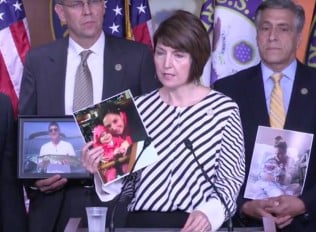
    In an effort to lend legislative support to the fight against the national opioid epidemic, the House of Representatives passed 25 bills that would provide crucial support to both government and public organizations to combat the crisis on a number of fronts.

    The bills, authored by both Democratic and Republican representatives, include measures to expand access to the overdose reversal drug naloxone, develop new forms of pain medication that are non-dependency-forming, and allow medical professionals to view a patient’s medical history for previous substance abuse.

    Greg Walden (R-OR), the Energy and Commerce Committee Chairman, and Michael C. Burger (R-TX), Health Subcommittee Chairman, said in a joint statement that the bills are “real solutions that will change how we respond to this crisis.”

    Among the bills passed are:

    • H.R. 449, the Synthetic Drug Awareness Act of 2018, which will require U.S. Surgeon General Jerome Adams to submit a “comprehensive report to Congress on the public health effects of the rise of synthetic drug use among youth aged 12 to 18,” authored by Reps. Hakeem Jeffries (D-NY) and Chris Collins (D-NY)
    • H.R. 4684, the Ensuring Access to Quality Sober Living Act of 2018, which will authorize the Substance Abuse and Mental Health Services Administration (SAMHSA) to “develop, publish, and disseminate best practices for operating recovery housing that promotes a safe environment for sustained recovery,” authored by Reps. Judy Chu (D-CA), Mimi Walters (R-CA), Gus Bilirakis (R-FL) and Raul Ruiz (D-CA)
    • H.R. 5009, Jessie’s Law, which will require the Department of Health and Human Services to develop the best way to present information about substance use disorder in a consenting patient’s history for medical professionals to make informed decisions about treatment, authored by Reps. Tim Walberg (R-MI) and Debbie Dingell (D-MD)
    • H.R. 5012, the Safe Disposal of Unused Medication Act, which will allow hospice employees to remove and dispose of unused controlled substances after the death of a patient, authored by Reps. Walberg and Dingell
    • H.R. 5327, the Comprehensive Opioid Recovery Centers Act of 2018, which will establish such centers to “dramatically improve the opportunities for individuals to establish and maintain long-term recovery through the use of FDA-approved medications and evidence-based treatment, authored by Health Subcommittee Vice Chairman Brett Guthrie (R-KY) and Ranking Member Gene Green (R-TX)
    • And H.R. 4275, the Empowering Pharmacists in the Fight Against Opioid Abuse Act, which will give pharmacists more information and ability to decline prescriptions for controlled substances which they suspect to be fraudulent or for abuse, authored by Reps. Mark DeSaulnier (D-CA) and Buddy Carter (R-GA).

    Reps. Walden and Burgess noted in their statement that the bills will “make our states and local communities better equipped in the nationwide efforts to stem this tide” of opioid dependency and overdose.

    The House will continue to review related bills on January 14, including H.R. 6069, which will require the Comptroller General to conduct a study on how virtual currencies are used to facilitate goods or services linked to drug or sex trafficking.

    View the original article at thefix.com