Tag: new book

  • Chapter 6: The Thrush’s Song

    Shauna Shepard, who works as a receptionist in the local health clinic, visited with me on my back porch. She shared why she drifted into substance abuse, and how she struggled to get — and remain — sober.

    After a man in my small Vermont town who had a heroin addiction committed suicide, I began asking questions about addiction. Numerous people shared their experiences with me — from medical workers to the local police to people in recovery. Shauna Shepard, who works as a receptionist in the local health clinic, visited with me on my back porch. She shared why she drifted into substance abuse, and how she struggled to get — and remain — sober.

    “Drugs,” Shauna finally said after a long silence, tapping her cigarette on the ashtray. “Drugs are really good. That’s the problem. When you’re using, it’s hard to imagine a life without them. For a long time, I didn’t know how to deal with my feelings any other way. It’s still hard for me to understand that getting high isn’t an option anymore.”

    I nodded; I knew all too well how using could be a carapace, a place to tuck in and hide, where you could pretend your life wasn’t unraveling.

    “You can go weeks, months, even years without using, and then you smell something or hear a certain song on the radio, or you see somebody, and — bam! — the cravings come right back. If you don’t keep your eye on that shit, it’ll get you.”

    “It? You mean cravings for drugs? Or your past?”

    “Both,” she said emphatically. “I mean, fuck. Emotions don’t go away. If you bury them, everything comes crashing out when someone asks you for a fucking pen, and they get the last six months of shit because they walked in at the wrong time.”

    I laughed. “So much shit can happen in six months.”

    She nodded, but she wasn’t smiling.

    I rubbed a fingertip around the edge of the saucer, staring at the ashes sprinkled over its center. “What’s it like for you to be sober?”

    “It’s harder. But it’s better. My job is good, and I want to keep it. I have money the day after I get paid. I’ve got my therapist and my doctor on speed dial. I have Vivitrol. But I still crave drugs. I don’t talk to anyone who uses. It’s easy for that shit to happen. You gotta be on your game.”

    “At least to me, you seem impressively aware of your game.”

    With one hand, she waved away my words. “I have terrible days, too. Just awful days. But if my mom can bury two kids and not have a drug issue, I should be able to do it. When my brother shot himself, his girlfriend was right there. She’s now married and has two kids. That’s just freaking amazing. If she can stay clean, then I should be able to stay sober, too.”

    “Can I reiterate my admiration again? So many people are just talk.”

    Shauna laughed. “Sometimes I downplay my trauma, but it made me who I am. I change my own oil, take out the garbage. I run the Weedwacker and stack firewood. I’ve repaired both mufflers on my car, just because I could.” Her jaw tightened. “But I don’t want to be taken advantage of.” She told me how one night, she left her house key in the outside lock. “When I woke up next morning and realized what I had done, I was so relieved to have survived. I told myself, See, you’re not going to fucking die.”

    “You’re afraid here? In small town Vermont?”

    “I always lock up at night. Always have, always will.” Cupping her hands around the lighter to shield the flame from the wind, she bent her head sideways and lit another cigarette.

    “I lock up, too. I have a restraining order against my ex.”

    She tapped her lighter on the table. “So you know.”

    “I do. I get it.”

    *

    As the dusk drifted in and the warm afternoon gave way to a crisp fall evening, our conversation wound down.

    Shauna continued, “I still feel like I have a long way to go. But I feel lucky. I mean, in my addiction I never had sex for money or drugs. I never had to pick out of the dumpster. My rock bottom wasn’t as low as others. I’m thankful for that.”

    I thought of my own gratitude for how well things had worked out for me, despite my drinking problem; I had my daughters and house, my work and my health.

    Our tabby cat Acer pushed his small pink nose against the window screen and meowed for his dinner. My daughter Gabriela usually fed him and his brother around this time.

    “It’s getting cold,” Shauna said, zipping up her jacket.

    “Just one more question. What advice would you give someone struggling with addiction?”

    Shauna stared up at the porch ceiling painted the pale blue of forget-me-not blossoms, a New England tradition. She paused for so long that I was about to thank her and cut off our talk when she looked back at me.

    “Recovery,” she offered, “is possible. That’s all.”

    “Oh . . .” I shivered. “It’s warm in the house. Come in, please. I’ll make tea.”

    She shook her head. “Thanks, but I should go. I’ve got to feed the dogs.” She glanced at Acer sitting on the windowsill. “Looks like your cat is hungry, too.”

    “Thank you again.”

    We walked to the edge of the driveway. Then, after an awkward pause, we stepped forward and embraced. She was so much taller than me that I barely reached her shoulders.

    When Shauna left, I gathered my two balls of yarn and my half-knit sweater and went inside the kitchen. I fed the cats who rubbed against my ankles, mewling with hunger. From the refrigerator, I pulled out the red enamel pan of leftover lentil and carrot soup I’d made earlier that week and set it on the stove to warm.

    Then I stepped out on the front steps to watch for my daughters to return home. Last summer, I had painted these steps dandelion yellow, a hardware store deal for a can of paint mistakenly mixed. Standing there, my bare feet pressed together, I wrapped my cardigan around my torso. Shauna and I had much more in common than locking doors at night. Why had I revealed nothing about my own struggle with addiction?

    *

    I wandered into the garden and snapped a few cucumbers from the prickly vines. Finally, I saw my daughters running on the other side of the cemetery, racing each other home, ponytails bobbing. As they rushed up the path, I unlatched the garden gate and held up the cucumbers.

    “Cukes. Yum. Did you put the soup on?” Molly asked, panting.

    “Ten minutes ago.” Together we walked up the steps. The girls untied their shoes on the back porch.

    “We saw the bald eagles by the reservoir again,” Gabriela said.

    “What luck. I wonder if they’re nesting there.”

    Molly opened the kitchen door, and the girls walked into our house. Before I headed in, too, I lined up my family’s shoes beneath the overhang. Through the glass door, I saw Molly cradling Acer against her chest, his hind paws in Gabriela’s hands as the two of them cooed over their beloved cat.

    Hidden in the thicket behind our house, the hermit thrush — a plain brown bird, small enough to fit in the palm of my hand — trilled its rippling melody, those unseen pearls of sound.

    In the center of the table where Shauna and I had sat that afternoon, the saucer was empty, save for crumbles of common garden dirt and a scattering of ashes. When I wasn’t looking, Shauna must have gathered her crushed cigarette butts. I grasped the saucer to dump the ashes and dirt over the railing then abruptly paused, wondering: If I had lived Shauna’s life, would I have had the strength to get sober? And if I had, would I have risked that sobriety for a stranger?

    In the kitchen, my daughters joked with each other, setting the table, the bowls and spoons clattering. The refrigerator opened and closed; the faucet ran. I stood in the dusk, my breath stirring that dusty ash.

    Excerpted from Unstitched: My Journey to Understand Opioid Addiction and How People and Communities Can Heal, available at Amazon and elsewhere.

    View the original article at thefix.com

  • Addiction and Estrangement

    Remarkably, a tense relationship with a sister or brother in adolescence may contribute to substance abuse.

    Addiction can roil relationships with abuse, betrayal, and domestic violence, placing great stress on a family. Typically, parents and siblings who try to help or manage a family member’s addiction find themselves sapped of emotional energy and drained of financial resources. My survey shows as many as 10 percent of respondents suspect that a sibling is hiding an addiction.

    I wonder: Does the addiction produce family problems, or do a dysfunctional family’s issues result in addiction? It sounds like a chicken‑and‑egg question. I suppose at this moment the sequence of events doesn’t really matter to me. What I need is guidance on helping my brother conquer his alcoholism.

    Typically, when it comes to addiction, many experts advise using “tough love” to change behavior—promoting someone’s welfare by enforcing certain constraints on them or requiring them to take responsibility for their actions. The family uses relationships as leverage, threatening to expel the member who is addicted. The message of this model is explicit: “If you don’t shape up, we will cut you off.”

    Tough love relies on solid, established relationships; otherwise, the family member at risk may feel he or she has nothing to lose. My relationship with Scott is tenuous, anything but solid. He has lived without me for decades, and if I try tough love, he could easily revert to our former state of estrangement.

    I wonder if there might be another way.

    Possible Causes of Addiction

    Addiction is a complex phenomenon involving physiological, sociological, and psychological variables, and each user reflects some combination of these factors. In Scott’s case, because alcoholism doesn’t run in our family, I don’t think he has a biological predisposition to drink. I suspect my brother’s drinking results from other origins.

    Current research identifies unexpected influences that also may be at the root of addictive behavior, including emotional trauma, a hostile environment, and a lack of sufficient emotional connections. Addictive behavior may be closely tied to isolation and estrangement. Human beings have a natural and innate need to bond with others and belong to a social circle. When trauma disturbs the ability to attach and connect, a victim often seeks relief from pain through drugs, gambling, pornography, or some other vice.

    Canadian psychologist Dr. Bruce Alexander conducted a controversial study in the 1970s and 1980s that challenged earlier conclusions on the fundamental nature of addiction. Users, his research suggests, may be trying to address the absence of connection in their lives by drinking and/or using drugs. Working with rats, he found that isolated animals had nothing better to do than use drugs; rats placed in a more engaging environment avoided drug use.

    Similar results emerged when veterans of the war in Vietnam returned home. Some 20 percent of American troops were using heroin while in Vietnam, and psychologists feared that hundreds of thousands of soldiers would resume their lives in the United States as junkies. However, a study in the Archives of General Psychiatry reported that 95 percent simply stopped using, without rehab or agonizing withdrawal, when they returned home.

    These studies indicate that addiction is not just about brain chemistry. The environment in which the user lives is a factor. Addiction may, in part, be an adaptation to a lonely, disconnected, or dangerous life. Re‑ markably, a tense relationship with a sister or brother in adolescence may contribute to substance abuse. A 2012 study reported in the Journal of Marriage and Family entitled “Sibling Relationships and Influences in Childhood and Adolescence” found that tense sibling relationships make people more likely to use substances and to be depressed and anxious as teenagers.

    Those who grow up in homes where loving care is inconsistent, unstable, or absent do not develop the crucial neural wiring for emotional resilience, according to Dr. Gabor Maté, author of In the Realm of Hungry Ghosts, who is an expert in childhood development and trauma and has conducted extensive research in a medical practice for the underserved in downtown Vancouver. Children who are not consistently loved in their young lives often develop a sense that the world is an unsafe place and that people cannot be trusted. Maté suggests that emotional trauma and loss may lie at the core of addiction. Addiction and Estrangement

    A loving family fosters resilience in children, immunizing them from whatever challenges the world may bring. Dr. Maté has found high rates of childhood trauma among the addicts with whom he works, leading him to conclude that emotional damage in childhood may drive some people to use drugs to correct their dysregulated brain waves. “When you don’t have love and connection in your life when you are very, very young,” he explains, “then those important brain circuits just don’t develop properly. And under conditions of abuse, things just don’t develop properly and their brains then are susceptible then when they do the drugs.” He explains that drugs make these people with dysregulated brain waves feel normal, and even loved. “As one patient said to me,” he says, “when she did heroin for the first time, ‘it felt like a warm soft hug, just like a mother hugging a baby.’”

    Dr. Maté defines addiction broadly, having seen a wide variety of addicted behaviors among his patients. Substance abuse and pornography, for example, are widely accepted as addictions. For people damaged in childhood, he suggests that shopping, chronic overeating or dieting, incessantly checking the cell phone, amassing wealth or power or ultramarathon medals are ways of coping with pain.

    In a TED Talk, Dr. Maté, who was born to Jewish parents in Budapest just before the Germans occupied Hungary, identifies his own childhood traumas as a source of his addiction: spending thousands of dollars on a collection of classical CDs. He admits to having ignored his family—even neglecting patients in labor—when preoccupied with buying music. His obsessions with work and music, which he characterizes as addictions, have affected his children. “My kids get the same message that they’re not wanted,” he explains. “We pass on the trauma and we pass on the suffering, unconsciously, from one generation to the next. There are many, many ways to fill this emptiness . . . but the emptiness always goes back to what we didn’t get when we were very small.”

    That statement hits home. Though my brother and I didn’t live as Jews in a Nazi‑occupied country, we derivatively experienced the pain our mother suffered after her expulsion from Germany and the murder of her parents. Our mother’s childhood traumas resulted in her depression and absorption in the past and inhibited her ability to nurture her children.

    Still, in the end, it’s impossible to determine precisely the source of an addiction problem. Maybe it doesn’t matter anyway. The real question is, What can I do about it?
     

    Excerpted from BROTHERS, SISTERS, STRANGERS: Sibling Estrangement and the Road to Reconciliation by Fern Schumer Chapman, published by Viking Books, an imprint of Penguin Publishing Group, a division of Penguin Random House, LLC. Copyright © 2021 by Fern Schumer Chapman. Available now.

    View the original article at thefix.com

  • The End

    The End

    With each sip I take, my brain and body scream “you freaking alcoholic,” and I know at that moment I can no longer do this.

    The last drink I have is a flute of champagne.

    It’s New Year’s Eve.

    My husband reserves a special room for us at a nearby hotel. He buys an imperial bottle of Moet, a misplaced purchase for this particular occasion. We’re making a last ditch effort at saving our marriage. A gala’s going on in the ballroom below, where we journey to join the revelers.

    Lights twinkle, streamers hang, and chandeliers glisten.

    I hardly notice.

    The band plays songs that were once my favorites.

    I hardly hear. 

    Hoards of gleeful couples celebrate around us.

    We dance with them, pretending to have a good time.

    But I know the end is creeping near.

    My husband’s been having an affair with a woman half his age. He hasn’t come clean yet, but my gut knows something’s going on. So I bleach my hair a sassier shade of blond, starve myself in hopes of losing the weight I know he hates, turn myself inside out to get him to notice me again.

    But mostly I drink.

    Because of my Catholic upbringing, I have a list of rules I follow.

    My commandments of drinking. I only have three. Ten is too many.

    1) No drinking before 5:00. I watch the clock tick away the minutes. It drives me crazy.

    2) No drinking on Tuesdays or Thursdays. I break this all the time. It’s impossible not to.

    3) No hard liquor. Only wine and beer. I feel safe drinking those.

    Anything else means, well, I’ve become my parents.

    Or even worse, his. I can’t bear to go there.

    One night, when he takes off for a weekend conference, or so he says, I get so stinking drunk after tucking my daughter in for the night, I puke all over our pinewood floor. All over those rich amber boards I spent hours resurfacing with him, splattering my guts out next to our once sexually active and gleaming brass bed.

    Tarnished now from months of disuse.

    The following morning, my five-year-old daughter, with sleep encircling her concerned eyes, stands there staring at me, her bare feet immersed in clumps of yellow. The scrambled eggs I managed to whip up the night before are scattered across our bedroom floor, reeking so bad, I’m certain I’ll start retching again. I look down at the mess I made with little recollection of how it got there, then peer at my daughter, her eyes oozing the compassion of an old soul as she says, “Oh Mommy. Are you sick?” Shame grips every part of my trembling body. Its menacing hands, a vice around my pounding head. I can’t bear to look in her eyes. The fear of not remembering how I’ve gotten here is palpable. Every morsel of its terror is strewn across my barf-laden tongue and I’m certain my daughter knows the secret I’ve kept from myself and others for years.

    You’re an alcoholic. You can’t hide it anymore.

    Every last thread of that warm cloak of denial gets ripped away, and here I am, gazing into the eyes of my five-year old daughter who’s come to yank me out of my misery.

    It takes me two more months to quit.

    Two months of dragging my body, heavy with remorse, out of that tarnished brass bed to send my daughter off to school. Then crawling back into it and staying there, succumbing to the disjointed sleep of depression. Until the bus drops her off hours later, as her little finger, filled with endless kindergarten stories, pokes me awake.

    Each poke like being smacked in the face with my failures as a mother.

    The EndAnd then New Year’s Eve shows up and I dress in a slinky black outfit, a color fitting my descending mood, a dress I buy to win him back. The husband who twelve years before drives hundreds of miles to pursue this wayward woman, wooing me over a dinner I painstakingly prepare, as I allow myself to wonder if he in fact, may be the one. We dine on the roof of the 3rd floor apartment I rent on 23rd and Walnut, in the heart of Philadelphia where I work as a chef, and where I tell him over a bottle of crisp chardonnay that I might be an alcoholic. He laughs, and convinces me I’m not. He knows what alcoholics look like. Growing up with two of them, he assures me I am nothing at all like his parents.

    His mother, a sensuous woman with flaming hair and lips to match, passes out in the car on late afternoons after spending hours carousing with her best friend, a woman he’s grown to despise. Coming home from school, day after day, he finds her slumped on the bench seat of their black Buick sedan, dragging her into the house to make dinner for him and his little brother and sister, watching as she staggers around their kitchen. His father, a noted attorney in his early years, drinks until he can’t see and rarely comes home for supper. He loses his prestigious position in the law firm he fought to get into, and gets half his jaw removed from the mouth cancer he contracts from his unrestrained drinking. He dies at 52, a lonely and miserable man.

    “I know what alcoholics look like,” he says. “You’re not one of them.”

    I grab onto his reassurance and hold it tight.

    And with that we polish off the second bottle of chardonnay, crawl back through the kitchen window and slither onto the black and white checkered tile floor, in a haze of lust and booze, before we creep our way into my tousled and beckoning bed. It takes me another twelve years to hit bottom, to peek into the eyes of the only child I bring into this world, reflecting the shame I’ve carted around most of my life.

    So on New Year’s Eve, we make our way up in the hotel elevator. After crooning Auld Lang Syne with the crowd of other booze-laden partiers still hanging on to the evening’s festivities, as the bitter taste of letting go of something so dear, so close to my heart, seeps into my psyche. A woman who totters next to me still sings the song, with red stilettos dangling from her fingers. Her drunken haze reflects in my eyes as she nearly slides down the elevator wall.

    At that moment, I see myself.

    The realization reluctantly stumbles down the hall with me, knowing that gleaming bottle of Moet waits with open arms in the silver bucket we crammed with ice before leaving the room. Ripping off the foil encasing the lip of the bottle, my husband quickly unfastens the wire cage and pops the cork that hits the ceiling of our fancy room. Surely an omen for what follows. He carefully pours the sparkling wine, usually a favorite of mine, into two leaded flutes huddling atop our nightstand, making sure to divide this liquid gold evenly into the tall, slim goblets that leave rings at night’s end. We lift our glasses and make a toast, to the New Year and to us, though our eyes quickly break the connection, telling a different story.

    As soon as the bubbles hit my lips, from the wine that always evokes such tangible joy and plasters my tongue with memories, I know the gig’s up. It tastes like poison. I force myself to drink more, a distinctly foreign concept, coercing a smile that squirms across my face. I nearly gag as I continue to shove the bubbly liquid down my throat, not wanting to hurt my husband’s feelings, who spent half a week’s pay on this desperate celebration. But with each sip I take, my brain and body scream you freaking alcoholic, and I know at that moment I can no longer do this. When I put down that glass, on this fateful New Year’s Eve, I know I’ll never bring another ounce of liquor to my lips.

    I’m done.

    There’s no turning back.

    And as we tuck ourselves into bed, I keep it to myself. 

    Each kiss that night is loaded with self-loathing and disgust. 

    Those twelve years of knowing squeezes tightly into a fist of shame.

    Little does my husband know, if he climbs on top of me,

    he’ll be making love to death itself. 

    Instead, I turn the other way and cry myself silently to sleep.

    Your days of drinking have finally come to an end.

    And you can’t help but wonder…

    will your marriage follow?


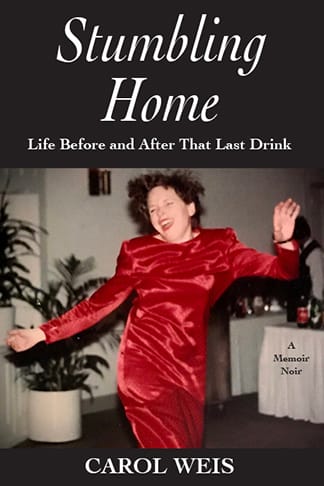
    Excerpted from STUMBLING HOME: Life Before and After That Last Drink by Carol Weis, now available on Amazon.

    View the original article at thefix.com

  • New Intergenerational Trauma Workbook Offers Process Strategies for Healing

    New Intergenerational Trauma Workbook Offers Process Strategies for Healing

    By following the clearly outlined steps to healing in the workbook, one can start healing the emotional wounds brought on by unaddressed intergenerational trauma.

    In the Intergenerational Trauma Workbook, Dr. Lynne Friedman-Gell, PhD, and Dr. Joanne Barron, PsyD, apply years of practical clinical experience to foster a healing journey. Available on Amazon, this valuable addition to both the self-help and mental health categories is perfect for a post-pandemic world. With so many people uncovering intergenerational trauma while isolated during the extended quarantines, the co-authors offer a direct approach. The book shows how to confront and ultimately integrate past demons from within the shadowy depths of the human psyche.

    Addressing such a difficult challenge, the Intergenerational Trauma Workbook: Strategies to Support Your Journey of Discovery, Growth, and Healing provides a straightforward and empathetic roadmap that leads to actual healing. Dr. Gell and Dr. Barron explain how unintegrated memories affect a person negatively without the individual being aware of what is happening. Rather than being remembered or recollected, the unintegrated memories become painful symptomology.

    By following the clearly outlined steps to healing in the workbook, finding freedom from what feels like chronic pain of the mind and the body is possible. Yes, the emotional wounds of childhood often fail to integrate into the adult psyche. Never processed or even addressed, they morph into demons. In response, the workbook is all about processing.

    Clearly-Defined Chapters about Processing Intergenerational Trauma

    The workbook is divided into clearly defined chapters that provide a roadmap to recovery from trauma. In the first chapter, the authors focus on “Understanding Intergenerational Trauma,” providing the reader with an orientation to the subject matter while defining key terminology for future lessons. From a multitude of perspectives, they mine the depths of intergenerational trauma. Expressing with a clarity of voice balanced with compassion, they write, “Intergenerational trauma enables a traumatic event to affect not only the person who experiences it but also others to whom the impact is passed down through generations.”

    New Intergenerational Trauma Workbook Offers Process Strategies for HealingThe chapters carefully outline how the workbook is to be used and the psychological underpinnings behind the exercises. Moreover, they use individual stories to demonstrate the ideas being expressed. Thus, moments of identification are fostered where someone using the workbook can see themselves in the examples being presented. Overall, the organization of the workbook is well-designed to help someone face the difficult challenge of dealing with their legacy of intergenerational trauma

    In terms of the chapter organization, the authors make the smart choice to start with the microcosm of the individual and their personal challenges. By beginning with the person’s beliefs and emotions using the workbook, these chapters keep the beginning stages of healing contained. Afterward, a chapter on healing the body leads to expanding the process to others and the healing of external relationships. As a tool to promote actual recovery, the Intergenerational Trauma Workbook is successful because it does not rush the process. It allows for a natural flow of healing at whatever pace fits the needs and personal experiences of the person using the workbook.

    A Strong Addition to Self-Help Shelves in a Time of Trauma Awareness

    In a 2017 interview that I did for The Fix with Dr. Gabor Maté, one of the preeminent addictionologists of our time, he spoke about how the United States suffered from traumaphobia. The rise of the 21st-century divide in our country came about because our social institutions and popular culture avoid discussing trauma. Beyond avoiding, they do everything they can to distract us from the reality of trauma. However, after the pandemic, I don’t believe that these old mechanisms will work anymore.

    Losing their functionality, people will need tools to deal with the intergenerational trauma that has been repressed on both microcosmic and macrocosmic levels for such a long time. The pain from below is rising, and it can no longer be ignored. In need of practical and accessible tools, many people will be relieved first to discover and then use the Intergenerational Trauma Workbook by Dr. Lynne Friedman-Gell and Dr. Joanne Barron. In this resonant work, they will be able to find a way to begin the healing process.

    View the original article at thefix.com

  • Helping Your Child Through Difficult Times

    All too often when we look beyond a child’s drinking or drug use we discover their struggle to manage intolerable thoughts, feelings or memories is a core issue that needs treatment.

    I have been a mental health and addictions counselor for over two decades. I’ve treated adults and adolescents diagnosed with serious psychiatric and substance abuse issues at one of the nation’s premier psychiatric hospitals. After informing parents of their child’s substance abuse history the most frequent response I heard from them was “I had no idea this was going on.” Or if they suspected their child was using a substance, they were shocked at how extensive it was.

    Adolescent substance abuse continues to invade too many of our families, leaving parents confused and without a roadmap to guide them in finding help for their child. Today, more than 40 percent of seniors and one-third of tenth graders are vaping a substance like marijuana. Twenty percent of teens report abusing prescription drugs like Xanax, Ritalin and Adderall.

    As the parent of an addicted child, feelings of helplessness, blame and fear can drown out any sense of hope. But in the pages of my book The Addicted Child: A Parent’s Guide to Adolescent Substance Abuse they receive the information and resources needed to help their child through assessment, treatment and recovery.

    Alcohol and drugs have the power to change a child’s brain and influence behaviors so I include a chapter on the neuroscience of substance abuse. In non-technical language parents learn how substances work in the adolescent brain.

    Because the best treatment starts with a comprehensive assessment there’s a chapter explaining which assessments are critical for a proper diagnosis. These assessments go beyond looking just at a child’s history of using substances. All too often when we look beyond a child’s drinking or drug use we discover their struggle to manage intolerable thoughts, feelings or memories is a core issue that needs treatment. While not every child using alcohol or drugs has an underlying psychological issue, for those that do, treating the alcohol or drug problem without treating the mental health issue can be a treatment plan doomed to fail.

    Other chapters in The Addicted Child address issues such as eating disorders, self-injury, gaming and cell phone use which often accompany a child’s use of substances. Parents learn the warning signs for these disorders and the warning signs that often accompany alcohol and drug use. Parents also learn which drugs are invading today’s adolescent population and how to recognize them.

    Parents often need guidance when looking for treatment options. There is no “one size fits all” treatment approach to addiction. For this reason, I have included chapters explaining the important principles of adolescent substance abuse treatment and various treatment options available for families. There is also a chapter listing helpful resources for parents.

    Very few things are more destructive to a family than having someone, especially a child, addicted to alcohol or drugs. While working on an adolescent treatment unit I met parents struggling to understand and accept their child’s psychiatric and substance use issues. For most of these families it was a heart-breaking experience. Sadly, many families do not have the financial resources to send their child to a nationally acclaimed hospital like the Menninger Clinic in Houston. Their desperate search for help often leaves them feeling alone and without a roadmap to guide them through the process of their child’s assessment and treatment. It’s for these families that I wrote my book, The Addicted Child: A Parent’s Guide to Adolescent Substance Abuse. You can find The Addicted Child on Amazon and at the following website: https://www.helptheaddictedchild.com

    View the original article at thefix.com

  • Better is Better: Stories of Alcohol Harm Reduction

    Better is Better: Stories of Alcohol Harm Reduction

    Unlike most recovery groups, abstinence (sobriety) is not a requirement for HAMS. HAMS encourages all positive change, from abstinence to moderation to safer drinking.

    The following is an excerpt from HAMS’ (Harm Reduction, Abstinence and Moderation Support) new book, in which members tell their stories of success and struggles along the way. Find more information about HAMS at the end of this excerpt.

    Jessica’s Story

    I had been a heavy drinker for 10 – 20 years. The increase in my drinking happened gradually, but then one day I became very ill after drinking and realized I could have been going through withdrawal. Yet it didn’t sink in and I continued on my path to destruction.

    I work in drug addiction so I wasn’t oblivious to harm reduction, but the consensus where I live is that it doesn’t work, and everyone pushes AA. I didn’t want to go to AA and felt I couldn’t because I am in a very public position in my career in the addiction field. So I started to Google around and came across the HAMS website, but I didn’t join yet. 

    Then in December of 2016 I took a bad turn. I had been binge-drinking on a public holiday, and I was very sick, but I had to go into work on Monday. That’s when I finally joined HAMS. It was the first time I ever expressed to anyone, even myself, that alcohol had become a problem. Being able to do that in a safe environment was very important to me. There were so many people on so many different paths, including many who had been abstinent for years or moderating successfully, as well as those who had serious problems. 

    I was a member of HAMS for several months before I embarked on a taper. It had its limitations because I work long hours and I don’t drink during work so obviously with the consumption of alcohol I used to have during my hours off work it was very difficult to taper while not drinking for 12 hours a day. But tapering works. I did a long taper – perhaps it was more psychological than physical, but I live alone and I didn’t want to risk DTs.

    I tried moderating, but it didn’t work for me. Once I start to drink, there is no stop button. So I made the decision last year to be alcohol-free. Once I tried moderation again, but drank way too much. It wasn’t even stress or trauma: I just thought I deserved a treat so I tried it again, but once I started I kept going. I contacted a doctor I knew from Facebook who was a specialist in addictions and who I knew would keep my confidence, and he prescribed an at-home detox with Ativan. Unfortunately, I still had to go to work, and I don’t know how I managed but I did. So I came to the conclusion last year that I need to be alcohol free because this moderation thing does not work for me. 

    I found the HAMS Facebook group very helpful because sleeping has always been a problem for me, and it was especially acute when I first stopped drinking. I am in Central Europe, so when I couldn’t sleep at night, everyone in the US was up. When I couldn’t sleep at 2 or 3 am my time, there was always someone in the group I could talk to. I’ve made a lot of good friends in HAMS, and we usually don’t even talk about alcohol. We talk about other things in our lives. My mantra has always been that I am much more than my alcohol problem, so talking with HAMS friends about things other than alcohol keeps me focused on the life I have beyond alcohol. 

    Another thing I like about HAMS is how many members are female. Women have a very different experience with alcohol than men do, and I feel that most treatment is geared to men. Women often have more at stake: a woman I know went to the ER because she was in withdrawal, and they called child protection services on her. I didn’t want to join AA because as a female, I didn’t want to be preyed upon by the men there. Women are so vulnerable, especially when we first stop drinking. I know of many women who have been taken advantage of by men in AA. That doesn’t happen in HAMS. I’ve never felt pounced upon or been contacted in any inappropriate way. 

    The support in HAMS has made it possible for me to become alcohol-free. The fact that it is international, I can get support any time day or night, and I don’t have to worry about my identity being exposed in the country where I work, have all been important. I want us to continue to grow and help people all over the world see that changing your drinking really is possible. With HAMS, no matter who you are or where you live, you are never alone. 


    HAMS – Harm Reduction, Abstinence and Moderation Support – is an over 5,000-member group of people worldwide who are working to change their drinking. Unlike most such groups, abstinence (sobriety) is not a requirement for HAMS. HAMS encourages all positive change, from abstinence to moderation to safer drinking. Members are encouraged to set their own goals and make a plan for achieving them. HAMS provides confidential, 24/7 online support through closed Facebook groups, including a 1,000-member group for women only. Members interact with each other from the privacy of their own homes, and no judgement is allowed – just support and encouragement. HAMS provides support for those who want to set their own goals, think for themselves, and improve their drinking.

    HAMS’ original book, a science-based, step-by-step guide to changing your drinking, can be found at How to Change Your Drinking by Kenneth Anderson. HAMS website is https://hams.cc/ and Facebook groups include HAMS: Harm Reduction for Alcohol, HAMS for Women, Alcohol Harm Reduction, and Alcohol Free Hamsters, a group for those who choose abstinence.

    View the original article at thefix.com

  • Kamala Harris Pushes For Marijuana Legalization In New Book

    Kamala Harris Pushes For Marijuana Legalization In New Book

    The California senator discusses her stance on prohibition, de-scheduling and the need for the war on drugs to be dismantled in her new book.

    More and more democratic politicians are getting on board with marijuana legalization, according to Forbes

    Sen. Kamala Harris (D-CA) is one of them, as she discusses the topic in her new book, The Truths We Hold: An American Journey.

    “Something else it’s past time we get done is dismantling the failed war on drugs—starting with legalizing marijuana,” Harris writes in the book. 

    “We need to legalize marijuana and regulate it,” she adds. “And we need to expunge nonviolent marijuana-related offenses from the records of millions of people who have been arrested and incarcerated so they can get on with their lives.”

    Though she is for marijuana legalization, Harris says that legalization should be done with caution. Because of the Schedule I status of the drug, she states, there has not been enough research on the effects. She also states that some solution needs to be put in place when it comes to driving under the influence of marijuana.

    Harris also touches on other drugs as a whole, writing, “”We also need to stop treating drug addiction like a public safety crisis instead of what it is: a public health crisis.” 

    “When someone is suffering from addiction, their situation is made worse, not better, by involvement in the criminal justice system,” she adds.

    Despite her support now, Harris has not always been supportive of marijuana legalization. According to Forbes, Harris laughed during a 2014 interview when a journalist raised a question about legalization.

    Two years later, in 2016, she also refused to support California’s cannabis legalization ballot measure. 

    However, with a possible presidential run on the horizon, Harris has gotten behind legalization. In May 2018, according to Forbes, Harris agreed to co-sponsor a bill that would remove marijuana from the Controlled Substances Act as well as withhold federal funding from states with “discriminatory cannabis enforcement.”

    “Right now in this country people are being arrested, being prosecuted, and end up spending time in jail or prison all because of their use of a drug that otherwise should be considered legal,” she said at that point.

    According to The Washington Examiner, at that time she also added that race plays a role when it comes to consequences of marijuana use.

    “It’s the smart thing to do. It’s the right thing to do. And I know this as a former prosecutor. I know it as a senator,” Harris said. “The fact is marijuana laws are not applied and enforced the same way for all people. African-Americans use marijuana at roughly the same rate as whites, but are approximately four times more likely to be arrested for possession. That’s just not fair.”

    View the original article at thefix.com

  • Former Amazon Employee Quit Job To Chronicle Journey To Sobriety

    Former Amazon Employee Quit Job To Chronicle Journey To Sobriety

    Kristi Coulter decided to focus on her sobriety more than her life as a person with alcoholism as she wrote Nothing Good Can Come From This.

    For 12 years, Kristi Coulter, who graduated with an MFA from the University of Michigan, worked at Amazon in a variety of executive roles. She also had a big drinking problem and would drink at least one bottle of wine a night.

    Now she’s written an acclaimed series of essays about her drinking and recovery called Nothing Good Can Come From This.

    In an interview with Seattle Magazine, Coulter helped shed light on addiction in “tech culture,” which she says has been overlooked for some time. “Tech culture is drinking culture.” 

    People in the tech sector not only drink from the high levels of stress, but also to deal with the rampant sexism that has infected that world for years.

    Coulter discovered she had a gift for writing when she penned an essay for Medium called Enjoli, which received wide acclaim and led to her book deal.

    Coulter told The Woolfer that her book is “a raw, frank, feminist look at what happens when a high-achieving, deeply unhappy forty-something woman give us the ‘one’ thing she really thinks she can’t live without—wine—and has to remake her entire sense of self from the ground up.”

    In writing Nothing Good, Coulter focused on her sobriety more than her life as a person with alcoholism. “My drinking life was so monotonous,” she explains. “I really wanted to spend some time on ‘here’s what it’s actually like to live in a world like that.’”

    Coulter says she’s now five years sober, and she found writing about it to be a great catharsis. “I never expected to make it to this side of the pool. I never thought I’d get to be here.”

    Coulter also runs her own blog called Off Dry, and each blog entry marks her sober days. (The latest entry, where you can win a copy of Nothing Good, is marked “Day 1,879.”) On the front page of her blog, Coulter writes, “I got sober. Life got big.”

    When asked what advice she would give her younger self, Coulter jokes, “I thought, given where I ended up, was ‘Don’t start drinking!’ But that’s an oversimplification. Instead, I’d say, ‘Be aware that you can’t drink away your pain. You can’t drink away the things you don’t want to face.

    “Reality is reality whether you like it or not, and it will still be waiting for you when the alcohol wears off, along with whatever you did to make things even worse while you were drunk—and by the way, people don’t generally make their problems ‘better’ while they’re drunk. Okay! Glad we had this chat, kiddo. Proceed.’” 

    View the original article at thefix.com

  • New Book "Dopesick" Explores The Opioid Crisis From All Angles

    New Book "Dopesick" Explores The Opioid Crisis From All Angles

    “My goal with this book was not to just show you how we got here and what it’s going to take to get out of it but also to inspire people to care,” says author Beth Macy.

    Journalist Beth Macy set out with a mission: to address the opioid epidemic from every possible angle. 

    In her new book, Dopesick: Dealers, Doctors and the Drug Company that Addicted America, she does that through examining the opioid epidemic from the very beginning to its current state. 

    According to NPR, Macy begins the book by detailing the story of Jesse, a 19-year-old whose struggles began with pills and ended with heroin. Jesse is one of the many lives taken at the hands of the opioid crisis.

    “He was one of these rambunctious kids who rarely napped,” Macy told NPR. “As a little boy, he would fall asleep with toys still in his hands. And early on, they put him on ADHD medication. He also had some football and snowboarding injuries when he was 15 and 16 and was prescribed opioid painkillers then.

    “His mother isn’t exactly sure at what point he became hooked, at what point he realized he was dope sick. But he knew he could trade his ADHD medicine for the opioid pills. And one thing led to another. When the pills got harder to get because of doctors cracking down on prescribing, that’s when the heroin started coming in.”

    Initially, Macy tells CBS, Jesse’s mother was unaware of the depths her son’s use had gone to.

    “She said something else that I heard a lot, which is ‘I thought it was just pills,’ and it had progressed to heroin unbeknownst to her, and he never missed a day at work,” Macy told CBS.

    As journalists do, Macy comes at the opioid epidemic from all angles. Her book also details her conversations with a drug dealer named Ronnie Jones, who “ran one of the largest heroin rings in the mid-Atlantic region,” according to NPR.

    Jones had tried a few times to recreate his life after spending time in jail, but with little luck.

    “Ronnie’s story illustrates how little we do for felons trying to re-enter our society. You know, we don’t make it easy for them to get jobs,” Macy told NPR. “They often come out, and they owe lots of fines. And he tries to go legit. And he ends up—you know, he starts out selling weed again, which he had been selling before. But meanwhile, since he’s been in prison, this opioid thing has exploded. And somebody tells him in the break room of George’s Chicken, hey, man, if you want to make the real money, you need to be bringing heroin in.”

    Also in her book, Macy examines the role that Purdue Pharma (the manufacturer of OxyContin) has played in the epidemic. She states that when Purdue introduced OxyContin, it was marketed as being more safe than other painkillers because of its 12-hour time release mechanism.

    For the past three years, Macy says, she has been following Google alerts for articles pertaining to the opioid crisis. However, she says, none of them addressed every angle of the crisis as she hoped to.

    “Each of them only deal with a little piece of something going on right now,” she tells NPR. “And my goal with this book was not to just show you how we got here and what it’s going to take to get out of it, but also to inspire people to care. And I really hope that that’s what I’ve done.”

    View the original article at thefix.com