Tag: News

  • Everyday Changes That Can Improve Depression Symptoms

    Everyday Changes That Can Improve Depression Symptoms

    Experts offer a few tips on how to manage symptoms of depression.

    Depression is a serious disease that can require treatment with therapy and pharmaceuticals, but mental health professionals also say that making lifestyle changes can help alleviate symptoms. 

    Considering that depression rates have increased 33% in five years, it seems that more people than ever are paying attention to their mental health and prioritizing their wellbeing.

    Here are some changes that you can implement today in order to help control your symptoms of depression. 

    Focus on gut health

    Understanding how our microbiome works is the next frontier in medicine and it affects much more than just your gut health. 

    “There’s been an explosion of interest in the connections between the microbiome and the brain,” Emeran Mayer, a gastroenterologist at the University of California, Los Angeles, told The Atlantic

    Your gut contains large amounts of the same neurotransmitters that keep communication running smoothly in your brain, including GABA, dopamine and serotonin. That’s why Alison Stone, a New York-based therapist told Well and Good that the gut is basically the “second brain.” 

    Avoiding sugar, processed food and alcohol can help reduce inflammation and improve gut health, which in turn can reduce symptoms of depression.

    “In addition to affecting our dopamine and GABA production [‘happy chemicals’ needed for healthy brain functioning] it’s estimated that the gut is responsible for up to 90% of the body’s serotonin production,” Stone said. “Since inflammation has been linked to depression, following an anti-inflammatory diet is an important step in creating a happy, healthy gut.”

    Socialize in person, not online

    While social media has been linked to feeling down, getting together with friends in person will boost your mental wellbeing, especially during the cold winter months when people tend to hibernate inside. 

    “I cannot emphasize the importance of human connection enough, especially now that we’re living in a world where technology has replaced many face-to-face interactions and altered the way we belong to communities,” Stone said.

    Meet a friend for a walk, attend a meeting or catch up over coffee. Research shows these social relationships will improve your health. 

    Care for your physical health with exercise and sleep

    Sleep and exercise are some of the most basic ingredients for healthy living, but too often they’re overlooked. This can have consequences for both physical and mental health. If revamping your sleep and exercise schedules feels overwhelming, start small. 

    “Even 15-20 minutes of moderate walking per day is better than nothing,” Stone said. 

    That small amount of physical activity, coupled with a bit more sleep, will help improve your mood. 

    View the original article at thefix.com

  • Are Courts Now Ruling In Favor Of Legal Weed-Using Employees?

    Are Courts Now Ruling In Favor Of Legal Weed-Using Employees?

    A recent case may change the legal precedent for employees who use marijuana.

    Courts around the country are beginning to rule against employers who terminate people for using cannabis in states where medical or recreational use is legal, reversing years of courts siding with employers on the issue. 

    Last month a federal judge ruled in favor of Katelin Noffsinger, who sued a Connecticut nursing home that rescinded her job offer when she tested positive for THC. Noffsinger had told the nursing home that she used medical cannabis pills at night to control her PTSD.

    Still, when she tested positive for cannabis the nursing home said that she could not work for them, saying it could jeopardize federal funding that the home received. 

    This is the first time that a federal judge has ruled in favor of someone using medical marijuana, according to TIME. In previous cases judges have ruled that employers can terminate or not hire a person who uses cannabis because the drug remains illegal under federal law.

    “This decision reflects the rapidly changing cultural and legal status of cannabis, and affirms that employers should not be able to discriminate against those who use marijuana responsibly while off the job, in compliance with the laws of their state,” Paul Armentano, deputy director of NORML, a pro-marijuana group, told TIME

    Previously, case law indicated that judges were likely to side with employers, but the Noffsinger case could change the precedent. 

    “This is a very significant case that throws the issue in doubt for many of these federal contractors,” said Fiona Ong, an employment attorney with the Baltimore firm of Shawe Rosenthal. “It’s certainly interesting and may be indicative of where the courts are going with this.”

    Thirty-one states have medical marijuana programs. However, only nine states—including Connecticut—have made it illegal to discriminate against someone based on their use of medical marijuana.

    Still, cannabis use is a grey area in employment. Some states prohibit employers from discriminating against someone for using outside work hours, but this gets complicated in states where cannabis use is legal, while it remains prohibited on the federal level. 

    “What is cannabis if it’s lawful on the state but not the federal level?” William Bogot, co-chair of the cannabis law practice at Fox Rothschild, told CityLab in 2016.

    U.S. District Judge Jeffrey Meyer, who ruled in the Noffsinger case, pointed out that the federal Drug Free Workplace Act, which dictates drug-testing policies, does not require drug testing and does not prohibit federal contractors from employing people who use legal medical marijuana outside of work. Some employers have stopped testing for THC. 

    Recently, state judges in Rhode Island and Massachusetts also ruled in favor of people who were denied employment because of their cannabis use, prompting the American Bar Association to call the cases “an emerging trend in employment litigation.”

    View the original article at thefix.com

  • Lack Of Suboxone Access Leads Users In Need To The Black Market

    Lack Of Suboxone Access Leads Users In Need To The Black Market

    President Trump is expected to sign a bill to expand medication-assisted treatment but it remains unclear as to how soon that will take place.

    A new feature by NPR underscores a potentially dangerous conundrum for health care professionals and individuals seeking treatment for opioid use disorder: while buprenorphine (also known as Suboxone, Subutex and Zubsolv) has proven effective in blocking the effects of opioids, it’s also difficult to find and a challenge to obtain due to federal limits on prescribers.

    As a result, many prospective patients have turned to the illicit market, where Suboxone can be obtained via diversion, or from patients who sell or give away their own prescriptions.

    President Donald Trump is expected to sign a bill to expand medication-assisted treatment (MAT), but as NPR noted, it remains unclear as to how much access will be granted and how soon that will take place.

    Along with methadone and naltrexone (Vivitrol), buprenorphine is one of three federally-approved drugs to treat opioid dependency.

    As the NPR feature stated, while it is less potent than heroin or prescription opioids, including fentanyl, it is possible to overdose on buprenorphine if mixed with other substances.

    But such instances are rare, especially when the drug is formatted with the overdose reversal drug naloxone. As Dr. Zev Schuman-Olivier, an addiction specialist and instructor at Harvard Medical School, said, “The majority of people are using it in a way that reduces their risk of overdose.”

    Despite its effectiveness and relative lack of harmful side effects, obtaining buprenorphine is subject to federal regulations in regard to who can prescribe it—medical professionals need a special waiver to do so—and how much can be obtained. Currently, those doctors that meet the federal requirements to prescribe buprenorphine are limited to treating 275 patients.

    Nurse practitioners and physician assistants may apply for a waiver to administer the medication as well. Under the SUPPORT for Patients and Communities Act, the number of such health professionals and the length of prescription may be increased.

    Until that bill is signed, buprenorphine remains both difficult to obtain and expensive. According to 2016 estimates provided by the U.S. Department of Defense, medication and twice-weekly visits to a certified opioid treatment program are $115 per week or nearly $6,000 per year. That puts the medication out of range for many in need, forcing them to turn to diversion situations for assistance.

    But as NPR noted, that scenario can be dangerous: patients need assistance from a treatment professional for proper dosage and treatment for mental health issues that may come as a part of addiction.

    Diversion has become prevalent enough to warrant calls for more regulations regarding buprenorphine and stronger enforcement against those that break the law. But the NPR story quoted Basia Andraka-Christou, an assistant professor and addiction policy researcher at the University of Central Florida, who said that stricter rules are not what’s needed for patients.

    “I guarantee you, they’re either going to go and buy heroin and get high, which surely is not a great policy solution here,” she said. “Or they’re going to go buy Suboxone on the street.”

    View the original article at thefix.com

  • Chance The Rapper Pledges $1 Million For Mental Health

    Chance The Rapper Pledges $1 Million For Mental Health

    “We want to change the way that mental health resources are being accessed,” Chance said at a summit for his nonprofit, SocialWorks.

    As one of the more prominent hip hop artists to speak out about mental health, Chance the Rapper is putting his money where his mouth is by pledging $1 million to mental health services in Chicago.

    According to Rolling Stone, this is part of a new mental health initiative that Chance has launched called My State of Mind, which could grow into a major resource for people in the Chicago area who need help.

    As part of this initiative, six mental health wellness providers in Chicago will receive grants for $100,000 each.

    Chance announced his pledge at a summit for his nonprofit SocialWorks, stating, “We want to change the way that mental health resources are being accessed. We need a new space where people can get information on how they feel, on where to go and a network for us to interact and review our mental health spaces, and create a community of people helping people.”

    Chance has seen a lot of devastation in the south side of Chicago, a large part of the city which has been ravaged by gun violence. 

    Brad Stolbach, a clinical director at a Chicago treatment center, told The Root, “Every time a person gets shot, especially a young person, there are literally hundreds of people who are affected by that shooting.”

    Stolbach adds that the victims left behind are “not thought about.”

    Research studies showed that areas that have the most gun violence also have the highest rates of hospitalization for depression, anxiety, and PTSD, among other mental health disorders.

    When Chicago cut $113.7 million in funds for mental health services, Chance spoke out against the Mayor Rahm Emanuel for closing down six mental health clinics in 2012.

    Last year, Chance the Rapper told Complex, “A really big conversation and idea that I’m getting introduced to right now is black mental health. Cause for a long time that wasn’t a thing that we talked about. I don’t remember, when I was growing up, that really being a thing. Now I’m starting to get a better understanding of that part of my life.”

    Even though Chance experienced traumatic events growing up, he added, “I don’t ever want to convince myself that I’m hindered by any of my experiences. There’s definitely a lot of things that have happened in my life that would cause me to think a certain way or feel a certain way. But I don’t label those experiences as traumatic events. They are events that were paradigm shifts in my life, but I don’t know if they caused a disadvantage.” 

    View the original article at thefix.com

  • Olympian Ryan Lochte To Enter Treatment for Alcoholism

    Olympian Ryan Lochte To Enter Treatment for Alcoholism

    A pair of incidents with the law were the reported driving factors behind Lochte’s decision to enter treatment. 

    Twelve-time Olympic swimming medalist Ryan Lochte will seek treatment for alcohol addiction after a string of incidents culminating in a car crash on October 4.

    Lochte’s legal representative, Jeff Ostrow, stated that the 34-year-old “has been battling from [sic] alcohol addiction for many years, and unfortunately, it has become a destructive pattern.”

    Ostrow added that his client’s goals are to be “the best husband and father he can be” and to return to competitive swimming for his fifth Olympics in 2020.

    Lochte has amassed an impressive treasure chest of laurels in swimming, including six Olympic gold medals, but since 2016, has also generated headlines for his involvement in several swimming-related scandals.

    He was widely criticized for embellishing his account of a 2016 incident during the Summer Games in Rio de Janeiro in which he and three teammates were allegedly robbed at gunpoint.

    Lochte later apologized for his statement and for what he described as “immature behavior,” including damage to a gas station bathroom, which caused an altercation with security guards. 

    He was subsequently suspended from swimming for 10 months and banned from participating in a 2017 world championship event.

    In 2018, Lochte was suspended for a second time for reportedly receiving an intravenous infusion without a therapeutic use exemption.

    Though Lochte claimed that the injection only contained vitamins, he was handed down a 14-month suspension, which effectively halted his comeback after the 2016 incident.

    On October 4, 2018, police were called at approximately 3 a.m. to a hotel in Newport Beach, California where Lochte had kicked in the door to his room while allegedly under the influence of alcohol. No arrest was made, but according to TMZ, he was involved in a car accident in Gainesville, Florida, after flying in from California.

    Police were again summoned, and Lochte, who had reportedly failed to brake before striking the car ahead of him, was cited for “careless driving.” Alcohol was not mentioned in the police report, as TMZ noted.

    The pair of incidents was apparently enough for Lochte to seek assistance for his substance use issues.

    According to his lawyer, he “has acknowledged that he needs professional assistance to overcome his problem, and will be getting help immediately. Ryan knows that conquering this disease now is a must for him to avoid making poor decisions, to be the best husband and father he can be, and if he wants to achieve his goal to return to dominance in the pool in his fifth Olympics in Tokyo in 2020.”

    No word as to where Lochte will seek treatment has been given as of this writing.

    View the original article at thefix.com

  • Narcan Creator Working On Fentanyl "Antidote"

    Narcan Creator Working On Fentanyl "Antidote"

    The new formulation is reportedly five times stronger than Narcan and will last longer. 

    A stronger formulation of Narcan (naloxone) nasal spray, the opioid overdose antidote, is in the works, FOX Business reports. There’s a need for a stronger antidote, its developers say, to counter the rising use of fentanyl.

    Fentanyl is a synthetic opioid pain reliever said to be 50-100 times more potent than morphine. Though it is a pharmaceutical drug, illicitly-made fentanyl is said to have fueled rising rates of drug overdose deaths in the United States.

    Narcan nasal spray, which reverses opioid overdose, hit the market in early 2016 after receiving fast-track designation by the Food and Drug Administration. Now first responders, health workers, and laypeople across the U.S. are equipped with Narcan—but in some cases, the otherwise life-saving drug is not enough.

    “Narcan is not the 100% fail safe that people may think it is, it does not always work,” warned police officials in West Fargo, North Dakota, responding to the emergence of acryl fentanyl, a newer, stronger fentanyl analog, last year. These illicitly-made opioids may require multiple doses of Narcan.

    Roger Crystal, the creator of Narcan and CEO of Opiant Pharmaceuticals, is now working with the government to create a new opioid overdose antidote that will match the strength of increasingly potent fentanyl analogs.

    The new formulation, Nasal Nalmefene, will not only be stronger but will last longer. “The reason we think it could have advantages is because nalmefene is a drug itself [and] is stronger than naloxone. It’s five time stronger and it lasts longer,” Crystal told FOX Business.

    According to data released by the Centers for Disease Control and Prevention (CDC), fentanyl accounts for a significant portion of drug overdose deaths in the U.S. In 2016, opioids (prescription and illicit) accounted for 42,249 deaths out of total 63,632 drug overdose deaths in the U.S.

    The CDC also reported that “over half of people in 10 states who died of opioid overdoses during the second half of 2016 tested positive for fentanyl.”

    Crystal, who is working with the U.S. Health and Human Services Department, said they are aiming for FDA approval of Nasal Nalmefene by 2020.

    “Compounds like fentanyl, carfentanil and other synthetic opioids act for longer periods of time. The concern is that naloxone’s half-life doesn’t provide sufficient cover to prevailing amounts of fentanyl in the blood,” said Crystal in a past interview.

    Learn how to administer naloxone: How to Reverse an Opioid Overdose with Naloxone.

    View the original article at thefix.com

  • New Jersey May Require Depression Screenings For Students

    New Jersey May Require Depression Screenings For Students

    A new bill aims to address undiagnosed and untreated mental health issues in school-aged children. 

    Some New Jersey lawmakers are taking a stand against undiagnosed depression in youth by drafting a bill that would require annual screenings. 

    According to New Jersey 101.5, if the bill were to pass, students in New Jersey would have to be screened for depression about six times in the time leading up to high school graduation. 

    The bill comes in the wake of a recommendation from the American Academy of Pediatrics, stating that young people should be screened for depression each year. If passed, it would require that public school students in grades 7 through 12 be screened once per year. 

    “Tragically, far too few people that suffer from mental illness actually get diagnosed,” Assemblyman Herb Conaway (D-Burlington), primary bill sponsor and chair of the Assembly Health and Human Services Committee, said at a recent hearing, according to 101.5. “For those who screen positive, information will be sent to the parents and the parents can get their child the care that they need.”

    The screening would consist of a two-question survey and could be given by a “qualified professional” at public schools. By the bill’s definition, this means a school psychologist, school nurse, school counselor, student assistance coordinator, school social worker or physician.

    According to Conaway, parents would have the choice of opting out of the screening for their child, which current laws also allow for other types of physical health screenings. 

    While the intent of the bill is understood, there is still some opposition, according to 101.5

    Debbie Bradley, director of government relations for the New Jersey Principals and Supervisors Association, tells 101.5 that the potential passing of the bill would impact understaffing at schools even more. As such, combining the screening with annual physicals is an idea that has been broached.

    “Many of our members suggested that this system be integrated with the current annual physicals that many parents bring their students to,” Bradley said.

    Conaway reiterated the importance of the bill by citing a study that discovered the number of children and teenagers hospitalized for thoughts of suicide climbed more than 100% from 2008 to 2015. 

    If passed, the bill would allow for confidential data collection. The data would be forwarded to the Department of Education and Department of Health, then studied for statewide trends.

    View the original article at thefix.com

  • Smuggler Caught With Cocaine-Stuffed Liquor Bottles

    Smuggler Caught With Cocaine-Stuffed Liquor Bottles

    The three bottles contained over $100,000 worth of cocaine.

    A high-flying traveler had an abrupt come-down when authorities collared him at JFK Airport with $115,000 of blow stuffed into bottles of Baileys. 

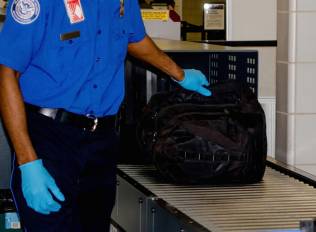
    Akeem Rasheen Lewis allegedly flew into the Queens, New York airport on Sept. 28 with three bottles of liquor in his duty-free bag, according to Customs and Border Protection. But agents at the airport noticed that the bottles appeared to be tampered with, and they pulled Lewis aside to a private search room where they allegedly found three powdery packages wrapped in clear plastic. 

    “This seizure demonstrates the dynamic border environment in which CBP officers operate at JFK,” said Frank Russo, the agency’s New York Field Operations acting director. “Our officers are determined to adapt and respond to these threats in an effort to protect the American people.”

    Lewis was arrested and turned over to Homeland Security Investigations. 

    Though the boozy bust raised some eyebrows, it’s not the agency’s weirdest—not even by a long shot. 

    Customs and Border Protection officials routinely intercept drugs and other illicit supplies stashed creatively inside vegetables, vehicles and people. 

    In 2017, officials uncovered more than $30,000 of pot hidden inside a hearse traveling near Tombstone, Arizona (yes, really). That same year, they turned up 40 pounds of meth hidden in the bumpers of a car in Texas. In another bust, authorities found 80 pounds of pot and coke hidden inside buckets of grease near the Mexican border. 

    Then there were the cans of tuna and corn actually filled with seven pounds of blow, the shipment of lettuce covering 3,700 pounds of pot, the speaker box full of heroin and the shipment of key limes that were actually poorly disguised packets of marijuana. And that was all just in 2017. 

    One of this year’s juiciest border busts happened in the spring, when agents in Texas stopped a tractor-trailer hauling 41 pounds of heroin hidden inside a supposed shipment of tomatoes

    The 18-wheeler was trying to pass through the checkpoint at the Pharr International Bridge when drug-sniffing dogs got a whiff of something amiss. Inside, they found roughly $1.6 million of smack. 

    Even though there are some consistent favorites when it comes to smuggling, traffickers in recent years have branched out and gotten creative, turning to drones, catapults and air compression guns. And, to get around border walls and vigilant agents, smugglers have started using speedboats to zip over from Mexico and bring in clandestine supplies, according to a New York Times report last year.

    From 2011 to 2016, authorities detected more than 300 such attempts to traffic by sea—and that’s only the ones they caught. 

    View the original article at thefix.com

  • "Dilbert" Creator Addresses Son’s Apparent Fentanyl Overdose

    "Dilbert" Creator Addresses Son’s Apparent Fentanyl Overdose

    “If you don’t have any personal experience with opioid addiction, it doesn’t look like anything else you’ve ever seen,” Adams said.

    Cartoonist Scott Adams is grieving the loss of his stepson, who died of an apparent fentanyl overdose last weekend. On a live video stream Monday, Adams described the moment he found out about 18-year-old Justin’s death and the path that led his son to his demise.

    “Yesterday I got a call… from my ex-wife who told me that my stepson, the little boy that I raised from the age of two, was dead,” said Adams, better known as the creator of the Dilbert comic strip.

    “He died last night… in his bed from what appears to be a fentanyl overdose. I got to watch my dead, blue, bloated son taken out on a stretcher in front of his mother and biological father.”

    Justin had a fentanyl patch on his arm, Adams said. “Fentanyl probably killed my son yesterday.”

    Justin had struggled with his drug use for years. “We weren’t surprised, because he’d had a long battle with addiction since he was 14,” said Adams.

    A traumatic injury as a young man had changed him completely. “He had a very bad head injury when he was 14 from a bicycle accident. His behavior changed after the accident,” said Adams. “He sort of lost his ability to make good decisions… He lost his impulse control, he lost his fear.”

    His family couldn’t help him, Adams said, especially because was never ready to seek help. “He never wanted to get better. From the time he started doing drugs, he wanted to do more drugs and that’s all he wanted.”

    Adams described what it’s like to see a loved one lost in addiction. “If you don’t have any personal experience with opioid addiction, it doesn’t look like anything else you’ve ever seen,” he said in the emotional live stream. “It turns people into walking zombies who quite clearly are not in their own mind and are not in control of their actions.”

    Fentanyl is a pharmaceutical painkiller said to be 50-100 times stronger than morphine. Because of its high potency and the growing demand for opioids, an illicit market for fentanyl has emerged. It is said to have fueled the rise in opioid-related deaths over the years.

    In 2016, the Centers for Disease Control and Prevention (CDC) recorded 63,632 drug overdose deaths in the U.S.—42,249 of them involved prescription and illicit opioids, including fentanyl.

    Adams, who’s made a name for himself as a conservative pundit of some sort, goes on to “call for [the] execution” of the people who according to the U.S. government are to blame for the fentanyl crisis—Chinese suppliers.

    Adams stoically explains that executing “Chinese executives” of companies who produce and distribute illicit fentanyl “would be a great step.”

    View the original article at thefix.com

  • Intoxicated Birds Cause Trouble In Minnesota

    Intoxicated Birds Cause Trouble In Minnesota

    Bird experts blame seasonal migration for the abnormal behavior while others believe fermented fruit is the culprit.

    Are they two wings to the air or three sheets to the wind? 

    A northern Minnesota town has been plagued by drunk and disorderly birds wreaking havoc on the friendly skies over Gilbert. 

    But—believe it or not—it was the town’s police department that flagged locals to stop calling in about the two-winged town drunks.

    “The Gilbert Police Department has received several reports of birds that appear to be ‘under the influence’ flying into windows, cars and acting confused,” officers wrote on Facebook. “The reason behind this occurrence is certain berries we have in our area have fermented earlier than usual due to an early frost, which in turn has expedited the fermenting process.”

    Typically, the birds would have already migrated away by the time the berries are at their most boisterous-making. But even if there appears to be some potential Flying While Intoxicated violations underway, police asked citizens not to call for help—unless they see “Big Bird operating a motor vehicle in an unsafe manner” or “other birds after midnight with Taco Bell items.” 

    Short of that, the best approach is to wait patiently for the booze to wear off, police said, as birds tend to sober up quickly. 

    Despite the well-received note, some experts had their doubts, telling the New York Times that the berries may not really be to blame for the birds’ boozy behavior.

    Instead, they credited any avian-versus-window wrecks to big seasonal migrations passing through the town and said it would simply be too early in the season for fermenting fruit to be the culprit.

    “I think this week everybody is yearning for something that we can all laugh at together,” Duluth-based bird expert Laura Erickson told the Times. “Drunken birds sound funny, and they are funny.”

    Even if these particular birds aren’t drunk, there’s some evidence they can turn a little tipsy from fermented fruit, according to the Washington Post

    “They just get sloppy and clumsy,” long-time birder Matthew Dodder told the paper. “They have actually fallen out of trees on occasion.”

    Some species—like robins and thrushes—are more apt to engage in drunken debauchery than others. But, as yet, there’ve been no reports of birdies in barroom brawls. 

    View the original article at thefix.com