Tag: News

  • Couple Accused Of Running Mobile Home Drug Drive-Through

    Couple Accused Of Running Mobile Home Drug Drive-Through

    A string of overdose cases led authorities back to a mobile home with a makeshift drug-dealing drive through.

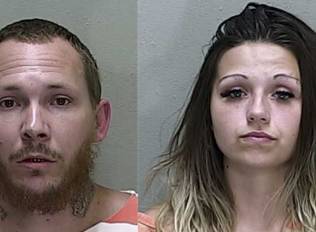
    Authorities busted a drug-dealing couple in Florida who were found running a drive-through service for illicit drugs out of the kitchen window of their mobile home. The drive-through experience was complete with signs directing traffic flow and open/closed signs.

    William Parrish Jr., 32, and McKenzee Dobbs, 20, reportedly put together the whole system, according to Ocala Police, to prevent their business from drawing unwanted attention from customers constantly entering and exiting their abode. But several overdoses in the area, presumably by their products, were what finally brought the long arm of the law to their door.

    “We were seeing some overdose incidents that were happening in this particular area, specifically at this particular location,” said Capt. Steven Cuppy of the Ocala Police. “There [were] some heroin sales that were going on there. Subsequently, through the investigation, we were able to determine that product was laced with fentanyl.”

    Parrish has been charged with driving under the influence, keeping a dwelling used to sell drugs, possession of drugs with intent to sell and resisting arrest without violence. Dobbs was slapped with keeping a dwelling used to sell drugs, possession of drugs with intent to sell, possession of fentanyl and possession of fentanyl with intent to sell.

    Parrish’s father, William Parrish Sr., claimed his son was trying to get his life back on track and was visiting a methadone clinic. “He’s been trying to get himself straightened out,” Parrish Sr. said.

    Parrish Sr. maintains that the reports of the overdoses are “a lie.”

    This isn’t the first time dealers have tried to use the convenience of a drive-through to do business. Last year, a pair of Burger King employees were caught using the fast food chain’s drive-through to deal cannabis.

    Customers in the know would speak to the drive-through in code, asking if “nasty boy” was working and, if so, if they could have their “fries extra crispy.”

    This was the cue for Garrett Norris, 20, and Meagan Dearborn, 19, to slip a little bit of marijuana in with the order and collect the payment at the second window. The pair were caught in a police sting, though Dearborn later claimed that she simply handed over the food and never knew what was stashed inside.

    View the original article at thefix.com

  • John Goodman Dishes on Sobriety, Roseanne Barr & Showbiz

    John Goodman Dishes on Sobriety, Roseanne Barr & Showbiz

    The 66-year old-character actor gave up alcohol in 2007 and still attends Alcoholics Anonymous meetings almost every day.

    John Goodman, 66-year-old character actor and Roseanne star, shared details about his life, including his struggles with alcohol, in an interview with The Sunday Times.

    Goodman now lives in New Orleans with his wife, Annabeth. Despite an earlier prediction that his career would have dried up by now, he has roles on HBO’s The Righteous Gemstones and BBC2’s Black Earth Rising.

    However, his life may not be as idyllic if he had not gotten his alcoholism under control, he revealed.

    “I was an alcoholic parent. If I saw a bottle of vodka I had to have it, it was a compulsion,” he told The Times. “My wife had given up on me, I sometimes wondered if she was just waiting for me to die. She’d had enough.”

    Goodman gave up alcohol in 2007 and has been sober since then. He says he still goes to Alcoholics Anonymous almost every day. “You never beat it, it’s a daily thing,” he said.

    When the interviewer suggested that beating alcoholism must have taken a lot of willpower, Goodman declined to take credit.

    “It didn’t have anything to do with will. It just grew old,” he admitted. “I was unhealthy and I was hurting people and I tired of it.”

    Giving up alcohol also gave way to healthier living for Goodman. He began to eat less and exercise more, and despite two knee replacements is feeling the best he’s felt in years.

    “I do about 40 minutes on an elliptical machine every day. And I don’t eat as much as I used to. I was eating alcoholically—with both hands,” he said, adding that he does not follow any special diet plans. “I just eat smaller portions.”

    His career, and happiness, recently took a hit with the cancellation of the Roseanne revival due to a racist tweet by the show’s titular star, Roseanne Barr.

    “I was broken-hearted, but I thought, ‘OK, it’s just show business, I’m going to let it go.’ But I went through a period, about a month, where I was very depressed,” he revealed. “I’m a depressive anyway, so any excuse that I can get to lower myself, I will. But that had a great deal to do with it, more than I wanted to admit.”

    He did not expect the network, ABC, to react the way it did.

    “I was surprised. I’ll put it this way, I was surprised at the response. And that’s probably all I should say about it,” he said, pausing. “I know, I know, for a fact that she’s not a racist.”

    View the original article at thefix.com

  • Can Ketamine Use Trigger Opioid-Like Dependency?

    Can Ketamine Use Trigger Opioid-Like Dependency?

    Researchers investigated whether ketamine works on depression by acting like an opioid in the brain.

    Though ketamine has gained the support of some mental health professionals as a possible therapy for depression, a new study suggests that the drug’s anti-depressive qualities may also have a hidden and potentially dangerous side effect: ketamine may offer relief from depressive symptoms by activating the body’s opioid system, which in turn may make some users dependent upon it, like an opioid.

    In an editorial that accompanied the study, Dr. Mark George, professor of psychiatry, radiology and neuroscience at the Medical University of South Carolina, wrote, “We would hate to treat the depression and suicide epidemics by overusing ketamine, which might unintentionally grow the third head of opioid dependence.”

    The study, conducted by researchers from Stanford University and published in the August 2018 edition of the American Journal of Psychiatry, was comprised of a double-blind crossover of 30 adults with treatment-resistant depression, which was defined as having tried at least four antidepressants and receiving no benefit from them.

    The authors looked at 14 of the patients—of which 12 had received, in randomized order, two doses of 0.5 mg of ketamine—once after receiving 50 mg of naltrexone (or Vivitrol) which blocks the brain’s opiate receptors and diminishes cravings for opioids; and once after receiving a placebo instead of the naltrexone—with the injections occurring about a month apart. 

    The goal of the study was to determine whether the naltrexone and ketamine combination would reduce the latter drug’s antidepressant qualities, or its dissociative or opioid-like response.

    The authors’ analysis found that when patients received the placebo/ketamine combination, they experienced what Live Science called a “dramatic reduction” of their depressive symptoms. But the naltrexone/ketamine combination appeared to have no effect on their symptoms.

    Additionally, those participants who received naltrexone experienced the dissociative effects of ketamine, which include hallucinations, which prompted the authors to cut the study short to avoid exposing more participants to a “clearly ineffective and noxious combination treatment,” as the study noted.

    The scope of the study was small, and as George (who was not involved in the study) noted, additional research is required in order to determine if the ketamine’s antidepressant qualities are caused by its impact on opioid receptors or another receptor. He ultimately expressed caution in regard to using ketamine for the treatment of depression.

    “Ketamine clinics that do not focus on accurate diagnosis, use proper symptom rating instruments and discuss long-term treatment options are likely not in patients’ best interests,” he wrote in the editorial. “We need to better understand ketamine’s mode of action and how it should be used and administered.”

    View the original article at thefix.com

  • Inside California's Massive Addiction Treatment Overhaul

    Inside California's Massive Addiction Treatment Overhaul

    Medi-Cal recipients will now have expanded access to addiction treatment.

    The California Health Care Foundation released a report on August 3 this year outlining the state’s new approach for residents using Medi-Cal and seeking substance abuse treatment options.

    California is the first state in the United States to use the new health care system structure, in a five-year pilot program authorized by the federal Centers for Medicare and Medicaid Services.

    Medi-Cal is California’s low-income health insurance, and previously covered very few addiction treatment services. In addition, patients had no database to explore what treatment plan would be best for their needs.

    A new system, called Drug Medi-Cal Organized Delivery, ensures that counties who participate can offer many more services to people struggling with addiction, as well as coordinate, manage and evaluate quality of care in those services.

    A huge leap forward is the increase in payment to treatment providers, allowing more access to various types of treatment. In California there are over 10 million people using Medi-Cal health insurance.

    “It’s been an enormous change,” William Harris, assistant regional manager of Riverside County’s substance abuse treatment program, told California Health Report. “We’re operating under an entirely new paradigm and are able to expand services and be more inclusive and better meet the needs of the population of our county.”

    Nineteen California counties have adopted the program with 21 more scheduled to do so in upcoming months. These counties represent 97% of the state’s Medi-Cal population.

    The California Health Care Foundation study looked at the four 2017 adopters of the new Medi-Cal system, including Riverside, Los Angeles, Marin and Santa Clara counties. Co-author Molly Brassil told California Health Report that the Medi-Cal program report was a way to access the strengths and weaknesses of the system.

    “This report sort of tells the story to other counties that, yes, (the implementation) is not without challenges and it isn’t easy, but it’s doable,” she affirmed. “I was taken aback by how positive all the counties were given the tremendous lift it is for all of them.”

    The newly offered services have induced a flood of user demand. In Riverside there was a large volume of calls after launching a hotline to screen members for substance use disorders and refer them for possible treatment. Since the inception of the program in 2017, Riverside has had to triple its staff to meet growing demand.

    The new system takes current research and implements it into their model, by treating substance use disorder like any other medical illness.

    Brassil noted to California Health Report that the goal is for substance abuse screening and treatment to become a mainstream part of all health care.

    The Medi-Cal program is working, and Brassil would like to see it put in place for good. “We’ve heard from folks overall that this is the right thing to do. It’s hard, but that doesn’t mean it’s not worth doing.”

    View the original article at thefix.com

  • Stop Illegally Selling Opioids Online, FDA Warns

    Stop Illegally Selling Opioids Online, FDA Warns

    Over the summer, the FDA has issued similar warnings to 70 websites. 

    The Food and Drug Administration issued a warning this week to the operators of 21 websites that the administration says sell mislabeled and illegal opioids to Americans. 

    The websites, which are run by four companies, have been “illegally marketing potentially dangerous, unapproved, and misbranded versions of opioid medications, including tramadol,” according to a press release issued by the FDA on Tuesday (August 28). 

    “The illegal online sale of opioids represents a serious risk to Americans and is helping to fuel the opioid crisis. Cutting off this flow of illicit internet traffic in opioids is critical, and we’ll continue to pursue all means of enforcement to hinder online drug dealers and curb this dangerous practice,” FDA Commissioner Scott Gottlieb said in the news release.

    Over the summer, the FDA has issued similar warnings to 70 websites. 

    “The FDA remains resolute in our promise to continue cracking down on these networks to protect the public health,” Gottlieb said. “We have more operations underway, and additional actions planned. We are also working closely with legitimate Internet stakeholders, including leading social media sites, in these public health efforts.”

    People who buy their opioids online can often wind up with expired, counterfeit or contaminated pills, according to the FDA. Some of the pills are marketed under one name, but are really just pressed fentanyl, a dangerous synthetic opioid. On CNBC’s Squawk Box, Gottlieb said that online sales are making the ongoing opioid crisis worse.

    “As we see doctors prescribe fewer opioids, we’re fearful that more and more of the new addiction is going to shift to illicit sources, and a lot of those illicit sales are taking place online,” he said on Tuesday.

    The four companies that received warnings on Tuesday were CoinRX, MedInc.biz, PharmacyAffiliates.org and PharmaMedics. They have 10 days to respond to the FDA’s letter, outlining the specific actions that they will take to avoid selling illegal opioids to Americans. If the companies do not respond they may face legal action. 

    On Wednesday, Gottlieb said that the FDA will continue to aggressively pursue companies and practices that make opioids too easily available. 

    “The reason that we find ourselves with a crisis of such proportion is that as a medical profession, we’ve been one step behind its sinister advance,” he said in a press release.

    “Collectively, we didn’t take all the steps we could, when we could, to stop the advance of this crisis. We shunned hard decisions. As a profession, providers were too liberal in our use of these drugs well past the point where there were signs of trouble, and the beginning of a crisis of addiction. I’m committed to making sure that we don’t perpetuate these mistakes of the past. And so, when we see this crisis taking new twists and turns, we’ve acted swiftly.”

    View the original article at thefix.com

  • Singer JoJo On Mental Health: I Named My Depression Burlinda

    Singer JoJo On Mental Health: I Named My Depression Burlinda

    In a recent Instagram post, the pop star described the self-destructive habits that fueled her depression and anxiety.

    Depression and anxiety affects millions of Americans—and celebrities are not immune. Recently Noah Cyrus, Demi Lovato, Ariana Grande and Emma Stone were among a slew of young artists who’ve been public about their inner struggles.

    Now, singer JoJo (born Joanna Levesque) expanded on her experience with depression—which she nicknamed “Burlinda”—in a recent Instagram post.

    In the caption accompanying a candid photo of herself, the “Too Little Too Late” singer announced that she will log off of Instagram “for the week to see how it impacts my mental/emotional state.”

    “There’s no peace inside the anxious mind. Sporadically, for years, depression and anxiety have convinced me I’m unworthy of love, patience, (real) self-care, and forgiveness. Made me question if I’m ‘good enough’ to do anything consistently. Made it hard to follow through and to have healthy long-lasting romantic relationships without sabotaging them,” the 27-year-old singer wrote.

    Levesque described the self-destructive habits that fueled her depression/void, named Burlinda. “In so many ways I’ve invited [Burlinda] to stick around… feeding her instantly gratifying treats that keep her growing… late night food binges, mind-altering substances, gossip, sex, comparing my life to what I see my peers doing on social media, etc.”

    JoJo’s next steps include “changing habits that no longer serve me, reclaiming my time, re-evaluating the relationships in my life.”

    “I love to sing and perform more than anything I’ve ever loved and I’ve always wanted to be the soundtrack to your lives,” she wrote. “But sometimes I feel paralyzed. Time for a reset. I deserve me at my best. So do you.”

    In past interviews, JoJo addressed her parents’ history of alcoholism and addiction, as well as her own struggles with drinking.

    “(My 2015 single) ‘Save My Soul’ is a song about addiction, and I grew up seeing addiction very close to me: Both my parents have struggled with it. So as a kid, you don’t kinda know when the bottom is going to fall through or what’s gonna happen next,” she said.

    The song is “about feeling powerless, and I’ve struggled with addiction in different forms, whether it’s addiction to love, to a person who’s not good for you, to food, to negative feelings,” she said.

    She, too, has been down dark paths. “I’ve definitely abused alcohol; I’ve been depressed. You can just kind of go down a black hole and find yourself addicted to almost anything,” she said.

    “For a while, I coped by drinking too much. I wanted to get out of my mind. I wanted to stop picking myself apart. I just wanted to feel good, to chase that high. I wanted to stop worrying about my career.”

    View the original article at thefix.com

  • Moby, Steel Panther To Appear At Rock To Recovery Concert In September

    Moby, Steel Panther To Appear At Rock To Recovery Concert In September

    Funds from the September 15th event will go to Rock to Recovery’s nonprofit branch, which provides treatment to people in need.

    The third-annual Rock to Recovery benefit concert will take place on Saturday, September 15, at the Fonda Theatre in Hollywood, raising money for treatment and celebrating sober living. 

    “By having an event where we can all share not only our darkness, but our strength and solution, and celebrate through live music and dancing and even mosh pits, is quite a healing form of expression,” said former Korn guitarist Wes Geer, who founded Rock to Recovery, which aims to harness the healing power of music. 

    Photo courtesy of Rock to Recovery

    The concert brings together people who are newly in recovery and rock stars who have been open about their sobriety journey. Funds from the event go to Rock to Recovery’s nonprofit branch, which provides treatment to people in need. 

    “I heard recently that the opposite of addiction is connection,” Geer said. “For all the people this event supports: wounded warriors, mental health, addiction, to at-risk youth—these are all issues of feeling lost and disconnected and not having a place in the world.”

    Corey Taylor from Stone Sour receiving the Rock to Recovery award in 2017.

    At the concert, people who have felt disconnected can come together and celebrate their new lives. This is particularly important for people in early recovery, Geer said. About half of the people attending the concert will still be in treatment, he noted. 

    “Imagine being in treatment and getting to experience a sober concert with known musicians, many of whom are also in recovery,” he said. “I go back to what my mindset was when I was newly in recovery, which is once you get sober life is over and boring. These concerts prove that mindset wrong. When you come see such an elaborate event supported by so many amazing humans, that is 100% sober and 100% rad, it is absolutely magical.”

    Photo courtesy of Rock in Recovery

    The concert will be hosted by Bryan Fogel and Steel Panther will headline the event. This year Moby will receive the Rock to Recovery award.

    “Moby is an iconic megastar, who has been open about the struggles he’s faced in his own addiction and how dark and humiliating they can be,” Geer said. “When we can honor somebody like him we let people in attendance redefine what their belief of a rock star is. It can be a sober person who’s iconic, an incredible artist in an industry rife with challenges. This helps others have hope not only for a muted version of recovery life, but an absolutely stellar one!” 

    Tickets for the concert on sale now

    View the original article at thefix.com

  • International Overdose Awareness Day Is August 31st

    International Overdose Awareness Day Is August 31st

    The global event helps erase stigma about drug-related deaths while spreading the word about overdose prevention.

    This year’s International Overdose Awareness Day is Friday, August 31. It’s not only a day to remember the lives lost, but to remind each other that overdose deaths are preventable.

    Since 2001, people around the world have recognized Overdose Awareness Day by holding candlelight vigils, free naloxone trainings, and more. These are opportunities for people who have been affected by a drug overdose to come together, remember their loved ones, and empower each other to prevent more deaths.

    Fatal drug overdoses are most prevalent in North America, but it’s a global phenomenon. According to 2017 figures from the United Nations Office on Drugs and Crime (UNODC), there were an estimated 190,000 premature deaths caused by drugs.

    Opioids accounted for the majority of these drug-related deaths, and were preventable “in most cases,” according to the report.

    North America has the highest drug-related mortality in the world, accounting for 1-in-4 drug-related deaths globally.

    Opioids (which include prescription painkillers and heroin) may be the most prominent cause of a drug overdose currently—but alcohol, stimulants, and other prescription medication can also cause a person to overdose.

    When taking prescription medication, it is important to know the correct dose and time to take the medication. Certain drugs do not react well with each other—it’s important to know this when taking prescription medication as well.

    With regular drug use, one will develop a tolerance to the drug. Thus, the body may be more vulnerable to an overdose after a period of abstinence, when one’s tolerance has had a chance to go down. This is why, for example, one is at a higher risk of overdose after a period of detox or prison.

    The official website of International Overdose Awareness Day advises one to “always” call for emergency help if they believe a person is overdosing. Symptoms that indicate that a person is in need of emergency help are not limited to being unconscious.

    A person may also be in trouble and need emergency care if they are having a seizure; are extremely paranoid, agitated and/or confused; or experiencing severe headache, chest pain, or breathing difficulties. Showing one or two of these symptoms is a cause for concern.

    Snoring or gurgling are also potentially dangerous symptoms, as they could be a sign that a person is having trouble breathing. Bystanders are advised to try and wake up the individual immediately. And if they do not wake up, paramedics should be called.

    Naloxone is a common tool for reversing opioid overdose. Events all across the US for this year’s Overdose Awareness Day include free naloxone trainings, to equip people with the skills to save a life.

    Harm reduction organizations across the country have worked to equip as many people with naloxone and the training to go with it.

    In San Francisco, the DOPE Project (which is affiliated with the Harm Reduction Coalition) and its partners have trained 11,667 people to administer naloxone.

    The organization reported that between the fall of 2003 and June 2018, 5,149 overdoses were reversed.

    View the original article at thefix.com

  • Mom Starts Addiction Recovery Photo Project After Son’s Overdose Death

    Mom Starts Addiction Recovery Photo Project After Son’s Overdose Death

    The photo documentary project aims to promote recovery and reduce the stigma surrounding addiction. 

    Simone Ochrym lost her 26-year-old son the same day that she had begged for him to return to treatment for his opioid addiction.

    After a decade of drug abuse, recovery “was not in the cards” for Ochrym’s child. The Democrat and Chronicle interviewed Ochrym about her new photo project that includes 15 portraits and narratives of people in recovery from addiction.

    The project, entitled “ChasingNirvanaClean: The Addiction Recovery Project,” was birthed from a question: “I wanted to know, ‘How and why did you go from being an active user to wanting to go into recovery?’” Ochrym said.

    The photo documentary debuts September 7th, nearly two years after her son’s death. The photos are displayed at Flower City Arts Center in Rochester, New York.

    The project’s website states: “The purpose is to explore the how and the why people enter and stay in addiction recovery. It is by exploration of those in addiction recovery that we will find the answers to fight emerging and chronic addiction in our communities.

    The goals of the ‘ChasingNirvanaClean’ project are promoting that recovery is possible for all types of addiction, reducing the social stigma of addiction, and promoting peer-mentoring models of addiction treatment, 12-step programs, and old and new diverse methods of addiction recovery.”

    One documentary subject is Jeff Williams, who lost both his older brother and an uncle to opioid overdose. Jeff began using at age 12 or 13, and his addiction progressed rapidly. After gaining sobriety through a rehabilitation outpatient program, Jeff began drinking again in his early 20s. It was when he lost his best drinking buddy that he realized how isolated and self-destructive he felt.

    On “ChasingNirvanaClean,” Jeff says, “I had one last drink the night before I got sober. I went to a psychiatrist and told him I needed help. He gave me some medications for depression and generalized anxiety. That was when I got sober.”

    Jeff continued to struggle with mental health issues and it was not until he fully embraced therapy and medication that he was able to achieve sobriety and stability.

    Jeff’s imparted advice to the loved ones of someone with active addiction, “The best thing you can do is show your love, your compassion, and if they made that decision to become sober, they can come to you for that help. Showing that you will accept all of them, even the bad parts, makes it less scary for them to ask for help and can encourage them to get the help they need.”

    “I always see people either working in prevention or working in crisis, but I think the only way to figure out prevention is to hear the stories of people who have achieved long-term recovery,” Ochrym told the Democrat and Chronicle.

    View the original article at thefix.com

  • Children's Advil Recalled Due To Potential Overdose Risk

    Children's Advil Recalled Due To Potential Overdose Risk

    The company was alerted to a labeling mishap through customer complaints.

    Pfizer is recalling a batch of children’s Advil, due to a labeling mishap that may increase the risk of accidental overdose of ibuprofen.

    Pfizer Consumer Healthcare is recalling one lot of Children’s Advil Suspension, which was distributed in May and June. The bubble gum-flavored, four fluid-ounce bottles have a November 2020 expiration date and are marked R51129. The UPC number is 3-0573-0207-30-0.

    According to CBS News, the company was alerted to a labeling mishap through customer complaints. While the label’s instructions measure doses in milliliters, the plastic cup that comes with the packaging is measured in teaspoons.

    One teaspoon is the equivalent of approximately five milliliters. According to Pfizer, of the 28,000 bottles targeted in the recall, one-third of the lot never made it to retail stores. The company has alerted wholesalers, distributors and retailers about the recall, according to the Madison Patch.

    Children’s Advil is commonly used to treat fevers and for minor pain relief from colds, flu, sore throat, headaches, and toothaches.

    It is possible to overdose on ibuprofen in both children and adults. In rare cases, an ibuprofen overdose can be fatal.

    The recommended dosage of ibuprofen for children depends on the child’s weight and the formulation of the medication, which comes in chewable tablets, drops and liquids, according to Healthline.

    Common symptoms of an ibuprofen overdose include nausea, vomiting, headache, drowsiness, blurred vision and dizziness.

    In case of an ibuprofen overdose, contact your local poison center at 1-800-222-1222.

    For information on how to return an affected product, call Stericycle at 1-800-805-3093. And for information about the recall, call Pfizer Consumer Healthcare at 1-800-882-3845.

    A similar medication that is used to relieve fever and pain in children is acetaminophen (most commonly known by the brand Tylenol). Like ibuprofen, it is possible for children and adults to overdose on acetaminophen. Too much acetaminophen can lead to life-threatening liver problems, according to the Mayo Clinic.

    To avoid acetaminophen overdose in children, giving a child acetaminophen while they are taking other medications containing acetaminophen is not recommended. Children should only take children’s formulations of acetaminophen.

    Child-resistant caps can also help prevent overdoses of these medicines.

    View the original article at thefix.com