Tag: News

  • Smoking Pot Can Disqualify You From Cannabis Jobs

    Smoking Pot Can Disqualify You From Cannabis Jobs

    “Sometimes you can get by with a low-level, misdemeanor possession charge, but not always,” said one medical marijuana job recruiter.

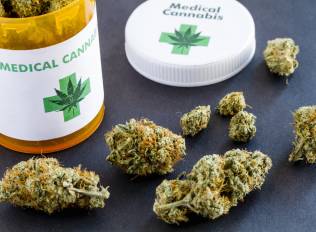
    Medical marijuana is creating about 25,000 new jobs in Florida, but smoking cannabis disqualifies many people from working in the industry, according to a report by The Orlando Sentinel

    “We get hundreds of applications for every job opening we have, and maybe only 10% of those are qualified and meet the legal requirements,” said Michelle Terrell, spokesman for Curaleaf, a Massachusetts-based company that opened a dispensary in south Orlando in August. 

    In Florida, state law requires that marijuana workers have a clean criminal background check with no felonies. Drug-related offenses, including smoking marijuana, can derail applicants, said James Yagielo, founder of HempStaff, a Miami-based medical marijuana recruiting firm.

    “Sometimes you can get by with a low-level, misdemeanor possession charge, but not always,” Yagielo said.

    Because of this, he advises people not to mention their illicit drug use in an interview, even if they feel that their experience with marijuana helps explain their qualifications. 

    “For a lot of people at the entry level, they say they want to get into this industry because of a passion for cannabis,” he said. “We usually tell them they should avoid bringing up any illegal activity regarding cannabis in an interview.”

    Because of the more intense screening process, the marijuana industry pays slightly more than other service industry jobs in Florida, with entry-level wages between $11 and $15 an hour. This makes the industry appealing to many people who aren’t intimidated by the requirements. The industry already created nearly 3,000 jobs during 2017 and is expected to grow to 25,000 jobs by 2022.

    “We need customer-experience specialists, we need drivers and we’ll be expanding our phone operations,” said Scott Klenet, a spokesperson for Knox Medical, a cannabis dispensary that is “aggressively hiring.” 

    “And what we find is that people come from all walks of life,” Klenet added. 

    Catie Callahan, 34, gave up a management job at a national grocery chain to open the new Orlando Curaleaf dispensary. She said that she sees cannabis as a business opportunity that she did not want to pass up.

    “I took a class on medical marijuana regulations last year, and I’ve been keeping my eyes open for an opportunity,” she said. 

    She considered the way that working in medical marijuana would impact her career and ultimately decided that the benefits outweighed the risks. 

    “There is a stigma, but I’m not worried about leaving this business and not being able to get a job because I worked in medical marijuana.”


    View the original article at thefix.com

  • Tunnel Beneath KFC Connects Drug Smugglers in Arizona, Mexico

    Tunnel Beneath KFC Connects Drug Smugglers in Arizona, Mexico

    The county sheriff’s department called the discovery a “heavy blow to that transnational criminal organization that built this tunnel.”

    A routine stop for an equipment violation led law enforcement in Arizona to an operation that numerous media outlets compared to the AMC series Breaking Bad, with a near-600-foot tunnel that connected a former fast food restaurant to a private home in Mexico for the purposes of trafficking narcotics.

    Police pulled over Jesus Ivan Lopez Garcia on August 13 after he was observed removing several containers from an abandoned Kentucky Fried Chicken (KFC) franchise located one mile from the U.S.-Mexico border; a search of the vehicle turned up more than 200 packages of various narcotics, including 6.8 pounds of fentanyl.

    This led to a search of the restaurant, where a tunnel traversed the border to a home in San Luis Rio Colorado, Mexico. The county sheriff’s department described the discovery as a “heavy blow to that transnational criminal organization that built this tunnel.”

    According to CNN, court documents showed that Lopez Garcia had purchased the former KFC location in San Luis, Arizona in April 2018. The structure was described as “vacant in recent years,” which raised the suspicion of police when Lopez Garcia was seen taking the containers, including a tool box from the former restaurant and loading them into a trailer attached to a pickup truck.

    Officers then pulled him over for what was described as an unspecified equipment violation, and during the traffic stop, a K-9 officer alerted authorities to suspected drugs in the two containers.

    A search of the containers yielded more than 261 pounds of methamphetamine, 14 pounds of cocaine, 30 pounds of white heroin, 13.7 pounds of brown heroin and 6.8 pounds of fentanyl.

    Homeland Security Investigations (HSI) Special Agent in Charge Scott Brown told a CNN affiliate station in Arizona that the fentanyl “translates to over three million dosage units.” Authorities gave the total price of the drugs at more than $1 million.

    After obtaining a warrant, HSI conducted a search of the KFC location on August 14 and found an eight-inch hole with a depth of 22 feet.

    This led to a walkway that was five feet tall and three feet wide that ran 590 feet across the border to San Luis Rio Colorado in Mexico. Mexican authorities reported that a search of a residential property on August 15 found an entrance to the tunnel under a bed. 

    “There was no mechanism to physically come up to the small opening” in the KFC location, said Brown in a press conference. “The narcotics we believe were raised up by a rope [and] then loaded into the tool box and taken out of the abandoned restaurant.”

    Yuma Sector Chief Patrol Agent Anthony Porvaznik said that the tunnel will be filled with cement to keep others from using it.

    View the original article at thefix.com

  • No Amount Of Alcohol Is Safe To Drink, Game-Changing Study Reveals

    No Amount Of Alcohol Is Safe To Drink, Game-Changing Study Reveals

    Alcohol accounted for 20% of deaths in 2016, according to a new report.

    Even one drink occasionally may be one too many, researchers are now saying.

    This information came from the Global Burden of Diseases study, which is carried out at the University of Washington in Seattle, and was recently published in the Lancet medical journal

    According to the Guardian, the Global Burden of Diseases study is the “largest and most detailed research carried out on the effects of alcohol.”

    The researchers found that in 2016, alcohol led to 2.8 million deaths and was the leading risk factor when it came to premature mortality and disability in those ages 15 to 49, in which it accounted for 20% of deaths. 

    According to the study, current habits when it comes to alcohol “pose dire ramifications for future population health in the absence of policy action today. Alcohol use contributes to health loss from many causes and exacts its toll across the lifespan, particularly among men.”

    Researchers at the Institute of Health Metrics and Evaluation studied the alcohol intake from people in 195 countries using data from 694 different sources ranging from 1990 to 2016 to determine “how common drinking was.” 

    They then examined 592 worldwide studies involving 28 million people to determine the potential health risks associated with alcohol. 

    Specifically, the study found that alcohol consumption was a cause of cancer in those over age 50, especially women. According to previous research, one in 13 breast cancer diagnoses in the UK were related to alcohol.

    The study determined that across the world, 27.1% of cancer deaths in females and 18.9% in men over age 50 were connected to alcohol consumption. 

    Among those in younger age groups, causes of death linked to alcohol were tuberculosis (1.4% of deaths), road injuries (1.2%) and self-harm (1.1%).

    Additionally, about 2.4 billion people around the world drink alcohol. One-quarter of women drink, while 39% of men do.

    Senior author Emmanuela Gakidou of the University of Washington says that the results indicate that new policies on alcohol may be necessary in the future.

    “Our results indicate that alcohol use and its harmful effects on health could become a growing challenge as countries become more developed, and enacting or maintaining strong alcohol control policies will be vital,” she told the Guardian.

    Dr. Robyn Burton, of King’s College London, stated in a commentary in the Lancet that the study results were clear.

    “Alcohol is a colossal global health issue and small reductions in health-related harms at low levels of alcohol intake are outweighed by the increased risk of other health-related harms, including cancer,” she wrote. 

    Burton stated that when it comes to public policy, methods to reduce alcohol intake could include price increases, taxation and setting prices depending on the strength of the drink. She also stated that limiting alcohol marketing could help.

    Dr. Max Griswold, lead author of the study, said, “Previous studies have found a protective effect of alcohol on some conditions, but we found that the combined health risks associated with alcohol increases with any amount of alcohol.

    “The strong association between alcohol consumption and the risk of cancer, injuries, and infectious diseases offset the protective effects for heart disease in our study. Although the health risks associated with alcohol start off being small with one drink a day, they then rise rapidly as people drink more.”

    View the original article at thefix.com

  • Mom Accused Of Letting Teen Daughter Run Pot Shop From Bedroom

    Mom Accused Of Letting Teen Daughter Run Pot Shop From Bedroom

    Police reportedly uncovered 80 pounds of cannabis in the closet of the master bedroom.

    A 15-year-old girl is in state custody after sheriff’s deputies alleged that she made cannabis deals out of her bedroom, supported by her mother.

    On August 17, the Merced County Sheriff’s Office served a search warrant at the family’s Delhi, California home. The search uncovered 80 pounds of cannabis in the master bedroom closet and 12 “large marijuana plants” in the backyard growing in a “makeshift greenhouse,” according to sheriff’s deputies. A loaded AK-47 was also found.

    According to a statement posted on Facebook, during the investigation officers allegedly learned that “the 15-year-old daughter was given marijuana from her mother to use and sell from her bedroom.”

    In addition, officers found “packaged marijuana, edibles and other items associated with the sales and use of marijuana” that they say belonged to the 15-year-old girl.

    The girl and another minor have since been removed from the home by Child Protective Services. Two adults in the home have been arrested—Jose Reyes Martinez, 44, on suspicion of marijuana crimes, possessing an assault weapon and assault on a child; and Norma Angelica Alvarez, 44, on suspicion of marijuana crimes and child endangerment.

    Parents all across the United States have lost custody of their children for providing them marijuana, but unlike this particular case—as far as we know—it is often to treat debilitating disorders like epilepsy.

    One recent example happened in Macon, Georgia, where Suzeanna and Matthew Brill are fighting for custody of their son David, who suffers from seizures. The couple had illegally purchased cannabis to try and ease David’s seizures, after prescription medication had failed to make a difference.

    The family was on the waiting list for Georgia’s Low THC Oil Program, but couldn’t wait any longer.

    The parents say the cannabis was “a miracle” for David. “I was tired of seeing my kid half-dead all the time,” said Suzeanna. “[Marijuana] helped my son where all other options had failed.”

    Cannabis is illegal in the state of Georgia. Only possession of up to 20 fluid ounces of low THC oil by qualified residents is allowed. Seizure disorder, Crohn’s disease, multiple sclerosis and Parkinson’s disease are among the qualifying conditions for Georgia’s limited medical cannabis program.

    View the original article at thefix.com

  • Demi Lovato’s Alleged Dealer Claims She Knew Pills Were Risky

    Demi Lovato’s Alleged Dealer Claims She Knew Pills Were Risky

    Friends of Lovato’s said they became concerned when they learned that the singer had begun spending time with Brandon Johnson in April.

    The man who allegedly provided singer Demi Lovato with the pills that she overdosed on in July said that he warned the singer that the pills were “aftermarket” and that she knew the risks with taking them. 

    Brandon Johnson told TMZ that Lovato texted him at 4 a.m. on the day that she overdosed, asking him to come over. Johnson said that he brought pills over and warned Lovato that they were not pharmaceuticals, so they were likely to be stronger.

    TMZ has previously reported that Lovato’s overdose was likely caused by OxyContin pills laced with fentanyl and that Johnson got the pills from Mexico. 

    Johnson insinuated to TMZ that they had done drugs together in the past and that they had a sexual relationship.

    After freebasing the pills together, Johnson told TMZ that he and Lovato watched true crime TV. When he left around 7 or 8 a.m. Lovato was asleep but not in distress, he said. 

    However, when Lovato’s assistant arrived around 11:30 a.m. the singer was in respiratory distress. Paramedics responded and administered Narcan to the pop star who went on to spend two weeks in the hospital before going to rehab. 

    Johnson said that Lovato’s overdose had made him realize how dangerous the pills can be. He added that the incident was “a wake up call for [Lovato].”

    Friends of Lovato’s have told TMZ that Johnson is “bad news” and that they were worried when they learned that the singer had begun hanging around with him in April.

    Just a month before the two connected, Johnson was reportedly arrested with $10,000, a loaded semi-automatic handgun and drugs. However, it seems to have been common knowledge with the singer’s circle that Johnson was dealing Lovato pills. 

    After her overdose, Lovato took to Instagram to discuss her overdose. 

    “I have always been transparent about my journey with addiction,” she wrote. “What I’ve learned is that this illness is not something that disappears or fades with time. It is something I must continue to overcome and have not done yet.”  

    She thanked the hospital that cared for her, and her friends and family

    “I now need time to heal and focus on my sobriety and road to recovery. The love you have all shown me will never be forgotten and I look forward to the day where I can say I came out on the other side. I will keep fighting.”

    View the original article at thefix.com

  • Prince’s Family Sues Doctor Who Reportedly Prescribed Him Pain Pills

    Prince’s Family Sues Doctor Who Reportedly Prescribed Him Pain Pills

    The lawsuit alleges that the doctor had to treat Prince’s opioid addiction prior to do his death but “failed to do so.”

    The family of Prince (born Prince Rogers Nelson) is suing a doctor accused of playing a “substantial part” in the music icon’s death.

    According to the Midwest Medical Examiner’s Office, the official cause of Prince’s April 15, 2016 death was an accidental overdose of fentanyl.

    The family is suing Dr. Michael Schulenberg in Hennepin County District Court in Minnesota, to replace the lawsuit filed in April in Illinois, according to the family’s attorney.

    The lawsuit alleges that Schulenberg and others—including the hospital where Schulenberg was working at the time)—had “an opportunity and duty during the weeks before Prince’s death to diagnose and treat Prince’s opioid addiction, and to prevent his death.” However, the family states, “They failed to do so.”

    The lawsuit seeks unspecified damages in excess of $50,000, ABC News reports.

    Authorities say the doctor admitted to prescribing oxycodone a week before his death, under his bodyguard’s name to protect his privacy.

    However, Schulenberg’s lawyer, Amy S. Conners, said in a statement that the doctor “never directly prescribed opioids to Prince, nor did he ever prescribe opioids to any other person with the intent that they would be given to Prince,” the New York Times reported in April 2017.

    Investigators later stated that it was possible that Prince was not aware that the medication he was taking contained fentanyl.

    “In all likelihood, Prince had no idea he was taking a counterfeit pill that could kill him,” said Carver County Attorney Mark Metz this past April, while announcing that no criminal charges would be filed in the musician’s death. “Others around Prince also likely did not know that the pills were counterfeit containing fentanyl.”

    Many of the medications found in the musician’s home were not in the original container provided by the pharmacy. “The evidence demonstrates that Prince thought he was taking Vicodin and not fentanyl,” Metz stated. “The evidence suggest that Prince had long suffered significant pain, became addicted to pain medications but took efforts to protect his privacy.”

    Walgreens Co., where some of the prescriptions were filled, is also named in the family’s lawsuit.

    Schulenberg’s attorney Paul Peterson maintained that the doctor did everything he could for the musician. “We understand this situation has been difficult on everyone close to Mr. Nelson and his fans across the globe,” said Peterson. “Be that as it may, Dr. Schulenberg stands behind the care that Mr. Nelson received. We intend to defend this case.”

    View the original article at thefix.com

  • Scientists Dosed Artificial Brain With Meth For New Study

    Scientists Dosed Artificial Brain With Meth For New Study

    Scientists chose to use meth on the brain replica because much is still unknown about the the drug and its effects on the body.

    It’s no secret that certain drugs are bad for your brain. However, scientists at Harvard’s Wyss Institute for Biologically Inspired Engineering can now tell you exactly how bad meth is for you, after dosing an artificial brain with the drug and watching the results.

    To do this, researchers used organ chips, computer chips lined with living human cells that can be used to test how human organs function and react to substances.

    In this case, the researchers were focused on the blood-brain barrier (BBB). This filter normally allows some substances to pass into the brain, while keeping other potentially harmful substances out. Using drugs, including meth, can alter the BBB, making it easier for toxins to reach the brain, according to Motherboard

    To show this and study exactly how it works, researchers dosed a brain chip mimicking the function of the BBB with meth

    “Just like in the brains of people who choose to smoke meth, the BBB chips started to leak,” Kit Parker, professor of Bioengineering and Applied Physics, told Digital Trends. “That’s exactly what happens when you smoke meth—and why you shouldn’t.” 

    Ben Maoz, one of three lead study authors from the Wyss Institute, said that the team chose meth because it is known to be particularly harmful to the brain. 

    “Our primary reason for choosing this drug is that it is one of the most addictive drugs responsible for thousands of deaths,” Maoz said to Motherboard via email. “Given this tragic statistic, it is surprising that much is still unknown. Therefore, we sought to use this novel system to unveil the metabolic effect of meth on the different parts of the [neurovascular unit].”

    Researchers found that about 10% of the dose of meth went through the BBB, similar to what happens when people smoke meth. Researchers were then able to examine how parts of the brain communicate, giving them insight that they wouldn’t be able to glean without the organ chips. 

    “The novelty relating to organ chips is that they enable us to carry out what is essentially a ‘synthetic biology’ approach at the cell, tissue, and organ level,” said Donald Ingber, director of the Wyss Institute.

    “In this study, we could use this synthetic approach to break down a complex organ—in this case, the human brain—into individual sub-compartments of the brain microvasculature and normally tightly intertwined neuronal networks. Because we can separate out each compartment and control ‘ins and outs,’ while analyzing them with state-of-the-art analytical technologies, we were able to gain insights into how cells within these different compartments communicate with each other.”

    View the original article at thefix.com

  • Safe Injection Sites Get Green Light From California Lawmakers

    Safe Injection Sites Get Green Light From California Lawmakers

    “I am committed to opening one of these sites here in San Francisco, no matter what it takes, because the status quo is not acceptable,” said Mayor London Breed.

    Last week, California lawmakers green-lit a bill that would allow safe injection sites in San Francisco as part of a three-year pilot program. 

    The forward-thinking measure, authored by Assemblywoman Susan Talamantes Eggman and state Senator Scott Wiener, has already enjoyed support from local advocates and lawmakers.  

    “I am committed to opening one of these sites here in San Francisco, no matter what it takes, because the status quo is not acceptable,” Mayor London Breed said Monday

    Eggman voiced similar support for the proposed program. “Should we keep trying what has failed for decades,” she said in a statement, “or give San Francisco the choice to try something that we know saves lives, reduces disease, and saves money?”

    The city’s Director of Health Barbara Garcia estimated that San Francisco has more than 22,000 people using IV drugs. 

    Last year, a slightly broader version of the bill stalled in the state Senate. That iteration of the would-be law would have authorized six counties—Alameda, Humboldt, Los Angeles, San Francisco, and San Joaquin—to participate in the harm reduction program.

    The current version applies only to San Francisco:

    “This bill would, until January 1, 2022, authorize the City and County of San Francisco to approve entities to operate overdose prevention programs for adults that satisfies specified requirements,” the bill reads, “including, among other things, a hygienic space supervised by health care professionals, as defined, where people who use drugs can consume preobtained drugs, sterile consumption supplies, and access to referrals to substance use disorder treatment.”

    The revised version also retools the language, calling it an overdose prevention program instead of a safer drug consumption program. Whatever it’s called, greenlighting the program would not skirt federal drug laws and it’s not clear how the federal government would respond to such a program were it put into effect.

    “People are injecting drugs whether or not we intervene,” Wiener said, according to the San Francisco Examiner. “Safe injection sites provide people with an opportunity to inject in a clean, safe environment, with healthcare personnel available to prevent overdoses, and with an opportunity to offer people addiction, healthcare, housing, and other services.”

    Now, the bill is waiting for a vote in the state Assembly. The last time around, the lower chamber approved the bill 41-33, according to Curbed

    If the measure sails through the Assembly this time around, it’ll still need a signature from Gov. Jerry Brown before it becomes law, potentially taking effect at the start of next year.

    View the original article at thefix.com

  • Woman Reportedly Caught With 1.5 Million Lethal Doses Of Fentanyl

    Woman Reportedly Caught With 1.5 Million Lethal Doses Of Fentanyl

    A woman traveling from Los Angeles to New York City was reportedly caught with five pounds of fentanyl in a suitcase.

    Authorities in Kansas City arrested a woman at a bus station who was traveling across the country, from Los Angeles to New York, carrying five pounds of fentanyl—reportedly enough of the drug to cause 1.5 million lethal overdoses.

    Kansas City Police noticed 33-year-old Evelyn C. Sanchez was “intently watching” detectives as they searched through the luggage on the bus.

    When asked, Sanchez told authorities she was heading to New York for “maybe a week,” but the story fell apart when officers reportedly noticed she had not packed a lot of clothing in her luggage.

    Following her questioning, K-9 units sniffed inside the bus and indicated a suitcase near Sanchez’s seat on the bus. When the other bus passengers did not claim the suitcase as theirs, police asked Sanchez and she admitted it was hers before allowing officers to search it.

    Authorities noted that she seemed “very nervous.”

    When asked, Sanchez told police she had “drugs,” according to court records. She did not seem to know what exactly she had, “but it’s a lot.”

    Officers checked inside and did indeed find a lot of drugs—over five pounds of fentanyl, “capable of killing thousands of people,” according to Kansas City Police Chief Rick Smith.

    Local authorities cooperated with the Drug Enforcement Administration (DEA) in the investigation. The DEA estimates the amount of fentanyl could kill several orders of magnitude more people than Smith’s estimates, claiming the operation took “1.5 million lethal doses from the streets.”

    There’s no telling where the fentanyl was ultimately heading yet, but it was almost guaranteed to help drive up the number of overdose deaths in the United States and further exacerbate the impact of the opioid crisis.

    Of 72,000 overdose deaths in 2017, 50,000 of those were opioid-related—30,000 of which were from fentanyl or related synthetic opioids.

    The drug is even getting to people who don’t want them—of 907 samples of drugs sold as heroin in Vancouver, Canada, 822 contained fentanyl.

    The U.S. Attorney’s office says Sanchez is in federal custody and awaiting a court date to be scheduled.

    View the original article at thefix.com

  • Actor Noah Centineo: Sobriety Is A "Really Beautiful Experience"

    Actor Noah Centineo: Sobriety Is A "Really Beautiful Experience"

    “When I got totally clean, I was able to take responsibility for all my laziness, or my incompetence or not being super honest with myself.”

    Actor Noah Centineo is just 22 years old, but he’s already extolling the virtues of recovery.

    “I’m completely sober,” he says in a video circulating the internet, in which he appears to be interacting with fans on Instagram Live. “I’ve been totally clean since May 8th of this year, on the day before my 21st birthday.”

    Centineo, who appears in the film To All the Boys I’ve Loved Before—released this month on Netflix—shared that he’d been “partying quite a bit” since he was 17 prior to his decision to cut out drugs and alcohol from his life.

    “I was like, wow, maybe I should take a break. So I stopped doing all that,” he said. “And I found that a lot of problems that I was having in my life slowly—they didn’t go away—they just became way more apparent to me.”

    The “teen” heartthrob, who also appears as Camila Cabello’s love interest in her music video for “Havana,” quit cigarettes, cannabis, alcohol, and even got off his anxiety medication. He said that for him, sobriety offered a sense of clarity that he hadn’t had before.

    “I could identify my problems and, more so, what’s causing my problems,” he said. “It was always me. When I got totally clean, I was able to take responsibility for all my laziness, or my incompetence or not being super honest with myself. So that was a really beautiful experience for me, and it still is.”

    From his experience, he learned that a clear mind can help people who are struggling with something within. “If you’re going through some really tough stuff, my advice to you is to get completely clean,” he suggested. “If you drink, stop drinking. If you smoke, stop smoking. Just try it for like two months.”

    He related back to his own recovery. “I made some poor decisions and hurt some people that I really loved, and I was like… do I really want to keep doing things that hurt people that I deeply care about? The answer is no, not at all.”

    He continued, “And if I could stop that, if I make decisions when I’m drunk that I would never make when I’m sober, why would I drink? Especially if those decisions and actions and choices are hurting people?”

    Instead, the health-conscious actor suggested replacing drugs and alcohol with healthy habits. “I replaced all my habits with working out, yoga, eating better, and spending time alone,” he said.

    View the original article at thefix.com