Tag: News

  • DEA Wants More Medical Marijuana, Fewer Opioids To Be Produced In 2019

    DEA Wants More Medical Marijuana, Fewer Opioids To Be Produced In 2019

    The new quotas are in line with the federal government’s goal of cutting opioid prescriptions by one-third in three years.

    When setting quotas for marijuana and opioid production for 2019, the Drug Enforcement Administration (DEA) did the unexpected.

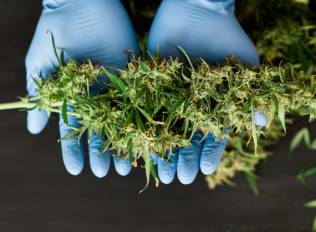
    The DEA is raising the quota of cannabis that can be grown in the United States from 1,000 pounds (in 2018) to 5,400 pounds for 2019, Forbes reported.

    And in an attempt to push back on the opioid crisis, the agency lowered the production quota of opioids including oxycodone, hydrocodone, oxymorphone, hydromorphone, morphine and fentanyl.

    The quotas represent “the total amount of controlled substances necessary to meet the country’s medical, scientific, research, industrial, and export needs for the year and for the establishment and maintenance of reserve stocks,” the DEA said in a press release.

    The opioid quota reductions are in line with the federal government’s goal of cutting opioid prescriptions by one-third in three years.

    According to U.S. Attorney General Jeff Sessions, there’s already been “significant progress” in doing so in the last year.

    “Cutting opioid production quotas by an average of 10% next year will help us continue that progress and make it harder to divert these drugs for abuse,” said Sessions, according to High Times.

    The DEA’s decision to raise the quota for research cannabis grown in the U.S. is a welcome change for researchers and advocates alike.

    Strict regulations surrounding the cultivation and dispensation of research cannabis has made it difficult for the body of research to catch up to the increasing number of states that are “legalizing it” in some form.

    The current White House is blamed for stalling progress on this issue. As of July 2018, STAT News reported that the DEA still had not granted additional licenses to cannabis growers, despite a 2016 announcement by the agency that it would be open up the application process to new growers.

    It was reported that the directive to stop accepting and processing new applications came from the Department of Justice via Attorney General Sessions.

    Sessions had hinted in April that, “fairly soon I believe… we will add additional suppliers of marijuana under controlled circumstances.” But despite this cryptic promise, and calls for change from bipartisan lawmakers in Congress, there’s been little movement on the issue.

    Perhaps the updated quotas may fill in the demand for research cannabis, though pain patients will no doubt worry about how lower opioid production will affect them.

    View the original article at thefix.com

  • Mike “The Situation” Sorrentino Celebrates Another Sober Milestone

    Mike “The Situation” Sorrentino Celebrates Another Sober Milestone

    Sorrentino announced his new sober milestone on Instagram and was showered with praise by his “Jersey Shore” castmates. 

    Mike “The Situation” Sorrentino has come a long way from his booze-fueled days on MTV’s Jersey Shore. The 36-year-old TV personality celebrated 33 months of sobriety on Saturday, announcing the milestone with a post on his Instagram account. “33 Months Clean & Sober #cleanchallenge,” he wrote. “Went from running into a wall to down on one knee. We do recover.”

    Sorrentino also tagged the Discovery Institute in his post, which he’s previously credited for helping him beat his addiction to alcohol and prescription painkillers.

    And despite having gone through a full year of treatment at Discovery (including both inpatient and outpatient counseling), he wasn’t initially sold on the idea.

    “I’ll be honest, I hated everything about [addiction treatment],” Sorrentino said. “But … I wanted better for myself and I was going to do whatever it takes to get there.” He noted that Discovery made him “humble” and that treatment forced him to understand that he didn’t have all the answers. “It costs zero dollars to be a kind person,” he added.

    Sorrentino’s Instagram post was applauded by several of his fellow Jersey Shore castmates, too. Former co-star Angelina Pivarnick commented “resilience,” while Snooki said “I am legit crying I’m so proud of you.” Sorrentino recently told E! News that he hopes to be a “good example” for the “recovery world” and demonstrate to others that it’s “possible to have fun and dance in the club without drinking.”

    That said, he admitted to People that shooting Jersey Shore Family Vacation in Miami Beach wasn’t without its problems. 

    “I had a very strong foundation for my recovery with over two years when I entered the house,” he said of the new show. “But I did have to challenge myself to go out and film a whole season of Jersey Shore and have fun without alcohol—to show the youth out there that it is possible.”

    He claimed that “it took a lot of hard work just to get there” as well as having to “challenge myself to do my job and be funny and be myself.”

    Following Jersey Shore’s cancellation in 2012, Sorrentino took to drugs and alcohol, eventually spending 60 days in rehab. “I had a year to settle down and find out who I was, and I wasn’t in the best shape,” Sorrentino told People. “I had to rebuild myself inside and out.”

    Unfortunately, after two years of sobriety, Sorrentino was indicted (along with his brother) with tax fraud on nearly $9 million of income. He was also prescribed painkillers (Sorrentino’s personal “drug of choice”) after cracking his ribs at the gym, which caused him to relapse.

    Now, with nearly three years of sobriety under his belt, Sorrentino appears to finally have his life in order: “I live my life today at peace. I try not to have any arguments,” he told E! News. “I mean, everything in my life has changed. I don’t speed. I don’t get into fights. I don’t get into arguments. I really feel awesome today.”

    View the original article at thefix.com

  • Stone Sour Guitarist: Maintaining Sobriety While Touring Is “Difficult”

    Stone Sour Guitarist: Maintaining Sobriety While Touring Is “Difficult”

    In a new interview, Josh Rand discussed the ups and downs of being in early recovery while out on tour with the band.

    Stone Sour guitarist Josh Rand revealed that staying sober on tour has been “more difficult” than he ever expected. Earlier this year, Rand sat out the Canadian leg of Stone Sour’s Hydrograd tour in order to receive treatment for alcohol and Xanax abuse.

    During a recent interview with Des Moines, Iowa radio station Lazer 103.3, Rand admitted that adjusting to life on the road hasn’t been easy.

    “Europe, for me, was really trying,” he said. “When I was touring in the U.S., it was easy for me to have structure, and that’s one thing that I learned on both of these tours—the U.S. one and then the European summer tour—I’m a guy that needs structure.”

    He added that while he faced “temptation” a number of times while in Europe, he made it through.

    “I have a great support group within the band and the people that work for us, and then my fiancée came out midway through, so that was the extra support,” he noted. “But it was a little bit more difficult than what I thought going into it.”

    Rand said that “nobody had any idea” that he’d been on the prescription anxiety medication, Xanax, since 2010. (He’d been prescribed the drug for anxiety related to flying.)

    “And then, over the course of the last couple of years, I started drinking, and when we started touring, I was basically day-drinking,” he told 103.3. “But [I was] not drinking to get messed up, but just to maintain, I guess. Or to be able to cope, to have this buzz.”

    Eventually, Rand found himself feeling “horrible and miserable” and left his bandmates shortly after the ShipRocked cruise in mid-January to get treatment.

    In a June interview with Loudwire, Rand observed that while maintaining sobriety on the road remains difficult, the decision to get sober was something of a no-brainer: “In January, I just hit a wall with things, felt just terrible and decided that it was in my best interest and the band’s best interest to step aside and get stuff sorted,” he said. 

    The guitarist further detailed his decision, claiming that it didn’t take an intervention to get him into treatment. Instead, he made the decision himself.

    “To be quite honest, everybody had went through check-in at the airport and they were already through when I made the decision that I wasn’t going to fly to Canada and I was flying back to Des Moines,” he told Loudwire. “I had just spun into a funk, depression thing. I just wasn’t happy and so that’s why I made the decision. I just felt like every day was a burden. I was just like, ‘This is crazy. I know I don’t have to feel like this.’”

    Following treatment, however, Rand has found solace in his exercise routines (“Sometimes I’ll go to the gym twice”) as the band continues to find success.

    “We have a very open communication with the five of us and truly a brotherhood,” he said.

    View the original article at thefix.com

  • Fentanyl Found In Startling Number Of Heroin Samples In Canada

    Fentanyl Found In Startling Number Of Heroin Samples In Canada

    “Something like 60% of the drugs that we check are not what people think they are,” said the author of a new drug-testing study.

    Drugs in Vancouver, Canada may be even more dangerous than normal, according to a new pilot project. 

    The project from the B.C. Centre on Substance Use (BCCSU) found that more than 80% of drugs sold as heroin in Vancouver do not actually contain heroin, but rather a dangerous synthetic opioid called fentanyl. 

    For the project, the BCCSU gave local users the opportunity to test their drugs for fentanyl as well as other substances. The study took place from November 2017 to April 2018 at two supervised-consumption sites in the Downtown Eastside part of Vancouver.

    In total, 1,714 samples were tested with fentanyl test strips and an infrared spectrometer. 

    The results, which the Globe and Mail reports will be published in September in the Drug and Alcohol Dependence journal, demonstrated that fentanyl was present in a great deal of local drugs, especially heroin. The project also found that types of drugs such as stimulants and hallucinogens are more likely to contain the substance they are sold as.

    The findings, according to co-author Mark Lysyshyn, give insight into how problematic the contamination of various drugs is locally. 

    “Something like 60% of the drugs that we check are not what people think they are,” Lysyshyn said on Tuesday, according to the Globe and Mail. “We’ve always had the idea that drugs could be something different, but right now [the contamination rate] is really high.”

    During the study, the Globe and Mail states, authors found that the majority of drug samples (58.7%) were expected to be opioids. They received 907 samples of what was thought to be heroin, but only 160 (17.6%) contained heroin. Of the total 907, 822 contained fentanyl. 

    Lysyshyn says the results aren’t necessarily indicative of the illegal drug market as a whole since the study was concentrated in downtown Vancouver. 

    He also added that the intention of the study was not to prove whether an illegal drug is safe, but instead to encourage those who use the drugs to seek out more information about what they are putting into their bodies. 

    “I don’t think the purpose of drug checking is to say, ‘These are safe; take them recklessly.’ That’s not what we’re trying to do,” he said, according to the Mail and Globe. “We’re saying, here’s a bit more information about these substances; they still could be risky. Because even if you find out there’s no fentanyl in your heroin, heroin causes overdoses, too. We don’t want people to forget all about the other harm-reduction advice that we’re giving; this is just additional information that we think could be helpful.”

    View the original article at thefix.com

  • Former Amazon Employee Quit Job To Chronicle Journey To Sobriety

    Former Amazon Employee Quit Job To Chronicle Journey To Sobriety

    Kristi Coulter decided to focus on her sobriety more than her life as a person with alcoholism as she wrote Nothing Good Can Come From This.

    For 12 years, Kristi Coulter, who graduated with an MFA from the University of Michigan, worked at Amazon in a variety of executive roles. She also had a big drinking problem and would drink at least one bottle of wine a night.

    Now she’s written an acclaimed series of essays about her drinking and recovery called Nothing Good Can Come From This.

    In an interview with Seattle Magazine, Coulter helped shed light on addiction in “tech culture,” which she says has been overlooked for some time. “Tech culture is drinking culture.” 

    People in the tech sector not only drink from the high levels of stress, but also to deal with the rampant sexism that has infected that world for years.

    Coulter discovered she had a gift for writing when she penned an essay for Medium called Enjoli, which received wide acclaim and led to her book deal.

    Coulter told The Woolfer that her book is “a raw, frank, feminist look at what happens when a high-achieving, deeply unhappy forty-something woman give us the ‘one’ thing she really thinks she can’t live without—wine—and has to remake her entire sense of self from the ground up.”

    In writing Nothing Good, Coulter focused on her sobriety more than her life as a person with alcoholism. “My drinking life was so monotonous,” she explains. “I really wanted to spend some time on ‘here’s what it’s actually like to live in a world like that.’”

    Coulter says she’s now five years sober, and she found writing about it to be a great catharsis. “I never expected to make it to this side of the pool. I never thought I’d get to be here.”

    Coulter also runs her own blog called Off Dry, and each blog entry marks her sober days. (The latest entry, where you can win a copy of Nothing Good, is marked “Day 1,879.”) On the front page of her blog, Coulter writes, “I got sober. Life got big.”

    When asked what advice she would give her younger self, Coulter jokes, “I thought, given where I ended up, was ‘Don’t start drinking!’ But that’s an oversimplification. Instead, I’d say, ‘Be aware that you can’t drink away your pain. You can’t drink away the things you don’t want to face.

    “Reality is reality whether you like it or not, and it will still be waiting for you when the alcohol wears off, along with whatever you did to make things even worse while you were drunk—and by the way, people don’t generally make their problems ‘better’ while they’re drunk. Okay! Glad we had this chat, kiddo. Proceed.’” 

    View the original article at thefix.com

  • More ERs Are Providing Withdrawal Meds As First Step To Recovery

    More ERs Are Providing Withdrawal Meds As First Step To Recovery

    Patients in need are receiving buprenorphine to address their withdrawal symptoms. 

    Kicking an opioid habit comes with a host of physical withdrawal symptoms so severe that people often end up in the emergency room.

    There, they are usually treated for diarrhea or vomiting, but not the underlying issue. Now, however, more emergency rooms around the county are providing buprenorphine to help ease withdrawal and get more people into treatment. 

    “With a single ER visit we can provide 24 to 48 hours of withdrawal suppression, as well as suppression of cravings,” Dr. Andrew Herring, an emergency medicine specialist at Highland Hospital in Oakland, California, told The New York Times

    At Highland, people who come in presenting with withdrawal symptoms are given a dose of buprenorphine, also known as Suboxone, and are told to follow up with Herring, who runs the hospital’s buprenorphine program. 

    “It can be this revelatory moment for people—even in the depth of crisis, in the middle of the night,” Herring said. “It shows them there’s a pathway back to feeling normal.”

    Although the Drug Enforcement Administration (DEA) requires doctors to receive special training and a license to prescribe buprenorphine, doctors in the ER can provide the medication without this training. Still, Herring said, many healthcare providers hesitate to provide the first step toward medication-assisted treatment (MAT). 

    “At first it seemed so alien and far-fetched,” he said. 

    Yet, research into the practice is promising. A 2015 study showed that people who were given buprenorphine in the ER were twice as likely to be in treatment 30 days later than those who were not given medication to help with withdrawal.  

    “I think we’re at the stage now where emergency docs are saying, ‘I’ve got to do something,’” said Dr. Gail D’Onofrio, lead study author. “They’re beyond thinking they can just be a revolving door.”

    California has plans to expand treatment for withdrawal in emergency rooms, using $78 million in federal funding to establish a hub-and-spoke system where people would get their first dose of medication in the emergency room before being connected with ongoing services.

    Dr. Kelly Pfeifer, director of high-value care at the California Health Care Foundation, said this is the next step in providing quality care for people fighting addiction. 

    “We don’t think twice about someone having a heart attack, getting stabilized in the emergency department, and then getting ongoing care from the cardiologist,” she said. “And the risk of death within a year after an overdose is greater than it is for a heart attack.”

    View the original article at thefix.com

  • Mixing Energy Drinks With Alcohol May Put You At Risk

    Mixing Energy Drinks With Alcohol May Put You At Risk

    A new study investigated how the main ingredient in energy drinks affected behavior. 

    Red Bull, according to the company itself, does not have any dangerous effects when mixed with alcohol. However, a new study indicates that this may not be the case—at least not with zebrafish.

    According to Esquire, researchers from the University of Portsmouth and the Federal University of Santa Maria in Brazil took a common energy drink ingredient called taurine, mixed it with alcohol and tested it with zebrafish. 

    The zebrafish that were given the combination were then compared to zebrafish that had been exposed to water, taurine or alcohol separately. The fish, Esquire reports, were then observed to see how they interacted with one another and how they responded to potential threats. 

    Researchers found that the fish that had been exposed to alcohol and taurine combined were less likely to socialize with the other fish and were more likely to engage in risky behavior, like spending time in what researchers referred to as a “predator zone.”

    “Taken together, these data appear to suggest that mixing alcohol and taurine might be a factor in increasing some of the negative effects of alcohol,” said Dr. Matt Parker, study co-author and senior lecturer at the University of Portsmouth, according to Science Daily. “People should be aware that drinking energy drinks in combination with alcohol may impair their judgement, and should do so with caution.”

    Parker also stated that this particular study was the first of its kind to indicate that mixing alcohol and energy drinks can increase the risk of behaviors like fighting and violence.

    “Binge drinking and general alcohol misuse is a key problem in the UK and across the world, with the numbers of hospital admissions resulting from illness or injury following intoxication costing the NHS millions per year,” Parker told Science Daily. “Alcohol reduces our inhibitions, and in low doses can cause relaxation and euphoria. However, in higher doses this low inhibition can cause problems with fighting or risky behavior. Zebrafish have similar biological and behavioural responses to alcohol, and are a highly social species, making them ideal for studying the effects of alcohol on behavior.”

    While the results of this study seem to imply that the combination of alcohol and taurine can lead to risky behavior, it’s important to note that the study was done on fish, not humans. 

    Meanwhile, Red Bull maintains that there are no side effects of drinking the beverage with alcohol.

    “There is no indication that Red Bull Energy Drink has any specific effect (negative or positive) related to alcohol consumption,” the company’s website reads. Red Bull also states that this claim is backed up by a 2012 decision from the UK Committee on Toxicity. 

    View the original article at thefix.com

  • Wells Fargo Closes Political Candidate’s Bank Account Over Marijuana

    Wells Fargo Closes Political Candidate’s Bank Account Over Marijuana

    The bank reportedly decided to terminate the account after being told the candidate’s campaign would accept donations from MMJ-related entities.

    Florida political candidate Nikki Fried claims that Wells Fargo Bank recently terminated her bank account because of her stance on marijuana

    On Monday (August 20), Fried’s campaign shared the details of what transpired.

    According to the Washington Post, Wells Fargo asked if Fried, who is running for Florida agriculture commissioner, would accept donations from the medical marijuana industry.

    When the campaign replied that it would accept donations “from lobbyists for the medical marijuana industry, as well as from executives, employees and corporations in the medical marijuana industry,” the bank decided to terminate Fried’s account, citing its “responsibility to oversee and manage banking risks.”

    According to the campaign, the decision had to do with the candidate’s “relationship to the medical marijuana industry.”

    Wells Fargo’s decision once again sheds light on the complicated relationship between the legal marijuana industry and financial institutions.

    A rep for Wells Fargo stated that it is the bank’s policy “not to knowingly bank or provide services to marijuana businesses or for activities related to those businesses, based on federal laws under which the sale and use of marijuana is illegal even if state laws differ.”

    Businesses operating in states where marijuana is legal in some form must contend with the fact that marijuana remains illegal under federal law. In fact, by the federal government’s definition, cannabis is as dangerous as heroin—defined as “drugs with no currently accepted medical use and a high potential for abuse.”

    As Federal Reserve Chairman Jerome Powell stated, the disparity between state and federal marijuana laws “puts federally chartered banks in a very difficult situation.”

    As a result of many banks’ reluctance to deal with legal marijuana businesses, many must operate as cash-only, making them a target for robberies.

    However, new data shows that the tide might be turning. In June, Forbes reported that the number of banks and credit unions that are willing to work with marijuana businesses has been “steadily climbing.”

    The data came from a report from the U.S. Treasury Department’s Financial Crimes Enforcement Network (FinCEN).

    Fried criticized Wells Fargo’s decision to terminate her campaign’s account. “Wells Fargo’s actions against my campaign are emblematic of what is wrong with our government and politics today,” she said in a Monday press conference.

    View the original article at thefix.com

  • Carson Daly & NBA Star Kevin Love Discuss Anxiety on Today Show

    Carson Daly & NBA Star Kevin Love Discuss Anxiety on Today Show

    “I had a moment where I thought I was going to die. I had never experienced something like that. I thought I was having a heart attack,” Love told Carson Daly.

    NBA All Star Kevin Love and Carson Daly have something in common—they both struggle with managing their anxiety.

    This came up in a recent interview on the Today show, where Love, who plays for the Cleveland Cavaliers, described the panic attack that set off his quest to spread mental health awareness.

    “I had a moment where I thought I was going to die. I had never experienced something like that. I thought I was having a heart attack,” he told Carson Daly.

    Love is sharing his experience in hopes that he’ll encourage more people to feel comfortable doing the same. Men in particular, Love says, have a hard time opening up about mental health issues.

    Raised on this mindset, at first Love, too, tried downplaying his panic attack. “I kind of brushed it off, because in our sport or in life, and being a man, you’re taught to suppress it. You’re taught to suffer in silence,” he said.

    Love’s essay “Everyone Is Going Through Something” was published in The Players’ Tribune in March 2018. In it, Love discussed the panic attack and the importance of talking about mental health.

    “To me, it was a form of weakness that could derail my success in sports or make me seem weird or different,” he wrote.

    “If you’re suffering silently like I was, then you know how it can feel like nobody gets it,” he wrote. “Partly, I want to do it for me, but mostly, I want to do it because people don’t talk about mental health enough. And men and boys are probably the farthest behind.”

    With Love and fellow NBA players DeMar DeRozan and Channing Frye speaking up about mental health, the NBA has addressed mental health in the league. It launched a new initiative under NBA Cares called Mind Health, aiming to teach people how to recognize and manage stress, while providing support.

    And the NBA Players Association appointed its first director of mental health and wellness, Dr. William Parham.

    TV anchor Carson Daly previously shared his struggles with anxiety disorder in March. The former Total Request Live (TRL) host said he was a “worrywart kid” and was “nervous my whole life.”

    His anxiety reached a breaking point the more success he achieved. “I had no idea what [a panic attack] was at the time,” he recalled. “The success of my career, I flew to New York, and my life changed overnight. I had a hard time breathing. I was terrified for no apparent reason.”

    View the original article at thefix.com

  • Demi Lovato's Backup Dancer Denies Rumor That She Gave Singer Drugs

    Demi Lovato's Backup Dancer Denies Rumor That She Gave Singer Drugs

    Dancer Dani Vitale took to Instagram to refute claims that she provided the singer with the drugs that led to her apparent overdose.

    Dancer Dani Vitale has issued an impassioned statement that pushed back against allegations that she supplied singer Demi Lovato with the drugs that caused her apparent overdose.

    Vitale, who performs with Lovato and described herself as a friend of the singer, shared her thoughts on the overdose and Lovato’s condition on her Instagram page, where she stated that she has “NEVER touched nor even SEEN a drug in [her] entire life,” and added that she did not use drugs, encourage their use or supply them to “anyone I love.”

    Vitale also detailed how the rumors about her alleged involvement in Lovato’s overdose have impacted her life, stating that the “circulation of an UNTRUE story on the internet yanked my life, my reputation and everything I have worked so hard to stand for, out from underneath me.”

    In the post, written on August 16, 2018, Vitale wrote that she was celebrating her birthday with friends on July 23, only to wake up the next morning and discover that Lovato had suffered an overdose.

    “My whole being was ridden with sadness, confusion, love and hopelessness,” she wrote.

    However, Vitale was not prepared for the outpouring of criticism from social media circles, much of which placed the blame for Lovato’s overdose on her. To complicate matters, she claimed that companies with whom she had worked and individuals she considered friends began to distance themselves from her.

    “I wound up not leaving my house nor my bed for three weeks,” she wrote. “Terrified to open a blind or to get out of bed, my house remained just as dark as my mind daily. I thought if I stayed asleep, that was the time I didn’t have to be conscious living in this hell that was being forced upon me. And there were nights I would honestly hope I wouldn’t wake up the next morning so I didn’t have to live through this anymore and it would all go away.”

    Lovato has since recovered from the overdose, and posted a message to fans via Instagram on August 5. “I am forever grateful for all of your love and support throughout this past week and beyond,” she wrote. “I now need time to heal and focus on my sobriety and road to recovery.” Vitale’s life has also found a degree of stability; though she is again leading dance classes in Los Angeles, but the pain of the social media outburst is clearly still with her.

    “I’m still scared to touch my phone and open it, and trying to resume a ‘normal’ life has been brutally unbearable,” she wrote. “This UNTRUE narrative is damaging innocent people’s lives, mine included. We are so quick to point the finger with little to ZERO facts at all.”

    View the original article at thefix.com