Tag: News

  • Widow Denied Benefits Because Husband Used Pot

    Widow Denied Benefits Because Husband Used Pot

    “I am frustrated with the system that is saying because he smoked a legal substance, we are going to take away your benefits from you and your kids.”

    The widow of a Colorado worker killed in a ski lift accident is being denied half of the workers’ compensation benefits that she would normally be entitled to because her husband had THC in his system, despite the fact that recreational marijuana use is legal in the state. 

    “I’m scared, and I have no idea how we are going to make it,” Erika Lee told The Denver Channel. “We don’t know if we will get any money, so I’m just looking now at how to survive.”  

    Lee’s husband Adam was working as an electrician at a ski area when he was killed on the job in December. A toxicology report showed that Adam had high levels of THC in his system. However, current testing is not able to say whether he was impaired at the time, or had just used marijuana recently. 

    Still, Colorado state law allows employers to cut benefits by half if toxicology reports show drugs in a worker’s system at the time of death. This is true even for marijuana, which is legal to use for medical and recreational purposes in Colorado. Lee says that this means her family—including the couple’s children—will receive $800 less per month than they were expecting. 

    “I am frustrated with the system that is saying because he smoked a legal substance, we are going to take away your benefits from you and your kids,” Lee said.

    Even in states like Colorado where marijuana use is legalized, there continue to be grey areas in the policies around cannabis. This is especially true for workers, who have to follow their employer’s policy as well as state law.

    In fact, workers can still be legally fired for using cannabis, even though it is legal in the state

    “This is heartbreaking, and I think this should be a message to marijuana consumers in Colorado,” said Brian Vicente, a Colorado attorney who helped legalize marijuana in the state back in 2012. “We voters spoke loudly and said marijuana should not be illegal for adults. Yet we still have some parts of the Colorado revised statutes that appear to penalize people who are using this substance.”

    Lee plans to appeal the reduction to her benefits. However, experts say that the ruling is currently in line with state law. 

    “As it stands now, with a positive test result, an employer has the right to reduce those benefits,” said John Sandberg, an administrative law judge with Colorado’s Department of Labor.  

    Lee hopes that by sharing her story other people who use cannabis will be more aware of the potential risks. 

    View the original article at thefix.com

  • Cory Monteith Took Pain Meds For Dental Work Before Fatal Overdose

    Cory Monteith Took Pain Meds For Dental Work Before Fatal Overdose

    “He had a lot of medication in his system, which was not good for his body coming out of rehab,” the actor’s mother recently revealed.

    The late actor Cory Monteith had been taking pain medication after a “massive” dental procedure he’d had not long before his fatal overdose on July 13, 2013, according to his mother Ann McGregor.

    The Canadian actor, known for his role as Finn Hudson on the TV series Glee, died in a Vancouver hotel room from a toxic drug mixture including heroin, alcohol, and traces of morphine and codeine, according to the coroner’s report. He was 31 at the time.

    Around the fifth anniversary of his tragic death, his mother discussed his use of pain medication post-dental work between May and July of 2013.

    “He had a lot of medication in his system, which was not good for his body coming out of rehab,” she said, according to Washington, D.C.’s WENN. “He didn’t have enough drugs in his system to kill him, but for some reason it did because of his intolerance.”

    Journalist and author Maia Szalavitz explained the effect that abstinence-based treatment programs like the one Monteith attended in the spring prior to his death will have on a person’s tolerance.

    “Monteith followed the pattern of the 90% of opioid addicts who are coerced into 12-step recovery and denied an adequate period of maintenance treatment: He relapsed,” she wrote in her commentary, published in The Fix.

    Szalavitz explained that the risk of overdose “is highest in the initial few months” after a period of abstinence, because a person’s tolerance to the drug will drop during that time.

    Not only was the actor “likely not informed” about this heightened risk of overdose from his treatment program, he was not given the option to use medications specifically to aid his recover such as methadone, buprenorphine, and naloxone, which Szalavitz says would have dramatically reduced the risk of overdose.

    When Glee co-creator Ryan Murphy discovered that Monteith was using again, he convinced the actor to enter a 30-day treatment program in April 2013, putting the show on hold.

    Prior to that, the actor publicly discussed his near-decade-long recovery in Parade magazine in 2011, saying that he was “lucky to be alive.”

    He first committed to sobriety at the age of 19. “I was done fighting myself,” he told Parade. “I had a serious problem.”

    In his memory, his mother McGregor works to empower youth in the fine arts, through the British Columbia-based Amber Academy in Canada.

    “Cory believed in prevention, rather than trying to fix people,” she said. “He wanted to give children opportunities to shine and feel good about themselves so they wouldn’t turn to drugs.”

    View the original article at thefix.com

  • Wendy Williams On Past Cocaine Addiction: I Was A Functioning Addict

    Wendy Williams On Past Cocaine Addiction: I Was A Functioning Addict

    “A functioning addict has several alarm clocks, you’re organized. It’s a miracle I was able to stop.”

    After hosting a star-studded gala on Wednesday to benefit youth in recovery, TV personality and host Wendy Williams discussed her own experience with cocaine abuse, which began during her days on the radio.

    I was a functioning addict though. I would report to work on time and I walked in and all of my coworkers, and including my bosses, would know but instead of firing me, you see, I would grab my headphones and arrogantly walk into the studio and dare them to fire me because I was making ratings,” said the host of The Wendy Williams Show.

    “[A] functioning addict has several alarm clocks, you’re organized,” she continued. “It’s a miracle I was able to stop.”

    On Wednesday, Williams hosted a fundraising gala in New York City to unveil the “Be Here” campaign, to benefit Facing Addiction with NCADD—which advocates for people who struggle with drug abuse as well as their families—and her own family’s organization, The Hunter Foundation, which supports young people in recovery.

    The gala landed on Williams’ birthday, July 18, and was attended by singer-songwriter Johnny Gill, singer Keri Hilson, rapper Remy Ma, actress Selenis Levya, singer Mario, and CNN host Don Lemon, among others.

    “I wanted to use the biggest day of the year (my birthday) to encourage family and friends to give to this cause which will, in turn, help those in need,” said Williams in a statement. “Instead of giving me gifts, I am encouraging everyone to donate.”

    The goal of the “Be Here” campaign is to raise $10 million. The event honored Chaka Khan with “The Survivor Award” to recognize the funk queen for her resilience in her own battles with substance abuse.

    “I have seen addiction up-close,” said Williams. “As a mother, wife, daughter, and friend, I cannot stand by and do nothing while there are people struggling to overcome substance abuse. Life is too short and we need to come together to help others.”

    The funds raised will specifically go to mentorship and counseling through the Youth Leader Program, and to fund clinical research on the effects of K2, also known as “synthetic marijuana.”

    According to the Hunter Foundation’s website, the family’s dedication to the cause of supporting recovery was deepened by their son, who was “given K2,” triggering the family to take action. “This personal experience deepened the Hunters’ life mission to fortify organizations that increase public awareness about addiction and abuse and help youths live healthy, drug-free lives,” the website reads.

    View the original article at thefix.com

  • "Bad Batch" Of K2 Suspected In DC Mass Overdose

    "Bad Batch" Of K2 Suspected In DC Mass Overdose

    Since last week, 140 people were sickened and four have died in the suspected overdose wave.

    A “bad batch” of K2, a nickname for “synthetic marijuana,” is the prime suspect behind a recent rash of apparent overdoses in Washington, D.C.

    Fox 5 reported on Wednesday that 140 people were sickened and four have died since Saturday. “Since July 14th we’ve had over 100 people that we’ve transported,” said D.C. Fire & EMS Chief Gregory Dean.

    While the suspected overdoses occurred in “pockets throughout the District,” emergency officials observed that many of them occurred near one homeless shelter not far from D.C. police headquarters.

    “You will see people that are unconscious, people that are vomiting, people that are collapsing or maybe being overly aggressive—those are signs that they may be impacted or under the influence,” said Dean.

    According to NBC News, the number of emergency calls for suspected overdoses has fluctuated in recent years. In July of 2016, the D.C. fire department responded to 597 overdose patients to the hospital, while in July of 2017, that number decreased to 105.

    Authorities handed out “Emergency Alert” flyers in hard-hit areas containing information about K2, how to stay safe, and resources for substance use disorder treatment and behavioral health services.

    While authorities have tried keeping up with the use of K2, reports of mass overdoses haven’t gone away.

    Last month, the Daily Beast reported a “remarkable increase in the use of synthetic cannabinoids among IV drug users.” There are now at least 700 possible variations of synthetic cannabinoids, according to the report.

    “We are now in our eighth generation of synthetic cannabinoids and they just keep getting more powerful and unpredictable,” said forensic narcotics expert David Leff. “Users you have no idea what you’re actually consuming. These are substances that have never been tested on humans.”

    Also, over the last year, we’ve come across reports of K2 laced with bug spray, and K2 that cause more disturbing side effects like severe bleeding.

    In April 2018, 56 such cases were reported in the Chicago-central Illinois area.

    “All cases have required hospitalizations for symptoms such as coughing up blood, blood in the urine, severe bloody nose, and/or bleeding gums,” reported the Illinois Department of Public Health (IDPH) at the time.

    View the original article at thefix.com

  • Jack Black Details What He Learned About Recovery While Filming "Don’t Worry"

    Jack Black Details What He Learned About Recovery While Filming "Don’t Worry"

    “It’s a battle for survival for millions of people around the world, and some of them are battling silently by themselves and no one else knows it.”

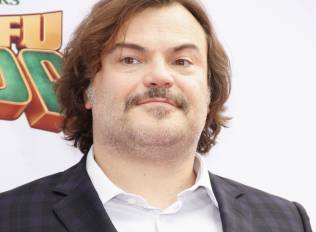
    Actor Jack Black said that he gained new perspectives about addiction and recovery filming “Don’t Worry, He Won’t Get Far On Foot.”

    The film, which was released last week, tells the story of real-life artist John Callahan, who became famous for his cartoons. Callahan was a heavy drinker who nearly died after a night of partying when he was involved in a car accident that left him paralyzed and in a wheelchair.

    After the accident he entered treatment for alcoholism and started drawing, eventually gaining a following. 

    Black, who plays a supporting role in the movie, said that being on set and learning what the real Callahan went through renewed his empathy for people in recovery.

    “Whether it’s alcohol or heroin or food or sex or whatever is it, people can get stuck in a hole and it can take all of your energy and powers and spiritual awakenings to get out and survive,” Black said, according to USA Today.  

    He noted that you can’t always tell from the outside who is struggling with substance abuse.

    “It’s a battle for survival for millions of people around the world, and some of them are battling silently by themselves and no one else knows it. They seem to be perfectly fine on the outside,” he said. “And some people are visibly heading down a dark path.” 

    He hopes that people will find hope from the film, which is based on a memoir that Callahan wrote. 

    “This is just one man’s journey on his way back to living a healthy happy life,” Black said. “It’s a cool story and a cool way to experience that in a small way.”

    Black didn’t mention his own substance abuse in relation to the movie, but in the past he has admitted to using cocaine as a teenager growing up in Los Angeles.

    “I remember just lots of turmoil from that time period,” he said in 2015. “I was having a lot of troubles with cocaine … I was hanging out with some pretty rough characters. I was scared to go to school [because] one of them wanted to kill me. I wanted to get out of there.”

    Ultimately, his mother put him in an alternative school that helped him address his cocaine problem.

    “It was a huge release and a huge relief,” he said. “I left feeling euphoric, like an enormous weight had been lifted from me. It changed me.”

    View the original article at thefix.com

  • Turkish Rapper Ezhel On Trial for Encouraging Drug Use

    Turkish Rapper Ezhel On Trial for Encouraging Drug Use

    Prosecutors cite the rapper’s lyrics as dangerous examples for impressionable Turkish youths.

    Turkish rapper Ezhel faces up to 10 years in prison for “encouraging drug use in his songs,” according to the Hürriyet Daily News. It’s also the second time this year that the 28-year-old rapper has been charged with promoting drugs in his lyrics by anti-narcotics police.

    In recent years, Ezhel (born Ömer Sercan İpekçioğlu) has found both significant critical and commercial success. Following the release of his acclaimed 2017 album Müptezhel, Ezhel has made several high-profile live performances (including one with U.S. rapper Wiz Khalifa), not to mention garnering millions of views on his official YouTube channel.

    Unfortunately, it seems as if Ezhel’s success has put a target on his back when it comes to Turkish authorities, who are taking aim at the pro-drug messages he purportedly layers into his music. “Both [his] lyrics and the narrative of the songs as a whole” promote drug use, the latest indictment argues.

    The Istanbul Chief Prosecutor’s Office leveled its newest charges against Ezhel on July 11, less than a month after the rapper was last acquitted. Prosecutors routinely cite his Ezhel’s lyrics (“The brighter the lights, under the influence of marijuana, taking puffs”) as well as photos shared on Twitter (one in particular shows him with “the outlawed cannabis sativa plant”) as dangerous examples for impressionable Turkish youths.

    In his previous arrest, Ezhel defended himself by claiming his lyrics were nothing more than rhymes and that “he was not aware that he committed a crime with pictures and lyrics,” the Daily News noted.

    Ezhel’s latest arrest was met with an almost immediate public outcry in Turkey, with the hashtag “#FreeEzhel” immediately trending on Twitter and countless others expressing their support on social media.

    As prosecutors decried the rapper’s promotion of drug use via social media channels, anti-narcotics officers also paid a visit to Ezhel’s home, searching for illegal substances. “No element of a crime was found,” the Daily News reported, though THC metabolite (the active substance in cannabis) was, however, found in the rapper’s blood sample.

    Regardless, many supporters and fellow Turkish musicians believe his arrests are attempts to “censor his critical voice.”

    A member of an Istanbul-based music group told the UK’s Independent that the arrests say less about Ezhel’s music than it does continued tensions between free speech and censorship in their country.

    “It’s so sad to see this is really happening in Turkey,” the anonymous musician said. “[Ezhel] is a really talented musician and definitely doesn’t deserve to be in jail. He inspires people in a good way—not in a bad way. Let’s support art and not punish the people creating it.”

    Ezhel’s manager Riza Okcu applauded the “#FreeEzhel” movement and echoed sentiments that “writing a song cannot be a crime” in Turkey. “The government should arrest the real criminals,” Okcu added, saying that “rap music tells the truth about what happens in the streets.”

    Unfortunately, no matter what support Ezhel receives from the public, Turkish law carries a sentence of five to ten years in prison for “encouragement of drug use.”

    View the original article at thefix.com

  • Political Ad Takes Shot At Lawyer's Past Addiction, Criminal History

    Political Ad Takes Shot At Lawyer's Past Addiction, Criminal History

    “To be pulled in to a heated political race based on my own story of redemption is really painful,” said Tarra Simmons.

    Tarra Simmons never wanted to be the stuff of campaign fodder. 

    But months after winning her year-long battle to become a lawyer, the former prisoner was surprised to see her name dragged into a state senate race – as a political smear.

    The mailers supporting Republican Marty McClendon, which started showing up on Washington doorsteps this month according to KING-TV, denounced his Democratic opponent for supporting the “drug-addicted ex-con” in her hard-fought efforts to gain admission to the state bar. 

    “Emily Randall has consistently failed to back our law enforcement,” the flyers reportedly said, “yet Randall has supported Tarra Simmons, a drug-addicted ex-con who was denied admission to the Washington State Bar Association due to multiple felony convictions.”

    Simmons, who served time for gun, drug and theft charges, made national headlines last year after the Washington State Bar refused to let her sit for the bar exam, the test needed to become a lawyer. She’d already won a prestigious law fellowship, was a dean’s medal recipient at her law school, launched a non-profit and racked up years of clean time under her belt. But still, the bar said, that wasn’t enough.

    “Her acquired fame has nurtured not integrity and honesty, but a sense of entitlement to privileges and recognition beyond the reach of others,” the Character and Fitness board wrote in 2017. 

    But the Bremerton mom took her case to court, and won, scoring accolades and compliments from the state’s jurists.

    “Simmons has proved by clear and convincing evidence that she is currently of good moral character and fit to practice law,” the Washington Supreme Court wrote in its 33-page opinion. “We affirm this court’s long history of recognizing that one’s past does not dictate one’s future. We therefore unanimously grant her application to sit for the bar exam.”

    But despite the state court’s support, it seems, some political groups still aren’t on board with Simmons’ impressive turnaround – and Simmons took them to task for it in a neatly-worded Facebook post. 

    “Hey 26th District Republicans You left out the part about how the Washington State Supreme Court UNANIMOUSLY put the bar in its place,” she wrote. “I thought the right wingers believed in things like ‘redemption’. You know what? Part of me is happy over this nonsense. Because people only talk about leaders. I’ll take it as a compliment that you thought about me, and I’ll keep leading with truth while y’all sit up here and throw stones at people who’ve done their time and have fought through pain that would make you crumble. I’m proud of Emily Randall because she gets it.”

    The ad in question wasn’t actually paid for by Randall’s opponent. Instead, an outside group, the Washington Forward, The Leadership Council, reportedly funded the flyer.

    View the original article at thefix.com

  • Relapse During Probation Grounds For More Jail Time, MA Court Decides

    Relapse During Probation Grounds For More Jail Time, MA Court Decides

    Eleven days after her probation began, Julie Eldred tested positive for the synthetic opioid fentanyl.

    Individuals on probation can face great consequences if they relapse, according to a Massachusetts court. The decision was made Monday, July 16 by the top court in Massachusetts, the New York Times reported. 

    The case that this decision stemmed from was one that had been being monitored closely by “prosecutors, drug courts and addiction medicine specialists.”

    The case was brought forward by 30-year-old Julie Eldred, who, in 2016, was convicted of larceny for stealing jewelry. She was given a year of probation with up to 30 months in jail if she violated conditions, two of which were to enroll in treatment and stay drug-free.  

    According to the Times, Eldred did enroll in an outpatient program, where she began taking Suboxone, a medication which can decrease opioid cravings and curb symptoms of withdrawal. Soon after, Eldred asked her doctor for a stronger dose. 

    Then, 11 days after her probation began, she tested positive for fentanyl, the Times notes. Because no inpatient treatment placement could be found and Eldred’s parents were out of town, the judge decided to send Eldred to a medium-security prison for 10 days. There, she did not receive Suboxone and went through withdrawals.

    “The judge was faced with either releasing the defendant and risking that she would suffer an overdose and die or holding her in custody until a placement at an inpatient treatment facility became available,” Justice David Lowy wrote in the court’s decision. 

    During the case proceedings, the defense made the argument that because substance use disorder is a “chronic, relapsing brain disease,” making it difficult for a person to simply stop using drugs.

    The prosecution countered that substance use disorder varies by individual in terms of intensity. They also argued that many people can overcome the disorder and that consequences and rewards, such as jail time or a clear criminal record, can motivate individuals to stop using.

    The seven justices of the Massachusetts Supreme Judicial Court stated that Eldred should have brought up the potential issues with her probation conditions earlier in the circumstances, when the argument could have been made in front of a trial judge instead.

    Lowy stated that judges have the responsibility of determining probation requirements while keeping the goals of rehabilitation and public safety in mind. He wrote that judges “stand on the front lines of the opioid epidemic” and are “faced with difficult decisions that are especially unpalatable.”

    According to Eldred’s lawyer, Lisa Newman-Polk, the court “rubber-stamped the status quo, dysfunctional way in which our criminal justice system treats people suffering from addiction.”

    The Massachusetts attorney general’s office agreed with the court’s ruling.  

    “We are pleased the Supreme Judicial Court today affirmed a court’s ability to take an individualized approach to probation that encourages recovery and rehabilitation to help probationers avoid further incarceration,” said a spokesperson for Maura Healey, the Massachusetts attorney general, according to the Times.

    View the original article at thefix.com

  • Bangladesh Drug War Claims Hundreds Of Lives

    Bangladesh Drug War Claims Hundreds Of Lives

    Since May, It is estimated that more than 200 people have been killed and 25,000 more imprisoned in the country.

    The violent anti-drugs campaign in Bangladesh has claimed more than 200 lives, according to human rights advocates. 

    “It is unprecedented in Bangladesh. So many people have been killed in such a short period of time,” Sheepa Hafiza, executive director of Ain o Salish Kendra, told Agence France-Presse (AFP). 

    The group estimates that more than 200 people have been killed, with 25,000 more imprisoned, in Bangladesh since May, when Prime Minister Sheikh Hasina launched the “war on drugs.” While the authorities deny wrongdoing, reports of “cold-blooded murders by police and the elite security force” surfaced at that time, Deutsche Welle reported. 

    Due to the violent and aggressive nature of the anti-drugs campaign, it is being likened to the drug war in the Philippines, launched by President Rodrigo Duterte in 2016. 

    “This is very unfortunate. We condemn these extrajudicial killings and want fair investigations into each of these killings,” Hafiza told AFP.

    A former chairman of Bangladesh’s National Human Rights Commission, Mizanur Rahman, also condemned the government’s actions. 

    “By killing suspects during raids, the security forces are violating the country’s legal system,” Rahman said, according to Deutsche Welle. “Extrajudicial killings are unacceptable in a democratic country. The authorities must respect human rights and respect the rule of law during their operations.” 

    According to TIME, Bangladesh is not the only country that appears to be taking cues from the Philippines. Just this month, Sri Lankan President Maithripala Sirisena announced that after a 40-plus year moratorium, the country will resume giving out death sentences for drug offenders.

    “From now on, we will hang drug offenders without commuting their death sentences,” said Sirisena. 

    “We were told that the Philippines has been successful in deploying the army and dealing with this problem. We will try to replicate their success,” said a spokesman for the president, Rajitha Senaratne.

    The last time Sri Lanka applied the death penalty was in 1976, according to the Guardian. According to Senaratne, this decision applies to 19 drug offenders whose death sentences had previously been commuted to a life sentence; they will now face execution.

    Human Rights Watch estimates that the Philippines drug war has claimed at least 12,000 lives since 2016, primarily of “poor urban dwellers, including children.” 

    Prior to his election, then-presidential candidate Rodrigo Duterte had promised to kill 100,000 criminals in the first six months of his presidency. He has encouraged violent anti-drugs enforcement and praised mass killings of drug suspects.

    View the original article at thefix.com

  • CDC Director: I Almost Lost My Son To Fentanyl

    CDC Director: I Almost Lost My Son To Fentanyl

    “It’s important for society to embrace and support families who are fighting to win the battle of addiction—because stigma is the enemy of public health.”

    The director of the Centers for Disease Control and Prevention (CDC) told a private audience last week that the opioid crisis hits close to home for him because his son nearly died after taking cocaine contaminated with fentanyl.

    “For me, it’s personal. I almost lost one of my children from it,” Dr. Robert Redfield Jr. told the annual conference of the National Association of County and City Health Officials, according to CBS News and the Associated Press.

    The AP saw a video of Redfield’s speech, which was given on Thursday in New Orleans. According to AP researchers, Redfield’s 37-year-old son was charged with possession in 2016, but the outcome of the case was not public record.

    Redfield declined to discuss the incident more in depth, but he did release the following statement: “It’s important for society to embrace and support families who are fighting to win the battle of addiction—because stigma is the enemy of public health.”

    During the speech, Redfield was outlining his priorities for the CDC. He said that since becoming director in March, the opioid crisis has been a top priority because it is “the public health crisis of our time.”

    Dr. Umair Shah, the head of Houston’s county health department, said that Redfield’s admission was a powerful statement. “It was definitely an intimate moment that grabbed the audience of public health professionals,” said Shah, who just finished a term as president of the National Association of County and City Health Officials.

    “It was a close-to-home story, and he spoke quite personally,” Shah told The Washington Post. Shah said that it’s relatively uncommon for healthcare providers to talk about their own personal experience with public health issues, but that doing so can be a powerful way to connect with patients.

    “We don’t want to be seen as too vulnerable or too unprofessional,” Shah said. “And here he is sharing such an intimate story.”

    Redfield’s background is in infectious disease and most of his professional work has been done around HIV, a condition that was stigmatized in much the same way that addiction is today.

    Once isolated to the heroin supply, fentanyl is increasingly being used to cut other drugs, including cocaine. In addition, fentanyl is increasingly being abused on its own, rather than being mixed with other drugs. In 2016, the drug was found to be present in 46% of opioid-related overdose deaths.

    View the original article at thefix.com