Tag: News

  • "The 13th Step": Inside AA's Subculture Of Sexual Predation

    “There are groups in AA where you could call it a meat market,” says one former AA board director.

    Sexual predation in Alcoholics Anonymous is a troubling and common occurrence, according to The Orange County Register.

    The “avalanche” of allegations against former Hollywood power players like Harvey Weinstein and Kevin Spacey “have been a horrifying reminder of the prevalence of sexual assault, harassment, exploitation and abuse in American society,” the Register noted—and AA meetings are no different.

    Some men there, too, use their stature and influence to prey upon unsuspecting women who are otherwise simply seeking recovery. (It happens so often, in fact, that it’s commonly referred to as “The 13th Step.”)

    Unfortunately, “there is something uniquely heartbreaking” about sexual abuse in AA, Vice noted, as their members are routinely encouraged to “look for their part” in the events that have transpired. 

    Many argue that AA, by its very design, is to blame.

    “Victims, former officials and some members say the culture of the organization—unregulated and loosely organized—puts vulnerable alcoholics at risk to predatory leaders whose only credential is their longtime sobriety,” the Register reported.

    Additionally, some members of AA are sexual offenders whose presence in the rooms is court-mandated. Unless someone volunteers their criminal history, no one would be the wiser.

    Offenders, thanks to the program’s core tradition of anonymity, can hide in plain sight. While a representative for AA’s General Service Office in New York told the Register that each local group operates independently, AA leaders in the U.S. and Canada have since developed guidelines and literature that specifically acknowledges the inherent danger of sexual predation.

    As such, the fellowship created a “safety card” that reads (in part): “We request that members and others refrain from any behavior that might compromise another person’s safety.” 

    Still, many critics insist that AA’s General Service Board can do far more to protect its members than printing up a small yellow card: “Each group is autonomous. That’s… an excuse not to use the power the board has to stop abusive behavior,” James Branscome, a former AA board director, told the Register. “There are groups in AA where you could call it a meat market. You have older guys hitting on newcomer women. Some groups are hijacked by gurus, and AA will claim they have no power to do anything about it.”

    Meanwhile, sexual attacks involving AA leaders keep mounting in California, the Register reported, detailing several cases of abuse, rape and murder that have occurred in recent years. Sexual predation, however, remains a thorny cultural issue within the walls of AA meetings.

    As some men take dark advantage of anonymity and vulnerability, the women who’ve been victimized continually find themselves in an outrageously precarious position.

    One woman, for example, told her sponsor about a rape and was quickly discouraged from going to the police. Sadly, that became a common refrain for the victim, as fellow AA members told her that she was scaring off newcomers with her story.

    “They said I was ruining people’s chance to get sober,” she said. “Rape was an outside issue.”

    View the original article at thefix.com

  • Farrah Fawcett's Son Blames Recent Arrest On Parents, Not Drugs

    Farrah Fawcett's Son Blames Recent Arrest On Parents, Not Drugs

    Redmond O’Neal claims his troubled life is a result of the expectations and attention placed on him for being the son of the famous couple.

    Redmond O’Neal, son of Farrah Fawcett and Ryan O’Neal, blames his recent arrest not on drug problems, but because of the pressure of having famous parents.

    After many speculated that his alleged robbery of a 7-Eleven convenience store earlier this month may have been tied to his struggles with drugs, he claims that the root cause is deeper.

    “It’s not the drugs that have been a problem, it’s the psychological trauma of my entire life—my whole life experiences have affected me the most,” O’Neal revealed to RadarOnline. “Fighting with my father, being kicked out and living on the streets, going to jail, being put in a psychiatric ward, being embarrassed all the time, just because of who my parents are.”

    The celebrity son has been charged with six crimes following the incident, including assault, drug possession, second-degree robbery, possession of a smoking device, and possession of an injection/ingestion device.

    At the time of the arrest, O’Neal reportedly had heroin and methamphetamine on him.

    “The pressure that came with that set off a time-bomb in my head. I never asked for any of this, I never wanted any attention,” he said.

    He pleaded not guilty and the judge denied him bail.

    “This last arrest, something happened to me. I’m not doing good. I can’t go back, no way can I go back. I just can’t do it,” he said. “I hated prison, it wasn’t good. I don’t do well in there. In my mind, I’ve lost all hope.”

    Things don’t look good for O’Neal as the felony complaint also alleges that “the defendant personally used a deadly and dangerous weapon, a knife, during the commission of the robbery.”

    According to authorities, O’Neal held up the store clerk and took an undisclosed amount of money before fleeing around 2:30 in the morning. He was soon arrested with the knife that matched the description of the one the store clerk described being brandished in the robbery.

    The incident is yet another in the long line of troubles O’Neal has found himself in. In 2015, he escaped having to serve a three-year sentence when his trial judge credited him a year served. He has also had probation revoked multiple times, having struggled with drugs for most of his adult life.

    This includes a 2015 incident in which he lost his probation when a judge found he used drugs and did not go to his doctor’s appointments.

    View the original article at thefix.com

  • Ambien Makers To Roseanne: Racism Is Not A Known Side Effect

    Ambien Makers To Roseanne: Racism Is Not A Known Side Effect

    Rosanne Barr blamed the sleep medication for a tweet where she compared a former White House aide to an ape.

    After an offensive tweet that cost TV star Roseanne Barr her rebooted show, she tried to lay the blame on the sleep aid Ambien.

    “muslim brotherhood & planet of the apes had a baby=vj,” read the original tweet by Barr, referring to Valerie Jarett, a former Obama White House aide.

    The reaction came swiftly, with public condemnations of the tweet leading to the cancellation of her recently rebooted television show, Roseanne.

    Barr apologized, mentioning that she was “Ambien tweeting,” referring to the drug’s alleged tendency to lead users to engage in bizarre behaviors. Sanofi, the pharmaceutical company that produces Ambien, shot back.

    “While all pharmaceutical treatments have side effects, racism is not a known side effect of any Sanofi medication,” the pharma company’s representatives tweeted.

    Still, experts confirm that it is indeed true that tweeting while on Ambien isn’t a great idea.

    “People could text or tweet while on Ambien and not remember,” said Dr. Rachel Salas, an associate professor of neurology at the Sleep Medicine Division at John Hopkins Medicine. She adds that while using sleep medications, people should avoid sleeping close to their electronic devices.

    Ambien has been blamed by many for a range of strange sleepwalking incidents.Golfer Tiger Woods was found asleep in his car on the highway with Ambien in his system.

    A woman in a class action lawsuit against Sanofi-Aventis claimed that she “ate hundreds of calories of food, including raw eggs, uncooked yellow rice, cans of vegetables, loaves of bread, bags of chips and bags of candy” under the influence of Ambien.

    The claims aren’t always so harmless. Robert Stewart, who went into a rehab and nursing home in North Carolina with a gun and shot eight people to death and wounded two others, was able to escape the death penalty and receive life in prison instead after his lawyers successfully argued that he was under the influence of Ambien at the time.

    Such incidents have raised concerns at the FDA, which recommends the dose be lowered from 10 mg to 5 mg. They also warn that besides the strange behaviors, Ambien can cause nausea, vomiting, muscle cramps, diarrhea, and abnormal thinking alongside changes in behavior. In some cases, hallucinations may manifest.

    “Visual and auditory hallucinations have been reported as well as behavioral changes such as bizarre behavior, agitation and depersonalization,” the FDA warns.

    View the original article at thefix.com

  • Montana Tribes To Feds: Help Our Community Fight Meth Addiction

    Montana Tribes To Feds: Help Our Community Fight Meth Addiction

    Addiction has undermined the infrastructure of the reservation, says one tribal board executive.

    Native American tribes in Montana are asking the federal government to help them confront methamphetamine addiction in their communities, which they say is causing health consequences and putting many children in foster care. 

    Members of the tribal executive board for the Fort Peck Assiniboine and Sioux Tribes met with U.S. Interior Secretary Ryan Zinke on May 20 in Poplar, Montana to ask for assistance in confronting addiction on the Hi-Line reservation, according to The Billings Gazette.

    “We have a massive drug problem in that we have a shortage of law enforcement, not only in our department, but in the county’s department. It’s pretty much overtaken us,” said Fort Peck Tribal Chairman Floyd Azure. “We have 107 kids in foster care right now, and the majority of that is because of drug problems and meth mainly. We had, last count, nine infants born addicted to meth. It’s tough to swallow when you see babies in that situation and they didn’t ask to be in that situation and they’re suffering.”

    Azure pointed out that addiction has undermined the infrastructure of the reservation, since many jobs are left empty for years because no applicants can pass a drug test. 

    Zinke, who oversees the Bureau of Indian Affairs as Interior Secretary, said that one way to break that cycle is to focus on treatment for mothers and grandmothers, who can then focus on raising the next generation so that they are not as heavily impacted by drugs. 

    “The fabric of the tribe is moms and grandmas. And when moms and grandmas are addicted, then the whole fabric of the tribe begins to rip,” Zinke said. “Then kids get transferred over to uncles and different relatives, and that’s a new set of challenges. We think that focusing on moms and grandmas on rehabilitation in a community is a priority, and it won’t solve the problem, but I think it’s the best solution up front.”

    Azure suggested opening a drug treatment center, while another member thought that providing housing for children whose families were impacted by addiction would help address the issue. 

    “To me, I think we need to help our children,” said Marva Chapman-Firemoon, a tribal board member. “That would be my first priority, maybe for us to get a dormitory. And I always say that the federal government took our kids off the reservation, took them to boarding schools and all that, but now we want a boarding school, or a dormitory, either one. I think that would be helpful because it would keep our children safe while we worked on the other ones.”

    View the original article at thefix.com

  • FDA Challenges Developers To Make Better Pain Treatment Devices

    FDA Challenges Developers To Make Better Pain Treatment Devices

    For an innovation challenge, the FDA is looking for devices that provide more benefits than opioids, with fewer risks. 

    The Food and Drug Administration wants better options available for treating pain—and it is turning to developers for help. 

    The FDA announced this week that it is running a new innovation challenge for medical devices that provide solutions to detecting, treating and preventing addiction, addressing drug diversion and treating pain.

    Applications will be accepted through September, and the developers of devices that are chosen will be able to work closely with the FDA to bring their product to market. 

    “Medical devices, including digital health devices like mobile medical apps, have the potential to play a unique and important role in tackling the opioid crisis. We must advance new ways to find tools to help address the human and financial toll of opioid addiction,” said FDA Commissioner Scott Gottlieb, M.D. 

    Gottlieb hopes that by encouraging the development of medical devices, fewer patients will need to rely on opioid pain relief, which has a high risk of addiction. 

    “For example, better medical devices that can effectively address local pain syndromes can, in some cases, supplant the use of systemic opioids. This can help reduce overall use of opioids,” he said. 

    Finding replacements for opioids is an important piece of confronting the opioid epidemic, he added. 

    “This innovation challenge is an example of the FDA’s commitment to an all-of-the-above approach to confront the opioid epidemic, including helping those currently addicted to opioids and preventing new cases of addiction,” he said. “We’re hopeful that in collaborating with public health-minded innovators, we can identify and accelerate the development of new technologies, whether a device, diagnostic test, mobile medical app, or even new clinical decision support software, that can contribute in novel and effective ways to help reduce the scope of this crisis.”

    Developers can submit devices that are in any stage of development, including the concept phase. The FDA will be looking for devices that provide more benefits than opioids, with fewer risks. 

    In 2012, the FDA ran a similar innovation challenge that helped develop and bring to market new ways of treating renal disease, said Jeff Shuren, director of the FDA’s Center for Devices and Radiological Health. He hopes this challenge will have similar results. 

    “The FDA stands ready to provide significant assistance and expedite premarket review of applications to help bring innovative devices that, if properly instituted, could help those at risk for addiction or treat those who might develop opioid use disorder,” he said. “We also hope that in turn these novel products may also help pave the way for the development of future products that build on the latest technologies.”

    View the original article at thefix.com

  • Older Americans Among "The Unseen" In The Opioid Epidemic

    Older Americans Among "The Unseen" In The Opioid Epidemic

    Opioid misuse nearly doubled for Americans older than 50 over a 12-year span. 

    The focus of the opioid crisis tends to be on younger generations. But this could be problematic, as, according to the Washington Post, older generations are increasingly at risk to develop opioid use disorders. 

    This is backed up by information from the Substance Abuse and Mental Health Services Administration (SAMHSA), which states that from 2002 to 2014, opioid misuse decreased in younger age groups, especially in those age 18-25.

    However, in Americans older than 50, use just about doubled. 

    On Wednesday, May 23, the Senate Special Committee on Aging held a session to discuss opioid use by the elderly population. 

    “Older Americans are among those unseen in this epidemic,” Sen. Robert P. Casey Jr. of Pennsylvania said, according to the Post. “In 2016, one in three people with a Medicare prescription drug plan received an opioid prescription. This puts baby boomers and our oldest generation at great risk.”

    Medicare can be problematic in situations such as this, because it funds opioids for patients, but it does not assist with care or medication that can be used to combat the opioid crisis, the Post notes. 

    William B. Stauffer, executive director of the Pennsylvania Recovery Organizations Alliance, in Harrisburg, Pennsylvania, spoke at the hearing and said one in three older Americans that have Medicare are prescribed opioids. 

    “However, while Medicare pays for opioid painkillers, Medicare does not pay for drug and alcohol treatment in most instances, nor does it pay for all of the medications that are used to help people in the treatment and recovery process,” he said, according to the Post. “Methadone, specifically, is a medication that is not covered by Medicare to treat opioid use conditions.”

    Gary Cantrell, a deputy inspector general at the Department of Health and Human Services, addressed Medicare Part D (prescription medication) beneficiaries, according to the Post.

    In 2016, Cantrell says, about 500,000 people “received high amounts of opioids” and nearly 20% of those are at “serious risk of opioid misuse or overdose.”

    For the elderly population, problematic use of opioids often starts with prescriptions rather than street drugs. 

    “Older adults are at high risk for medication misuse due to conditions like pain, sleep disorders/insomnia, and anxiety that commonly occur in this population,” Stauffer said, according to the Post. “They are more likely to receive prescriptions for psychoactive medications with misuse potential, such as opioid analgesics for pain and central nervous system depressants like benzodiazepines for sleep disorders and anxiety.”

    Apart from abuse, there are other risks associated with opioid use in older populations, too. The Post states that Sen. Susan Collins (R-Maine) pointed out at the hearing that, “Older adults taking opioids are also four to five times more likely to fall than those taking nonsteroidal, anti-inflammatory drugs.”

    Opioid misuse in seniors becomes even more dangerous because doctors can have a harder time recognizing the signs, Collins says. 

    “Regrettably,” Collins said, according to the Post, “health-care providers sometimes miss substance abuse among older adults, as the symptoms can be similar to depression or dementia.”

    View the original article at thefix.com

  • Store That Sold Hemp Chews, CBD Oils For Pets Shuttered By E-Commerce Site

    Store That Sold Hemp Chews, CBD Oils For Pets Shuttered By E-Commerce Site

    “We all know that it’s completely asinine that CBD is a controlled substance at all. It doesn’t even get you high, and it absolutely has medical value.”

    A couple of months ago, Shopify shuttered the account of Treatibles, a company that sells popular hemp chews and CBD oils for pets, claiming the company sold products in jurisdictions where marijuana is illegal.

    Treatibles, which is based out of San Francisco, was founded by Julianna Carella. As Carella tells The Daily Beast, she began creating hemp products (which have the medical benefits of cannabis and extremely low amounts of THC) when she found out her clients were feeding the company’s marijuana products to their sick pets, which can be dangerous.

    Carella thought she could sell her hemp pet products across state lines and in Canada because they contained less than 0.3% THC, until Shopify closed down her account this April.

    As Carella explains, “The biggest problem with Shopify cutting us off like that is that suddenly it made it impossible for our customers to purchase the product, when, in many cases, they need it for their animals’ health and well-being. Many of our customers are using this product to help eliminate seizures.”

    The head of corporate communications for Shopify told The Daily Beast in response: “We investigate material reported to us and take action if it violates the Acceptable Use Policy (AUP). In Canada, only licensed producers are authorized to produce and sell cannabis for medical purposes.”

    With marijuana slowly becoming legal, there is still a lot of misinformation about feeding cannabis treats to your pets. Some people who take medical marijuana think they can give it to their cats and dogs, but THC can be harmful to them.

    A 2012 study showed that many pets living in Colorado suffered from marijuana toxicity after medical marijuana became legal, and last year, the ASPCA’s poison control line saw a sizable increase in handling pets who ate marijuana.

    While CBD oil has reportedly had positive effects in treating epilepsy in kids and pets, it is still considered a Schedule I drug, which Carella finds absurd.

    “We all know that it’s completely asinine that CBD is a controlled substance at all,” she says. “It doesn’t even get you high, and it absolutely has medical value. We’re not out there getting teenagers stoned. We’re getting dogs with seizures to stop having seizures. We’re getting cats with high anxiety to stop freaking out on anybody who comes to the door. We’re doing nothing but good for these animals.”

    There’s still hope on the horizon for Carella and Treatibles. Marijuana should become legal in Canada soon, and the Hemp Farming Act is trying to take hemp off the Schedule I list as well. 

    View the original article at thefix.com

  • Former "Good Morning America” Anchor Details Gambling Addiction

    Former "Good Morning America” Anchor Details Gambling Addiction

    The former weatherman wrote about his secret gambling addiction in his new book, “You Bet Your Life.”

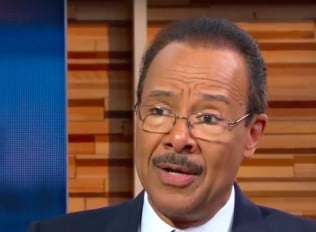
    Erstwhile weatherman and Good Morning America host Spencer Christian pulled back the curtain on his struggles with gambling addiction—and his brush with the FBI, a close call that still wasn’t enough to break the habit. 

    The long-time TV personality struggled mightily with his costly gambling habit, moving around so much money he attracted the attention of federal agents at one point. 

    “Before every gambling trip I’d go to three or four banks where I had accounts and take cash out and then I’d go off and when I’d come back, I’d have all this cash to redeposit, and that fit the pattern of someone covering up drug money or whatever,” the 70-year-old said in a GMA interview last week.

    That sparked interest from the FBI, who thought it fit the pattern of illicit activity. But after investigating, the feds realized he wasn’t doing anything illegal.

    “‘We found no criminal activity, you didn’t break any laws,’” Christian remembered an FBI agent telling him. “He said, ‘You obviously have a real gambling problem, and for your own good you need to seek some help.’ That was a scary moment and it was a huge wake-up call.”

    But that wasn’t the thing that actually got him to turn things around. Instead, it was his family.

    Even though he was able to keep his addiction from interfering with his on-air life, it wreaked havoc at home. It was his daughter who eventually took him to task for it, he recounted.

    “She said, ‘Dad, you know I admire you and I love you, and I think the world of you, but you’ve got this problem and I’m going to bring grandchildren into your life,’” Christian remembered. “‘Do you want your grandchildren to know their grandfather as a gambler? Is this the legacy you want to leave, is this the way you want to be defined?’ And it just hit me like a ton of bricks.’”

    That was the moment of clarity for him, the spark that prompted him to turn things around. Now, he’s in recovery, working for San Francisco’s ABC affiliate, and touting his new book, You Bet Your Life.

    Before parting ways with GMA, Christian was the show’s weatherman, occasional reporter and guest anchor from 1986 to 1998. 

    “It’s never too late to change the direction of your life,” Christian said. “We all have problems. Even those of us who seem to be living the perfect life have problems.”

    View the original article at thefix.com

  • Police Seize Enough Fentanyl To Kill 26 Million People

    The record-breaking seizure was one of the biggest fentanyl busts in US history.

    Nebraska State Patrol managed to seize 118 pounds of fentanyl during a routine traffic stop.

    According to estimates by the U.S. Drug Enforcement Administration, this was enough fentanyl to kill 26 million people. This estimate is based on the fact, according to the DEA, that just two milligrams of the drug is enough to kill a person.

    On April 26, state troopers became aware of a suspicious semi-truck driving on the shoulder of Interstate 80. After pulling the truck over, troopers searched the vehicle and found the record-breaking stash in a hidden compartment. 

    At first glance, the troopers thought they had found a formidable mound of what was probably mostly cocaine. Testing of the drug was delayed because of the “dangerous nature of the substance,” as some drugs, including fentanyl, are dangerous if touched and absorbed into the skin or accidentally breathed in.

    It was fortunate they took such precautions, because testing revealed that all 118 pounds were fentanyl. This bust was the largest the state of Nebraska had ever seen, and is among the largest in the country, announced Nebraska Gov. Pete Ricketts.

    The driver and passenger of the truck, 46-year-old Felipe Genao-Minaya and 52-year-old Nelson Nunez, were arrested for possession of a controlled substance with intent to deliver. Authorities estimate the product they were hauling was worth more than $20 million.

    Fentanyl, a synthetic opioid, is anywhere between 50 and 100 times stronger than morphine and 30 to 50 times stronger than heroin.

    The drug has exacerbated the opioid crisis and has been involved in a few high-profile deaths, including Prince and Tom Petty. Petty was found unconscious in his home and was rushed to the hospital in full cardiac arrest. An autopsy revealed that among the drugs in his system, fentanyl featured prominently.

    In Prince’s case, neither he nor those close to him knew he was taking fentanyl. Everyone involved thought the pills were Vicodin, but they were actually fentanyl-laced counterfeits, according to an investigation.

    Kellyanne Conway, who was entrusted by the Trump administration with the task of tackling the opioid crisis, suggested that fentanyl addiction and deaths could be avoided if people opted for junk food as their vice instead.

    “I guess my short advice is, as somebody double your age, eat the ice cream, have the french fry, don’t buy the street drug,” Conway said. “Believe me, it all works out.”

    View the original article at thefix.com

  • Guns N’ Roses Drummer: I’ve Never Been Happier Than I Am Sober

    “After, like, the ninth month of not drinking, my whole life did a 180. Everything changed. I became happy again. I love life again.”

    Steven Adler, the former drummer for Guns N’ Roses, who left the rock band because his drug use was becoming too much, says that he has never been more happy than he is living life in recovery. 

    “My health is fabulous. Actually, tomorrow I will have four years and four months of no drinking. And I haven’t done drugs since 2008. So I’ve never been happier,” Adler recently told a journalist, according to Blabbermouth

    While the initial period of recovery was difficult, Adler said that he began to notice positive changes in his life the longer he stayed away from drugs and alcohol. 

    “After, like, the ninth month of not drinking, my whole life did a 180,” he said. “Everything changed. I became happy again. I love life again. I enjoy the sunsets. I enjoy the sunrise. It’s beautiful.”

    Guns N’ Roses paused recording during the late ‘80s and early ’90s to give Adler a chance to get his heroin addiction under control. However, Adler wasn’t able to stay sober, so he was kicked out of the band in 1990. 

    Since he has been sober, Adler has joined the band on some tour dates, and has also started his own Guns N’ Roses tribute band. In order to keep touring with that band, Adler maintains a strict routine that helps him stay sober, he said. 

    “I wake up,” he said. “The first thing I do is I read The Four Agreements. It’s a book from Don Miguel Ruiz. [The book’s mantra is] be impeccable with your word; don’t take things personal; don’t make assumptions; and always do your best—no more no less,” Adler said. 

    “I read a little of that, I have my decaf tea, I go on the treadmill and I do a little jogging to stay in shape, and then I practice. It’s all mind, body and soul. So I read the book for my mind, I do the treadmill for my body, and I play the drums for my soul. And then the rest of the time, I sit round and watch Family Guy with my dogs.”

    Adler’s mother, Deanna Adler, recently spoke about watching her son struggle for so many years. 

    “[It] was very hard to see my son hurt like that and have a disease like that, because I’ve never drank or smoked or done drugs—I’m just a normal person,” she said. “But to see your son in such pain like that and knowing that you can’t do anything—I thought I could do something to help him, but in reality you can’t.”

    View the original article at thefix.com