Tag: News

  • Marijuana Equity Programs Help People Of Color Access Growing Industry

    Marijuana Equity Programs Help People Of Color Access Growing Industry

    “We’re not just budtenders, not just security guards anymore. We’re owners now,” said a marijuana dispensary owner.

    It has been well-documented that the war on drugs has disproportionately affected communities of color. Now, as marijuana legalization becomes more common, some municipalities are helping people of color get into the legal marijuana business, saying it’s a matter of social justice. 

    “We actually do have to overcorrect. People from our communities, black and brown communities, were the one first ones to be criminalized. Why shouldn’t we be the first ones to benefit?” Kassandra Frederique, the New York state director of the Drug Policy Alliance, told USA Today.

    Initially, many licensing laws for legal marijuana businesses excluded anyone with a criminal record. However, policymakers and social justice advocates realized that that was continuing a cycle of discrimination.

    “You make the industry super-hard to get into, that only people who are squeaky clean can get into it, because you know all eyes are on you. However, that is the approach always, always, that you take to whitewash things and make it clean. That’s literally what you say before you fire the black people and the minorities,” said Adam Powers, an African-American man who works in the cannabis industry in Washington state. 

    Now, policies are emerging around the country to make legal marijuana businesses more accessible to people of color, who are more likely to have marijuana-related offenses on their criminal records.

    The California Cannabis Equity Act of 2018 called for “persons most harmed by cannabis criminalization and poverty be offered assistance to enter the multibillion-dollar industry as entrepreneurs or as employees with high-quality, well-paying jobs.”

    In Massachusetts, equity programs run by the Cannabis Control Commission have a similar task. 

    Tucky Blunt, who was convicted for selling marijuana illegally years ago, now operates a legal dispensary thanks to the equity applicant program in Oakland, California, which prioritizes businesses operated by people who have criminal convictions for selling marijuana

    Blunt said that many in his community had their lives disrupted by marijuana convictions. 

    “It affected everybody in my circle because it was only targeted to us. I knew white people that was selling weed that never went to jail. The war on drugs was just about putting as many of us in jail in possible. It tore up a lot of families,” he said. 

    Now, he is happy to make his mark on the legal marijuana industry, which continues to be dominated by white men. 

    “We’re not just budtenders, not just security guards anymore. We’re owners now,” Blunt said. “To be able to sell this legally in my city, literally 10 blocks from where I caught my case, I’m fine—I wasn’t going to let anything stop me. I’m the new kid on the block, and I’m here to change the game.”

    View the original article at thefix.com

  • New York Counties Skeptical Of Marijuana Legalization

    New York Counties Skeptical Of Marijuana Legalization

    In the more rural counties upstate, sheriffs and others are concerned about the effect that marijuana legalization will have on road safety.

    As New York state moves forward with plans to legalize the recreational use of cannabis, some counties in the state are expressing skepticism and considering whether to “opt out” of recreational cannabis. 

    If marijuana is legalized in New York, counties may be able to stop marijuana businesses from operating within their boundaries, according to WKBW Buffalo. 

    Chautauqua County in Northwest NY is one of the counties that is wary of marijuana legalization, according to Chautauqua County Executive George Borrello. 

    “It’s irresponsible to legalize recreational marijuana,” he said, adding that the bill being considered by the state does not make the rules around recreational cannabis use clear. 

    Niagara County Legislator Jesse Gooch said that he does not have a strong opinion on marijuana legalization, but he would like to hear from his constituents about their concerns. Because of that, he plans to host community forums to discuss whether Niagara County should opt out of legalization by not allowing marijuana to be bought, grown or sold in the county. 

    “I would like to set up a couple of open forums where we invite the public residents to come in and really just talk it out,” Gooch said. 

    NY Governor Andrew Cuomo expressed opposition to legalization as little as two years ago, but now supports a bill to legalize recreational use for people over 21. He has essentially said that the move is inevitable. 

    “It’s a false choice legalize marijuana or not, because we are there already,” Cuomo said, according to WIVB

    Despite that, law enforcement in New York has been against legalization. In the more rural counties upstate, sheriffs and others are concerned about the effect that marijuana legalization will have on road safety, according to Thomas Dougherty, Livingston County Sheriff.

    Dougherty said officers will need to be specially trained to detect whether a driver is operating under the influence of marijuana

    “I don’t know many agencies that can afford to have a full force of [drug recognition experts], some of the largest counties have 3 or 4. Again we have major concerns on what will be the fiscal impact,” he said. 

    Dr. Gale Burstein, Erie County Health Commissioner, said that since she has no say in whether marijuana use is legalized, she’s just doing her best to prepare for how that may impact public health in the county. 

    “We know that you can get addicted to marijuana. That’s a known fact, even though people don’t believe that,” she said. “In states where marijuana has been legalized, they’ve seen a much higher incidence of impaired driving and very serious motor vehicle accidents compared to states where marijuana has not been legalized for recreational use.”

    View the original article at thefix.com

  • Google Maps Now Points Users To Drug Disposal Sites

    Google Maps Now Points Users To Drug Disposal Sites

    The tech giant aims to help people with opioid prescriptions get rid of excess pills in the hopes of preventing them from being abused.

    Tech giant Google wants to do its part to combat the opioid epidemic by making it easy for users to find places where the can drop off unneeded medications.

    If people search for “drug drop off near me” or “medication disposal near me,” Google Maps will find nearby pharmacies, hospitals, or government buildings where they can dispose of pills that could otherwise be abused.

    The project was part of a cooperative effort between Google, the Drug Enforcement Administration, the Department of Health and Human Services, and state governments as well as private pharmacy companies like Walgreens and CVS.

    “Addiction to opioids can start after just five days of use, and the majority of prescription drug abuse (53%) starts with drugs obtained from family and friends,” wrote Dane Glasglow, Google Maps’ vice president of product, in a blog post. “That’s why Google wants to help people get rid of leftover pills that are sitting in people’s medicine cabinets, and to make drug disposal locations easier for people to find with a simple search.”

    Such medications are usually prescribed for good reason, especially in cases of recovery after surgeries for ailments like broken bones, burns, or serious illness.

    “Treating pain adequately helps recovery, reduces the downstream psychiatric and psychological effects,” said Dr. Elliot J. Krane. “In the absence of risk factors or concerns about the child’s home environment, I am more concerned about deleterious effects of untreated pain than I am about creating somebody with substance abuse disorder.”

    Some families might think it’s clever to keep these powerful painkillers for future use, but health experts warn that just having the medications in the house can boost the potential for abuse.

    “You should not keep them for use for a future time,” Dr. Linda J. Mason said. “These are for a specific surgery.”

    Google’s ease in involving itself in such an intervention should come as no surprise to those who are aware of the massive amounts of data the tech giant has kept on its users. A study has found that Google can predict the onset of overdoses in a given area by tracking certain search terms.

    “For a number of fiscal and practical reasons, data on heroin use have been of poor quality, which has hampered the ability to halt the growing epidemic,” the researchers wrote. “Internet search data, such as those made available by Google Trends, have been used as a low-cost, real-time data source for monitoring and predicting a variety of public health outcomes.”

    View the original article at thefix.com

  • Fentanyl Brunch Joke Lands Restaurant In Hot Water

    Fentanyl Brunch Joke Lands Restaurant In Hot Water

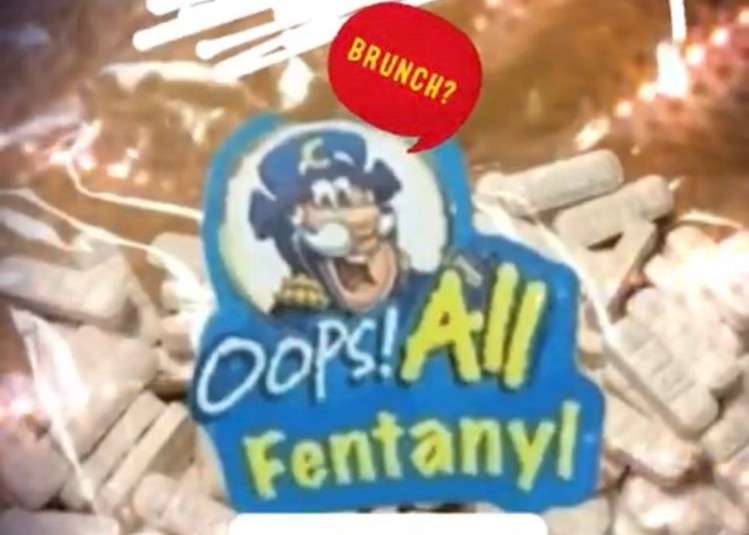
    An Ohio pub issued a public apology after parodying Cap’n Crunch with a joke menu item called “Oops! All Fentanyl.”

    Some jokes are best untold, as one restaurant and pub in Lakewood, Ohio is learning after a bungled social media post. On their Instagram account, the restaurant Yuzu posted a photo of a bag of fentanyl labeled “Oops! All Fentanyl” and “New brunch special? Sat & Sun.”

    The “joke” was likely referring to how many opioid drugs being sold have been unexpectedly cut with fentanyl, which has led to accidental fatal overdoses. Many Instagram users who saw it were not amused.

    “Screenshot from Yuzu Lakewood’s IG story. Not at all cool,” one person responded. “Making a joke of the opioid crisis is never funny ever.”

    The establishment’s owner, Dave Bumba, seemed to ignore the controversy his social media account created for about three days before finally responding on Facebook.

    “First, it’s never our intention to cause any malicious offense, and for that I do genuinely apologize for,” Bumba wrote in the post. “There’s a generational gap of humor; our target demo is 21 to 34. I’m aged out of our demo myself. Younger generations have developed a different sense of humor that more abstract, surreal, and darker than previous generations.”

    Bumba stopped short of calling the backlash a result of political correctness, instead turning into a meta-analysis of what’s a relatable coping mechanism versus what’s actually offensive.

    “It would be easy for me to blame this simply on an overly-politically-correct culture. A loud subset of people have been trained to seek out a reason to be offended. And while this might exist on some level, seeing some of the constructive criticism also made me think retrospectively about our social media content choices,” he posted. “Just because something exists and is perceived to be liked by enough of a subset of our demographic, does that make it the socially right choice to be relatable content?”

    Users considered the statement a non-apology, calling Bumba out on using a generational gap as cover.

    “Rather than sincerely apologizing for your offensive posts (which personally are not clever or funny and were in very poor taste), you backpeddle and still try to place blame on those you offended by implying they aren’t young or hip enough to get the joke,” wrote a user.

    Fentanyl has accelerated the number of deaths in the opioid crisis, hitting areas like Arizona especially hard. There, deaths from fentanyl overdoses have tripled between 2015 and 2017, mostly due to users believing they had a weaker opioid, like oxycodone, in hand.

    Street fentanyl is often disguised as legitimate prescription opioids, but these bootlegged pills are often made in primitive conditions with no quality control. And it only takes a little bit of fentanyl to send users into overdose.

    Users, including those of the targeted millennial demographic, have commented explaining why the joke wasn’t funny. Yuzu hasn’t posted anything further.

    View the original article at thefix.com

  • How John Lennon's Heroin Addiction Affected The Beatles

    How John Lennon's Heroin Addiction Affected The Beatles

    A new report delves into the impact that Lennon’s heroin addiction had on the iconic rock band.

    John Lennon’s addiction to heroin during a time when it was poorly understood may have played a significant role in the breakup of the Beatles, according to an article published in Salon.

    Fans have long speculated on just how much of the lyrics in the late Beatle’s songs reference the powerful illicit opioid, but a look into Lennon’s own words and reports from those close to him paint a picture of someone who was deep into an addiction disorder before he was able to finally quit.

    The Beatles were not shy about experimenting with drugs during their time in the spotlight. Early in their music careers, the members of the Beatles were “veteran pill-poppers,” using amphetamines regularly.

    They were then introduced to cannabis by Bob Dylan, and a former housekeeper employed by Lennon wrote a letter claiming that she “began noticing drugs lying around in various parts of the house.” 

    Lennon, Harrison, and their wives would later be slipped LSD by a dentist named John Riley, according to Rolling Stone. This terrifying experience is credited for their Revolver album.

    Heroin, however, may have done more damage to the Beatles than provided inspiration. Though it was only Lennon and Yoko Ono who used the opioid, it created a fracture in the group.

    “The two of them were on heroin, and this was a fairly big shocker for us because we all thought we were far-out boys, but we kind of understood that we’d never get quite that far out,” said McCartney, according to the Salon article.

    In later interviews, Lennon suggested that a hashish raid leading to the couple’s arrest, and Ono’s miscarriage that happened a few days after, led to their experimentation with heroin. However, writer and Beatles authority Kenneth Womack points out that Lennon spoke about taking heroin in the summer before the raid.

    Whatever the reason, Lennon’s heroin use was said to have caused his intense and often violent mood swings that made it difficult for the other band members to reason with him.

    “The other Beatles had to walk on eggshells just to avoid one of his explosive rages,” wrote music historian Barry Miles. “Whereas in the old days they could have tackled him about the strain that Yoko’s presence put on recording and had an old-fashioned set-to about it, now it was impossible because John was in such an unpredictable state and so obviously in pain.”

    With no resources available at the time to help people detox from heroin, Lennon and Ono had no choice but to quit “cold turkey,” leading to the creation of the song “Cold Turkey,” in which Lennon vividly describes the symptoms of opioid withdrawal.

    The song was banned from the radio, which led Lennon to become an early advocate of addiction education.

    “They’re so stupid about drugs,” he said in an interview. “They’re not looking at the cause of the drug problem: Why do people take drugs? To escape from what? Is life so terrible? Are we living in such a terrible situation that we can’t do anything without reinforcement of alcohol, tobacco? Aspirins, sleeping pills, uppers, downers, never mind the heroin and cocaine—they’re just the outer fringes of Librium and speed.”

    View the original article at thefix.com

  • Daniel Radcliffe Used Alcohol To Cope With Fame

    Daniel Radcliffe Used Alcohol To Cope With Fame

    Radcliffe discussed his past relationship with alcohol and decision to get sober on “Off Camera With Sam Jones.”

    Actor Daniel Radcliffe, who shot to fame when he was cast as Harry Potter, said that he used alcohol to cope with his sudden fame. 

    Radcliffe was discussing his sobriety on “Off Camera With Sam Jones.” According to E! News, Radcliffe was uncomfortable with how often he was recognized in his teens after he starred in the Harry Potter films. He would drink to cope with that anxiety, but realized that just led to more attention. 

    “There is an awareness that I really struggled with particularly in my late teens when I was going out to places for the first time where you would feel…again it could have largely been in my head but…you would feel watched when you went into a bar, when you went into a pub,” said Radcliffe, who is now 29. “Then, in my case, the quickest way of forgetting about the fact that you were being watched was to get very drunk and then as you get very drunk, you become aware that, oh people are watching more now because now I’m getting very drunk, so I should probably drink more to ignore that more.”

    Radcliffe said that it took him some time to break this cycle, but he was able to do it with the help of family

    “It took a few years and it took a couple of attempts. Ultimately, it was my own decision…I woke up one morning after a night going, ‘This is probably not good.’”

    He said in part his excessive drinking was an attempt to reconcile his new lifestyle. 

    “When I think of the sort of chaos that I used to invite into my life, I’m really much happier now and I think there was some part of me that was like actors have to be like crazy, cool drunks. I have to live up to this weird image that I have in my head of what it is to be a famous actor or something.”

    He also felt that he couldn’t be open about the downsides of his fame. 

    “Part of the thing is the expectation that you should just be delighted all the time. You have a great job, you’re wealthy, you don’t have a right to ever feel sad or to not be excited about the whole thing all the time and I think that’s a pressure as well.”

    Despite the challenges, he said he’s still grateful for the role that defined his career. 

    “Even at the lowest point, I still loved my job so much and I loved going to set and there was never a day where my own shit would affect how I was on set. There was never a point where I was like ‘I wished this didn’t happen to me. I wish I wasn’t Harry Potter,’ like that just didn’t happen.”

    View the original article at thefix.com

  • Emergency Rooms Are Failing Overdose Victims, Study Shows

    Emergency Rooms Are Failing Overdose Victims, Study Shows

    Fewer than 10% of people who were treated in West Virginia emergency rooms for non-fatal overdose were connected with medication-assisted treatment.

    When people show up in the emergency room, they expect not only to be treated for the immediate problem, but to be connected with ongoing care. Someone with a broken arm, for example, can expect to have it set and leave with a referral to an orthopedist.

    Yet, this system is failing people with substance use disorder, one of the most deadly medical conditions in the country. 

    According to a new study published in the Journal of General Internal Medicine, fewer than 10% of people who were treated in West Virginia emergency rooms for non-fatal overdose were connected with medication-assisted treatment, and just 15% were connected with counseling. 

    Although the study looked at just one state, the findings are symptomatic of failures in the medical system across the country, Andrew Kolodny, who directs opioid policy research at at Brandeis University’s Heller School for Social Policy and Management, told California Healthline. 

    He said, “There’s a lot of evidence that we’re failing to take advantage of this low-hanging fruit with individuals who have experienced a nonfatal overdose. We should be focusing resources on that population. We should be doing everything we can to get them plugged into treatment.”

    Even the researchers were surprised by the low rates of ongoing treatment for opioid use disorder for patients who were clearly in need of treatment, said lead study author Neel Koyawala, a student at the Johns Hopkins School of Medicine.

    “We expected more… especially given the national news about opioid abuse,” Koyawala said. 

    Dr. Margaret Jarvis, who works as medical director of a residential addiction treatment center, said that despite the prevalence of addiction, emergency room doctors often don’t know how to help people who present with substance use disorder.

    “Our colleagues in emergency rooms are not particularly well-trained to be able to help people in a situation like this,” she said. Marissa Angerer visited the emergency department in Texas many times with substance abuse-related conditions. She was never offered ongoing intervention and was surprised when doctors didn’t understand what she meant when she said she was dopesick. 

    “They were completely unaware of so much, and it completely blew my mind,” she said. 

    When Angerer finally got into recovery, it was because she found a treatment center herself after having fingers and toes amputated because of an opioid-related condition. 

    “There were a lot of times I could have gone down a better path, and I fell through the cracks,” she said.

    View the original article at thefix.com

  • Is Scanning Inmates' Mail To Stop the Spread Of Drugs Legal?

    Is Scanning Inmates' Mail To Stop the Spread Of Drugs Legal?

    The ACLU is challenging a Philadelphia prison mail policy that they allege violates attorney-client privilege and inmates right to privacy.

    A trial is underway in Pennsylvania to decide whether a new prison policy involving the opening and scanning of inmates’ mail to prevent drug smuggling is legal. State prisons began the new mail procedure in 2018 after a number of inmates and staff were hospitalized from synthetic cannabinoid exposure.

    Dangerous drugs like K2 were being smuggled into prisons after being mixed with ink or used to coat letter paper. The substances are colorless and odorless, making them difficult or impossible to detect through normal means.

    According to officials, more than 50 prison staff members and 33 inmates were hospitalized over a period of three months in western and central Pennsylvania. Since the implementation of the new mail policy, the amount of synthetic cannabinoids entering the prisons has plummeted.

    However, the legality of the policy was challenged in October by the American Civil Liberties Union (ACLU), and arguments are now being heard by a judge. 

    The policy requires staff members to remove letters from friends, family, and legal counsel from envelopes, scan them, and pass along the copies to inmates. The originals are kept in a box for 45 days, at which point they can be destroyed.

    Lawyers are alleging that this procedure violates attorney-client privilege and inmate right to privacy. They argue that there is no way to prevent staff from reading letters containing legal strategy and other sensitive information, intentionally or not. 

    “The practices they’ve implemented are tremendously disruptive, and in fact are prohibiting a lot of lawyers from being able to use the mail to communicate with their clients,” said Pennsylvania ACLU legal director Vic Walczak.

    Many lawyers have therefore stopped sending their imprisoned clients anything in the mail and are having difficulty finding alternative methods to communicate privately with inmates.

    According to Leane Renee, assistant federal public defender for the U.S. Middle District Court, inmates are only allowed 15 minutes at a time on the phone and lawyers are not always allowed to bring documents into face-to-face meetings.

    Even if they are, legal teams are often located hours away from the prisons where their clients are held. This has reportedly caused a backlog in legal phone call requests that prisons can’t accommodate.

    At the same time, although the Pennsylvania Department of Corrections has claimed that all documents are stored and disposed of properly in order to prevent privacy violations, there have been reports of “legal documents piled on desks or heaped into trash bags,” according to Philadelphia’s The Inquirer

    “We’ve gotten reports from dozens of lawyers who are involved in criminal appeals and civil issues, who can’t communicate with their clients, and these individuals’ cases are being harmed and delayed,” said Pennsylvania Institutional Law Project lawyer Alexandra Morgan-Kurtz.

    There have also been allegations of missing pages from legal packets and staff failing to use protective equipment while handling mail possibly contaminated with synthetic cannabinoids.

    The ACLU is not challenging the use of this new mail procedure when it comes to mail from friends, family, or anyone other than legal counsel.

    View the original article at thefix.com

  • World Health Organization To UN: Reclassify Cannabis

    World Health Organization To UN: Reclassify Cannabis

    WHO is calling for the classification to be updated to reflect the medical uses of marijuana.

    The World Health Organization is calling on the United Nations to change the classification of cannabis to acknowledge that the drug does have some medicinal purposes. 

    According to Futurism, cannabis is currently considered a Schedule IV drug by the UN. This designation is the most tightly controlled, and reserved for drugs that show “particularly dangerous properties.” It was set by an international drug treaty passed in 1961. 

    However, according to information published in the journal BMJ, the World Health Organization is calling for the classification to be updated to reflect the medical uses of marijuana

    “The World Health Organization has proposed rescheduling cannabis within international law to take account of the growing evidence for medical applications of the drug, reversing its position held for the past 60 years that cannabis should not be used in legitimate medical practice,” the report authors wrote

    According to the report, The WHO Expert Committee on Drug Dependence started reconsidering marijuana’s classification last year. The committee released a report with its findings and recommendations. 

    “The Committee concluded that the inclusion of cannabis and cannabis resin in Schedule IV is not consistent with the criteria for a drug to be placed in Schedule IV,” the report reads. 

    It goes on to recommend that marijuana and its compounds be reclassified as Schedule I or II drugs, which are less tightly controlled. The recommendations could be voted on by the United Nations member countries as soon as March, which would change the way that marijuana is handled under international law.

    However, it would have no bearing on how cannabis is scheduled federally in the United States, which uses an entirely different system of classification.

    Still, marijuana advocates, including a US Air Force veteran Michael Krawitz, said that the reclassification is long overdue. 

    “The placement of cannabis in the 1961 treaty, in the absence of scientific evidence, was a terrible injustice,” he told Forbes. “Today the World Health Organization has gone a long way towards setting the record straight. It is time for us all to support the World Health Organization’s recommendations and ensure politics don’t trump science.”

    Kenzi Riboulet Zemouli, the head of research at Paris-based non-profit For Alternative Approaches to Addiction Think & Do Tank, told Leafly that the measure is “a beginning of a new evidence and health-oriented cycle for international Cannabis policy.”

    “This is the best outcome that WHO could possibly have come up with,” Riboulet Zemouli said. 

    View the original article at thefix.com

  • FDA May Recommend Naloxone Be Co-Prescribed With Opioids

    FDA May Recommend Naloxone Be Co-Prescribed With Opioids

    The “co-prescribing” recommendation would apply to patients who are at high risk of overdose, including people who take a high-dose opioid.

    The Food and Drug Administration (FDA) is considering recommending that people who receive an opioid prescription are also offered a prescription for naloxone, the opioid overdose reversal drug. 

    The move is intended to reduce deaths from opioid overdose, but some people say that the effort is misguided. 

    The so-called co-prescribing recommendation would apply to patients who are at high risk of overdose, including people who take a high-dose opioid, have a history of addiction or have sleep apnea, according to CNN.

    Kristy Shepard, a Virginia patient who uses opioids, didn’t know that she had a naloxone prescription waiting for her at the pharmacy. She said that her doctor didn’t give her a heads up about the state’s new co-prescribing recommendations. Other states, including California and Ohio have made similar recommendations, but Shepard doesn’t understand why. 

    “It’s so silly. I didn’t feel like I needed it. Unless I plan to hurt myself, I’m not likely to overdose,” she said. 

    However, Dr. Nathan Schlicher, who is on Washington state’s opioid task force and works as an emergency medicine physician, said this is a common misunderstanding. 

    “You can take pain meds responsibly, and you can be at risk for an accidental overdose even when you’re doing everything right,” he said. Washington also has a co-prescribing recommendation. 

    If the FDA recommends co-prescribing, the need for naloxone would increase by 48 million dosages annually, according to an FDA report. That could be a big financial incentive to drug makers, who have spent money lobbying for similar efforts at the state level, especially in California. 

    Some opponents point out that having naloxone on hand only works if the people taking opioids have someone around who could administer the drug if they overdose. 

    Katie O’Leary, who deals with pain, said that talking about overdose risk and carrying naloxone should be a conversation between individual providers and their patients, not a federal requirement. 

    “So many patients already jump through so many hoops to get their meds,” she said. “And if you live alone and don’t have family or friends to take care of you, the naloxone might not be something that could actually help.” 

    Dr. Farshad Ahadian, medical director at the University of California San Diego Health Center for Pain Medicine, agreed, saying, “Most providers probably feel that it’s better for physicians to self-regulate rather than practice medicine from the seat of the legislature. The truth is there’s been a lot of harm from opioids, a lot of addiction. It’s undeniable that we have to yield to that and to recognize that public safety is critical.”

    View the original article at thefix.com