Tag: News

  • Federal Program To Help Addiction Treatment Providers With Student Loans

    Federal Program To Help Addiction Treatment Providers With Student Loans

    The goal of the new federal program is to strengthen the workforce in the field of addiction treatment. 

    If you work in the substance use treatment field in an underserved area, you may be eligible for student loan aid, thanks to a new federal program. 

    The program, according to MassLive, was launched Dec. 27 and will help health care clinicians repay up to $75,000 in student loans. For the first year, it has been funded with $75 million and officials hope to help repay loans for 1,100 clinicians.

    Israil Ali is the director of the Division of National Health Service Corps, which is an entity of the US Department of Health and Human Services agency that is overseeing the loan payment program. He says the overall idea of the program is to strengthen the workforce in the field of treatment. 

    “The goal is to ensure that sites that provide evidence-based care have the workforce to deliver care,” Ali said, according to MassLive.

    For those working in the substance use treatment field in areas considered underserved, the agency will pay up to $75,000 as long as the individual commits to working for three years in an underserved area.

    Boston Health Care for the Homeless doctor Gabriel Wishik began working at his facility through the repayment program and tells MassLive that such a program helps to bring in qualified candidates and increases the overall number of professionals in the field. 

    According to MassLive, it’s difficult for those with substance use disorder to find available treatment. This program will not aid in the issue of low treatment reimbursement rates, which can make it difficult for facilities to stay profitable. And, according to Wishik, “there is a shortage at every single level in the treatment continuum.”

    However, Wishik adds that programs such as this could prove helpful in leading people into the career field. 

    “There are lots of competing career paths,” he adds. “It’s one way to get people into this career.”

    The new program is similar to that of another offered by the agency, in which doctors in underserved areas can also have loan repayment. There is also a program for part-time workers, and in addition to doctors it is also open to nurses, pharmacists and substance use disorder counselors.

    In Massachusetts specifically, there are 89 substance use treatment facilities where employees could potentially benefit from the program. According to MassLive, these include Spectrum Health Systems’ treatment centers in Worcester and North Adams, the opioid treatment center at Providence Behavioral Health Hospital in Holyoke, and additional programs run by Baystate and by the Springfield Public Health Department. 

    View the original article at thefix.com

  • How Pregnant Women with Substance Use Disorder Are Criminalized

    How Pregnant Women with Substance Use Disorder Are Criminalized

    “The more we double down on the idea that pregnant women who struggle with addiction are terrible people and terrible mothers, the easier it becomes for… everyone else to treat them terribly.”

    Pregnant women in at least 45 states have faced criminal charges for abusing drugs while pregnant, stemming from the idea that they are doing harm to their unborn babies, according to a New York Times investigation.

    Many addiction and recovery professionals, including Dr. Sarah Wakeman, who directs the substance use program at Massachusetts General, say that criminal charges result from and contribute to the stigma around addiction and the idea that substance use disorder is a moral failing or choice rather than a complex medical issue.

    “The more we double down on the idea that pregnant women who struggle with addiction are terrible people and terrible mothers, the easier it becomes for doctors, social workers, judges and everyone else to treat them terribly,” Wakeman told the Times, which reported on the issue as part of a series about the rights of pregnant women. “When we criminalize women, we make them scapegoats for all of these large structural forces and societal failures that create poverty and give rise to addiction in the first place.”

    At Massachusetts General, the Hope Clinic provides treatment and parenting support for pregnant women and mothers with substance use disorder. By helping women rather than criminalizing them, both mother and child fair better, Wakeman said.

    In Tennessee, a law was passed two years ago that could force pregnant women with substance use disorder into jail, essentially claiming they need protective custody. However, the law backfired, resulting in women giving birth in risky situations or leaving the state, said University of Tennessee College of Law professor Wendy Bach. Now, the law is not being renewed.

    “We started out saying we would curb drug use and promote treatment and care. We ended up deterring people from treatment while doing basically nothing to curb use,” she said.

    Even when substance use doesn’t result in criminal charges, it can cause children to be taken from their families. Kasey Dischman, of Pennsylvania, got sober when she was pregnant with her first child. She maintained her recovery for years, until her daughter was eight and Dischman reconnected with the girl’s father.

    Dischman said, “It was like we didn’t know how to be sober together.”

    Dischman relapsed. She became pregnant again and accidentally overdosed, resulting in an emergency cesarean delivery for her second daughter.

    She said that in the moment when she injected heroin, the pull of addiction was stronger than her concern for her daughters — something she believes shows the power of the illness.

    “It’s almost like I forgot about them. I know that’s awful, and that people think I don’t have a conscience,” she said. “But that’s exactly what addiction is. Once it enters your head to do that shot, you develop this tunnel vision that nothing can break.”

    Today, Dischman is sober but still facing a complex legal battle in hopes of regaining custody of her daughters, all while feeling like the system is set up against her.

    “They don’t want me to recover from this,” she said. “Because if I do, if I make it through and I do all right, then what does that say about them, and about how they trashed me?”

    Barry Lester, who specializes in opioid addiction as a professor of psychiatry and pediatrics at Brown University, said that the treatment of women like Dischman is short-sighted and hurtful.

    “We love to hate these women,” he said. “But our hatred is not accomplishing anything.”

    View the original article at thefix.com

  • "Church of Safe Injection" Hopes to Save Lives Through Needle Exchange

    "Church of Safe Injection" Hopes to Save Lives Through Needle Exchange

    A 26-year-old former drug user turned recovery coach has founded a harm-reduction-based “church” that offers clean needles, Narcan and a welcoming brand of faith-driven dialogue to drug users.

    As the viability of safe injection sites continues to be debated across the globe, a 26-year-old former drug user turned recovery coach has found a following with a harm-reduction-based “church” that offers clean needles, the overdose reversal drug Narcan and a welcoming brand of faith-driven dialogue to drug users.

    As the Huffington Post noted, the tenets of Jesse Harvey’s “Church of Safe Injection” have been taken up by others in eight states, but his efforts have been met with resistance by some law enforcement and health officials who have abided by federal law that prohibits safe injection sites.

    Since late 2018, Harvey, who has been in recovery from drug and alcohol dependency for several years, has been operating his “church” from the back of his car, which he stations near a park frequented by drug users in Lewiston, Maine.

    With the help of volunteers, he offers free needles and a gospel that emphasizes inclusion and support for those in need. That approach informs the Church’s three basic principles: helping those in need, welcoming people of all faiths, as well as atheists, and keeping drug users healthy through harm reduction-based support.

    “Our religious belief is simply that people who use drugs don’t deserve to die,” Harvey told the Huffington Post.

    That philosophy has attracted others, especially those with religious backgrounds who have been dismayed by some traditional churches, which have rejected or condemned drug users.

    To date, 18 Churches of Safe Injection have been established in eight states, and Harvey hopes to incorporate the Church as a nonprofit in order to apply for religious exemption to the Controlled Substances Act so he can open a legal safe injection site.

    However, Harvey’s goals run opposite of many state policies regarding needle exchange and safe injection sites. Maine has only six certified needle exchanges, none of which are located in Lewiston, and the state’s Center for Disease Control issued strict warnings to those exchanges about regulations after Harvey began attracting media attention.

    Eventually, Lewiston police warned him about possible misdemeanor charges for possessing more than 10 syringes at one time, which prompted Harvey to stop handing out clean needles.

    However, as the Post feature noted, he continues to offer Narcan and bags of supplies, including saline, alcohol wipes and rubber ties, to those who meet him in Lewiston. Harvey also hopes to start a drug users’ union in Maine, which would serve as a center for health and safety advocacy. In an op-ed penned for the Portland Press Herald in late 2018, Harvey summed up his goal for the church: “Politicians, law enforcement, and health care haven’t taken the lead here, so our church is.”

    View the original article at thefix.com

  • Are Pet Prescriptions Contributing To The Opioid Crisis?

    Are Pet Prescriptions Contributing To The Opioid Crisis?

    Some wonder if people with opioid addiction are using their pet’s prescriptions to feed their own addictions instead.

    With the rise of the opioid epidemic, a phenomenon has occurred where painkiller sales for pets have increased, and some wondering if people with opioid addiction are using their pet’s prescriptions to feed their own addictions instead.

    A new study by Penn Medicine and Penn Vet has revealed that in the last 10 years, there has been a 41% increase in opioid prescriptions for pets, yet in the same period, there has only been a 13% jump in pets having to go to the hospital. This has some suspecting that people could be using these prescriptions to get opioids for themselves.

    Study author Jeanmarie Perrone, director of medical toxicology at Penn Medicine told Philly.com, “As we are seeing the opioid epidemic press on, we are identifying other avenues of possible human consumption and misuse. Even where the increase in prescribed veterinary opioids is well intended by the veterinarian, it can mean an increased chance of leftover pills being misused later by household members.”

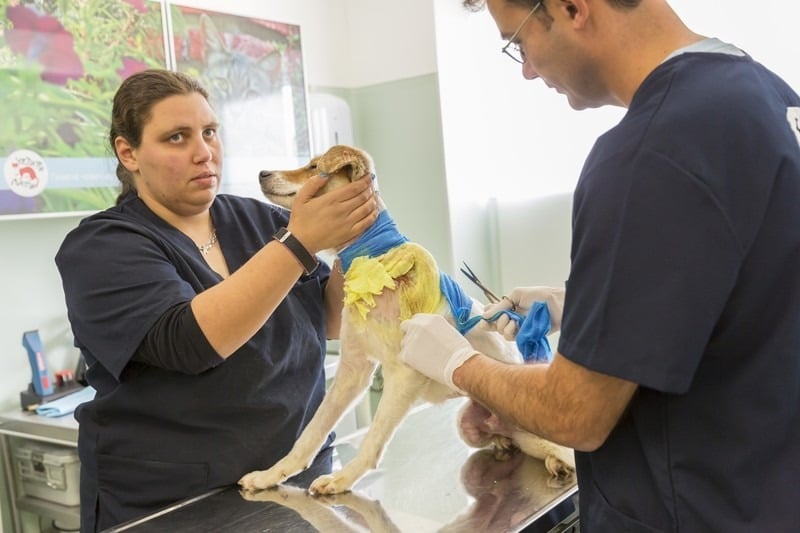
    Penn Medicine says this is the first study they’ve done in this area, and in gathering data, they looked at pharmacy records at Penn Vet’s Ryan Hospital over a 10-year period and looked at prescription patterns with four kinds of opioids given to pets: tramadol, hydrocodone, codeine tablets, and fentanyl patches.

    An author of this study, Dana Clarke, an assistant professor at the vet school, added, “We found that the increased quantity of opioids prescribed by our hospital was not due to increased patient volume alone. It’s likely our goal of ensuring our patients are pain-free post-operatively, particularly those requiring complex and invasive procedures, has driven our increased prescribing practices during this period.” At the same time, Clarke says, “we don’t know the potential or extent of prescription diversion from animals to humans, and what impact this could have on the human opioid crisis.”

    There has already been concern about people abusing pet meds elsewhere in the country. A similar study was done through the University of Colorado, where they learned that 13% of vets who were surveyed reported that pet owners would injure their pets or make them sick on purpose to get their hands on opioids.

    Last year, the commissioner of the Food and Drug Administration also released a statement concerning possible opioid abuse through pet meds and said that it could “lead to addiction, abuse and overdose in humans who may divert them for their own use.” The FDA told vets to be responsible when prescribing opioids and recommended prescribing different meds whenever they could.

    As a result of these concerns, some veterinarians have already been putting restrictions on how many opioids can be prescribed to an animal, and some vets also perform background checks on some pet owners to look into their histories with opioid prescriptions.

    View the original article at thefix.com

  • Slipknot’s Corey Taylor Talks Social Media Addiction In New Book

    Slipknot’s Corey Taylor Talks Social Media Addiction In New Book

    The singer reveals his battle with social media and addiction in his new book.

    Corey Taylor, the lead singer of Slipknot, has been very open with the public about his struggles with addiction, and in his next book, he’ll be confessing an addiction to social media.

    As Loudwire reports, Taylor will examine the link between addiction and social media in his new book, and it’s apparently something he understands firsthand.

    “There’s a flare in addiction right now and it’s one of the things I’m working on in my new book,” he explains. “There’s a correlation between that and social media – all of the shit that’s been triggered because of social media, the same kind of dopamine trigger. It’s compulsion, gratification, compulsion, gratification. It’s just a constant cycle.”

    Taylor admits he had become addicted to social media himself, adding he had “just gotten separated and I kind of went down a crazy wormhole and I was really depressed . . . I had just been through hell. Before, you’re a single guy, you go out, you play the scene, you do whatever. Now, you’ve got all this crazy shit at your fingertips. For an addict, it was fucking nuts.

    “Instagram, Twitter… it took me a while to get out of it,” Taylor continues. “For about three months solid, that’s all I did, ignoring my fucking duties and shit. The only time I would really fucking get away from it was when I was with my kids. Then the compulsion would come right back and I was like, ‘What is going in?’ It took me so long to settle that compulsion down … If I could get rid of it all, period, I would.”

    As far as Taylor’s belief that his addiction transferred to social media, there is certainly a lot of speculation these days about whether social media could be a true addiction that needs to be taken seriously. Many reports have found a link between social media and depression, and recently Marc Benioff, the CEO of Salesforce made the analogy between social media addiction and the cigarette industry.

    “It’s addictive,” Benioff told CNBC. “It’s not good for you. There’s people trying to get you to use it that even you don’t understand what’s going on. The government needs to really regulate what’s happening.”

    View the original article at thefix.com

  • The Link Between Hearing Loss And Depression In The Elderly

    The Link Between Hearing Loss And Depression In The Elderly

    A new study examines the link between depressive symptoms and hearing loss in older Hispanic adults.

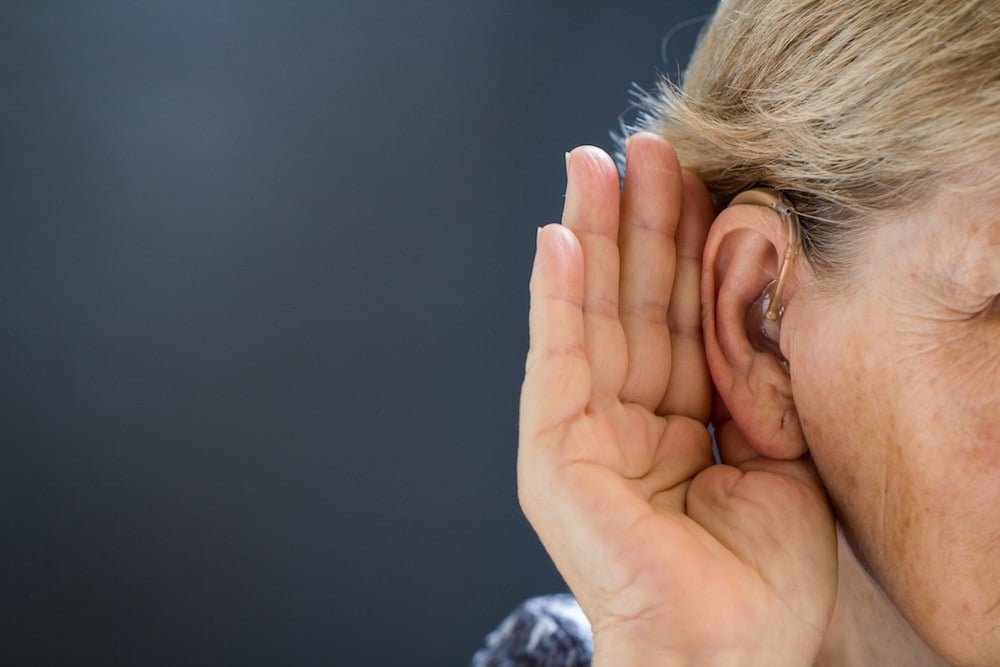
    Having to ask people to repeat themselves or nodding along politely to a conversation they cannot hear is common for the thousands of elderly Americans who live with hearing loss. Now a new study shows that hearing loss isn’t just an inconvenience: It can be a real health threat linked to depression. 

    The study, published in the journal Otolaryngology-Head and Neck Surgery, examined 5,328 Hispanic adults, testing their hearing and screening them for depression.

    Adjusting for other contributing factors to depression like educational level and cardiac health, the researchers found that moderate hearing loss made people nearly twice as likely to suffer from depression. People with severe hearing loss were about four times more likely to be depressed. 

    “People with hearing loss have trouble communicating and tend to become more socially isolated, and social isolation can lead to depression,” Justin S. Golub, assistant professor of otolaryngology-head & neck surgery at Columbia University Vagelos College of Physicians and Surgeons and lead study author told Columbia University Irving Medical Center

    Golub pointed out that the study only found a link, and researchers couldn’t definitively say that hearing loss causes depression. 

    “That would have to be demonstrated in a prospective, randomized trial,” he said. “But it’s understandable how hearing loss could contribute to depressive symptoms.”

    However, the study did find that the likelihood of depression increased with the severity of hearing loss in the individuals who were screened. 

    “The odds of having clinically significant depressive symptoms increased approximately 45% for every 20-dB increase in hearing loss,” the study authors wrote. “Objective hearing loss appears to be associated with clinically significant depressive symptoms in older Hispanic people, with greater hearing loss seemingly associated with greater odds of having depressive symptoms. Given the high prevalence of untreated hearing loss in older adults, hearing loss may be a potentially modifiable risk factor for late-life depression.”

    Hearing loss is the third most common chronic condition for the elderly and has been linked with dementia and cognitive decline. Researchers looked at Hispanics because this group may be under-diagnosed with depression because of language and cultural barriers. The results show the need for more research into hearing loss and depression in the elderly population at large. It also suggests that screening for and treating hearing loss may be an important part of health care for older patients. 

    “Most people over age 70 have at least mild hearing loss, yet relatively few are diagnosed, much less treated, for this condition,” Golub said. “Hearing loss is easy to diagnose and treat, and treatment may be even more important if it can help ease or prevent depression.”

    View the original article at thefix.com

  • Connection Between Addiction, Excess Social Media Use Explored

    Connection Between Addiction, Excess Social Media Use Explored

    A new study’s results could potentially change the way excessive social media use is treated.

    There’s been a lot of debate over whether technology and social media can be addictive, and a study has strengthened the connection between the behaviors of people with substance use disorders and those who use social media excessively. 

    “This result further supports a parallel between individuals with problematic, excessive [social media] use, and individuals with substance use and behavioral addictive disorders,” the authors of the study wrote in the Journal of Behavioral Addictions

    As part of the study, researchers asked individuals about their social media use and its effects on their lives and had them complete the Iowa Gambling Task, a measure used by psychologists to determine decision-making abilities. They found that people who performed poorly on the task were more likely to have excessive social media use. People who abuse drugs also generally performed poorly on the task. 

    “With so many people around the world using social media, it’s critical for us to understand its use,” lead study author Dar Meshi, an assistant professor at Michigan State University, said in a press release. “I believe that social media has tremendous benefits for individuals, but there’s also a dark side when people can’t pull themselves away. We need to better understand this drive so we can determine if excessive social media use should be considered an addiction.”

    Meshi added that with one-third of people on the planet using social media, researchers and health care providers need to better understand the ways this can affect health and social functioning. 

    “Our findings will hopefully motivate the field to take social media overuse seriously,” Meshi said. 

    People with substance use disorders are known for not making the best decisions, something that was also found in people who used social media heavily. 

    Meshi explained, “Decision-making is oftentimes compromised in individuals with substance use disorders. They sometimes fail to learn from their mistakes and continue down a path of negative outcomes. But no one previously looked at this behavior as it relates to excessive social media users, so we investigated this possible parallel between excessive social media users and substance abusers. While we didn’t test for the cause of poor decision-making, we tested for its correlation with problematic social media use.”

    In the study, authors concluded that the results could change how we as a society perceive and potentially treat excessive social media use. 

    “Our results have important societal implications,” they wrote. “Taking this into consideration, our current finding, which demonstrates a behavioral similarity between excessive [social media] use and substance use and behavioral addictive disorders, can influence the beliefs and practices of policy makers, therapists, and tech industry leaders.”

    View the original article at thefix.com

  • Baking Becomes Growing Outlet For Anxiety

    Baking Becomes Growing Outlet For Anxiety

    Some therapists are even prescribing baking for their patients struggling with anxiety.

    For Kelly Caiazzo, relief from her anxiety comes from an unexpected place: cooking and baking. 

    Caiazzo, 35, told The Portland Press Herald that the constant flow of negative news contributes to her anxiety. 

    “Even when I’m trying to take a rest day and take a deep breath, I’m still getting it because of social media,” she said. “It’s one headline after another about things that are going to make our country less safe from an environmental perspective.”

    So, in such instances, Caiazzo turns to prepping food. And she isn’t alone. In December, The Atlantic ran a piece about millennials turning to baking to decrease stress and anxiety. And, according to the American Psychiatric Association, stress levels are only increasing as 40% of Americans reported feeling more anxious in 2018 than the previous year. 

    It seems people are seeking out comfort foods as well, according to the Press Herald. Pete Leavitt, owner of Leavitt & Sons delis in Portland and Falmouth, said sales of his chicken potpie have skyrocketed in the last year with more than a double-digit increase. Ali Waks-Adams, executive chef at the Brunswick Inn, told the Press Herald the same can be said for their tapioca pudding. 

    Another increase has been seen in the number of people applying for jobs in the food industry, especially people with no prior culinary experience. Stacy Begin, owner of the Two Fat Cats bakeries, told the Press Herald that many “describe baking as a ‘release,’” in their resumes.

    Andrea Swanson, owner of Portland’s Scattoloni Bakery, said she has had an overwhelming increase in enrollment in her baking classes in recent years.  

    “Most of them want to do it as a hobby,” Swanson told the Press Herald, “but a lot of them, especially the bread ones, they’re into it as something to do at home to kind of decompress. They’ve tried bread machines, and it’s not the same thing.”

    Some therapists, such as Hannah Curtis of Falmouth, are even prescribing baking for their patients struggling with anxiety.

    “In baking, there are still rules we can count on,” she said. “If I do it right, and I do it in the right order, I’m going to get the right result.”

    Kathy Gunst, a South Berwick food writer and cookbook author, told the Press Herald she found comfort in baking during the hearings for Judge Brett M. Kavanaugh. 

    “People would come into my house and say ‘What is going on here?’” Gunst stated. “And I would say ‘I’m trying to stay sane. That’s what’s going on here.’” 

    For Caiazzo, the urge to cook and bake also gives her a greater sense of control. 

    “Even though I can’t control the world at large, I can have a major impact on taking responsibility for my own personal impact and actions,” she said.

    View the original article at thefix.com

  • Starbucks To Install Syringe Disposal Boxes In Some Of Its Restrooms

    Starbucks To Install Syringe Disposal Boxes In Some Of Its Restrooms

    “My coworkers and I had all experienced needles left behind in the bathroom, store, and even in our drive-thru,” said one former Starbucks employee.

    Starbucks is slated to start installing syringe disposal boxes after hundreds of workers banded together to ask the java giant to address the growing problem of dirty needles appearing in coffee shop bathrooms. 

    This week, an online petition netted more than 3,800 signatures from current and former employees begging for better protections from the health hazards of used needles. 

    “Employees risk getting poked, and DO get poked, even when following ‘protocol’ of using gloves and tongs to dispose of used needles left in bathrooms, tampon disposal boxes, and diaper changing stations,” the petition reads. “Making coffee should not come with this kind of easily detoured risk.”

    In response, the coffee chain went public with plans to install sharps containers at high-risk locations.

    “These societal issues affect us all and can sometimes place our partners (employees) in scary situations,” a Starbucks spokesperson told Business Insider. “Which is why we have protocols and resources in place to ensure our partners are out of harm’s way.”

    It’s not immediately clear when the boxes will be installed or how many locations will get them—but for some, the change can’t come quickly enough.

    “My coworkers and I had all experienced needles left behind in the bathroom, store, and even in our drive-thru,” one former employee told Business Insider. “My primary fear when I worked there would be taking out the bathroom garbages. I was terrified that if I went to take the bag out, I would get poked by a needle I didn’t know was there.”

    Accidental pokes can cost hundreds of dollars, given the cost of post-exposure drugs, the petition points out. 

    The concerns come after the coffee colossus last year announced a new policy of always leaving bathrooms open for the public following harsh criticism over the arrest of two black men who’d tried to use the restroom. Afterward, the pair sued and settled for an undisclosed sum, according to The Washington Post.

    In May, Starbucks locations across the country closed for a day of anti-bias training.

    Starbucks already trains its workers on safe disposal techniques, and employees aren’t required to do anything that makes them feel unsafe, the company told Business Insider

    “I can’t emphasize enough that if our partners are ever in a position where they don’t feel comfortable completing a task, they are empowered to remove themselves from the situation and alert their manager,” spokesman Reggie Borges told the online outlet. “As we always do, we are constantly evaluating our processes and listening to partner feedback of ways we can be better.”

    View the original article at thefix.com

  • What Does 2019 Hold For Opioid Lawsuits?

    What Does 2019 Hold For Opioid Lawsuits?

    Many are looking at the settlements with Big Tobacco to see how the opioid settlements—if there are any—might take shape.

    During 2018, as opioid overdose rates continued to soar, municipalities from around the country vowed to hold drug manufacturers and distributors accountable. This year, 2019, will show how many of the lawsuits around the opioid epidemic will pan out. 

    The plaintiffs — mostly local and county governments from around the country — hope that settlements from the lawsuits will help them recoup some of the costs of treating people addicted to opioids and maybe even help finance better treatment options going forward.

    “We are still in the throes of a public health crisis in Summit County,” Greta Johnson, a county official in Akron, Ohio, told NPR. In order to respond to that crisis, she said, the county needs funds from the major companies that caused or contributed to the epidemic. “We’re confident the court will see it that way as well.”

    Johnson’s argument, echoed in dozens of lawsuits, may sit well with Federal Judge Dan Polster, who is presiding over the largest group of lawsuits out of his Cleveland courtroom. Polster has called the opioid epidemic a “man-made plague,” and called for comprehensive solutions to the issues of addiction and recovery

    While defendants will likely try to have certain allegations dismissed on legal technicalities — like the statutes of limitations being up — Richard Ausness, a law professor at the University of Kentucky, told NPR that effort is unlikely to succeed entirely.

    “The judge has made it clear that he wants a settlement ultimately from this, along the lines of the tobacco settlement,” Ausness said. “If that is indeed the way that he feels, he is probably not going to let the defendants off the hook.”

    As the court cases proceed, the public could learn even more about practices that led to millions of Americans becoming hooked on opioids. Attorney Joe Rice, who represents some governments suing Big Pharma, said that he would like to see the information about misleading advertising and other unscrupulous practices become common knowledge. 

    “Our next battle is to get the documents that are being produced made available to the public instead of everything being filed under confidentiality agreements so we can get the facts out,” he said. 

    Many people are looking at the settlements with big tobacco to see how the opioid settlements — if there are any — might take shape. Tobacco companies have paid more than $100 billion in damages to Americans, some of which have been used to fund anti-smoking public health campaigns. A similar settlement with manufacturers and distributors could impact how future generations are educated about drug use.  

    View the original article at thefix.com