Tag: News

  • "Fortnite" Addiction Is Becoming More Prominent For Kids, Teens

    "Fortnite" Addiction Is Becoming More Prominent For Kids, Teens

    One expert says games like Fortnite are similar to heroin “once you are hooked, it’s hard to get unhooked.” 

    Whether or not tech addiction exists is still up for debate, but parents around the country are saying that their kids and teens are no doubt addicted to the video game Fortnite, prompting some parents to seek professional help for their children. 

    “This game is like heroin,” Lorrine Marer, a British behavioral specialist who works with kids with game addiction, told Bloomberg. “Once you are hooked, it’s hard to get unhooked.” 

    One NPR listener from Florida called in saying that he understands how people get hooked on the games. The listener, who is in his 30s, is nationally-ranked in a similar video game, and said that the adrenaline hit he gets from playing could easily be addictive to kids and adults. 

    “A lot of these games — I mean, my worry is they get kids addicted through chemical reactions,” he said. “If you go through a 40-minute game with 100 people, and you’re one of the last five people, your heart is beating so fast, when you actually win, they crave that rush. And that’s what they’re going back for.

    Video games are part of life for many kids today, so having healthy boundaries is important, said Sarah Domoff, a clinical child psychologist and psychology professor at Central Michigan University who directs the Family Health Lab, a training clinic that promotes healthy media use in adolescents.

    “For a lot of these different mediums, we cannot completely avoid them,” Domoff said. “What’s really imperative is to set limits early on, help children learn how to regulate their use, but then really be involved, set guidelines around use. If problems appear to arise, prevent future issues by checking to see, is my child only playing video games to the exclusion of other activities?”

    Nir Eyal, an author and tech blogger who has written about producing habit-forming tech products, said that parents need to schedule time for games and introduce healthy limits for their children. 

    “I think a big mistake that parents make is having technology in kids’ rooms. They don’t need to have the technology in the room. Keep it outside in a more family-focused place,” Eyal said. “And then prevent distraction with the technology. Your iPhone today comes with a functionality called ‘Screen Time’ where you can set limits around how long kids have access to certain apps, so then it’s not you telling them to get off the device, it’s the phone.”

    If parents suspect their child is developing an unhealthy habit around tech, Eyal said that parents need to help them figure out why that’s happening. 

    “For some folks, there are underlying issues: a lack of autonomy, confidence, connectedness, and for those type of things we need to dig deeper to figure out what we’re really trying to escape with these devices,” Eyal said. 

    View the original article at thefix.com

  • WWE Icon Jake "The Snake" Roberts On A Sober Life Beyond The Ring

    WWE Icon Jake "The Snake" Roberts On A Sober Life Beyond The Ring

    Jake “The Snake” Roberts credits his close work with Diamond Dallas Page as a crucial factor in finally becoming sober after decades of addiction.

    The rise, fall and rise again of Jake “The Snake” Roberts has played out in live arenas and on film and television screens for the better part of the last three decades. Roberts and his trademark python were among the most popular and colorful figures in World Wrestling Entertainment (WWE) in the late ’80s and early ’90s, but alcohol and drug dependency – showcased in the 1999 documentary Beyond the Mat – led to his dismissal and a lengthy descent that nearly ended Roberts’ life. 

    With the help of fellow wrestler turned fitness guru Diamond Dallas Page, Roberts returned to health and sobriety – as chronicled in the The Resurrection of Jake the Snake (2015) – and has embarked on a variety of ventures, including acting roles and the “Dirty Details Tour,” in which he shares the wildest stories from his WWE days with a live audience. In a conversation with the Asbury Park Press, Roberts discussed his health and sobriety as well as his desire to help others struggling with dependency.

    Roberts describes his “Dirty Details” appearances as a catalog of “the crazy stuff” that he and fellow WWE wrestlers got into while touring the WWE circuit. “Whether they happened in a hotel or it happened in a strip joint, you’re going to hear it,” he said. “They’re all true stories . . . and the best thing about it is the statute of limitations has run out on all of them, so I’m good there.” Roberts added that stories of classic WWE heels and babyfaces, from André the Giant to the Undertaker and Randy “Macho Man” Savage, will also be on the bill.

    Roberts is able to talk about the “crazy stuff” in his past because it’s no longer an active and toxic part of his existence. He credits his close work with Page as a crucial factor in finally gaining sobriety after decades of dependency. “It was totally up to me to finally (get sober) – it always is,” he said. “But I’d been to rehabs and stuff and they hadn’t worked. So moving in with Dallas was a different way of attacking the same old problem, and thank God he was able to.”

    Interacting with fans is a key element of Roberts’ appearances, and he hopes that anyone who might be undergoing dependency issues will look to him as a source of support. “I encourage anybody out there that’s suffering from any type of addiction or alcoholism: come on out to the show,” he said. “Let me know that you want to talk to me after the show, we’ll get you some place, sit down and I’ll see if I can’t help you got on the narrow path. It’s a lot more fun – it really is. You can have a good time sober.”


    View the original article at thefix.com

  • Rob Tanchum's New Comedy Album Finds Humor In Mental Health

    Rob Tanchum's New Comedy Album Finds Humor In Mental Health

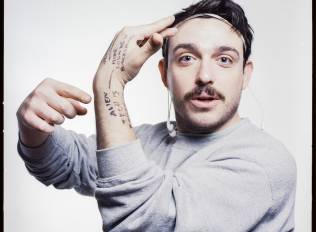
    Rob Tanchum drew from his own mental health issues to create his new rap/comedy album Disturbed, Depressed, Inadequate.

    Finding ways to cope with mental health issues can take a myriad of forms, from traditional therapy and medication to meditation, massage and yoga. Writer and comedian Rob Tanchum has found a very unique means of contending with his depression and anxiety: He used them as the basis for his comedic hip-hop concept album, Disturbed, Depressed, Inadequate.

    The New York-based Tanchum – who has written and directed work for Upright Citizens Brigade, among others – wrote and performed the album’s 11 tracks, which, according to the album’s storyline, are the inner workings of his mind after being extracted by aliens who have abducted him.

    Community creator Dan Harmon voices one of the aliens and serves as the album’s executive producer, and he is one of Tanchum’s primary inspirations in seeing the project to completion, which he describes to The Fix as “a cathartic challenge.”

    Tanchum says that he’d tried to record concept albums before Disturbed but found himself unable to see them through. “I get to a point where I’m overcome by anxiety and self-doubt,” he says. “And I want them to be perfect, and I have a pathological need for external validation.”

    As a self-described “hip-hop nerd,” he also worried about using the music form for his own project. “I don’t want to be an interloper, or defile or lessen it in any way. I constantly start and give up working on these albums because I don’t want to be that person,” notes Tanchum. 

    Disturbed got a crucial boost from Dan Harmon, whom Tanchum met after sending him an original rap song that referenced one of Harmon’s own freestyle inventions. Tanchum said that he brought pitches of song ideas as possible collaborations with Harmon but also voiced his concerns about recording a hip-hop album. “He convinced me to do it,” says Tanchum. “I wasn’t going to turn down that opportunity.”

    Once the project was set in motion, Tanchum began drawing on his own issues as the root of the material. “I’m a comedy writer, and just by virtue of who I am, my mental health always seeps in,” he says. “You write about what you know, and that’s the perspective I’m interested in. I try to uncover my neuroses and look at myself, my depression and my anxiety as character traits.”

    Despite his concerns and self-doubt, recording Disturbed proved to be a positive experience for Tanchum. “It’s been nice to hear from people who have said that it’s exactly how they feel,” he says. “And I listened to the album months after making it, and it was really helpful for me to hear it because I was at a particularly low point.”

    Tanchum also cites the NBC series Parks and Recreation as having the sort of impact he’d like to have with listeners. “There are so many characters [on the show] that are dealing with depression and feelings of failure, and getting back up after those things,” he explains. “That’s what defines you, and that’s the kind of thing I want to make – something funny but helpful.”

    Disturbed, Depressed, Inadequate is currently available via iTunes, SoundCloud, Spotify and TIDAL. It’s also available as a special edition cassette from Harmon’s SBI Press, which features 35 minutes of bonus material and a 10-minute improv scene.

    View the original article at thefix.com

  • Psychiatric Directives May Be A Game Changer For Mental Health Patients

    Psychiatric Directives May Be A Game Changer For Mental Health Patients

    Psychiatric advance directives give mental health patients a way to express ahead of time, when they are in a sound state of mind, how they would like to be treated during hospitalization or treatment.

    Steve Singer, who has bipolar and borderline personality disorders, knows that he sometimes needs to go to the hospital. However, he also knows that certain treatments from staff — like getting the police involved or keeping Singer in a locked room — can make his condition much worse, not better. 

    Because of this, Singer drafted a psychiatric advance directive, a document that is entered in his medical chart and dictates his wishes, even when he is unable to express them. 

    “That psychiatric advance directive, I think is so important,” he told The New York Times. “It allows me to turn things around.”

    For mentally ill patients and their families, hospitalization and treatment can be terrifying. While people are experiencing psychosis or other symptoms of mental illness they are often desperate for support, but certain treatments or medications can exacerbate the situation rather than calm it. 

    Psychiatric advance directives allow people with mental illness agency over how they are treated by giving them a means to express ahead of time, when they are in a sound state of mind, how they would like to be treated. The documents can cover issues such as which medications should be avoided, what words can help cut through psychosis or which family member can make decisions during crisis. The directives are added to a patient’s chart and should be followed as long as the conditions within meet the patient’s best interests. 

    This type of advance directive is authorized in 27 states and can be incorporated into different types of medical directives in other states. Now, the Substance Abuse and Mental Health Services Administration is considering ways to encourage directives, and Medicare and Medicaid are requiring hospitals to ask if patients have a directive. As awareness grows, clinics are being held around the country to help patients draft psychiatric advance directives.

    Effective directives “would enhance people receiving appropriate treatment,” said Dr. Mark Rapaport, chairman of psychiatry and behavioral sciences at Emory University. “But this is going to be really hard to do.”

    The directives need to be notarized and given to medical professionals or be logged in the state’s system. They also need to be realistic, requesting treatment that medical professionals can provide in a crisis. 

    Dr. Marvin Swartz, a Duke psychiatry professor, said that just the act of drafting a directive can be empowering for patients and improve their interactions with their health care team. He offered 239 patients the opportunity to write a directive and found that those who did had fewer crises and involuntary hospitalizations. 

    View the original article at thefix.com

  • Meth, Opioid Use Rises Among Pregnant Women

    Meth, Opioid Use Rises Among Pregnant Women

    Researchers report that geography and finances played a role in the rate of amphetamine, opioid use among pregnant women.

    New research points to the troubling rise of amphetamine and opioid use among pregnant mothers is on the rise, particularly in rural areas.

    The research, according to Forbes, was conducted by examining 47 million US deliveries over 12 years. The results state that from 2008 to 2015, US births associated with amphetamine use doubled from 1.2 per 1,000 to 2.4 per 1,000. Of those, the majority were from methamphetamine use. Likewise, the rate of opioid use among expectant mothers also grew rapidly in a similar timeframe, quadrupling from 1.5 per 1,000 births to 6.5 per 1,000 births.

    According to researchers, geography played a role. By 2014-2015, amphetamine use during pregnancy resulted in “adverse outcomes” in about 1% of deliveries (11.2 per 1,000) in the rural West. Additionally, research shed light on the fact that the greatest amount of opioid misuse during pregnancy was concentrated in the rural Northeast and led to delivery complications in 3% of women (28.7 per 1,000 deliveries).

    Research also indicated that higher numbers of expectant mothers using amphetamines and opioids were from poor areas, had public insurance and were non-Hispanic white.

    Lead study author Lindsay Admon of the University of Michigan’s Von Voigtlander Women’s Hospital stated that in such cases, there are often barriers to the right type of care. 

    “Early and adequate access to prenatal care for women with substance use has been shown to improve birth outcomes,” Admon said, according to Forbes. “However, geographic disparities have a major impact on the health and well-being of pregnant women and infants. There are significant barriers to obstetric care access in many rural communities, particularly for women with substance use.”

    Researchers also discovered that in mothers using amphetamines, the risk of death and birth complications was 1.6 times that of mothers using opioids. 

    Admon noted in a press release that these results were surprising.

    “We know from our previous research on maternal health disparities that there are disproportionately higher rates of substance affected births in rural communities. . . . When we looked at the specific types of substances driving this disparity, we were surprised to find that amphetamine use accounted for such a significant portion,” she added. “Our findings suggest both amphetamine and opioid use are growing public health crises that affect delivery and birth outcomes.”

    Admon added that it is vital that medical professionals evaluate pregnant women for substance use disorder. 

    “It is critical that health providers employ universal screening for substance use early in pregnancy,” Admon stated. “Optimizing access to prenatal care is a crucial mechanism to connect women with the services they need for their health and their baby’s health.”

    View the original article at thefix.com

  • How To Eat To Support Your Recovery

    How To Eat To Support Your Recovery

    A breakdown of healthy foods to eat that will help rebuild the health of those in recovery.

    Getting clean and sober is a huge accomplishment, one that needs all the support it can get. The foods you eat can dramatically impact the quality of your sobriety, so choosing to eat for the health of your brain is hugely supportive to long-term recovery.

    After initially getting clean, many people struggling to stay that way find themselves understandably binging on sugar, caffeine and white bread products to calm the storm within. Unfortunately, the immediate satiation leads over time to worsening coping mechanisms – the opposite of what is needed in early sobriety.

    Whole foods (simply meaning foods that have been minimally processed and are free from additives such as preservatives, added sugars, etc.) are the best choice, as nutrients in those foods can increase brain health (which assists in elevating and steadying mood), alleviate some of the symptoms of withdrawal, and speed the body and brain healing process. Organic, whole foods have the benefit of being without pesticide sprays which may put a further burden on an already stressed brain.

    US News reports that many rehab clinics serve foods geared toward rebuilding the health of the client. There are specific nutritional elements particularly helpful in this goal. Tyrosine is an amino acid that converts dopamine during the digestion process.

    Dopamine is a “feel good” neurotransmitter which is often at abnormally low levels in early recovery. This lack of dopamine is concurrent with low energy and motivation, apathy, a depressed mood and intense substance cravings. Eating tyrosine-rich foods will increase dopamine levels. High-tyrosine foods include bananas, sunflower seeds, soybeans, lean beef, lamb, pork, whole grains and cheese.

    L-glutamine is an amino acid that offers immune and antioxidant benefits and can help reduce sugar cravings. L-glutamine heavy foods include dark, leafy greens like kale, spinach and parsley, and beets, carrots, beans, Brussels sprouts, celery, papaya and protein-rich foods like beef, chicken, fish, dairy products and eggs.

    Antioxidants in general help to rebuild your immune system and speed the body’s detoxing process during withdrawal. Antioxidant-rich foods include berries like blueberries and strawberries as well as leeks, onions, artichokes and pecans.

    GABA is good for lessening early recovery struggles with anxiety, restlessness and insomnia. Kefir (a fermented yogurt-like drink), shrimp and cherry tomatoes are some GABA-rich foods.

    Tryptophan is another essential amino acid in the body that helps create serotonin, the famous neurotransmitter that brings an uplifted mood. It is found in a number of foods, including cheese, turkey, lamb, pork, tuna fish, oat bran, and beans and lentils.

    View the original article at thefix.com

  • Pete Davidson Gets Candid About Cyberbullying, Mental Health

    Pete Davidson Gets Candid About Cyberbullying, Mental Health

    Pete Davidson, who has been vocal about his mental health issues, penned a post on Instagram about the cyberbullying he has received due to his former relationship with Ariana Grande.

    Comedian and Saturday Night Live writer Pete Davidson is opening up about the online attacks he has fielded since his breakup with Ariana Grande, and while he was dating the singer. 

    Davidson said that people have bullied him online and in public, bringing up his mental illness and suicidal ideation, during and after his relationship with Grande. The pair started dating in May and quickly got engaged, before splitting up in October. 

    Davidson has been open about being diagnosed with borderline personality disorder in the past and took this opportunity to talk frankly about cyberbullying. 

    “I’m trying to understand how when something happens to a guy the whole entire world just trashes him without any facts or frame of reference,” Davidson wrote on Instagram on Monday. ”I’ve been getting online bullied and in public by people for 9 months. I’ve spoken about BPD and being suicidal publicly only in the hopes that it will help bring awareness and help kids like myself who don’t want to be on this earth. I just want you guys to know. No matter how hard the internet or anyone tries to make me kill myself. I won’t. I’m upset I even have to say this.”

    Davidson was diagnosed in 2017 and has been open about how his mental illness affects him. 

    “I’ve been having a lot of problems,” he told Marc Maron on the WTF podcast in September 2017, according to Time. “This whole year has been a f—ing nightmare. This has been the worst year of my life, getting diagnosed with this and trying to figure out how to learn with this and live with this.”

    However, Davidson told Variety that he has been educating himself in order to learn how to live with his illness. 

    “The last few years have been real rough with me,” he said. “I took all these mental health classes and really spent a lot of time getting me good.”

    In May, he talked about the misconception that people with BPD can’t have healthy relationships. 

    “Normally I wouldn’t comment on something like this cause fuck you,” he wrote, according to The Cut. “But I been hearing a lot of ‘people with bpd can’t be in relationships’ talk. I just wanna let you know that’s not true. Just because someone has a mental illness does not mean they can’t be happy and in a relationship. It also doesn’t mean that person makes the relationship toxic. Everybody is different and there are a lot of treatments for mental illnesses and I have done/am doing all of them … I just think it’s fucked up to stigmatize people as crazy and say that they are unable to do stuff that anyone can do.”

    View the original article at thefix.com

  • Rapper Lil Xan Checks into Rehab

    Rapper Lil Xan Checks into Rehab

    Lil Xan had announced in November that he intended to enter rehab but he had issues finding a bed in a treatment facility.

    Lil Xan has gone to rehab for the first time, according to an Instagram post penned by his girlfriend. Lil Xan, or Diego Leanos, is a 22-year-old rapper from the west coast with a big following. Since the recent overdose deaths of Mac Miller and Lil Peep – both idols of Lil Xan – those around Xan had heightened concerns about his safety.

    Lil Xan recently got tattoos memorializing Mac Miller, and CNN reported that Xan said in an interview that Miller’s death made him want to quit music.

    Lil Xan entered rehab hoping this would be a new start to his life; he declared his rap moniker would be changed from Xan, which is short for Xanax, to his actual name, Diego.

    Diego had announced in November that he intended to enter rehab, but had issues finding a bed in a treatment facility. On December 2, Diego’s girlfriend Annie wrote on his Instagram:

    “This sweet angel of mine officially entered rehab this morning. I’m sorry for all the confusion circulating about Diego leaving for rehab,” Smith wrote alongside a photo of Diego. “It’s a tricky thing since people are coming in and out of the facility so often that rooms end up getting switched around and dates can be pushed back. I’m so beyond proud of this precious boy for being the strongest person I know and for wanting to live a better life. Please keep him in your prayers, he is doing his best right now to find peace with himself. We love you all so much, and we appreciate all of the support. I love him beyond words and cannot wait to see what the future holds for our family. xanarchy family – love, Annie”

    A later Instagram post, also by Annie, read, “Diego was just admitted into his first treatment. He loves each and every one of you sending good wishes and prayers to him,” she captioned a selfie of the musician. “We thank you all so very much for all of the love and support you are sending his way. He will be back soon, with another top 10 album we love you all xanarchy family ! – love, Annie”

    Diego has been public about his ongoing struggle with opioid addiction. In November he told TMZ, “As far as my sobriety goes right now, there was a long period of time where I was clean. But I relapsed. . . . Any other addict would understand that that s—t just happens. You just relapse — you don’t want to — and then you get clean again. It’s like a process. You need treatment and help and sometimes that doesn’t even help. It has to come from within. That’s what I’ve learned.”

    View the original article at thefix.com

  • Dennis Quaid: "I Saw Myself Being Dead" During A Cocaine Binge

    Dennis Quaid: "I Saw Myself Being Dead" During A Cocaine Binge

    Dennis Quaid said in a recent interview that in the midst of his cocaine addiction he was doing two grams a day.

    Actor Dennis Quaid, who has said that he did cocaine almost daily during the ’80s, told The Sunday Times this week that during one binge he saw himself being dead, a frightening experience that led the star to put himself in rehab. 

    “I was doing about two grams a day,” Quaid said, according to People. “I was lucky. I had one of those white-light experiences where I saw myself being dead and losing everything I had worked for my whole life.”

    That led Quaid to check into rehab, which he completed in 1990, before marrying actress Meg Ryan in 1991. The pair were married until 2001. 

    Quaid used to use cocaine and alcohol together. 

    “I would do coke and I would use alcohol to come down,” he said. “I liked coke. I liked it to go out.”

    Quaid said that when he stopped using he still experienced cravings for the drug, saying he “missed it for quite a while.” Earlier this year, Quaid said that getting sober was a challenge. 

    “A lot of it had to be learned,” he said during an interview with People magazine in March “And part of it is just where I come from, I guess. Sometimes your hopes get ahead of your dreams, so you can get disappointed that way. Adversity is the thing that teaches you how to handle that.”

    However, these days Quaid, 64, gets his high from working out regularly. 

    “I’ve always had a high metabolism. I get a high from exercising. I really do,” he said. “I think it does what all those antidepressants are supposed to do.”

    He has also taken up meditation, “which puts me into the present moment because that’s all there really is,” he said. “Because either you worry about the future or there’s something about the past, but if you’re in the present moment, then there’s no problem at all. I’m sitting here. I’m just fine.”

    Quaid said earlier this year that despite his past drug use and three public divorces, he’s content now. 

    “I’m most happy when I just kind of get out of my own way and let things happen,” he said. “I’m not the guy that’s living an enlightened experience all the time; I blow my top many times. In life we’re either forced, kicking and screaming, into change—or we learn to cope with it. But I really am at peace now.”

    View the original article at thefix.com

  • Why Men May Be More Susceptible To Internet Gaming Disorder

    Why Men May Be More Susceptible To Internet Gaming Disorder

    A new study examined the brain scans of men and women with online gaming disorder to figure out if there were any notable differences. 

    When it comes to issues with online gaming, men may be more likely to develop problematic habits than women. 

    According to CNN, new research has revealed that in the brains of men with internet gaming disorder, changes are indicated in the regions of the brain associated with impulsivity. In comparison, the brain scans of women also with the disorder showed no such changes. 

    Yawen Sun, senior author of the study and diagnostic radiologist at Ren Ji Hospital in China, told CNN via email that males may be more prone to internet gaming disorder. The disorder was only recently added to the World Health Organization’s International Classification of Diseases and is defined as when an “online gamer plays compulsively to the exclusion of other interests, including school and family life.”

    “Males with IGD (Internet Gaming Disorder) were found to be more affected by genetic influences than females with IGD,” Sun wrote. 

    She added that high levels of testosterone in younger males could add to behaviors “such as taking greater risks, being less responsive to punishment, and exhibiting more aggressive behaviors.”

    For the study, Sun and fellow researchers sought out 32 men and 23 women, all of whom had internet gaming disorder, as well as 30 males and 22 females without the disorder. 

    The 105 study participants all had resting-state functional MRI scans, according to CNN. Sun states that this particular type of scan “measures brain activity by detecting associated changes in blood flow.”

    In examining the results, the researchers found differences in the brains of men with the gaming disorder versus the brains of men without. In the brains of those affected with the disorder, Sun says there were alterations of brain function in the superior frontal gyrus, which is a part of the prefrontal lobe that has to do with impulse control. When comparing the scans of both sets of women, there were no such differences. 

    According to Sun, the brain changes that showed in the MRIs “may be one of the risk factors, not the result” of internet gaming disorder. 

    Sun also stated that “the cortex matures later in males and does not catch up to females in the prefrontal cortex regions by adulthood.” As such, she says younger males have demonstrated less impulse control than their female counterparts.

    “Numerous studies, including neuroimaging studies, have found that IGD and substance addiction share similar neural mechanisms,” Sun said. “I speculate that males are more susceptible to the effects of long-term online-game playing in comparison with females,” she added.

    Sun says more research is needed but that doing such research in China may prove difficult.

    “Most parents in China do not regard IGD as a disease,” she said. “They think there is no need to do the MRI examination.”

    View the original article at thefix.com