Tag: News

  • Anti-Marijuana Attorney General Jeff Sessions Resigns

    Anti-Marijuana Attorney General Jeff Sessions Resigns

    “Our hope is the next attorney general will recognize that it is not politically popular to escalate the war on drugs,” said one drug reform advocate.

    Jeff Sessions is out as U.S. Attorney General.

    The former U.S. Senator from Alabama resigned on Wednesday (Nov. 7), a day after the midterm elections.

    “At your request I am submitting my resignation,” Sessions wrote in a letter to the White House. His chief of staff, Matthew Whitaker, will serve as acting attorney general until a permanent replacement is found.

    Sessions’ departure from the Department of Justice is cause for celebration for advocates of drug policy reform.

    “He’s been an absolute disgrace on drug policy. We would welcome any attorney general whose policy ideas would move beyond the 1980s,” said Michael Collins, interim director of national affairs at the Drug Policy Alliance.

    The 71-year-old former Alabama senator’s opinion of marijuana in particular is perhaps best illustrated by this statement he made during a 2016 Senate hearing: “Good people don’t smoke marijuana.”

    He also said in February 2017, “I don’t think America is going to be a better place when people of all ages, and particularly young people, are smoking pot. I believe it’s an unhealthy practice, and current levels of THC in marijuana are very high compared to what they were a few years ago, and we’re seeing real violence around that.”

    Last year, he took aim at sentencing reform, telling federal prosecutors to stop seeking leniency for low-level drug offenders and start seeking the toughest penalties possible, as NBC News reported at the time.

    And in January, Sessions reversed an Obama-era policy—the 2013 Cole memo—that prioritized marijuana cases that presented a safety threat (involving minors, organized crime, etc.) but otherwise left alone U.S. states that have approved marijuana in some capacity. In his own memo, the attorney general called it a “return to the rule of law.”

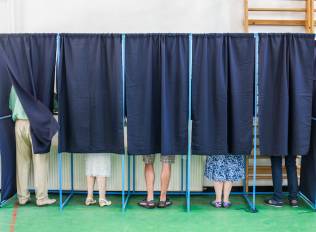
    But despite Sessions’ anti-marijuana stance, on Tuesday, Michigan became the 10th state to legalize cannabis for adult use, and two others—Utah and Missouri—approved medical marijuana.

    Marijuana policy reform has been winning with each election, and appears more popular than ever.

    “Our hope is the next attorney general will recognize that it is not politically popular to escalate the war on drugs,” said Collins of the Drug Policy Alliance.

    View the original article at thefix.com

  • Medical Marijuana Participation Drastically Drops In Oregon

    Medical Marijuana Participation Drastically Drops In Oregon

    Experts have a number of theories as to why the state’s medical marijuana program has experienced a 40% drop in participation.

    The number of people participating in the medical marijuana program in Oregon has dropped by about 40% this year, as more people opt to get their cannabis from recreational outlets rather than navigate the complex medical marijuana system.

    “Marijuana is legal in Oregon,” Oregon Health Authority spokesman Jonathan Modie told the Sun Herald. “You don’t need a medical card. We’re not surprised we’ve seen a drop.” 

    Medical marijuana patients don’t need to pay the same taxes as recreational users, who are taxed at about 20%. However, medical patients need to pay a $200 annual registration fee to renew their license and are subject to tight restrictions. 

    Diana Calvert of River City Retail marijuana dispensary says she repeatedly heard from customers who have left the medical marijuana system. 

    “They say, ‘I let my medical card expire. It’s too expensive to renew. I’ll just pay the taxes.’”

    At the same time, growers are opting to switch to recreational sales rather than learning a complex new tracking system that the state requires for medical sales or exchanges.

    “I think a lot of people say, ‘Let’s cut my overhead and go to the rec side,’” Republican State Rep. Carl Wilson said. 

    The changes could reflect that some people on the medical marijuana program were just trying to access the drug legally, said Rob Bovett, legal counsel for the Association of Oregon Counties.

    “Those that were getting an [medical marijuana] card as a ruse to get marijuana for recreational purposes … no longer need to continue the ruse after we legalized recreational marijuana,” he said. 

    The medical system in Oregon was legalized in 1998, and allows registered participants to grow their own cannabis or obtain it from someone who grows it for them.

    However, a new tracking system has made exchanging marijuana on the medical market more complex, so that many people who previously grew cannabis for medical patients have stopped doing so. 

    “Many patients are just unable to find a grower to supply them. Previously I think it was relatively easy for a patient who didn’t know anyone, in relatively short order, to find a grower to provide free or low-cost cannabis,” said Cedar Grey, a grower and member of the Oregon Cannabis Commission, a state advisory body. “With the changes they’ve made [to the medical marijuana program], it’s much more difficult to care for other patients. Therefore, the number of growers willing to do that has dropped significantly.”

    Recreational use of marijuana was legalized in 2014, allowing people to grow their own plants or obtain cannabis from licensed growers and dispensaries. 

    Despite the fact that it’s arguably easier than ever to obtain pot, Pete Gendron, president of the Oregon SunGrowers Guild, an association of growers, said that the breakdown of the medical market could affect low income people particularly hard. 

    “They don’t have the money to go to the corner dispensary,” he said.

    View the original article at thefix.com

  • Can Tetris Help Alleviate Anxiety?

    Can Tetris Help Alleviate Anxiety?

    Researchers explored whether the classic game could have positive effects on those battling anxiety.

    Could an old-school video game help ease your anxiety? New research points to yes. 

    According to NPR, Kate Sweeny, a psychologist at the University of California, Riverside, conducted research into whether the game Tetris can have positive effects for those struggling with anxiety. 

    The premise of the game is to rotate and adjust moving tiles so they fit into a flat line at the bottom of the screen.

    “Years of my life were lost disappearing into a game of Tetris on my Nintendo system,” Sweeny told NPR.

    The game, according to Sweeny, can help ease anxiety by allowing players to enter a state psychologists call “flow.”

    “The state of flow is one where you’re completely absorbed or engaged in some kind of activity,” Sweeny told NPR. “You lose your self-awareness, and time is just flying by.”

    In conducting the study, Sweeny’s team focused on people who were waiting for “uncertain, potentially life-altering news” with the idea that playing Tetris could help their minds focus elsewhere for a period of time.

    Specifically, they took a group of 300 college students and told them their peers would be rating how attractive they were. 

    “I know, it’s kind of cruel, but we found it’s a really effective way to get people stressed out,” Sweeny told NPR.

    While the students were waiting for the results, they were instructed to play Tetris. There were three levels of difficulty assigned to different students: one slow, easy and boring; one fast, challenging and frustrating; and one classic version, meaning the game is adjusted based on the player’s ability. 

    While players still reported varying degrees of worry, the group that played the classic version reported slightly increased levels of positive emotions and slightly decreased levels of negative ones. 

    “It wasn’t a huge difference, but we think it’s noticeable,” Sweeny told NPR. “And over time, it can add up.”

    Games aren’t the only way to reach a state of flow, according to Elizabeth Dunn, a psychologist at the University of British Columbia who studies happiness.

    “Think of the activity that grabs your attention and doesn’t let it go,” Dunn told NPR. “For me, it’s mountain biking.” 

    While Dunn was not involved in the research, she says the results were not surprising.

    “I can’t say I found this study particularly surprising at all,” she told NPR. “Mostly because, based on previous research, it’s hard to find a situation where the experience of flow isn’t a good thing.”

    Dunn also noted that the research indicates “that even in tough moments, we should push ourselves to do something challenging to get us out of the moment.”

    View the original article at thefix.com

  • El Chapo Trial Begins In New York City

    El Chapo Trial Begins In New York City

    Joaquín Guzmán is accused of running the Sinaloa drug cartel from 1989 to 2014.

    The high-security trial for one of the world’s most well-known criminals—Joaquín “El Chapo” Guzmán—began this week in New York City. 

    The federal trial, according to AFP, began Monday (Nov. 5) and is expected to last about four months. 

    Guzmán is accused of having led the Sinaloa cartel from 1989 to 2014. During those years, prosecutors say that the cartel was responsible for bringing 340,892 pounds of cocaine into the U.S. from Mexico, in addition to heroin, methamphetamine and marijuana—making a total of $14 billion. 

    Currently facing charges of international drug trafficking, conspiring to kill rivals, gun charges and money laundering, Guzmán was extradited from Mexico in January 2017 and has been in solitary confinement in the U.S. ever since, spending 23 hours per day in his cell.

    He is only allowed visits from his lawyer and twin daughters—even his wife, Emma Coronel, is not allowed to see him. 

    This is not the first time Guzmán has been captured. In 1992, he was arrested in Guatemala and spent more than seven years in prison, but then escaped in 2001. He was again arrested in 2014, then escaped 14 months later before being arrested most recently in January 2016. 

    While the alleged cartel leader maintains his innocence, the government has been building a case against him, which includes more than 300,000 pages of documents and at least 117,000 recordings.

    AFP reports that of the several hundred witnesses will testify, some are in witness protection programs while others are in jail. 

    The trial is expected to be the most expensive federal trial in U.S. history, costing millions of dollars. 

    Jury selection took place Monday (Nov. 5) through Wednesday. CNN reports that five men and seven women were chosen. The 12 individuals include “several immigrants, Spanish speakers and people with relatives in law enforcement.”

    Some potential jurors expressed fear over being involved in the trial.

    “What scares me is that his family could come after jurors and their families,” one of the women told the court, according to AFP. She added that she felt “nervous” and “unsafe.”

    CNN reports that other jurors were dismissed for various reasons; one juror asked for Guzmán’s autograph and another said he liked to order a sandwich called “El Chapo.”

    The 12 chosen jurors will remain anonymous and will be escorted to federal court daily by U.S. Marshals, CNN reports.  

    View the original article at thefix.com

  • Ariana Grande: Therapy Saved My Life So Many Times

    Ariana Grande: Therapy Saved My Life So Many Times

    “I’ve got a lot of work to do but it’s a start to even be aware that it’s possible.”

    Singer Ariana Grande has had quite a few painful moments over the last 18 months. From the Manchester Arena bombing at her May 2017 concert to losing her ex-boyfriend, rapper Mac Miller, to a drug overdose in September—life hasn’t been easy for the 25-year-old pop star.

    On Monday, Grande lent some words of encouragement for people who may benefit from counseling. Responding to a tweet, she said, “In all honesty, therapy has saved my life so many times. If you’re afraid to ask for help, don’t be. You don’t have to be in constant pain and you can process trauma. I’ve got a lot of work to do but it’s a start to even be aware that it’s possible.”

    Grande has not shied from talking about her own battles. In an emotional interview with Ebro Darden of Beats 1 radio in August, the singer emphasized the importance of helping one another through the good and the bad.

    She said that her song “Get Well Soon” is about “just being there for each other and helping each other through scary times and anxiety. We just have to be there for each other as much as we can because you never fucking know.”

    She added that the song, which appears on her latest album Sweetener, is “also about personal demons and anxiety, more intimate tragedies as well. Mental health is so important. People don’t pay enough mind to it… People don’t pay attention to what’s happening inside.”

    Not only did she lose her ex-boyfriend Mac Miller (born Malcolm McCormick)—who she called “my dearest friend”—this year, she was the target of shame and blame from some misguided individuals.

    Responding to Mac fans who blamed her for triggering his fatal overdose, she said, “I am not a babysitter or a mother and no woman should feel that they need to be. I have cared for him and tried to support his sobriety and prayed for his balance for years (and always will of course) but shaming/blaming women for a man’s inability to keep it together is a very major problem.”

    A medical examiner confirmed this week that the Pittsburgh rapper had died from mixed drug toxicity of fentanyl, cocaine and alcohol.

    McCormick was candid about his drug use, and seemed to struggle to find a balance. In a 2015 interview with Billboard, he said, “I’m not doing as many drugs. It just eats at your mind, doing drugs every single day, every second. It’s rough on your body.”

    View the original article at thefix.com

  • Demi Lovato Is Reportedly Out Of Rehab

    Demi Lovato Is Reportedly Out Of Rehab

    A source claims the pop star is spending time at a sober living facility in Los Angeles.

    Singer Demi Lovato is reportedly out of rehab, having achieved 90 days of sobriety following her near-fatal overdose in July. 

    “She just got back to LA a couple days ago,” a source told PEOPLE. “She seems to be doing well so far.”

    The singer was spotted over the weekend out and about in Los Angeles. On Saturday she was seen at Matsuhisa restaurant in Bev Hills with clothing designer Henry Levy.

    TMZ reports that the pair were smiling and happy, holding hands within the restaurant. 

    According to E! News, a source says that Lovato is “also spending time at a sober living facility, where she has a great support system.”

    The source adds that the singer is “taking it slowly and getting back to life one day at a time. She’s not rushing to figure out where she’s going to live permanently.”

    On July 24, Lovato was found unresponsive in her home, reportedly following a night with her dealer taking “aftermarket” pills. She spend two weeks in the hospital before heading to inpatient treatment at an undisclosed facility.

    Last week, the 26-year-old singer’s mother, Dianna De La Garza, said that Lovato had reached a recovery milestone.

    “She has 90 days,” De La Garza said. “I couldn’t be more thankful or more proud of her because addiction being a disease, it’s work. It’s very hard. It’s not easy, and there are no shortcuts.”

    During the same interview, De La Garza revealed that she knew her daughter’s sobriety was slipping even before she learned about the overdose. 

    “I knew that she wasn’t sober. I didn’t know what she was doing because she doesn’t live with me and she’s 26,” she said. On the day that Lovato was hospitalized, De La Garzo said she received an alarming text that said “I just saw on TMZ and I’m sorry.”

    “Before I could get to TMZ, I got the phone call from her assistant and she said, ‘We’re at the hospital.’ So then I knew, OK, she’s not gone. She’s here,” De La Garzo recalled. “And I said, ‘What’s going on?’ And the words that I heard are just a nightmare for any parent: ‘Demi overdosed.’” 

    Lovato has been open about her struggles with mental illness and substance abuse in the past. However, her social media accounts have been quiet since she posted in August, about her relapse. 

    “I have always been transparent about my journey with addiction,” she wrote. “What I’ve learned is that this illness is not something that disappears or fades with time. It is something I must continue to overcome and have not done yet.”  

    She continued, “I now need time to heal and focus on my sobriety and road to recovery. The love you have all shown me will never be forgotten and I look forward to the day where I can say I came out on the other side. I will keep fighting.”

    View the original article at thefix.com

  • Suspect In Deadly Rehab Shooting Taken Into Custody

    Suspect In Deadly Rehab Shooting Taken Into Custody

    The suspect denied responsibility for the shooting.

    A suspect in Monday’s shooting at a California recovery center is now in custody, according to authorities.

    Authorities believe Davance Lamar Reed was the person who opened fire at Helen Vine Detox Center in San Rafael early Monday morning (Nov. 5).

    Helen Vine, on Smith Ranch Road, is a licensed 26-bed co-ed residential detoxification program for people with alcohol and drug addiction as well as co-occurring psychiatric problems, according to the Sacramento Bee.

    Three people were shot—leaving one dead and two with life-threatening injuries.

    The deceased victim was identified as Nathan Lamont Hill, 52. The two injured are 32-year-old Anthony Dominguez Mansapit, an employee at the facility, and 30-year-old Brittney Kehaulani McCann. As of Monday, they remained in intensive care at Marin General Hospital.

    McCann is said to have a dating relationship with Reed, according to the Marin County Sheriff’s Office. The Marin resident, who friends say has a 7-year-old son with the suspect, was trying to drop Reed off at the recovery center, but instead he began shooting, according to her father and sister.

    The shooting victim is a “genuinely empathetic person” who wanted to help Reed, a friend told KTVU.

    Reed was arrested for an unrelated incident that occurred about an hour after the shooting. Police began pursuing Reed after spotting his Hyundai Elantra, which belonged to the mother of shooting victim Mansapit, weaving on the highway, according to KTVU.

    It was not until later that police learned that Reed was a suspect in the shooting at Helen Vine Detox Center.

    According to the sheriff’s office, Reed “made admissions that tied him to the crime scene” at Helen Vine.

    The suspect denied responsibility for the shooting. “I didn’t shoot nobody. I shouldn’t be here,” he told KTVU from jail. He said he is withdrawing from a dependence on Xanax. The anti-anxiety drug was discovered in the vehicle he was in during the police chase that ended in his arrest.

    Reed is being held at Sonoma County Jail. His next court appearance is scheduled for Nov. 15.

    Buckelew Programs, the non-profit organization that oversees the program at Helen Vine and other facilities in Marin, Napa and Sonoma counties, expressed its condolences in a social media post: “Our hearts are with the staff, clients and families affected at Helen Vine Recovery Center.”

    View the original article at thefix.com

  • Corrections Officer Accused Of Attempting To Bring Drugs Into Prison

    Corrections Officer Accused Of Attempting To Bring Drugs Into Prison

    Officers believe the man intended to distribute drugs found in his car to inmates in the jail.

    A Camden, New Jersey corrections officer has been suspended and charged after allegedly attempting to bring drugs into a correctional facility with the intention of selling them to inmates. 

    According to NJ.com, Christopher Bowie, 47, was caught with 21 Suboxone strips, four pills suspected to be oxycodone and six pills suspected to be Xanax. The substances were found on him as well as in his vehicle, according to court documents and a press release from the Camden County Prosecutor’s Office. 

    Officers believe Bowie intended to distribute the drugs in the jail, though they did not provide a reason for their suspicion. 

    Bowie was immediately suspended, and the internal affairs unit and the prosecutor’s office are investigating. Bowie is facing charges of distributing a controlled dangerous substance, possession of a controlled dangerous substance and official misconduct, according to the prosecutor’s office. 

    New Jersey isn’t the only state confronting such actions from corrections officers. 

    On Monday (Nov. 5) an Arizona detention officer was arrested on suspicion of bringing heroin and other contraband into the Mohave County Adult Detention Facility, according to AZ Central

    A Facebook post from the Mohave County Sheriff’s Office states that Ashley Desiree Aquino, 24, was questioned after law enforcement officials received a tip about the smuggling. Though the heroin was disposed of before Aquino was searched, other contraband was found and she admitted to bringing it into the facility. 

    “I hold all of my personnel accountable to their Oath of Office and will ensure that every measure is taken to fully prosecute Aquino for her actions,” said Sheriff Doug Schuster.

    In October, a former Georgia Department of Corrections officer pleaded guilty after being paid by an inmate to bring meth and marijuana into a prison in North Georgia, according to the Atlanta Journal-Constitution

    Tiffany Cook, 34, was caught with more than 118 grams of methamphetamine and 150 grams of marijuana in July, after police received a tip that she had been smuggling such substances into the prison.

    In 2015, CNN reported in-depth on the issue, even speaking with one former guard who had fallen into smuggling for inmates. Gary Heyward worked at New York’s Rikers Island and was facing financial struggles when an inmate approached him about bringing cigarettes in. In speaking with CNN, Heyward reflected back on his prison guard training instructor.

    “He said, ‘Look to your left. Now look to your right. One of you is going to smuggle something in, some inmate is going to talk you into doing bad,’” Heyward told CNN. “I thought, ‘Oh, no, not me.’ But, you know, you never think it’s going to be you.”

    While in prison for two years, Heyward wrote a self-published memoir called Corruption Officer: From Jail Guard to Perpetrator Inside Rikers Island.

    “A lot of people will look at what’s going on in New York… and wonder why,” Heyward said. “People do what they do for different reasons. It’s just people being human, letting that thing that’s most weak in them get the better of them.”

    View the original article at thefix.com

  • Mixed Results For Marijuana Legalization At The Polls

    Mixed Results For Marijuana Legalization At The Polls

    Advocates received a major win in Michigan, which became the first midwest state to legalize recreational marijuana.

    Marijuana advocates hoping for a mandate on legalization instead got a mixed result at the polls on Tuesday, when Michigan became the 10th state to legalize recreational cannabis and voters in Missouri and Utah approved medical marijuana programs, but North Dakota residents rejected a legalization bid. 

    Michigan became the first midwest state to legalize recreational marijuana, with 56% of voters coming out in favor. 

    “Adults will no longer be punished for consuming a substance less harmful than alcohol, and rather than having to resort to the illegal market, they will be able to access it safely and legally from licensed businesses,” Marijuana Policy Project deputy director Matthew Schweich told The Washington Post

    Michigan residents who are 21 and older will be able to legally posses up to 2.5 ounces of weed in public and 10 ounces at home as soon as the election results are certified, which is likely to be in early September, according to the Detroit Free Press. Commercial sale of marijuana is likely to begin in 2020, although public consumption will remain banned in the state. 

    The change to the law in Michigan means that 25% of Americans now live in a state that has legalized recreational weed, despite the fact that cannabis remains a Schedule I substance under federal law. 

    In Utah, a hotly contested measure to begin a medical marijuana program in the state was slightly ahead with 53% of the vote in unofficial reporting, according to The Salt Lake Tribune. The deeply conservative state is heavily influenced by the Mormon church, which opposed approval of the medical marijuana program. Advocates for cannabis reform say that the victory shows a wide-spread change in the public perception of marijuana

    “When Utah flips, the whole country will be watching, and you all did that,” Christine Stenquist, a medical cannabis patient and founder of the advocacy group TRUCE Utah, told voters on Tuesday night. 

    In Missouri, 65% of voters approved a measure to legalize medical marijuana and tax it at 4%, with the funds directed toward healthcare for veterans. Voters rejected two similar measures that also legalized medical marijuana, but taxed it at either 2 or 15%. 

    However, the news was not rosy for marijuana advocates in North Dakota, where nearly 60% of voters rejected a ballot initiative that would have legalized recreational cannabis without establishing a marketplace or even regulations. 

    “Tonight, parents can sleep easy knowing their children won’t wake up to more marijuana use in their schools,” Luke Niforatos, senior policy adviser to Smart Approaches to Marijuana, a group that opposes legalization, wrote on Twitter. “The sensible, wonderful people of North Dakota have rejected marijuana commercialization in their state.”

    View the original article at thefix.com

  • State Of Mental Health In America "Still Quite Bleak," Report Says

    State Of Mental Health In America "Still Quite Bleak," Report Says

    New data shows “alarming increases in adult suicidal thoughts and major depression in youth.”

    Talking about mental health is becoming less taboo, but is this making a real difference? 

    According to a new report that offers a snapshot of mental health in the United States, overall the picture is “still quite bleak.”

    The annual State of Mental Health report, compiled by Mental Health America (MHA), saw encouraging trends since the release of the first report. These include slight decreases in the number of American adults who have mental health concerns (18.19% to 18.07%) or substance use problems (8.76% to 7.93%).

    However, according to president and CEO of MHA Paul Gionfriddo, the data shows “alarming increases in adult suicidal thoughts and major depression in youth.”

    An estimated 9.8 million adults experience suicidal thoughts—an increase of 200,000 people since 2017. And more than 2 million young people were diagnosed with severe major depression, according to the report.

    Overall, more than 24 million Americans living with mental health issues go untreated.

    “Despite mental health being something that more and more people are talking about—far too many people are still suffering. People are simply not receiving the treatment they need to live healthy and productive lives—and too many don’t see a way out,” said Gionfriddo in a press release.

    The MHA report ranked all 50 states and Washington, D.C. based on rates of mental health issues and access to treatment. Minnesota came out on top at #1, with Nevada ranked #51. States ranked higher were deemed to have lower prevalence of mental health issues and better access to treatment, while states ranked lower were deemed to have more mental health issues with less access to care.

    The report also studied the long-term impact of childhood trauma, and determined that youth affected by trauma are more likely to have problems at school such as missing school, being removed from classrooms, and struggling with schoolwork.

    Thus MHA “strongly supports” integrating mental health services in schools. Early intervention and education can prevent the development of more severe mental health problems and help kids deal with trauma.

    This year, New York became the first state to require mental health education across all grades. Virginia enacted a similar rule this year, requiring mental health education to be taught in the 9th and 10th grades.

    “When young people learn about mental health and that it is an important aspect of overall health and well-being, the likelihood increases they will be able to effectively recognize signs and symptoms in themselves and others will know where to turn for help—and it will decrease the stigma that attaches to help-seeking,” said NY’s Education Commissioner MaryEllen Elia.

    View the original article at thefix.com