Tag: nicotine addiction

  • Nicotine and Self-Recrimination: Kicking My Last Addiction

    Nicotine and Self-Recrimination: Kicking My Last Addiction

    I had four months smoke free under my still loosely fitting belt and had been patchless for over 30 days. Hours passed without any thought of a cigarette. I felt confident. And then one day, I stepped on the scale.

    According to the QuitNow! app glowing from the glossy face of my phone, I’ve been smoke-free for 294 days. I have saved almost $3,000 and “won” back three weeks that otherwise would have been squandered away standing in the rain sucking on a Basic Menthol Light. 

    This almost unthinkable achievement, this formerly unattainable goal, is a boast I have bellowed to and fro for the last eight months to anyone who does or doesn’t give a shit. In support groups with quitters swimming in self-pity and weakness, I have proclaimed myself the victor over nicotine and tobacco; an easy battle because I am committed. Though 42 years of smoking may have damaged my body in ways yet to be revealed, I have managed to silence the relentless chatter of the irrational addict and return logic to the part of my brain that runs every other program of my life.

    That is, until a month ago.

    During my four tours in rehab, counselors and addicts alike proposed the theory that the last substance an addict quits will be the most difficult. I have 16 years clean and sober from drugs and alcohol but it was not without many slips along the way. 

    Whatever made me think I could quit smoking and get it right on the first try? The hubris of the addict.

    Using the NicoDerm patch system, the first few months of my quit were reminiscent of my first stay in rehab at age 26. The pink cloud, as it’s called, evidently happens no matter what drug you kick and it buoyed me through those initial weeks of cigarette cravings. I lived and breathed the Facebook quit smoking groups (there are dozens!) where I could experience all the regret, heartache, and depression of relapsing by reading of others’ failures while still remaining smoke-free.

    I weathered internet and cable outages and the subsequent maddening phone calls to Comcast that I thought I couldn’t endure, and I considered lighting up and smoking my Williams Sonoma Wintergreen candles to deal with the stress. I survived a devastating family fight that left me bent in half on the couch for a week, my tears spilling onto the floor until they crested over the cushions. I couldn’t write because I didn’t smoke and those two activities were knit together like a friendship bracelet. 

    But I persevered. I went on walks, something I hadn’t done for, well, ever. With my grandchildren, the nucleus of my motivation, I trotted along as they biked or scootered; again, unprecedented. 

    “Gwammy, you’re going to walk us to school?!” they would squeal, their incredulity expressing a maturity unheard of for a seven- and five-year-old.

    “Why yes, my darlings,” I would declare with the wisdom and assurance of Yoda. “Gwammy can walk now!”

    I had spent so many years anticipating the sudden fatal heart attack that would befall me should I exert myself even a wee bit, and now I felt a freedom I had not known since my teenage years, when I first started smoking but thought myself immortal. 

    And I gloated. I admit it. I went to the groups and while they whined and cried about gaining weight, I lectured about exercise and eating right and how it’s all about choices. Eat fruit and popcorn, like me! Drink lots of water, like me! Walk to the store, like me!

    I had not had a problem with my weight for, well, ever. At five feet and 105 pounds, I felt very positive about how I looked – in clothes. I was hypervigilant about maintaining my weight because at my height, even a few extra pounds could mean an unwelcome eight-hour shopping excursion to Nordstrom Rack for a wardrobe in the next size up. That’s not happy shopping. 

    I had four months smoke free under my still loosely fitting belt and had been patchless for over 30 days. Hours passed without any thought of a cigarette and most of the habitual smoking associations like driving, talking on the phone, writing, eating, cooking, breathing, living, had been broken effectively enough for me to feel like an actual non-smoker. I steered clear of the last few friendly smoking circles I’d once been a part of (people, places, and things) and reveled in my success. I felt confident. I didn’t need support.

    And then one morning, I stepped on the scale. And it was different. VERY different. 

    I had read accounts of ex-smokers who claimed to gain ten pounds overnight. I thought them daft. I accused them of looking for excuses to smoke. I showed them no mercy.

    And the scale continued to climb. 

    Suddenly everything that seemed manageable fell into chaos. Work became untenable. I seethed with HATRED for my boss, who had the unmitigated gall to ask me to do things. I purple-screamed in traffic at other drivers. I muttered in the grocery store like a sociopath when the deli clerk sliced honey ham instead of Black Forest. I stopped eating plain, dry, Styrofoam-like popcorn at night because clearly that was the culprit behind the weight gain. I cried on the kitchen floor because I could no longer have popcorn. I cried because I grew a muffin top overnight. I cried because I hate fruit and now it was my only treat. I cried because my thighs were about to…touch.

    The chatter returned. Quiet, reluctant, and shy at first, it built up steam quickly, as I fought with all the strength I could muster to shut it down.

    “Fatty. Fatso. FAT GIRL. You’re going to get so fat, it won’t matter if you live longer because you’re going to hate yourself.”

    “Shut it.”

    “Look how depressed you are! Is that how you want to feel the rest of your life? Don’t you know you could feel BETTER, happier, skinnier, right now?”

    “Feel better momentarily and then feel horrible because I failed? No thanks.”

    “Who says you’ll feel bad? All those other fat people? Who cares! You’re the one alone, depressed and getting larger with every clean, deep breath you take. And there’s nothing you can do about it. Walk, cut back on popcorn – it’s inevitable. Your metabolism is in a coma.”

    “That’s rubbish. Leave me alone. I don’t want to die.”

    “Drama queen.”

    I’d quiet myself down, still the noise with an audiobook or some raucous comedy on Spotify. But always waiting in the silence: the nicotine Night King, ready to strike…and I felt ill-equipped for the battle.

    “Hey, you know it took you four tries to kick drugs and alcohol.”

    “That’s true.”

    “Theoretically, you’ve got a few more years of smoking to go before you really quit.”

    “As illogical as that is, I’m listening.”

    And so it goes.

    I bought a pack of fake, herbal smokes made of marshmallows, rose petals, and the flatulence of unicorns. And I told EVERYONE. I brought the unopened pack to my therapist’s office and slammed them down on the couch. 

    “Let’s talk about these fake cigarettes,” I stated.

    And we did, but I still wanted to smoke them. I told my older sisters, my greatest champions in this quit, and they both implored me to refrain from lighting them. I told my son, who shrugged and mumbled “slippery slope.”

    I’ve smoked a few a day for about a week. The menthol flavor is not terrible, as the reviews on Amazon claimed. They help when a strong craving steers my car into the 7-11 with only one objective that has nothing to do with Slurpees. Already, my lungs feel uncomfortably full and I’m concerned about the long term effects of marshmallow leaf and unicorn farts.

    But for now, I’m still nicotine and tobacco free. I can’t say smoke-free anymore because that’s dishonest. I hope I don’t go back. It would be miserable AF to have to start a quit again. I hope I don’t gain any more weight. I’ve already dropped a grand at Nordstrom’s for a wardrobe to fit my new bountiful 115 pound frame. But mostly, I hope that whatever happens, I can cut out the self-recrimination as successfully as I cut out the popcorn. That, I suspect, is the deadliest extra weight I now carry.

    View the original article at thefix.com

  • Can you get addicted to black and milds?

    Can you get addicted to black and milds?

    Yes. You can get addicted to the nicotine found in Black and Milds. Nicotine, a component of tobacco, is the primary reason that tobacco products like Black and Mild are addictive.

    But aren’t Black and Milds safer than other types of cigars? How does tobacco and nicotine affect you while smoking cigars? And is smoking cigars addictive?  We explore these questions here and invite you to ask your questions at the end.

    Are Black and Milds safer than other cigars?

    Sorry. No they are not safer. Black and Milds are a type of cigar called a “cigarillos”, which are typically smaller than regular cigar in terms of diameter and length. Black and Milds are a little bigger than little cigars and cigarettes and contain about 3 grams of tobacco each. But even though Black and Milds are smaller, they are just as harmful to you.

    Black and Milds deliver a wide range of chemicals which can modify behavior. Each Black and Mild you smoke contains cancerous chemicals, plus carbon monoxide, hydrocarbons, ammonia, cadmium and nicotine. Even if the smoke is not inhaled, high levels of psychoactive chemicals like nicotine can still be absorbed into the body. And although nicotine is absorbed through the mucosal membranes in the lining of the mouth (or in accidental lung inhalation) and reaches peak blood levels and the brain more slowly, its effects are intoxicating. And it’s the nicotine (and possible other chemicals in tobacco) that can get you addicted.

    Black and Milds: What causes the “kick”?

    Immediately after exposure to nicotine, you experience a “kick” to your system. This kick is caused because nicotine stimulates the adrenal glands, causing a discharge of epinephrine (adrenaline). The rush of adrenaline stimulates the body and causes an increase in blood pressure, respiration, and heart rate which can be measured. And if you love this effect and smoke Black and Milds to get it, you are at risk of becoming addicted..

    How do you get addicted to Black and Milds?

    Addiction is characterized by compulsive drug seeking and abuse, even in the face of negative health consequences. Nicotine addiction occurs after chronic smoking or dosing over an extended period of time. If you smoke enough Black and Milds over enough time, you will NEED the nicotine in the cigar in order to function and prevent withdrawal.

    Just know that nicotine is the primary reason that tobacco products like Black and Mild are addictive. Nicotine is available in high enough quantities in cigarellos like Black and Mild to trigger physical dependence. But in addition, a psychological element of addiction (craving) is also present. It’s this compulsive nature of addiction, and the inability to withstand cravings which makes addiction so difficult to overcome.

    Additionally, the acute effects of nicotine wear off quickly, as do the associated feelings of reward. The “kick” effect of nicotine drive a smoker to continue dosing to maintain the drug’s pleasurable effects and prevent withdrawal. And although nicotine withdrawal time is different for every smoker, most symptoms will ease after the first few days and then be gone 2 weeks after you stop smoking. But nicotine addiction is not an easy habit to break. And you are not alone.

    Do you need help for Black and Mild use?

    If you think that you are smoking too many Black and Milds, you probably are. If you are asking yourself, “Why can’t I stop smoking?”  maybe it’s time to take a closer look. Please leave us a message below or send us an email and let us know how we can help you. If you’re looking for treatment, there are a number of options available to you. We can help you research local resources and get you connected to addiction professionals who can help. Just let us know!

    Reference sources: NIDA Research Report Series on Tobacco Addiction
    National Cancer Institute Cigar Smoking topic

    View the original article at addictionblog.org

  • Get Rid Of Cigarettes Once And For All

    Get Rid Of Cigarettes Once And For All

    ARTICLE SUMMARY: You can quit smoking! This article aims to help educate you about the physical nature of nicotine addiction and provide you with ideas for quitting safely. Then, we invite your questions at the end.

    ESTIMATED READING TIME: Around 5 minutes.

    TABLE OF CONTENTS

    Basic Statistics

    Cigarettes remain a leading cause of preventable disease and premature deaths not just in the United States but in other countries as well. According to this study published in 2010 in the New England Journal of Medicine, on average, 435,000 people in the U.S die from smoking-related diseases each year. Overall, smoking causes 1 in 5 deaths. And a longitudinal study looking at British doctors smoking over 50 years found that the chance that a lifelong smoker will die from a complication of smoking is approximately 50%.

    All of this to say: YOU ARE NOT ALONE!

    So, if you’re struggling with this habit and looking for ways to get rid of cigarettes once and for all, we invite your to read this article for ideas on how to get rid of cigarettes for good. And then, we invite your questions and comments at the end.

    Is Nicotine Addiction “Normal”?

    Well, if not normal, nicotine addiction is predictable.

    In fact, did you know that most smokers use tobacco repeatedly because they are addicted to nicotine? Tobacco addiction is no different than any other addiction in the sense that it is also characterized by compulsive seeking and abuse, regardless of negative health consequences. How many tobacco addicts know the harmful consequences of their repeated smoking habits, yet they do not stop smoking cigarettes? 35 million tobacco addicts try to quit each year but unfortunately, more than 85% them who try quitting on their own relapse very quickly.

    Anyone can become a nicotine dependent, but, usually, at-risk smoking starts in adolescence. The need for experimentation and the strong influence of advertising led by the tobacco industry plays a significant part in the in regular smoking habits among young teenagers. The results of SAMHSA’s 2013 National Survey on Drug Use and Health showed that about 2,500 kids under 18 tried smoking for the first time every day. About half of new smokers in 2013 were younger than 18 when they first smoked cigarettes (50.5 percent)!

    Because self-help can lead to failed attempts to quit cigarettes, it’s best to try getting rid of this addiction with professional help. In fact, there is evidence that tobacco addiction treatment has helped people to quit smoking for good. What do the experts say?

    What Do The Experts Say About Quitting?

    Professor Robert West from the Cancer Research, UK Health Behaviour Research Centre at UCL explains what makes smokers crave cigarettes.

    “There are several things going on in a smoker’s brain that add up to a powerful urge to keep smoking. First, the nicotine hit in the brain forms a strong association between situations in which people smoke and the urge to smoke. This bond gets stronger and stronger with each cigarette. In a matter of months, smokers find that when they’re in certain situations where they normally smoke, or exposed to certain cues, that they experience a powerful urge to smoke.

    Often, smokers say: “Well, I don’t need to smoke when I’m on a plane or in the supermarket, therefore I can’t be addicted.” But actually they probably are – nicotine makes them crave a cigarette in situations when they would usually smoke. But there’s often more to cigarette addiction than these situational cravings. After smoking for a while, the pathways in a smoker’s brain change so that the nerve cells need nicotine to function normally. For heavy smokers, if their brain is not topped up with nicotine they experience what I call ‘nicotine hunger’. This adds to the situational cravings and can occur at any time”.

    What Are The Characteristics Of Nicotine Addiction?

    Tobacco or nicotine addiction can be identified as a set of behavioral changes. These are some of the most common signs that indicate a tobacco addiction:

    1.  Giving up social or recreational activities in order to smoke.
    2.  The presence of withdrawal symptoms when you try to stop.
    3. You experience the inability to stop smoking or have made several failed attempts.
    4.  You keep smoking despite health problems.

    How Can You Get Rid Of Cigarettes?

    Getting rid of nicotine is challenging, but it isn’t impossible. And although quitting smoking is difficult, alternatives exist in different forms of treatment.Here are some key point sto keep in mind when considering a plan to quit smoking for good.

    1. Be serious about your intention to quit smoking.

    When you want to change any habit, a strong will, determination, and devotion are required. Ask yourself: Do I really want to quit smoking? If the answer is YES, have a clear reason for quitting. This way, when cravings attack and abstinence gets challenged you can be clear about your important reason to quit. Take into consideration the effects of smoking on your health, appearance and lifestyle.

    2. Gather a list of reasons why quitting smoking is important to you and how would you benefit from it in the future. Consider looking your listed reasons as opportunities.

    For example:

    • Smoking affects a person’s health: If I quit smoking, I’ll be more healthy.
    • Smoking affects a person’s energy level: If I quit smoking, I’ll have more energy.
    • Smoking increases the chances to get lung cancer: If I quit smoking, I’ll reduce my chances of getting lung cancer.

    Also, know that it might take than one attempt to stop smoking because ,according to some statistics, 45 million Americans use some form of nicotine and only 5 percent of users are able to quit during their first attempt.

    3. Expect withdrawal symptoms.

    People who smoke cigarettes for a longer period of time have developed physical dependence to nicotine. When you stop smoking, you might experience increased cravings. This means that your body will try to make you go back to smoking in order to continue to receive nicotine to function normally. Here are some of the symptoms you might experience when trying to detox yourself from nicotine:

    • Anxiety
    • Concentration problems
    • Depression
    • Headaches
    • Increased appetite
    • Tension

    4. Create your own quit smoking plan.

    Choose a starting date and choose the most appropriate method. Usually a gradual reduction of smoking is required, instead of an abrupt nicotine discontinuation. You can get more ideas about cessation methods on the Smoke Free government website.

    5. Ask for professional help

    Behavioral and medication therapy can improve your chances of successfully quitting. If you have failed to succeed on your own and you had several unsuccessful attempts, consider getting professional help. But don’t beat yourself up! Asking for help is one of the best and strongest things that you can do for yourself. You can locate a counselor or psychotherapist by searching the American Psychological Association’s member directory.

    Your Questions

    So, ready to start?

    Or, do you have more questions? Please leave your questions or comments in the section at the end of the article. We do our best to respond to all real-life questions with a personal and prompt reply.

    Reference Sources:Drug Abuse: Is Nicotine Addictive?
    Tobacco Free Kids: THE PATH TO TOBACCO ADDICTION STARTS AT VERY YOUNG AGES
    Mayo Clinic: Nicotine dependence: Symptoms and causes
    Cancer Research UK: Expert opinion – Constant craving: how can science help smokers to quit?
    WikiHow: How to Quit Smoking

    View the original article at

  • The Perilous Journey of a Tobacco Addict

    The Perilous Journey of a Tobacco Addict

    Smoking was like kicking myself down the stairs every day: There she goes again. You’re nothing. Remember that.

    I had no words to describe my obsession back then. I was 12 years old and I didn’t know what was happening. I would phone my friend across the street and abruptly ask her without apology, “how many did you get?” I wasn’t even that fond of her but her mother chain smoked cigarettes and didn’t keep track of them. That’s how we smoked.

    Often there were a couple burning in the ashtray at the same time. We got butts off the ground, but mostly we liked them fresh out of the pack. I felt so sick after we smoked. I would stagger across the street, dizzy, barely making my way to the couch and flopping in front of the TV until the nausea and spinning wore off. It was normal to feel awful. I felt like I had the flu every day.

    I’m not sure what came first, the tobacco or the addict; the addict or the tobacco. I was a preteen and tobacco had grabbed a hold of me and said “come on kid, you’re one of us now.” I couldn’t turn it around no matter how hard I tried. I wasted years and decades of my life doing the thing I hated the most in the world: smoking cigarettes.

    I viewed smoking as a sign of weakness which plummeted my self-esteem. I used weed and alcohol because I always felt so sick and kept thinking something else might perk me up. Turns out my mother was right about tobacco being a gateway drug, not that I ever listened to her. To top it off there was a lot of dysfunction going on in my family and no one seemed to notice the compromised state of my well-being and morbid self-loathing. Smoking was like kicking myself down the stairs every day: There she goes again. You’re nothing. Remember that.

    I wanted what I hated and hated what I wanted. I was down to 100 pounds and had to choke food down that I couldn’t taste. I could barely lift my head in the shower from all the poison and I was physically and mentally weak. I ruined my teenage years panicking and ruminating about how to get off them. Tobacco nearly destroyed my life.

    The moment of clarity came to me about five years ago when I stepped out onto the deck in the middle of winter at 3 a.m. in my husband’s robe and slippers. The barometer read -28 with a wind chill factor of -38. It would’ve been dangerous if I had slipped. This was my third night in a row: I needed a fix.

    How incredibly stupid it was for me to start smoking again after the 200th time quitting. I had quit once for nine years. We were opening our cottage after a long winter, taking the weekend off and hanging out by the campfire, raking and burning leaves. I felt good to be up there again and my husband and I were really enjoying our day. Then the trigger came out of nowhere and sat on my shoulder:

    “There you are. I’ve been waiting for you. It’s been a long time.”

    I agreed. It had been. I needed a bit of crazy. I’ll just have a few. I knew full well I was playing with fire yet in that moment, I forgot I was an addict. I said to myself what every addict says just before a relapse.

    “I got this.” 

    The next morning was the worst day of my life. Nine years down the drain. I’ll never forget that feeling of dread — I wanted to die and it scared me. It haunts me to this day; the nightmare of relapsing wasn’t a dream this time. I was paralyzed by defeat and self-loathing. 

    An hour later I was searching for keys and heading to the store. By the end of the weekend I had smoked two packs. 

    There I was on the deck in the middle of the night in my husband’s robe and slippers deeply inhaling the burning smoke into my lungs. As I stared down at the cigarette shivering between my gloved fingers, something hit me. What am I doing awake? I can’t even make it through the night. That need had never woken me up before. This insidious clutch was turning me into a robot and forcing me out of my warm bed. There was no rolling over and going back to sleep. I realized in that moment how much stronger and more potent they had become. 

    After I finished I would step back into the house, brush off all the snow and stagger to the fridge for a gulp of orange juice to equalize my body because the poison left me feeling like I was going to pass out. 

    I already felt like a cancer patient who was depleted and nauseated. Why did I go back? How am I going to get off them again? I would eventually drift off to sleep, not looking forward to ever waking up to face the failure in the mirror and the pair of hands around my neck saying “come with me.”

    I’m not a neuroscientist but I believe nicotine dependency changes the chemistry in your brain. I’m not surprised that there’s a link between early tobacco addiction and cocaine use. I see tobacco slaves under umbrellas; smokers out shivering alone in smoking areas; panicked travelers in airports trying to remain calm, looking for a miracle exit. I see the monkey on smokers’ backs as they come in with their forced smiles to purchase their fix. I see families choosing tobacco over bread and milk. I see grubby corner stores and brightly lit 24-hour gas stations selling tobacco, lottery and gum. I see desperate people wanting to quit and not being able to. I see discrimination and lack of understanding or commitment to do anything but collect the cash off the train that’s ruining people’s health. I see addiction and struggle and a system profiting from poisoning people to death. 

    There is absolutely no way I’m ever going to see the 12 smokers in my life quit. I will see chronic health issues, lung and breathing problems, heart problems and cancer. It’s already starting. Oh, the excuses. I can’t blame them, really. I was there. I lived it. 

    I remain vigilant because you never know when nicotine will show up in disguise, pretending to be your best friend again; how it will use any opportunity when you’re exposed and vulnerable to hijack your life again. The nicotine immediately grabs hold of me and forces me into submission. I ruined a $10,000 family vacation because I relapsed on tobacco. Tobacco addiction makes you weak and it depletes your energy. That was an expensive lesson. I can’t let that happen again. 

    If you lined up every smoker and said: “Here’s a pill. If you take this pill, you’ll never want another cigarette,” 99% of all smokers would take the pill. But there is never going to be a pill to cure tobacco addiction, because illness is more lucrative. 

    Instead, cigarettes will continue to be accessible 24-7 on every street corner for your convenient demise. The tobacco industry is powerful and the government protects them. It’s a legacy this generation shouldn’t be too proud of: “This product keeps killing people, but we’ll continue to make it anyway.”

    Smoking is hell. I was slowly poisoning myself to death and I couldn’t stop. 

    View the original article at thefix.com

  • Could "Magic Mushrooms" Help You Stop Smoking?

    Could "Magic Mushrooms" Help You Stop Smoking?

    A new study examined whether psilocybin could help long-time smokers put down their butts for good. 

    Once dismissed as a remnant of ’60s counterculture, and eventually banned as a Schedule I drug, psilocybin—the naturally-occurring psychedelic compound found in certain species of mushrooms, thus earning them the sobriquet “magic mushrooms”—has in recent years been ushered to the forefront of medical and psychological research for its reported efficacy in treating any number of health conditions, including depression and alcoholism.

    Now, a new study suggests that psilocybin may also help to curb smoking, as evidenced by the results of six years of research involving smokers who had tried and failed to quit smoking on multiple occasions.

    The study found that through controlled psilocybin use and cognitive behavioral therapy (CBT), more than half of the participants had successfully quit smoking after a six-month period—a higher rate of abstinence than with CBT alone, according to researchers.

    The study, conducted by researchers from Johns Hopkins University, involved 15 study participants—10 men and 5 women, all at an average age of 51, and who smoked, on average, slightly less than a full pack (19 cigarettes) daily for 31 years. All had attempted to stop smoking on previous occasions, but had failed.

    The study authors administered treatment to the participants and then followed up with them over a period of six years, between 2009 and 2015.

    The treatment consisted of carefully controlled and monitored psilocybin use in conjunction with CBT. After a period of more than two years, the researchers invited the participants to take part in a follow-up interview to determine if and how the treatment affected their smoking. Twelve of the original 15 participants took part in the interview.

    What researchers found was that the 12 participants had not only succeeded in complete smoking cessation after six months, but also experienced a host of additional emotional and psychological responses to the treatment.

    Participants said that through a combination of the treatment, counseling, a “strong rapport” with the study team, and a sense of momentum after taking part in the study all contributed to their achieving abstinence.

    They also reported “gaining vivid insights into self-identity and reasons for smoking” from the psilocybin treatment, and the sense of “interconnectedness, curiosity and awe” continued after the treatment had ended. Participants also said that they felt an array of “persistent” positive feelings, including “increased aesthetic appreciation, altruism, and pro-social behavior” as a result of their participation.

    The researchers concluded that the results of their study underscored the value in continuing research into what some have labeled “psychedelic therapy,” and recommended future research trials.

    Their findings also supported previous study findings by Johns Hopkins researchers, which suggested that lifetime smokers treated with psilocybin experienced twice the rate of abstinence than those who used the FDA-approved drug Chantix.

    View the original article at thefix.com

  • Bees May Become "Addicted" To Pesticides, Study Claims

    Bees May Become "Addicted" To Pesticides, Study Claims

    The possibility for an addictive response underscores the concern over global use of the controversial insecticide.

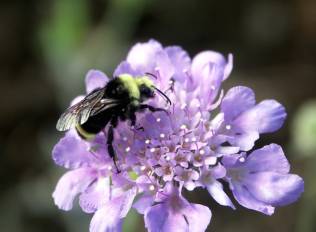
    Researchers in London have found that bumblebees may develop a preference for food that is laced with pesticide that can echo the addictive effects of nicotine on humans.

    The study looked at a class of pesticide from the neonicotinoid family, a controversial form of insecticide used in farming that some scientists have claimed can be harmful to bees. When offered options for food—one with the pesticide and one without—bees initially preferred the latter, but upon consuming the chemically-treated food, they returned to it with greater frequency.

    The possibility for an addictive response underscores concern over global use of neonicotinoids, which were banned by the European Union in 2018.

    The study, conducted by researchers from London’s Imperial College and Queen Mary University, was intended to reproduce real foraging behavior by bumblebees, including social cues used in that activity.

    To determine if the introduction of neonicotinoids into the bees’ food sources, 10 colonies of bees were introduced to several sucrose feeders, each containing a solution with varying degrees (in parts per billion) of a neonicotinoid called thiamethoxam.

    Over a period of 10 days, the researchers found that bees initially preferred what IFL Science called the “pure” solution, which contained no pesticide. But once a bee consumed a solution that contained thiamethoxam, it would return to that solution more regularly and avoid the pure solution. Changing the position of the feeders also appeared to have no impact on the bees’ preference for the pesticide-laced solution.

    The researchers’ comparison between the bees’ reaction to the neonicotinoid and human response to nicotine is not accidental: as study lead author Richard Gill noted in a statement: “neonicotinoids” target nerve receptors in insects that are similar to receptors targeted by nicotine in mammals.”

    As Texas A&M’s AgriLife Extension Service posted on its site, the term “neonicotinoid” is translated literally as “new nicotine-like insecticide.”

    Though agriculturalists and scientists are split on how neonicotinoids affect bees, they cause paralysis and eventual death in the bugs they are intended to repel, such as aphids or root-feeding grubs. Unlike contact pesticides, they are absorbed by the plant and transported through its system, and will remain in the plant for many weeks. 

    And while studies have shown that the pesticide class is less harmful to birds and mammals, others have suggested that it can affect a variety of crucial foraging skills for bees, including motor functions and navigation.

    Some have even linked the increase in the population of bees in the city over those located in rural areas to the use of such pesticides. The potential for harm to bees is among the key reasons why the European Union chose to ban the use of neonicotinoids in agriculture, save for permanent greenhouses, in 2018.

    However, in his statement, Gill wrote, “Whilst neonicotinoids are controversial, if the effects of replacements on non-target insects are not understood, then I believe it is sensible that we take advantage of current knowledge and further studies to provide guidance for using neonicotinoids more responsibly, rather than necessarily an outright ban.”

    View the original article at thefix.com