Tag: opioid alternatives

  • US To Spend $3 Million Researching Chemicals in Marijuana

    US To Spend $3 Million Researching Chemicals in Marijuana

    Current marijuana research lags behind the public’s marijuana usage.

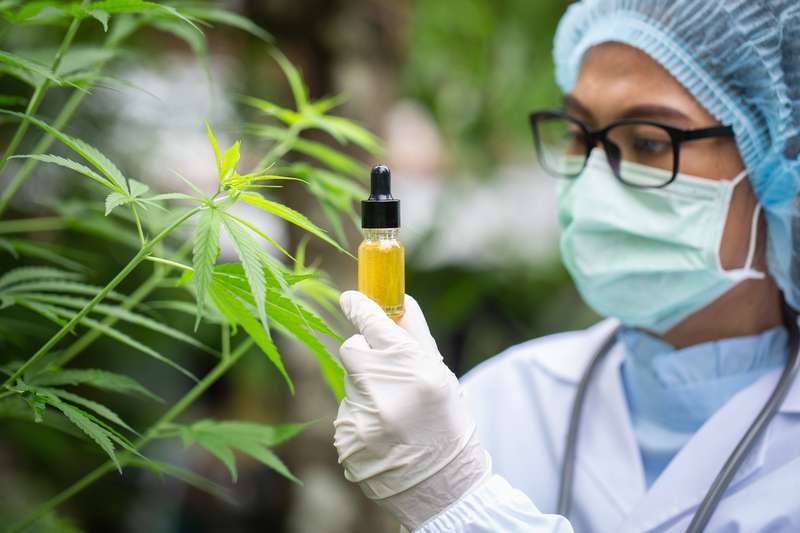
    The United States government plans to spend $3 million studying whether marijuana has pain-relieving effects. 

    However, it will only be studying the parts of the plant that do not get users high. 

    Study Will Focus on Chronic Pain Relief

    According to NBC News, the money is coming from nine research grants that were announced on Thursday (Sept. 19). The grants will allow researchers to delve deeper into the pain-treating properties of CBD and other lesser-known chemicals in marijuana. The chemical THC, which is what users get high from, is not included in the research plans. 

    When it comes to pain management using the chemicals from marijuana, “The science is strongest for chronic pain, the most common reason people give when they enroll in state-approved medical marijuana programs,” NBC notes.

    Dr. David Shurtleff is the deputy director of the National Center for Complementary and Integrative Health, which is funding the projects. He says THC has been studied “extensively” already and that the dangers of the chemical don’t make it a good option for treating pain. He adds that the hope is to catch up to the current use of other chemicals in marijuana

    “The science is lagging behind the public use and interest. We’re doing our best to catch up here,” he said. 

    According to Shurtleff, the grants come as a response to the 2017 National Academies of Sciences, Engineering and Medicine report which stated that there was a lack of research surrounding marijuana, making it a “public health risk.” 

    Responding To The Opioid Crisis

    Another motivator for the research on the pain-easing properties of marijuana is the opioid epidemic, which is rooted in the use of prescription painkillers. 

    Dr. Judith Hellman, a grant recipient from University of California San Francisco, is researching the ability of the body to create signaling molecules that are similar to the ingredients in marijuana

    Hellman says it’s vital for scientists to more deeply explore pain and its treatment. “It’s very exciting to have the opportunity to do that,” she said.

    According to NBC, only one of the grant projects involves human test subjects. University of Utah researcher Deborah Yurgelun-Todd plans to run brain scans of volunteers suffering from lower back pain. Her plan is to determine how CBD mixed with chocolate pudding can affect the pain-signaling pathways in the brain. 

    Many of the new projects will use lab-made versions of the chemicals, instead of extracting them from the plant itself, according to NBC.

    View the original article at thefix.com

  • Kratom-Related Calls To Poison Centers Skyrocket

    Kratom-Related Calls To Poison Centers Skyrocket

    The majority of the calls to poison centers about kratom were made by men over the age of 20. 

    As the debate continues to swirl over the potential health benefits as well as hazards of kratom use, researchers have found that calls to poison control centers in regard to the use of the herbal supplement have increased more than 50-fold in recent years.

    Their findings show that kratom-related calls to poison control centers across the country rose from 13 in 2011 to 682 in 2017. Nearly 10% of those calls involved an individual who experienced life-threatening side effects, and 11 individuals who made calls later died—though the majority of these were reported to have taken another substance in addition to kratom.

    The researchers concluded their report by requesting enhanced information about kratom and increased regulation by the Food and Drug Administration (FDA) on kratom products.  

    The study, published in the journal Clinical Toxicology, sought to determine the number of calls to poison control centers that involved kratom, as well as demographic information of the callers. To find that information, researchers reviewed data on 1,800 calls from the National Poison Data System.

    Though 2011 was designated as the beginning of the study period, 65% of the calls were received in 2016 and 2017, or the final two years of the study.

    As Live Science noted, the majority of the cases (71%) involved men over the age of 20. Approximately 2.5% of the cases involved children under the age of 12 who were exposed to kratom, including seven newborns; five of that group reportedly experienced symptoms of withdrawal due to exposure in the womb, while another newborn received kratom through breastfeeding.

    Approximately one-third of the cases required treatment at a health care facility, and as mentioned, nearly 10% reported life-threatening or disabling effects. The most commonly reported side effects were agitation, elevated heart rate and/or blood pressure, nausea and/or vomiting, and drowsiness or lethargy.

    Those who took kratom with another drug were more than twice as likely to experience a more serious response than those who consumed kratom alone; of the 11 reported fatalities, nine were reported to have ingested other substances including alcohol, fentanyl, cocaine and benzodiazepines.

    Kratom use has increased in recent years due to the widespread belief in its healing properties. According to the American Kratom Association, between 3 and 5 million people in the United States use it for various reasons.

    Herbal supplements made from the plant, which can be found in Southeast Asia, have been used to treat chronic pain, depression and dependency on opioids or alcohol.

    Proponents of kratom have found their support opposed by the FDA, which has not approved kratom for any medical use, and by the Department of Health and Human Services and Drug Enforcement Administration, which briefly attempted to ban the substance, though that pursuit was shut down by public outcry. 

    The researchers offered a number of recommendations for future action regarding kratom. They advised the medical community to disseminate more information about the risks of kratom, especially for women during pregnancy and breastfeeding.

    They also advised the FDA to increase regulation of kratom products.

    “At a minimum, they should be free of potentially harmful ingredients, provide a uniform strength of active ingredients and have appropriate labeling,” the researchers wrote in their study’s conclusion.

    View the original article at thefix.com

  • New York Moves To Replace Opioids With Medical Marijuana

    New York Moves To Replace Opioids With Medical Marijuana

    Opioid use disorder has been added to the list of qualifying conditions that medical cannabis can be used to treat in the state.

    Officials in New York have changed medical marijuana policy in order to make it easier for patients to access medical cannabis in lieu of opioids, and have added opioid use disorder to the list of qualifying conditions that medical cannabis can be used to treat. 

    The New York Department of Health announced the expansion on July 12. Under the emergency regulations, any condition that could be prescribed an opioid is now a qualifying condition for medical marijuana

    “Effective immediately, registered practitioners may certify patients to use medical marijuana as a replacement for opioids, provided that the precise underlying condition for which an opioid would otherwise be prescribed is stated on the patient’s certification,” the state’s press release said. “This allows patients with severe pain that doesn’t meet the definition of chronic pain to use medical marijuana as a replacement for opioids.”

    The expansion also allows people who are being treated for opioid use disorder in a qualified treatment setting to be issued a medical marijuana license to use cannabis as a replacement for opioids. 

    Only 12 other medical conditions are currently listed as qualifying conditions for medical cannabis, so the expansion could have a significant effect on New York’s medical marijuana system. At the time of the announcement, just over 62,000 New Yorkers had a medical marijuana license, according to the health department.  

    Lawmakers hope that by expanding access to medical marijuana, they can reduce the number of opioids prescribed in the state. 

    “Medical marijuana has been shown to be an effective treatment for pain that may also reduce the chance of opioid dependence,” said New York State Health Commissioner Dr. Howard Zucker. “Adding opioid replacement as a qualifying condition for medical marijuana offers providers another treatment option, which is a critical step in combatting the deadly opioid epidemic affecting people across the state.”

    Additional changes will make it easier for people to access medical cannabis after they are approved for the program. Lawmakers hope that this will help reduce overdose deaths from opioids. 

    “I have been strongly advocating to remove barriers and allow the use of medical marijuana as an alternative to opioids because it will help patients, reduce the number of highly addictive opioids in circulation, and ultimately, it will save lives,” state Senator George Amedore, co-chair of the Senate Task Force on Heroin and Opioid Addiction said in a June press release.

    “We continue to be faced with an opioid epidemic that is devastating communities throughout our state. It’s important we continue to do everything possible to address this issue from all sides, so I’m glad the Department of Health is taking this measure that will help high risk patients, as well as those that are struggling with, or have overcome, addiction.”

    View the original article at thefix.com

  • Kratom Draws Support And Controversy As Opioid Addiction Treatment

    Kratom Draws Support And Controversy As Opioid Addiction Treatment

    “It’s like a cruel joke that I finally found something that works and the FDA and DEA want it banned,” said one kratom user. 

    A controversial supplement, kratom, could have benefits when it comes to treating opioid use disorder, according to a new study. However, there is still much controversy around it due to safety concerns.

    Kratom is a psychoactive drug that comes from the leaves of Mitragyna speciosa, which is an Asian plant in the coffee family

    Some believe it is effective for treating substance use disorders, but organizations such as the Food and Drug Administration (FDA) and the Drug Enforcement Administration are wary of that. In fact, the DEA even attempted to ban the substance.

    In February, FDA commissioner Scott Gottlieb spoke against kratom, saying “there is no evidence to indicate that kratom is safe or effective for any medical use.”

    Scott Hemby, a professor of pharmaceutical science at High Point University in North Carolina, led a new study recently published in Addiction Biology, which found that kratom may in fact have some benefits.

    Kratom has two main ingredients: mitragynine (MG) and 7‐hydroxymitragynine (7‐HMG). MG accounts for 60% of the compound in the plant while HMG is about 2%. Using rats, Hemby’s study examined how both these ingredients affect the brain. 

    Hemby and other researchers allowed rats to self-administer both components of kratom. They found that the rats quickly began self-administering HMG, but did not have interest in MG.

    “In other words, while one of kratom’s main compounds appeared to be addictive, the other wasn’t at all—in fact, it appeared to have the opposite effect,” Business Insider reported

    Because kratom affects some of the same receptors in the brain as opioids, the FDA announced in February that it would be called an “opioid.” But others believe kratom could be beneficial and treat cravings while reducing symptoms of withdrawal and the likelihood of relapse.

    The results of the study suggest that it could be beneficial to breed the plant to have higher concentrations of one compound versus the other. However, the results are preliminary because the study was not done on humans.

    Some people, such as 26-year-old Bryce Avey, began using kratom because they could not get access to other opioid treatments like buprenorphine and naltrexone. “It’s like a cruel joke that I finally found something that works and the FDA and DEA want it banned,” Avey told Business Insider

    David Juurlink, professor of medicine at the University of Toronto, told Business Insider that the use of kratom makes sense, as it affects the same brain receptors as opioids. “It makes sense that this product would mitigate the symptoms of opioid withdrawal or allow someone to transition from a higher dose to lower dose, or help get them off of opioids altogether,” he said.

    Business Insider notes that concern about the supplement arises because there is no “quality oversight of kratom,” meaning people don’t know what the pills actually contain.

    “Personally, I would never take this stuff,” Juurlink told Business Insider. “When you go to a pharmacy, you know there’s quality control, you know precisely how much you’re getting, and you know exactly what you’re getting. With this, it’s impossible to know.”

    View the original article at thefix.com

  • "No Evidence" That Medical Marijuana Works For Chronic Pain, Study Finds

    "No Evidence" That Medical Marijuana Works For Chronic Pain, Study Finds

    The study also found “no evidence” that marijuana use reduced prescription opioid use. 

    For those experiencing non-cancer chronic pain, medical marijuana may not be as effective as initially thought, according to a new study.

    According to Medical Xpressresearchers at UNSW Sydney, who led one of the longest community studies of its kind, discovered no obvious role when it comes to cannabis for the treatment of non-cancer chronic pain.

    The Pain and Opioids In Treatment (POINT) study, which took place over four years, discovered that participants who used marijuana for chronic pain reported they were “experiencing greater pain and anxiety, were coping less well with their pain, and reported that pain was interfering more in their life,” when compared to those not using medical marijuana

    “At four-year follow-up, compared with people with no cannabis use, we found that participants who used cannabis had a greater pain severity score, for less frequent cannabis use, greater pain interference score, lower pain self-efficacy scores and greater generalized anxiety disorder severity scores,” authors wrote. “We found no evidence of a temporal relationship between cannabis use and pain severity or pain interference, and no evidence that cannabis use reduced prescribed opioid use or increased rates of opioid discontinuation.”

    Researchers did not find any clear evidence that medical marijuana reduced severity of pain or had participants decrease opioid use or dosage. When it comes to medical marijuana, chronic non-cancer pain is the most common reason for use. 

    The length of this study sets it apart from others, Medical Xpress points out. The POINT study recruited participants through community pharmacies, then completed an overall assessment of their level of pain, physical and mental health, and medication and marijuana use each year. 

    Of the 1,514 participants, about 80% completed all the assessments, Medical Xpress states. The median number of years of chronic pain was about 10 and the number of years having taken opioids for the pain was about four. Rates of physical and mental health issues among participants were high, Medical Xpress says.

    The results of the study were published in Lancet Public Health and imply there may not be as many benefits to medical marijuana as previously thought.

    “Chronic non-cancer pain is a complex problem,” said lead author Dr. Gabrielle Campbell. “For most people, there is unlikely to be a single effective treatment… In our study of people living with chronic non-cancer pain who were prescribed pharmaceutical opioids, despite reporting perceived benefits from cannabis use, we found no strong evidence that cannabis use reduced participants’ pain or opioid use over time.”

    This study was funded by the National Health and Medical Research Council and led by the National Drug and Alcohol Research Centre at UNSW Sydney.

    View the original article at thefix.com

  • Can IV Tylenol Help Curb The Opioid Crisis?

    Can IV Tylenol Help Curb The Opioid Crisis?

    Health experts are debating the efficacy of IV acetaminophen as a non-opioid pain management tool.

    An approach to cutting back on opioid use isn’t proving as affordable or as helpful as thought, according to the Washington Post.  

    In an effort to cut down on opioid use, some hospitals are turning to intravenous forms of medications like Tylenol. Boston Medical Center was one such entity, adding IV Tylenol as a method of pain management.

    However, David Twitchell, Boston Medical Center’s chief pharmacy officer, says the price quickly became concerning. 

    According to the Post, Mallinckrodt Pharmaceuticals increased the price of IV Tylenol and the medical center was projected to spend $750,000 on acetaminophen, which is the active ingredient in Tylenol, in 2015.

    The Post notes that a normal tablet dose of acetaminophen costs only cents, but Ofirmev, the IV version, is $40 per 1,000 milligrams.

    “It was going to cost us, without the intervention that happened, more than any other drug on our formulary. Think of the most expensive cancer drug,” Twitchell told the Post. “To me, that didn’t seem justified.”

    Though some medical centers are attempting to turn away from opioids and instead utilizing options such as IV Tylenol, a recent study found that this approach may not be any more effective than taking the medication in tablet form. Some studies, on the other hand, claim there is a benefit to the IV medication. 

    Another study published in the July issue of Anesthesiology examined seven years of data for bowel surgeries across 602 hospitals and determined that when it came to decreasing opioid use, IV acetaminophen seemed no more effective than taking a tablet form of the same medication. 

    “It just seems very often, physicians have magical thinking about a new preparation of an old drug,” Andrew Leibowitz, system chair of the department of anesthesiology, perioperative and pain medicine at the Icahn School of Medicine at Mount Sinai and co-author of the study, told the Post. “Doctors do seem, in general when a patient is in the hospital, to favor IV medications as a knee-jerk reflex, even when equally effective oral medications are available.”

    According to Mallinckrodt, the study was “significantly flawed” and argued that half the patients in the study had not even received a full dose of the medication.

    IV Tylenol isn’t the only generic painkiller to be offered in IV form, the Post states. The Post also says that more types of IV painkillers are expected in the future. 

    Erin Krebs, a staff physician at the Minneapolis VA Health Care System, led a study published in JAMA that determined that opioids were no more effective than non-opioids when it came to managing chronic back pain or hip and knee pain.

    She tells the Post that while it’s good that physicians are reexamining prescribing opioids, they should be careful not to buy into other new medications too early.

    “I think part of the reason we got into such a mess with opioids was really a lack of training and understanding of pain management,” Krebs told the Post. “It’s a symptom of how little research we’ve done on the appropriate management of these really common conditions. These are some of the most common human ailments, and they have not received enough research attention, research funding or education.”

    View the original article at thefix.com