Tag: opioid crisis

  • Are Pet Prescriptions Contributing To The Opioid Crisis?

    Are Pet Prescriptions Contributing To The Opioid Crisis?

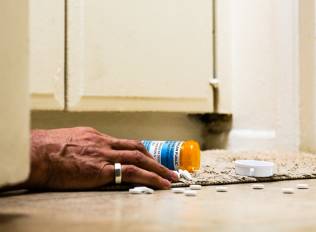
    Some wonder if people with opioid addiction are using their pet’s prescriptions to feed their own addictions instead.

    With the rise of the opioid epidemic, a phenomenon has occurred where painkiller sales for pets have increased, and some wondering if people with opioid addiction are using their pet’s prescriptions to feed their own addictions instead.

    A new study by Penn Medicine and Penn Vet has revealed that in the last 10 years, there has been a 41% increase in opioid prescriptions for pets, yet in the same period, there has only been a 13% jump in pets having to go to the hospital. This has some suspecting that people could be using these prescriptions to get opioids for themselves.

    Study author Jeanmarie Perrone, director of medical toxicology at Penn Medicine told Philly.com, “As we are seeing the opioid epidemic press on, we are identifying other avenues of possible human consumption and misuse. Even where the increase in prescribed veterinary opioids is well intended by the veterinarian, it can mean an increased chance of leftover pills being misused later by household members.”

    Penn Medicine says this is the first study they’ve done in this area, and in gathering data, they looked at pharmacy records at Penn Vet’s Ryan Hospital over a 10-year period and looked at prescription patterns with four kinds of opioids given to pets: tramadol, hydrocodone, codeine tablets, and fentanyl patches.

    An author of this study, Dana Clarke, an assistant professor at the vet school, added, “We found that the increased quantity of opioids prescribed by our hospital was not due to increased patient volume alone. It’s likely our goal of ensuring our patients are pain-free post-operatively, particularly those requiring complex and invasive procedures, has driven our increased prescribing practices during this period.” At the same time, Clarke says, “we don’t know the potential or extent of prescription diversion from animals to humans, and what impact this could have on the human opioid crisis.”

    There has already been concern about people abusing pet meds elsewhere in the country. A similar study was done through the University of Colorado, where they learned that 13% of vets who were surveyed reported that pet owners would injure their pets or make them sick on purpose to get their hands on opioids.

    Last year, the commissioner of the Food and Drug Administration also released a statement concerning possible opioid abuse through pet meds and said that it could “lead to addiction, abuse and overdose in humans who may divert them for their own use.” The FDA told vets to be responsible when prescribing opioids and recommended prescribing different meds whenever they could.

    As a result of these concerns, some veterinarians have already been putting restrictions on how many opioids can be prescribed to an animal, and some vets also perform background checks on some pet owners to look into their histories with opioid prescriptions.

    View the original article at thefix.com

  • Sexual Orientation Tied To Increased Risk Of Opioid Abuse

    Sexual Orientation Tied To Increased Risk Of Opioid Abuse

    A new study examined the link between sexual orientation and opioid abuse. 

    People who identify as gay, lesbian or bisexual are more likely to misuse opioids, and bisexual women are at a particularly high risk, according to a study published this week. 

    The study, published in The American Journal of Preventive Medicine, found that bisexual women were about twice as likely to misuse opioids as members of the general population who identify as heterosexual. 

    Lead study author Dustin Duncan, an associate professor in the Department of Population Health at NYU School of Medicine, told The Washington Post that these findings are consistent with previous studies that have showed people who are not heterosexual have poorer health overall. 

    “I think the findings speak to the life experiences of people in society,” he said. “People who have less privilege and power generally have worse health. This isn’t a fluke or a one-time finding. It tends to be systematic.”

    For the study, researchers analyzed data from more than 40,000 individuals who took the National Survey on Drug Use and Health, an annual study conducted by the Substance Abuse and Mental Health Services Administration.

    In 2015, questions were introduced asking about sexual orientation for the first time, allowing researchers to see the connection between sexual orientation and substance abuse, particularly focused on prescription opioids.  

    Joseph Palamar, an associate professor in the Department of Population Health at New York University’s School of Medicine and another author of the study, said that he was surprised to see that bisexual women were most at risk for opioid abuse, since the opioid epidemic is usually associated with men. 

    “Typically women are more protected against drug use,” he said. “It’s usually the men we worry about.”

    Palamar theorized that bisexual woman might be more open to experimentation — both sexually and with drug use. However, Duncan pushed back on that idea, instead suggesting that the “minority stress model” can explain the increased risk factor for bisexual women. The minority stress model suggests that the stress of being a member of a minority group can contribute to negative health outcomes. 

    Bisexual woman, he said, are minorities in many ways: they are female and not heterosexual, but they also don’t fit in fully with members of the lesbian or gay communities. 

    “These things together create further stress, less ability to cope and give rise to poor health,” Duncan said.

    The National Survey on Drug Use and Health does not include questions about gender identity, so researchers were not able to study any potential links between transgender or non-binary individuals and drug abuse. However, Duncan said that doctors can use the study to better serve people who are at increased risk of abusing opioids. 

    “We need to continue documenting who is at risk,” he said. “This study is really the first step.”

    View the original article at thefix.com

  • Maryland Funeral Directors: We're The "Last Responders" To Opioid Crisis

    Maryland Funeral Directors: We're The "Last Responders" To Opioid Crisis

    Funeral directors in the state claim that safety has become an issue when dealing with opioid overdose victims. 

    Proactive funeral directors in Maryland are stocking up on naloxone, the opioid overdose antidote, as they’ve seen a dramatic increase in the number of opioid-related deaths.

    They’re calling themselves the “last responders” to Maryland’s opioid crisis, the Baltimore Sun reports.

    In 2017, the Tri-County Funeral Directors Association launched an awareness campaign in local newspapers to notify communities that “We Don’t Want Your Business” when it comes to opioid abuse.

    “We see a side of this tragic epidemic that many don’t see,” said association president James Schwartz. “The devastation families are facing is heartbreaking.”

    Schwartz tells the Baltimore Sun that other funeral home directors have known not only family members, but funeral home guests “who have come and had either an opioid reaction in the parking lot or other areas during the service time.” 

    “This has caused the folks stress because not only are they grieving this person and now somebody else is having the same tragic result,” Schwartz said.

    The National Funeral Directors Association urges members to protect themselves while handling deceased victims of opioid overdose.

    “Coming into contact with a minuscule dose of fentanyl or carfentanil can be fatal,” the association warns. (This point is oft-repeated, but harm reduction and addiction/recovery advocates say it’s merely a harmful myth.)

    “The opioid crisis presents unique challenges for funeral directors, from working with families whose loved one has died from an overdose to protecting themselves from harm when handling the body of an overdose victim during removal or embalming,” says the funeral directors association.

    In 2017, opioid overdose deaths continued to climb in Maryland, accounting for the majority of drug/alcohol-related deaths—2,009 of 2,282 overdoses were opioid-related, according to the state’s Department of Health.

    “This is an escalating epidemic,” said Baltimore Health Commissioner Dr. Leana Wen, whose city saw the worst of the opioid crisis. “But still we don’t even see the peak of this epidemic yet.”

    In response, Maryland schools and libraries are also stocking up on naloxone. “The rule of thumb is: when in doubt, use it,” said funeral director Jeffrey L. Gair.

    The antidote is there “if there’s ever the need while we’re on duty at the funeral home,” Gair said.

    View the original article at thefix.com

  • Organ Donations Increase As Opioid Overdose Deaths Climb

    Organ Donations Increase As Opioid Overdose Deaths Climb

    “Some refuse due to the stigma but when posed with lifesaving transplants in very sick people, that refusal rate for a quality organ is low.”

    The number of Americans waiting for organ donation is dropping for the first time in 25 years, in part because there are more organs available for donation from people who have died of a drug overdose. 

    “We started noticing the increase in overdose deaths in 2012,” Alexandra Glazier, director of New England Donor Services, which coordinates organ donation, told Vox. “Although it has a silver lining, in terms of its impact on organ availability, or at least it has in our region, it’s still not something we hope continues.”

    “Those people are better off here, having fought their battles with drugs and won, for their families and for their kids,” said Daniel Miller-Dempsey, a family services coordinator with New England Donor Services. “It’s heartbreaking to know that so many people are dying from this.”

    However, organ donation can provide a small silver lining for family members left behind. When David Maleham lost his son Matt to opioid overdose, he was not surprised. “It was a call I had dreaded for years,” he told Vox.

    Matt was in the hospital and his driver’s license indicated that he was an organ donor. Eventually, Maleham and his wife received a letter from the man who received Matt’s organ and felt a connection to his story. Maleham said that knowing his son’s donation gave this man a second chance at life eased the sense of loss

    “If it weren’t for that, what a waste. What a pointless death. What did that accomplish?” he said. “The answer would have been nothing.”

    The medical community has also become more willing to accept donations from so-called high risk donors. Federal law now allows donations from HIV-positive individuals. However, many people who die from opioid overdoses don’t have a long history of drug use. 

    Most people who are in dire need of a transplant do not mind having an organ from someone who died from drug overdose. 

    “Some refuse due to the stigma,” said Jay Fishman, who co-directs the transplant program at Massachusetts General Hospital, “but when posed with lifesaving transplants in very sick people, that refusal rate for a quality organ is low.” 

    View the original article at thefix.com

  • Opioid Crisis At Forefront As Midterms Approach

    Opioid Crisis At Forefront As Midterms Approach

    Politicians are eager to offer their take on the crisis, in hopes of connecting with constituents who have been affected by it.

    As November fast approaches, those on Capitol Hill know that the opioid crisis is an issue voters are taking into consideration.

    “We see more and more deaths being attributed to opiates and illicit drugs than ever before. It’s of epidemic proportion and we’re going to lose a whole generation,” said Sen. Joe Manchin of West Virginia during an interview.

    With a vote of 99 to 1 on Monday (Sept. 17), the Senate passed a package of 70 bills aimed at opioid prevention and expanding treatment. 

    According to KATV, those in support of the legislation say it is just the beginning. The bill package would mean increased the screening of packages sent via the U.S. Postal Service, which U.S. Representative Erik Paulsen has been supportive of, according to a blog post by Advanced Medical Integration, a consulting firm.  

    “While private carriers have to submit electronic data for any of their packages that come into the United States, the postal service has been exempt,” Paulsen stated. “We have a loophole that is being exploited by smugglers.”

    The bill package would also mean shorter opioid prescriptions and increased funding for treatment. 

    “Now we’re able to get money coming to the most addicted areas and that’s gonna be the biggest help to West Virginia,” Manchin stated. 

    Manchin is in a tight race for his Senate seat. His opponent, Attorney General Patrick Morrissey, states that Manchin did nothing to help the opioid crisis when he served as governor of West Virginia.

    “Quite frankly Joe Manchin was governor and I inherited the fact that he was asleep at the switch all while this crisis was raging,” Morrissey said, according to KATV.

    However, Morrissey himself has had to contend with some backlash due to his ties to pharmaceutical companies, which he has lobbied for in the past. “Last year I sued the DEA because I thought that their whole drug quota system was fundamentally flawed and it was spitting out in excess hundreds of millions of pills that were not warranted,” Morrissey stated.

    Midterms and the passing of the bill package could bring some clarity and direction, according to AMI.

    “We have to take some responsibility as a public for we should have recognized it as soon as it reared its ugly head and squashed it then,” the AMI blog post notes. “Now it is out of control. There is hope that one of these programs before Congress will take hold and slowly but surely begin to usher in the change we so desperately need.”

    View the original article at thefix.com

  • New York Times Op-Ed Slams "Incompetent" DEA Over Opioid Crisis

    New York Times Op-Ed Slams "Incompetent" DEA Over Opioid Crisis

    The writers of a scathing op-ed believe the federal agency “deserves much of the blame” for opioid-related deaths.

    A recent op-ed in the New York Times does not mince words in its critique of the U.S. Drug Enforcement Administration (DEA). “Because of its incompetence, the opioid crisis has gone from bad to worse. The solution: overhauling the agency, or even getting rid of it entirely,” write Leo Beletsky and Jeremiah Goulka in the Sept. 17 opinion piece.

    Rather than pointing to pharmaceutical drug makers or drug cartels, Beletsky and Goulka—of Northeastern University’s Health in Justice Action Lab—say the DEA “deserves much of the blame” for rising opioid-related deaths. This summer, the Centers for Disease Control and Prevention (CDC) estimated that more than 72,000 Americans died of a drug overdose in 2017—with opioids accounting for more than 49,000 of the deaths. 

    The federal agency’s response to rising opioid abuse in the United States did little to mitigate the growing epidemic, the authors write. While the DEA has the authority to establish “non-enforcement programs aimed at reducing the availability” of illicit drugs—e.g. expanding evidence-based treatment from a public health perspective—instead, in its decades-long existence, the agency has opted to ramp up the enforcement side of its mandate.

    “Instead the agency pushed for surveillance of prescription records and electronic communication, doubled down on prosecuting prescribers and helped to tighten the screws on patients seeking pain relief,” reads the op-ed.

    The agency’s enforcement-heavy response to painkiller abuse only pushed people to seek illicit substitutes like heroin and counterfeit pills, and to encourage drug traffickers to “create more compact, potent drugs” like fentanyl.

    This resulted in more deaths as well as the spread of HIV and hepatitis (from sharing needles), while access to evidence-based treatment for drug use disorder, like methadone, saw little improvement.

    Not only is the DEA accused of employing tactics that have “fueled the opioid crisis,” in the 40-plus years since it was established under the administration of former President Richard Nixon (the man who declared drugs “Public Enemy Number 1”) the agency’s approach has had a harmful effect on community policing, and it has earned a reputation for botched operations at home and abroad in its tireless campaign to hunt down illicit drug suppliers. (The agency has the largest foreign presence of any U.S. federal law enforcement agency, according to its 2018 Budget Request.)

    “It has eroded civil liberties through the expansion of warrantless surveillance, and overseen arbitrary seizures of billions of dollars of private property without any clear connection to drug-related crimes,” write Beletsky and Goulka.

    And in the DEA’s long history, “these actions have disproportionately targeted people of color, contributing to disparities in mass incarceration, confiscated property, and collective trauma.”

    By taking Nixon’s “War on Drugs” a bit too literally, the DEA’s focus on the law enforcement side of its mandate has done nothing to reduce the amount of drugs consumed by Americans. “The agency was supposed to curb problematic drug use, but failed to do so because its tactics were never informed by public health or addiction science,” write Beletsky and Goulka.

    The authors of the op-ed offer a solution: reinvent the DEA “from the bottom up.” One way to do this is to transfer regulatory authority over the pharmaceutical supply to the Food and Drug Administration.

    Currently the DEA is in charge of how controlled substances are classified, produced and distributed. (For example, under the DEA, marijuana is classified as a Schedule I drug, which are considered the most dangerous, alongside heroin and LSD.)

    Some of its law enforcement efforts can be transferred to the FBI or local authorities, or eliminated altogether, the authors suggest.

    And a “significant portion” of the DEA’s budget should go to life-saving measures like access to high-quality treatment. The agency requested a budget of $2.16 billion for fiscal year 2018, a $77 million increase from the year prior.

    According to the authors, the agency is an emblem of the failure of Nixon’s “War on Drugs” and the failure of the federal government to make significant progress in reducing drug abuse in the United States.

    Forty-seven years after Nixon declared a “War on Drugs,” the authors say it’s time to “urgently rethink how our nation regulates drugs.”

    View the original article at thefix.com

  • Stephen Colbert Takes Aim At Big Pharma Over Opioid Crisis

    Stephen Colbert Takes Aim At Big Pharma Over Opioid Crisis

    “You know you’ve been bad when the government fines you one aircraft carrier.”

    Stephen Colbert publicly called out those responsible for the opioid crisis, as the Late Show host laid into Big Pharma during a segment last Friday (Sept. 14).

    “There are certain subjects that are genuinely hard to talk about like, the opioid crisis. It’s an epidemic that affects both political parties, Republican, Democrat, rich people, poor people, it does not discriminate,” Colbert said in the segment. “And a lot of people blame Big Pharma, but only because it’s their fault.”

    Colbert went on to single out Purdue Pharma, which manufactures OxyContin and is owned by members of the billionaire Sackler family. Colbert discussed the various lawsuits against the company accused of downplaying how addictive the medication could be “even as their sales reps used the words ‘street value,’ ‘crush’ and ‘snort’ in the late nineties.”

    “That’s what happens when the head of sales is El Chapo,” Colbert joked in the segment, referring to the former head of the Sinaloa drug cartel, who is now in U.S. custody.

    In 2007, Purdue was fined more than $600 million after pleading guilty to misrepresenting OxyContin’s potential for abuse.

    “You know you’ve been bad when the government fines you one aircraft carrier,” Colbert stated. “Of course, this same time they made $35 billion.”

    He went on to add that the Sackler family wants to expand globally and that they already own a lesser-known company called Rhodes Pharma.

    Colbert stated, “It was revealed just this week that they own a second, secret company, Rhodes Pharma, a little-known Rhode Island-based drug maker that is among the largest producers of off-patent generic opioids in the U.S.”

    Colbert went on to discuss the fact that Rhodes Pharma recently was granted a patent for a new medication—a “fast-acting form of buprenorphine”—that could potentially treat opioid use disorder. The new medication would be in wafer form rather than a tablet, meaning it would dissolve quickly and work faster. 

    “Another not-so-fun fact about Rhodes Pharmaceuticals is, in addition to selling all these off-brand opiates, they also just patented a new drug to help wean addicts off opioids,” Colbert said.

    “So, the Sacklers addicted the country to opioids, now they’re going to profit off the cure?” Colbert noted. “That takes a pair of swingin’ Sacklers.”

    View the original article at thefix.com

  • New Dosage Strength Of Opioid Addiction Drug Approved By FDA

    New Dosage Strength Of Opioid Addiction Drug Approved By FDA

    The FDA commissioner noted that the approval will expand access for patients and reduce drug development costs.

    The U.S. Food and Drug Administration (FDA) approved a new dosage strength for a maintenance drug for the treatment of opioid addiction.

    Cassipa, which is a sublingual (applied under the tongue) film that combines the opioid treatment drug buprenorphine and the opioid overdose reversal drug naloxone, will now be available in a 16 milligrams/4 milligrams dosage, and according to FDA Commissioner Scott Gottlieb, should be used in conjunction with counseling and therapy.

    The new dosage strength is approved by the FDA in both brand name and generic versions, and in various strengths.

    The approval underscores the agency’s emphasis on greater development of and access to medication-assisted treatment (MAT) for substance use disorder. The full range of MAT is a key element of the U.S. Department of Health and Human Services’ Five-Point Strategy to Combat the Opioid Crisis, and was the focus of guidelines issued to drug manufacturers for evaluating the effectiveness of new or existing MAT products. 

    In a statement issued in April 2018, Gottlieb described the FDA-approved MAT drugs—methadone, buprenorphine and naltrexone—as “safe and effective in combination with counseling and psychosocial support to stabilize brain chemistry [and] reduce or block the euphoric effects of opioids.”

    The FDA has also cited statistics from the Substance Abuse and Mental Health Services Administration (SAMHSA), which found that patients using MAT for opioid dependency have reduced their chance of overdose death by half.

    In addition to its suggested efficacy for opioid use disorder, Gottlieb noted that newer treatment options like the increased dosage strength for Cassipa will not only “broaden access for patients,” but may also “reduce drug development costs, so products may be offered at a lower price to patients” via the agency’s “streamlined approach to drug development for certain medication-assisted treatments that are based on buprenorphine.”

    This approach is the abbreviated 505(b)(2) pathway under the Federal Food, Drug and Cosmetic Act, which allows manufacturers to use the FDA’s findings regarding the safety of their product to grant approval.

    The FDA is advising that Cassipa should be used in conjunction with a complete treatment plan that includes counseling and other support, and should only be used after the patient is introduced to the drug and stabilized up to a dose of 16 mg of buprenorphine using another marketed product. Additionally, Cassipa can only be prescribed by Drug Addiction Treatment Act-certified prescribers.

    View the original article at thefix.com

  • Purdue Pharma Accused Of Targeting Seniors For Oxy Sales

    Purdue Pharma Accused Of Targeting Seniors For Oxy Sales

    The lawsuit claims Purdue had salespeople downplay the harmful risks and side effects of OxyContin.

    Oregon’s Department of Justice claims that pharmacy giant, Purdue Pharma, lied to the state and misled customers to drive sales.

    Oregon Attorney General Ellen Rosenblum filed a lawsuit against Purdue Pharma on Thursday, accusing the company of lying to the Oregon State Board of Pharmacy to obtain permission to sell in Oregon, as well as targeting senior citizens with its products.

    The violations against a settlement with Oregon goes back 10 years, according to a June 27 filing. Rosenblum’s office is demanding Purdue submit to the terms of a 2007 settlement or risk legal consequences.

    In the Thursday filing, Rosenblum’s office is demanding Purdue Pharma pay $1 million and abide by a prohibition against marketing to Oregon’s senior citizens.

    According to the lawsuit, Purdue released misleading publications and had its salespeople downplay the harmful risks and side effects of OxyContin, and specifically targeted disabled and senior citizens.

    Purdue also stands accused of lying in its application to renew its license to sell OxyContin in Oregon, erroneously claiming that the company had not faced state or federal punishment. In the past, they’ve been made to pay fines, and some of its top executives faced charges related to the company’s OxyContin marketing practices.

    “Ten years later, it is clear Purdue has flouted the judgment and ignored the severe federal penalties,” reads the lawsuit.

    Advocates for substance abuse prevention lauded the move, praising it as holding pharma companies accountable, to push them to cooperate in combating the opioid epidemic.

    “My hope is that this action will help establish some accountability and bring them to the table to help solve this,” said Dwight Holton, CEO of Lines for Life. “They ought to be helping us and they haven’t been.”

    Representatives of Purdue, however, disagree with this assessment of the situation.

    “We vigorously deny the state’s allegations,” said Purdue spokesperson Robert Josephson, according to the Oregonian. “The state claims Purdue acted improperly by communicating with prescribers about scientific and medical information that FDA has expressly considered and continues to approve. We believe it is inappropriate for the state to substitute its judgment for the judgment of the regulatory, scientific and medical experts at FDA. We look forward to presenting our substantial defenses regarding this lawsuit.”

    Working to improve its image in the shadow of the opioid crisis, Purdue has eliminated 350 sales positions, closed its “speakers” program that paid doctors and other professionals to sing OxyContin’s praises, and reshuffled its efforts towards researching cancer-fighting drugs.

    However, the opioid crisis has already damaged the state. Oregon saw a spike in opioid-related deaths in this past year, with Oregon’s Jackson County seeing a 70% increase in such deaths in just the first quarter of this year.

    View the original article at thefix.com

  • 2017 Worst Year Yet for Drug Deaths

    2017 Worst Year Yet for Drug Deaths

    Last year has usurped the dubious title from 2016 with the most lives claimed by drug overdoses ever.

    According to a preliminary report by the Centers for Disease Control and Prevention (CDC), over 72,000 people in the United States died from a drug overdose in 2017. The number translates to nearly 200 people lost per day.

    This shatters the record previously held by the year 2016, which saw about 64,000 overdose deaths. In both 2016 and 2017, “at least” two-thirds of the deaths could be linked to the use of opioids.

    For comparison, the number of drug overdose deaths in 2017 exceeds the number killed by guns, car accidents, or HIV/AIDS within the span of a single year. The number is also larger than the casualties in both the Vietnam and Iraq conflicts combined.

    These figures are simply estimates, with more accurate figures due later. However, the CDC claims a trend is clear: the massive uptick is correlated to the rise of fentanyl.

    Fentanyl is an opiate stronger than heroin, sometimes used to lace other opioid products. Its potency makes it a dangerous high, especially when added to heroin, especially east of the Mississippi. But apparently, this “trend” is moving West.

    “Dr. [Chris] Jones said there is some early evidence that drug distributors are finding ways to mix fentanyl with black tar heroin, which could increase death rates in the West,” reported New York Times’ Margot Sanger-Katz. “If that becomes more widespread, the overdose rates in the West could explode as they have in parts of the East.”

    Fentanyl has been exacerbating the already burgeoning opioid crisis in the United States. Experts say the crisis is a fixable one, with one solid step in the right direction being making access to addiction treatment more available.

    In France, doctors were given the green light to prescribe buprenorphine in 1995, leading to a 79% decrease in opioid deaths in four years, Vox noted.

    Another recommended step would be to enact harm reduction policies, including needle exchanges and making naloxone, the overdose reversal drug, more available. Such measures have resulted in steep drop-offs of deaths in states that have put such plans in place.

    The Trump administration, however, has not made significant progress in these steps, according to Senator Elizabeth Warren.

    “Experts and observers have concluded that your efforts to address the opioid crisis are ‘pathetic,’ and ‘ambiguous promises’ that are ‘falling far short of what is needed’ are ‘not… addressing the epidemic with the urgency it demands,’” she wrote in a letter to President Trump. “I agree, and I urge you to move quickly to address these problems.”

    View the original article at thefix.com