Tag: opioid epidemic

  • Should Your Mental Health Determine How Your Pain Is Treated?

    Should Your Mental Health Determine How Your Pain Is Treated?

    Patients with a mental health condition might have a hard time accessing opioids for pain relief, while patients with unexplained pain are often referred to psychiatric care, which does little to alleviate their symptoms. Finding treatment can be frustrating and humiliating.

    Four years ago, Dez Nelson’s pain management clinic demanded that she complete a visit with a psychologist. Nelson was surprised, since she had no history of mental illness, but she didn’t feel that she could push back on the request.

    “Of course I said okay — I didn’t want to lose my treatment,” Nelson told The Fix. “I was not happy about it, but I did it.”

    Nelson, 38, went to the appointment and had a mixed experience with the psychologist. She hasn’t been back since and the pain clinic hasn’t asked her to visit a psychologist again. Still, Nelson said that the experience highlighted — yet again — the discrimination pain patients face.

    “It was a condition of my continued care,” she said. “It seemed like they’re bringing it up in a beneficial light, as part of a multi-pronged approach to pain care. But I don’t think [mental health treatment] should be forced on a patient who doesn’t think they need it.”

    Chronic pain and mental illness are among the most stigmatized conditions in modern medicine. The conditions frequently intersect and change the way that patients are cared for and treated. Patients who have a mental illness might have a hard time accessing opioids for pain relief, while patients with unexplained pain are often referred to psychiatric care, which does little to alleviate their physical symptoms. At the same time, research suggests there is a strong connection between mental health and pain: depression can cause painful physical symptoms, while living with chronic pain can cause people to become depressed.

    All of this makes treating chronic pain and mental illness complex and frustrating for doctors and patients alike.

    A Mental Health Diagnosis Affects the Way Your Doctor Treats You

    Elizabeth* is a professor in her mid-thirties who had undiagnosed Lyme disease for eight years. Her Lyme contributed to the development of an autoimmune disease that has led to widespread inflammatory and nerve pain throughout her body. Elizabeth also has bipolar disorder. Despite the fact that she has been stable on medication for a decade, her mental health diagnosis complicates her pain treatment.

    “Doctors’ demeanor changes when I tell them my medications. When I say I have bipolar disorder, it’s a whole different ballpark. To them that’s clearly a risk factor and red flag for drug abuse,” Elizabeth said.

    Opioids are one of the only treatments Elizabeth has found that works to alleviate her pain. But she also takes benzodiazepines on an as-needed basis to control her anxiety (usually once a week). Even though Elizabeth is well aware of the risk of combining the two medications and knows better than to take the two pills together, doctors refuse to prescribe both. They don’t seem to trust her not to abuse them.

    “I could tell them that I wouldn’t take them together. But that’s not a valid choice,” Elizabeth said.

    While doctors were extremely cautious about this drug interaction, they didn’t focus on another drug-related risk: medications that are used to treat nerve pain can cause adverse reactions in patients with bipolar disorder. No one warned Elizabeth of this danger, and she ended up being hospitalized for psychosis after a long stretch of stability.

    “The doctors didn’t talk about it because it’s just a side effect, not a liability concern,” she said.

    On the flip-side, Elizabeth has experienced psychiatric providers who were skeptical of her pain diagnosis.

    “They wrote in my chart that I had a delusion that I had Lyme disease,” she said.

    The Intersection of Pain and Mental Illness

    Treating patients with pain and mental illness is complicated because both conditions rely on patient reports rather than objective tests for a diagnosis and to create or adjust a treatment plan.

    “Pain is a subjective symptom of the people feeling it. There is no way to measure it,” said Dr. Medhat Mikhael, a pain management specialist and medical director of the non-operative program at the Spine Health Center at Memorial Care Orange Coast Medical Center in Fountain Valley, California

    Pain and mental illness can exacerbate each other. In addition, medications for the conditions can interact in rare and serious ways, like what Elizabeth experienced. Finally — and at the forefront for many pain specialists — is the fact that many people with mental health conditions also develop substance use disorders and treating them with highly-addictive opioids can be dangerous. 

    “We address these issues with patients head on, explain that staying on these medications is very risky for them,” Mikhael said.

    Mikhael said that there’s a reason doctors ask patients so frequently about their mental health and substance abuse history. While some patients find that exhausting and repetitive, Mikhael feels it is his responsibility to be constantly evaluating the risk and benefits of using pain medications for people more susceptible to substance misuse or addiction.

    “I have to give them the benefits of the doubt, particularly if the history does not show they’re going doctor shopping. I have to trust them and I have to help them,” he said. “But trust has limits. I can’t say I trust the patient and let go.”

    My Body Is in Pain, I Do Not Need Psychiatric Care

    As the medical community grapples with how to manage pain in light of the opioid epidemic, there is an increased focus on holistic approaches to pain management. Nelson, however, believes this can be harmful to patients who need the pain-relieving power of opioids.

    “They’re trying to turn into bio-psycho-social model, and there are people with real diseases who are dying,” Nelson said. “My pain has nothing to do with my psyche. It has to do with the fact that my body is sick.”

    Before she was diagnosed with arthritis, emphysema and hemiplegic migraines, Nelson was often sent to psychiatric care when she arrived at the emergency room in pain. She had one provider tell her that facial paralysis — later found to be a symptom of her migraines — was psychogenic.

    “Instead of doing their jobs and investigating the physiological issues, they jumped right to the psychological,” she said, pointing to the long history of doctors believing that women’s pain was not real. Eventually, these experiences began to take a toll on Nelson.

    “There was a time when I began to question my own sanity. I thought ‘maybe they’re right, maybe this is just in my head.’”

    Untreated Pain Is Like a “Time Bomb.”

    Both Nelson and Elizabeth have been able to advocate for themselves. While they’ve still struggled with the medical community, they’re been able to improve their care. Yet many people with chronic pain and mental illness don’t have the ability to advocate for themselves in this way.

    “I’ve had a lot of education, so I feel comfortable and confident talking to a doctor,” Elizabeth said. She also has the money to be able to travel to a pain clinic and the support of a spouse and therapist.

    “I have a lot of these privileges that a lot of people don’t have,” she said. “I’m grateful for that, but I shouldn’t have to be. It should be ordinary.”

    Elizabeth often thinks about patients who have uncontrolled or treatment-resistant mental illness, and how that might affect their access to pain relief.

    “Should they just not get pain management because they’re not well with their mental illness? Of course not.”

    Having in-depth conversations, sharing information between different specialists, and providing community support could all help improve outcomes for people dealing with chronic pain and mental health conditions, she said.

    “People need help, not a punitive approach of taking [pain management] away,” she said. “Energy should be put into safe approach to dealing with pain. You can’t ignore it — it’s like a time bomb.”

    View the original article at thefix.com

  • New York Invests In 14 New Addiction Treatment Centers

    New York Invests In 14 New Addiction Treatment Centers

    Recovery Community Centers will focus on long-term recovery and offer ongoing support to combat relapse.

    New York State is investing more than $5 million to support the opening of 14 new drug addiction treatment and recovery centers, bringing the total number of new centers opened since 2016 to 25. At the same time, two of the state’s existing addiction treatment facilities will be expanded.

    The funds were awarded by the New York State Office of Alcoholism and Substance Abuse Services (OASAS) as part of a statewide effort to combat the current opioid epidemic.

    The new treatment centers, called Recovery Community Centers, will focus on long-term recovery, offering ongoing support to combat relapse, which is a common part of addiction recovery.

    “Treatment alone is not enough for people dealing with addiction, and we need to make sure that the proper recovery supports are available,” said OASAS Commissioner Arlene González-Sánchez. “These new centers will offer people in recovery a chance to meet their peers going through the same challenges, receive help to reclaim their lives from addiction, and build a new life in recovery.”

    According to Niagara Frontier Publications, these centers will offer peer support, skill building, recreation, wellness education, employment readiness, and social activities with the help of professional staff, peers in recovery, and volunteers. This is just one part of a “multi-pronged approach” put into action by Governor Andrew Cuomo.

    “We are committed to investing in recovery centers across the state to help individuals and families struggling with addiction,” said Lt. Gov. Kathy Hochul during her announcement of the funding plan.

    “This funding will establish 14 new recovery community centers and expand services at two existing centers across the state. We want to ensure people have access to the resources and services they need to lead healthy and safe lives and continue our efforts to combat the opioid epidemic.”

    This new grant comes on the heels of funding secured by Cuomo in December of 2018, when over $9 million was directed toward opioid addiction treatment services, including $2.1 million for new treatment facilities in high-risk areas. Prior to that, over $25 million was allocated to address the opioid epidemic in 19 counties in the state of New York in September.

    All of this funding is part of a national effort to halt the rising rates of opioid-related overdose deaths, which have increased six-fold from 1999 to 2017.

    Thankfully, preliminary data from the Centers for Disease Control and Prevention (CDC) appear to show that these deaths are beginning to level off, likely due to comprehensive efforts by states across the country to expand addiction treatment and distribute the opioid overdose reversal drug, naloxone.

    View the original article at thefix.com

  • Melania Trump: Media Should Focus On Opioid Crisis, Not "Gossip"

    Melania Trump: Media Should Focus On Opioid Crisis, Not "Gossip"

    The First Lady addressed the opioid epidemic at a recent town hall meeting in Las Vegas. 

    First Lady Melania Trump called on the media this week to spend more time focusing on the opioid epidemic and less time on frivolous reporting. 

    “I challenge the press to devote as much time to the lives lost and the potential lives that could be saved by dedicating the same amount of coverage that you do to idle gossip or trivial stories,” she said during a town-hall meeting in Las Vegas on Tuesday (March 5).

    The meeting was part of a three-stop tour highlighting her “Be Best” campaign, which focuses on well-being for young people by touching on topics including the dangers of opioids, according to NBC News.

    The first lady continued, “I wish the media would talk about more and educate more children, also adults, parents, about the opioid crisis that we have in the United States. They do it already, but I think not enough.”

    Trump said that coverage of the opioid epidemic should focus on the human toll of drug addiction

    “When we see breaking news on TV, or the front pages of newspaper — it is my hope that it can be about how many lives we were able to save through education and honest dialogue,” she said. 

    In her own home, she warns her son Barron, 12, that “drugs are dangerous. It will mess up your head. It will mess up your body and nothing comes positive out of it,” according to Time.

    Mrs. Trump is focusing on the opioid epidemic as part of overall wellness for young people, and feels that education is a key component of that. 

    “As a mother and as first lady, it concerns me that in today’s fast-paced and ever-connected world, children can be less prepared to express or manage their emotions and oftentimes turn to forms of destructive or addictive behavior such as bullying, drug addiction or even suicide,” she said last year. “I feel strongly that as adults we can and should be best at educating our children about the importance of a healthy and balanced life.”

    At the Las Vegas event Trump spoke with Eric Bolling, a former anchor for Fox News. Bolling’s son Eric died at 19 from a drug overdose, and Bolling has spoken publicly about the loss, including in a White House video

    “We never saw it coming,” Bolling said. “We never thought we would get that call.”

    In the video Bolling emotionally warns parents that they need to be aware that anyone’s child can fall victim to opioids. 

    “Not-my-kid syndrome is a killer. Because you just don’t know. It could very well be your kid,” he said. “So do us all a favor. Do yourself a favor. Do your family a favor. Do your children a favor. Have the discussion with them and do it again. And again. Get involved in your kids lives. …You could save a life. “

    View the original article at thefix.com

  • Deaths From Alcohol, Suicide & Overdose Reach Record High

    Deaths From Alcohol, Suicide & Overdose Reach Record High

    Suicide, drug overdose and alcohol now kill more than 150,000 Americans annually. 

    Deaths from suicide, drug overdose and alcohol have reached an all-time high in the United States. 

    Data from the Centers for Disease Control and Prevention (CDC) analyzed by two non-profit organizations revealed that deaths attributed to those causes rose 6% in 2017, USA Today reported.

    Those factors are now responsible for 46.6 deaths per 100,000—killing more than 150,000 people each year, according to U.S. News and World Report.

    In 2017, deaths from suicide rose 4%, double the pace of increase over the past decade. Deaths caused by synthetic opioids also skyrocketed, up 45%. However, five states saw decreases in deaths from suicide, overdose and alcohol. Those were Massachusetts, Oklahoma, Rhode Island, Utah and Wyoming.

    Loribeth Bowman Stein, of Milford, Connecticut, believes that social isolation is contributing to these co-called diseases of despair.

    She said, “We don’t really see each other anymore. We don’t share our hopes and joys in the same way, and we aren’t as available to one another, physically and emotionally, as we need to be. The world got smaller, but lonelier.”

    Kimberly McDonald, a licensed clinical social worker in Wisconsin lost her father to suicide, and says that she sees patients struggling with suicidal ideation and addiction every day. Often, they don’t get the support that they need to heal. 

    “We are a society that criticizes and lacks compassion, integrity, and empathy. I work daily with individuals who each have their own demons,” she said. 

    However, Benjamin Miller, a psychologist and chief strategy officer at the Well Being Trust, said that people need to avoid the temptation to explain away these alarming statistics. 

    He said, “It’s almost a joke how simple we’re trying to make these issues. We’re not changing direction, and it’s getting worse.”

    The Well Being Trust calls for policy changes, such as restricting access to firearms and medications that can be deadly for someone looking to end their life. In addition, the trust calls for more funding for programs that support resiliency in kids, address childhood trauma, and provide treatment for addiction.

    All of these efforts, Miller said, can help save lives. Progress has been made in these areas, but there is need for more work, Miller said. 

    “It is important to see hope in the slowing of rates—but it’s not nearly enough. We should not be satisfied at all. Too many of us are dying from preventable causes.”

    Overall, the suicide rate has increased 33% since 1999. Rural states including West Virginia, New Mexico, Ohio, Alaska and New Hampshire have the highest suicide rates. 

    View the original article at thefix.com

  • UFC Launches Opioid Awareness Campaign

    UFC Launches Opioid Awareness Campaign

    In the video, UFC president Dana White highlights statistics about the toll taken by the opioid crisis and offers resources for those in need of help. 

    The mixed martial arts organization Ultimate Fighting Championship (UFC) has joined in the fight against the national opioid crisis by launching its own public service campaign to heighten awareness about the impact of opioid dependency.

    The campaign, which kicked off in Las Vegas on March 2, 2019, featured UFC President Dana White, as well as the Substance Abuse and Mental Health Services’ (SAMHSA) National Helpline.

    The campaign fulfills the UFC’s 2018 commitment to create a public service campaign as part of its relationship with the Trump Administration’s Initiative to Stop Opioid Abuse.

    In a press release, UFC stated that future announcements will feature UFC athletes and take advantage of the company’s sizable social media audience of 75 million followers and widely viewed live events to “spread the message of prevention, treatment, and recovery related to opioid addiction.”

    The video featuring White premiered before the UFC 235: Jones vs. Smith event on March 2.

    In October 2018, the UFC was among a group of lawmakers and representatives from more than 20 major stateside companies, including Amazon, Facebook and Blue Cross Blue Shield, to appear at a White House ceremony where President Trump signed into law the SUPPORT for Patients and Communities Act, which was intended to provide help for opioid treatment and recovery initiatives.

    White, who spoke at the Republican National Convention in support of Trump’s bid for the White House, pledged his company’s assistance in helping to combat the epidemic. 

    “Opioid addiction does not discriminate,” said White at the 2018 ceremony. Millions of Americans are impacted by this tragic crisis. UFC is committed to helping President Trump in the fight to end opioid abuse.” At the time of the ceremony, UFC announced that it would roll out its public service campaign before the end of 2018.

    In the video, White highlights statistics about the toll taken by the opioid crisis – drug overdoses are currently the leading cause of death among Americans under the age of 50, and two-thirds of drug overdose deaths are caused by opioids – which is followed by the National Helpline number and SAMHSA’s web address.

    View the original article at thefix.com

  • Black Balloon Day Pays Tribute To Lives Lost To Addiction

    Black Balloon Day Pays Tribute To Lives Lost To Addiction

    Families and loved ones across the country are taking part in the growing Black Balloon movement which memorializes lives lost to addiction.

    Diane Hurley, a Peabody, Boston resident, lost both her son-in-law, Greg, and her son, Sean, to overdoses. Hurley wanted to find a way to both memorialize the two men and remind people that drug addiction is a crisis.

    Hurley, her son, and her two daughters hung black balloons outside of their homes on the first anniversary of Greg’s death. Greg was a father of four and 38 years old at the time of his passing. “I thought of death,” Diane Hurley told The Daily Item. “And then I thought of black.”

    The simple gesture turned into Black Balloon Day, a national movement every March 6th. Hurley and her children spread the word online about displaying black balloons in 2016, and over 42,000 people responded and joined the memorial.

    Every year on the 6th, families around the country send photos of the black balloons they have anchored to float outside, alongside the hashtag #BlackBalloonDay.

    “I had this vision that you wouldn’t be able to escape the balloons, just like you can’t escape this epidemic,” she told The Salem News, explaining how addiction doesn’t discriminate and touches everyone.

    “In one way or another, I feel like everyone I talk to has dealt with this pain,” Hurley said. “I work in a nursing home and, including myself, there are seven or eight women who have all lost a child or a sibling to addiction.”

    And this year, Hurley tragically lost her son Sean to addiction, after being sober for five years. The recent death of a friend had unmoored him and although he was doing well, according to Hurley, he overdosed and died at age 30. He’d had a second child on the way.

    Hurley wrote her son’s obituary transparently, hoping to spread awareness. “When he used to tell me he had a disease, I would tell him not to say that and not to compare himself to people who actually have diseases, like cancer. I never really understood it.” 

    “I learned that it wasn’t a choice, it’s a disease,” said Hurley. “When people say: ‘They made this choice, it’s their problem,’ most of them do not understand that many people who suffer with addiction have some sort of underlying health issues.”

    Hurley and the Black Balloon movement are now a nonprofit organization and will be raising money to put Narcan in public bathrooms, one of the most common places for overdoses to occur.

    “We can’t be ashamed about addiction,” said Hurley. “We need to talk about it. It’s killing a whole generation of people and we have to do something.”

    View the original article at thefix.com

  • Dentists Need To Make Sweeping Changes To Opioid Prescribing

    Dentists Need To Make Sweeping Changes To Opioid Prescribing

    Dentists have decreased the amount of opioid prescriptions they write by nearly 500,000—but some believe it’s not enough.

    Three years ago, P. Angela Rake decided to make a major change at her oral surgery practice.  

    “After the loss of Prince, I just drew a line in the sand that I’m going to change my prescribing practices,” Rake said, according to The Chicago Tribune. In just two years, she reduced the amount of opioids she was prescribing by 70%. 

    It wasn’t just the death of the superstar that moved her. Rake had also seen her own brother get hooked on opioids that he was given during cancer treatment. Having seen firsthand the dangers of opioid addiction, she knew that she couldn’t continue to prescribe opioids to her patients in the usual manner. 

    Today, she only prescribes opioids when absolutely necessary. The patients who do need opioids get few pills and lower doses. Rake now says she feels like the opioid industry deceived her. 

    “When these drugs came into being routinely prescribed, the industry-funded message we were being told was that the risk of addiction was less than 1 percent. We were misled.”

    The truth is that the risk of addiction for young people given opioids after oral surgery is closer to 6%. Now, more dentists are becoming aware of the danger of these pills for the youngest patients, said Andrew Kolodny, co-director of opioid treatment research at Brandeis University.

    “Dentists and oral surgeons are the No. 1 prescribers of opioids to teenagers. What’s so disturbing is that it’s so unnecessary. These are kids who could have gotten Advil and Tylenol,” he said. “It’s almost a rite of passage in the United States having your wisdom teeth out. The aggressive prescribing of opioids to adolescents may be why we’re in an epidemic.”

    Dentists have decreased the amount of opioid prescriptions they write by nearly half a million, from 18.5 million in 2012 to 18.1 million in 2017. However, that’s a far cry from the 70% reduction that Rake made, and some within the industry say it is not enough. 

    Romesh Nalliah, who teaches at the University of Michigan School of Dentistry and has studied opioid prescribing among dentists, said that dentists are concerned about customer satisfaction, and sometimes that relies on doling out opioids. 

    “Dentists are also business owners. They don’t want patients to say, ‘Dr. Nalliah did my extraction, and now I’m in agony,’” Nalliah said. Despite that, he has now changed the way that he prescribes opioids, and urges others in the field to do the same. 

    He said, ”I don’t want to be responsible for someone becoming addicted to opioids. I personally think we can cut opioid prescribing in dentistry to less than half of what we do now.”

    View the original article at thefix.com

  • Does Restricting Prescription Opioids Save Lives In The Long Term?

    Does Restricting Prescription Opioids Save Lives In The Long Term?

    A new study found that over a five- to 10-year period, policies limiting the prescription of opioids would initially increase deaths as many individuals turn to heroin or fentanyl.

    Combating the opioid epidemic is complicated for a number of reasons—one of which, according to new research, is that cutting back on prescriptions may cause more deaths in the short-term, despite saving them in the long-term.

    This information comes from a simulation study recently published in the American Journal of Public Health. The study determined that over a five- to 10-year period, policies limiting the prescription of opioids would initially increase deaths as individuals may turn to heroin or fentanyl.

    The simulation study was led by Stanford University researchers Allison Pitt, Keith Humphreys and Margaret Brandeau.

    “This doesn’t mean these policies should not be considered,” said Humphreys, who was a former senior policy adviser at the White House Office of National Drug Control Policy (ONDCP) during the Obama administration. “Over longer periods, they will reduce deaths by reducing the number of people who initiate prescription opioids.”

    Austin Frakt, director of the Partnered Evidence-Based Policy Resource Center at the VA Boston Healthcare System, wrote in a New York Times opinion piece that restrictions on prescribing opioids seem to be a logical response to curbing the crisis. As many as 80% of heroin users in the U.S. are estimated to have previously used prescription opioids.

    However, the idea of limiting prescriptions becomes more complicated when individuals who are truly in need of the medications for pain management are taken into account. 

    It’s a situation in which there has to be a trade-off of some sort, according to Frakt.

    “This is the fundamental trade-off opioids present, with which we have been battling for decades,” Frakt writes. “As the pendulum swung further toward treating pain, opioid-related deaths ballooned. Now to stem the deaths, it is swinging back, challenging us to treat pain in other ways.”

    According to the researchers of the simulation study, there is no one policy that would solve the crisis or even make a significant difference. The policy that could be most effective, according to the researchers, is increasing access to naloxone, an opioid overdose antidote. Even so, this would likely only bring the deaths down about 4% over the next decade. 

    “Expanding access to naloxone is inexpensive and saves lives,” Pitt said. “That’s an attractive combination, but we should be realistic that it will only save a small percentage of opioid deaths.” 

    As such, researchers note that combining policies such as increasing naloxone access, expanding treatment and more needle exchanges could help to save twice that number of lives. 

    “Policy interventions can prevent many deaths, as well as the other destruction that opioids bring to individuals, families and communities,” Frakt concludes. “But prescription opioids are neither all bad nor all good. Policies that sound sensible—potentially helping many people—could also cause a lot of damage, particularly in the short run.”

    View the original article at thefix.com

  • FDA Admits Past Mistakes In Handling Opioid Crisis

    FDA Admits Past Mistakes In Handling Opioid Crisis

    The Food and Drug Administration addressed its missteps in handling the crisis and outlined its future plans in a new statement.

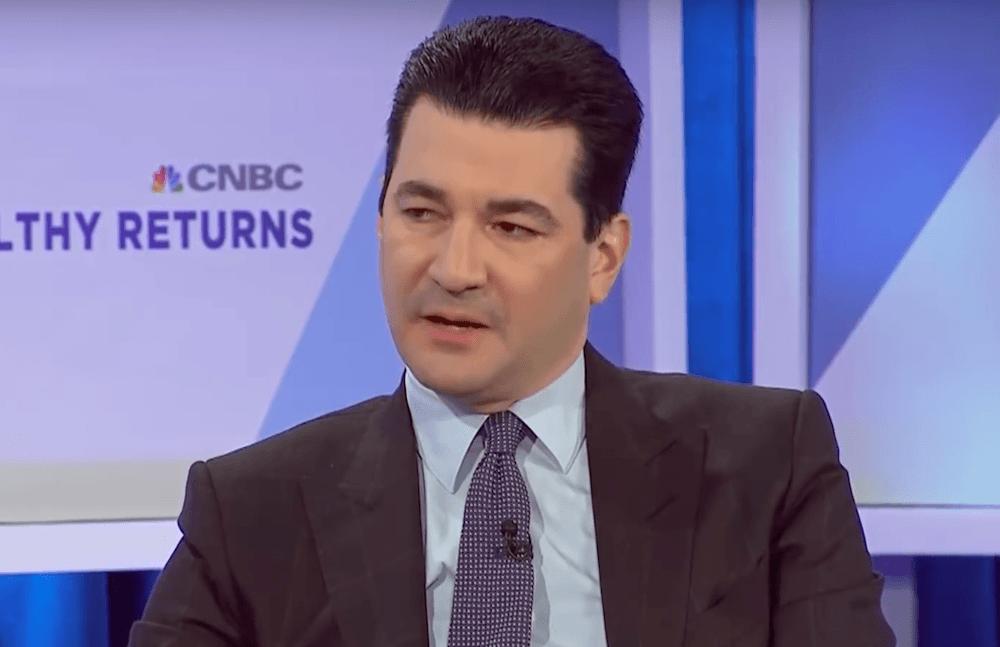
    FDA Commissioner Scott Gottlieb issued a far-ranging statement about his agency’s most recent and upcoming actions, while also addressing past missteps, in regard to the national opioid epidemic.

    Noting that the FDA’s previous wait-and-see policy in regard to evidence and intervention left it “a step behind a crisis that was evolving quickly,” Gottlieb said in the statement that his agency will implement more effective measures to reduce exposure to opioids, including prescription and labeling changes, promotion of treatment therapies, and approval of non-dependency-forming pain treatment.

    Calling the opioid crisis “a top priority” of both Secretary of Health and Human Services Alex Azar and the Trump Administration as a whole, Gottlieb wrote that faster and more decisive action will define the FDA’s policy in 2019.

    The rise in synthetic opioids like fentanyl and the “continued prevalence” of opioid prescriptions with overly long durations has prompted the agency to “step up its intervention,” according to Gottlieb.

    The commissioner also noted that the FDA’s previous approach—”waiting for the accumulation of definitive evidence of harm” put them in a position of catching up to the crisis as it ravaged “vulnerable communities.”

    “We don’t want to look back five years from now, at an even bigger crisis, with regret that there were more aggressive steps that we could have taken sooner,” wrote Gottlieb. “All options are on the table.”

    As Gottlieb outlined in his statement, these options have included expanded information on drug labeling. Passage of the Substance Use-Disorder Prevention that Promotes Opioid Recovery and Treatment (SUPPORT) for Patients and Communities Act in October 2018 has also given the agency new authority to assess and reduce dependency and misuse of opioids, including requirements for packaging on opioids and other drugs that carry a high risk of abuse or overdose.

    According to the statement, FDA will issue a report on their recommendations for prescription guidelines at the end of 2019.

    The FDA is also considering an option to require certain immediate-release formulations of opioids be made available in blister packages containing one- and two-day dosages, which would “comport with evidence demonstrating that a day or two of medication is sufficient” and could “reduce the overall amount of dispensed drugs available for misuse, abuse and diversion.”

    Gottlieb also wrote that the agency will consider a formal evaluation of prospective opioid drugs to determine its application for specific patients, and whether or not the newer application is safer or more effective for treatment than existing, non-addictive medication. The Risk Evaluation and Mitigation Strategies (REMS) program, which measures the benefits of a particular drug over its potential risks, will also be subject to review to determine if it is properly addressing such concerns.

    The FDA will also prioritize the development of new and effective forms of medication-assisted treatment (MAT) to treat opioid dependency and non-addictive pain medication, and expand access to the overdose reversal drug naloxone.

    The agency will also continue to partner with U.S. Customs and Border Protection to reduce the marketing and distribution of illegal opioids through national borders and through international shipping.

    View the original article at thefix.com

  • How A Family Member's Opioid Use Affects Teens

    How A Family Member's Opioid Use Affects Teens

    A new study examined why teens with family members who chronically use prescription opioids are at higher risk of long-term opioid use. 

    Having a family member who chronically uses opioids significantly increases the chance that a teen who is prescribed opioids will develop long-term use, according to a new study. 

    The study, published in JAMA Surgery, looked at insurance records of nearly 350,000 people aged 13 to 21 who had never been prescribed opioids before, but who were given the painkillers after surgery or dental procedures. By looking at other people on the family insurance plan, researchers were able to understand whether someone else in the family was using opioids chronically. 

    They found that 2.4% of young people prescribed opioids for the first time developed long-term use. However, if a family member was using opioids chronically, that percentage increased to 4.1%. 

    “The findings suggest that long-term opioid use among family members is associated with persistent opioid use among opioid-naive adolescents and young adults undergoing surgery and should be screened for in the preoperative period,” study authors wrote. 

    Lead study author Dr. Calista Harbaugh said that the results show that doctors need to be proactive about talking to patients about opioid use in their families. 

    “We are trying to better understand what impacts a young adult’s risk of chronic opioid use after the first time they are prescribed an opioid,” she told Science Daily. “Surgeons and providers should heighten efforts to prevent opioid dependence among patients with any potential risk factors.”

    The research found a connection—but researchers couldn’t explain why the risk was higher. They explained that it could be due to family culture, genetic factors, or possibly even other family members using the teen’s prescription. 

    Study author Jennifer Waljee said the findings highlight the need for even more caution around prescribing practices for young adults. 

    “We know from previous research that adolescents and young adults undergoing dental and other common surgical procedures are at risk of persistent opioid use after their first opioid prescription,” she said. “Our study suggests a potential relationship between this risk among youth and the presence of opioid use among family members and may be an important consideration when screening for individuals at risk for prolonged postoperative opioid use.”

    For teens who have someone in their family already using opioids chronically, doctors should be proactive about trying to prevent long-term use of opioids, study authors wrote. 

    “Physicians should screen young patients for long-term opioid use in their families and implement heightened efforts to prevent opioid dependence among patients with this important risk factor,” they said. 

    View the original article at thefix.com