Tag: opioid epidemic

  • Could The Purdue Settlement Set The Stage For A Public Pharma System?

    Could The Purdue Settlement Set The Stage For A Public Pharma System?

    “A United States public option for pharmaceutical production would address a range of problems in an industry rife with market failure.”   

    After Purdue Pharma settles its bankruptcy cases, the company will be disbanded and reformed, according to settlement plans. Rather than selling its drugs for profit, the new spin-off company will sell drugs to benefit cities and states devastated by the opioid crisis.

    Purdue will be no more, and a “public beneficiary company” will take its place. 

    Writing for The New Republic, Dana Brown and Isaiah J. Poole of The Democracy Collaborative, argue that this should be a first step in transforming the pharmaceutical industry from public to private. 

    “A United States public option for pharmaceutical production would address a range of problems in an industry rife with market failure,” Brown and Poole write.  

    The Case For Public Pharma

    Unscrupulous tactics like those undertaken by Purdue, the company behind OxyContin, and other opioid manufacturers are just the tip of the iceberg when it comes to the industry’s problems, they write. There’s the fact that some medications are too expensive for the people who need them the most (including insulin, which has been in the news for high prices). Or, the fact that companies only research drugs that they believe can generate profit. 

    “The case for a public option is simple,” the authors write. “First, publicly owned pharmaceuticals are free of the structural need to appease profit-hungry shareholders and are thus able to focus on public health priorities.”

    Other Countries Have Public Options

    Sweden, Brazil, China and India all have some sort of public pharmaceutical industry and those countries have contributed to global drug development. 

    “These examples expose the emptiness of industry arguments that public involvement in the drug industry will stifle innovation,” Poole and Brown write. In fact, with no need to spend on advertising or to direct profits to investors, a public pharmaceutical company would be better able to invest in research and thus make new innovations, they write. 

    The authors point out that controlling diabetes currently costs about $6,000 per person annually, a cost that has tripled in the past 10 years. A public pharmaceutical company could cut that cost to about $70, according to some analysis. 

    “Coupled with reforms such as a national pharmaceutical institute—which would ensure public investments in medical research can be harnessed for public benefit instead of co-opted exclusively for private profit—these public enterprises would produce both new medications and generics, and could offer them at or even below cost,” Poole and Brown write. 

    Learning From the Big Tobacco Settlement

    The authors point out that little lasting change came from the massive settlement with Big Tobacco in 1998. However, the opioid settlement could be different, if it sparked interest in public pharmaceuticals. 

    Poole and Brown conclude, “The U.S. could once and for all move beyond having to tolerate an industry that subordinates public health to shareholder greed.”

    View the original article at thefix.com

  • Sacklers Accused Of Concealing $1 Billion In Wire Transfers

    Sacklers Accused Of Concealing $1 Billion In Wire Transfers

    The New York Attorney General’s Office was able to identify shell companies that were used to conceal the Sacklers’ riches.

    Members of the Sackler family have been accused of trying to conceal their wealth, as they try to settle some 2,000 lawsuits alleging that the family-owned company Purdue Pharma, the manufacturer of OxyContin, contributed to the opioid crisis.

    New York Attorney General Letitia James said that her office discovered about $1 billion in wire transfers made by the Sackler family to various entities including real estate holdings.

    The wire transfers were uncovered as a result of just one of 33 subpoenas issued by James to various financial institutions, seeking information about the family’s wealth. Forbes listed the Sacklers as the 19th richest American family in 2016 with a net worth of $13 billion.

    Shell Companies

    James’ office was able to identify shell companies that were used to conceal the Sacklers’ riches.

    “While the Sacklers continue to lowball victims and skirt a responsible settlement, we refuse to allow the family to misuse the courts in an effort to shield their financial misconduct,” said James in a statement. “The limited number of documents provided to us so far underscore the necessity for compliance with every subpoena.”

    Sackler Rep Says Transfers “Were Perfectly Legal”

    A representative for Mortimer D.A. Sackler, a former Purdue Pharma board member, denied James’ suggestion that the family has been trying to protect their wealth from the barrage of lawsuits from states, counties, cities and tribal governments across the U.S.

    “There is nothing newsworthy about these decade-old transfers, which were perfectly legal and appropriate in every respect,” they stated. “This is a cynical attempt by a hostile AG’s office to generate defamatory headlines to try to torpedo a mutually beneficial settlement that is supported by so many other states and would result in billions of dollars going to communities and individuals across the country that need help.”

    A lawyer for Purdue Pharma argued in a court filing against subpoena action by the AG’s office, but a lawyer for the AG’s office said they have already helped uncover “shell companies” used by the family to hide their wealth.

    “Already, these records have allowed the State to identify previously unknown shell companies that one of the Sackler Defendants used to shift Purdue money through accounts around the world and then conceal it in at least two separate multimillion-dollar real estate investments here in New York, sanitized (until now) of any readily-detectable connections to the Sackler family,” said David E. Nachman in a letter to the court.

    On Monday, it was reported that Purdue Pharma filed for bankruptcy after reaching a tentative settlement that could be worth up to $12 billion over time, according to AP News. However, not everyone is onboard with the proposed settlement.

    View the original article at thefix.com

  • Man Who Posed As Doctor Convicted Of Prescribing Thousands Of Opioids At Pill Mill

    Man Who Posed As Doctor Convicted Of Prescribing Thousands Of Opioids At Pill Mill

    The fake doctor wrote prescriptions which had been pre-signed by a registered physician for more than 200,000 doses of hydrocodone.

    A man who pretended to be a physician and issued prescriptions for hundreds of thousands of doses of opioids was found guilty after a five-day trial, the Department of Justice (DOJ) announced.

    Muhammad Arif, 61, is awaiting sentencing for one count of conspiracy to unlawfully distribute and dispense controlled substances and three counts of unlawfully distributing and dispensing controlled substances, which he carried out from late 2015 to early 2016 at an unregistered pain clinic in Rosenberg, Texas, which federal authorities described as a “pill mill.” 

    Though unlicensed to practice medicine, Arif saw patients and wrote prescriptions for hydrocodone and other drugs that were pre-signed by a registered physician. Both the doctor and the owner of the clinic were named as co-conspirators in the case.

    Patients Shell Out $250 Cash For Hydrocodone, Soma Prescriptions

    According to the DOJ release, evidence presented at the trial showed that up to 40 people a day could visit the Aster Medical Clinic, where they obtained prescriptions for over 200,000 dosage units of the opioid pain medication hydrocodone and over 145,000 dosage units of the muscle relaxant carisoprodol, a Schedule IV controlled substance which is also sold under the brand name Soma. 

    “The combination of hydrocodone and carisoprodol is a dangerous drug cocktail with no known medical benefit,” wrote the authors of the DOJ release.

    Testimony revealed that individuals were charged $250 in cash for each visit. “Crew leaders” would recruit individuals to pose as patients and paid for their visits in order to obtain the prescriptions, which were sold on the street.

    Real Doctor Pleads Guilty for His Role in Pain Med Scheme

    The co-conspirators—Baker Niazi, 48, and Waleed Khan, 47—both pled guilty for their roles in the prescription scheme at Aster Medical Clinic, and like Arif, are currently awaiting sentencing.

    The case was investigated by the Drug Enforcement Administration and was brought as part of the Medicare Fraud Strike Force, a joint initiative between the DOJ and the U.S. Department of Health and Human Services.

    Since 2007, the Strike Force, which operates in 23 districts, has charged nearly 4,000 defendants, who have billed Medicare for more than $14 billion.

    The news comes on the heels of the DOJ’s August 28th announcement regarding charges filed against 41 individuals for their alleged involvement in a pill mill network of clinics and pharmacies.

    According to the press release, the owner and pharmacist at one pharmacy allegedly dispensed the second highest amount of oxycodone 30 mg pills of all the pharmacies in Texas in 2019, and the ninth highest amount in the United States.

    View the original article at thefix.com

  • Purdue Reaches $10 Billion Settlement In Opioid Lawsuits

    Purdue Reaches $10 Billion Settlement In Opioid Lawsuits

    The deal does not include any admission of wrongdoing by Purdue Pharma or the Sackler family

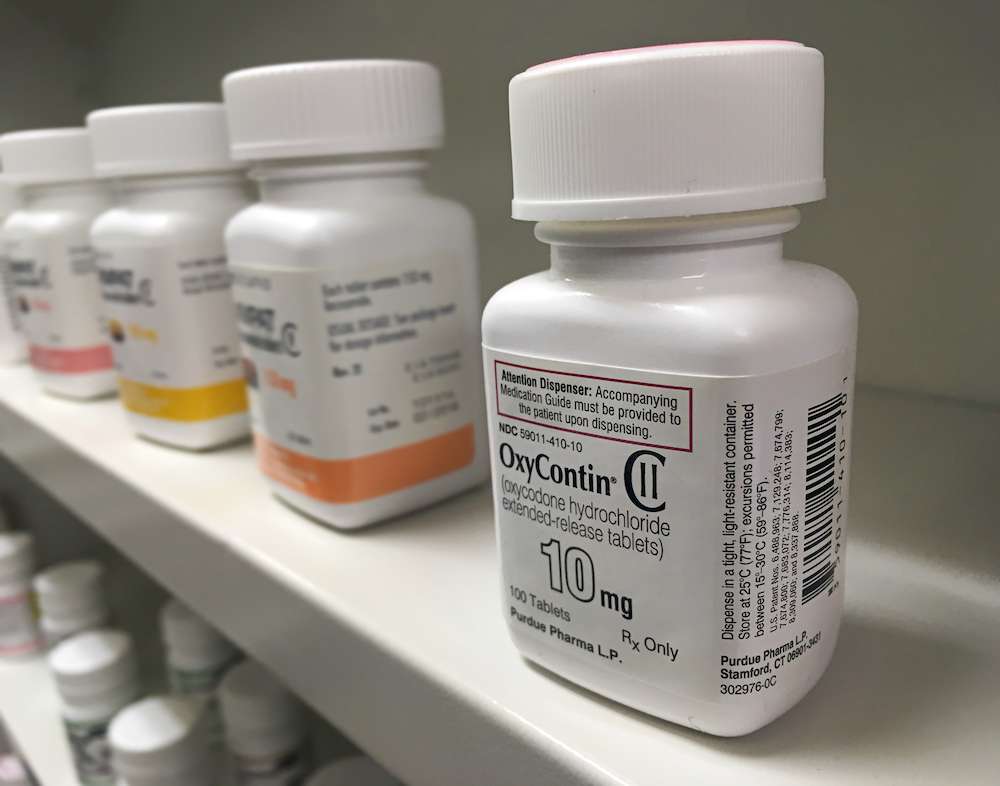
    Purdue Pharma, the most infamous manufacturer of prescription opioid pills, has reached a multi-billion dollar settlement with thousands of state, city and county governments that are suing the maker of OxyContin for its alleged role in the opioid epidemic. 

    The deal was first reported Wednesday evening (Sept. 11). The details were not immediately made public, but The New York Times reported the basics of the settlement: Purdue will declare bankruptcy.

    What Happens To Purdue?

    A new company will be formed to sell OxyContin, and the profits from those sales will go to Purdue’s settlement payout. The Sackler family, which owns Purdue, will contribute $3 million to the settlement over seven years. In addition, Purdue will donate prescriptions, including those for addiction treatment. NBC News reported that the settlement is worth $10-12 billion overall. 

    The deal does not include any admission of wrongdoing by Purdue Pharma or the Sackler family

    According to NBC News, as of Thursday (Sept. 12), at least 20 states have rejected the deal while legal officials in 27 states are reportedly in favor of the deal, which still needs to be approved by a bankruptcy judge and the board of Purdue Pharma. 

    “We are proud to participate in the nation’s most significant step in addressing this deadly crisis,” Texas attorney general Ken Paxton said through a spokesperson. 

    Tennessee Attorney General Herbert Slatery, who earlier this week predicted that Purdue would likely file for bankruptcy, said the settlement “would secure billions of dollars nationwide to go toward addressing the devastating effects of the opioid epidemic and will result in the Sackler family divesting themselves of their business interests in the pharmaceutical industry forever.”

    Florida Attorney General Ashley Moody said that the settlement was historic and will help provide treatment. 

    “Sadly, this agreement cannot bring back those who have lost their lives to opioid abuse, but it will help Florida gain access to more life-saving resources and bolster our efforts to end this deadly epidemic,” Moody said. 

    The Opposition Calls The Settlement “An Insult”

    However, not everyone was satisfied with the settlement. At least 20 states have opted not to sign on to the deal. New York Attorney General Letitia James had one of the strongest reactions, calling the settlement “an insult, plain and simple.”

    Other states want to hold onto their right to sue the Sackler family personally. 

    “If Purdue cannot pay for the harm it inflicted, the Sacklers will,” said New Jersey Attorney General Gurbir S. Grewal. 

    Massachusetts Attorney General Maura Healey wanted to see Purdue Pharma and the Sackler family forced to admit wrongdoing. 

    “It’s critical that all the facts come out about what this company and its executives and directors did, that they apologize for the harm they caused, and that no one profits from breaking the law,” she said. 

    View the original article at thefix.com

  • FDA Rejects Petition For Moratorium On New Opioids

    FDA Rejects Petition For Moratorium On New Opioids

    The FDA explained its decision to continue accepting applications for new opioids in a written response. 

    The Food and Drug Administration has rejected a request for a moratorium on the approval of new opioid drugs.

    The petition for a moratorium was launched by the Public Citizen’s Health Research Group in April of this year. It requested that the FDA hold off on approving new opioids until the organization adopted recommendations made by the National Academies of Sciences, Engineering, and Medicine’s 2017 report, “Pain Management and the Opioid Epidemic: Balancing Societal and Individual Benefits and Risks of Prescription Opioid Use.”

    The FDA issued a written response to the request last week, denying the petition. 

    Why The FDA Denied The Request

    “While the FDA is committed to continuing its ongoing work of scrutinizing how it applies its benefit-risk framework to candidate opioids, and to exploring whether additional authority from Congress is needed, FDA must also continue to apply the existing statutory and regulatory framework to properly filed [new drug applications], including applications for new opioid drug products or opioid formulations,” the agency wrote. 

    “Furthermore, a moratorium on the approval of new opioid drug products could stifle the development and availability to patients of new opioids that could offer greater safety or other therapeutic advantages over products already on the market.”

    The FDA went on to state that even after a new drug is approved, it is still closely monitored to make sure that its benefits outweigh its risks. The FDA has taken steps to mitigate the risk of opioids, including changing labeling, the agency says. 

    Approving A New Opioid That’s Stronger Than Fentanyl

    Last year, the FDA ruffled feathers by approving a controversial new opioid that is 10 times stronger than fentanyl. The medicine, Dsuvia, is a version of sufentanil intended only for use in hospitals, the FDA said. Many people, including a member of the FDA’s own advisory committee, spoke out against the approval of the drug. 

    “It is certain that Dsuvia will worsen the opioid epidemic and kill people needlessly,” Dr. Sidney Wolfe of Public Citizen’s Health Research Group (the same group that requested the moratorium) said in a press release at the time. “It will be taken by medical personnel and others for whom it has not been prescribed. And many of those will overdose and die.”

    Raeford Brown Jr., MD, chair of the FDA’s Anesthetic and Analgesic Drug Products Advisory Committee spoke strongly against the approval of the drug, even writing an open letter in opposition: 

    “It is my observation that once the FDA approves an opioid compound, there are no safeguards as to the population that will be exposed, the post-marketing analysis of prescribing behavior, or the ongoing analysis of the risks of the drug to the general population relative to its benefit to the public health,” he wrote.

    “Briefly stated, for all of the opioids that have been marketed in the last 10 years, there has not been sufficient demonstration of safety, nor has there been post-marketing assessment of who is taking the drug, how often prescribing is inappropriate, and whether there was ever a reason to risk the health of the general population by having one more opioid on the market.”

    View the original article at thefix.com

  • New York Overdose Deaths Decline Slightly After Rising For 7 Years

    New York Overdose Deaths Decline Slightly After Rising For 7 Years

    “The decrease in drug overdose deaths is promising but far too many New Yorkers are still dying,” said New York Health Commissioner Dr. Oxiris Barbot.

    The official report for 2018 drug overdose deaths in New York City has been released, showing a slight 2.6% decrease from 2017 after being on the rise for seven years. Last year, there were 1,444 overdose deaths within city limits, compared to just 541 in 2010.

    Experts see this as a promising start after the city put forth millions of dollars in efforts to address this problem, particularly as the opioid epidemic has raged on. However, overdose deaths are still too high for anyone’s liking.

    “The decrease in drug overdose deaths is promising,” said New York Health Commissioner Dr. Oxiris Barbot, according to NBC. “But far too many New Yorkers are still dying.”

    The U.S. has experienced a “third wave” of the opioid epidemic in recent years due to the increasing prevalence of the highly potent fentanyl. This particular drug is often added to other illicit substances such as heroin or cocaine to increase the euphoric effect, and has been attributed to the heightened death toll of the opioid crisis.

    Around 80% of New York’s overdose death cases from 2018 involved an opioid, with around 50% involving cocaine.

    A Little Relief

    Thankfully, preliminary reports on overdose deaths throughout the country have suggested an overall downturn in the number of fatal cases after several years of severe and alarming spikes.

    Much of the nation’s efforts to combat the opioid epidemic have revolved around increasing the public’s access to naloxone, the drug that blocks opioid receptors in the brain, halting the effects of an overdose.

    Campaigns have been launched across the U.S. to install naloxone kits alongside general first aid kits in public places such as airports and hotels and to recruit people to act as “community responders,” using apps and widespread community involvement to save lives.

    Naloxone Access

    New York City alone has distributed around 230,000 naloxone kits in two years. The medication commonly comes in an easy-to-deploy nasal spray, which anyone can purchase from a local pharmacy and carry with them in case they or someone nearby suffers an overdose.

    Local governments have also invested in facilitating access to addiction treatment programs and businesses have contributed by implementing overdose detection technology in customer bathrooms in places like coffee shops and fast food establishments.

    Unfortunately, some possibly overlooked populations still saw a rise in the number of overdose deaths in New York, including among older adults ages 55 to 84.

    View the original article at thefix.com

  • Remembering Lives Lost On International Overdose Awareness Day

    Remembering Lives Lost On International Overdose Awareness Day

    International Overdose Awareness Day is on Saturday, August 31st.

    International Overdose Awareness Day is on August 31st, like every year since it began in Australia in 2001. This year, the National Safety Council (NSC) is encouraging people in the U.S. to recognize the awareness day and “remember loved ones and act toward preventing overdose,” according to Occupational Health & Safety.

    Overdose death rates in the U.S. have been on the rise for decades, increasing from 6.1 per 100,000 people in 1999 to 21.7 in 2017, according to the Centers for Disease Control and Prevention (CDC).

    The increases were particularly severe from 2012 to 2017, though early reports appear to show a slight decrease from 2017 to 2018, sparking hopes that national efforts to fight this epidemic are beginning to show results.

    Spreading the Word

    Still, tens of thousands of people in the U.S. alone are dying yearly, and the NSC is working to reduce the stigma of drug addiction and spread the word.

    “Opioid misuse touches one in every four Americans, and these deaths are completely preventable,” said NSC President and CEO Lorraine M. Martin. “It is also a time to reduce stigma and prevent future deaths by supporting education and advocacy efforts.”

    The NSC is recommending a number of actions that groups and individuals can take to commemorate International Overdose Awareness Day, including holding a candlelight vigil, hosting a fundraiser, wearing purple, and adding the name of someone who died of an opioid overdose to the Celebrating Lost Loved Ones map.

    How To Participate

    The International Overdose Awareness Day website has additional ideas and resources for ways to participate and has already registered a long list of events from all around the world, from Afghanistan to Waupaca, Wisconsin. You can also post or read tributes about lost loved ones on the website or download free social media graphics, t-shirt designs, and overdose fact sheets.

    In 2014, the campaign partnered with the Penington Institute in Australia, which is dedicated to building knowledge and increasing awareness around substance use disorders and equipping frontline workers to act on the problem.

    “Overdose does not discriminate, and the number of people affected by it are increasing around the world,” reads the 2018 International Awareness Day Partners Report. “Part of what makes overdose so deadly is the silence that surrounds it. At Penington Institute, we envisage a world where overdose is destigmatized and better understood; where policy makers make well-informed and evidence-based decisions that help those who are at risk of overdose.”

    View the original article at thefix.com

  • Purdue Pharma Would Pay Billions In Proposed Opioid Settlement

    Purdue Pharma Would Pay Billions In Proposed Opioid Settlement

    The newly proposed deal would involve the Sackler family giving up control of Purdue, and paying at least $3 billion toward the settlement.

    Purdue Pharma may be close to reaching a settlement. The OxyContin maker—named in more than 2,000 lawsuits for fueling, and then aggravating, the opioid crisis—is seeking to resolve the lawsuits through a multibillion dollar settlement, NBC News reported.

    The company’s lawyers were in Cleveland last Tuesday (Aug. 20) to meet with the plaintiffs’ attorneys, including state attorneys general, to discuss the proposal, anonymous sources relayed to NBC.

    The company would settle for $10 billion to $12 billion, and declare bankruptcy. The deal would involve the Sackler family giving up control of Purdue, and paying at least $3 billion toward the settlement. The family has owned Purdue since 1952.

    Purdue Speaks

    “The people and communities affected by the opioid crisis need help now,” the company said in a statement to NBC. “Purdue believes a constructive global resolution is the best path forward, and the company is actively working with the state attorneys general and other plaintiffs to achieve this outcome.”

    The company is blamed for fueling the opioid crisis by “downplaying the risks of addiction to OxyContin while exaggerating its benefits.”

    The death toll of the opioid crisis has exceeded 400,000 between 1999-2017, the CDC says.

    The Sacklers

    The legacy of the wealthy Sackler family—a major donor to the arts—has been tarnished by their affiliation with OxyContin. The Sackler name has been removed from the Louvre, and major institutions including the Metropolitan Museum of Art and the Guggenheim have agreed to stop accepting gifts from the family, following anti-Sackler rallies organized by photographer Nan Goldin, who herself is in recovery from prescription opioid abuse.

    This wouldn’t be the first time Purdue had to pay for the “alleged” damage inflicted by OxyContin. In 2007, the company paid a fine of $635 million and top executives pleaded guilty in federal court to criminal charges that they duped regulators, medical providers and patients about the drug’s potential to be abused, as the New York Times reported.

    The company also agreed to pay Oklahoma $270 million in March, avoiding the trial that just concluded this month with only Johnson & Johnson as the remaining defendant. Johnson & Johnson was ordered to pay the state $572 million to offset the cost of the opioid crisis.

    View the original article at thefix.com

  • What To Expect After The Johnson & Johnson Verdict 

    What To Expect After The Johnson & Johnson Verdict 

    The Oklahoma ruling has changed expectations for how other opioid trials will be resolved. 

    When an Oklahoma judge ordered Johnson & Johnson to pay $572 million for its role in contributing to the state’s opioid epidemic, he made history by holding an opioid-related company accountable for damages in court for the first time. 

    With thousands of similar cases pending across the country—including 1,600 consolidated lawsuits slated to go before a federal judge in Ohio this October—the Oklahoma ruling has changed expectations for how other opioid trials will be resolved. 

    “It’s the first time that any of these claims have been trial tested,” Joe Khan, an attorney representing municipalities from Pennsylvania, New Jersey and Mississippi in opioid-related cases, told TIME

    The Aftermath

    Khan said that following the verdict in Oklahoma, more drug manufacturers and distributors may be apt to settle their cases. In the Oklahoma case, Purdue Pharma settled for $270 million, while Johnson & Johnson chose to proceed to trial. All other defendants in the case made smaller settlements. The fact that Johnson & Johnson had to pay so much more than Purdue could prompt other companies to err on the side of caution. 

    This “sends a very strong signal to defendants [that] rolling the dice (and going to trial) was not the winning strategy,” said Khan. 

    Professor emeritus of law at George Washington University, Peter Meyers, said that the Oklahoma case was a “game-changer” that strengthens the cases for other municipalities. Even if the judgment were overturned on appeal, that would not happen before the federal cases begin in October, so the impact of the Oklahoma case will be large, he said. 

    He compared the current litigation to lawsuits from the 1990s against Big Tobacco. Ultimately, all 50 states reached a massive settlement, that saw the top five tobacco companies paying $9 billion a year in perpetuity. 

    Meyers said, “The world changed when all states began bringing cases on behalf of their constituents.”

    Still, following the ruling, Johnson & Johnson’s stock price rose, indicating that the company’s investors were relieved by the result. The state was asking for billions in damages. 

    Analyst Joshua Jennings told The New York Times, “As silly as it sounds, a $600 million decision was, relative to expectations, a positive outcome. It was less onerous than many had expected.” 

    Setting a Precedent

    In addition, other legal precedents could compete with the Oklahoma ruling. The Oklahoma case was based on public nuisance laws: the state essentially argued that drug manufacturers and distributors had created a nuisance with their aggressive and misleading sales tactics.

    Although that line of reasoning worked in this case, University of Georgia law professor Elizabeth Burch pointed out that similar cases have failed against gun manufacturers, which could indicate trouble for future opioid lawsuits. 

    She said, “You can draw an analogy there, mainly because once you sell a gun, it is no longer in the control of the gun manufacturers.”

    View the original article at thefix.com

  • Michigan Reduces Opioids After Surgery, Patients Fare Fine

    Michigan Reduces Opioids After Surgery, Patients Fare Fine

    A new study examined information on patient satisfaction and outcomes in the seven months following the release of new opioid prescription guidelines in the state.

    The state of Michigan implemented opioid prescribing guidelines that resulted in people receiving fewer painkillers after surgery—but patients taking fewer pills did not experience more pain after procedures, according to a new study. 

    The study, published in The New England Journal of Medicine, looked at information on patient satisfaction and outcomes in the seven months following the release of new opioid prescription guidelines in Michigan. The study examined results for nearly 12,000 patients, and found that the average number of pills patients were given following a surgery was reduced from 26 to 18. 

    Controlling The Numbers

    Despite the drastic reduction, patients reported “no clinically important changes in pain scores,” the study authors found. 

    Study author Dr. Joceline Vu, a surgical resident at the University of Michigan, said that controlling the number of opioids people are given after a surgery can help reduce their risk for long-term use, and can help avoid introducing people to opioids. 

    “For healthy people, surgery may be the first time they are exposed to opioids,” she told ABC News. 

    On average, Michigan physicians prescribed eight fewer opioids per patient after the guidelines were released. Patients took, on average, three fewer pain pills. The percentage of prescriptions that were for fewer pills increased from 20% to 59% during the seven months of the study. 

    Dr. Joshua Sharfstein, who has studied the opioid epidemic as a professor at Johns Hopkins Bloomberg School of Public Health, said that the study shows that changing recommendations can have a real impact on doctors’ habits. 

    “The results here are promising,” he said. “Most [physicians] prescribe by routine, and changing those routines is hard. This shows that some changes are possible. It is important that this study be read, and people realize that changes are possible.” 

    Before the statewide guidelines were issued by the Michigan Surgical Quality Collaborative, there was no standard that doctors could turn to for guidance on how many opioids to prescribe. Vu explained that doctors always wanted to be sure patients had enough pain pills, so that patients would report that they were satisfied with their surgical experience. Having lower patient satisfaction could affect ratings for doctors and hospitals, she noted. 

    However, the study found that patients did not experience increased pain levels when they were given fewer opioids. This shows that reducing the number of opioids prescribed is an effective way to mitigate the risks of opioids, without compromising patient comfort, the researchers say. 

    View the original article at thefix.com