Tag: opioid policy

  • Frustrated Pain Patients Meet With FDA About Opioid Access

    Frustrated Pain Patients Meet With FDA About Opioid Access

    A group of pain patients met at FDA headquarters to share their personal stories in a bid to get the agency to ease opioid restrictions.

    The FDA called a meeting in Washington, D.C. to listen to pain patients’ experiences of lacking access to opioids to manage their symptoms.

    A group traveled to the FDA’s headquarters outside the nation’s capital to ask the agency to ease restrictions that they say has made it harder for them to obtain opioids.

    NBC News reported on the stories of some of those who urged the FDA to consider what it is like to have acute or intractable pain and be unable to find relief.

    Dr. Sharon Hertz, director of FDA’s Division of Anesthesia, Analgesia and Addiction Products, told NBC of the informal meeting, “We don’t have expectations for what we are asking. If we thought we knew, we wouldn’t be asking.”

    The Patient-Focused Drug Development Meeting included harrowing stories of suffering. Sandra Flores has a condition called adhesive arachnoiditis, which is an inflammation of membranes in the brain, spine and nerve endings. She has repeatedly attempted to obtain the correct drugs for her pain.

    “I am seeing the true face of medicine,” Flores said. “Now they are throwing me in the trash.”

    FDA Commissioner Scott Gottlieb made an emphatic statement on the plight of pain patients without access to relief. 

    “Tragically, we know that for some patients, loss of quality of life due to crushing pain has resulted in increased thoughts of or actual suicide. This is unacceptable. Reflecting this, even as we seek to curb overprescribing of opioids, we also must make sure that patients with a true medical need for these drugs can access these therapies,” said Gottlieb, according to PatientEngagementHIT.

    The FDA does not regulate physicians’ prescribing habits; states do. As of now, 28 states enforce limits on opioid prescriptions, says data from the National Conference of State Legislatures.

    Although the FDA, CDC and most major medical institutions agree that limiting access to opioid prescriptions is a necessary step in fighting the opioid epidemic, they do not want intractable pain patients to suffer.

    Under the new regulations, many doctors have simply stopped prescribing out of fear of lawsuits. Flores has been unable to find a doctor that will take her on as a patient. “No doctors will fight. They just don’t want to get into trouble. They have forgotten the people that these drugs were made for.”

    Rose Bigham, speaking on behalf of the Alliance for the Treatment of Intractable Pain, said in the Washington meeting, “To the FDA—we are begging you. Correct the CDC’s egregious mistakes. The CDC recommendations have done irreparable harm to people in pain.”
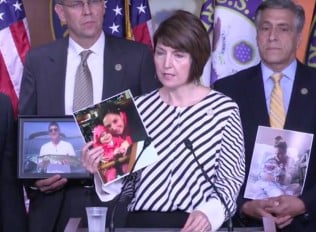
    View the original article at thefix.com

  • House Passes 25 Bills To Aid Fight Against Opioid Crisis

    House Passes 25 Bills To Aid Fight Against Opioid Crisis

    The bills cover a variety of issues ranging from improving sober living homes to disposal of unused medication.

    In an effort to lend legislative support to the fight against the national opioid epidemic, the House of Representatives passed 25 bills that would provide crucial support to both government and public organizations to combat the crisis on a number of fronts.

    The bills, authored by both Democratic and Republican representatives, include measures to expand access to the overdose reversal drug naloxone, develop new forms of pain medication that are non-dependency-forming, and allow medical professionals to view a patient’s medical history for previous substance abuse.

    Greg Walden (R-OR), the Energy and Commerce Committee Chairman, and Michael C. Burger (R-TX), Health Subcommittee Chairman, said in a joint statement that the bills are “real solutions that will change how we respond to this crisis.”

    Among the bills passed are:

    • H.R. 449, the Synthetic Drug Awareness Act of 2018, which will require U.S. Surgeon General Jerome Adams to submit a “comprehensive report to Congress on the public health effects of the rise of synthetic drug use among youth aged 12 to 18,” authored by Reps. Hakeem Jeffries (D-NY) and Chris Collins (D-NY)
    • H.R. 4684, the Ensuring Access to Quality Sober Living Act of 2018, which will authorize the Substance Abuse and Mental Health Services Administration (SAMHSA) to “develop, publish, and disseminate best practices for operating recovery housing that promotes a safe environment for sustained recovery,” authored by Reps. Judy Chu (D-CA), Mimi Walters (R-CA), Gus Bilirakis (R-FL) and Raul Ruiz (D-CA)
    • H.R. 5009, Jessie’s Law, which will require the Department of Health and Human Services to develop the best way to present information about substance use disorder in a consenting patient’s history for medical professionals to make informed decisions about treatment, authored by Reps. Tim Walberg (R-MI) and Debbie Dingell (D-MD)
    • H.R. 5012, the Safe Disposal of Unused Medication Act, which will allow hospice employees to remove and dispose of unused controlled substances after the death of a patient, authored by Reps. Walberg and Dingell
    • H.R. 5327, the Comprehensive Opioid Recovery Centers Act of 2018, which will establish such centers to “dramatically improve the opportunities for individuals to establish and maintain long-term recovery through the use of FDA-approved medications and evidence-based treatment, authored by Health Subcommittee Vice Chairman Brett Guthrie (R-KY) and Ranking Member Gene Green (R-TX)
    • And H.R. 4275, the Empowering Pharmacists in the Fight Against Opioid Abuse Act, which will give pharmacists more information and ability to decline prescriptions for controlled substances which they suspect to be fraudulent or for abuse, authored by Reps. Mark DeSaulnier (D-CA) and Buddy Carter (R-GA).

    Reps. Walden and Burgess noted in their statement that the bills will “make our states and local communities better equipped in the nationwide efforts to stem this tide” of opioid dependency and overdose.

    The House will continue to review related bills on January 14, including H.R. 6069, which will require the Comptroller General to conduct a study on how virtual currencies are used to facilitate goods or services linked to drug or sex trafficking.

    View the original article at thefix.com