Tag: opioid sales

  • Sacklers Benefit From Ski Resort Sales In Areas Hit Hard By Opioids

    Sacklers Benefit From Ski Resort Sales In Areas Hit Hard By Opioids

    Some believe the Sacklers should donate the profits to fund addiction treatment.

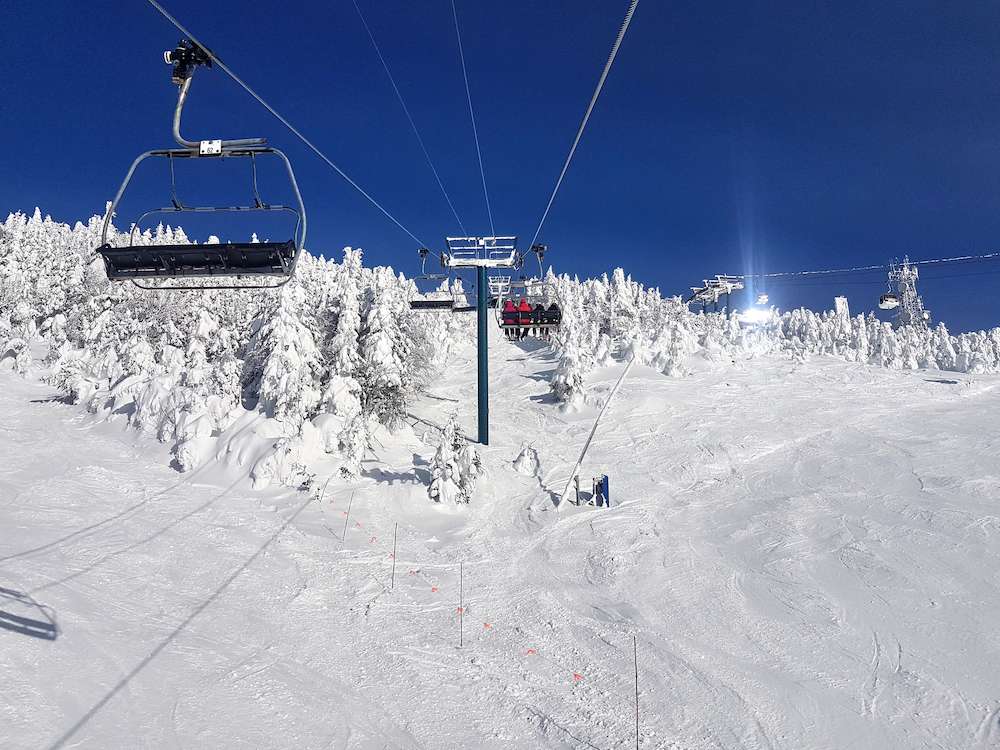
    The Sackler family, including those who own Purdue Pharma, have recently earned as much as $116 million from the sale of ski resorts that they owned in areas of New Hampshire, Vermont and Ohio that have been heavily impacted by the opioid epidemic. 

    The Sackler family owned 54% of Peak Resorts Inc., according to Bloomberg. The company was purchased by Vail Resorts Inc. last week, leaving members of the Sackler family with a massive check and some members of local communities frustrated.

    New Hampshire Associate Attorney General James Boffetti explained why to The Washington Post: “It is clear that the Sacklers withdrew a huge amount of money from Purdue Pharma. To the extent that was used for these investments, including in the ski resorts, that is money that they would have only because of this deceptive marketing scheme that they have been running at Purdue.”

    Critics Say Sacklers Should Donate The Profits

    Amanda Bevard, chairwoman of the board of commissioners in Carroll County, New Hampshire, where one of the ski resorts is located, wants to see the Sacklers give up the money from the sales. 

    “The 10 counties in the state of New Hampshire spent over $60 million between 2015 and 2019 on the opioid problem,” she said. “It would be really nice if they would donate their profits back to the state of New Hampshire’s counties.”

    New Hampshire, which is home to three of the resorts sold, has the forth-highest overdose rate in the nation. In the area around one of the resorts, there were enough opioid prescriptions filled between 2006 and 2012 to give 201 pills per year to everyone living in a five-mile radius, the Post noted. Even when you account for out-of-town travelers to the ski area, that’s vastly higher than the national average of 36 pills yearly per person. 

    One Local Denies The Outcry Against The Ski Resort Sales

    Still, some New Hampshire locals said that the sales were needed, especially in rural areas of the state that could use an economic boost. Gene Chandler, former New Hampshire House Speaker, represents an area that is home to one of the resorts. 

    “There hasn’t been any outcry that we’ve been aware of,” he said. “Most people seem to be just interested in what’s best for the ski areas. If anything is going to offset opioid abuse and get control of it, it’s a good economy.”

    One of the ski resorts included in the sale is in Ohio, near where the opioid lawsuits are being litigated. Greg McNeil used to take his son Sam skiing at that resort, until Sam died of an overdose in 2015. Now, he says that seeing the Sacklers benefit from the sale of the resort is painful. 

    “Sam grew up skiing on that mountain, so we had many, many fun days,” McNeil said. “There’s a lot that the Sackler family can do so other families don’t have the same experience—the same thing we had with a loved one.”

    View the original article at thefix.com

  • Johnson & Johnson Called Opioid "Kingpin" In Oklahoma Lawsuit

    Johnson & Johnson Called Opioid "Kingpin" In Oklahoma Lawsuit

    The lawsuit names the multinational company as a “top supplier, seller and lobbyist” for prescription opioids.

    Johnson & Johnson is being named as a “kingpin” of the opioid epidemic in the first big trial targeting opioid manufacturers, which is set to take place in May 2019.

    The lawsuit, brought by the state of Oklahoma, is naming the multinational company as a “top supplier, seller and lobbyist” for prescription opioids, according to a report by Axios.

    Although Purdue Pharma is the most commonly cited company associated with the opioid crisis, there are several other pharmaceutical companies being targeted by the many hundreds of lawsuits being brought to court by local governments as well as individuals.

    Johnson & Johnson, most often associated with baby powder and lotion products, is classified as a pharmaceutical company. 

    Prior to the Axios report, Johnson & Johnson came under fire when it was discovered that the brand’s baby powder contained asbestos. The company was ordered by a California judge on Wednesday to pay $29 million to a woman who sued based on the claim that the powder was a “substantial contributing factor” in the development of her terminal cancer.

    In addition to everyday home products, Johnson & Johnson “produced raw narcotics in Tasmanian poppy fields, created other active opioid ingredients, and then supplied the products to other opioid makers—including Purdue Pharma,” according to the report.

    The company also allegedly boasted about the high morphine content of its poppies, targeted children and the elderly in its marketing, and funded multiple “pro-opioid groups.” A brochure made by one of the company’s subsidiaries even claimed that “opioids are rarely addictive.”

    The lawyers representing Oklahoma in the upcoming case have asked a court to release millions of pages of Johnson & Johnson’s confidential documents to the public, based on the fact that the company has divested from the opioid business and therefore shouldn’t have to worry about losing trade secrets.

    “The public interest in this information is urgent, enduring and overwhelming,” wrote Oklahoma Attorney General Mike Hunter.

    Johnson & Johnson provided Axios with a statement in the company’s defense, claiming that it “appropriately and responsibly met all laws and regulations on the manufacturing, sale and distribution of APIs (active pharmaceutical ingredients) and the raw materials that go into them” and that its “actions in the marketing and promotion of these important prescription pain medications were appropriate and responsible.”

    The company claims that it accounted for “less than one percent” of the total market share for opioid medications.

    However, the Axios report points out that Johnson & Johnson made $1 billion in 2015 by selling the opioid Nucynta and $2 billion from the fentanyl patch Duragesic, which it still sells to this day.

    View the original article at thefix.com

  • Insys Execs Used Rap Video To Push Higher Doses Of Fentanyl Spray

    Insys Execs Used Rap Video To Push Higher Doses Of Fentanyl Spray

    The sales video parodied A$AP Rocky’s hit single “F—in’ Problems.”

    Jurors for a racketeering, fraud and conspiracy trial in Boston involving former Insys Therapeutics CEO John Kapoor saw a sales video made by the pharmaceutical manufacturer that showed company employees rapping about increasing prescription dosages and dancing with an individual dressed as a bottle of its powerful fentanyl spray Subys.

    Kapoor and four other former Insys managers and executives are accused of conspiring to pay doctors in exchange for prescriptions for Subsys, a fentanyl-based medication intended for use by cancer patients with severe pain. Kapoor and the other defendants have denied the charges.

    In the video, a parody of A$AP Rocky’s 2012 single “F—in Problems” which prosecutors said was shown during a national sales meeting in 2015, salesmen and other individuals rap about “titration,” a process by which employees persuade medical professionals to increase the strength of a prescription until their patients reach a certain dosage.

    At one point in the video, the person dressed as a Subsys bottle – which is notated with 1,600 micrograms, its highest dosage – is reportedly revealed to be Insys’ then-vice president of sales, Alec Burlakoff.  

    In November 2018, Burlakoff pled guilty to a charge of racketeering conspiracy, and according to NBC News, is expected to cooperate with prosecutors in the case against Kapoor.

    Another former Insys executive, ex-CEO Michael Babich, testified during the current trial that Kapoor encouraged employees to push for high dosages of Subsys so they would continue taking the drug.

    Attorneys for Kapoor claimed that Burlakoff was the architect of the kickback scheme, which according to CBS News, handed out more than $2 million to 18,000 doctors in 2016 alone.

    Kapoor’s lawyers also alleged that Burlakoff and Babich sought to reduce their sentences by providing false testimony against Kapoor, and have claimed that prosecutors have tried to link Insys to the national opioid crisis, noting that Subsys represents a fraction of the prescription opioid market

    Prosecutors, however, claim that Kapoor personally recruited physicians through expensive dinners and high-payment speaking engagements in order to ensure their commitment to higher dosages of Subsys. Kapoor, who resigned from Insys’ board of directors in 2017 after being arrested, along with Burlakoff, for their role in the kickback scheme on the same day that President Donald Trump declared the opioid crisis a public health emergency.

    Subsys, which is reportedly 100 times stronger than morphine, has been alleged to have played a role in hundreds of overdose deaths since the Food and Drug Administration approved it for use as cancer treatment for breakthrough pain in 2012. The drug, which helped to make Insys the best performing public offering in 2013, is now one of several opioid-related assets for which Insys Therapeutics, Inc., is currently seeking a buyer.

    View the original article at thefix.com