Tag: pain management

  • Meet Adie Wilson-Poe, the Cannabis Scientist

    Meet Adie Wilson-Poe, the Cannabis Scientist

    “Of all the things that cannabis can potentially do for humankind, the impact on the opioid crisis is by far the best and biggest thing it could do for humanity.”

    Dr. Adie Wilson-Poe was a straight edge kid. She grew up in Arizona then moved to the northwest at 19–first to Seattle and later to Portland–and found her home there. She wasn’t into drugs or drug culture; she was a punk rock kid who moved to Seattle for the music and ended up in science. While getting her psychology degree, Dr. Wilson-Poe became interested in drug use and addiction. She started studying neuroscience, specifically the neurobiology of psychology. 

    The first time Dr. Wilson-Poe smoked weed, she was 25 and well into grad school. Although at the time there was scant scientific literature about marijuana, she studied whatever data she could find and came to understand that cannabis had medicinal properties. She also started studying the basic mechanisms of addiction and how different drugs affect the brain in unique ways. 

    Dr. Wilson-Poe is an accomplished neuroscientist whose work is regularly funded by the National Institute on Drug Abuse.

    Why do you think so many pain-relieving drugs are addictive and what does the future hold in terms of cannabis-based pain relief?

    The whole reason that most people are using opioids or cannabinoids is because they’re trying to relieve pain. There is a very complex interaction between pain relieving drugs that are also addictive. That dynamic interaction between pain relief and drug abuse or drug misuse is something that we spent a lot of time working on. There’s a big gap between what we do in the lab and what we would do in the clinic and I’m trying to narrow that gap for cannabis and opioid interaction. 

    We know that inhalation is a very common method that people use to relieve pain. We know it’s a very effective method for relieving immediate pain. Oral products and edibles are great for nighttime when you can wait for them to kick in and then work overnight. But for relief when you’re in pain, you need something that works right away, and we know that the lungs are a great method of doing that.

    How do you think cannabis can solve the opioid epidemic?

    Of all the things that cannabis can potentially do for humankind, the impact on the opioid crisis is by far the best and biggest thing it could do for humanity. There are a number of places where cannabis can interact with opioids. If we just follow one person, let’s say you get injured at work, you throw out your back, and you have pain. You have a choice at the time that you’re experiencing pain. You could start using cannabis right away and never even use an opioid at all. All of the side effects, all of the risks, all of the dependence potential. You can prevent it entirely by managing pain with cannabis. Cannabis has been used for pain relief on this planet for 5,000 years. 

    The other thing we know from the evidence and my work has contributed to this as well, is that when they are used together, cannabis and opioids provide synergistic pain relief. So synergy means greater than additive effects. Rather than two plus two equals four you have two plus two equals seven or something. We know that this is a very robust effect, we see it in people, we see it in all other mammals, we see it whether you use a synthetic cannabinoid or delta-9, you see it whether you use codeine and morphine. When you use the drugs together, you get better pain relief and what that means–the outcome of that better pain relief–is that you don’t need as many opioids.

    Can you explain how cannabis can also be used for addiction treatment?

    Let’s say again: you have your injury on the job and your doctor prescribed opioids. You took them as directed and get to a point where your injury has resolved, but now you’re physically dependent on opioids. There’s a role for cannabis here. Part of the science is a little bit more messy than the others, but there’s some preliminary results showing that people who are physically dependent on opioids have some withdrawal relief from cannabis. During withdrawal you feel restless, you can’t sleep, you’re irritable. Those symptoms are very well treated with cannabis. 

    People have always talked about weed as a gateway drug, but now we’re hearing that marijuana is the exit drug. What are your thoughts?

    The gateway hypothesis came out of some evidence that was produced in the 70s, 80s, and 90s, which showed that there’s a correlation between using cannabis and using harder drugs like opioids. But that correlation is also true for people who use nicotine and alcohol. Just because those things are correlated with the use of harder drugs doesn’t mean that they cause a person to use harder drugs. That gateway hypothesis has been thoroughly refuted in more recent work. We now know that cannabis is not necessarily the gateway to causing someone to use other drugs. We’re in this new time where we see that cannabis is not the gateway drug to opioid use, but rather it’s an important tool for exiting from dependence on opioids.

    How has our government ignored the evidence that cannabis is less dangerous than alcohol? 

    In the early seventies, President Nixon assigned a bunch of scientists and doctors the task of analyzing cannabis’ effects on people and making a determination about how safe or how dangerous it was. This was the Shafer Commission. They wrote up this exhaustive report and gave it back to him. The report said, “This is a very innocuous substance, it shouldn’t be regulated, it’s even less dangerous than alcohol.” But Nixon ignored the evidence and allowed cannabis to persist as a schedule one drug.

    Through the history of prohibition there’s been a blatant disregard of the evidence. We saw this even as recent as the current administration. Jeff Sessions is probably the worst at this. Everything that comes out of his mouth about cannabis is directly in contradiction to the evidence. The evidence has always been there to support cannabis as a relatively safe substance, especially compared to other drugs.

    Can you talk about what you’re doing with the business Smart Cannabis

    We’re really interested in what the effects of cannabis in people are and how we can use that information to both better support the people using cannabis and help to support the people who are cultivating or producing cannabis. We have to study it in people and ask them, how did this make you feel? Knowing what people actually find enjoyable, not just intoxicating because there’s really a difference there, right? Like just because something has 30% THC and it got you really high doesn’t mean that was necessarily an enjoyable experience. Maybe you’d have a better time on Friday night if you had had a 17% flower, but we don’t know that until we actually test it in people. 

    Do you have an opinion on the recent vaping controversy?

    Oil cartridges are not going anywhere. This is an incredibly convenient and very popular way for people to consume cannabis. But what we really need to focus on is what’s the safest possible way to consume. Propylene Glycol and Vitamin E Acetate are probably never going to be allowed to be in these cartridges again. Obviously, all of these flavors and additives that break down into really nasty chemicals, those are going to be outlawed. 

    We’re going to need to have some regulation around.

    We’re probably going to see some change in the technology also. You can’t have a battery that’s over this amount of voltage. You can’t have a ceramic coil or a fiberglass coil that gets hotter than this temperature, because we know at that temperature, that’s when things start to break down and even if we don’t have the FDA or some other regulators telling us that this is what we need to do, it’s on us, it’s on the industry to be able to make those decisions for the health of our consumers.

    Cannabis events help to educate people about cannabis, what do you see as your role in all this?

    I feel incredibly grateful that this is what I get to do with my time on planet earth. It just so happened that legalization and the opioid crisis was happening when I was going to grad school. I get to participate in something that could leave a very long-lasting mark on humanity. It’s also interesting that a lot of my colleagues–a lot of doctors, a lot of healthcare professionals–because of the federal prohibition, there’s a lot of conservative thinking. There are a lot of people who are afraid to talk with their patients about cannabis or a lot of people who are afraid to speak about these things in public. 

    I believe in doing no harm and it’s very clear to me from the evidence that cannabis is a medicine and opioids, although useful for certain things, are dangerous. I feel very privileged that I get to participate in these really important conversations at a really important time. But one component of that is my not fearing what the National Institutes of Health are going to do or what the DEA is going to do. There’s some inherent risk for me in openly talking about these kinds of ideas because so many of my colleagues would just rather hide in the laboratory because it’s too much of a risk for them. But the right thing to do is to reduce harm and keep people alive and I feel very privileged that I get to play some part in that.

    View the original article at thefix.com

  • Can Low-Dose Naltrexone Work For Pain Relief?

    Can Low-Dose Naltrexone Work For Pain Relief?

    Some chronic pain patients say that naltrexone has offered them much-needed relief.

    Naltrexone has changed Lori Pinkley’s life. But unlike most people who have benefited from the drug, she’s not using it to treat alcohol or opioid use disorder. Pinkley uses naltrexone to treat chronic pain. 

    “I can go from having days that I really don’t want to get out of bed because I hurt so bad, to within a half-hour of taking it, I’m up and running, moving around, on the computer, able to do stuff,” Pinkley told NPR

    Jumpstarting Endorphins

    Pinkley’s physician, Dr. Andrea Nicol, is a pain specialist at the University of Kansas. She started prescribing naltrexone to Pinkley about a year ago. For people living with substance use disorder, she said, 50 milligrams of naltrexone blocks the brain’s opioid receptors.

    However, Nicol said that in her pain patients, a much lower dose of about 4.5 milligrams helps their malfunctioning nervous systems reset and work optimally, and jumpstart the production of endorphins, which contribute to natural pain relief. 

    “What it’s felt to do is not shut down the system, but restore some balance to the opioid system,” she said. 

    There have not been any wide-scale studies of low-dose naltrexone, which is sold under the brand names Revia and Vivitrol to treat addiction. However, a review recently published in the journal Medical Sciences found that naltrexone has entirely different effects at low doses. 

    Different Dynamics In Low Doses

    “In substantially lower than standard doses, they exert different pharmacodynamics,” the review authors wrote of naltrexone and a related drug, naloxone. This makes them potentially useful in treating pain, and keeping patients off high-dose opioids, said Dr. Bruce Vrooman, the study author. He added that patients on low-dose naltrexone report fewer side effects than patients on opioids. 

    “Those patients may report that this is indeed a game changer. It may truly help them with their activities, help them feel better,” he said. 

    Doctors Are Unaware Of Its Off-Label Use

    However, naltrexone faces barriers to becoming a widely-used pain reliever. First, many doctors don’t know that it can be prescribed for pain relief, or may not be comfortable prescribing it “off label.” In addition, pharmacies don’t sell such small doses, so people using low-dose naltrexone need to use compounding pharmacies, and insurance often won’t cover the medicine. 

    Finally, there is little interest from companies in producing naltrexone products. Since it’s already available as a generic, there’s less profit to be derived from it. 

    “Bringing a new drug to market requires getting FDA approval and that requires doing clinical trials,” said Patricia Danzon, a professor of health care management at the Wharton School at the University of Pennsylvania. “That’s a significant investment, and companies—unsurprisingly—are not willing to do that unless they can get a patent and be the sole supplier of that drug for at least some period of time.”

    View the original article at thefix.com

  • Should Your Mental Health Determine How Your Pain Is Treated?

    Should Your Mental Health Determine How Your Pain Is Treated?

    Patients with a mental health condition might have a hard time accessing opioids for pain relief, while patients with unexplained pain are often referred to psychiatric care, which does little to alleviate their symptoms. Finding treatment can be frustrating and humiliating.

    Four years ago, Dez Nelson’s pain management clinic demanded that she complete a visit with a psychologist. Nelson was surprised, since she had no history of mental illness, but she didn’t feel that she could push back on the request.

    “Of course I said okay — I didn’t want to lose my treatment,” Nelson told The Fix. “I was not happy about it, but I did it.”

    Nelson, 38, went to the appointment and had a mixed experience with the psychologist. She hasn’t been back since and the pain clinic hasn’t asked her to visit a psychologist again. Still, Nelson said that the experience highlighted — yet again — the discrimination pain patients face.

    “It was a condition of my continued care,” she said. “It seemed like they’re bringing it up in a beneficial light, as part of a multi-pronged approach to pain care. But I don’t think [mental health treatment] should be forced on a patient who doesn’t think they need it.”

    Chronic pain and mental illness are among the most stigmatized conditions in modern medicine. The conditions frequently intersect and change the way that patients are cared for and treated. Patients who have a mental illness might have a hard time accessing opioids for pain relief, while patients with unexplained pain are often referred to psychiatric care, which does little to alleviate their physical symptoms. At the same time, research suggests there is a strong connection between mental health and pain: depression can cause painful physical symptoms, while living with chronic pain can cause people to become depressed.

    All of this makes treating chronic pain and mental illness complex and frustrating for doctors and patients alike.

    A Mental Health Diagnosis Affects the Way Your Doctor Treats You

    Elizabeth* is a professor in her mid-thirties who had undiagnosed Lyme disease for eight years. Her Lyme contributed to the development of an autoimmune disease that has led to widespread inflammatory and nerve pain throughout her body. Elizabeth also has bipolar disorder. Despite the fact that she has been stable on medication for a decade, her mental health diagnosis complicates her pain treatment.

    “Doctors’ demeanor changes when I tell them my medications. When I say I have bipolar disorder, it’s a whole different ballpark. To them that’s clearly a risk factor and red flag for drug abuse,” Elizabeth said.

    Opioids are one of the only treatments Elizabeth has found that works to alleviate her pain. But she also takes benzodiazepines on an as-needed basis to control her anxiety (usually once a week). Even though Elizabeth is well aware of the risk of combining the two medications and knows better than to take the two pills together, doctors refuse to prescribe both. They don’t seem to trust her not to abuse them.

    “I could tell them that I wouldn’t take them together. But that’s not a valid choice,” Elizabeth said.

    While doctors were extremely cautious about this drug interaction, they didn’t focus on another drug-related risk: medications that are used to treat nerve pain can cause adverse reactions in patients with bipolar disorder. No one warned Elizabeth of this danger, and she ended up being hospitalized for psychosis after a long stretch of stability.

    “The doctors didn’t talk about it because it’s just a side effect, not a liability concern,” she said.

    On the flip-side, Elizabeth has experienced psychiatric providers who were skeptical of her pain diagnosis.

    “They wrote in my chart that I had a delusion that I had Lyme disease,” she said.

    The Intersection of Pain and Mental Illness

    Treating patients with pain and mental illness is complicated because both conditions rely on patient reports rather than objective tests for a diagnosis and to create or adjust a treatment plan.

    “Pain is a subjective symptom of the people feeling it. There is no way to measure it,” said Dr. Medhat Mikhael, a pain management specialist and medical director of the non-operative program at the Spine Health Center at Memorial Care Orange Coast Medical Center in Fountain Valley, California

    Pain and mental illness can exacerbate each other. In addition, medications for the conditions can interact in rare and serious ways, like what Elizabeth experienced. Finally — and at the forefront for many pain specialists — is the fact that many people with mental health conditions also develop substance use disorders and treating them with highly-addictive opioids can be dangerous. 

    “We address these issues with patients head on, explain that staying on these medications is very risky for them,” Mikhael said.

    Mikhael said that there’s a reason doctors ask patients so frequently about their mental health and substance abuse history. While some patients find that exhausting and repetitive, Mikhael feels it is his responsibility to be constantly evaluating the risk and benefits of using pain medications for people more susceptible to substance misuse or addiction.

    “I have to give them the benefits of the doubt, particularly if the history does not show they’re going doctor shopping. I have to trust them and I have to help them,” he said. “But trust has limits. I can’t say I trust the patient and let go.”

    My Body Is in Pain, I Do Not Need Psychiatric Care

    As the medical community grapples with how to manage pain in light of the opioid epidemic, there is an increased focus on holistic approaches to pain management. Nelson, however, believes this can be harmful to patients who need the pain-relieving power of opioids.

    “They’re trying to turn into bio-psycho-social model, and there are people with real diseases who are dying,” Nelson said. “My pain has nothing to do with my psyche. It has to do with the fact that my body is sick.”

    Before she was diagnosed with arthritis, emphysema and hemiplegic migraines, Nelson was often sent to psychiatric care when she arrived at the emergency room in pain. She had one provider tell her that facial paralysis — later found to be a symptom of her migraines — was psychogenic.

    “Instead of doing their jobs and investigating the physiological issues, they jumped right to the psychological,” she said, pointing to the long history of doctors believing that women’s pain was not real. Eventually, these experiences began to take a toll on Nelson.

    “There was a time when I began to question my own sanity. I thought ‘maybe they’re right, maybe this is just in my head.’”

    Untreated Pain Is Like a “Time Bomb.”

    Both Nelson and Elizabeth have been able to advocate for themselves. While they’ve still struggled with the medical community, they’re been able to improve their care. Yet many people with chronic pain and mental illness don’t have the ability to advocate for themselves in this way.

    “I’ve had a lot of education, so I feel comfortable and confident talking to a doctor,” Elizabeth said. She also has the money to be able to travel to a pain clinic and the support of a spouse and therapist.

    “I have a lot of these privileges that a lot of people don’t have,” she said. “I’m grateful for that, but I shouldn’t have to be. It should be ordinary.”

    Elizabeth often thinks about patients who have uncontrolled or treatment-resistant mental illness, and how that might affect their access to pain relief.

    “Should they just not get pain management because they’re not well with their mental illness? Of course not.”

    Having in-depth conversations, sharing information between different specialists, and providing community support could all help improve outcomes for people dealing with chronic pain and mental health conditions, she said.

    “People need help, not a punitive approach of taking [pain management] away,” she said. “Energy should be put into safe approach to dealing with pain. You can’t ignore it — it’s like a time bomb.”

    View the original article at thefix.com

  • Woman Testifies About Chronic Pain, Opioids From Cot

    Woman Testifies About Chronic Pain, Opioids From Cot

    “We must invest in the discovery of new, effective, and safer options for people living with pain,” Cindy Steinberg said in prepared remarks.

    It’s heartbreaking to see the faces of the opioid epidemic—young lives cut short by drug overdoses. Yet, this week another tragic but often overlooked face of the epidemic was on display when a woman testified before Congress from a cot, detailing her life with chronic pain. 

    Cindy Steinberg, national director of policy and advocacy for U.S. Pain Foundation spoke before the Senate Committee on Health, Education, Labor and Pensions during a hearing entitled “Managing Pain During the Opioid Crisis.”

    Steinberg’s chronic pain began 18 years ago when filing cabinets and cubical walls fell on her at work. Today, she isn’t able to sit or stand for long periods without experiencing muscle spasms and pain.

    She told the committee that her life is like “being a prisoner in your own body and being tortured,” according to the National Pain Report

    Steinberg argued that substance abuse and access to pain management medications for those who need them are two entirely separate issues. She said that rising overdoses has highlighted an existing problem, “underscor[ing] our failure to provide adequate, safe, accessible treatment options for pain relief.”

    “We can and must restore balance to opioid prescribing,” Steinberg said. 

    According to NBC News, Steinberg said in her prepared remarks, “In the near term, we can and must restore balance to opioid prescribing with depoliticized, rational and cleareyed recognition of the risks and benefits of these medications. In the long term, we must invest in the discovery of new, effective, and safer options for people living with pain.”

    Others who advocate for pain patients, including Richard “Red” Lawhern, director of research for the Alliance for the Treatment of Intractable Pain, were happy to see Steinberg’s story in the spotlight.

    “Steinberg directly challenged the lack of resident expertise on pain management at CDC, suggesting that Congress direct the much better equipped NIH to rewrite the guidelines based on recommendations of the HHS (Department of Health & Human Services) Task Force. This is a recommendation I support,” Lawhern said. 

    Committee Chair Senator Lamar Alexander of Tennessee seemed to empathize with Steinberg’s concerns, saying the “massive effort in reducing the supply of opioids has had the unintended consequence of hurting people who need them.”

    This week, research emerged showing that current changes in access to prescription opioids are unlikely to reduce the number of opioid overdoses. The research shows that projected annual opioid overdose deaths will reach 82,000 by 2025

    View the original article at thefix.com

  • Can SSRIs Interfere With Opioid Pain Relief?

    Can SSRIs Interfere With Opioid Pain Relief?

    A new study examined whether patients who were on SSRIs received less pain relief from certain opioids.

    SSRIs—the most common type of antidepressant—can make some opioid pain relievers less effective, exposing patients to higher levels of pain, according to a new study. 

    For the study, published in the journal PLOS ONE, researchers examined medical records of 4,300 patients who underwent a major operating room procedure at a medical center between 2009 and 2016. They found that patients who were on SSRIs and who received a certain type of opioid had less pain relief following their operations. 

    To understand the study, it’s important to note that opioids come in two varieties, according to NPR. Direct opioids, including morphine and OxyContin, begin working as soon as they are administered. Prodrugs, which include Vicodin and hydrocodone, have to be broken down in the liver before they can begin relieving pain. 

    SSRIs interrupt this process. This is because they affect a liver enzyme that is needed to break down prodrugs. With less of the enzyme breaking down drugs, the pain relief is less effective. 

    “There was theoretical evidence that suggested SSRIs might block prodrug opioids, but we didn’t know if it actually affected patient outcomes,” said Tina Hernandez-Boussard, who authored the study. 

    People on SSRIs who were prescribed prodrug opioids were in more pain up to two months after their procedure. 

    Because SSRIs and opioids are some of the most common prescriptions in the country, the study could have widespread implications for how pain is handled, said Jenny Wilkerson, a professor who teaches pharmacodynamics at the University of Florida.

    “This is an important study,” she said, before calling for additional research. 

    People who get less effective pain relief from opioids are likely to take more pills, which “could lead to misuse or abuse down the road,” Hernandez-Boussard said. 

    “If the opioids aren’t being activated and you’re not getting appropriate pain management, you’re going to take more opioids and you’re going to take them for a longer period of time,” she said. 

    One way around this would be to prescribe direct-acting opioids to patients on SSRIs. 

    “Every opioid has a side effect, not one opioid that is better than another. Possibly for patients taking SSRI, morphine or oxycodone, direct-acting drugs which don’t need to be broken down by the liver might be a better choice,” Hernandez-Boussard said. 

    Wilkerson said that patients should be confident in advocating for themselves when it comes to effective pain relief. 

    “Patients shouldn’t feel stigmatized for being depressed or in pain. Patients have to advocate for their best personal care.”

    However, Hernandez-Boussard acknowledged that this can be difficult for people who are depressed. Instead, she believes the medical community should work to better understand the interaction of SSRIs and opioids. 

    She said, “We need to think about how we can tailor treatment towards more vulnerable groups. More work needs to be done, but this is a good first step.”

    View the original article at thefix.com

  • Parents Should Ask Questions About Opioids For Kids, Teens

    Parents Should Ask Questions About Opioids For Kids, Teens

    Doctors warn that while being mindful of addictive properties of opioids is important, it’s also critical that pain be controlled for young patients. 

    Despite concern about the risks for addiction, there remains a legitimate medical need for opioid painkillers to manage pain for children and teens in some cases, and doctors say that parents can encourage responsible use of opioids by talking with their child’s provider about how best to manage pain. 

    “Opioids are very potent relievers of pain, very effective,” Dr. Linda J. Mason, a professor of anesthesia and pediatrics at Loma Linda University and president of the American Society of Anesthesiologists told The New York Times. “But they have addictive properties, and also side effects, like respiratory depression.” 

    Mason suggests that parents ask their provider how the doctor plans to manage a child’s pain. This can even begin at a pre-operative meeting, so that everyone has the same expectations about pain management. Although opioids may be needed in the short-term following surgery or a broken bone, patients can usually transition away from them quickly. In other cases, like those involving burns or serious illness, opioids may need to be used for a longer period of time. 

    Doctors warn that while being mindful of addictive properties of opioids is important, it’s also critical that pain be controlled for young patients. 

    “Treating pain adequately helps recovery, reduces the downstream psychiatric and psychological effects,” said Dr. Elliot J. Krane, chief of pain management at the Packard Children’s Hospital at Stanford and professor of anesthesiology and pediatrics at Stanford University. “In the absence of risk factors or concerns about the child’s home environment, I am more concerned about deleterious effects of untreated pain than I am about creating somebody with substance abuse disorder.” 

    Krane said that if patients are prescribed opioids “rationally and appropriately” there is little cause for concern about substance misuse. Krane has very few patients who are prescribed opioids for chronic pain, but some do need the strong medications, he said.

    He described himself as “neither pro-opioid nor anti-opioid, but pro-patient.”

    In addition to discussing pain management ahead of time, Mason recommends that parents ensure that any unused opioids are properly disposed of. 

    “You should not keep them for use for a future time,” Mason said. “These are for a specific surgery.”

    Many doctors and pharmacies are conscious of prescribing opioids in a very controlled manner for children and teens, but parents still have an important role to play in helping prevent opioid abuse in patients. 

    “Parents who are well-informed can give the best care to their children,” Mason said. 

    View the original article at thefix.com

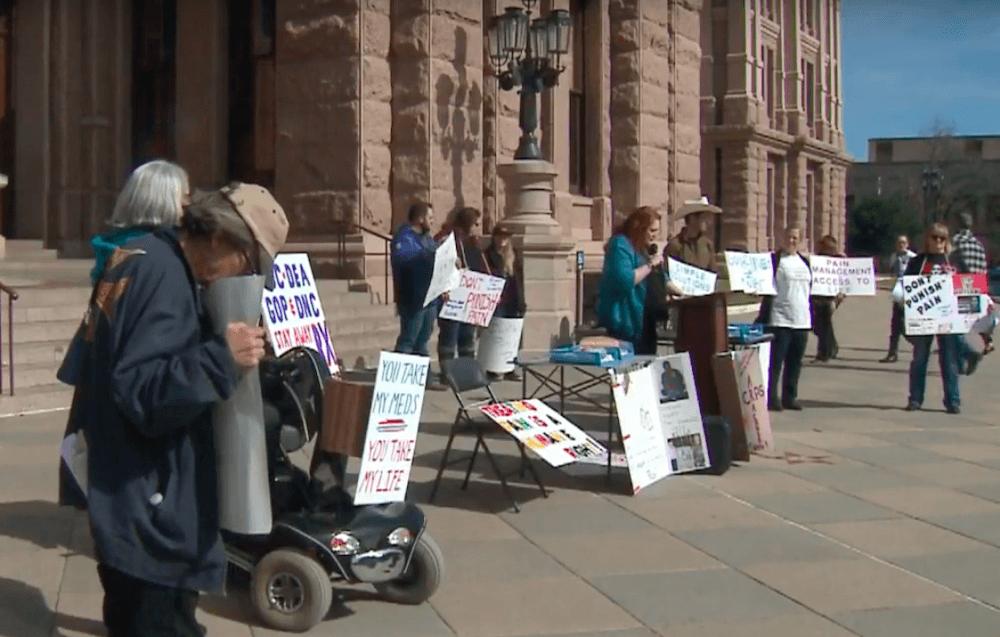
  • "Don’t Punish Pain" Rallies Held Across The Nation

    "Don’t Punish Pain" Rallies Held Across The Nation

    Pain patients gathered around the US to bring attention to the damage caused by restrictive opioid prescribing guidelines.

    While the opioid epidemic has claimed thousands of lives, the regulations meant to stem the death toll are having unintended consequences for people who live with chronic pain, according to people who rallied across the country Tuesday Jan. 29 as part of the “Don’t Punish Pain” event. 

    In Concord, New Hampshire, Lauren Benson was one of the younger people at the rally. Nine years ago, when she was just 23, Benson injured her back working as an EMT, and has been disabled since.

    She told The Union Leader that she and many other people who need opioids to control their pain have a harder time accessing the drugs because of tightening prescription regulations. This is especially frustrating for pain patients who have used opioids responsibly for decades, she said. 

    “They’ve been on pain medication longer than I’ve been alive and all of a sudden it’s: ‘No, stop, no more for you.’ What are they supposed to do? They’ve been taking their meds properly.”

    Many pain patients are afraid that they won’t be able to access the pills that make their lives bearable. Many have already had doctors taper their dosage or have had to go through humiliating questioning and drug tests to get their opioids. 

    “For over 10 years, I took the same dose and because of the Oklahoma opioid task force, my doctor had to cut my prescription by 75%,” Patrick Burdette, who attended a rally in Oklahoma City, told Fox 25 News. “It caused me to sit at home in bed most days.”

    There’s a misconception that pain patients can choose alternatives to opioids, according to many patients, who say that this isn’t an option for everyone. 

    “My physical therapist would come to my house and I just basically sat there and cried because the pain was so bad,” said Patty Loveless, who was also at the Oklahoma rally. 

    In Tucson, Arizona, one patient carried a sign proclaiming that pain patients are “afflicted, not addicted,” according to The Tucson Sentinel

    “You know that horrific pain that takes about a minute or so to go away?” said Debra Hickey, whose doctor recently reduced her pain medications. “Can you imagine if you were in that kind of pain 24/7 with no opioids? That’s the pain I’m in.”

    In 2016, the Centers for Disease Control and Prevention issued guidelines about the amount of opioids that most patients should be on. This year, Medicare has plans to further restrict access to opioids. However, pain patients say that their lives are being negatively-affected by these well-intentioned measures. 

    “It is borderline genocide,” Lauren DeLuca, founder of the Chronic Illness Advocacy and Awareness Group, told The Fix last year. 

    View the original article at thefix.com

  • Big Claims About Pot's Health Benefits Made Possible By Limited Research

    Big Claims About Pot's Health Benefits Made Possible By Limited Research

    “It’s hard to study marijuana, and there’s money to be made in the business. That’s an unfortunate combination that makes it exceedingly hard to separate the truth from the hype.”

    Cannabidiol (CBD) can alleviate your PTSD and anxiety symptoms, while THC can reduce your nausea and inflammation—or, at least, that is what the medical marijuana industry wants you to believe.

    As using cannabis has become more socially acceptable, industry insiders are making big claims about their products’ health benefits, despite the fact that there is limited scientific research on cannabis due to the federal government’s tight control on the Schedule I substance. 

    “Absence of evidence is not evidence of absence, but if something is being marketed as having health benefits, it needs to be proven to have health benefits,” Salomeh Keyhani, a professor of internal medicine at UC San Francisco told The Verge. “I think it’s very dangerous to be asserting that things are very beneficial without thinking about risks.”

    Keyhani authored a study published in September in the Annals of Internal Medicine examining how Americans perceive cannabis. He found that 81% of Americans believe that marijuana has at least some health benefit, and 66% believe it can help relieve pain. Nearly 30% of people surveyed believe that using marijuana can prevent health issues. 

    The research on the medical benefits of cannabis shows that Americans may be vastly overestimating its effectiveness. “Americans’ view of marijuana use is more favorable than existing evidence supports,” authors concluded. 

    “Limited evidence suggests that cannabis may alleviate neuropathic pain in some patients, but insufficient evidence exists for other types of chronic pain,” authors of another study in the Annals of Internal Medicine wrote, noting that research also shows that cannabis can increase the risk for mental health consequences. 

    Despite the Drug Enforcement Administration’s promise to grant more licenses to study cannabis, this has not happened, meaning that research has lagged behind the growing social acceptance of marijuana. This has allowed an industry to be created around cannabis as a health product, without research on the benefits or dangers. 

    “The irony is that by trying to keep us ‘safe’ and refusing to reschedule, the DEA is making us less safe by letting us be drowned by hype without quality evidence either way,” writes Angela Chen of The Verge

    Last Tuesday, voters in Michigan approved legalizing recreational marijuana, meaning that a quarter of Americans can now use the drug for non-medical use, and many more can opt into a medical marijuana program. 

    “All the while, the research lags behind,” Chen writes. “It’s hard to study marijuana, and there’s money to be made in the business. That’s an unfortunate combination that makes it exceedingly hard to separate the truth from the hype.”

    View the original article at thefix.com

  • Kathleen Turner Talks Alcoholism, Recovery

    Kathleen Turner Talks Alcoholism, Recovery

    “I thought I could control the pain of my illness better with alcohol than I could with pain medication.”

    Kathleen Turner first became a star with the erotic thriller Body Heat, and throughout the ’80s the hits kept coming with Romancing the Stone, Who Framed Roger Rabbit (she voiced Jessica Rabbit), The War of the Roses and more.

    Now she has released her new book, Kathleen Turner on Acting, and she’s more outspoken than ever about her career and recovering from alcoholism.

    As ABC News reports, Turner turned to alcohol when she developed rheumatoid arthritis.

    “Oh, I abused alcohol,” she said. “Because it’s a great painkiller, let me tell you.”

    Turner had previously written about her struggles with alcohol in a previous memoir, Send Yourself Roses. She wrote that when she suffered from arthritis, having sex was difficult because of the extreme pain she was in, which put a “multilayered” strain on her marriage.

    “With my loss of confidence went a loss of sexuality,” she wrote. “When my pain from the illness was at its worst, I discovered that vodka killed it quite wonderfully. I didn’t want to take painkillers because I didn’t like the way they mucked up my mind, so I used alcohol instead. Stupidly, I didn’t consider that alcohol mucks up your mind, too.”

    As Turner recently told Vulture, “I thought I could control the pain of my illness better with alcohol than I could with pain medication. I didn’t want to take OxyContin and Percocet. I thought that would be an immediate path to addiction; I never thought alcohol would. Then I did, of course, abuse it [alcohol]. It never got in the way of the work but, oh, on my time off, just to kill the fucking pain, drinking was great.”

    Turner recalled hitting bottom at a rehearsal for a New York run of The Graduate. She drank heavily that day and passed out in a bathroom. The next day she apologized, telling the cast, “I’m having a drinking problem. I have these pills that will make me desperately ill if I drink. I’m going to give them to the stage manager and he’s going to give me one a day. I will not be a problem again.”

    Once the production ended, Turner went to rehab, and went to AA meetings for six months afterwards. Yet Turner also confessed that a drink of wine “at the end of a show or something” is still an “occasional pleasure.”

    View the original article at thefix.com

  • Doctors Gave No Reason For Writing Opioid Scripts In Nearly 30% Of Cases

    Doctors Gave No Reason For Writing Opioid Scripts In Nearly 30% Of Cases

    A new study uncovered that doctors were prescribing opioids for hypertension and high cholesterol when no pain diagnosis was recorded. 

    A team at Harvard Medical School and the Rand Corp. combed through medical records from 2006 to 2015 and found that physicians gave no explanation for writing an opioid prescription in 29% of the cases.

    According to NBC News, the Centers for Disease Control and Prevention (CDC) has been working to get doctors to pull back on opioid prescriptions, citing careless prescribing as one cause of the opioid crisis. In 2016, more than 42,000 people died of opioid overdose, according to the CDC.

    The new study was led by Nicole Maestas, professor of health care policy at Harvard. Maestas and study coauthors went through tens of thousands of medical records, and then honed in on more than 31,000 physician surveys that included an opioid prescription.

    In two-thirds of the prescriptions, some type of pain diagnosis was present.

    The report, published in the Annals of Internal Medicine, then concluded, “No pain diagnosis was recorded at the remaining 28.5%.”

    “At visits with no pain diagnosis recorded, the most common diagnoses were hypertension, hyperlipidemia (high cholesterol), opioid dependence and ‘other follow-up examination,’” the research revealed.

    This over-prescribing could be unfairly impacting people who do have serious pain conditions and are finding it difficult to access the opioids they need to manage their pain due to new restrictions and doctors who fear that they will be targeted for over-prescribing.

    Dr. Tisamarie Sherry, who worked on the study, was reported in NBC News as emphasizing, “Whatever the reasons, lack of robust documentation undermines our efforts to understand physician prescribing patterns and curtails our ability to stem overprescribing.”

    The study also showed that 24% of youth who appeared with an opioid use disorder did not have a prescription to a medication-assisted treatment (MAT) drug to control their cravings.

    Drugs like buprenorphine and methadone are approved by the Food and Drug Administration for the treatment of opioid use disorder.

    “In this multistate study of addiction treatment and retention in care, we found that three-quarters of youths diagnosed with opioid use disorder received treatment within three months,” researchers wrote in JAMA Pediatrics. “However, most treatment included behavioral health services only, and fewer than one of four youths received timely buprenorphine, naltrexone or methadone treatment.”

    View the original article at thefix.com