Tag: pain patients

  • Pain Patients Express Hope Amid Revised Opioid Policies

    Pain Patients Express Hope Amid Revised Opioid Policies

    Some medical professionals are finally starting to understand that cutting pain patients off opioids abruptly causes more harm than good. 

    After years of having their access to opioids restricted, some chronic pain patients feel that they are finally being heard, as the medical community becomes more open to the idea that tapering opioids, especially after long-term use, needs to be done slowly and carefully. 

    In April, the FDA warned that cutting off patients’ opioids too quickly could be detrimental to their health. The organization went so far as to recognize that not being able to control pain could lead to suicide in chronic pain patients. The Centers for Disease Control and Prevention (CDC) made a similar change in policy. 

    Andrew Kolodny, who co-directs Brandeis University’s Opioid Policy Research Collaborative at the Heller School for Social Policy and Management, recently told OZY that it is “exceptionally cruel to abruptly withdraw a patient from opioids.”

    Many pain patients feel that the medical community and regulatory commissions are just now beginning to talk about that openly.

    Lelena, a woman who was given opioids to deal with pain from fibromyalgia, was dismissed from her pain clinic after testing positive for heroin, a result that was later proved to be a false positive. Despite that, she was not able to access pain medications and had to go through opioid withdrawal, in addition to coping with her pain. 

    Laura Mills, who works with Human Rights Watch, said that experiences like Lelena’s are unnecessary and discriminatory. 

    “We always emphasize that the risk for harm [from suddenly stopping opioid medication] is huge, given that an approximate 13 million Americans are still on opioids long-term,” she said. 

    That’s why people like Kate Nicholson, a civil rights attorney who previously worked at the U.S. Department of Justice, turned their attention to helping people with legitimate medical needs access opioid medications. Although Nicholson said that the government’s new, more nuanced approach is needed, she also feels that there is a lot of work still to be done. 

    “It was hard in some ways to get the CDC to change,” she said. “And in some ways, it was the easiest first step.”

    Still, many people who have seen the negative impacts of opioids feel that it is only natural for prescribers to be extra cautious. Kolodny pointed out that Lelena, like many people on opioids, should never have been given the pills in the first place. 

    “There’s no debate,” he said. “You don’t give opioids for fibromyalgia. It’s the fault of this campaign that encourages people to prescribe opioids, a highly addictive drug you become easily dependent on.”

    View the original article at thefix.com

  • Pain Patients Push Back On Unfair Opioid Restrictions

    Pain Patients Push Back On Unfair Opioid Restrictions

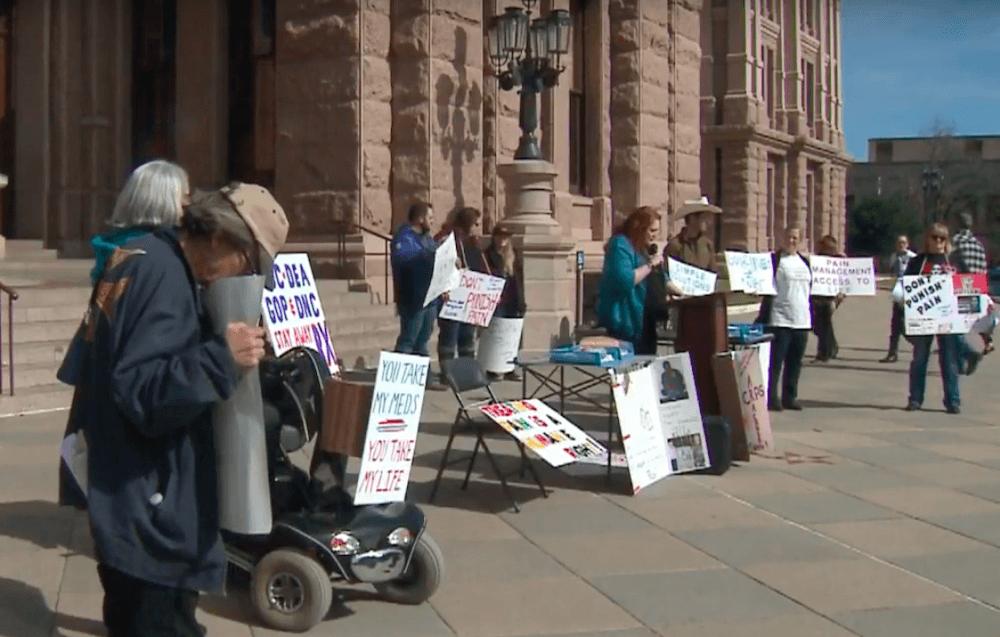
    Pain patients hope to bring attention to the issue during Don’t Punish Pain rallies held around the nation this week. 

    April Grove Doyle just wanted to fill her prescriptions when she walked into a Rite Aid pharmacy. What she encountered, instead, was a hostile pharmacy worker who shamed her about using pain pills. 

    Doyle, who has Stage IV cancer, left in tears. 

    “I’ve got fucking cancer. I have terminal fucking cancer,” she said in a video that she posted about the experience. “They make me feel like I’m a felon or something. It’s not right.”

    Doyle is one of many pain patients around the United States who feel that opioid restrictions have gone too far. The pharmacist she interacted with that day told her he couldn’t fill her prescription because he was afraid of being fined.

    Pain patients say that these overly strict regulations on the distribution of pain pills erodes their quality of life and can ultimately drive them toward suicide. 

    “Pain patients have been abused,” Michael Schatman, editor-in-chief of the Journal of Pain Research told Wired. “I believe that it’s genocide of people with chronic pain.”

    Pain patients hope to bring attention to the issue during Don’t Punish Pain rallies held around the nation this week. 

    Doyle pointed out that she uses pain pills less frequently than her doctor recommends, making a one-month prescription last for 2-3 months. However, sometimes the pain from her terminal illness is too much to handle without opioids, she said. 

    “I don’t really take it unless I absolutely need it,” she said. “When you have metastatic cancer in your bones you need it, because sometimes the pain is so much you can’t even function. I just want to function. I want to be able to work. I want to be able to sleep. I want to be able to do things with my child. I don’t want to hurt all the time.”

    This isn’t the first time that Doyle has had trouble filling her pain prescriptions, even when she’s submitting them alongside other medications like chemotherapy pills and anti-nausea pills. 

    “Every time I take my pain prescription there they give me the run around. There’s always some stupid excuse,” she said. “I’m not a criminal. I’m not a drug addict. I don’t even take them as much as my doctor tells me to take them. It’s not fair.”

    Suicides among people with chronic pain have been rising, and many people blame the tightened regulations around opioids that have made it difficult for people to manage their pain effectively. 

    “You are allowing them to go home and essentially suffer until they kill themselves,” Lauren DeLuca, founder of the Chronic Illness Advocacy & Awareness Group, told The Fix last year. 

    View the original article at thefix.com

  • Woman Testifies About Chronic Pain, Opioids From Cot

    Woman Testifies About Chronic Pain, Opioids From Cot

    “We must invest in the discovery of new, effective, and safer options for people living with pain,” Cindy Steinberg said in prepared remarks.

    It’s heartbreaking to see the faces of the opioid epidemic—young lives cut short by drug overdoses. Yet, this week another tragic but often overlooked face of the epidemic was on display when a woman testified before Congress from a cot, detailing her life with chronic pain. 

    Cindy Steinberg, national director of policy and advocacy for U.S. Pain Foundation spoke before the Senate Committee on Health, Education, Labor and Pensions during a hearing entitled “Managing Pain During the Opioid Crisis.”

    Steinberg’s chronic pain began 18 years ago when filing cabinets and cubical walls fell on her at work. Today, she isn’t able to sit or stand for long periods without experiencing muscle spasms and pain.

    She told the committee that her life is like “being a prisoner in your own body and being tortured,” according to the National Pain Report

    Steinberg argued that substance abuse and access to pain management medications for those who need them are two entirely separate issues. She said that rising overdoses has highlighted an existing problem, “underscor[ing] our failure to provide adequate, safe, accessible treatment options for pain relief.”

    “We can and must restore balance to opioid prescribing,” Steinberg said. 

    According to NBC News, Steinberg said in her prepared remarks, “In the near term, we can and must restore balance to opioid prescribing with depoliticized, rational and cleareyed recognition of the risks and benefits of these medications. In the long term, we must invest in the discovery of new, effective, and safer options for people living with pain.”

    Others who advocate for pain patients, including Richard “Red” Lawhern, director of research for the Alliance for the Treatment of Intractable Pain, were happy to see Steinberg’s story in the spotlight.

    “Steinberg directly challenged the lack of resident expertise on pain management at CDC, suggesting that Congress direct the much better equipped NIH to rewrite the guidelines based on recommendations of the HHS (Department of Health & Human Services) Task Force. This is a recommendation I support,” Lawhern said. 

    Committee Chair Senator Lamar Alexander of Tennessee seemed to empathize with Steinberg’s concerns, saying the “massive effort in reducing the supply of opioids has had the unintended consequence of hurting people who need them.”

    This week, research emerged showing that current changes in access to prescription opioids are unlikely to reduce the number of opioid overdoses. The research shows that projected annual opioid overdose deaths will reach 82,000 by 2025

    View the original article at thefix.com

  • Parents Should Ask Questions About Opioids For Kids, Teens

    Parents Should Ask Questions About Opioids For Kids, Teens

    Doctors warn that while being mindful of addictive properties of opioids is important, it’s also critical that pain be controlled for young patients. 

    Despite concern about the risks for addiction, there remains a legitimate medical need for opioid painkillers to manage pain for children and teens in some cases, and doctors say that parents can encourage responsible use of opioids by talking with their child’s provider about how best to manage pain. 

    “Opioids are very potent relievers of pain, very effective,” Dr. Linda J. Mason, a professor of anesthesia and pediatrics at Loma Linda University and president of the American Society of Anesthesiologists told The New York Times. “But they have addictive properties, and also side effects, like respiratory depression.” 

    Mason suggests that parents ask their provider how the doctor plans to manage a child’s pain. This can even begin at a pre-operative meeting, so that everyone has the same expectations about pain management. Although opioids may be needed in the short-term following surgery or a broken bone, patients can usually transition away from them quickly. In other cases, like those involving burns or serious illness, opioids may need to be used for a longer period of time. 

    Doctors warn that while being mindful of addictive properties of opioids is important, it’s also critical that pain be controlled for young patients. 

    “Treating pain adequately helps recovery, reduces the downstream psychiatric and psychological effects,” said Dr. Elliot J. Krane, chief of pain management at the Packard Children’s Hospital at Stanford and professor of anesthesiology and pediatrics at Stanford University. “In the absence of risk factors or concerns about the child’s home environment, I am more concerned about deleterious effects of untreated pain than I am about creating somebody with substance abuse disorder.” 

    Krane said that if patients are prescribed opioids “rationally and appropriately” there is little cause for concern about substance misuse. Krane has very few patients who are prescribed opioids for chronic pain, but some do need the strong medications, he said.

    He described himself as “neither pro-opioid nor anti-opioid, but pro-patient.”

    In addition to discussing pain management ahead of time, Mason recommends that parents ensure that any unused opioids are properly disposed of. 

    “You should not keep them for use for a future time,” Mason said. “These are for a specific surgery.”

    Many doctors and pharmacies are conscious of prescribing opioids in a very controlled manner for children and teens, but parents still have an important role to play in helping prevent opioid abuse in patients. 

    “Parents who are well-informed can give the best care to their children,” Mason said. 

    View the original article at thefix.com

  • "Don’t Punish Pain" Rallies Held Across The Nation

    "Don’t Punish Pain" Rallies Held Across The Nation

    Pain patients gathered around the US to bring attention to the damage caused by restrictive opioid prescribing guidelines.

    While the opioid epidemic has claimed thousands of lives, the regulations meant to stem the death toll are having unintended consequences for people who live with chronic pain, according to people who rallied across the country Tuesday Jan. 29 as part of the “Don’t Punish Pain” event. 

    In Concord, New Hampshire, Lauren Benson was one of the younger people at the rally. Nine years ago, when she was just 23, Benson injured her back working as an EMT, and has been disabled since.

    She told The Union Leader that she and many other people who need opioids to control their pain have a harder time accessing the drugs because of tightening prescription regulations. This is especially frustrating for pain patients who have used opioids responsibly for decades, she said. 

    “They’ve been on pain medication longer than I’ve been alive and all of a sudden it’s: ‘No, stop, no more for you.’ What are they supposed to do? They’ve been taking their meds properly.”

    Many pain patients are afraid that they won’t be able to access the pills that make their lives bearable. Many have already had doctors taper their dosage or have had to go through humiliating questioning and drug tests to get their opioids. 

    “For over 10 years, I took the same dose and because of the Oklahoma opioid task force, my doctor had to cut my prescription by 75%,” Patrick Burdette, who attended a rally in Oklahoma City, told Fox 25 News. “It caused me to sit at home in bed most days.”

    There’s a misconception that pain patients can choose alternatives to opioids, according to many patients, who say that this isn’t an option for everyone. 

    “My physical therapist would come to my house and I just basically sat there and cried because the pain was so bad,” said Patty Loveless, who was also at the Oklahoma rally. 

    In Tucson, Arizona, one patient carried a sign proclaiming that pain patients are “afflicted, not addicted,” according to The Tucson Sentinel

    “You know that horrific pain that takes about a minute or so to go away?” said Debra Hickey, whose doctor recently reduced her pain medications. “Can you imagine if you were in that kind of pain 24/7 with no opioids? That’s the pain I’m in.”

    In 2016, the Centers for Disease Control and Prevention issued guidelines about the amount of opioids that most patients should be on. This year, Medicare has plans to further restrict access to opioids. However, pain patients say that their lives are being negatively-affected by these well-intentioned measures. 

    “It is borderline genocide,” Lauren DeLuca, founder of the Chronic Illness Advocacy and Awareness Group, told The Fix last year. 

    View the original article at thefix.com

  • How The CDC's Opioid Prescribing Guideline Hurts Chronic Pain Patients

    How The CDC's Opioid Prescribing Guideline Hurts Chronic Pain Patients

    “Conflating the misuse of opioids with their legitimate medical use, and treating all opioids alike is stigmatizing patients for whom opioid painkillers are necessary and medically appropriate,” writes one expert.

    The heavy-handed misapplication of the Centers for Disease Control and Prevention’s opioid-prescribing guideline is hurting legitimate pain patients, according to a STAT News opinion piece penned last week by two health law attorneys and a doctor. 

    “The CDC guideline and its progeny of laws and policies have created chaos and confusion in the medical community,” the experts wrote in their Dec. 6 essay.

    “Conflating the misuse of opioids with their legitimate medical use, and treating all opioids – illegal or prescription – alike is stigmatizing patients for whom opioid painkillers are necessary and medically appropriate.”

    The guideline, published in early 2016, suggests restrictions on the daily dosage of painkillers, though the suggestions are not intended to apply to existing long-term pain patients.

    And in theory, the CDC guidelines aren’t mandatory – they’re simply guidelines. But insurance companies, lawmakers and pharmacies have relied on them to craft sweeping policies, the authors wrote, effectively treating long-term pain patients as suspected drug addicts. 

    That’s despite the fact that – even as overdose deaths continue to rise – opioid prescribing is on the downswing and currently is at an 18-year low. 

    Some research shows that most people who abuse painkillers don’t get them from doctors. And, most people who are prescribed painkillers don’t become addicted, even if they become physically dependent. 

    Even so, the authors wrote, doctors are reportedly dropping patients for fear of blowback as the Drug Enforcement Administration (DEA) and state medical boards continue using those guidelines to identify suspected over-prescribers. 

    “Some physicians are telling their patients that changes in the law are the reason they are tapering them to a preset dosage of opioids or off of opioids altogether,” the experts wrote. “Yet the specific dosage thresholds in the CDC guideline were never intended to apply to patients currently taking opioids. Indeed, nothing in the current legal or regulatory environment justifies forcibly tapering a patient off of opioids who is doing well, and there is no solid evidence to support such a practice.”

    This isn’t a new complaint; it’s a problem previously documented by reporters and researchers. But now the American Medical Association is weighing in; at their most recent interim meeting, the physicians group approved resolutions striking out against the spate of laws and mandated restrictions imposing blanket limitations on prescribers.

    The resolutions won’t change outside policy, but they represent a formal effort to push back against the mandates of lawmakers, pharmacies and insurers.

    “The resolutions underscore that dosage guidance is just that – guidance – and that doses higher than those recommended by the CDC may be necessary and appropriate for some patients,” the authors wrote.

    “Epidemics instill fear, but physicians have a responsibility to rise above fear and advance the interests of their patients. The AMA’s action in advocating for patients and for the right of physicians to practice individualized care is an important effort in beginning to rebalance the scales in the joint goals of reducing pain and opioid addiction.”

    View the original article at thefix.com

  • New Opioid Laws Seek To Curb Overprescribing

    New Opioid Laws Seek To Curb Overprescribing

    Though there is no hard evidence of the effectiveness of the laws yet, some professionals see the numbers as heading in the right direction.

    As the opioid epidemic has continued to claim lives, more than two dozen states have put laws in place in the hope of limiting the damage.

    Of those two dozen, the most recent states to take action are Florida, Michigan and Tennessee, according to Harvard Health Publishing. The new rules put in place set limits for the amount of opioids medical professionals can prescribe for pain relief from surgery, injury or illness. 

    Opioid laws vary from state to state, according to Harvard Health. While most states limit first-time opioid prescriptions to seven days, some states, such as Florida, Kentucky and Minnesota, have shortened it to three days unless a medical professional can give reason for a week-long supply.

    “For almost all acute pain problems, including after surgery, a week is usually sufficient,” Dr. Edgar Ross, senior clinician at the Pain Management Center at Harvard-affiliated Brigham and Women’s Hospital, told Harvard Health. 

    Additionally, some states have put procedures in place that require doctors to take more steps when prescribing. In Florida, both physicians and pharmacists are required to take courses about prescribing practices. They must also search a drug database to make sure doctors aren’t doubling up on prescriptions for patients.

    Massachusetts has a similar procedure in place, but some medical professionals say it’s not as simple as it sounds. 

    “We have the ability to check the registry to see who else has prescribed it, but it’s not integrated with electronic records,” Dr. Dennis Orgill, a surgeon at Harvard-affiliated Brigham and Women’s Hospital, told Harvard Health. “If you have someone who needs opioids over the weekend, you can imagine the logistics of that.” 

    Another new law, this one in Ohio, allows doctors to override and refill acute pain prescriptions, but only after a patient has gone through the first prescription.

    According to Harvard Health, patients will typically have to return to the doctor to get a prescription rather than getting a refill on the phone. If for some reason a refill is made over the phone, Harvard Health states patients will end up visiting the pharmacy more often and making more copays as a result.

    If doctors do not follow the new laws, they may face consequences. As a result, Harvard Health states some patients that need prescriptions for chronic pain are not getting them.

    “Many doctors now refuse to prescribe any opioids because of the fear of sanctions,” Ross told Harvard Health. “I have had several cancer patients whose pain was not well managed because of incorrect perceptions.” 

    Although there is no hard evidence of the effectiveness of the laws yet, some professionals see the numbers as heading in the right direction.

    “Massachusetts’ opioid legislation was signed into law in March of 2016. The overdose death rate then decreased by 8.3% in 2017, the first decrease since the beginning of the opioid epidemic,” Dr. Karsten Kueppenbender, an addiction psychiatrist at Harvard-affiliated Massachusetts General Hospital, told Harvard Health. “While it’s impossible to say the law caused the decrease, it’s certainly a welcome association.” 

    View the original article at thefix.com

  • Inside Racial Disparities In Opioid Prescribing, Drug Testing

    Inside Racial Disparities In Opioid Prescribing, Drug Testing

    Black patients who tested positive for marijuana were twice as likely to have their pain pills discontinued than their white counterparts.

    Black patients who are prescribed opioids for chronic pain are more likely to be tested for illicit drug use than their white counterparts.

    Black patients are also more likely to have their pain medication discontinued if they test positive for other substances, including marijuana, according to new research. 

    The research, conducted at Yale, analyzed the health records of 15,000 patients Veterans Administration between 2000 and 2010. The Centers for Disease Control and Prevention recommends testing patients who get opioids for illicit drug use, but the researchers found that doctors rarely enforce the policy.

    However, when the drug-testing policy was enforced it was more likely to be applied to black patients. 

    In addition, black patients were more likely to have their opioid prescriptions discontinued if they tested positive for marijuana or cocaine. Ninety percent of people who tested positive for illicit substances kept their opioid prescriptions, but blacks were twice as likely to have their pain pills taken away. 

    “If they were black and tested positive for marijuana, they were twice as likely to have opioids discontinued, and for cocaine, they were three times more likely,” Julie Gaither, lead study author, told Science Daily

    Gaither blames this on lack of consistent policy and engrained biases. 

    “There is no mandate to immediately stop a patient from taking prescription opioids if they test positive for illicit drugs,” Gaither said. “It’s our feeling that without clear guidance, physicians are falling back on ingrained stereotypes, including racial stereotyping. When faced with evidence of illicit drug use, clinicians are more likely to discontinue opioids when a patient is black, even though research has shown that whites are the group at highest risk for overdose and death.”

    Having an established protocol for what to do when a patient tests positive for illicit substance could help address biases, Gaither said. 

    “This study underscores the urgent need for a more universal approach to monitoring patients prescribed opioids for the concurrent use of sedatives and other substances that may increase the risk of overdose,” she said. 

    However, even with a policy in place, minorities may still face discrimination when it comes to drug testing, something many black Americans experience regularly.

    In July, tennis great Serena Williams tweeted her frustration at being tested for drugs more than twice as often as her competitors. 

    “It’s that time of the day to get ‘randomly’ drug tested and only test Serena. Out of all the players it’s been proven I’m the one getting tested the most. Discrimination? I think so,” she wrote. 

    View the original article at thefix.com

  • New York Moves To Replace Opioids With Medical Marijuana

    New York Moves To Replace Opioids With Medical Marijuana

    Opioid use disorder has been added to the list of qualifying conditions that medical cannabis can be used to treat in the state.

    Officials in New York have changed medical marijuana policy in order to make it easier for patients to access medical cannabis in lieu of opioids, and have added opioid use disorder to the list of qualifying conditions that medical cannabis can be used to treat. 

    The New York Department of Health announced the expansion on July 12. Under the emergency regulations, any condition that could be prescribed an opioid is now a qualifying condition for medical marijuana

    “Effective immediately, registered practitioners may certify patients to use medical marijuana as a replacement for opioids, provided that the precise underlying condition for which an opioid would otherwise be prescribed is stated on the patient’s certification,” the state’s press release said. “This allows patients with severe pain that doesn’t meet the definition of chronic pain to use medical marijuana as a replacement for opioids.”

    The expansion also allows people who are being treated for opioid use disorder in a qualified treatment setting to be issued a medical marijuana license to use cannabis as a replacement for opioids. 

    Only 12 other medical conditions are currently listed as qualifying conditions for medical cannabis, so the expansion could have a significant effect on New York’s medical marijuana system. At the time of the announcement, just over 62,000 New Yorkers had a medical marijuana license, according to the health department.  

    Lawmakers hope that by expanding access to medical marijuana, they can reduce the number of opioids prescribed in the state. 

    “Medical marijuana has been shown to be an effective treatment for pain that may also reduce the chance of opioid dependence,” said New York State Health Commissioner Dr. Howard Zucker. “Adding opioid replacement as a qualifying condition for medical marijuana offers providers another treatment option, which is a critical step in combatting the deadly opioid epidemic affecting people across the state.”

    Additional changes will make it easier for people to access medical cannabis after they are approved for the program. Lawmakers hope that this will help reduce overdose deaths from opioids. 

    “I have been strongly advocating to remove barriers and allow the use of medical marijuana as an alternative to opioids because it will help patients, reduce the number of highly addictive opioids in circulation, and ultimately, it will save lives,” state Senator George Amedore, co-chair of the Senate Task Force on Heroin and Opioid Addiction said in a June press release.

    “We continue to be faced with an opioid epidemic that is devastating communities throughout our state. It’s important we continue to do everything possible to address this issue from all sides, so I’m glad the Department of Health is taking this measure that will help high risk patients, as well as those that are struggling with, or have overcome, addiction.”

    View the original article at thefix.com

  • Pain Patients Turn To Controversial Injection After Cuts To Opioid Coverage

    Pain Patients Turn To Controversial Injection After Cuts To Opioid Coverage

    The anti-inflammatory drug has been banned in Australia, Brazil, Canada, France, Italy, New Zealand and Switzerland.

    Back problems are the most common cause of chronic pain, and at the time when Medicare is cutting coverage for many opioid pain relievers, lawmakers are increasing Medicare coverage for a potentially dangerous off-label treatment for back pain. 

    Depo-Medrol is an injectable anti-inflammatory drug made by Pfizer. When it is injected into muscles and joints it can provide pain relief, but the drug is not supposed to be injected into or near the spinal chord. In fact, in 2013 Pfizer asked the Food and Drug Administration to ban back injections.

    The FDA declined to issue the ban, despite the fact that Australia, Brazil, Canada, France, Italy, New Zealand and Switzerland all issued bans, according to The New York Times

    “Serious neurologic events, some resulting in death, have been reported with epidural injection of corticosteroids,” Pfizer told the FDA. “Specific events reported include, but are not limited to, spinal cord infarction, paraplegia, quadriplegia, cortical blindness, and stroke.”

    In June, legislators approved an increase in reimbursements for the Depo-Medrol shot.

    At the same time, Medicare finalized a restrictive plan for covering opioids that will make it difficult for all but the most severe patients to access opioids long-term. This combination could make injectables a more appealing treatment, despite their risks. 

    “The victims of our era of aggressive opioid prescribing are being exploited in some cases by interventional pain doctors, who will continue them on opioids in exchange for allowing them to perform expensive procedures that they don’t need,” said Dr. Andrew Kolodny, co-director of opioid policy research at Brandeis University and executive director of Physicians for Responsible Opioid Prescribing. “These are not benign procedures. Patients can be harmed and are harmed.”

    Despite this, use of Depo-Medrol and similar drugs increased 7.5% among Medicare patients between 2012 and 2016. Dr. James P. Rathmell, chairman of anesthesiology, perioperative and pain medicine at Brigham and Women’s Hospital, said that Medicare coverage policies have the potential to make the shots even more popular. 

    “The truth underlying it is that doing an injection is faster and results in higher reimbursements, compared to other ways of managing the same pain,” he said. “The use of injections has increased dramatically, yet the prevalence of back pain has remained relatively unchanged.”

    Dr. Brian Yee, an anesthesiologist who practices in West Virginia, said that injections have the potential to be useful, but that they need to be handled carefully in order to ensure that they are being used responsibly. 

    “With people trying to take away opioids now, we are opening up another doorway for people to overutilize other options that can be helpful with the right doctors and the right patients,” he said.

    View the original article at thefix.com