Tag: Patrick Kennedy

  • Patrick Kennedy Discusses Cousin’s Overdose Death With Dr. Phil

    Patrick Kennedy Discusses Cousin’s Overdose Death With Dr. Phil

    The mental health advocate spoke with Dr. Phil abut losing Kennedy Hill to an overdose this past summer.

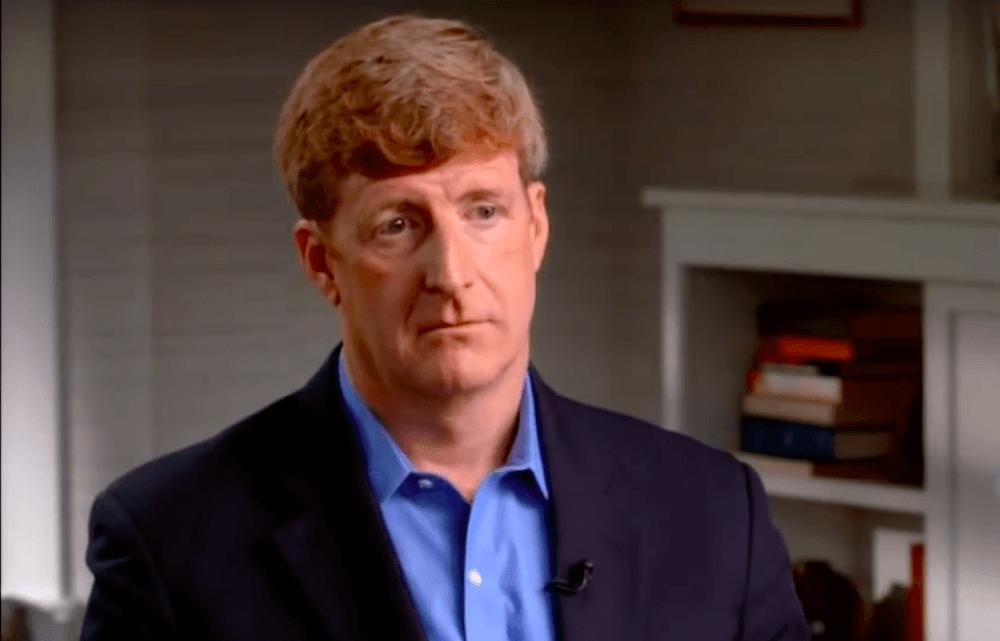
    Patrick Kennedy, former Rhode Island representative and son of the late Senator Ted Kennedy (D-MA), is speaking out about the need for better access to mental health services, after his cousin, 22-year-old Saoirse Kennedy Hill, died from an overdose at the family’s compound near Cape Cod this summer. 

    Kennedy appeared on The Dr. Oz Show on Monday (Oct. 28), according to People. There, he called for a comprehensive plan to promote mental health nationally. Part of that, he said, means encouraging doctors to talk tot heir patients about mental health, conducting a “checkup from the neck up,” Kennedy said. 

    “When you go to your physician’s office and they take a family history of whether you’ve had stroke or cancer in the family, they ought to take a family history of whether you have alcoholism, or addiction, or mental illness in your family,” Kennedy said. “Because the chances are, you’re going to be at high risk yourself if any other family members also suffer from one of those illnesses.”

    Kennedy has spoken out about his own struggled with mental illness and alcoholism. He praised Kennedy Hill for speaking openly about her depression, including in an essay that she wrote for her school newspaper when she was 18. 

    “We Are All Either Struggling Or Know Someone Who Is”

    In the essay, Kennedy Hill wrote, “My depression took root in the beginning of my middle school years and will be with me for the rest of my life. Although I was mostly a happy child, I suffered bouts of deep sadness that felt like a heavy boulder on my chest.” 

    Kennedy Hill even revealed that she had attempted suicide after a sexual assault. She ended by calling on people to prioritize mental health care. 

    “We are all either struggling or know someone who is battling an illness; let’s come together to make our community more inclusive and comfortable,” she said. 

    This week, Kennedy praised his cousin’s letter, but said that it also showed how prevalent depression is among teens. 

    “She was speaking to her friends in high school. We’re seeing a giant leap in the number of suicide attempts and rates of depression and anxiety amongst kids and amongst college-age, young people,” he said.

    Kennedy Hill died of a suspected opioid overdose, and Kennedy pointed out that the underlying causes of addiction need to be addressed, even as big pharmaceutical companies are being held responsible. 

    Addressing The Mental Health Crisis

    He said, “So this is not a crisis that’s going to go away simply after Purdue Pharma stopped selling oxycodone. We have an underlying disease of addiction and we have an underlying mental health crisis in this country that we need to address and it’s not as simple as cutting off the supply of Pharma, it has to be more comprehensive than that.”

    View the original article at thefix.com

  • Patrick Kennedy Remembers Cousin After Apparent Overdose Death

    Patrick Kennedy Remembers Cousin After Apparent Overdose Death

    “She opened the door for her peers to also come out and not feel shamed by this illness and she is a real hero in my family,” Kennedy said.

    After losing his 22-year-old cousin to an apparent overdose last week, Patrick J. Kennedy is speaking out and hopes the nation is listening. 

    According to People, Kennedy, a former Rhode Island Congressman and son of Ted Kennedy, appeared on NBC Nightly News the evening following Saoirse Kennedy Hill’s death. He spoke about how Saoirse had been open about her struggles with mental health in the past

    “She opened the door for her peers to also come out and not feel shamed by this illness and she is a real hero in my family,” Kennedy said. “She broke the silence. And we mourn her loss but her memory will live on as someone who wasn’t going to keep silent and wasn’t going to be feeling as if she had something shameful, but rather something medical that she sought treatment for.”

    “This affects every single family in America,” he added. “It’s way past time that we deal with this in a way that we would deal with any other public health crisis.”

    Saoirse’s Legacy

    Kennedy also took to Twitter to speak about his cousin’s legacy and her courage to share her struggles. He shared a link to an essay about life after a suicide attempt, which she had written at age 19. 

    “Saoirse’s sincere account of her depression is a powerful reminder of how so many people suffer alone and feel isolated,” Kennedy tweeted. “I am proud Saoirse was able to be open and tell her story. I encourage everyone to read her words.”

    “Feel what she felt. Do whatever you can from your position in life to stop the isolation, the stigma, and the devastating lack of acknowledgment that often leads to tragedy,” he added in another tweet. “Families across the nation, including ours, are suffering. We must come out of the shadows.”

    The Family Statement

    Others in the Kennedy family have also spoken about the loss of Saoirse. 

    “Our hearts are shattered by the loss of our beloved Saoirse,” her family said in a statement. “Her life was filled with hope, promise, and love. She cared deeply about friends and family, especially her mother Courtney, her father Paul, her stepmother Stephanie, and her grandmother Ethel.”

    Saoirse was found unresponsive at Ethel’s home Thursday, August 1, a source tells People, and was later pronounced dead. Ethel, 91, also commented on the loss of her granddaughter. 

    “The world is a little less beautiful today,” she said. “She lit up our lives with her love, her peals of laughter and her generous spirit. Saoirse was passionately moved by the causes of human rights and women’s empowerment and found great joy in volunteer work, working alongside indigenous communities to build schools in Mexico. We will love her and miss her forever.”

    View the original article at thefix.com

  • Patrick Kennedy Says Dad’s Reaction To His Addiction Left Him In "Fog Of Shame"

    Patrick Kennedy Says Dad’s Reaction To His Addiction Left Him In "Fog Of Shame"

    Kennedy got candid about the ups and downs of his journey to sobriety in a recent commencement speech.

    Former U.S. Representative Patrick Kennedy had to learn about the stigma surrounding substance use disorder the hard way.

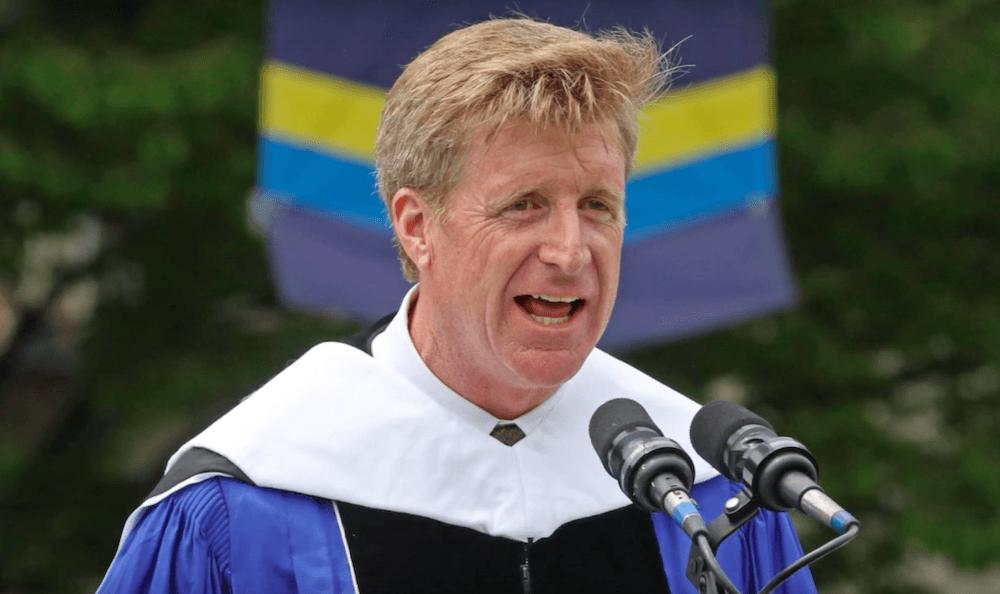
    His father and former U.S. Senator, the late Ted Kennedy, was compassionate “when it came to my asthma or my brother’s bone cancer,” Kennedy said at the University of Rhode Island commencement last Sunday (May 19). But “when it came to my addictions,” his father said, “Patrick just needs a swift kick in the ass.”

    Kennedy gave his commencement speech to a crowd of 15,000 on Sunday. The congressman-turned-mental health advocate said that drug overdose and suicide in the U.S. is “a public health crisis.”

    As a U.S. representative, Kennedy was the lead sponsor of the Mental Health Parity and Addiction Equity Act of 2008, which required insurance to cover treatment for “illnesses of the brain, like depression and addiction, the same as diseases of the body, like cancer and heart disease,” as he explained to The Fix in a 2016 interview.

    “Mental health conditions are chronic diseases, for the most part,” said Kennedy in the same interview. “You wouldn’t feel shame in seeking treatment for diabetes or cancer. So you shouldn’t feel ashamed for seeking treatment for depression, anxiety or anything else.”

    Kennedy added, “And just like those other diseases, people living with a mental health condition or substance use disorder can manage their disease and live full, happy, meaningful lives—I’m living proof of that.”

    After leaving Congress, Kennedy furthered his mental health advocacy by founding The Kennedy Forum in 2013, an organization with the goal of revolutionizing mental health care in the U.S., and One Mind, an organization to improve and accelerate brain research.

    When he was younger, Kennedy was haunted by his father’s perception of addiction. “I spent many years lost in a fog of shame,” he said at URI. “Addiction was unimpressed that I came from a famous family.”

    On May 6, 2006, Kennedy woke up at three o’clock in the morning “thinking I was late for a vote.” That’s when he famously crashed his car into a barricade on Capitol Hill. He admitted that he had been “disoriented” from medication he was taking.

    “That’s when I found my highest calling,” he said. We’d later find out that Kennedy was abusing OxyContin, which he was prescribed for back pain.

    Since he revealed his truth, he said other senators and representatives, both Democrat and Republican, would confide in him about their own struggles.

    Kennedy found help through medication-assisted treatment. And through his work, and through speaking up about his own journey, he’s hoping to encourage more people to speak up as well.

    “The more people learn that someone at their church is in recovery for opioid addiction or another mom at day care takes medication to control her OCD, the more we will realize that ‘everyone has something.’ We have to break down the ‘othering’ that has gone on too long with brain diseases,” he told The Fix.

    View the original article at thefix.com

  • Patrick Kennedy Urges Congress To Fight "Illegal" Denial Of Addiction Services

    Patrick Kennedy Urges Congress To Fight "Illegal" Denial Of Addiction Services

    The former U.S. Representative is urging state officials to end “deceptive and discriminatory practices by health insurance plans.”

    Former U.S. Representative Patrick Kennedy joined a group of mental health advocates to fight for the rights of individuals to receive legally mandated coverage of mental health and addiction services without being subjected to what he called “deceptive and discriminatory health insurance plans.” 

    Kennedy was a co-signer on letters sent to U.S. House Speaker Nancy Pelosi and Senate Majority Leader Mitch McConnell, as well as state attorneys general and insurance commissioners, that cited a recent class-action lawsuit against a major behavioral health care company, United Behavioral Health, which was deemed to have used “flawed and overly restrictive internal guidelines” to deny coverage to tens of thousands of mental health and substance use disorder patients, including many children.

    “In short, the nation’s largest managed behavioral health care company was found liable for protecting its bottom line at the expense of its vulnerable members,” read the letter.

    The other signers were former U.S. Rep. James Ramstad; Mary Giliberti, CEO of the National Alliance on Mental Illness (NAMI); and Mental Health America president and CEO Paul Gionfriddo.

    As the Providence Journal noted, Kennedy has been a longtime advocate for mental health and addiction services. He co-sponsored the Mental Health Parity and Addition Equity Act of 2008, which mandates health insurers to provide coverage for treatment for mental health and addiction disorders on par with coverage for physical health care. 

    After leaving the House of Representatives in 2011, Kennedy has advocated for mental health and addiction issues, most recently at the Connecticut State Capitol, where on March 5, he advocated for the passage of House Bill 7125, which would require health insurance companies to provide the state General Assembly an annual report on parity efforts for mental health and dependency benefits.

    The letter submitted by Kennedy and his co-signers noted that the lawsuit involving United Behavioral Health was not an isolated incident. “Other health plans, such as Aetna, Kaiser, and Anthem Blue Cross Blue Shield have also been subject to recent court decisions and regulatory fines,” they stated in the letter.

    “As rates of overdoses and suicides continue to decrease U.S. life expectancy, our nation must ensure that people have access to treatment for mental health and substance use disorders,” the letter concluded. “Illegal insurance denials should not stand in their way.”

    View the original article at thefix.com

  • Patrick Kennedy On The State Of Addiction, Suicide Rates

    Patrick Kennedy On The State Of Addiction, Suicide Rates

    “If this were some other illness that evoked the same type of compassion that other illnesses receive, we would be spending dramatically more money to combat these rising suicide and overdose rates,” Patrick Kennedy said.

    Patrick Kennedy recently spoke to US News about the latest statistics on addiction and suicide and what he believes could be at the root of the problem.

    Kennedy says recent news about the drop in US life expectancy due to suicide and drug overdose deaths was “extremely shocking, but frankly, not surprising.”

    He added, “As a nation, we’re absolutely in denial about how bad this crisis is. If this were some other illness that evoked the same type of compassion that other illnesses receive, we would be spending dramatically more money to combat these rising suicide and overdose rates.”

    Kennedy has been very vocal about the stigma surrounding addiction and mental health. In his book, A Common Struggle, he detailed his own experience of living with addiction and bipolar disorder. Kennedy believes stigma plays a massive role in preventing people with addiction and/or mental health issues from getting the treatment they need.

    “The real tragedy is what it says about the people who suffer from these illnesses – they’re still shamed by their illness, they’re overwhelmingly stigmatized,” he tells US News. “They’re relegated to a system of care that is substandard at best.”

    Addressing the increased rates of addiction and suicide, Kennedy said, “There is obviously great complexity to all of the causes and how they converge together to create the crisis that we’re in right now,” and he also felt “there’s a well-established narrative here that pharma had a huge responsibility for this, and there should be a huge national settlement in helping to create this crisis…”

    Kennedy added, “I think that both insurance companies and Big Pharma made a lot of money in this process, and a lot of people died. And I think if we’re going to go after the pharmaceutical industry, then it would be absolutely inexplicable why we would not also go after the insurance industry with the same fervor for their part in letting this crisis unfold without doing what we needed to do to address it.”

    Kennedy also took time to reflect on the 10-year anniversary of the Health Parity and Addiction Equity Act, which he called “a medical civil rights bill” where people are treated for mental health and addiction on the same “primary care level, secondary care level and tertiary care level as you would find when treating any other medical surgical illness.”

    Yet Kennedy recently acknowledged that the act still has a long way to go, and he started a website in October called Don’t Deny Me, where people can report insurance companies that won’t cover their addiction and mental health issues.

    He told The Washington Post, “There are plenty of solutions to bring people the care they need, but what is missing is the political will and the economic and legal pressure to make it happen and that’s why we’re marking the anniversary.”

    View the original article at thefix.com

  • Christopher Kennedy Lawford Dies At 63

    Christopher Kennedy Lawford Dies At 63

    “He was the absolute cornerstone to my sobriety,” said his cousin, Patrick Kennedy.

    Actor Christopher Kennedy Lawford has died, according to his family. The nephew of John F. Kennedy succumbed to a heart attack on Tuesday, according to his cousin, former U.S. Rep. Patrick Kennedy. He was 63.

    Lawford was living in Vancouver, Canada with his girlfriend and working to open a recovery facility, according to the AP.

    Lawford used his own drug issues to author several books about addiction and recovery—including Moments of Clarity (2008), Recover to Live (2013), What Addicts Know (2014), and When Your Partner Has an Addiction (2016).

    Lawford—the son of English “Rat Pack” actor Peter Lawford and Patricia Kennedy—was candid about his recovery, and guided others on the same path.

    “He was the absolute cornerstone to my sobriety, along with my wife. He was the one who walked me through all the difficult days of that early period,” said Patrick Kennedy, who battled his own drug issues and is now a vocal advocate for mental health and addiction recovery.

    Lawford described using LSD in his youth while in boarding school. He stayed away at first, but began experimenting to cope with the trauma of his parents’ bitter divorce and the assassinations of his uncles John F. Kennedy and Robert F. Kennedy.

    “I had friends trying to get me to use LSD in seventh grade. I grew up with an ethic of trying to do good in the world, and I said no. Then my Uncle Bobby was shot. Next fall they asked me again and I said sure,” Lawford told the Chicago Sun-Times in 2016.

    Things only got worse from there, as Lawford “graduated” to heroin and other opioids, according to the AP. In his memoir Symptoms of Withdrawal: A Memoir of Snapshots and Redemption (2005), Lawford described mugging women for money, panhandling in Grand Central Station, and getting arrested for drug possession.

    Lawford finally went to rehab at the age of 30. And while his life was far from perfect, he said he has no regrets.

    “There are many days when I wish I could take back and use my youth more appropriately. But all of that got me here,” he told the AP in 2005. “I can’t ask for some of my life to be changed and still extract the understanding and the life that I have today.”

    After the death of his cousin David Kennedy (son of RFK) who fatally overdosed at the age of 28, Lawford said in 1991, “I never expected to make it to 30. I shouldn’t have. I just have to stay out of my own way, because I’ve got this capacity to screw things up.”

    View the original article at thefix.com