Tag: Patrick Kennedy addiction

  • Patrick Kennedy Says Dad’s Reaction To His Addiction Left Him In "Fog Of Shame"

    Patrick Kennedy Says Dad’s Reaction To His Addiction Left Him In "Fog Of Shame"

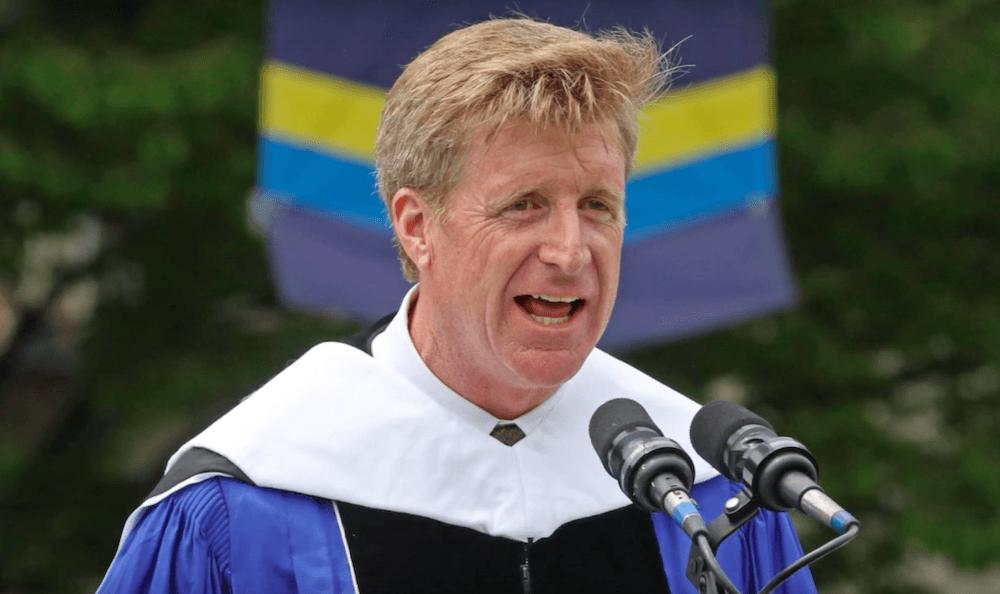
    Kennedy got candid about the ups and downs of his journey to sobriety in a recent commencement speech.

    Former U.S. Representative Patrick Kennedy had to learn about the stigma surrounding substance use disorder the hard way.

    His father and former U.S. Senator, the late Ted Kennedy, was compassionate “when it came to my asthma or my brother’s bone cancer,” Kennedy said at the University of Rhode Island commencement last Sunday (May 19). But “when it came to my addictions,” his father said, “Patrick just needs a swift kick in the ass.”

    Kennedy gave his commencement speech to a crowd of 15,000 on Sunday. The congressman-turned-mental health advocate said that drug overdose and suicide in the U.S. is “a public health crisis.”

    As a U.S. representative, Kennedy was the lead sponsor of the Mental Health Parity and Addiction Equity Act of 2008, which required insurance to cover treatment for “illnesses of the brain, like depression and addiction, the same as diseases of the body, like cancer and heart disease,” as he explained to The Fix in a 2016 interview.

    “Mental health conditions are chronic diseases, for the most part,” said Kennedy in the same interview. “You wouldn’t feel shame in seeking treatment for diabetes or cancer. So you shouldn’t feel ashamed for seeking treatment for depression, anxiety or anything else.”

    Kennedy added, “And just like those other diseases, people living with a mental health condition or substance use disorder can manage their disease and live full, happy, meaningful lives—I’m living proof of that.”

    After leaving Congress, Kennedy furthered his mental health advocacy by founding The Kennedy Forum in 2013, an organization with the goal of revolutionizing mental health care in the U.S., and One Mind, an organization to improve and accelerate brain research.

    When he was younger, Kennedy was haunted by his father’s perception of addiction. “I spent many years lost in a fog of shame,” he said at URI. “Addiction was unimpressed that I came from a famous family.”

    On May 6, 2006, Kennedy woke up at three o’clock in the morning “thinking I was late for a vote.” That’s when he famously crashed his car into a barricade on Capitol Hill. He admitted that he had been “disoriented” from medication he was taking.

    “That’s when I found my highest calling,” he said. We’d later find out that Kennedy was abusing OxyContin, which he was prescribed for back pain.

    Since he revealed his truth, he said other senators and representatives, both Democrat and Republican, would confide in him about their own struggles.

    Kennedy found help through medication-assisted treatment. And through his work, and through speaking up about his own journey, he’s hoping to encourage more people to speak up as well.

    “The more people learn that someone at their church is in recovery for opioid addiction or another mom at day care takes medication to control her OCD, the more we will realize that ‘everyone has something.’ We have to break down the ‘othering’ that has gone on too long with brain diseases,” he told The Fix.

    View the original article at thefix.com

  • Patrick Kennedy On The State Of Addiction, Suicide Rates

    Patrick Kennedy On The State Of Addiction, Suicide Rates

    “If this were some other illness that evoked the same type of compassion that other illnesses receive, we would be spending dramatically more money to combat these rising suicide and overdose rates,” Patrick Kennedy said.

    Patrick Kennedy recently spoke to US News about the latest statistics on addiction and suicide and what he believes could be at the root of the problem.

    Kennedy says recent news about the drop in US life expectancy due to suicide and drug overdose deaths was “extremely shocking, but frankly, not surprising.”

    He added, “As a nation, we’re absolutely in denial about how bad this crisis is. If this were some other illness that evoked the same type of compassion that other illnesses receive, we would be spending dramatically more money to combat these rising suicide and overdose rates.”

    Kennedy has been very vocal about the stigma surrounding addiction and mental health. In his book, A Common Struggle, he detailed his own experience of living with addiction and bipolar disorder. Kennedy believes stigma plays a massive role in preventing people with addiction and/or mental health issues from getting the treatment they need.

    “The real tragedy is what it says about the people who suffer from these illnesses – they’re still shamed by their illness, they’re overwhelmingly stigmatized,” he tells US News. “They’re relegated to a system of care that is substandard at best.”

    Addressing the increased rates of addiction and suicide, Kennedy said, “There is obviously great complexity to all of the causes and how they converge together to create the crisis that we’re in right now,” and he also felt “there’s a well-established narrative here that pharma had a huge responsibility for this, and there should be a huge national settlement in helping to create this crisis…”

    Kennedy added, “I think that both insurance companies and Big Pharma made a lot of money in this process, and a lot of people died. And I think if we’re going to go after the pharmaceutical industry, then it would be absolutely inexplicable why we would not also go after the insurance industry with the same fervor for their part in letting this crisis unfold without doing what we needed to do to address it.”

    Kennedy also took time to reflect on the 10-year anniversary of the Health Parity and Addiction Equity Act, which he called “a medical civil rights bill” where people are treated for mental health and addiction on the same “primary care level, secondary care level and tertiary care level as you would find when treating any other medical surgical illness.”

    Yet Kennedy recently acknowledged that the act still has a long way to go, and he started a website in October called Don’t Deny Me, where people can report insurance companies that won’t cover their addiction and mental health issues.

    He told The Washington Post, “There are plenty of solutions to bring people the care they need, but what is missing is the political will and the economic and legal pressure to make it happen and that’s why we’re marking the anniversary.”

    View the original article at thefix.com