Tag: personal story

  • Gloria Harrison: True Recovery Is the Healing of the Human Spirit

    Although Gloria experienced trauma, violence, and institutionalized oppression, she never gave up hope. Now, in recovery, she is a counselor and staunch recovery advocate. 

    True recovery is the healing of the human spirit.
    It is a profound recognition that we not only have the right to live
    but the right to be happy, to experience the joy of life.
    Recovery is possible if only you believe in your own self-worth.

    -Gloria Harrison

    Although the dream of achieving recovery from substance use disorders is difficult today for people outside of the Caucasian, straight, male normative bubble, there is no question that progress has been made. If you want to know how difficult it was to get help and compassionate support in the past, you just have to ask Gloria Harrison. Her story is a stark reminder of how far we have come and how far we still must go.

    As a young gay African American girl growing up in a Queens household overrun with drug abuse and childhood trauma, it is not surprising that she ended up becoming an addict who spent years homeless on the streets of New York. However, when you hear Gloria’s story, what is shocking is the brutality of the reactions she received when she reached out for help. At every turn, as a girl and a young woman, she was knocked down, put behind bars in prisons, and sent to terribly oppressive institutions.

    Gloria’s story is heartbreaking while also being an inspiration. Although she spent so much time downtrodden and beaten, she never gave up hope; her dream of recovery allowed her to transcend the bars of historical oppression.

    Today, as an active member of Voices of Community Activists & Leaders (VOCAL-NY), she fights to help people who experience what she suffered in the past. She is also a Certified Recovery Specialist in New York, and despite four of her twenty clients dying from drug overdoses during the COVID-19 pandemic, she continues to show up and give back, working with the Harlem United Harm Reduction Coalition and, as a Hepatitis C survivor, with Frosted (the Foundation for Research on Sexually Transmitted Diseases).

    Before delving into Gloria’s powerful and heartbreaking story, I must admit that it was not easy for me to decide to write this article. As a white Jewish male in long-term recovery, I was not sure that I was the proper person to recount her story for The Fix. Gloria’s passion and driving desire to have her story told, however, shifted my perspective.

    From my years in recovery, where I have worked a spiritual program, I know that sometimes when doors open for you, it is your role to walk through them with courage and faith.

    A Cold Childhood of Rejection and Confusion

    Like any child, Gloria dreamed of being born into the loving arms of a healthy family. However, in the 1950s in Queens, when you were born into a broken family where heavy responsibilities and constant loss embittered her mother, the arms were more than a little overwhelmed. The landscape of Gloria’s birth was cold and bleak.

    She does not believe that her family was self-destructive by nature. As she tells me, “We didn’t come into this world with intentions of trying to kill ourselves.” However, addiction and alcoholism plagued so many people living in the projects. It was the dark secret of their lives that was kept hidden and never discussed. Over many decades, more family members succumbed to the disease than survived. Although some managed to struggle onward, addiction became the tenor of the shadows that were their lives.

    Gloria’s mother had a temper and a judgmental streak. However, she was not an alcoholic or an addict. Gloria does remember the stories her mother told her of a difficult childhood. Here was a woman who overcame a terrifying case of polio as a teenager to become a singer. Despite these victories, her life became shrouded in the darkness of disappointment and despair.
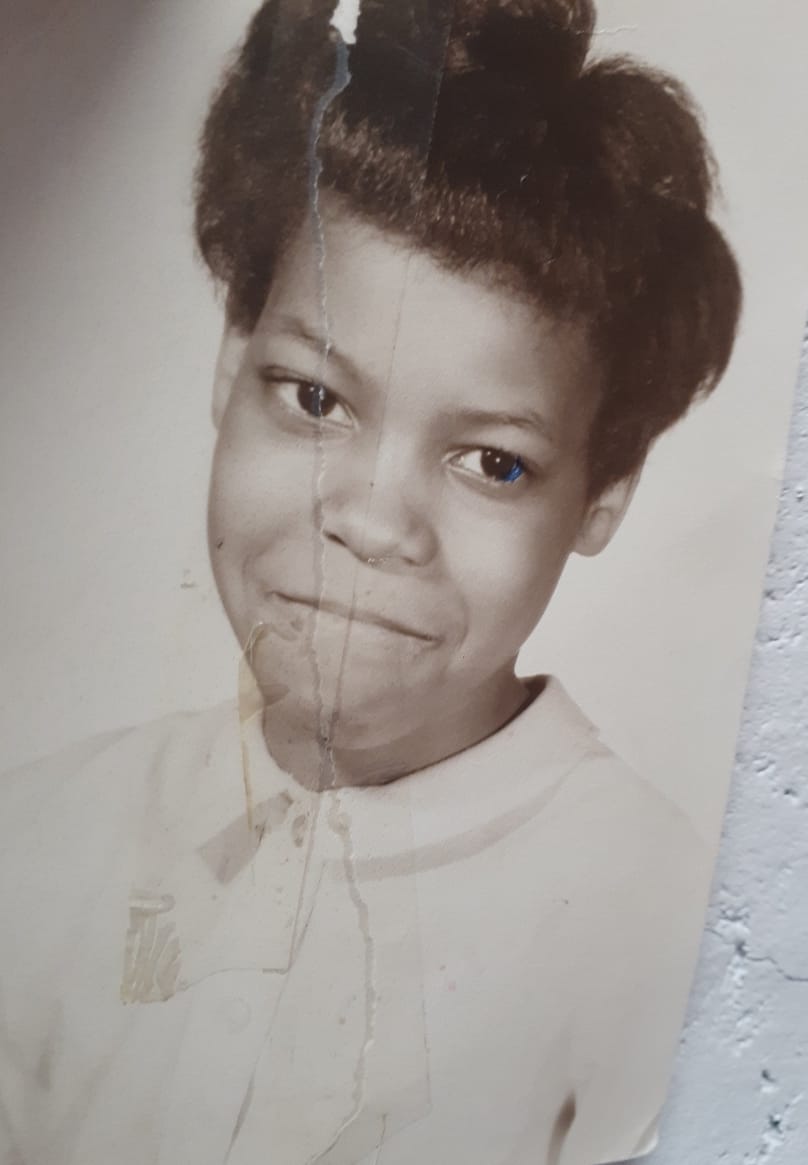
    Gloria Harrison: True Recovery Is the Healing of the Human Spirit

    In 1963, as a pre-teen, Gloria dreamed of going to the March on Washington with Martin Luther King, Jr., and the leaders of the Civil Rights Movement. Her mother even bought her a red beanie like the militant tam worn by the Black Panthers. Proudly wearing this sign of her awakening, Gloria went from house to house in Astoria, Queens, asking for donations to help her get to Washington, D.C. for the march. She raised $25 in change and proudly brought it home to show her mother.

    Excited, she did not realize it was the beginning of a long line of slaps in the face. Her mother refused to let her little girl go on her own to such an event. She was protective of her child. However, Gloria’s mom promised to open a bank account for her and deposit the money. Gloria could use it when she got older for the next march or a future demonstration. Gloria never got to turn this dream into a reality because her life quickly went from bad to worse.

    At thirteen, Gloria found herself in a mish-mash of confusing feelings and responsibilities. She knew she liked girls more than boys from a very early age, not just as friends. Awakening to her true self, Gloria felt worried and overwhelmed. If she was gay, how would anyone in her life ever love her or accept her?

    The pressure of this realization demanded an escape, mainly after her mother started to suspect that something was off with her daughter. At one point, she accused her daughter of being a “dirty lesbo” and threw a kitchen knife at her. Gloria didn’t know what to do. She tried to run away but realized she had nowhere to go. The only easy escape she could find was the common escape in her family: Drugs seemed the only option left on the table.

    The High Price of Addiction = The Shattering of Family Life

    In the mid-sixties, Gloria had nowhere to turn as a young gay African American teen. There were no counselors in her rundown public high school, and the usual suspects overwhelmed the teachers. Although the hippies were fighting the war in Vietnam on television, they did not reach out to troubled kids in the projects. Heck, most of them never left Manhattan, except for a day at the Brooklyn Zoo or Prospect Park. The Stonewall Riots of 1969 were far away, and Gay Rights was not part of almost anyone’s lexicon. Gloria had no options.

    What she did have was an aunt that shot heroin in her house with her drug-dealing boyfriend. She remembers when she first saw a bag of heroin, and she believed her cousin who told her the white powder was sugar. Sugar was expensive, and her mom seldom gave it to her brothers and sisters. Why was it in the living room in a little baggie?

    Later, she saw the white powder surrounded by used needles and cotton balls, and bloody rags. She quickly learned the truth, and she loved what the drug did to her aunt and the others. It was like it took all their cares away and made them super happy. Given such a recognition, Gloria’s initial interest sunk into a deeper fascination.

    At 14, she started shooting heroin with her aunt, and that first hit was like utter magic. It enveloped her in a warm bubble where nothing mattered, and everything was fine. Within weeks, Gloria was hanging out in shooting galleries with a devil may care attitude. As she told me, “I have always been a loner even when I was using drugs, and I always walked alone. I never associated with people who used drugs, except to get more for myself.”

    Consequences of the Escape = Institutions, Jails, and Homelessness

    Realizing that her daughter was doing drugs, Gloria’s mother decided to send her away. Gloria believes the drugs were a secondary cause. At her core, her mother could not understand Gloria’s sexuality. She hoped to find a program that would get her clean and turn her straight.

    It is essential to understand that nobody else in Gloria’s family was sent away to an institution for doing drugs. Nobody else’s addiction became a reason for institutionalization. Still, Gloria knows her mother loved her. After all, she has become her mother’s number one contact with life outside of her nursing home today.

    Also, Gloria sometimes wonders if the choice to send her away saved her life. Later, she still spent years homeless on the streets of Queens, Manhattan, the Bronx, and Brooklyn. Of the five boroughs of New York City, only Staten Island was spared her presence in the later depths of her addiction. However, being an addict as a teenager, the dangers are even more deadly.

    When her mother sent her away at fourteen, Gloria ended up in a string of the most hardcore institutions in the state of New York. She spent the first two years in the draconian cells of the Rockefeller Program. Referred to in a study in The Journal of Social History as “The Attila The Hun Law,” these ultra-punitive measures took freedom away from and punished even the youngest offenders. Gloria barely remembers the details of what happened.

    After two years in the Rockefeller Program, she was released and immediately relapsed. Quickly arrested, she was sent to Rikers Island long before her eighteenth birthday and put on Methadone. Although the year and a half at Rikers Island was bad, it was nothing compared to Albany, where they placed her in isolation for two months. The only time she saw another human face was when she was given her Methadone in the morning. During mealtimes, she was fed through a slot in her cell.

    Gloria says she went close to going insane. She cannot recall all the details of what happened next, but she does know that she spent an additional two in Raybrook. A state hospital built to house tuberculosis patients; it closed its doors in the early 1960s. In 1971, the state opened this dank facility as a “drug addiction treatment facility” for female inmates. Gloria does remember getting lots of Methadone, but she does not recall even a day of treatment.

    Losing Hope and Sinking into Homeless Drug Addiction in the Big Apple

    After Raybrook, she ended up in the Bedford Hills prison for a couple of years. By now, she was in her twenties, and her addiction kept her separate from her family. Gloria had lost hope of a reconciliation that would only came many years later.

    When she was released from Bedford Hills in 1982, nobody paid attention to her anymore. She became one more invisible homeless drug addict on the streets of the Big Apple. Being gay did not matter; being black did not matter, even being a woman did not matter; what mattered was that she was strung out with no money and no help and nothing to spare.

    Although she found a woman to love, and they protected each other when not scrambling to get high, she felt she had nothing. She bounced around from park bench to homeless shelter to street corners for ten years. There was trauma and violence, and extreme abuse. Although Gloria acknowledges that it happened, she will not talk about it.

    Later, after they found the path of recovery, her partner relapsed after being together for fifteen years. She went back to using, and Gloria stayed sober. It happens all the time. The question is, how did Gloria get sober in the first place?

    Embracing Education Led to Freedom from Addiction and Homelessness

    In the early 1990s, after a decade addicted on the streets, Gloria had had enough. Through the NEW (Non-traditional Employment for Women) Program in NYC, she discovered a way out. For the first time, it felt like people believed in her. Supported by the program, she took on a joint apprenticeship at the New York District College for Carpenters. Ever since she was a child, Gloria had been good with her hands.

    In the program, Gloria thrived, learning welding, sheet rocking, floor tiling, carpentry, and window installation. Later, she is proud to say that she helped repair some historical churches in Manhattan while also being part of a crew that built a skyscraper on Roosevelt Island and revamped La Guardia Airport. For a long time, work was the heart of this woman’s salvation.

    With a smile, Gloria says, “I loved that work. Those days were very exciting, and I realized that I could succeed in life at a higher level despite having a drug problem and once being a drug addict. Oh, how I wish I was out there now, working hard. There’s nothing better than tearing down old buildings and putting up something new.”

    Beyond dedicating herself to work, Gloria also focused on her recovery. She also managed to reconnect with her mother. Addiction was still commonplace in the projects, and too many family members had succumbed to the disease. She could not return to that world. Instead, Gloria chose to focus on her recovery, finding meaning in 12-Step meetings and a new family.

    Talking about her recovery without violating the traditions of the program, Gloria explains, “I didn’t want to take any chances, so I made sure I had two sponsors. Before making a choice, I studied each one. I saw how they carried themselves in the meetings and the people they chose to spend time with. I made sure they were walking the walk so that I could learn from them. Since I was very particular, I didn’t take chances. I knew the stakes were high. Thus, I often stayed to myself, keeping the focus on my recovery.”

    From Forging a Life to Embracing a Path of Recovery 24/7

    As she got older and the decades passed, Gloria embraced a 24/7 path of recovery. No longer able to do hard physical labor, she became a drug counselor. In that role, she advocates for harm reduction, needle exchange, prison reform, and decriminalization. Given her experience, she knew people would listen to her voice. Gloria did more than just get treatment after learning that she had caught Hepatitis C in the 1980s when she was sharing needles. She got certified in HCV and HIV counseling, helping others to learn how to help themselves.

    Today, Gloria Harrison is very active with VOCAL-NY. As highlighted on the organization’s website, “Since 1999, VOCAL-NY has been building power to end AIDS, the drug war, mass incarceration & homelessness.” Working hard for causes she believes in, Gloria constantly sends out petitions and pamphlets, educating people about how to vote against the stigma against addicts, injustices in the homeless population, and the horror of mass incarceration. One day at a time, she hopes to help change the country for the better.

    However, Gloria also knows that the path to recovery is easier today for facing all the “absurd barriers” that she faced as a young girl. Back in the day, being a woman and being gay, and being black were all barriers to recovery. Today, the tenor of the recovery industry has changed as the tenor of the country slowly changes as well. Every night, Gloria Harrison pictures young girls in trouble today like herself way back when. She prays for these troubled souls, hoping their path to recovery and healing will be easier than she experienced.

    A Final Word from Gloria

    (When Gloria communicates via text, she wants to make sure she is heard.)

    GOOD MORNING, FRIEND. I HOPE YOU ARE WELL-RESTED. I AM GRATEFUL. I LOVE THE STORY.

    I NEED TO MAKE SOMETHING CLEAR. MY MOTHER HAD A MENTAL AND PHYSICAL ILLNESS. SHE HAD POLIO AT THE AGE OF FOURTEEN BUT THAT DIDN’T STOP HER. SHE WENT THROUGH SO MUCH, AND I LOVE THE GROUND SHE WALKS ON. I BELIEVE THAT SHE WAS ASHAMED OF MY LIFESTYLE, BUT, AT THE SAME TIME, SHE LOVED ME. SHE GAVE ME HER STRENGTH & DETERMINATION. SHE GAVE ME HER NAME. SHE RAISED HER LIFE UP OVER HER DISABILITIES. SHE BECAME A STAR IN THE SKY FOR ALL AROUND HER.

    BEING THAT MY MOTHER WASN’T EDUCATED OR FINISHED SCHOOL, SHE DIDN’T KNOW ABOUT THE ROCKEFELLER PROGRAM. SHE ONLY WANTED TO SAVE HER TRUSTED SERVANT AND RESCUE HER BELOVED CHILD. SHE NEEDS ME NOW AND I AM ABLE TO HELP BECAUSE I WAS ABLE TO TURN MY LIFE AROUND COMPLETELY. SHE TRUSTS ME TODAY TO WATCH OVER HER WELLBEING, AND I FEEL BLESSED TO BE HER BELOVED CHILD AND TRUSTED SERVANT AGAIN. AS YOU HAVE MENTIONED TO ME, THE PATH OF RECOVERY IS THE PATH OF REDEMPTION.

    Postscript: A big thank from both Gloria and John to Ahbra Schiff for making this happen.

    View the original article at thefix.com

  • Why I Choose Not to Be Anonymous in Recovery

    Why I Choose Not to Be Anonymous in Recovery

    I am in favor of a sober revolution in which everyone is comfortable speaking frankly about their struggle with alcohol and other substances.

    “I can’t believe how some people will share the most intimate details of their lives on social media. People they don’t even know can see these things. Future employers. It’s shocking.”

    I nodded my head in agreement as my biggest client shared her opinion of oversharing the details of your life. We were at dinner with a group, but this was a one on one conversation. I stopped processing what she said after that. My mind raced through the intimate details of my life that I’ve shared with strangers. I’m way beyond Facebook posts when it comes to sharing my struggles with alcohol and how mental illness has impacted my life.

    A quick Google search would show my client I’ve written articles, spoken at conferences and on podcasts, and frequently posted about alcohol abuse and mental health issues on my social media. I felt on edge as I drove home that night. Would my client find out I’m an oversharing alcohol abuser? Most importantly, it was the first time I was questioning if it was a good idea for me to attach my name to the issue of alcohol abuse since I wrote my first article on the topic nearly five years ago. Why didn’t I stay anonymous? Was it worth it? Why would anyone choose to make their struggles public?

    Why Didn’t I Stay Anonymous?

    Five years ago, I made a personal and voluntary choice to write about my struggle with alcohol abuse. I wanted to raise awareness of the role I felt alcohol was playing in my field of design and technology. I had one year of sobriety. I struggled during that year to find a good reference point among my colleagues and friends for what not-drinking looked like. I knew there were others like me. I wanted them to know they weren’t alone. I wanted to put my name and face out as someone they could trust on this issue.

    I believe we are more impactful when we remove anonymity from sharing our struggles. People pay attention when an A-list celebrity comes out with their struggle with alcohol or drug abuse. We feel more connected to a disease or condition when someone we know shares with us they have it. In that same way, though not at all a celebrity, I wanted to maximize the impact of sharing my experience. I also thought having others know my desire to stay sober would help hold me accountable in times I craved alcohol.

    I had an anonymous childhood. I grew up in a family where one parent had a significant mental illness, and I went through middle school and high school avoiding attention. I reflected on this before I made my alcohol abuse public. I didn’t want to live a life of anonymity when I realized my struggles — both with alcohol and mentally ill family members — are shared by large numbers of people. Perhaps everyone knows someone impacted by one or both of these issues. But we don’t talk about it; not nearly as often as we should. I wanted to contribute to changing that for the better.

    I made the commitment to attempt publishing and speaking on the topic of alcohol abuse. I haven’t set the world on fire, but I’ve gained enough traction. I’ve published over a dozen articles and blog posts, videos of conference presentations, and podcasts on this topic. I’ve lived four years with my issues made public.

    The Present: Things change – Things Stay the same.

    I couldn’t have predicted many of the changes that have occurred since I left anonymity; changes that perhaps would have caused me to reconsider going public.

    My works situation has changed. Four years ago, I sat down with one of the partners at the design firm I work for. I told him I’d been sober for a year and I wanted to go public about the need for our industry to do more for those struggling with alcohol issues. I knew my first article on the topic was set for release within 48 hours. I wanted his permission to affiliate myself with the studio in my bio statement. He gave me his full support and that of the other two partners. I knew I wouldn’t lose my job when the article came out.

    One year later, a mega-company acquired our studio. A company with many restrictions around communication with the outside world, a company with many restrictions against affiliating yourself with their name. I’ve now worked for this company for over three years. No one at the company from outside of our studio has commented on my alcohol-related writing or speaking.

    I’ve done some things to help limit the possibility I’ll get in trouble at work. I’ve shifted how I affiliate myself in my bio: I don’t name my company; I don’t claim any affiliation with my opinion and the company I work for. I post less on social media, as many people from my studio and the larger company follow some of my accounts. I do have anxiety over being asked to remove my writing from public view. I knew this was a possibility if I decided to change employers after going public, but I was surprised to find myself with the same employer but different policies almost overnight

    I’m not as concerned about future employers. As I continue to build a foundation of writing and speaking, I’m hopeful to move more towards the space of advocating for awareness of issues related to alcohol abuse as part of my profession. I will choose a future employer based on the support and flexibility they are able to provide me around this goal. And I haven’t given up on exploring the potential for acceptance of my advocacy at my current employer.

    My personal life has changed. I was engaged and then married when I first shared my issues with alcohol abuse. I had my wife’s consent to go public. I wasn’t concerned she would judge me; she’d lived through what I was writing about.

    I’m now divorced and dating. Potential dates ask for a last name to look me up online prior to meeting and I’m proud of what they will find. I know some might develop negative opinions based on what I’ve written. I’m not concerned about what I might miss, but it’s an example of something I hadn’t considered because my relationship status seemed solid four years ago.

    I’m not set on having a sober partner. Almost every woman I’ve had a date with stated they drink. They ask if I mind them drinking on our dates. I don’t. One woman canceled a date after finding out I am sober. She was coming out of a marriage to an alcohol abuser and said she still felt triggered. I respect that. My lack of anonymity allowed us to avoid investing time in something that would not have worked.

    Outside of work and relationship changes, I was aware of the potential pitfalls. People know my shit. You can know my flaws before you meet me. I can’t speak for how that might have impacted me. Many people have introduced themselves and congratulated me on staying sober or thanked me for sharing insights they found valuable. No one has ever said to my face they think I’m oversharing or embarrassing myself.

    I constantly deal with imposter syndrome, which is when you feel like a fraud for putting yourself forward as someone with expertise. I struggle with this whenever I start writing an article or post meant to help others. I focus on the fact that I’m sharing my experiences in a way I hope helps people. I’m not saying what I’ve done is the only way, or even the best way to get and stay sober. I’m not an imposter as a sober person. No one is. We each do it our own way. If I do something that’s effective for another person then I want to take the opportunity to share that.

    What if I do drink? If I relapse or decide I want to become a casual drinker (probably impossible), I will look very hypocritical. I find that helpful in adding to the sense of accountability I have. I know that’s shallow, to care what others think, but I’ve interjected myself into the how to be sober conversation and would deservedly look foolish for failing to hold up my end of the discussion.

    A Personal Decision

    I can’t speak to whether anyone else should make their sober status public. I am in favor of a sober revolution in which everyone is comfortable speaking frankly about their struggle with alcohol and other substances. Today, we are far from that. I always appreciate when actors, musicians, and sports icons share their struggles. These people have large platforms and can impact society at the change level much quicker than I can.

    I believe the benefits of being open about my alcohol issues have outweighed the costs. I’ve been able to play a small part in shaping a message that will need to be repeated through the end of time, it seems: Not everyone drinks. It doesn’t matter why. We need to support those who choose not to drink. We need to support those who are struggling to recognize and treat alcohol abuse, as well as their families. I wouldn’t feel as comfortable entering these conversations if I didn’t have a small body of work to support my experience. I understand most people have no idea who I am or what my background is, but knowing I exist in public forums as a confessed alcohol abuser on a mission to help others with alcohol issues is enough to keep me engaged.

    As far as the client from the opening of this piece, I don’t know if they have ever looked me up online or found any of my posts on sobriety. But I have made them aware I’m sober, and they are grateful to have me as the designated driver when we go out for entertainment.

    View the original article at thefix.com

  • Kicking Heroin Cold Turkey Changed My Life

    Kicking Heroin Cold Turkey Changed My Life

    Nobody ever tells you how it feels, especially for the first time.

    This was the most pain and anguish I had ever experienced in my life, and I had given it my best shot, but there was really no point in going on.

    There were three of us.

    Eric was dashing and handsome, with eyes that cut through you, even as a child. He’d walk into a room and own it, immediately, and he knew it. He had leading man features that greatly resemble Chris Pratt, after he got sexy.

    James was the athlete, gifted with a physique that a teenager shouldn’t have been allowed to have. He was also kind to a fault, and loved God in the way that a puppy loves anything. If being a charismatic, fun-loving priest didn’t work out, he would have settled for being the NFL’s hottest running back.

    And then me: two years younger, two heads shorter, with eyes twice as wide when I’d look at my cousins, whom I worshipped. I thought of myself as their sidekick, but to be honest, if they were both Superman then I was a bundle of kryptonite around their necks, weighing them down. They didn’t mind, though. It kept them human.

    Musketeers. That’s what our family called us, and we were inseparable. We came from a prototypical Irish-American Catholic family (which means lots of kids). If you’re at all familiar with that demographic, you know that such families are tightly knit. Since the three of us were so close in age, our parents made sure that we spent time together, every single day. “Protect each other!” They’d always say.

    Even though Eric and James were two years older than me, they always encouraged me to hang out with them and their friends after school, but only after all my work was done. Ironically, it was my cousins more than my parents who forced me to get my homework done, but that could have been because they needed me to help them with theirs. I could never have hoped to be as cool as my cousins, but book smarts came easily to me. Together, we were a perfect team.

    And then we lost Eric.

    Not immediately. Acute myeloid leukemia works quickly, but it still gives you plenty of time to wait for the inevitable. After chemo failed, the doctors gave him two months. Eric gave them four. He frequently joked that he was going to live forever, despite having leukemia, just out of spite. In fact, he probably put up the most convincing happy face during the whole ordeal. In a way, this helped a lot of us. If Eric wasn’t scared, then why should we be? But underneath, he had to be frightened to death.

    Eric died in his senior year of high school, a few weeks before Christmas. I can’t believe that we found enough tissues for his funeral. My family doesn’t pick favorites, but deep down, I think everybody knew that Eric was the most beloved of any of us. He was the all-American boy we loved to boast about. Despite the tears, though, something felt dignified about his funeral. I think my whole family was proud that he put up a fight, that he went down swinging. That’s the kind of people they are.

    James and I took it harder, though. Family mattered to us more than anything, but what we had with Eric was something else. It was like a family within a family. And Eric was always our fearless leader. I thought he was invincible. As for James, I think he felt like a knight with no prince to follow.

    “Always protect each other,” our family would say.

    How?

    ***

    A few months earlier, James hurt himself playing football; torn ACL, his senior season cut short. To be honest, I wasn’t surprised when he did. As I watched him play, I thought he seemed angry. This was during the waiting game with Eric. It was while treating this injury that James received his first prescription of painkillers.

    Even after Eric died, James and I were still inseparable. I think I was the first one to notice that he was particularly fond of his medication. Besides numbing the pain from his injury, I think it helped him feel numb to the situation, and made him seem stronger than he was. Despite this, he got even more active than he already was in the church. If his plan B of being an NFL superstar was out the window, he’d have to work extra hard to make sure that the priesthood worked out. We sang songs together at church. Even though I was angry that Eric had been taken from us, I loved God more than I ever had. I had to. Eric was somewhere better, and that’s all there was to it.

    Two years went by, and James was still taking his pills. He mainly avoided taking them around family, but we were together too much for him not to do it around me. I wasn’t stupid, I knew his prescription ran out a long time ago. Without a prescription, opioids can get expensive, and it was only a matter of time before James found a cheaper, stronger substitute.

    And that’s how we both started doing heroin.

    At this point, I was a fairly upstanding high school citizen. I attended school full-time and worked an after-school job. Schoolwork came easy to me, and grades and test scores followed. On top of that, I still sang in church with James and volunteered with the Catholic Services food bank. I was responsible to a T, and I hated it.

    There’s not a lot of glamor in being the responsible one in a family that tells stories of war and fights, and values adventure above all else. Sure, the whole family would throw a barbeque every time an acceptance letter came in the mail, and they never showed anything but pride and support. But I wanted experience. I was young and stupid and had a thirst for everything that I couldn’t have. So when James switched from the pills to the heroin, I took some and tried it on my own (you can learn anything on the internet).

    Nobody ever tells you how it feels, especially for the first time. To this day, I can promise you that the most euphoric moments in your life cannot compare to the rush that heroin will give you; not love, not sex, not pride, nothing! Literally, it’s chemically impossible. Heroin forces your receptors to overload, giving you an overwhelming feeling of pure pleasure.

    One time, and I was hooked.

    At first, James was furious with me, although I suspect he was more furious with himself. At that point, though, we both already knew what it felt like, and neither of us was going to stay away.

    For the next six months, we both used regularly whenever we could. James had a full-time job, and I had a part-time one with no expenses. On top of that, people always expected us to be around each other. There were no obstacles in the way of our continued drug-fueled lethargic shenanigans. During this time, I maintained my grades, my job, my church activities, and my relationship with my girlfriend, who was in the dark about my darkest habit. Somehow, I had convinced myself that I could maintain everything I had while still being a heroin addict. Anyone who couldn’t figure it out was just too foolish.

    There is a cost to such pleasure, though. Due to the amount of dopamine that is released in your brain when you do heroin, your brain starts to get complacent, and won’t produce any new dopamine without the stimulation of heroin. Over time, this meant that I couldn’t feel pleasure, or giddiness, or satisfaction, unless I had recently used heroin. Towards the end of school days, I would get irritable, getting restless for my next fix.

    James realized this before I did. He never excelled in school, but he always had much more emotional wisdom than me. It’s because of this that he told his parents about his addiction. I first found out from my parents that he had told them, and I selfishly was terrified that he had ratted me out. But James would never do that without my consent.

    “Always protect each other,” they’d say.

    James, with the help of family, started getting treatment. In the meantime, I continued to shoot up in his bedroom while he tried to convince me to do the same. Near the end, I was strongly considering it. Even at the point when heroin had the strongest hold over my life, I still loved and trusted James more than pretty much anything in this world. And truthfully, he was doing well. He hadn’t used for nearly a month.

    But then I made a mistake.

    One night, I took the bus home from James’ home and went to bed. Early in the morning, though, I shot awake with the realization that I had left my bag in his room, and in that bag was the thing that James most needed to stay away from. As I hurried to get back to his home, my stomach was already filling up with a sickness of certainty.

    James was already long dead when I walked into his room.

    I thought my heart was going to pound out of its chest. I’m ashamed to admit that my first thought was that I needed a fix, and then my second was how long it would take to bleed out if I cut my wrists. At that moment, I probably could have found the courage to cut my own throat. Somehow, I did neither of these things, and managed to call 911.

    And then there was one.

    If he had never have gotten help and stopped using, the dosage wouldn’t have killed him, but he didn’t lower it to compensate his reduced tolerance. This irony never escaped me, even when I first found him.

    This funeral was harder than Eric’s. It was harder to find the dignity, to justify the purpose of this loss. Eric’s death brought sadness to my family. James’ death ripped the rug out from under them.

    Everybody blamed themselves. His parents thought they didn’t try hard enough. His older siblings thought they weren’t good enough influences. My grandparents felt they didn’t talk to him enough after Eric died.

    But it was me. If there was a metaphorical trigger to pull, then I was the one who did it. Not only was it heroin that I bought that killed him, a fact my family was woefully ignorant of, but I was the one who continued to use in the environment that he needed to be a safe space. I was too proud to think that I needed help, and it cost the life of a far kinder person and gentler spirit than me.

    As I looked at his open casket, all I could think was that I was the worst fucking scum on the planet, and that I should follow him into the ground.

    But as everyone I love wept around me, I could practically hear their hearts cracking. And then I had a realization would define every molecule of my existence for the coming days: I would not be the next one to hurt my family. I couldn’t bring myself to tell them that I was also an addict, so I decided there was really only one option, something I had never done before, but had heard about from TV shows and online articles. I had to go cold turkey.

    Because of how close James and I were, it was easy to get a few days to myself that I would need to completely detox. My family would simply think I was grieving. They were right, but only half so. That thought at the funeral put me into a mode of complete obsession, and I was determined to follow through with my plot.

    ***

    I bought a couple cases of water, a few bags of salted jerky, and a rotisserie chicken, and then locked myself in a spare room at my grandparents’ home. There was a lot of family in town, so they would be busy for the next couple days. I felt ready for anything.

    But, just like nothing could prepare me for the pleasurable feeling that heroin washed over me, neither could reading about the cold turkey process ready me for how horrific it really was. Below is my attempt to be as straightforward about the process as I can be, and to tell it as factually as I can…

    Once I was 14 hours in from my last fix, I consider the withdrawals to have truly begun. First, it starts with intense cravings. You want heroin more than you’ve wanted anything in your entire life, or at least you think you do. I constantly reminded myself that this was a trick, but I’m not sure I believed it at the time. Remember, after you’ve become dependent on heroin, your brain is practically incapable of producing positive thoughts. I tried to remember happy memories of James, but they were fuzzy in my mind. Beyond this, my concept of time began to blur for the next several days.

    After I had neglected my strong desire to use, I began to get uncontrollably irritated. Every time I clattered my teeth or made a sound, I would frustrate myself to the point that I wanted to punch a wall. I started to scream into pillows to let off steam. However, this got harder once the nausea set in. I was prepared for this. I had read all about the physical effects that would happen to me. However, reading did little to mitigate the sickness and dizziness. Pretty soon, standing became a difficult task.

    I stayed in bed and attempted to control my breathing. For a little while, I was even almost able to relax. This was short lived, though. Again, I knew that the skin crawling sensations were coming, but I didn’t realize how sporadic it would be. Everywhere on my body felt like it was on fire. I tried to hold my breath and keep still, but pretty soon I was scratching everywhere I could reach. After a matter of minutes, my arms were bleeding. I wrapped my fingers in duct tape to prevent myself from doing further harm.

    I knew that I would eventually start vomiting and purging everything in my body. I had readied myself for all of the physical effects. However, the true hell of heroin withdrawals isn’t in the physical aspects, it’s the mental side effects that really get you. At this point, my irritability had climbed to a full-scale anger. I kept clenching my jaw so bad that my gums started to bleed. All I could do to let out the energy was to continue screaming into a pillow, but I was starting to get tired. Then, out of nowhere, the vomiting started.

    I vomited and dry gagged in a throbbing cycle that lasted about an hour, but would continuously rear up throughout the whole process. While the initial vomiting was quite painful, it actually provided me some relief from the thoughts in my head. Afterwards, I was so overcome with exhaustion, that I was actually able to sleep for several hours. To my memory, this was the only continuous sleep I would have for about two days.

    Although I very much needed these few hours of sleep, it almost wasn’t worth it because of the nightmares that started at the end and woke me up. Up to this point in my life, I wasn’t very prone to nightmares at all, and could probably have counted the number of nightmares I had had (or at least remembered) on one hand. However, the dopamine from my last hit was finally hitting the dregs, and my brain couldn’t produce anything to balance itself out, chemically.

    I woke up in a cold sweat and felt paralyzed with fear. For the next several days, every time I would start to fall asleep, nightmares and partial hallucinations (waking nightmares) would jolt me awake in terror. After a few times of trying to doze off, I began to question my own sanity. We tend to hear a lot about the physical aspects of heroin withdrawals, but one of the most dangerous threats to people going cold turkey is suicide.

    Somewhere at this point, although time was a bit of a blur, my mind hit rock bottom. My dopamine receptors were doing nothing at this point, and my brain began to fall apart, unable to produce a single happy thought. The world was a bleak pit, and I was just washing around at the bottom of it. I had felt small bouts of depression before, but this was soul-crushingly different. Out of instinct, I began to pray. I begged God to make the pain end. I begged for a light at the end of the tunnel. I begged for some sort of sign or to be saved from my own thoughts.

    Then, it occurred to me how easy it would be to simply end it all right there. It wasn’t hard to reason myself into it. I could be with Eric and James. We could be the three musketeers again! This was the most pain and anguish I had ever experienced in my life, and I had given it my best shot, but there was really no point in going on. I’m sure that God would understand. I knew that he would have mercy.

    It was then that I remembered the thought that saved my life. I didn’t need a happy memory. I needed the memory of feeling the worst I had ever felt. I needed to remember the self-loathing that washed over me at James’ funeral, as I heard the people I cared most about bawling uncontrollably in pain, because of me.

    And then it hit me as if the sky fell down: God wasn’t there.

    I don’t expect everyone to have this same revelation. It was an incredibly personal moment to me. Addiction recovery programs frequently talk about needing to surrender to a higher power, and this was my own special ‘higher power’ moment.

    It wasn’t that God didn’t care, or that he was cruel, or that I couldn’t understand his grand plan. He wasn’t there. There was nothing above me or below me that wasn’t a meaningless abyss. A void of space that stretched beyond what my brain could conceive for absolutely no reason. There was no cavalry coming to save me, and there was nothing waiting for me if I were to die now; just more pain for my family.

    I had gotten myself in this situation, and only I could get myself out. I was going to have to do this Eric’s way: survive, out of spite. I abandoned every notion of meaning I had ever put on the world, and replaced it with this one simple purpose. For the rest of this battle, that would be my single function. I may have wanted to die, but I had too much hate to give in. If you can’t find happiness, hate can be a powerful motivator.

    The only thing I knew was that I would not be the next reason my family grieved and hurt. I would survive. No cancer, or heroin, not even God himself would stop me. If I died and woke up in heaven, I would have killed every last angel to get back to Earth; to get back to my family.

    Dramatic? Yes. But the mind of an addict suffering from heroin withdrawals is hardly a place for subtlety.

    From this point on, I sat against the wall, and remained there for about a day, just staring and drinking water. I wouldn’t let myself fall asleep and be the victim of yet another night terror. Every craving and thought of suicide filled me with more and more spite, and I sat there, stewing in it, until finally, I could feel the physical effects wearing off.

    I had survived.

    The cravings continued to last for months. Even years later, I sometimes have a sharp, discernable memory of how good the pleasure of heroin felt. But I can say with certainty that I don’t have the temptation to use. If I sat in an empty room with an ounce of heroin, I wouldn’t even have the slightest desire.

    In that room, I burned down who I was as a person, and built something else with the pieces that I had. Truth be told, going cold turkey is a horrible idea, and isn’t safe to try under even the best of circumstances. Please, if you or a loved one find yourself struggling with heroin dependency, get professional help and stick with it. This is by no means a road map to fighting addiction. It doesn’t really feel like a feel-good story, either. Hell, I’m not even sure if this is a happy ending.

    But it’s my story.

    *Names have been changed for the sake of anonymity.

    View the original article at thefix.com

  • How Gigolos' Garren James Found Recovery and Success

    How Gigolos' Garren James Found Recovery and Success

    The client base is diverse, ranging from the ladies who want to go out and have a fun night on the town to those who are recovering from a traumatic experience or dealing with a terminal illness.

    Garren James is a man filled with surprises. The stunning former model is more than just a handsome hunk. He is the CEO, producer, and star of Cowboys 4 Angels, the male escort company featured on Showtime’s hit series, Gigolos, which is entering its seventh season. With a beautiful wife, kids, and successful career, James seems to have it all. But what many don’t realize is that the journey to this dream life was filled with obstacles that only he could overcome.

    The innovative businessman recently celebrated ten years of sobriety. Rather than continuing to keep his recovery quiet, James felt he might be able to provide some hope or inspiration by sharing his experience, strength, and hope with a wider audience. Here, James shares his story publicly for the first time.

    “I’m tired of hearing about people dying. Let’s equal it out, let’s talk about the successes,” he says when sharing his story with me. The Florida native had a slew of prior arrests. After numerous stints in various rehab centers that were not successful, James was finally ready to hit rock bottom. His addiction to crack, powder cocaine, and various other substances had completely taken over his life.

    “I was living in a garage and the girl who was letting me stay there told me if I got high one more time that she would kick me out. So, I went out and I got high.”

    To his surprise, she kept her word and he was out. James found himself with no place to go.

    In desperation he chose to break into her property, hoping to retrieve something that could be pawned for cash. At the time he was in the height of his addiction and thought that she would surely understand what he was doing. She did not. The police were called and he found himself leaving with handcuffs shackled to his wrists and nothing to pawn.

    “I was in a jail cell laying on the floor. I didn’t care.” Rather than looking back with regret, James speaks of his arrest with gratitude: “That was the day the Brown County Sheriff department saved my life,” he recalls. This was not his first experience with prison time, but he was hoping it would be his last.

    For the next ten months he contemplated his future while behind bars. His situation improved when he was offered a chance to go to a halfway house. After getting involved in a 12-step recovery program and attending meetings within the system, he began to discover that life was worth living.

    “I worked my ass off in recovery…I was loved back into being a person who had confidence.”

    It’s normal to be fearful of life beyond your comfort zone, especially when it’s one in which you’ve been thriving and learning a new way of life. When it came time for James to seek employment, he was hesitant and nervous. Acclimating to life clean and serene was as intimidating as it was wonderful.

    “I thought I should have been on disability. I was nervous about getting a job based on my past.” He was encouraged to try. Wearing a pair of slacks and an $8.00 shirt from The Salvation Army, he went in search of employment. Almost immediately, he was hired by an art gallery. From there, he began to rebuild his life.

    His business, Cowboys 4 Angels, started slowly. First, he developed a website. Straight male escorts were available to provide companionship to females. It was a service that would provide compassionate and handsome men to women in need. His big break came when he was featured on The Tyra Banks Show. Before Tyra he was receiving a few calls a month; after his appearance, his business began to boom. He started getting up to 50 bookings a month and the website stayed near the top of Google searches.

    The love that James received during his experience getting sober informs the way he runs his company, and especially when it comes to his interactions with the women who approach him. Cowboys 4 Angels’ client base is diverse, ranging from the ladies who want to go out and have a fun night on the town to those who are recovering from a traumatic experience or dealing with a terminal illness. It’s more than just a dinner date, it’s about having a connection with another human being.

    Ten years later, James’ life has exceeded his expectations. Now happily married with children, with a business and television series on Showtime, he is in a place he never imagined. And James is adamant he has achieved this all because he has never lost sight of his recovery. That is where the real work started.

    “With recovery, anything is possible,” he says with conviction.

    One of his most recent and proudest achievements was rallying for a meeting to be held in the very prison he once did time in. This was finally approved and every other Sunday he personally visits the facility and works with the inmates.

    All the while keeping his coffee commitment at his home group.

    “There are no big shots in recovery.” Garren James says smiling.

    Follow Garren James and Cowboys4Angels on Twitter and Instagram.


    View the original article at thefix.com

  • A Dopeman's Grocery List

    A Dopeman's Grocery List

    The reality and gravity of the entire situation was this: if I don’t steal this shit, I’m not getting high. If I’m not getting high, I’m dying. That’s how bad I was strung out on opioids; that’s how much of a slave I was to the drugs.

    The following story is based on actual events. In an effort to protect anonymity as well as keep people out of potential legal trouble; names, places and identifying characteristics have been modified. I hope you enjoy these stories. Whatever you do. DO NOT try this at home.

    What happens when you run out of money and need a fix bad?

    What happens when you just don’t have it in you to stick someone up on that particular day?

    What happens when you run out of shit to pawn?

    What happens when there’s nothing left to post on OfferUp, LetGo and Craigslist?

    You can always go grocery shopping for your drug dealer like I did. I mean, I didn’t have any money at the time and I already traded my food stamps for dope that month but I knew there were a few items that “D” needed me to pick up from one of those big-box-retail-stores. If I could get the items he needed, he would trade me 50% of whatever it cost in cash or trade me 75% of what it cost in dope. This was a no brainer. Get the grocery list, steal the items, get the dope and get high.

    I’ve always been a fan of “heist” movies. Mission Impossible, Ocean’s Eleven and Catch Me If You Can come to mind when I think about the excitement I felt when the “bad guys” got away with whatever it was that they were taking. Sometimes rooting for the bad guy feels good. Every time I received one of these lists via text message from D, I felt like Ethan Hunt accepting some kind of grand mission that was of the utmost importance. The reality and gravity of the entire situation was this: if I don’t steal this shit, I’m not getting high. If I’m not getting high, I’m dying. That’s how bad I was strung out on opioids; that’s how much of a slave I was to the drugs. When opioids told me to jump, my response was always: how high?

    It’s been four and a half hours since I last shot up. My stomach is beginning to turn like that sensation you get when a roller coaster takes its first plunge, except it felt like it was my life that was diving into utter oblivion. My palms have begun to get clammy. I got the cold-sweats and it’s pissing me off. It’s 73 degrees in my room but I’m soaking wet like “Dollar Debbie” taking a stroll down MLK in the middle of August. Life sucks and I need to get “one” in me… like yesterday.

    BEEP! BEEP! A text comes in. God I hope it’s D. I unlock my phone and see the good news I’ve been waiting for:

    1 bottle of Pine-Sol
    2 boxes of Huggies
    Peanut Butter and Jelly – not that shit with the peanuts in it
    1 Mop
    1 Case of Ramen Noodles
    5-10 assorted girl’s tees
    1 pair of white sneakers, size 6 – I don’t care what the brand is

    Oh, I also need a new Bluetooth speaker, some crackhead stole mine last night. See if you can get one of those dope ass Dyson vacuums too.

    And hurry the fuck up, I’m trying to go to the casino. You got one hour!

    Finally! I got the grocery list! Now I have to find a ride. That means I have to cut somebody in on the payoff, which means fewer drugs for me. Fuck it, I’m hurting bad. At this point, I’m not going to argue over whose half of a dilaudid is bigger. It doesn’t matter anymore.

    I scroll through my contacts and find the guy I’m looking for. I just hope he’s awake. It’s three in the afternoon, a little early for Tony. He usually gets up around four or five because he’s been up all morning trying to come down from the “shards” he shot up the night before. I know an offer to score some dope to come down off the shit will lure him into my latest scheme.

    “But what color vacuum does he want?” Tony asked, dazed.

    “Does it fucking matter?!” I yelled back. Tony had a way of asking questions that didn’t matter. He was slow, he was sloppy, and he smelled like a piece of toasted Chore Boy. It’s mind boggling to me that this guy was ever successful at pickpocketing when he lived in New York. He had been down here in Florida for only six years and had already visited the local jail well over 12 times. Thing is, he always stayed high, had a car, and was just as sick as I was.

    “I’ll be there in five minutes.” he murmured. “Meet me two streets over by the bando,” he instructed before hanging up.

    Twenty-five minutes later, Tony pulls up in a hurry, looking annoyed like I’m the asshole who’s twenty minutes late. I’m livid. He always does that; he’s worse than a drug dealer and I hate waiting. I need a fix bad. My nose is beginning to run and I’m getting these random sensations in my stomach. Feels like someone is taking a blade and stabbing me erratically. My body is telling me that I’m supposed to eat but the appetite isn’t there. The worst symptom I get when withdrawing is when I smoke a cigarette: I gag every time I hit it and they don’t taste the way they normally do. It doesn’t help that the cigarettes I’m smoking are the ones I’ve collected from all the public ashtrays around town. They already taste bad. This life sucks. I need a pill, now.

    “Here’s the plan,” I say to Tony as I get in the passenger seat. “We have a half hour to grab the shit and meet D at his place before he leaves for the casino.” Tony is already driving to the store. Like me, he knows which one to go to at any particular time of day. We know when loss prevention does their shift change, we know which side of the store the greeters are on, we know which store we hit last time and that dictates which store we hit next.

    “Five minutes or less!” I say assertively. “If it takes longer than that, we’re going to the other store.” I know that if I have to come up with a story to buy more time with D, it shouldn’t be a problem.

    “Flip a coin to see who’s building the cart this time?” Tony asks.

    “Run it,” I reply.

    “Heads!” He yells as I flip the coin. “Yes!” He screams. He gets to build the cart. I’m getting excited. As we near the store, the symptoms of my withdrawal seem to lessen. I’m getting turned on over the idea of committing a crime. Sounds crazy, doesn’t it? Not only am I addicted to drugs, I’m in love with the crazy and dangerous lifestyle that comes along with it.

    Let me break down the lick for you.

    This is a two man job. Park near the front and keep the car running. Pop the trunk but leave it down so it looks shut. Leave all the doors unlocked. First man goes inside alone to “build the cart.” Building the cart is the easy part, that’s why we flipped a coin for it. You basically go in the store, acquire the items on the list, and place them inside a shopping cart. This must be done in five minutes or less. The other man, the one in the car, is on the phone with you, the cart builder, talking in your ear while he looks through the store window, informing you on what the employees are doing. Are they watching you? Is there an undercover loss prevention guy following you? These are things that must be known.

    General rule of thumb when building a cart: look like you belong there. Just go shopping. Smile; say hi to an employee; maybe ask them where you can find a particular item. You’re the customer, act like one.

    Tony gets everything on the list in less than five minutes. His slow ass must really need a pill as bad as I do. If he’s hurting, he’s not showing it. I think he’s as excited as I am.

    Once the cart is built, head to an aisle that runs along the cash register that’s nearest to the exit. Ditch the cart. Leave it in the aisle and get the fuck out. Once you get back in the car, look your partner in the eye, wish him luck, light a cigarette, sit back and relax. Your work is almost done.

    Here’s the dicey part. It’s the driver’s turn to enter the store. I exit the whip and walk to the entrance. Tony keeps his earpiece in and puts the car in drive while he keeps his foot on the brake. I almost forgot to mention, never pull into a parking space. Back in, so when it’s time to make the getaway, you just let off the brake and get the hell out. No one is trying to get into a little fender-bender while trying to elude potential law enforcement. I mean seriously, if my ass goes to jail over a fucking bottle of Pine-Sol, I’m killing somebody.

    I’m in the store. My heart is racing! Do I look like I belong? Do I look like a junkie? I know I showered. My shirt is wrinkled but my shoe game is on point. I don’t look homeless but I feel like shit. Do the employees notice? Keep walking. Eyes forward. Listen for Tony on the phone. It’s going to be okay.

    I find the cart. My palms are sweaty as I grab it and head towards the exit. I dig into my pocket and pull out an old receipt from the gas station. This is what I’m going to use as I walk out the door with my head down. I’m going to make it look like I’m going over the items I “just purchased” as I walk out; never mind the fact that nothing is bagged up.

    “How’s my back, T?” I ask nervously.

    “I don’t see anyone behind you, bro. Just keep coming. The trunk is already open.”

    We chose the correct side. As I near the exit, I notice there aren’t any greeters, AKA receipt checkers. This is expected but I still don’t get it. There are two entrances, spaced out on either end of this store, but they keep a greeter on only one side. Idiots. I’m about to walk out; just a few more steps.

    “Excuse me, Sir!” I hear behind me. I ignore it and keep on walking.

    “Sir! Excuse me, hey sir!” I hear again. She sounds cute. I stop and begin to turn around. I got to be honest, my heart is racing and I’m extremely turned on at this point. Why does crime excite me so much?! I can hear Tony screaming and yelling expletives in my ear.

    “What’s up?” I casually ask while making eye contact with this cute employee. She can’t be older than 22 and she looks perfect, like those black pants and blue vest were custom made to wrap around her beautiful figure. I wish I wasn’t a junkie. She seems like a good girl. If I wasn’t so concerned with getting high, maybe I’d ask a woman like her out. I don’t have time for women. They get in the way of my using. Just give me a crack-whore that wants to fuck before or after we get loaded. That’s all I have time for.

    Shit. I forgot what’s happening here. My ADHD gets the best of me sometimes. I’m supposed to be walking out of a store with a shopping cart full of stolen goods.

    “Sir, are you forgetting something?” She asks. I stare blankly back at her. I don’t have a response and I kind of just want to stare at her before she calls the authorities and I have to turn around and make a break for it. The only thing I can muster up to answer her question is “I don’t know, am I forgetting something?”

    She raises a fist and begins open to up her cute little hand. I quickly picture her cute fingers with the chipped nail polish dancing all over my body. Focus!

    “Get the fuck out of there!” I hear Tony screaming in my ear.

    She opens her fist. “You dropped your lighter, Sir,” she says as she hands it back to me. Tony can hear her on his end and I hear him let out a sigh of relief.

    “Okay we’re good” I hear him say as I thank her and head out the door.

    I throw the items in the trunk and we head over to meet up with D. We’re in a hurry to get high; he’s in a hurry to get to the casino. Both parties are bitching at each other. We engage in the usual small talk that really is just a load of bullshit. D doesn’t care about me or my well-being, and I could give a shit about him and his family. I just want my dope and I want to go home. He just wants his shit and wants me to leave. We do the same shit every day. Act like we’re family. Like there’s some “street code” of honor or something. The truth is, nobody cares. Everyone is out to get theirs and theirs only.

    Tony and I head home and split the shit we scored. As soon as I get mine in me, all in the world is right again. For those brief ten seconds of numbness and euphoria, as the opioids flow into my bloodstream, I forget that I am a slave. I forget that just ten seconds ago, my body was writhing in pain. I forget that I was almost stopped inside of a store for shoplifting while on probation. I forget that if I violate, I’m going up-the-road for at least five years. I forget about that girl that broke my heart. I forget that I’m a lying piece of shit that steals from my mother every time she goes to sleep. For ten seconds, I’m free…

    And in four hours, I’m doing it all over again.

    If no one told you today that they love you, fuck it, there’s always tomorrow. 😉

    View the original article at thefix.com