Tag: Purdue Pharma lawsuits

  • Will Nearly 2,000 Pending Opioid Lawsuits End In A Master Settlement?

    Will Nearly 2,000 Pending Opioid Lawsuits End In A Master Settlement?

    Attorneys are attempting to put together a settlement that would make a “meaningful impact on the deeply tragic opioid crisis.”

    There are now nearly 2,000 opioid lawsuits pending in federal court. States, counties and cities across the U.S. are seeking to hold drug companies like Purdue Pharma, Johnson & Johnson and McKesson accountable for fueling the national opioid epidemic.

    The companies are accused of aggressive and improper marketing of opioid drugs like OxyContin and downplaying the risks of developing a drug use disorder.

    With so many lawsuits seeking money damages for the devastating impact that opioid abuse has inflicted on American communities, the question of how they will be dealt with remains.

    The Master Plan

    In June, a group of attorneys representing 1,200 counties, cities and towns proposed a plan to reach a settlement with two-dozen drugmakers and distributors. One of the attorneys, Joe Rice, was the architect of the 1998 Master Settlement between 46 states and major U.S. cigarette manufacturers, WBUR reported. “Tens of billions of dollars would be needed to make a significant—a real significant impact on this epidemic,” said Rice.

    The plan is “ambitious and creative but fundamentally flawed,” according to attorney Mark A. Gottlieb, executive director of the Public Health Advocacy Institute at Northeastern University School of Law. Gottlieb, wary of its potential impact, emphasized the importance of making a strong statement with the massive settlement that would provide closure for both parties. Ideally it would be a symbolic end to the opioid crisis.

    “While any new ‘master settlement’ must primarily compensate the plaintiffs for their losses, a settlement that simply moves money around, as the tobacco settlement did, has no chance at having a meaningful impact on the deeply tragic opioid crisis,” wrote Gottlieb in his commentary.

    Safeguarding The Future

    Gottlieb proposed securing a portion of the settlement that will go to future safeguards against similar crises. He suggests an independent foundation to serve as a watchdog over the pain management and addiction treatment industries, to provide opioid prescribing education, to fund treatment and prevention programs, to fund addiction-related medications such as naloxone and buprenorphine, and to advise policymakers on relevant legislation.

    “We must ensure that we do not squander the opportunity to address the opioid crisis through a coordinated public health approach in the next settlement,” Gottlieb wrote.

    View the original article at thefix.com

  • Oklahoma Lawsuit Against Purdue Pharma Settles For $270 Million

    Oklahoma Lawsuit Against Purdue Pharma Settles For $270 Million

    The bulk of the settlement will go to Oklahoma State University to fund an addiction treatment center and addiction treatment medicine.

    The first lawsuit of around 2,000 filed against Purdue Pharma and other drug manufacturers/distributors has settled for $270 million, Reuters reports. The money which will go toward mitigating the opioid crisis.

    The lawsuit was filed by Oklahoma Attorney General Mike Hunter and would have gone to court in May.

    It accused pharmaceutical companies Purdue Pharma (the maker of OxyContin), Johnson & Johnson, and Teva Pharmaceutical Industries of deceptive marketing that fueled the national opioid epidemic.

    The $270 million settlement is with Purdue Pharma only, so Johnson & Johnson and Teva are still expected in court on May 28 of this year.

    According to Reuters, the state of Oklahoma was seeking a total of $20 billion in damages caused by opioid addiction and overdose. The bulk of the $270 million from the settlement will be granted to Oklahoma State University to fund an addiction treatment center and addiction-fighting medications.

    $12.5 million will be given to local governments to help them recover from the opioid epidemic, and $60 million will be paid in legal fees. Members of the Sackler family who own Purdue Pharma will pay an additional $75 million to the university.

    This settlement has been encouraging news for critics of drug companies who believe this is a sign of more settlements to come. Purdue Pharma had been considering bankruptcy as a way to halt the roughly 2,000 lawsuits against it.

    However, it appears that Purdue may instead be opting for a far-reaching settlement across the many similar lawsuits. This is how the legal battles against the tobacco industry ended in 1998—with a $246 billion settlement, Reuters noted.

    University of Connecticut School of Law Professor Alexandra Lahav believes that the Purdue settlement “may be the start of the dominoes falling” for the company.

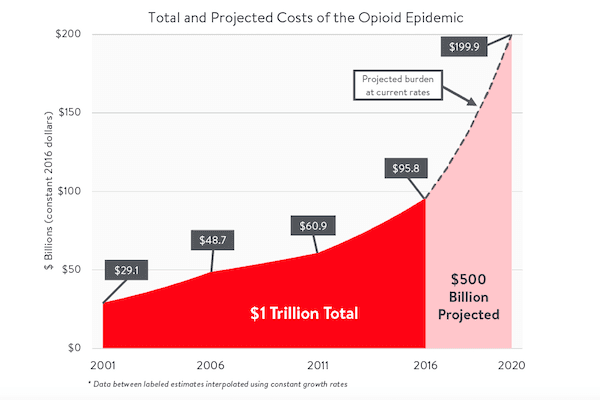
    According to the White House Council of Economic Advisers, the opioid epidemic has caused over $500 billion in economic damages across the U.S. in the year 2015 alone.

    That number likely rose in 2016, when the total number of deaths from opioid-related overdoses jumped from 33,091 to over 42,000.

    Between deaths, the costs of treating overdose cases and addiction, missed work by those affected, and crime related to illicit opioids, the crisis has been economically devastating to communities across the nation.

    Purdue Pharma and members of the Sackler family have continued to deny its alleged role in fueling the opioid epidemic, stressing that prescription opioids come with FDA warnings about addiction and overdose. This argument, however, has proved to be an ineffective deterrent. 

    View the original article at thefix.com

  • Connecticut Judge Dismisses Opioid Lawsuits Against Purdue Pharma, Others

    Connecticut Judge Dismisses Opioid Lawsuits Against Purdue Pharma, Others

    The Connecticut lawsuits are part of a nationwide effort to make pharmaceutical companies pay for a portion of the damage caused by this crisis.

    Judge Thomas Moukawsher in Connecticut ruled against 37 cities and towns within the state that brought lawsuits against pharmaceutical companies accused of fueling the opioid crisis in the U.S.

    According to the Associated Press, the judge ruled that the lawsuits were “not allowed because they were not filed as government enforcement actions authorized by state public interest laws.”

    “Their lawsuits can’t survive without proof that the people they are suing directly caused them the financial losses they seek to recoup,” Moukawsher wrote. “This puts the cities in the same position in claiming money as the brothers, sisters, friends, neighbors, and co-workers of addicts who say they have also indirectly suffered losses by the opioid crisis. That is to say—under long-established law—they have no claims at all.”

    Though this is a setback in the efforts of the plaintiffs to recoup the many billions of dollars spent to mitigate and combat the opioid crisis, appeals are already being considered.


    Source: ALTARUM

    The lawsuits in Connecticut are only a part of a nationwide effort to make pharmaceutical companies pay for a portion of the damage caused by this crisis. States, cities, counties and Native American tribal councils across the country are filing civil suits against some of the biggest drug manufacturers, claiming that misleading advertising and the alleged encouragement of physicians to over-prescribe opioids have fueled the epidemic of addiction and overdoses.

    According to Forbes, the collective action could become “the largest civil litigation settlement agreement in U.S. history.”

    The record is currently held by the settlement between 46 states and the tobacco industry—a case that some are pointing to as a precedent for the present-day opioid lawsuits. However, experts have pointed out that there are marked differences between these two cases.

    Addiction to prescription opioids is often caused by misuse, whereas there is a clear link between using tobacco products as directed and illness. This makes it easier to blame addiction, overdose and other health concerns on the opioid users themselves.

    “Individual plaintiffs who have sued pharmaceutical companies over how opioids have been marketed have rarely been successful, according to Richard Ausness, a professor at the University of Kentucky College of Law,” wrote Alana Semuels for The Atlantic in 2017. “Courts have made clear that they believe that individual victims are largely responsible for their addiction.”

    However, drug makers have been successfully sued in the past, though many of the lawsuits were settled out of court for a small portion of company profits. Purdue and others have continued to deny any allegations of deceptive marketing or other roles in the opioid crisis.

    Purdue Pharma released a statement about Judge Moukawsher’s ruling, praising him for “applying the law” and vowing to “help address this public health challenge.”

    View the original article at thefix.com