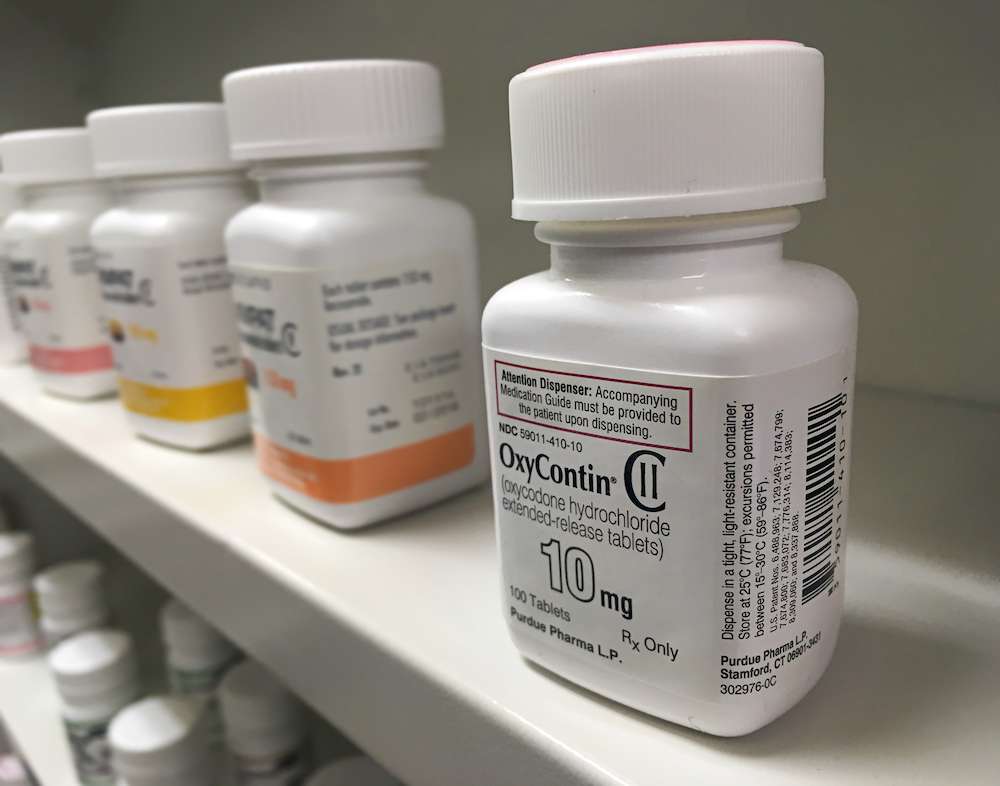
Tag: purdue pharma settlement

  • Drug Companies Want Federal Judge Removed From Opioid Cases 

    Drug Companies Want Federal Judge Removed From Opioid Cases 

    Big Pharma lawyers argue that their clients will not get a fair trial with Judge Dan Polster because of his desire for a settlement.

    Drug companies and retailers that are being sued by local governments across the nation are requesting that the judge overseeing the opioid suits in federal court step down, saying that he is too focused on reaching a settlement. 

    Lawyers for the defendants—which include Cardinal Health, Walmart and many others—filed a motion on Saturday saying that Judge Dan Polster is not impartial in the case because he has said he wants a settlement, The Guardian reported

    Turning A Blind Eye

    Polster’s “unusual level of commitment” to reaching a settlement agreement has caused him to turn “a blind eye to the law,” the lawyers said in the motion. 

    They explained, “Defendants do not bring this motion lightly. Taken as a whole and viewed objectively, the record clearly demonstrates that recusal is necessary.”

    Polster has indeed been outspoken about his desire to see a settlement in the federal cases, which combined more than 2,000 lawsuits.  

    Hopeful For Change

    Last year, Polster discussed his hopes that the trials would result in meaningful change. The defendants latched onto that comment in their motion.

    They quoted Polster as saying, “My objective is to do something meaningful to abate this crisis,” including “dramatically reducing the number of opioids that are being disseminated, manufactured and distributed… and [assuring] that we get some amount of money to the government agencies for treatment.”

    Polster has acknowledged that the trials that he is presiding over are a unique situation, and something that hasn’t been seen before in the judiciary. 

    “The judicial branch typically doesn’t fix social problems, which is why I’m somewhat uncomfortable doing this, but it seems the most human thing to do,” he said in 2018. 

    The lawyers argue that their clients will not get a fair trial with Polster at the bench.

    “The court’s deep involvement in settlement discussions requires its disqualification from any bench trial of equitable remedies. Together, these factors more than raise a reasonable question about the court’s impartiality,” they wrote. 

    The first bellwether trial in the federal opioid litigation is scheduled to start next month. However, this motion is likely to delay that beginning, said law professor Carl Tobias.

    “Polster is likely to deny the motion, which will then be appealed, delaying the start of the trial,” he said. 

    Tobias pointed out that the whole point of presiding over all of the lawsuits in one court is to facilitate settlements. 

    “The defendants are saying Polster pre-judged the outcome through his public statements and in all he’s done,” Tobias said. “But trying to move it toward settlement is what Congress intended in this kind of situation.”

    View the original article at thefix.com

  • Could The Purdue Settlement Set The Stage For A Public Pharma System?

    Could The Purdue Settlement Set The Stage For A Public Pharma System?

    “A United States public option for pharmaceutical production would address a range of problems in an industry rife with market failure.”   

    After Purdue Pharma settles its bankruptcy cases, the company will be disbanded and reformed, according to settlement plans. Rather than selling its drugs for profit, the new spin-off company will sell drugs to benefit cities and states devastated by the opioid crisis.

    Purdue will be no more, and a “public beneficiary company” will take its place. 

    Writing for The New Republic, Dana Brown and Isaiah J. Poole of The Democracy Collaborative, argue that this should be a first step in transforming the pharmaceutical industry from public to private. 

    “A United States public option for pharmaceutical production would address a range of problems in an industry rife with market failure,” Brown and Poole write.  

    The Case For Public Pharma

    Unscrupulous tactics like those undertaken by Purdue, the company behind OxyContin, and other opioid manufacturers are just the tip of the iceberg when it comes to the industry’s problems, they write. There’s the fact that some medications are too expensive for the people who need them the most (including insulin, which has been in the news for high prices). Or, the fact that companies only research drugs that they believe can generate profit. 

    “The case for a public option is simple,” the authors write. “First, publicly owned pharmaceuticals are free of the structural need to appease profit-hungry shareholders and are thus able to focus on public health priorities.”

    Other Countries Have Public Options

    Sweden, Brazil, China and India all have some sort of public pharmaceutical industry and those countries have contributed to global drug development. 

    “These examples expose the emptiness of industry arguments that public involvement in the drug industry will stifle innovation,” Poole and Brown write. In fact, with no need to spend on advertising or to direct profits to investors, a public pharmaceutical company would be better able to invest in research and thus make new innovations, they write. 

    The authors point out that controlling diabetes currently costs about $6,000 per person annually, a cost that has tripled in the past 10 years. A public pharmaceutical company could cut that cost to about $70, according to some analysis. 

    “Coupled with reforms such as a national pharmaceutical institute—which would ensure public investments in medical research can be harnessed for public benefit instead of co-opted exclusively for private profit—these public enterprises would produce both new medications and generics, and could offer them at or even below cost,” Poole and Brown write. 

    Learning From the Big Tobacco Settlement

    The authors point out that little lasting change came from the massive settlement with Big Tobacco in 1998. However, the opioid settlement could be different, if it sparked interest in public pharmaceuticals. 

    Poole and Brown conclude, “The U.S. could once and for all move beyond having to tolerate an industry that subordinates public health to shareholder greed.”

    View the original article at thefix.com

  • Purdue Reaches $10 Billion Settlement In Opioid Lawsuits

    Purdue Reaches $10 Billion Settlement In Opioid Lawsuits

    The deal does not include any admission of wrongdoing by Purdue Pharma or the Sackler family

    Purdue Pharma, the most infamous manufacturer of prescription opioid pills, has reached a multi-billion dollar settlement with thousands of state, city and county governments that are suing the maker of OxyContin for its alleged role in the opioid epidemic. 

    The deal was first reported Wednesday evening (Sept. 11). The details were not immediately made public, but The New York Times reported the basics of the settlement: Purdue will declare bankruptcy.

    What Happens To Purdue?

    A new company will be formed to sell OxyContin, and the profits from those sales will go to Purdue’s settlement payout. The Sackler family, which owns Purdue, will contribute $3 million to the settlement over seven years. In addition, Purdue will donate prescriptions, including those for addiction treatment. NBC News reported that the settlement is worth $10-12 billion overall. 

    The deal does not include any admission of wrongdoing by Purdue Pharma or the Sackler family

    According to NBC News, as of Thursday (Sept. 12), at least 20 states have rejected the deal while legal officials in 27 states are reportedly in favor of the deal, which still needs to be approved by a bankruptcy judge and the board of Purdue Pharma. 

    “We are proud to participate in the nation’s most significant step in addressing this deadly crisis,” Texas attorney general Ken Paxton said through a spokesperson. 

    Tennessee Attorney General Herbert Slatery, who earlier this week predicted that Purdue would likely file for bankruptcy, said the settlement “would secure billions of dollars nationwide to go toward addressing the devastating effects of the opioid epidemic and will result in the Sackler family divesting themselves of their business interests in the pharmaceutical industry forever.”

    Florida Attorney General Ashley Moody said that the settlement was historic and will help provide treatment. 

    “Sadly, this agreement cannot bring back those who have lost their lives to opioid abuse, but it will help Florida gain access to more life-saving resources and bolster our efforts to end this deadly epidemic,” Moody said. 

    The Opposition Calls The Settlement “An Insult”

    However, not everyone was satisfied with the settlement. At least 20 states have opted not to sign on to the deal. New York Attorney General Letitia James had one of the strongest reactions, calling the settlement “an insult, plain and simple.”

    Other states want to hold onto their right to sue the Sackler family personally. 

    “If Purdue cannot pay for the harm it inflicted, the Sacklers will,” said New Jersey Attorney General Gurbir S. Grewal. 

    Massachusetts Attorney General Maura Healey wanted to see Purdue Pharma and the Sackler family forced to admit wrongdoing. 

    “It’s critical that all the facts come out about what this company and its executives and directors did, that they apologize for the harm they caused, and that no one profits from breaking the law,” she said. 

    View the original article at thefix.com

  • Purdue Pharma Would Pay Billions In Proposed Opioid Settlement

    Purdue Pharma Would Pay Billions In Proposed Opioid Settlement

    The newly proposed deal would involve the Sackler family giving up control of Purdue, and paying at least $3 billion toward the settlement.

    Purdue Pharma may be close to reaching a settlement. The OxyContin maker—named in more than 2,000 lawsuits for fueling, and then aggravating, the opioid crisis—is seeking to resolve the lawsuits through a multibillion dollar settlement, NBC News reported.

    The company’s lawyers were in Cleveland last Tuesday (Aug. 20) to meet with the plaintiffs’ attorneys, including state attorneys general, to discuss the proposal, anonymous sources relayed to NBC.

    The company would settle for $10 billion to $12 billion, and declare bankruptcy. The deal would involve the Sackler family giving up control of Purdue, and paying at least $3 billion toward the settlement. The family has owned Purdue since 1952.

    Purdue Speaks

    “The people and communities affected by the opioid crisis need help now,” the company said in a statement to NBC. “Purdue believes a constructive global resolution is the best path forward, and the company is actively working with the state attorneys general and other plaintiffs to achieve this outcome.”

    The company is blamed for fueling the opioid crisis by “downplaying the risks of addiction to OxyContin while exaggerating its benefits.”

    The death toll of the opioid crisis has exceeded 400,000 between 1999-2017, the CDC says.

    The Sacklers

    The legacy of the wealthy Sackler family—a major donor to the arts—has been tarnished by their affiliation with OxyContin. The Sackler name has been removed from the Louvre, and major institutions including the Metropolitan Museum of Art and the Guggenheim have agreed to stop accepting gifts from the family, following anti-Sackler rallies organized by photographer Nan Goldin, who herself is in recovery from prescription opioid abuse.

    This wouldn’t be the first time Purdue had to pay for the “alleged” damage inflicted by OxyContin. In 2007, the company paid a fine of $635 million and top executives pleaded guilty in federal court to criminal charges that they duped regulators, medical providers and patients about the drug’s potential to be abused, as the New York Times reported.

    The company also agreed to pay Oklahoma $270 million in March, avoiding the trial that just concluded this month with only Johnson & Johnson as the remaining defendant. Johnson & Johnson was ordered to pay the state $572 million to offset the cost of the opioid crisis.

    View the original article at thefix.com