Tag: raising awareness

  • Chester Bennington’s Widow Aims To #ChangeDirection On Mental Health

    Chester Bennington’s Widow Aims To #ChangeDirection On Mental Health

    “Hangover” actor Ken Jeong and GnR bassist Duff McKagan are a few of the celebs taking part in the campaign to start a conversation about mental health.

    The widow of Chester Bennington is continuing the legacy of her late husband with a new social media challenge to raise mental health awareness.

    “I challenge you to do a 30-second video on why mental health is important to you,” Talinda Bennington said in a video posted on Instagram. “For me it’s very personal. And I’ve dedicated my life to change the culture surrounding mental health.”

    Even though the Week To Change Direction Challenge was issued last Monday (June 10), people have continued to post videos to add to the conversation using the hashtag #ChangeDirection.

    To kick things off, Talinda challenged Lisa Ling and Linkin Park band members Mike Shinoda, Joe Hahn and bassist Dave Phoenix Farrell to post their own 30-second videos.

    Actor Ken Jeong joined the conversation on his Instagram: “As a former physician having dealt with multiple cases of depression, bipolar disorder and schizophrenia, it’s important as a community that we all change direction, change our attitudes, evolve our attitudes towards mental health. We as a community should remind each other life doesn’t have to be perfect to be wonderful. And I challenge everyone to change direction.”

    Guns N’ Roses bassist Duff McKagan made a video as well with singer-songwriter Shooter Jennings: “This is something we can all do something about… Learn to recognize the signs of people who are suffering.”

    ABC Chief Medical Correspondent Dr. Jennifer Ashton used her platform to shed light on maternal mental health: “The reason that I am passionate about mental health awareness is because it is a leading cause of maternal mortality in this country,” she said in her video. She encouraged women’s health care providers to speak to their patients about mental health.

    Chester Bennington died by suicide in 2017. In the days prior to his death, the beloved Linkin Park vocalist—who long battled depression and substance use disorder stemming from trauma—showed no sign of what was to come, according to Talinda.

    “This was not a time where we or any of our family suspected this to happen… We thought everything was OK,” she said in June of 2018.

    Guitarist and friend Ryan Shuck said that Chester would detail his “hour-by-hour battle” with the urge to drink.

    Since her husband’s passing, Talinda Bennington has channeled her pain to help expand the conversation about mental health. She engages with people on social media, encouraging meaningful dialogue by promoting hashtags like #FuckDepression and #MakeChesterProud.

    View the original article at thefix.com

  • "Hope Stems" Campaign Spotlights How Opioids Affect The Brain Using Flowers

    "Hope Stems" Campaign Spotlights How Opioids Affect The Brain Using Flowers

    The floral exhibit coincided with the Macy’s Flower Show, and aimed to depict opioid addiction in a different light.

    While flowers are typically given on joyous occasions—births, graduations or anniversaries—florists around the nation have also found themselves preparing hundreds of thousands of bouquets for the funerals of people who have died from opioid addiction. 

    With that in mind, the addiction advocacy group Shatterproof has launched a new initiative, showing a brain made from more than 9,000 carnations, pockmarked by black poppies meant to represent the effects of opioids on the brain. 

    The exhibit, called “Hope Stems” was on display in Herald Square in New York City from Tuesday to Thursday (April 2-4). 

    The public was invited to remove a poppy from the bouquet, symbolizing the restoration that happens when someone gets treatment and is able to overcome their opioid addiction. 

    “As a father who lost his son to addiction, ‘Hope Stems’ gives me so much optimism,” Shatterproof Founder Gary Mendell, whose son died by suicide in 2011 after fighting opioid addiction, told Campaign Live. “This installation will impact how people view those suffering from addiction. It is my sincere wish that this campaign will help end the stigma and encourage those who are suffering to seek treatment. By changing how we think about addiction we can save lives.”

    The display is timed to coincide with the Macy’s Flower Show, which runs through Sunday, April 7. 

    June Laffey, who works as chief creative officer at McCann Health New York, said that the “Hope Stems” campaign is a powerful way to raise awareness and get attendees at the flower show to think about addiction and ways to provide treatment to people who need it. 

    “This campaign has the power to not only change the way people think about opioid addiction, but to save lives,” Laffey said. 

    By using the flowers to form a brain, the initiative focused on the fact that addiction is a brain disease, not simply a matter of willpower or choice. 

    “Opioid addiction is not a weakness,” Laffey said. “It is a disease that changes the brain. There’s science to prove it. With knowledge comes power. With knowledge comes compassion. With knowledge comes hope.”

    She continued, “Hope stems from reducing the stigma and speaking with compassion. So let’s all speak with one voice. The more we reduce stigma, the more people will seek treatment and the more lives will be saved.”

    After New York, the Hope Stems display will appear in Atlanta from April 22-25 (Monday through Thursday) during the Rx Drug Abuse & Heroin Summit.

    View the original article at thefix.com

  • Michigan Man In Recovery To Walk 280 Miles For A Good Cause

    Michigan Man In Recovery To Walk 280 Miles For A Good Cause

    Mike Hamp wants to show people that they don’t need to rely on substances in order to live a full life. 

    A Michigan man plans to walk 280 miles this August as a way of bringing attention to mental health and substance use disorder. 

    Fox 17 reports that Mike Hamp, the founder of nonprofit Values Not Feelings Organization, is dubbing the journey “A Walk For Thought” and plans to walk roughly 25 miles daily. He will begin in his hometown, Hastings, Michigan, and finish in St. Ignace, Michigan. 

    Hamp has personal experience with substance use disorder, as he struggled with it in high school after numerous surgeries on his shoulder. 

    “Addiction for me started back in high school, I was 16 years old when I had four shoulder surgeries and got hooked on opioids,” Hamp said, according to Wood TV 8. “It wasn’t easy you know, overdoses, almost losing my life and losing marriages and my kids. I realized what I was doing was probably going to take my life.” 

    Hamp says that over the next 16 years, dialing in on nutrition and exercise helped him overcome his struggles. And when an injury kept him from being able to go to the gym, he turned to walking. 

    “The funk, the darkness, the depression, it hit like tenfold and got so intense that I really didn’t know what to really do,” he said, according to Fox 17. “I just started walking; I had to get outside of the house.”

    “I feel more clear here, I feel like I can think, like it’s not chaos as much when I’m out here doing this,” he added.

    Hamp started his nonprofit in hopes of using his own experiences to show others that it is possible to overcome obstacles. 

    “Treating our bodies with respect mentally and physically plays a crucial role in the overall function of our being,” Hamp writes on his website. “Exercise, proper nutrition, proper life and thinking habits, positive thoughts and positive self talk… This is when we begin to find ‘Our Path.’”

    As he prepares for the walk in August, Hamp says his intention is to show people that they don’t need to rely on substances in order to live a full life. 

    “I’m going to show the people that are really battling that you can really do this without turning to that stuff without literally killing yourself as you’re trying to live,” Hamp said.

    More information on A Walk For Thought, as well as sponsorship opportunities, can be found at www.valuesnotfeelings.org

    View the original article at thefix.com

  • April is Alcohol Awareness Month

    April is Alcohol Awareness Month

    This year’s theme “Help for Today, Hope for Tomorrow” focuses on educating young people about the dangers of alcohol abuse.

    April is Alcohol Awareness Month. In 2019, the focus is on underage drinking.

    Alcohol abuse/addiction have taken a backseat to the epidemic of opioid abuse that has swept the country. However, alcohol abuse continues to increase in America.

    Alcohol Awareness Month, established in 1987, was created in part to reduce the stigma of alcoholism and to support local communities in addressing alcohol-related issues.

    A 2015 NSDUH study of young people between the ages of 12 to 17 estimated that 623,000 adolescents ages had alcohol use disorder, or AUD. (This study looked at 298,000 male and 325,000 female subjects.)

    According to the National Institute on Alcohol Abuse and Alcoholism (NIAAA), alcohol use disorder is defined as “a chronic relapsing brain disease characterized by compulsive alcohol use, loss of control over alcohol intake, and a negative emotional state when not using.”

    Signs of teen problematic drinking are similar to the signs of drug addiction, according to Project Know—including shirking of regular responsibilities (such as ditching school or suddenly getting bad grades), lack of interest in relationships, irresponsible behavior or a change in appearance such as exhaustion, weight loss or gain, or sudden lack of concern for appearance.

    Teens who have a family or personal history of addiction or mental health issues are more at risk of alcohol abuse, as are teens who are under greater stress due to socioeconomic or personal circumstance.

    The theme of Alcohol Awareness Month with its focus on youth drinking is “Changing Attitudes—It’s not a rite of passage.” This slogan seeks to change the cultural idea that heavy drinking is an important or expected part of teenage social life.

    The first weekend of April, the National Council on Alcohol and Drug Dependence (NCADD) is encouraging the public participate in Alcohol-Free Weekend. NCADD offers this weekend as a gesture of solidarity in our communities in support of alcohol-free youths, in remaining completely alcohol-free for three days.

    The Office of Disease Prevention offered these ideas as April’s action tool kit for communities:

    1. Share about April’s Alcohol Awareness month and focus on underage drinking on social media.

    2. Host a community event where families can learn about the issues around underage alcohol use and abuse.

    View the original article at thefix.com

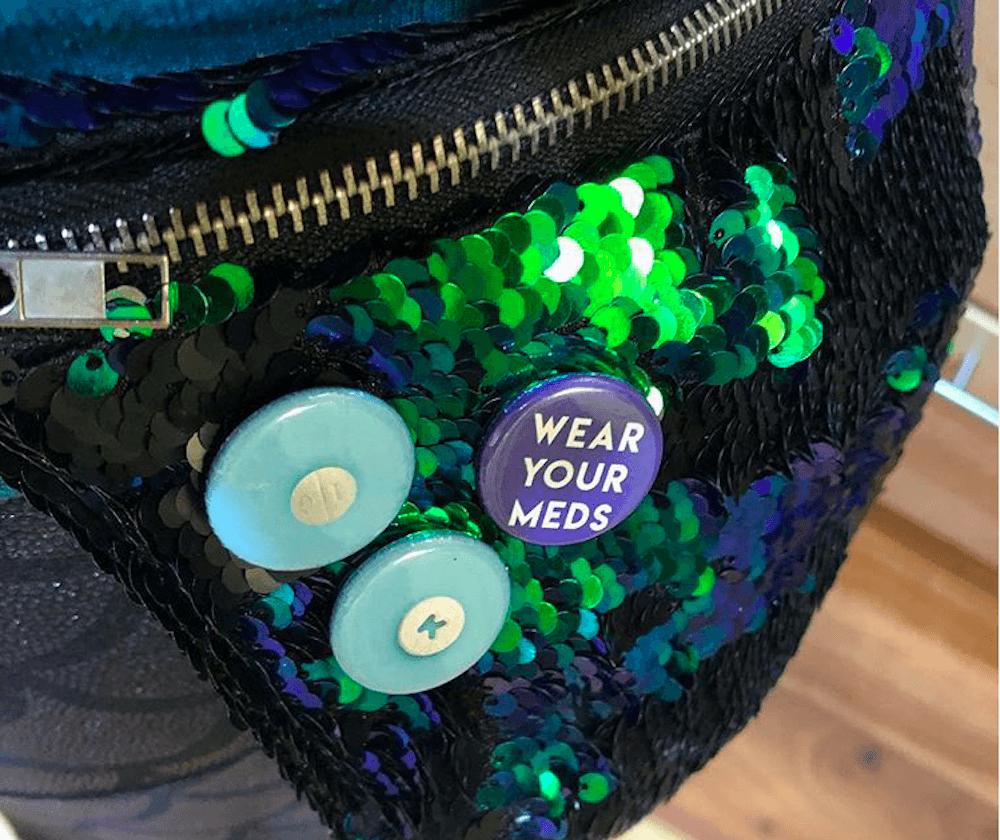
  • "Wear Your Meds" Buttons Help Fight Stigma Against Mental Health

    "Wear Your Meds" Buttons Help Fight Stigma Against Mental Health

    Creator Laura Weiss hopes her pinback buttons can spark conversations and break down the stigma surrounding mental illness.

    When Lauren Weiss took control of her mental health and began taking medication for bipolar disorder, she knew that she wanted to be an advocate for mental illness. Weiss studies advertising at Miami Ad School in New York City, so it was natural that she searched for a quick, engaging visual cue to open conversations about her condition. 

    Weiss designed pinback buttons depicting common psychiatric medications, like Xanax and lithium. Another button proclaims “Wear Your Meds,” summing up the mission of her project. Weiss told Fast Company that the buttons, which started as a class project, are a way to spark a conversation around mental health. 

    “[It’s a] symbol that represents the story you want to tell, and a gateway into your personal story,” she said. “I know that not everybody wants to be an activist about mental health. With something like the buttons, I think it’s a little more accessible for people who maybe are open to sharing their story, but don’t want to be shouting about it on the streets. They can have this button, and it’s an easy way for people to see it and maybe ask about it.”

    Weiss said that she doesn’t expect everyone to be comfortable broadcasting what medications they are on. Some people have said to her that they are afraid they would be fired or otherwise discriminated against if they were open about their mental health condition and the medications that they are taking. 

    However, she said the buttons allow people who are interested in sharing their story to help break down stigma. 

    “People like me who are talking about this from a position of privilege, in a community where we can feel safe talking about it, are the people who ultimately have to do the heavy lifting and have to do the work around this in order for that stigma to start to be lifted for people in communities that don’t feel comfortable talking about it right now,” she said. 

    Weiss is now selling the buttons online, with proceeds to benefit the National Alliance on Mental Illness. 

    “When you ‘wear your heart on your sleeve,’ it means you’re being honest, open, and vulnerable. When you wear your meds on your sleeve, you’re doing the same,” her website reads. 

    Weiss’ buttons depict 14 different pills commonly used for treating mental health conditions: Zoloft, Lithium, Adderall, Ativan, Klonopin, Desyrel, Lexapro, Lamictal, Effexor, Cymbalta, Celexa, Wellbutrin, Xanax, and Prozac.

    View the original article at thefix.com

  • "192aDay" Campaign Spotlights Heartbreaking Toll Of Addiction

    "192aDay" Campaign Spotlights Heartbreaking Toll Of Addiction

    The campaign aims to spread awareness about addiction and offer resources for recovery and treatment options.

    Each day, 192 people die from a drug overdose in the United States.

    “That’s like a plane crashing each day, day after day,” write the leaders of #192aday, an initiative from the Addiction Policy Forum, an organization that aims to bring awareness to drug addiction and fight for better treatment.

    The friends and relatives of people killed by addiction penned an open letter, highlighting the things they wish they had known. “We hope that this knowledge, painfully earned, can help you and your family,” they write.

    It’s important that family members and friends familiarize themselves with the signs of addiction. Although they can be hard to spot, follow your intuition if you feel there is something more going on, the family members write.

    “We now know that we should’ve been more proactive in the very beginning,” said Barbara. Her son died of a fentanyl overdose at 46, but a teacher had first expressed concern decades earlier, when he was in 8th grade.

    Even experimenting with seemingly harmless substances like cigarettes or marijuana can be cause for concern, the family members say.

    And once you realize your loved one is abusing drugs, don’t wait until they hit rock bottom to offer them help. “Now with fentanyl, rock bottom was an overdose, a fatal overdose,” said Justin, who lost her son Aaron to an overdose at 20.

    When your loved one is ready for help, realize that recovery takes time. “I wish I would’ve known that recovery is not about 3 months, 6 months, a year in rehab. It’s a lifetime. When they release someone from rehab, it’s not the end. It’s the very beginning,” said Karla, whose daughter Alicia overdosed at 28.

    Finding quality treatment can be lifesaving, so talk with other families and organizations to identify the best treatment option for your loved one. “Resources are much easier to find these days because people are finally talking about the disease,” said Katie, whose brother died of a drug overdose.

    Family members should be open to all courses of treatment, and help their loved one connect with the type of treatment that is most likely to help him or her succeed. “I’d thought medication-assisted treatment (MAT) was ludicrous, just trading one addiction for another, but I was wrong,” Katie said. “Since losing my brother, I often wonder if MAT would’ve helped Zachary succeed. When someone has cancer, we don’t choose between chemo and radiation—we layer treatments.”

    Even failures can be important for recovery, or serve as warning signs for the family. Aimee D’Arpino found out after her son died that he had received Narcan at least seven times in prior overdoses. “That is seven missed opportunities to intervene and save our son’s life,” she said.

    Although it’s difficult to talk about, family members need to be open about the connection between substance use and suicide, said Jim, whose son Scott died by suicide. “His relapse led to his suicide,” Jim said.

    Lastly, no matter how your loved one is doing in managing their recovery, it’s important that family members seek out their own support and resources.

    “It feels like you’re drowning when you’re worried about your kid and desperately trying to find help,” said Doug Griffin, whose daughter Courtney died from an overdose. “And the stigma around this disease can mean backlash and judgment from some of the people closest to you, but help does exist. Reach out. There are so many people right next door who are dealing with addiction too and so much support we can give each other.”

    View the original article at thefix.com

  • Alaska Celebrates Sobriety Awareness Month

    Alaska Celebrates Sobriety Awareness Month

    The state will play host to a variety of sobriety-inspired events, wrapping up with a “nationally touring sober pop-up event” on March 30.

    This March, more Alaskans than ever will celebrate Sobriety Awareness Month. This tradition began with the Alaska Native Sobriety Movement, which was created in 1989 by the Alaska Federation of Natives.

    In 1995, the tradition of both the state legislature and governor officially dedicating March Sobriety Awareness Month began. Last year, Alaska made it official by signing the tradition into law.

    The sobriety movement has roots in fighting addiction, and the movement is expanding and attracting more people than ever. This includes people who don’t necessarily have addiction disorders but are concerned about the overall health issues associated with regular drug and alcohol consumption, and are tired of what people are calling a stigma against sobriety.

    “Alcohol is so present in our society, whether we’re listening to music or seeing ads in magazines, whether we’re celebrating or mourning, if we want to relax or get pumped up, alcohol is everywhere,” Recovery Alaska Executive Director Tiffany Hall told Anchorage Press. “Hopefully this month will encourage people to start thinking about the presence of alcohol in their lives and getting creative with other ways to celebrate or relax. There’s a misperception that sobriety is boring or anti-social, but it couldn’t be further from the truth.”

    The growing sobriety movement is evident in how many restaurants and bars are offering more alcohol-free mixed drinks. Sober or “sans bar” pop-up events are also becoming more common. The idea is to provide people with a night of food, socializing, music, dancing, and more—without the pressure to drink.

    The trend appears to be appealing quite a bit to millennials.

    “Sober dance parties like DayBreaker are becoming the new rage, inviting guests to ‘DOSE’ on all-natural chemicals like Dopamine, Oxytocin, Serotonin, and Endorphins before heading out for a work day,” wrote Jules Schroeder for Forbes. “For millennials today, it’s become somewhat of a faux pas to drink. While our parents’ generation considered booze cool, we think it the opposite. Instead, connection, authenticity, and mindfulness are what’s catching on, and as a result, producing many benefits.”

    Back in Alaska, there will be “Dry Weekend Challenges” and new featured alcohol-free drinks at bars and restaurants across the state, ending in a “nationally touring sober pop-up event” on March 30 with live music from Alaskan musician Emma Hill and Athabaskan and Inupiaq singer-songwriter Quinn C.

    View the original article at thefix.com

  • Women Launch "Joy Tour" To Raise Mental Health Awareness

    Women Launch "Joy Tour" To Raise Mental Health Awareness

    Two women are on a nationwide mission to spread awareness about suicide prevention. 

    Two women have given up their jobs and are traveling to all 50 states on what they call a “Joy Tour.” 

    More specifically, the women—Shontice McKenzie and Cedrica Mitchell—are doing the tour in hopes of raising awareness around the increase in suicide in the United States. 

    According to AL.com, the two have made one-month long stops in Virginia, North Carolina, South Carolina, Georgia, Florida and now Alabama for the month of February.

    The suicide rate in Alabama has been higher than the national average for the past 29 years. The rate there is 16.2 per 100,000, in comparison to the country’s average of 13.9.

    According to the Alabama Department of Public Health, suicide is the second-leading cause of death for those ages 10 to 24. 

    During their tour, McKenzie and Mitchell are hoping to break down the stigma around mental health and increase access to outlets like yoga, meditation, exercise and the arts as a whole.

    “We have met so many families who are still in denial about a family member who completed the act of suicide because they don’t want the backlash from the public,” McKenzie said. “They should have received more support around the topic. Then we can prevent suicides. That’s what the Joy Tour is about.”

    The Joy Tour was sparked as part of McKenzie’s nonprofit H.U.M.A.N.I.T.Y 360, INC. The women conclude their month-long state visits with what they call a “Joy Jam.”

    The Joy Jam is a free event that offers food, connections to mental health resources, and the chance to be educated about different holistic approaches to mental health. 

    While their visit to each state has varied, McKenzie says the one thing that has remained steady is the fact that people struggle to access appropriate mental health resources. 

    “Most of these people in these communities are contained in their environment. So, they rarely go outside of their environment,” McKenzie tells AL.com. “I don’t know many mental health resources that are coming to them by going inside of these places. So, we are coming to them.”

    After leaving Alabama, McKenzie and Mitchell will head to Tennessee in their 2002 Chevy Trailblazer, which boasts more than 246,000 miles. They hope to eventually replace it with an RV. As of now, the two women plan to conclude the Joy Tour in 2023 in the state of Hawaii. 

    View the original article at thefix.com

  • New York Launches Campaign To Promote Addiction Treatment Resources

    New York Launches Campaign To Promote Addiction Treatment Resources

    The “Know Your Facts” campaign will promote information about addiction treatment resources, insurance coverage and support systems.

    The New York State Office of Alcoholism and Substance Abuse Services (OASAS) announced Monday that it is launching a new campaign to educate the public on addiction and treatment resources in the state.

    The PSA campaign, called “Know the Facts,” is designed to help direct people to addiction services and help, according to a press release by New York Governor Andrew Cuomo and OASAS Commissioner Arlene González-Sánchez.

    The recent press around the opioid crisis in the U.S. has spurred multiple information campaigns about addiction across the country. As the public learns more about the nature of addiction and that there’s no shame in seeking treatment, New York officials have found that there is a lack of awareness about where and how individuals can access that treatment.

    “The key is making sure people are aware of the resources available and that they have access to them,” said New York State Heroin and Opioid Abuse Task Force co-chair and Lt. Gov. Kathy Hochul. “Lives can be saved and returned to normal with help and support. With this campaign, we hope to encourage people to start their journey on the road to recovery.”

    According to the New York State Department of Health, 12% of residents 12 or older “experience a substance use disorder (addiction or abuse) annually” and over 1.9 million individuals living in the state have a “substance abuse problem.”

    The new campaign will run in both English and Spanish throughout the state until March 25. It will promote information about the availability of addiction treatment in New York, insurance coverage and payment, and support systems and resources in place for those who are already in recovery.

    According to “Know the Facts,” there are 23 million people in recovery from addiction disorders in the U.S.

    The OASAS website includes a database of addiction treatment centers in the state of New York that individuals can search through to find an appropriate program.

    The NYS OASAS Treatment Availability Dashboard returns results for 555 programs for adults and 244 programs for adolescents when searching within 100 miles of New York. There are also databases for gambling addiction treatment, disability services, and mental health resources, among many other related tools.

    “The challenges New Yorkers statewide face in trying to break the grip of addiction are immense, yet they are too often needlessly compromised by stigma and misinformation,” says chairwoman of the Assembly Committee on Alcoholism and Drug Abuse, Linda B. Rosenthal. “While New York desperately needs to continue expanding its harm reduction infrastructure, it is vital we take steps to better illuminate and promote the supports already in place.”

    The press release also recommends CombatAddiction.ny.gov for addiction-related resources and Talk2Prevent for information on how to best discuss addiction and drug use with young people.

    View the original article at thefix.com

  • Parents Of Opioid Epidemic Named Citizens Of The Year

    Parents Of Opioid Epidemic Named Citizens Of The Year

    A New Hampshire paper has named the “parents of the addiction crisis” as the citizens of the year for 2018.

    In New Hampshire last year, 437 people died of drug overdoses, a significant number in the small state. Many of them were young adults who left behind parents who were unable to save them, despite their best intentions.

    Now, a New Hampshire paper has named the “parents of the addiction crisis” as the citizens of the year for 2018.

    “The selection honors parents who have lost children to overdoses — and others whose loved ones have found recovery — but who are striving to help other families find hope and healing,” Shawne K. Wickham wrote in a piece for The New Hampshire Union Leader explaining the selection. “Most do that work quietly, out of public view. They run support groups and volunteer at recovery centers. They raise their grandchildren, postponing retirement in favor of parenting a second time around. Others have shared their stories publicly, reaching out in hopes of sparing other families their grief.”

    After Susan Messinger’s son died of a fentanyl overdose in 2014, Messinger and her husband John (who passed away suddenly last fall) threw themselves into advocacy and awareness in hopes that other parents would never need to experience a loss like theirs.

    “It may look like we’re OK; you see us in the grocery store, Walmart, wherever. We’re there, we’re putting one foot in front of the other; we may have a smile on our face that day or we may look sad,” Messinger said. “But our heart is broken inside and it’s never, ever, ever going to be together again.”

    Jim and Anne Marie Zanfagna lost their daughter to an opioid overdose in the fall. Anne Marie has since painted 180 pictures of people who have died from drug overdoses.

    She calls the series “Angels of Addictions.” It has now been displayed around the state and led the Zanfagnas to found a nonprofit by the same name to raise awareness and cut stigma. They want to encourage other people to be open about addiction. 

    “Speak about this,” said Jim Zanfagna. “Let people know what’s going on. Maybe we can save some lives.”

    Charles “Chucky” Rosa has been speaking out since his two sons died of drug overdoses more than 10 years ago. Recently he has seen more and more parents doing the same. 

    “I used to be the only member of the club that nobody wants to be part of,” he said. “Now there’s so many people that have lost children.”

    Senator Jeanne Shaheen (D-NH) said that New Hampshire parents have shown resiliency in the face of crisis.

    “So many families have courageously shared their experience of losing a loved one, which has been instrumental in destigmatizing substance use disorders and raising awareness of the magnitude of this crisis,” she said. “I deeply appreciate their advocacy and will continue to work with them to end this scourge on our state and our country.”

    View the original article at thefix.com