ARTICLE SUMMARY:Horses can help us develop emotional congruence, good boundaries, responses rather than reaction, perspective, and instinct. More on how to apply this to recovery here.
When I started riding horses, I was 41, going on 42 years old and had never been near an equine in my life. The closest I came was standing near to the carriage horses that congregated on Central Park South, daring a pat now and then until their drivers chivvied me off as it was clear I was not a potential client.
I took up the sport due to my burgeoning codependency recovery: having left my marriage to a substance abuser, I decided to do something for myself. Never mind that it seemed as precarious an undertaking as trying to ‘make’ someone clean and sober; I took a notion to do it and unexpectedly found a hobby that helped me get healthy in mind, body and spirit.
[banner variant=”article-1″]
A World of Healing
I soon found that many of the behaviors that I employed on a daily basis were going to get me into serious trouble with the animals; the equestrian lifestyle, in many ways, is antithetical to the codependent lifestyle, or indeed any addiction lifestyle.
For example, in The Tao of Equus, Linda Kohanov speaks of ‘emotional congruence’, of being in alignment with your mount, a state which can only come into being when the rider is in line with herself. In my case, being congruent meant:
Not lying.
Not fudging.
Not making up stories about the way things should have been, could have been, or ought to have been if only someone in my life hadn’t abused substances.
5 Ways Horses Help With Addiction
The more time I spent around horses, the more I realized that I was not only learning how to ride, I was also learning how to be the sort of person I wanted to be: clear, calm, a person who was becoming emotionally stronger as well as physically.
I guessed my improvement had to be down to the horses, because that was the only new thing in my life, but surely that was impossible?
[banner variant=”article-2″]
It is completely possible, and there’s a whole world of healing that employs horses as therapeutic partners, covering client bases from children struggling with autism and ADD, to people of all ages with learning and physical challenges. It’s a fascinating field that’s growing by leaps and bounds, but how does being around a horse help us with our issues?
Here are five ways that horses can become a healing touchstone for addicts in recovery. And don’t worry: you don’t have to ride the horse to reap the rewards.
[banner variant=”sidebar-1″]
#1 Body Language
To refer to Kohanov’s example of congruence, you can’t fake anything around a horse.
You may think you’re covering up your feelings, but a horse can spot your true mood a mile away.
[banner variant=”sidebar-3″]
As herd animals, their safety is inextricably linked with being in harmony with their herd mates. Should a predator approach, it is vital the herd be able to move as one in order to protect the group. They achieve homeostasis as a form of protection, and extends to the humans who would interact with them.
Philippe D’Helft, a practitioner with EAGALA, Equine Assisted Growth and Learning Association, explains. “Horses are hyper vigilant and have constant awareness of each other and their place in the herd, and they apply the same to us,” he says. “They are constantly watching our body language, our breathing, the way we move and then they mirror that. And then depending on the way we behave, they react a certain way.”
A 2017 study via the University of Sussex involved 30 horses and examined the animals’ reactions to human body language. Humans who approached in a non-threatening, submissive manner, with arms and legs held close to the body and in a slight slouch drew the horse towards them; those who rocked up with chests puffed out and arms in an aggressive posture such as hands on hips or elbows out were avoided by the animals.
Horses are well able to pick up much subtler clues, and will mirror back to you what’s going on inside, even if you think you’ve got your outside sorted. You’re either a potential herd member, or you’re threat.
#2 Good Boundaries
Failure to set good boundaries when working with horses is dangerous, to both human and animal. They are much bigger and stronger than we are and it is paramount to ensure the horse respects you and your space. Get your foot stepped on one time by a 1200 pound creature, and you learn fast.
However, there’s a difference between being aggressive and assertive.
[banner variant=”article-5″]
As shown above, aggressiveness sets you up in the horse’s mind as a predator and they will do everything in their power to remove themselves from your presence. If you are assertive, you set yourself up as a leader and this also dovetails nicely with the herd mentality. In the interests of self-preservation, a horse is always happy enough to defer to a stronger creature.
If you can be that strong for a horse, you can be that strong for yourself.
#3 Response, Not Reaction
Quite a lot of horseback riding and working with horses on the ground is repetitive. You do the same things over and over, and yet due to variable conditions — weather, your health, the horse’s health, the instructors mood, your mood, the horse’s mood — little things can have great impact.
In the past, changes outside of my control used to send me into a tailspin. I’d react in the snap of a finger, and start fixing things before I knew whether they were actually broken or not, or most importantly, whether it was my business to do so.
Horses are sentient beings and they are always reacting to their environment. In order to stay safe around them, we must learn to respond to their reactions; that is, we begin to learn to read a situation and make conscious decisions how to behave.
Because many of our tasks around the horse, from grooming to show jumping, require a set process, it allows us to become more aware of ourselves in the situation and gives us the opportunity to build our own lexicon of responses.
We become able to assess, with clarity and calm, what the best solution in a given situation is and to put it into gentle action.
This was a real watershed for me in my own recovery: I began to see that I had choices, that I was able to be clearheaded and to make decisions based on evidence, and not old coping mechanisms or distorted feelings.
#4 Perspective
EAGALA specializes in training psychology and horse professionals to work as teams, in order to apply techniques to help all sorts of populations, including people in addiction recovery.
Sometimes when we’re deep in our challenges, we can’t see the wood for the trees – or the feed buckets for the traffic cones.
D’Helf cites an example in which a client was asked to use simple props – that feed bucket, those traffic cones, along with rings, lightweight poles and mounting blocks – and build areas in a riding arena that symbolize certain aspects of their lives. The horse is then set at liberty in the arena, and the instructor and the client pay attention to where the horse goes… or doesn’t.
“We’d say that we noticed that the horses went with them in other areas that they’ve built, and were happy to share those spaces with them, except for one, and the client will say, ‘Well, it’s generally not a great place to be, nobody wants to go there with me,’” he explains. “We’d ask what the space represented and the answer was ‘The bookies’. The fact that they see it for themselves is very powerful.”
#5 Trusting Your Instincts
As a codependent, I never trusted myself, even the evidence of my own eyes and experience.
Horses have helped me recover and build upon my ability to believe that I can trust myself to know what’s correct, what I have still to learn and work on.
I began to know, even as my butt hit the saddle, how I was going to get on with a horse. I began to learn how to be as gentle with myself as I was with a horse. I learned when to say ‘no’ (to a horse that was too frisky for me), and when to say ‘yes’ (even though I was a tiny bit nervous.) I learned that I would always be learning, which resulted in humility, a cornerstone of 12-step recovery. Humbled before the horse, I paradoxically became stronger in myself, and continue to grow and heal every day I am around them.
Your Questions
Do you have any questions for Susan? Perhaps you’d like to share an experience about your work with horses? Please leave your questions in the comments section at the end. We try to respond to all real life comments with a personal and prompt reply.
—
About the Author: Susan E Conley is the author of Many Brave Fools: A Story of Addiction, Dysfunction, Codependency… and Horses, available now from www.horseandriderbooks.com. Follow Susan on Twitter and Instagram @manybravefools.
ARTICLE OVERVIEW: This article reviews the benefits of exercise during addiction recovery….to give you some extra motivation to get your heart pumping!
Addiction recovery is all about restoring balance to the body. Through therapy, training, practice and support, people suffering from addiction can overcome their dependence on a substance or behavior, and find healthier ways to live.
Most accounts of addiction recovery tend to focus on mental aspects of recovery – and with good reason, as the mind is central to the process of personal growth and improvement. But the mind is also heavily influenced by the rest of the body, since changes in activity alter the body’s production of chemicals that help shape mood and behavior.
Diet, sleep patterns, and a person’s immediate environment can all greatly affect the success or failure of an addiction recovery effort.
But exercise is arguably as important as any of these factors, for reasons we list below. The main principle is this: When we ignore any of the three components of being – mind, body, or spirit – we are cutting off our lifeline to wellness.
Why Exercise?
So why do treatment centers or aftercare programs focus on exercise in the first place? Following are some of the reasons why recovery programs that include an exercise component were found by researchers to be more effective than programs that do not incorporate exercise.
First, endorphins moderate brain chemistry. The brain is hard wired to experience and repeat pleasure. But when we use drugs and alcohol, this natural system gets tweaked. Exercise helps us establish balance again.
Second, exercise offers us better overall health and energy levels. Just think about how you feel after a vigorous 30 minute walk. Now, compare that to 30 minutes in front of the T.V. Hands down, circulating blood and oxygenizing the cardiovascular system rewards us with energy…and wellness.
Finally, exercise can be a part of structured daily activities. When we use drugs and alcohol, we throw off rhythm cycles of sleeping and eating. Exercise can help us get back into these rhythms. When we set a regular daily or weekly exercise regimen, we settle into routine. And routine is good!
Benefits of Exercising in Recovery
If you or a loved one are entering a period of addiction recovery, consider the following advantages of exercise as you plan out your effort:
1. It puts you in a good mood.
Exercise releases endorphins, which creates feelings of happiness and activates the brain’s reward system. When you are in a better mood, you will feel more motivated to continue the addiction recovery process. A bonus effect is that the body will find it easier to say goodbye to the addictive substance or behavior, because it is getting the chemicals it needs from a new source.
2. It gives you energy.
Exercise wakes up your muscles and gets the blood pumping, sending more oxygen throughout your body. This heightened body state allows you to be more vigilant in fighting off urges, and helps give you the endurance needed to succeed in the long term.
3. It gets the stress out.
Even as exercise gives you new and positive energy, it also lets you release the built-up energy that comes from stress, anxiety, or other negative feelings. By cleansing your body of these negative forces, you will find yourself more free – and ready to focus your full attention on the challenge of recovery.
4. It gives you a new hobby.
People who are facing addiction issues should remain active; otherwise, they will need to spend more time thinking about (and fighting) their addictive impulses. By making exercise a regular part of your daily schedule, you can train your body to settle into a newer and more healthy routine.
5. It helps you sleep.
By using up your spare muscle energy during the day, exercise lets your body get ready for a full rest at night. A healthy sleep cycle is important for your body as it works to stay internally balanced.
What Kinds of Exercise?
Aerobics, outdoor activities, and yoga have been singled out as particularly effective types of exercisefor people recovering from addiction. Aerobic exercise helps improve overall health, while yoga incorporates a meditative practice that enhances personal focus and reduces negative thoughts. By spending time outdoors, individuals can reconnect with nature and also boost their body’s production of vitamin D.
These recommendations match well with the experiences of addiction recovery experts at rehab centers around the world, many of which are adding an exercise component to their recovery programs. We spoke with Tony Tan, Clinical Director at The Dawn, a rehab in Thailand, for his take on the subject. He told us:
“When a person is trying to overcome addiction, the mind and body crave the substance that was producing endorphins and dopamine in the brain and creating the feeling of being “high”. Add to this is the stress of daily life, and the cravings can reach unbearable levels.
Vigorous exercise can also release endorphins, causing the client to feel a “runner’s high” — the same sensation of euphoria that accompanies a chemical high. Although it may be less intense than what the client used to experience with drugs or alcohol, the effects can be pleasurable both mentally and physically.
In fact, our experience of treating clients with substance abuse show that exercise can lead to a sense of accomplishment and increased confidence in staying sober. We have seen real success in their ability to maintain a strong recovery after treatment.”
As with addiction therapy techniques, different exercises can be more effective with some people than with others. Some clients are more suited to lower-intensity exercises like walking, yoga and Pilates, while others benefit from strenuous exercises like:
Core strength building
Hiking
Long distance cycling
Rafting
Rock climbing
Group exercise within natural settings can be a particularly effective way to foster unity during treatment. The exercise itself is a great help, but these activities also have the additional benefit of giving recovering addicts a feeling of family-like support as they participate, as well as exposing them to situations that require collaboration and peer support.
Finding Peace through a Well-Rounded Recovery Process
An ideal recovery process should include high-quality therapy that focuses on the body as well as the mind. A growing number of rehab centers are following this holistic model – including The Dawn, whose program includes advanced treatment techniques as well as a complementary program of physical healing and exercise.This combined physical and mental approach to recovery allows patients to have a rehab experience that is as enjoyable and revitalizing as it is effective.
Your Questions
Have questions about exercising?
Please leave us your questions – or personal experience – in the comments section below. We try to respond to all real life questions personally.
“I’m determined to stay sober and to help someone. Every bad experience in your life can turn into an opportunity, and this is, like, a golden opportunity,” the man said.
Twenty-one-year-old Daniel Henderson was out enjoying a spring hike in Utah last March when he took an ill-fated step.
“The trail just happened to be on the side of a cliff,” Henderson told KSL.com. “I wasn’t doing anything stupid. I just stepped on a rock and the ground gave out because it was thawing.”
Henderson went careening more than 200 feet down the cliff before landing unconscious in a stream. A helicopter rescue crew took him to the hospital where he was in critical condition. He spent the next two months in the hospital, including more than three weeks in a medically-induced coma. He broke seven ribs, his wrist and his shoulder, fractured his spine, and had a traumatic brain injury.
Still, he said that the nine-month recovery from the fall has not been as difficult as getting sober.
“Addiction was honestly harder than falling 200 feet off a cliff,” Henderson said. “I’m determined to stay sober and to help someone. Every bad experience in your life can turn into an opportunity, and this is, like, a golden opportunity.”
This March, nearly a year after his accident, Henderson will celebrate four years of sobriety. Despite his challenges during this year, he has not had any relapse issues, he said.
Henderson said that he was an alcoholic at 16 after taking his first drink at 13.
“I had a really bad alcohol problem and I was homeless, sleeping under a bridge in Covington, which is across the Ohio River from Cincinnati,” he said. “I was in and out of psych units, jail. I was miserable. Nobody wanted anything to do with me, and I didn’t think there was a way to get out of it.”
However, a rehab in California helped him realize that recovery was possible.
“That finally helped me get my life together,” he said. “They said that if you just put action into this and do what your therapist is saying and take our advice, things will get better.”
After treatment he began working in Utah at Wasatch Crest treatment center. He said that his employer supported him through mental health challenges that arose during his recovery.
“They set me up for success by sending me out to Utah to treatment and, not only that, they stayed with me through it,” he said. “I could come down there and volunteer and run book studies or shovel snow and earn like $20 — stuff like that, and they were nothing but nice to me.”
Now, Henderson is learning from his sobriety to help inform his recovery from the fall.
“I couldn’t change what happened, but I could change the outcome,” he said. “So I decided to change the outcome.”
There is great news for recovering addicts: A holly jolly holiday is still possible, even while you’re recovering from an addiction. Although you may experience some triggers such as being alone during the holidays, dealing with tenuous relationships, and fending off constant offers of alcoholic drinks, you can stay sober this season with the help of these tips and tricks.
Here are some great ways to stay sober and enjoy the holidays.
1. Make A Plan Before Starting The Day.
As sure as wreaths and lights will be hung this season, a recovering addict needs to wake up each day with a plan to remain sober. Before even stepping foot out of bed, you should evaluate the situations you are likely to encounter and then rank them in order of risk. Of course, the goal this season should be to avoid high risk scenarios as much as possible. But some situations are simply unavoidable.
For example, maybe you need to attend a holiday work party to impress your boss and eventually receive a promotion. While at the party, you may be tempted to consume an alcoholic beverage with your co-workers. If you must attend a high-risk event, make sure that you drive yourself so that you can leave whenever you want. There’s nothing worse than being forced to stay in a situation where people are partaking in drugs and alcohol for an extended period of time.
Eat a healthy snack or meal at least once every three hours.
2. Maintain A Healthy Diet
All of the delicious holiday food may be tempting, but now is not the time to push your healthy habits to the side. When you eat an unimaginable amount of unhealthy foods, your body will not be feeling the greatest. To feel better, you may want to drink or use. Even though those sugar cookies and specialty pies may be hard to resist, the best way to avoid this pitfall is by maintaining a balanced diet…as much as possible.
While you shouldn’t eat too much this holiday season, you should also make sure that you are eating enough. If you don’t get enough food in your system, you are prone to low blood sugar levels. A low blood sugar can make you feel irritable and anxious, and you might want to turn to alcohol or drugs to reduce these unpleasant symptoms.
The best way to ensure that your blood sugar never gets too low is to eat a healthy snack or meal at least every three hours. Make sure that you take extra precautions if you are a recovering addict and a diabetic.
Meditation takes just a few minutes per day.
3. Practice Stress-Relieving Activities
There is no doubt that the holiday season is one of the most stressful times of the year, but you don’t have to let the stress get to you. Instead of coping with alcohol or illegal substances, engage in some self-soothing strategies like meditation and breathing exercises to clear your mind.
The great thing about meditation is that anyone can practice this activity. Even if you meditate and breathe deeply for a few minutes each day, you will be able to restore calm and peace in your life. As you practice meditation and deep breathing, make sure that you keep reminding yourself that you cannot stop at just one drink so that you can stay on the path to sobriety.
Another way to reduce stress is to engage in a regular exercise routine. Due to the well-known fact that exercise stimulates the production of feel good neurotransmitters called endorphins, you’ll start feeling better in no time. Not only can a regular work-out routine reduce stress, the activity can also improve sleep, combat depression, reduce anxiety, and boost self-confidence. As you experience all of these great effects of exercise, you’ll be well on you way to having a great and sober holiday season.
Practice your refusal lines.
4. Bring Support To Holiday Parties
The holidays wouldn’t be as much fun without parties and get-togethers. If you plan to attend a holiday event, just make sure that you don’t show up alone. A friend who does not drink alcohol or use substances can definitely help you stay on track at social functions. While everyone is enjoying drinks at the bar, your loyal friend can make you feel comfortable by keeping you engaged in conversation and drinking sparkling fruit juice with you. When both of you guys are drinking non-alcoholic beverages, you are less likely to feel tempted to consume something a little stronger.
If someone does offer you a drink at a gathering, you need to know exactly what to say to avoid being persuaded to join the fun. Instead of fumbling over your words when offered a drink, know the type of non-alcoholic beverage you would like before you attend the social function. That way you can quickly and politely decline alcoholic drinks without being forced to expand upon your decision.
Along with bringing support to the party, you can also take your own beverages to fend off those offers of alcoholic drinks. Many New Year’s parties only serve alcoholic drinks, so you’ll want to consider this option if you plan to attend one. Whether it’s sparkling water, hot chocolate, or red bull, consider bringing a beverage for the host and one for yourself.
5. Stay Connected To Positive People
Speaking of support from friends, you should also seek accountability from your buddies in your support group. Throughout the holiday season, consider attending some extra meetings to stay connected to positive people. In order to remain sober this time of the year, the goal should be to stay close to supportive friends and family.
Staying Sober Starts With A Decision
As you embrace the holiday season, make sure that you remember the reasons why you are on a recovery journey. If you keep these good thoughts in mind during this time of year, staying sober is much easier even when temptation seems to be everywhere. Although there are a lot of people seemingly having fun with drugs and alcohol this holiday season, you don’t have to be a part of the statistic.
And now we’d like to hear from you.
Please leave your comments or questions in the section at the end. We try to respond to all real life questions with a personal reply.
My sobriety cost too much; I have always believed this and now, after 15 consecutive years, I am sure that I always will believe this.
It’s eight o’clock in the morning and I am sitting at the desk in my office. I’m not at work officially yet, won’t be for another hour or so. Then the race will start. Kara had asked me if I wanted to go to a meeting this morning, to pick up my 15 year coin. I didn’t.
She said, “The day can look however you want. I have a babysitter, so if you want to go out after work and celebrate, then we can do that…or nothing.”
I said that I thought that this year I just wanted it to be a day, just to be a day like any other day. Sometimes I really want the celebration, but this year, this is what I wanted to do. I wanted to come in here and sit and think and spend some time alone. So, I woke up early, my daughter’s warm, tiny body next to me through the night sleeping heavily after a late evening of trick-or-treating excitement, costumes, candy, and other children running wildly through the streets. Kara, still exhausted, is next to her, a new puppy sleeping soundly at her shoulder. There is a cat at her feet curled up contentedly as all cats sleep. Last night we went to bed laughing about this — the animals, our child, about the busy place that our bed has become. I pointed out that nine years ago this would have been an absolute dream come true.
Kara said, “Nine years ago this couldn’t have even been imagined!” and we laughed together at our own amazement.
Today is the 15th anniversary of my sobriety. It is a date that is perpetually entwined with gratitude and sorrow. This is a date that I will always celebrate and mourn. My sobriety cost too much; I have always believed this and now, after 15 consecutive years, I am sure that I always will believe this.
Sobriety always comes at a cost. I’ve been around enough 12-step rooms and other sober support communities to know this.
It is veritably impossible to hear a person’s recovery story without being very often stunned and amazed by the levels of grief and despair that their recovery has cost. The cost of my own sobriety was lives. I still shake my head 15 years later even as I write those words. It just doesn’t seem possible still. I can just never make it better. Not ever.
I am Sysiphus, eternally condemned to pushing a boulder to the top of this mountain.
But it is also great, which is an odd dissonance. It’s a perpetual mourning, but also an absolute celebration, and discovery, and adventure.
I work with people daily in very early recovery. They sit in my office and cry and are angry and are desperate and scared. They sit across from me and I see myself. It would be impossible not to. The words they use, the language they use, is a close memory hermetically sealed forever in my mind. I listen to them and I hear myself. I feel sad for them, and grateful that for me that the chaos has ended. It has finally ended. I remember how it felt to have the heavy fog of eternal delusion lift and what it felt like to start to see for what felt like the first time ever. And I am so grateful for the utter simplicity of today’s problems.
But again, I question the cost.
One simple decision.
One very simple, very wrong, decision.
And some poor soul never gets to see their child again, their parent again, someone they love ever again, and there is no way to ever make that better. That can never be made better again.
After taking Story trick-or-treating last night, she climbs excitedly into her car seat and asks for her bounty, her new treasures, her bucket of goods scored on a lively Hallows Eve. Kara tells her that she doesn’t want Story to eat all of that candy and make herself sick. Story insists that she won’t. We relent and let her have her reserve. On the way home we are absolutely charged. What a great night! We tell Story what a good kid she was and how much we appreciated her saying “thank-you” to all of the people that gave her candy. And because I never want her to forget it, I remind her of all of the great things we did leading up to this night. I ask her to join in with me, and we laugh about corn mazes and hot apple cider. We talk about apple picking and candy corn. We revel in her having been read the entire first Harry Potter book not once, but twice! We remember carving pumpkins and roasting pumpkin seeds.
Occasionally, Story asks if she can turn the light on in the van so that she can carefully pick her next treat. Kara says she can do it as long as she does it quickly, and I can hear the crinkling of tiny brown wrappers behind me and I am filled to the brim with love and joy and just Life!
And then I wonder…
Was this what it was like for them?
Fifteen years later this is what I have to offer not just my own victims, but the world. This is what I owe:
My boundless gratitude.
My eternal apologies.
My diligence and determination.
My thankfulness.
My joy.
My promise.
My sobriety.
Thank you to everyone, friends, and families, my victims, just everyone, who has made this incredibly magical, and far too meaningful journey possible. Thank you all. And please don’t drink and drive. Please. Just don’t.
The retired hero discusses the turning point that led him to become an advocate for veterans with addiction in a recent interview.
Heroes come in many forms, and now a soldier who fought in the battle documented forever in its namesake movie—Black Hawk Down—is finding himself a different kind of hero than he once was. After serving the country as a soldier, he now helps veterans with opioid addiction.
The famous battle began Oct 3, 1993 when then—U.S Army Master Sergeant Norm Hooten went in as Delta force team leader for the assault force in Mogadishu, Somalia. Hooten and his team flew in to Somalia to capture command members fighting for a warlord.
“It ended up being a lot more than we thought it was going to be,” Hooten recalled in KOMO News.
Horrifically, as the American team left the completed mission, one of the helicopters—a Blackhawk—was brought down in enemy fire. Hooten and his team returned to find and rescue the downed copter, spending 18 hours of battle fighting toward the site, and then bringing home the dead soldiers. In the end, 18 American soldiers were killed. Hooten’s squadron was hit particularly hard with more than half wounded.
“Not only were we rushing to get there,” Hooten said. “Every other hostile militiaman in that city was doing the same thing. We were going to go in and recover every person that went in if it took us forever to do so.”
Twenty years later, one of Hooten’s team members died. He lost his life not to enemy soldiers, but to opioid addiction. “I used to think of it [drug addiction] as a choice,” Hooten admits. “But it’s really not a choice. It’s truly a disease.”
Hooten was grief-stricken and enraged in a new way.” It was a different feeling losing a dear friend to a drug overdose than one in combat,” Hooten said. “Both are tragic but one is a little more acceptable than the other as far as I’m concerned.”
Hooten felt a later-in-life call to service, and at age 55 he received his doctorate of pharmacy. He is now a clinical pharmacist at the Orlando Veteran’s Association, working to support and save veterans with addiction.
A staggering statistic that moved Hooten to action: opioid abuse has killed more Americans than the Iraq, Afghanistan and Vietnam wars combined. Due to PTSD and pain resulting from injuries, veterans are prescribed opioids and more at risk for opioid addiction.
This past Veteran’s Day, vets had a rally pushing for more access to legal cannabis for the treatment of pain through the Department of Veterans Affairs. “Use cannabis, die less,” Mike Krawitz, a 56-year-old disabled U.S. Air Force veteran told Marijuana.com.
If you are a veteran or a service member in crisis, there are resources to help. Please call the Veterans Crisis Line at 1-800-273-8255 and Press 1.
Recovery brings about a lot of changes in your life, including who you surround yourself with. It is critical that you reevaluate your current relationships and cut ties with anyone who is not supportive of your new sober lifestyle. While this might diminish your social circle, do not get discouraged. Forming new, positive connections is a rewarding part of recovery.
While reaching out to new people can be intimidating at first, surrounding yourself with positive people will not only keep you motivated in your recovery but will improve your overall happiness. Below, you’ll find some tips on how to build a strong sober support network that can help you overcome any challenges ahead and will be there to celebrate all your victories.
TIP #1: Be Honest.
To form a strong support network that can effectively help you navigate through all the changes in your new life, you first need to ask yourself what you are looking for. Explore your true needs. Ask yourself:
Do I need someone who will go to meetings with me?
Do I need someone who will encourage you to I healthier and work out more?
Do I need someone who will tell me what I need to hear, even if it is not what I want to hear?
Knowing what you need will make it easier to recognize who should be a part of your support network.
While it is important that you are honest about your needs, you also need to be able to relay them to those around you. Your friends and family want to help but they may not know how. So, be open and honest. Do not be afraid to educate them about what you are going through, how you are feeling, and what they can do to help. If you need them to be more patient and understanding with you because you are having a tough day, let them know. If you are feeling lazy or uninspired and need someone to push you to go to a meeting or practice some self-care, ask for help. Remember, you cannot get what you want unless you ask for it.
TIP #2: Choose Wisely.
Who you include as part of your support network is very important. When making new friends, ask yourself:
Do they abuse drugs or alcohol? If they do, they should not be a part of your network as they could be a source of temptations and triggers that could derail your progress. Note that not everyone in your network has to be in recovery. You will likely have friends or family who drink during social occasions. Just be sure to establish boundaries, such as asking them to not drink in front of you or not ask you to go to bars with them.
How do they make me feel? Is their positivity contagious? Do they encourage you to go out of your comfort zone or inspire you to be better? Or does their negativity cause you stress or make you feel down? Being around negative people can be stressful, so avoid this trait when forming new friendships.
Are they living healthy lives? Surrounding yourself with people who take care of themselves and value their well-being will encourage you to do the same.
TIP #3: Embrace Diversity.
While surrounding yourself with others like you provides a sense of comfort, having a diverse group of friends gives you access to fresh new perspectives. When building your support network, consider attending 12 Step meetings and introducing yourself to everyone and seeing who you click with. By including individuals of different ages, cultures, backgrounds, and years of sobriety in your life, you will be exposed to a wealth of knowledge.
Another great way to make new friends is by attending sober events. Many treatment centers hold educational workshops and fun sober activities for their alumni to socialize with one another. If you went to treatment, reach out to the staff there and see if they have an alumni group. Sober events can range from open mic nights to mountain climbing and are a great way for you to not only meet new people but relearn to have fun sober.
TIP #4: Go Beyond.
Don’t limit yourself to only making friends in recovery. Go beyond your comfort zone and interact with others, even those who may have no experience with addiction. Know that while you are sober, sobriety is not your full identity. There are many other things that make you who you are. So, think about what you are passionate about and get involved ⎼ take a cooking class, go to the gym, start volunteering, take a computer course ⎼ and make an effort to meet others there, too.
Befriending individuals outside of the recovery community can be intimidating for some. A common worry is explaining that you are sober. While this is an understandable concern, know that no one worth having as a friend will think of you any differently just because you are choosing to live a healthier life.
TIP #5: Try Online.
Spending too much time on your phone, particularly on social media, can distract you. It can also slow your progress in recovery. But going online does provide you access to many sober social networks where you can connect with others who may be going through similar things. Mobile apps like Sober Grid can help you connect to other sober people no matter the time of day, which can be particularly helpful when you are going through a crisis or experiencing cravings. Sites like MeetUp – and even using the hashtag #livingsober on Instagram – can also introduce you to others living healthy, fulfilling lives.
TIP #6: Remain Open.
A big part of recovery is rediscovering yourself, your passions, and how to enjoy life sober. To do this, you need to remain open-minded about trying new things and meeting new people. Try doing things you have never experienced before, such as going kayaking, singing karaoke, or painting. Even if you decide this is not the activity for you, you may end up making genuine connections with people there. It is not so much about what you do but who you spend that time with.
In sum, fight back against any resistance you may feel towards trying new things and get out of your comfort zone. The more you put yourself out there, the more you and your support network will grow.
TIP #7: Don’t Rush.
Seeing all the positive changes in your life is exciting but be sure to take everything one step at a time. Do not rush into friendships because you feel the pressure to have a support network set up. Allow friendships to form naturally rather than forcing them. Similarly, once you have made new friends, practice tolerance. Recovery might be new to them and you cannot expect them to fully understand everything you have gone through. Understand that you are forming new connections and you need to build them up over time.
Your Support Network Is Your Lifeline
While addiction might have been isolating and lonely, your recovery should not be. Positive relationships are a key component of a healthy, fulfilling life. So, reinforce your current relationships and allow yourself to form new ones. Having a group of individuals you can both reach out to during tough times and celebrate your accomplishments with can make all the difference in your recovery.
And if you need help, reach out. You can use this article as a place to begin. Please leave your questions or comments in the section below. We’ll do our best to respond to you personally and promptly!
About the Author: John Hamilton is Chief Clinical Outreach Officer for Mountainside Treatment Center. He is a Licensed Marriage and Family Therapist as well as a Licensed Alcohol and Drug Counselor. At Mountainside, he communicates the depth and intricacies of the company’s portfolio of programs and offerings, which have redefined addiction treatment for thousands of individuals across the country. John has been a consultant for the National Institute for Drug Abuse (NIDA) and the Substance Abuse and Mental Health Service Administration (SAMHSA).
Trauma isn’t just a buzzword in addiction treatment. It’s a reality that many men, women, young adults, and children face … every day. Trauma can take the form of a life-changing event. Psychology Today explains trauma as the result of ”any distressing or life-threatening event”. Trauma is usually caused by an external force that we cannot control:
A natural disaster
A person who forces us to do or witness something horrible
How someone responds to a traumatic experience is personal. But there are some commonalities in the ways we cope as humans, and the ways that we can help. So, if you’ve been through trauma…you ARE NOT DOOMED to live with lasting negative effects. While difficulties and stress reactions are normal,you can address these challenges and explore healing.
A Path to Healing
Traumatic experiences can contribute to chronic physical and mental health conditions. But you can move through the pain and come out the other side. One way to do that is by reading a new book called, “Recovery from Trauma, Addiction, or Both” by Dr. Lisa M. Najavits.
Herself the victim of a violent assault while in graduate school, the author’s personal empathy for trauma combined with trends in “Co-Occuring Disorders”, or the treatment of addiction and mental health disorders. Her latest book presents science-based self-help strategies that you can use no matter where you are in your recovery. Every chapter features testimonials from people who have “been there” before you. Plus, the text is designed to be worked through over time.
Overall, I give this book a hearty “thumbs up.”
Why I Recommend This Book
As a workbook, “Recovery from Trauma, Addiction, or Both works to your advantage. First of all, it’s based on clinical practice. Dr. Najavits has been using evidence-based clinical skills for decades. The text include background reading for context. Then, Dr. Najavits has included reflection questions, surveys, exercises, and action points in every chapter.
Second, you can advance at your own rate, or use the workbook as an adjunct to talk therapy. It is truly a tool that can move you towards becoming your best self. However, be fairly warned. There is a lot of work to do. And most of the time, you may not want to approach that work on your own.
Still, if you are ready to work through trauma, this book will teach you how to:
Keep yourself safe and find support.
Set your own goals and make a plan to achieve them at your own pace.
Learn coping skills so that the future is better than the past.
However, I personally think it best that you also commit to talk therapy. In my experience, scheduling regular, weekly appointments with a psychotherapist, addiction counselor, or a spiritual/religious guide is critical to moving forward. When we are hurt the most, we need a guide.
When you’re ready to seek out professional support for treatment of addiction, trauma, or both, here are a list of possibilities.
1. Rehabs. Search the SAMHSA website. For rehab that specialize in trauma AND addiction treatment. Or, call our number listed on this page for confidential information on where to get treatment.
2. Professionals. Clinical psychiatrists or psychologists who have specialized in addiction treatment can offer suitable advice on resolving trauma and substance abuse issues. You can search the APA directory to find a psychotherapist and the APA directory to find a psychiatrist. Or, check with your State’s Department of Social Services to be connected to a licensed clinical social worker.
3. Support Groups. These are non-formal meetings between people who share their experiences in order to gain positive result in recovery. The U.S. Veteran’s Association suggests the following support groups for trauma
Sidran Institute Help Desk Help Desk locates support groups for people who have experienced trauma. Sidran does not offer clinical care or counseling services, but can help you locate care or support.
National Alliance on Mental Illness (NAMI) Information HelpLine provides support, referral and information on mental illness care. You may also find family support groups in a NAMI state or local affiliate online or by calling 1(800)950-NAMI (6264).
What I Learned From This Book
Because this book is easy-to-read, you can essentially open any chapter and take away some key learning moments for yourself. It’s workbook, so the process is highly personal. The three mostinteresting things that I learned from this book are:
1. It’s best to treat trauma and addiction at the same time. It does not help to treat addiction first and then address trauma. You might actually be delaying healing or cause yourself unnecessary misery when you do this. Instead, a good treatment provider will address them both together.
2. You can shop around for counselors. The therapeutic relationship is something you need to feel comfortable with. And not everyone will resonate with your own personal need. So, don’t feel like you need to do trauma work with the first person you come across. Instead, take your time and vet the person first. Ask for referrals. And do your homework.
3. Re-living past trauma is not necessary to resolving it. Repeat that. This insight was MAJOR for me. Maybe I’ve seen to many movies with hypnotists…but I had a LARGE misconception about trauma work. So, just know that you do not need to smell, see, touch, or taste the past in order to live more comfortably in the moment. What a relief!
Conclusion
Clearly, the effects of traumatic events place a heavy burden on individuals, families, and communities. However, research and practice are combining to offer us new pathways forward.
This book – Recovery from Trauma, Addiction, or Both … is worth buying. In fact, it might just be the best book you ever buy. Why?
Because you are worth it! This book offers just the right kind of gentle guidance toward positive action that it takes to change your life. But only YOU CAN DO THE WORK. Why not spend the $12 and get started today?
For the past several months I have been experiencing a lot of change. But what does that mean? I’ve been asking some questions:
What do we mean by change?
How do we view change?
What does change do to us?
Simply defined, change is, “the act of making or becoming different.”
Those are small words for such an often series of tumultuous acts. Change can be sudden and unexpected, or it can be thought out and planned. But no matter how much we plan for change, it can throw us in a loop. We can feel lost. Anxiety and fear can take over. In sum, change is strange.
Change is Strange: A First Hand Account
Take for instance how I have spent my life’s work working in the behavioral health care field, most notably in the addiction and mental health arena. I’ve spent decades either teaching on the university level or helping others to change. I have worked with thousands of students as well as hundreds of families whose loved ones experience the maladies of abuse. This has included:
Chronic pain
Disordered eating
Disordered shopping
Compulsive gambling
… other process disorders coupled with anxiety and depression. All the while, the name of the game is to motivate, facilitate, inspire them to change their behaviors. The goal is to fool those neuro tags and change the way one responds to life.
Well, let me tell you first hand, “Change is strange”. I travel for work. Over the last few months, I have worked in London, New York, Fargo, Clovis, Mountainside, Long Beach and Malibu. I have changed some of the work I do from consulting at one place to consulting at a few others. Consulting means you go into a center with essentially clean eyes and knowledge about the subject matter you are asked to look at. As such, one becomes a partial part of something.
As a consultant, one’s job is well defined. In my case, most of the time it centers around developing curriculum, training and working with others. As such, you must learn all about the entities and perspectives in the workplace. In other words, you must put yourself in their shoes. You must identity with and try to understand all the nuances of a treatment environment, even though you are not present all the time.
Looking at Attachment
This is a tightrope walk. I honor the professionals, the work they are doing, and their processes for accomplishing their goals. Nonetheless, in doing so, I find that I become attached to the people, places, and things I encounter.
When a consulting job ends, there is a little hole inside of me that misses that place, that staff, those people.
And so, faces and places change. I found this experience to be bittersweet, having learned tons about a new subject matter. Hence, whether it’s abrupt or planned, saying goodbye is difficult. Change is strange!
Moving to a New Home Shakes Things Up
Recently, my husband, dogs, and all our things were picked up and moved. The process has shaken up the molecules of knowing where everything is in its rightful place. It’s difficult to know where things are: from where silverware sits to where the best grocery store is to wondering, “Where did I put this or that?”.. to not knowing exactly where to go, what to do, or who to meet.
My sense of direction, belonging, and trajectory have all been thrown into a clothes dryer and the dial turned up to maximum spin. I don’t know where I’m going to fall when the tumble dry finishes. Indeed, change is strange.
Many of you know we have relocated to the desert. Mr. Wadas – my husband – as I affectionately call him, is happy as a clam after spending months making a new home. He can walk out onto our back patio and look up at the stars every night, see the harvest moon, and can play golf for a cheap ticket at the best clubs.
As a former athletic director, moves are a way of life for him. He changed university colors many a time. As an athlete, he learned that there is always another game to play. If you lose one you get up the next day, dust yourself off, learn from the plays, train harder, and go back out. His mantra is:
“Preparation plus opportunity equals success.”
He rolls with the punches, another way of dealing with the emotional highs and lows of transition.
How Being an ACOA Informs My Response to Change
For me, the adult child of an alcoholic and the daughter of a Loretta Young-type mother who vacationed and moved constantly, change doesn’t settle well in my bones. In addition to this, I’m a woman who experienced many sudden deaths of close family.
I don’t move.
In WeHo, my previous residence, I only moved two doors down from our condo to a home. I fell in love with the city, learned, laughed, walked everywhere in the neighborhood feel of WeHo, met so many new people, volunteered at the Sheriff’s station, tripped in disbelief over a growing homeless population, protested the marijuana stores, made friends with the doormen at Sunset Marquis, experienced the vastness of the treatment and recovery industry, hiked up to Soul Cycle every morning, riding alongside artists, designers, celebrities, etc., and felt a strong sense of community. I felt energized, activated and secure with the sounds of La Cienega roaring in the background.
And then life took some turns and we chose to move.
I have been coming to the desert for more than 35 years. I know the streets, have a few professional friends here, and can find my way around. Still, I don’t know all the places. There is a flood of new faces. Yet, there is a familiarity in unfamiliarity.
I Turn to the Tools of Recovery
What I do have that I embrace are the tools of recovery for any environment in the world. As such, this means that:
I try six meetings and try six more.
I try six spinning studios and try six more instructors.
I use the telephone (I don’t know my landline number even that was switched).
I reach out to new and old friends, suiting up and showing up.
I trade Melrose Place for Lowes (really!)
More than anything, it means feeling my feelings.
I grieve the changes and welcome new beginnings. I shed some tears, write an article about FOMO (the fear of missing out), as I am missing all the L.A. events and its robust treatment community. It means facetiming with grandchildren instead of hugging in person.
And in the process, I am finding my groove.
This morning, as I see the desert sky come up… I am grateful. Grateful that I got to learn so much about chronic pain and how to work with families in that arena. I’m grateful for the synergy of the city, for learning about life in the fast lane, for traveling near and far in the pursuit of wellness, for learning from such great folks along the way from Sean Firtel to Brad Lamm, Jonathan Rauch, Jeffrey Merrick, James Flowers to Cole Rucker, Heather Hayes and Eve Ruff, Judith Landau, Denise Klein, Charlene Short Majors, Monica Phillips Priya Chaudri, Ed and Mary Ann Spatola, Dawn Hedgepath.
There are so many more!
How to Get Through Periods of Change
So, now I am here in the desert, being gentle with myself. I realize that I am in the process of becoming. “Be gentle with your soul,” I say to others. Now I am saying that to myself.
In this new chapter, the tools of recovery are important. Here they are:
Empathy
Establishing new rituals
Exercise
Feeling one’s feelings
Meetings
Nutrition
Peer Support
Professional consultation
Telephone calls
So, if you are in the midst of doing something different – taking something out of your daily routine or adding something in – please remember it takes 60-90 days to change just one behavior. When you are trying to adjust, adapt, or learn about so many new things… let those neurons fire off and remember you are attaching to new ways of being.
You will be OK.
Change is strange! As John West, Co- Owner of The Guest House . hared on Facebook:
“A shark in a fish tank will grow eight inches but in the ocean it will grow eight feet or more. The shark will never grow out of its environment. The same is true with you. Many times we are around small thinking so we don’t grow. Change your environment and watch yourself grow.”
How are you growing today?
How are you addressing change?
Let me know and I will compile your wisdom and share with everyone.
“A really cool expression of the family bond in the film is how the love survives everything that the disease can throw at it. Despite so much trauma, at the very end, you see that that core love never goes away.”The journey from addiction to recovery is a personal one, with details usually confined to family, friends, and maybe a therapist’s office or sobriety fellowship. But what happens when you open the doors to the public, laying bare the trials and triumphs that got you to this point? Since the publication of his father’s award-winning memoir, Beautiful Boy: A Father’s Journey Through His Son’s Addiction, his own memoir, Tweak: Growing Up on Methamphetamines, and his writing for The Fix and other publications, Nic Sheff’s experiences with addiction and his subsequent recovery have played out under the public’s gaze.
Now, with the Amazon Studios wide release of the feature film Beautiful Boyon October 12th, Nic Sheff is going to experience a whole new level of recognition and fame. Now more than ever, anonymity is a thing of the past, but he remains dedicated to his personal recovery and the principles of a healthy program. With the premiere fast approaching, The Fix is honored that Nic took time to sit down and talk to us.
The Fix: How did you and your father decide to initiate and move forward with the movie project? Was it agreed upon from the beginning that your book and his book would be turned into a combined film if successful? How did you go about deciding to combine Tweak: Growing Up on Methamphetamines with the Beautiful Boy story, or was this choice made by the filmmakers?
Nic Sheff: We always thought the best idea was to combine the two books. Right after publication, we met with Jeremy Kleiner, a producer with Plan B Productions, and this is before the company had won two Academy Awards for producing 12 Years a Slave and Moonlight. They were just starting out, but when we sat down with him over dinner, I just felt that he got what we were trying to do with the books. Also, we had a friend in common who had been a heroin addict and had died due to this disease. It gave us an immediate emotional connection.
You have to realize that there have been so many movies about addiction that show the downward spiral of a person as the drugs overtake their life. Many of these films show these people hitting bottom, then end with them dying or getting into rehab and ending on a hopeful note. Although there have been some great movies like that, our idea was to do something different. We wanted to show the effect the addiction has on the family because my Dad had written about it so amazingly in Beautiful Boy. We wanted to combine the family narrative with the addiction narrative.
Along with that combination, we wanted to show a process that so many people experience when they first try to get sober — the cycle of relapse caused by the pain of being without the drugs and having to face your feelings. When the pain comes, we reach out to the one thing that we know has kind of made us happy for so long, and we end up relapsing. As soon as we take the drugs again, they immediately take hold, and we can’t stop. I felt that process of relapsing had never been depicted in films. We wanted a movie that shows how hard it is to get out of that cycle. Ultimately, the answer, if there is an answer, is that there is a love that exists within a family, and that love never goes away. The ending of the movie doesn’t tie up the story with a bow, but it does emphasize that that love is still there. It will never go away. I know that is not true in all cases, but it was true in our story. As a result, I thought it was a really powerful way to end the story.
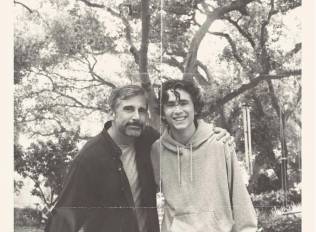
Nic Sheff Image Credit: UCLA Friends of the Semel Institute Open Mind Community Lecture and Film Series
In an interview with Variety, Timothée Chalamet said about first meeting you, “It was all trepidation on my part — nerves and anxiety — which was immediately settled by [the] extraordinarily warm and kind and intelligent and wise person that Nic is, that is innate to him but also through his experiences and his life.” What was it like for you to meet the actor that would play you and tell your most deeply personal story on film? What do you think stands out about his portrayal of you?
God, that is so sweet of him to say that about me. He’s such a sweet guy. I must admit that I wasn’t familiar with Timothée’s work when we first met at a coffee shop. As soon as he came in, I saw that he has this incredible energy and passion for his work. Sure, I could tell that he was nervous about meeting me, but he also was just so committed to getting it right. I immediately felt comfortable with him because I knew he was coming to the role with a very open mind. He wanted to make his portrayal of this young person struggling with addiction as honest and as authentic as possible. He was so willing to learn in an active way.
He asked me a million questions about everything from the emotions I was feeling to the physicality of what it actually looks like to be high on these drugs and what it looks like to be detoxing from these drugs. There’s something really amazing that Timothée does in the movie. It’s something I feel that I’ve not ever seen in a movie about addiction before. Even as he’s in the trenches and high and doing these unconscionable things like breaking into his parents’ house and stealing from his little brother and sister – at the very moments when he’s being volatile and angry and out of control – he conveys this self-awareness that he doesn’t want to be this person and he doesn’t want to be taking these actions. It seems like his body is almost possessed.
As a performer, Timothée was able to hold those two contradictory elements at once. He really expresses that sense of being trapped in the addiction and the behavior. At the same time, you see him fighting to hold onto who he was before the addiction took over; you can see how much guilt and shame he feels about everything he is doing, even while he is doing it. I thought that was so remarkable because it was exactly how I felt when I was out there. I saw myself doing these behaviors, and I was so horrified at myself, but I couldn’t stop. Indeed, that feeling of powerlessness is so devastating. It’s at the heart of the disease, and to see it captured so well on film I thought was truly remarkable.
At the Colorado Health Symposium in August, you talk about how watching the movie makes you feel so grateful because it’s such an amazing reminder of the miracle of recovery. Is gratitude the very heart of your recovery?
Absolutely. Although I know the film wasn’t made for this reason, I felt that the filmmakers gave me such an incredible gift by making this movie. It is such a visceral reminder of everything we went through as a family. It’s such a great help for me because I’m still very much involved in recovery. It’s a big part of my life every single day. In some ways, however, I have moved on. I write for television now, and I am doing things that aren’t necessarily connected to telling my story and writing about addiction. Seeing the movie, seeing my life reflected back to me, it hit home in a way that I hadn’t felt in a long time. I felt again on a very deep level what an incredible miracle it is that I survived and how much came back to me. My family and I have such a close relationship, and it’s beyond anything I ever thought possible. It makes me so grateful.
Every day, gratitude is such an essential part of my existence. Battling this disease, I have gone through such hell that coming out the other side is something I need to acknowledge on a daily basis. I try to be grateful and to express my gratitude. The amazing thing about being sober is how you learn to appreciate and love the simple moments of life. I am so grateful to be able to go out on a walk with my dogs or go out to dinner with my wife. The little things are so sweet like just watching a movie. Gratitude is a gift of sobriety that I keep close to me.
Like you, I first tried drugs when I was eleven years old, smoking pot. Although I didn’t develop a problem until high school, I know my eyes were opened to that feeling of escape. It felt like an answer. Did you feel this way as well? Do you believe the movie effectively highlights the real dangers of early drug use?
Yes, I felt that way exactly when I first smoked pot when I was eleven. I felt this very immediate sense of relief. Up until that point, I had felt so insecure and uncomfortable in my own skin. I just didn’t fit in anywhere. Smoking pot for the first time felt like the first real answer that I had ever found. I kept turning to drugs to cope with everything from success to failure to shyness and everything in between. Thus, when I wasn’t using, I really developed no skills to handle what life threw at me. I kept going back to the drugs because they were the only coping mechanism that I’d ever learned.
In the movie, I do think we show that relapse is not about having a good time. Most people think addicts relapse because they want to keep the party going. They think we are enamored with this fast-paced life. In my experience, I was just in a tremendous amount of pain, and I kept reaching out to the drugs to try to feel better. I really see that theme well-expressed in the movie. Every time Timothée relapses, it’s because he’s in pain. He doesn’t want to relapse, but he can’t stop himself. He does not know how to break that cycle.
For example, there’s a scene in the movie where Timothée and Steve are smoking pot together. Timothée is in high school, and he’s convinced his Dad to smoke pot with him. In the scene, you see that the Dad is trying so hard to connect with his son on a personal level. He believes that smoking pot with his son might help connect them. However, for the son, he’s already in his disease. All he can focus on is the drug. In that scene, we see how he keeps bringing the topic back to the drugs, and he wants to hear about the other drugs his Dad is doing or has done. He wants ammunition so he can feel justified about his using, and he wants to be exonerated in the process from his feelings of guilt. He doesn’t care about connecting; he cares about what his disease wants him to care about. He’s so obviously obsessed with the drug. I definitely felt like I hadn’t seen anything like that before.
Dr. Gabor Maté writes, “The question is not why the addiction, but why the pain.” What does that quote mean to you? Do you agree with him? Is treating the underlying trauma behind the addiction the key to long-term sobriety?
I think that quote is amazing. It makes me remember my last treatment center. When I got there, they asked, “Why are you here?” I replied, “Because I am an addict, and I can’t stop using meth and heroin.” They said, “That’s not the reason that you’re here. It’s not because of the drugs. It’s because of the feelings that were making you use the drugs.”
I knew right away how true that was for me. As I said, I was in a lot of pain growing up, and drugs were the one thing that I found that made that feel better. I’m sure it’s different for many people, and I am not an expert in addiction. I am just sharing my own experience. It definitely was super helpful for me to start exploring and treating that underlying pain behind the addiction. Some of it was just chemical. Going on antidepressants helped at first, then I was diagnosed as bipolar. Now I am on lithium for the bipolar disorder. All of that stuff helped to address that pain and break the cycle.
To me, recovery is like trying to put together this puzzle. There are all these different puzzle pieces. They are not the same for everyone, but for me, those puzzle pieces have been therapy, medication, fellowship, and 12-step. All of these puzzle pieces come together to allow me to stay sober, and they are all really important. However, they are different for everybody. I wish there was one solution that worked for all people, but unfortunately, that’s not the case.
In Tweak: Growing Up on Methamphetamines, you write, “There is this crazy fear I have of being rejected by anyone – even people I don’t really care about. It’s always better to leave them first, cut all ties, and disappear. They can’t hurt me that way – no one can.” Is this fear at the very core of what drives the escapism of addiction?
That’s a fascinating question. I think it definitely was a big contributor to the pain that I needed to use the drugs to help relieve. As I’ve gotten more long-term sobriety and had the opportunity to work on myself, I have found that I have developed these amazing friendships with other people. I never before had anything like the friendships I have today. Before I got sober, it was too scary for me to be vulnerable enough to have friends. Having friends means the potential of losing those friends. The lasting friendships that I’ve been able to form mean so much to me. It’s such a gift.
You have to realize that my disease wants me to be alone. It wants me to be isolated so it can take control. When I was alone, my disease would be talking to me, and it would make me feel like I wasn’t worth anything. Still, it does take courage to have friendships. Without my recovery, I don’t think it would have ever happened. My recovery and those friendships go so well together.
Worrying does not serve me at all. When I get into that negative headspace, I still have a hard time getting out of it. Luckily, I have friends that I can talk about it with, and they help me get more perspective. They help me take a step back and see again the value of my life. It’s one of the greatest gifts of authentic connection.
You know from firsthand experience how hard the disease of addiction is on families. Should families see this film together? Should parents take their teenagers? If they do, how should they prepare both themselves and their kids for the film before and what should they do afterward?
It’s hard for me to be prescriptive about anything. I really only can express things that come from my own experiences. I do believe that having conversations about this subject are really important for a family to consider. I have learned a lot by going around with the film to screenings and talking with people afterward. The main reason I’m doing it is that this film opens the door to such a great opportunity to have conversations about these issues. Watching this film raises awareness by making it easier for people to have honest talks about this disease.
Even more importantly, it is helping to not only emphasize recovery but also reduce the stigma around addiction that prevents such talk in the first place. From my perspective and beyond my personal stake, I believe the more people that see this film, the better. It will raise conversations that might not have occurred without it.
It made me proud to be connected to this film after I first saw it, and I realized there is nothing glamorous about the drug use in the movie. There is a scene in the movie where the son relapses. He does drugs with this girl, and it doesn’t look like a lot of fun. Instead of presenting it as fun or wild or on the edge like they do in a lot of movies, you really see how much guilt and shame the son has about it. There is no party period. Right after it happens when he’s alone, he breaks down and starts crying.
The power of the movie is that it really shows that the reason people use is because of this pain that they are experiencing. Relapsing tends to be a desperate attempt to escape that pain. It also shows the effect that a relapse has on the family. It was painful to watch it on the screen and kind of relive it again.
Watching the film reminded me of when I first read my Dad’s book. It was so hard to realize and see how much of a negative effect I had on him and my whole family. It was important to me that the film would capture that feeling, and it does it so well. Thus, I believe it would be amazing for families to see this film together. I think it would encourage honest conversation afterward.
The one warning I would add to that recommendation is that for people in recovery, especially early recovery, it can be really triggering to watch the explicit drug use in the film. There are some very intense scenes of IV drug use that could be triggering. I would encourage people in early recovery not to put themselves in a position where they might be triggered. If they are worried that it might be a possibility, then I would recommend that they choose caution and not take an unnecessary risk.
In Tweak: Growing Up On Methamphetamines, you write, “Sure, I buried it. I buried it and buried it and turned away from everything light and sweet and delicate and lovely and became so scared and scarred and burdened and fucked up. But that goodness is there, inside – it must be.” Do you believe this movie can help people struggling with addiction find the goodness within themselves and embrace recovery? If so, how?
Wow! That’s creepy to hear that quote again. I haven’t gone back and read Tweak in such a long time, and hearing it is such a sad reminder of how I was feeling. It amazes me how far my life has come since then, and it makes me feel so grateful.
This movie exemplifies that gratitude by showing in such a beautiful way how much love there is within a family. You really see the love within our family, and it’s a reflection of the way that families are. I am so impressed by the incredible bond between parents and children, and also between brothers and sisters. A really cool expression of that bond in the film is how the love survives everything that the disease can throw at it. Despite so much trauma, at the very end, you see that that core love never goes away.
I remember when I was out using, I had this horrible thing happen. My girlfriend OD’d, and I had to call 911 and do CPR. Thankfully, she came out of it, but she had to go to the hospital. Of course, I went with her, and it was such a wake-up call. I decided I had to do something to stop all of this. I called my Dad, and I told him, “Okay, I don’t want to go into rehab, but I want to come home and get clean on my own.”
My Dad had learned enough at that point to know that wasn’t going to be a good idea, and I wasn’t going to be able to do it on my own. He knew he couldn’t let me come home and put everyone else at risk. He said to me, “No, you can’t come home. I really hope you get help, but I can’t help you unless you’re willing to go into treatment.”
When I heard that from him, I was devastated. It was devastating to hear that from my father. All I wanted to do was come home. I was angry and hung up the phone, but even at that moment, when he said I couldn’t come home, I also recall this profound awareness of his love for me. I knew he wasn’t drawing that boundary because he didn’t care about me. Even after everything that had happened, I instinctively knew that love was still there. In the movie, the themes include that such deep love never goes away and that forgiveness is always possible. For people struggling with addiction, that’s a powerful message that they need to hear and that needs to be heard.
Nic and David Sheff Image Credit: UCLA Friends of the Semel Institute Open Mind Community Lecture and Film Series







![Trauma and Addiction Recovery Workbook [BOOK REVIEW]](https://www.answeraddiction.com/wp-content/uploads/2018/11/Trauma-and-Addiction-Recovery-Workbook-BOOK-REVIEW-2-8.jpg)