Tag: rock stars & sobriety

  • Goo Goo Dolls’ Johnny Rzeznik: Sobriety Make Me A Better Person

    Goo Goo Dolls’ Johnny Rzeznik: Sobriety Make Me A Better Person

    Even five years after he quit drinking, Rzeznik said he still takes careful steps to maintain his sobriety. 

    As the Goo Goo Dolls celebrate their 33rd anniversary together, frontman Johnny Rzeznik is celebrating a more personal milestone: five years of sobriety. 

    “People actually like me again,” Rzeznik told Cleveland.com. “I think it’s made me a better person. It certainly has humbled me.”

    Even five years after he quit drinking, Rzeznik said he still takes careful steps to maintain his sobriety. 

    “I have a very powerful form of alcoholism. I finally gave up and accepted the fact that if I even smell too much booze, I’m going to start drinking again,” he said. “That’s just how I am.”

    Rzeznik said he finds fellowship through performing. 

    He said, “Connecting with the audience. If I go up there and say a little something or tell a little story or the audience is singing all the lyrics to the songs, I feel like I did my job. All I want to do is connect.”

    That is something that can’t be replaced, even in an increasingly digital age.

    “One of the things about live music that’s so incredibly important and can’t be replaced and automated is the common focus of a room full of people having that human contact and being immersed in the sensory overload of a rock concert,” Rzeznik said. “The volume, the lights, the smells, the people bumping into you…”

    That personal connection is especially important for people today, he said. 

    “We live in an increasingly isolated world, so it’s important to get out and actually touch people and laugh and cry and do all those things.”

    Even after 33 years of playing his songs, Rzeznik is always willing to play them again. 

    “A rock star I know said, ‘I just can’t play that song anymore,’ and I said, ‘You’re an ungrateful bastard. That song bought you a house in Northern California. That song put your kid through college,” he said. “Stand up there for three-and-a-half minutes and sing the [bleeping] song!’”

    Last year, Rzeznik revealed that he has a sobriety tracker on his phone. His recovery started after a New York blackout forced him to realize it was time to change. 

    Going To Rehab

    He called his manager and said, “I’m not doing anything for the next three months. I’ve got to take care of this, because I’m going to die.” 

    He went to rehab for three months, but wished he could have had even more in-depth treatment. 

    “I wish I could have stayed for six months,” he said. “I went to a very serious place, where they don’t do yoga and massage. They concentrate on triangulating treatment, where it’s like therapy and 12 step and some spiritual work.”

    After growing up with an alcoholic father, Rzeznik is happy that he will be raising his daughter in a sober home. 

    “I’m paraphrasing someone else, but kids turn you into the person that you should have been the whole time,” he said.  

    View the original article at thefix.com

  • Sum 41's Deryck Whibley Reflects On Sobriety

    Sum 41's Deryck Whibley Reflects On Sobriety

    The pop punk star opened up about getting sober and how GnR’s Duff McKagan inspired his sobriety.

    Deryck Whibley, the lead singer of Sum 41, had to get sober in 2014 if he wanted to continue living. Like many artists when they get clean, he’s had adjustments to make, but he’s found that the pros certainly outweigh the cons.

    Whibley found himself close to death when his liver and kidneys started collapsing from too many years of alcohol abuse. Being a musician was a dream come true for Whibley, but as he told Forbes, “Once all the partying and everything I had done caught up to me and I ended up in the hospital and I felt like I was about to lose it all, getting sober sort of re-solidified more than ever [that] all I care about is playing music. Once I felt like it was gonna be gone forever, I started respecting the fact I play music and it’s taking care of myself to play music.”

    It wasn’t just the hectic musician lifestyle that drove his addiction, Whibley was also dealing with a bad back.

    “I was self-medicating that pain with alcohol,” he explains. “So I started drinking a little bit more because of that on top of the partying. But then I would party that night too. So I was doubling it all up and that’s what got me into trouble.”

    Duff Inspires

    Whibley has looked up to Duff McKagan from Guns N’ Roses, who also got sober after many years of heavy drinking and a near-death experience where his pancreas exploded.

    “I always knew his story and obviously loved Guns N’ Roses when I was growing up,” Whibley says. “I knew he had gone through all that and gotten healthy and was doing really well. When I knew I was getting bad I would say to myself, ‘I’m gonna do the Duff thing. I’m gonna get healthy. I know I’m gonna get out of this.’”

    Whibley reached out to McKagan after he got out of the hospital. “I didn’t know him at the time. I’d run into him a few times, but not enough to know him. He gave me some advice and he was great.”

    Passion Returns

    Now that Whibley is sober, he feels “the passion for music is probably stronger now and also passion for the work that goes into it… I thought touring was so fun when we were all partying. It was just this rolling party wherever we went. And I thought, ‘Would it be that fun sober?’ And doing it now it’s way more fun.”

    View the original article at thefix.com

  • Scott Stapp Pays Tribute To Chris Cornell, Chester Bennington

    Scott Stapp Pays Tribute To Chris Cornell, Chester Bennington

    Stapp’s new music video features images of Cornell and Bennington performing as well as the late musician, Prince.

    Creed frontman Scott Stapp paid tribute to the late Chris Cornell and Chester Bennington—fellow rock vocalists who died by suicide around the same time in 2017—in “Gone Too Soon,” a song off his new album The Space Between the Shadows (July 19).

    The music video for the song is a simple but powerful tribute, playing images of Cornell and Bennington performing as well as the late Prince, who died of a drug overdose in April 2016.

    Being in recovery from substance use disorder and mental illness himself, the passing of Stapp’s iconic peers affected him deeply.

    “When Chris passed, it hit me hard. And then a year later [sic] when Chester died, again, hit me really hard,” said Stapp during an interview with Nightline. “That’s when I began, I was at a place in my recovery… where not only was I feeling the pain of their loss, but I was saying, ‘Man, that very, very easily could’ve been me and should’ve been me.’ And this feeling of just, ‘I can’t ever go back. You know, because that will be my story.’”

    Stapp, who marked five years sober in March, endured a very public rock bottom and at one point became known for his erratic behavior. When Creed disbanded in 2014, Stapp reportedly suffered a psychotic break. He admitted to Rolling Stone that around this time he had been abusing alcohol, Xanax and Percocet.

    Reflecting On Addiction

    He reflected on that period of his life in a 2016 interview with The Fix. “It was a very scary and low point in my life. I was having delusions, hallucinations and massive paranoia. I was lost!” he said. “My bottom was losing my family, sitting in a psych ward thinking I was undergoing experiments at the hands of the CIA. It was the most horrific living nightmare of my life.”

    Eventually he found his way. His wife gave him an ultimatum—get help or lose your family. He stopped using drugs and alcohol, and began taking medication for his bipolar disorder.

    “My greatest accomplishments in life, my Grammys, are my children and my wife,” he told Nightline. “They mean more to me than anything that I could ever achieve or receive or have received in my entire career. That’s where it’s at. And if I never get another accolade… moving forward, I’ve already achieved it all with the family that I have.”

    View the original article at thefix.com

  • Ivan Moody Counts Rob Halford, Jon Davis Among His Sober Supporters

    Ivan Moody Counts Rob Halford, Jon Davis Among His Sober Supporters

    “No matter where he was in the world, he picked up, left me messages, he sent me cards,” Moody said of the Judas Priest singer.

    Ivan Moody, the lead singer of the metal band Five Finger Death Punch, has had a hard road to achieving sobriety, but he currently counts metal legend Rob Halford as one of his sober supporters, as well as Jonathan Davis from Korn.

    As Moody explained on The Jasta Show, “Rob is actually one of my—and I hate to put it this way—sober coaches. He’s been sober now for almost forty years. And when I went through recovery, and even my bandmates and I weren’t talking, Halford was on the phone with me. I got two 10-minute phone calls a day, and Halford was one of them every single day. No matter where he was in the world, he picked up, left me messages, he sent me cards.”

    Moody added that “Jonathan Davis was the same way—he was very supportive of me.”

    Halford is considered one of the best in the genre. Moody said, “This was coming from a kid who grew up on Judas Priest and I’m turning around and this guy is a father to me in certain ways, and very much a piece of who I am now.”

    Moody went on to tell Jasta he was “never very orthodox with [my] sobriety. Neither was J.D. or Rob, which, again, that’s what I really appreciate. I don’t go to a lot of meetings. I respect it, and I understand why other people used [them] and benefitted from [it], but for me personally, it’s just not what I need. So that was something I always looked to with guys like J.D. and Rob… that wasn’t my path and I didn’t need it.”

    Moody has reportedly been to rehab five times, and came close to death from an alcohol-related seizure. After that experience, Moody recalled, “I knew I was done during my detox. It took me seven and a half days just to detox. I couldn’t walk, I couldn’t go to the bathroom by myself, I couldn’t smoke a cigarette. I had a staff member actually sleep in the room with me for the first 28 hours just to make sure I didn’t go under. I blew a .36 when I went in, which anyone who knows anything knows means that was basically death. And I didn’t want to come out of it. I woke up the next day and I [was] pissed that I was still alive.”

    Moody ultimately realized he didn’t want his legacy to be dying from substance abuse.

    “I listen to a Linkin Park song now and I can hear [Chester Bennington] crying for help. Why did it take us so long to hear that? I want people to hear my lyrics or my melodies and say ‘that dude’s in pain.’ Or ‘that guy’s victorious over something—he overcame that substance.’”

    View the original article at thefix.com

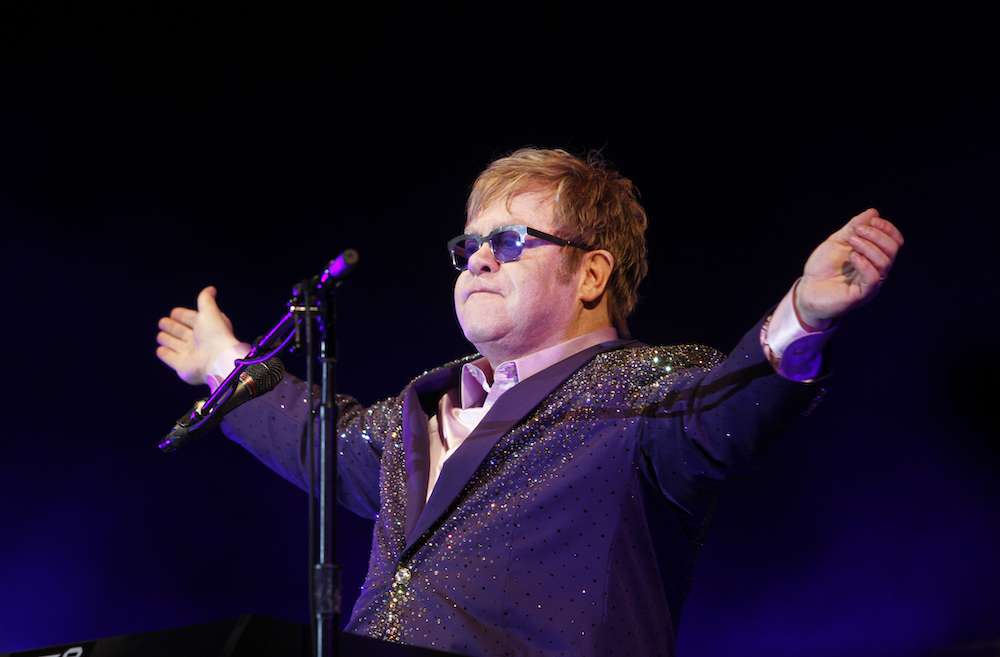
  • Elton John Reflects On Sobriety As “Rocketman” Movie Makes Its Debut

    Elton John Reflects On Sobriety As “Rocketman” Movie Makes Its Debut

    “Life is full of pitfalls, even when you’re sober. I can deal with them now because I don’t have to run away and hide,” John said.

    The new film Rocketman details singer Elton John’s life, including his drug, sex, and shopping addictions that hounded him earlier in his career. Despite his stature as an artist and musician, John says he still finds himself in the throes of self doubt.

    “I think every artist does [have self-doubt],” John said in an interview with Variety. “Every creative artist does have doubt and has moments of, ‘Am I doing the right thing? Am I good enough?’ And that’s what turns us into monsters as well because I think you become unreasonable and of course the chemical substances and the alcohol doesn’t help anything, and you lose touch with reality.”

    John admitted that his life spiraled out of control as he began to settle into a lifestyle of fame and fortune.

    “The life I was leading, flying on the Starship [his legendary private plane], living in beautiful houses, buying things left, right and center — it was not a normal life, not the sort of life I came from anyway,” said John. “I lost complete touch with that. I vowed when I did change my life that that would never happen again.”

    The “Tiny Dancer” singer also revealed that some days, he wasn’t sure whether he’d make it to tomorrow.

    “There were times I was having chest pains or staying up for three days at a time,” said John. “I used to have spasms and be found on the floor and they’d put me back to bed and half an hour later I’d be doing the same. It’s crazy.”

    These days, the musician is married to David Furnish, with whom he is raising two sons. He’s only made it this far because he fought to live.

    “I am a survivor,” he said. “I’ve survived a lot of things. Life is full of pitfalls, even when you’re sober. I can deal with them now because I don’t have to run away and hide.”

    John says that the most valuable ability he’s learned from sobriety is communication.

    “What I couldn’t do when I was an addict was communicate, except when I was on cocaine I thought I could but I talked rubbish,” John recounted. “I have a confrontation problem which I don’t have any more because I learned if you don’t communicate and you don’t talk about things then you’re never going to find a solution.”

    The origin of his troubles may be traced back to his complicated relationship with his parents, who split when he was a child.

    “I’ve come to understand — as you get older you understand — the circumstances they went through,” said John. “I’m not angry or bitter about that whatsoever, but it did leave a scar and that scar took a long time to heal — and maybe it will never heal totally.” 

    View the original article at thefix.com

  • U2’s Adam Clayton Talks Alcoholism: You Lose Your Sense Of Yourself

    U2’s Adam Clayton Talks Alcoholism: You Lose Your Sense Of Yourself

    “I was kind of very unhappy, so I drank and I drugged and I got myself in tabloid newspapers,” Clayton said.

    Adam Clayton spoke frankly about the remarkable success he’s enjoyed as the bassist for U2, as well as how that time in the spotlight was complicated by his struggles with alcohol.

    Clayton’s comments came as part of his appearance on The Tommy Tiernan Show, a popular talk program on Ireland’s RTÉ One channel, and touched on how the band’s rise to fame impacted his own mental health and dependency issues.

    “You lose your sense of yourself,” said the 59-year-old musician. “I was kind of very unhappy, so I drank and I drugged and I got myself in tabloid newspapers.”

    Clayton added that while sobriety was hard fought, he’s glad to have made the choice to pursue it. “The alternative would have been a lot worse,” he noted.

    Tiernan, a popular actor, comedian and radio host in Ireland, has drawn praise from viewers and critics alike for his candid conversations with his guests, many of whom have discussed difficult personal issues during their appearances. Clayton’s conversation with Tiernan touched on a wide range of issues related to fame and dependency. In regard to the roots of addiction, Clayton said that he believed it to be a mix of family problems and childhood trauma.

    “Once you have that in your DNA, you don’t feel comfortable,” he said. “You feel restless, you feel questioning, you feel irritable and you don’t know what to believe. Once you have that programming, it’s really hard to undo it, and I think that’s what I went out into the world with.”

    After founding U2 as a teenager with Paul Hewson (Bono), David Evans (The Edge) and Larry Mullins, Jr., Clayton said that their rise to international acclaim within just a few short years left him unmoored. “Success went to my head,” he told Tiernan. “I think that if you get everything your heart desires by the time we were 20 – anyone I’ve ever met who’s experienced success and fame in that way in those years, it takes them a long time to recover from it. And that sounds like a complain, but that’s just what happens.”

    Clayton said that he dealt with the attention through alcohol and drugs, which earned headlines in Ireland and abroad. “I embarrassed kind of everyone I knew, and myself,” he said.

    But an experience in Australia during the Zoo TV tour in 1993 brought the impact of his actions into sharp focus for Clayton. After consuming two glasses of wine, Clayton said that he lost a period of three days, during which he missed a crucial day of recording with the band at a stadium appearance. “I had let the guys down, the three guys who had stood by me since the age of 16 and 17,” he recalled. “It was not a great place to be, and if ever there was a moment of realization, where you wake up and go, ‘I have a problem and it’s bigger than me, and I need some help,’ that was it.”

    Clayton said that gaining sobriety was a challenge – “It was a struggle, but I’m really glad I had the struggle” – and staying sober has its own set of difficulties. “I still have to really work quite hard at keeping my sanity on and off the road,” he said. “Drinking can take me to bad places. My thinking is not always reliable. And it’s great having three other guys who can check you sometimes, and we check each other.”

    View the original article at thefix.com

  • Scott Stapp Credits Family For His Hard-Fought Sobriety

    Scott Stapp Credits Family For His Hard-Fought Sobriety

    “It was either get sober or lose my wife and kids, man, and that’s about the lowest rock bottom that I could possibly have gotten to,” Stapp said.

    Scott Stapp, lead singer of the post-grunge band Creed, gave a lot of credit to his family for lifting him out of a period of substance abuse in a recent interview with Detroit radio station WRIF.

    Stapp recently hit his five-year sobriety anniversary after years of struggling with alcohol and prescription drug addiction.

    “My wife and my kids were critical in helping me get sober,” he told DJ Meltdown. “It got to the point where it was either get sober or lose my wife and kids, man, and that’s about the lowest rock bottom that I could possibly have gotten to. So they were critical.”

    In addition to his family, the singer recently gave a shoutout to MusiCares, a non-profit established by the National Academy of Recording Arts and Sciences that provides support to musicians who have fallen on hard times.

    According to Stapp, MusiCares helped educated him and his wife on the nature of addiction, helping them understand that it’s a disease that requires ongoing treatment.

    “I still have a lot of music ahead me and without MusiCares, that wouldn’t have been possible,” said Stapp. “They provided support and helped educate my wife and I on what we were going through, that it was a disease, and if I did my part, it could be treated and recovered from. Thanks to MusiCares and my family, I’m going on five years sober.”

    Stapp also suffers from bipolar disorder, which went undiagnosed for years and may have fueled his addiction disorders. He has spoken out about multiple suicide attempts and near-attempts, including an incident in 2006 in which he jumped off of a balcony in Miami and fell 40 feet.

    He survived after being discovered by rapper T.I. with a fractured skull and a broken nose and hip. Later that year, he admitted to Rolling Stone that he had been fighting addiction to Percocet, Xanax, and prednisone.

    It wasn’t until 2015 that Stapp told People he had been diagnosed with bipolar disorder after suffering what he called a “psychotic break.”

    “I had a psychotic break that was brought on by alcohol and drug abuse,” he says. “I was hallucinating. I drove around the United States for a month, following an angel that I saw on the hood of my car.”

    During the WRIF interview, Stapp explained how his naiveté going into the world of music set him up for “going down that wrong path.”

    “I just had so much in front of me, and being so naïve, walking into it, I just didn’t know how to handle it, and it got a hold of me,” he said. “And around the same time, I had my first onset of depression. And you combine that with self-medicating, with alcohol and whatever else you can find, and it’s a bad scenario, man.”

    View the original article at thefix.com

  • Five Finger Death Punch Bassist Celebrates Sober Milestone

    Five Finger Death Punch Bassist Celebrates Sober Milestone

    Before getting sober, bassist Chris Kael used about an eightball of cocaine a week to help manage untreated mental health issues.

    Chris Kael, who plays bass in the heavy metal band Five Finger Death Punch, has been sober for a year and took to Twitter to celebrate his milestone. 

    “May my hitting my first sober birthday yesterday give hope to those of you also struggling with addiction. It can be done. And, you will thank yourself when you too hit these milestones. Keep your chin up and those feet moving! #ShitYesSon #SoberAsFuck #SFG” Kael wrote on February 4, according to Blabbermouth

    Kael had previously said that he used about an eight-ball of cocaine each week to help manage his untreated mental health conditions. 

    “That got to be the biggest problem for me,” he said. “That and depression, the two things, were not good. I didn’t realize it until I got into rehab that I was self-medicating with cocaine to get my dopamine levels up to fight the depression. I never even thought about that. And then when you come off it, you crash hard.”

    Kael said that it was difficult to watch the band’s lead vocalist Ivan Moody struggle publicly with addiction, while Kael kept his substance use more private. 

    “Ivan was going through his thing, and me, no one really knew, I was the quiet one that was kind of doing things on the side. That was one of the things that was eating away at me too—my guy had a huge problem, and here I am, a quiet problem.”

    Although Moody missed some tours for treatment, Kael usually was at his worst when the touring ended, he said. 

    “It hit me hard when I got off the road. Going home was always hard anyway, ’cause you’ve got so much stimulation out on the road, and then you come home and you’re, like, ‘Wait a minute? I’ve gotta take out the trash? That’s the biggest part of my job now?’”

    Kael said on Twitter his wife helped him get into treatment and kickstart his sobriety.

    “Had she not busted me trying to restock after burning through $1300 in blow in two days in late January [2018], I truly believe that I would not be here today,” he said. “She has silently and bravely dealt with far more than what would have crushed any other woman. Her loyalty, patience, TRUE love and resolve are unmatched by any other woman I’ve ever known.”

    Although admitting he was powerless was difficult, Kael is glad that he did it. 

    “Throwing my hands to the universe and admitting I was at a fucking low and no longer able to do it myself was one of the most humbling and powerful things I’ve ever done in my life.”

    View the original article at thefix.com

  • Great White's Mark Kendall On Sobriety: I Won't Drink Today No Matter What Happens

    Great White's Mark Kendall On Sobriety: I Won't Drink Today No Matter What Happens

    “I don’t care if I have guns pointed at me — I’m not drinking. That’s how serious I am,” the Great White guitarist said at a recent recovery event. 

    Mark Kendall, founding guitarist for the legendary rock band Great White, doesn’t say that he’ll never drink again, despite his decade of sobriety. Instead, he focuses on staying sober just for today. 

    “Nobody’s ever gonna hear me say, ‘I’ll never drink again,’ or, ‘I’m done.’ I just don’t go there. I don’t put these impossible tasks [in front of me]. ‘Cause I don’t know if I’ll never drink again; I can’t tell you if that’ll happen. But what I can tell you is that I’m not gonna drink today no matter what happens,” Kendall said as part of the No More Heroin Survivor Stories. 

    “I don’t care if I have guns pointed at me — I’m not drinking. That’s how serious I am. And I know it sounds stupid simple to some of our audience out there, but when I do it this way and just leave the task to be today…I’m just not gonna drink today. Yesterday, whatever happened, I don’t know; I don’t wanna think about it. I probably didn’t drink though.”

    As for tomorrow, Kendall says he’s not concerned with it.  

    “I’m not concerned about something that takes care of itself. Time takes care of itself. Years are gonna go by all by themselves. The only thing that I can control with confidence is being sober today only — that’s my task. If I make it to midnight, I’ve made it through another day. That’s the way I’ve done it, and 10 years rolled by. It’s not like I sat there one day and [went], ‘You know what? I think I’m gonna be sober for 10 years. I’m just gonna go for it.’ I never did that.”

    Kendall struggled with alcoholism and started toying with sobriety in 1991, according to Blabbermouth. However, he didn’t give sobriety his all until 2008, which is when it clicked for him, he said. 

    “I’d try it and then I’d quit again. So I’d literally keep starting and stopping and keep trying it again — try to drink like the normal guy that just watches the football game on the weekends with his buddies and has, like, four beers. I wanna be that guy and not wake up the next day and have to drink again. So I’d force it and not drink, so I could tell myself that I’m normal now. But then again, here it comes again — I’d end up in pain,” Kendall said. “So I kept trying and trying and trying — going two years, a year and a half, a year, another two years. And keep trying and trying.”

    View the original article at thefix.com

  • Steven Tyler, Jason Isbell & Other Sober Musicians Share Their Stories

    Steven Tyler, Jason Isbell & Other Sober Musicians Share Their Stories

    A group of famous sober musicians discussed their past addictions and getting sober for a new GQ profile.

    Famous musicians aren’t known for being a sober bunch, and yet many successful musicians are in recovery. Recently a group of sober musicians spoke with GQ about how they are surviving and thriving in recovery.

    Joe Walsh, 71, guitarist for The Eagles, said that even after decades of Alcoholics Anonymous he still lives day by day.  

    “I have 25 years of sobriety,” he said. “But the important thing is, I haven’t had a drink today.”

    Aerosmith’s frontman Steven Tyler, 70, said that his experience with drugs started with marijuana

    “I grew up in the woods listening to the wind. It was just the silence and Mother Nature, no one around—it was an awful lot of magic there,” he said. When I started smoking weed, in ’65, ’66, it kind of enhanced those magic feelings.”

    Walsh said he turned to drugs to help him ease symptoms of obsessive-compulsive disorder and Asperger’s. The relief was instant, he said.

    “I felt like Superman onstage, and I played that way. I thought cocaine and alcohol was the combination, and it was just a kid trying to feel better. And I chased that initial solution to my problems for 30 years or so,” he said. 

    Tyler said that living the rockstar lifestyle made drugs feel like a natural part of life. 

    “You have a shot of Jack Daniel’s and you play Madison Square Garden and you get offstage and you go clubbing with Jimmy Page—come on,” he said. “After two encores in Madison Square Garden, you don’t go and play shuffleboard. Or Yahtzee, you know? You go and rock the fuck out. You’ve done something that you never thought you could, and you actually think that you are a super-being.”

    Over time, however, the drug use came to interfere with the art, Tyler said. 

    “It absolutely works for a while. But then things go wrong. You become addicted, it’s something you do all the time, and suddenly it starts influencing your greatness,” he said. 

    Still, Tyler was afraid that getting sober would affect his work. 

    “I thought I would lose my creativity,” he said. 

    Singer-songwriter Jason Isbell, 39, said that before he got sober he told himself he was afraid he would lose his art. However, he realized afterward that he was making excuses. 

    “Now I know what was really scaring me was just the thought of getting sober,” he said. “The addiction in your brain, that’s a tricky son of a bitch. It had me convinced for a long time that I wasn’t going to enjoy my life, that nobody was going to enjoy being around me if I wasn’t raising hell all the time.”

    View the original article at thefix.com