Tag: sober celebrities

  • Elton John Biopic "Rocketman" Gets Childhood Trauma and Addiction Right

    Elton John Biopic "Rocketman" Gets Childhood Trauma and Addiction Right

    Vice’s Ryan Bassil writes that the movie understands how childhood trauma and addiction right.

    The minds behind Rocketman, the new Elton John biopic, understand how childhood trauma can lead to addiction, writes Vice’s Ryan Bassil.

    Rocketman’s narrative is anchored in an Alcoholics Anonymous meeting where Taron Egerton’s fictional Elton John shares his experiences with addiction.

    “I’m Elton Hercules John and I’m an alcoholic, cocaine addict, sex addict, bulimic, shopaholic…” Egerton says in the movie.

    The film has Egerton’s Elton John reflect on major events in his life in the AA meeting, providing audiences with insight into how traumatic events, especially in childhood, can ripple into substance abuse problems later down the line.

    In Bassil’s take on the film, he notes how well the film’s narrative, and Elton John’s real life, is reflected in the writings of Dr. Gabor Maté, author of In The Realm Of Hungry Ghosts: Close Encounters With Addiction.

    Maté defines addiction as “any behavior that a person craves, finds temporary relief or pleasure in but suffers negative consequences as a result of, and yet has difficulty giving up.”

    This is apparent in the movie and real-life Elton John, who spoke on his addictive behaviors in an interview with Variety earlier this month.

    “There were times I was having chest pains or staying up for three days at a time. I used to have spasms and be found on the floor and they’d put me back to bed and half an hour later I’d be doing the same. It’s crazy,” John said in the interview.

    Maté points to childhood trauma as a major factor in addiction.

    “Childhood trauma is the template for addiction—any addiction,” Maté writes. “All addictions are attempts to escape the deep pain of the hurt child, attempts temporarily soothing but ultimately futile.”

    Bassil points out that this narrative is present in the film, shown to the audience in the form of a young Elton John dealing with abuse at the hands of his father and his parents’ divorce. The real-life Elton also reflected on his childhood trauma in the Variety interview.

    “I’ve come to understand—as you get older you understand—the circumstances they went through. I’m not angry or bitter about that whatsoever, but it did leave a scar and that scar took a long time to heal—and maybe it will never heal totally,” he said.

    View the original article at thefix.com

  • Real Housewife Luann de Lesseps Takes Sobriety "Day by Day"

    Real Housewife Luann de Lesseps Takes Sobriety "Day by Day"

    The ‘Real Housewives of New York’ star says her co-stars support her on her sober journey.

    Countess Luann de Lesseps, who stars on the Real Housewives of New York, told Life & Style that she’s received immense support from her co-stars in her sober journey.

    “You know what, I take it day by day,” de Lesseps said. “I take my sobriety seriously, and day by day, and I just am learning to enjoy myself without drinking. So it’s eye-opening and it’s not easy. It’s always a struggle, but I feel a lot better.”

    The reality star may have realized she had a problem with alcohol when she was charged with several crimes following a Christmas Eve arrest, including battery of an officer, disorderly intoxication, resisting arrest with violence, and crimes against a person, and two corruption by threat charges for telling officers, “I am going to kill you all.”

    Her hefty list of charges could have landed her five years in prison, according to TMZ. She even rejected a plea deal offered by prosecutors, instead arguing that she was emotionally distraught because of the geographic location.

    “This was my first time in Palm Beach since my wedding, and being here brought up long-buried emotions,” she explained. “I want to offer my sincere apologies to anyone I might have offended with my behavior. I am committed to a transformative and hopeful 2018.”

    Following the incident, she committed herself to rehab and recovery.

    “After the events of last Saturday night in Palm Beach, I am truly embarrassed. I have decided to seek professional guidance and will be voluntarily checking into an alcohol treatment center,” she said. “I intend to turn this unfortunate incident into a positive life changing event. Once again, I sincerely apologize for my actions. I have the greatest respect for police officers and the job they do.”

    Now, de Lesseps is better and back in the spotlight in a cabaret show.

    “Nine months ago, I was in jail, and now I’m a cabaret star,” she said in the season 11 trailer. “Isn’t that crazy?”

    Given that the cast of the Real Housewives is provided alcohol to drive the drama, de Lesseps may find herself relying on her co-stars to stay clean… and her recovery may become a driving narrative of the show.

    View the original article at thefix.com

  • Jodie Sweetin, John Stamos, Mackenzie Phillips and Others Gather for Experience, Strength and Hope Awards

    Jodie Sweetin, John Stamos, Mackenzie Phillips and Others Gather for Experience, Strength and Hope Awards

    Sober celebrities gathered in Los Angeles to express gratitude for their recovery and celebrate this year’s Experience, Strength, and Hope Award-winner, Jodie Sweetin.

    On February 28, 2019, the 10th Annual Experience, Strength and Hope Awards honored actress Jodie Sweetin for her successful journey into recovery. Detailed with painful conviction in her book, unSweetined: A Memoir, Sweetin’s story exemplifies the ESH Awards’ mission to recognize an individual’s honest journey from addiction to recovery, and their dedication and enthusiasm for carrying the “message” to help others with addiction. Hosted by Leonard Buschel, founder of Writers in Treatment and the Reel Recovery Film Festival, the event marked a milestone for the recovery community in Southern California and beyond.

    For ten years, Leonard Buschel’s organization has hosted the high profile get-together in Los Angeles honoring people who spread the word of recovery. Commenting on the success of his efforts, Leonard said, “For the past ten years, it’s been very gratifying honoring these remarkable individuals who’ve taken the time and have had the fortitude to bare their souls writing such compelling memoirs. We mark this 10th anniversary honoring Jodie Sweetin, who went from adored child star to struggling addict, then rising phoenix-like to become an author, devoted mother, and full-time TV and film actress.”


    Leonard Buschel

    The experience of being honored at the ESH Awards resonates with the honorees as well. When asked what it meant to her, Jodie Sweetin smiled and said, “It’s incredible that such an inspirational event has now been happening for an entire decade. It’s powerful not just as a symbol of success outside of the sober community, but also as a celebration of recovery from within. Together, we are stronger, and we have a voice that has an impact and can save lives.”

    Having covered this event as a journalist for The Fix and other news organizations since its inception, I have been impressed by its consistency and overall quality year after year. Before the actual awards presentation, there is a catered reception organized by Ahbra K. Schiff, the Director of Operations and Outreach for Writers in Treatment and the Reel Recovery Film Festival. The reception includes red carpet photographs, networking, food, and lots of nonalcoholic drinks. Every year, there’s a buzzing energy in the room before the show.

    During the reception, I asked Mackenzie Phillips what she thought of the ESH Awards’ decade-long history.

    “It means that we are a vital and important people; we are members of society today. This event is a testament to our staying power, our longevity, and our insistence on surviving and thriving. As it says in the Big Book, we are not a glum lot,” she said.

    The miracle of recovery also is expressed through family. Ben Buschel, Leonard’s son, embraced the path of sobriety several years after his father. As Leonard remarked, the apple doesn’t fall far from the tree. With close to 20 years of sobriety under his belt, Ben said about the event, “After witnessing this celebration of recovery in Los Angeles time and time again, I have come to appreciate that the best parties and the most fun are to be had long after we thought the party was over.”

    Leonard Buschel is well-known for calling the ESH Awards his love letter to Alcoholics Anonymous, and attendees of the show share his appreciation of the program. During the catered reception, Academy Award-nominated actor Bruce Davison expressed how “The Experience, Strength and Hope Awards has expanded the 12-step principle of ‘keep coming back.’ It shows that what works for us in recovery also works for us in all the other areas of our lives.”

    When you think about the nature of recovery, there are very few lightning strikes or earthquakes or flashes of enlightenment. Instead, the process of getting and staying sober is the day-to-day maintenance of a person’s spiritual, mental, and physical condition. In recovery, we learn to take care of ourselves. By turning the ESH Awards into an institution that reflects the best of these efforts, Leonard Buschel pays respect to the hard part of the journey.

    Mackenzie Phillips, a former winner of the Experience, Strength and Hope Award, intimately understands the hard part of the journey. As she mentioned onstage, it took 11 attempts at treatment before she was able to achieve sustained sobriety. She also memorialized the winner of the first annual ESH Award, Christopher Kennedy Lawford. In 2018, Lawford, 63, died after suffering a heart attack at a yoga studio in Vancouver, British Columbia. The internationally-respected author, actor, and activist had been sober for over 30 years.

    Phillips remarked how happy Peter Kennedy Lawford would have been to see all the people in recovery gathered together on this day to honor what matters in our lives. Smiling through tears, she said: “We freely have been given this life, and we are blessed to be able to celebrate together. We come here so we can express our gratitude for the amazing gift of recovery.”

    In her acceptance speech, Jodie Sweetin expanded on this idea. Beyond thriving and expressing gratitude, we also learn how to love and be loved in recovery. Looking directly at her parents from the podium on stage, she said: “When we are using, we don’t get the luxury of being with the people who love us because we are unable to love ourselves. Loving and being loved by your family, your friends, and your community is one of the greatest gifts of recovery.”

    Many other celebrities took part in this year’s event. Ed Begley, Jr. hosted, John Stamos presented the award to Sweetin, and there were special appearances by actors Joanna Cassidy and Tony Denison. At the end of the night, after spoken word and musical performances, comedian Mark Schiff closed the show. By the end of the 10th Annual Experience, Strength and Hope Awards, everyone was ready to go home and climb into bed, relaxed, happy, and with fond memories of the evening.

    View the original article at thefix.com

  • Bam Margera Completes Court-Mandated AA, But Friends Are Worried

    Bam Margera Completes Court-Mandated AA, But Friends Are Worried

    The troubled skateboarder has completed treatment, but those who know him fear the worst could be ahead.

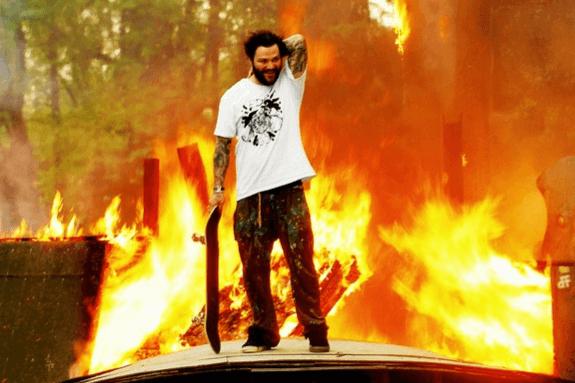
    Even after completing his court-mandated, three-month-long online alcohol program and attending AA meetings, Bam Margera’s friends are worried for his life.

    Margera’s colleague and Jackass co-star Brandon Novak told TMZ that he’s worried about Margera’s decision to leave rehab early. Novak, who is in recovery, expressed his disappointment in Margera leaving rehab, because he felt he would otherwise be killing him, saying, “enable an addict, bury an addict.”

    But Margera wasn’t satisfied with sitting in rehab, sharing these feelings in a journal entry he posted on social media.

    “Dear assholes who want to talk shit about my sobriety…” he began.

    He went on to explain that he left because the rehab facility did not seem to think that he needed any detox or medications, so he figured he was wasting his time. His lawyer also mentioned that Margera is ahead of his legal obligations in regards to his DUI.

    Margera was placed in rehab after getting a DUI in Los Angeles in January last year. At the time, he was already struggling with drinking.

    “I never had any pill problems and I’ve never tried heroin in my life, but it’s been a real struggle for me to stay off the alcohol,” he said in a 2017 interview. “But just as long as you’re surrounded by good people and you have something to do, you’ll be good.”

    He avoided jail time, opting for three years probation and mandatory alcohol programs as well as compulsory visits to Alcoholics Anonymous.

    Margera was managing to stay sober until late last year, when he posted a video of himself in distress and telling the story of the life-threatening robbery he had just experienced.

    “I just arrived in Cartagena alone and I took a taxi, a random one, from the airport to here and I wouldn’t speak Spanish, they couldn’t speak English, and they translated on their phone to read ‘empty your wallet’ as they put a gun on their lap to show it to me. So I did and I had 500 bucks,” he recounted in the video. “They let me go. Welcome to Colombia.”

    At the end, he cracked open a beer. Following the post, Steve-O publicly expressed his concern that Margera wasn’t even sober prior to the robbery. Steve-O himself, like Novak, is a now-sober Jackass alumnus.

    View the original article at thefix.com

  • Eliza Dushku Celebrates 10 Years of Sobriety

    Eliza Dushku Celebrates 10 Years of Sobriety

    “Buffy” actress Eliza Dushku shared her sobriety milestone on Instagram.

    Eliza Dushku, best known for her roles in the show Buffy the Vampire Slayer and the film Bring It On, is celebrating 10 years sober on Instagram.

    Posting an image of a large Roman numeral X, the 37-year-old actress bubbled with positivity and gratefulness in the caption. “#grateful #sober #X yrs today. holy sh*t. #aa #twelvesteps #willingness a #sponsor #fellowship #service & asking for help #odaat saved my life,” Dushku wrote on the post. “If you’re struggling w #alcohol &/or #drug #addiction, I promise, you don’t have to live that way anymore.”

    She topped off the post with a little encouragement and advice for any of her fans who might be facing the same problems. “Reach out, your life is waiting for you: www.aa.org & www.na.org,” she wrote. Possibly making a reference to her Buffy character’s name, she added “Have #FAITH.”

    Dushku hasn’t always been so public about her recovery. For years, she kept her struggles with substance abuse under wraps, only speaking directly about it for the first time in March of last year at the Youth Summit on Opioid Awareness in New Hampshire.

    “Something a lot of people don’t know about me is that I am an alcoholic and I was a drug addict for a lot of years,” Dushku told a crowd of 8,000 middle and high school students. “You hear people say ‘I am that’ because I am that, and I’m always going to be that, but the difference between me and an alcoholic or drug addict that still drinks and does drugs is that I am sober.”

    Dushku said that she began using drugs when she was just 14 years old.

    “I loved the first time I took a drug because I loved how it made me feel. I loved the way it made me not feel, and I didn’t have to feel,” she recounted to the audience. “It was fun and I loved it, until it wasn’t.”

    Her substance abuse problems got worse, spiraling down until one day her brother stopped allowing Dushku to visit her niece while under the influence.

    “I remember my brother telling me he didn’t want me to be around my niece because he didn’t trust me,” Dushku said. “I’m a really good auntie today. But you know what? He was right. I’m a good person, but when I did drugs and I drank, I didn’t make good decisions. … All it takes is one bad decision. You don’t have to live like that.”

    These days, Dushku is doing better, celebrating 10 years sober as well as getting married in August.

    View the original article at thefix.com

  • Slipknot’s Corey Taylor On Addiction: I Wouldn’t Be Who I Am Now

    Slipknot’s Corey Taylor On Addiction: I Wouldn’t Be Who I Am Now

    Taylor reveals that it’s only been within the past year that he’s finally become a fan of who he is.

    Slipknot’s Corey Taylor says there’s a lot about his own recovery and his new attitude towards it on his band’s new album and their Halloween single, “All Out Life.”

    Taylor has spoken openly about his struggles with depression and having been the target of child abuse, and his coming to terms with the darkness he’s struggled with having changed his perspective not only on his life, but how he sees himself as well.

    “I’m looking to the world through clearer eyes,” Taylor said on Beats1. “I’m also just starting to make peace with the fact that there are dark pieces of my chapters that I’ve had to relinquish and let go of. I’ve said, ‘Look, if it wasn’t for all these dark things happening to me, I wouldn’t be the guy I am right now.’”

    He says he’s also realizing his priorities have changed.

    “This has made me deal with the fact that I am an addict. It’s made me deal with the fact that I’m in my 40s, I’ve got kids, and I need to take care of them. I’m dealing with all of these crazy things in my life that make me ‘me,’ and yet I should be embracing the fact that I’m alive,” he revealed. “I should be embracing the fact that I’m a father, I should be embracing the fact that I’m in two great bands.”

    Taylor has in the past stood up to take on the role of a sober role model.

    “It’s stronger to be that badass—to be the guy who sees it all, remembers it all, feels it all, and, at the end of the night, doesn’t need that quote-unquote party, you know. Because it’s hard in this industry; people are made to feel like they don’t belong, because they’re not a part of that. And it’s a shame,” he said in a past interview.

    He’s lost a friend to the industry before—fellow Slipknot bass player Paul Gray in 2010. Gray died of a drug overdose caused by morphine and fentanyl.

    It’s only recently that Taylor’s been able to forgive and learn to love himself.

    “I was never a huge Corey Taylor fan, until maybe the last year or so,” he admitted. “I was like, ‘What? There’s a lot about me that’s really, really cool. I’ve luckily had a lot of great people around me to encourage that and go, ‘We’ve been saying that for years.’”

    Slipknot’s newest album should be out next year, and the band is scheduled to headline Download Festival 2019. Their new single, “All Out Life,” debuted on Halloween.

    View the original article at thefix.com
  • Boy George On Sobriety: I’m A Work In Progress

    Boy George On Sobriety: I’m A Work In Progress

     “I think that you never really get there, but you definitely get better at being alone and observing yourself.”

    Singer Boy George is soon releasing a new album with Culture Club for the first time in two decades, but he might not have made it this far if he were still focused on the drugs, he says.

    The singer and style icon (born George Alan O’Dowd) recounted the positive impact that sobriety has had on his life in an interview with USA Today.

    “You have more time. Your life is not centered around one obsession. But it takes time. I’ve always regarded myself as a work in progress,” he said. “I think that you never really get there, but you definitely get better at being alone and observing yourself.”

    The singer has had a long, public battle with drugs and has lost several friends and colleagues over the years to drug overdoses. Reflecting on what inspired him to try and get sober, the singer spoke frankly.

    “I think it’s all quite well-documented. Some of it’s true, some of it’s not. When you’re in the eye of the storm, you don’t see a way out of it. For me, it was really just a series of events that led me to an AA meeting,” he recounted. “As much as I didn’t want to be there, I also knew that’s where I needed to be. So you could call it a point of realization.”

    He also says that there was no one dramatic moment in which he suddenly realized he needed to turn his life around, but rather a spark of realization that he needed to get better.

    “So many bad things happen to people when they’re in throes of addiction and it’s almost impossible to say what is the ‘rock bottom’ that makes you stop. Sometimes it’s just a chance encounter or a moment of clarity,” he said. “For me, I was just brought to a place where I was able to stop and go, ‘OK, this is not my life. This is not what I want to be or where I want to go.’”

    When asked how he felt about the new generation of LGBTQ artists who haven’t felt the need to hide themselves, he answered that he was glad that they could come out to a world more accepting of them.

    “It’s interesting. Without people like me, (David) Bowie, Oscar Wilde, and whoever came before taking the kinds of risk that we took however we took them, maybe there wouldn’t be a situation where you didn’t have to think about your sexuality—that you can just factor it into what you do. I suppose, in a way, that’s what I always wanted,” Boy George answered.

    “So I guess the answer would be I’m delighted for those people, because I’ve always wanted to live in a world where your sexuality, your race and your age weren’t important.”

    View the original article at thefix.com

  • Relapsing While Famous: Demi Lovato, Stigma, and Compassion

    Relapsing While Famous: Demi Lovato, Stigma, and Compassion

    “We would typically not blame a patient with a chronic medical condition for their problem; nor imbue the patient with shame over their offending organ—why do we seem to do this with addiction?”

    The news that Demi Lovato was hospitalized of a suspected drug overdose has sent her celebrity friends and fans into overdrive; they are full of praise and well wishes for the singer.

    The support offered has been a beautiful response to witness, and this outpouring of encouragement is the exact caring that Lovato needs right now.

    This overwhelmingly positive response is a very different reaction than we normally associate with people falling off the wagon. Our society has painted the ordinary (non-celebrity) person with an addiction—whether it be to drugs, alcohol, sex or some other negatively perceived behavior—who loses their sobriety as a monster, as someone who cannot fix themselves, as a loser, as an undisciplined and unhealable soul.

    How many Internet memes have been generated that show the unforgiving and unflattering face of addiction? How many ill-conceived jokes about addicts relapsing have you heard? How often do you see mockery of those who have lost their fight? Or a sense of them being not strong enough to withstand the urges we all face?

    But the reality is that relapses are oftentimes part of the process, even for those who have spoken about their recovery. Just because someone has stood up and celebrated their recovery does not mean they will never possibly have a setback.

    Demi Lovato has been open about sharing her struggles through addiction, eating disorders and bipolar disorder. In her music (her song “Sober” details her ongoing struggle with sobriety), her interviews and social media accounts, Lovato has never shied away from speaking her truth. She is proud to be a mental health advocate and has spoken about how she knows her music has helped other young women struggling with some of the same issues that she has.

    Lovato’s openness in sharing her fight and the help her art has provided for others is all the more remarkable considering she was on the Disney Channel when she first entered rehab. There were many pressures and expectations upon her young shoulders and no one would have blamed her for wanting to keep that part of her life private.

    But admitting that the struggle continues after a setback can be the hardest part. Often, as a culture, we are not gung ho on offering people second chances, and especially not third or fourth chances.

    What’s that famous saying? Hurt me once, shame on you. Hurt me twice, shame on me.

    As a society, we can be unforgiving when it comes to people relapsing, but we seem to be much more sympathetic and forgiving with celebrities who struggle with addiction than we are with our ordinary peers.

    There is an unwritten social contract that we follow with celebrities that allows them to loom larger in our minds than normal, everyday people. We see them as larger than life while at the same time feeling intimately connected to them, as though they are family. We feel we know them.

    And we do know them when they share their personal demons with us. We recognize our own struggles and feel buoyed up by their example of openness and honesty.

    Could Lovato’s suspected relapse be an opening for a new understanding of the addiction cycle and conversation about the role of relapse in recovery? Perhaps her experience can shine a light on why no one deserves to be stigmatized for their illness.

    Of course, this goes for all mental health conditions, whether the diagnosis is addiction, bipolar disorder, depression, schizophrenia or others. Historically, our culture has stigmatized people with mental illness so that they feel embarrassed or that they need to hide their condition. It is only in recent decades that more individuals have been brave enough to come forward and speak about their struggles.

    Lovato’s overdose can serve as an example and a beacon to help people understand that addiction and other mental health issues are illnesses which aren’t always cured on the first, second or even third try.

    The fact that wealthy celebrities, who often have the best treatments and practitioners at their fingertips, still suffer relapses shows us how devastating mental health conditions can be. How can we expect our neighbors—who have those same diagnoses but may be struggling to make ends meet—to fare any better than our most celebrated and privileged?

    Many individuals prefer to suffer in silence rather than seek help because of this prejudice. They would rather live with often debilitating diseases rather than expose themselves to the potential stigma that comes with admitting they need help.

    What can we do to help alleviate the suffering of those around us?

    We can read and learn more about addiction and how difficult the road is to recovery and we can work to understand that the road is not always without bends and turns and sometimes brief exits.

    “Research has consistently shown addiction to be a chronic/relapsing disease, where multiple treatment episodes are often necessary, and that recovery may be a cumulative and progressive (non-linear) process,” says Dr. David Greenfield, Assistant Clinical Professor of Psychiatry at University of Connecticut Medical School and a specialist in addiction medicine. “We would typically not blame a patient with a chronic medical condition for their problem; nor imbue the patient with shame over their offending organ—why do we seem to do this with addiction?”

    We can have compassion for those who struggle and sometimes fall in their recovery, which will help alleviate their feelings of shame. For those closest to us, we can be supportive without enabling them or being codependent. The celebrity outpouring of love and caring through social media is an example of how compassion can be expressed through this modern tool.

    But Lovato’s friends are not the only ones sharing the love; her fans are sending messages of support, too.

    How Demi Lovato speaks to the public about her reported relapse can have real consequences for the greater conversation society needs to have. Hopefully, she will use her celebrity status to continue the dialogue with her fans about addiction; at the same time, she may express a need for privacy and time for reflection.

    The real opportunity for change will occur around the water coolers at work or on our social media feeds. When we can openly discuss mental health conditions—not as signs of weak moral character or evidence of being less than or incapable—but as true illnesses which require assistance from all corners—financial, family and friends, and sociocultural—we will then be truly supporting not only the celebrities amongst us, but our neighbors and ourselves as well.

    View the original article at thefix.com