Tag: sober rockers

  • Ex-Kiss Guitarist Ace Frehley Details Phone Call That Made Him Get Sober

    Ex-Kiss Guitarist Ace Frehley Details Phone Call That Made Him Get Sober

    “She goes, ‘Dad, it’s time to stop.’ She goes, ‘You better call your sponsor and tell them to take you to a meeting tonight.’”

    In an interview with Eddie Trunk, ex-Kiss guitarist Ace Frehley opened up about getting sober and the unlikely phone call that helped him realize it was time to get help.

    Frehley, who has been sober for 13, revealed on SiriusXm’s Eddie Trunk Live!, that he first used alcohol at the age of 13 and didn’t stop until he got a life-changing phone call in 2006.

    The Call That Changed His Life

    “I ended up with five girls in my room in Vegas. I think I kept it going for another month. And then I got a phone call from my daughter, Monique, and she was living in Florida at the time,” he detailed, according to Ultimate Classic Rock

    “A lot of alcoholics talk about how they had that moment of clarity… Monique called me up and she goes, ‘Dad, I heard you been drinking again.’ I go, ‘Yeah, but I haven’t done anything else bad, you know? I haven’t done any coke yet, I haven’t done any pills.’ She goes, ‘Dad, it’s time to stop.’ She goes, ‘You better call your sponsor and tell them to take you to a meeting tonight.’”

    Frehley took her words to heart and after a few beats he relented.

    “I looked in the mirror and I looked like shit. I just said to her, ‘Alright, honey, I’ll give Jimmy a call.’ … he came and picked me up right after dinner, he took me to my first meeting, and that was 13 years ago,” Frehley said. “He’s like my guardian angel on earth; I got a lot of them floating around me – after 10 car accidents, someone’s got to be helping me!”

    His fans have expressed their gratitude to Frehley for being so forthcoming about his sobriety.

    “[E]very time I perform a concert I usually have meet-and-greets after the show… at least one person comes up to me and says, ‘Ace, I’ve been sober two years,’ ‘Ace, I’ve been sober five years,’” Frehley shared. “I’m helping people live longer lives, more fruitful lives, because I’m a power of example. Go figure!”

    Other Kiss Members

    Back in 2017, Frehley’s former Kiss bandmate Gene Simmons, who’s no stranger to controversy, said in an interview with the Chicago Tribune that he attributres his success to the fact that he does not imbibe.

    “I’ve never done drugs or alcohol, never smoked cigarettes, so my soul is intact,” Simmons told reporter Allison Steward. Drummer Peter Criss battled cocaine addiction during the band’s peak and beyond but hasn’t taken drugs since 1984


    View the original article at thefix.com

  • Ivan Moody Reflects On Addiction Through His Tattoos

    Ivan Moody Reflects On Addiction Through His Tattoos

    The Five Finger Death Punch singer got candid about the connections between his tattoos and his journey to sobriety.  

    Ivan Moody, the lead singer of Five Finger Death Punch, has had a very tough road out of addiction, and recently he spoke to the metal site Loudwire for a show called “The Needle and The Damage Done.”

    It’s a show about tattoos, but the title, in reference to a Neil Young song about heroin, is also fitting considering his dark past.

    In showing his tattoos, Moody has a phoenix drawn onto his head which represents his one-year sobriety milestone.

    “I wanted to not only wake up everyday and remind myself of how far I’ve come, but how far I have to go,” he says. “I wanted to make sure that everybody knew that I wasn’t going anywhere. This is not only a symbol of my strength, but also, hopefully, a symbol that other people can look at, and know they’re not alone.”

    Declared Legally Dead For 2 Minutes

    Moody also has a snake tattoo, symbolizing shedding skin after coming out of a medically induced coma, During his coma, Moody was declared legally dead for two minutes, and when he woke up, he needed help walking to the mirror. He took a hard glance and didn’t recognize the person staring back at him.

    “It was like [Lord of the Rings character] Gollum. I was green and ugly and pale and like, ‘What the fuck happened to me?’ And that’s when I decided I was going to shed skin and be the man that I’ve always been and I can be.”

    Moody adds, “The biggest part for me, especially in sobriety, yes it’s the band, yes it was for my kids, yes it’s for my family, but at the beginning of the day, it starts with me.”

    Under his eye, Moody has the spears of destiny symbol, which is out of the Bible, and he also turned a teardrop tattoo into a flame, “as a sign of the future. I wanted to do everything I could to not forget who I am, but move past it.”

    This past March, Moody hit his one-year sober milestone, and as he said in an Instagram video, “I’m speechless man. A lot of people didn’t think I’d make it 24 hours. To be honest with you, there were times I didn’t either.”

    View the original article at thefix.com

  • Ronnie Wood Details Excesses, Sobriety In New Documentary

    Ronnie Wood Details Excesses, Sobriety In New Documentary

    Somebody Up There Likes Me explores the highs and lows of the prolific guitarist’s life.

    Veteran English rocker Ronnie Wood said that he was once so entrenched in his drug addiction that he would carry a personal burner to parties in order to freebase cocaine.

    The story and other harrowing incidents are detailed in a new documentary, Somebody Up There Likes Me, which explores the heights of the guitarist’s fame as a member of the Rolling Stones and Faces, as well as the lows experienced along the way, including dependency to drugs, alcohol and tobacco, and a bout with cancer.

    Nine Years Of Sobriety

    Wood told The Mirror that after getting sober nine years ago, he works daily to maintain his music career and new life as a husband and father to three-year-old twin daughters. “I probably like things too much, which is harmless for some things, like music, but harmful in ways like dope or drink.”

    Wood said that he “enjoyed the s—t out of” freebase cocaine and took his burner with him everywhere, including parties. “I would go, ‘Everybody try this,’ get a great big Bunsen burner out, the pipes, the works, freebase and everything. And people would be going, ‘You’re f—king crazy.’ But I would love it.”

    But the potency of the high and the novelty of the portable works fell away, and Wood was left with a crippling dependency on cocaine. “I had no control over it,” he recalled. “It’s incredibly powerful. It ruled everything. Getting high with that pipe was frightening. [You] do anything for it, and I can understand why people went out and killed for it.”

    Eventually, Wood realized that he could die as a result of his addiction—a fate that had befallen some of his friends. “I have seen enough people go over the top,” he said. “Some of them didn’t make it. It was a really horrible thing, and you would learn a lesson from that.”

    Intervention Time

    The intervention of friends and peers, like his band mates in the Rolling Stones, as well as artist Damien Hurst, helped to steer Wood into treatment. Hirst recalled receiving an urgent call from professional snooker champion Ronnie O’Sullivan—both of whom had recently binged on cocaine and alcohol—to take Wood to rehab.

    “I picked him up with his son, [English musician] Jesse [Wood], and of course, he’s drinking,” said Hirst. “We went out and we went to a local pub on the way.” Wood reportedly underwent treatment seven times before gaining sobriety nine years ago.

    Wood’s circle of friends and collaborators stated their relief at his life change in the documentary. Rolling Stones guitarist Keith Richards—no stranger to dependency and recovery himself—said, “[Wood] has a great immune system. In fact, he is very like me, with a great pain threshold.” Drummer Charlie Watts—ever the sole of brevity—added, “If I was of some help, I am glad.”

    As for Wood, the work of remaining clean and sober is a daily requirement. “It’s very difficult, because you go through a period of dry, and you go, ‘I’ve done it. I’ve cleaned up now. I can have just one.’ And that is a big mistake, because you can’t have just one.”

    View the original article at thefix.com

  • Mike Ness From Social Distortion On 34 Years Of Sobriety

    Mike Ness From Social Distortion On 34 Years Of Sobriety

    “I hit an emotional bottom early on, and I’m grateful. I was lucky,” said the lead singer.

    Social Distortion, the LA-based punk band, have hit their 40-year anniversary, and lead singer/founder Mike Ness is lucky to be here to enjoy it.

    Ness had his battles with addiction and hardship as a young punk, tough experiences that he chronicled in his music, but he cleaned up his act when he was 23, and has been sober for 34 years.

    As Ness tells Altpress, he left home when he was a teenager, and was not on good terms with his parents for years. “I had to figure out everything again on my own,” he explains.

    “I got sober when I was 23, and I thought, As long as I’m sober, everything’s good. It wasn’t until almost 20 years into my marriage that I realized my upbringing and stuff that happened to me as a kid was affecting my behavior and relationships with the people immediately close to me – my wife and kids. So I had to really confront that.”

    17 & In The Throes Of Alcoholism

    Ness said by the time he was 17 years old, “I was in full-blown alcoholism, a really fucked-up kid, damaged. And I was really, really luck to have gotten pulled out of that. I could easily have just been a small paragraph in {punk fanzine] Flipside saying, ‘We lost him.’”

    Before Ness got sober, he spent a lot of time in jail. He was stealing and committing burglaries to support his habit, and he finally had to confront his difficult childhood.

    “I hit an emotional bottom early on, and I’m grateful,” he says today. “I was lucky. Here’s the thing: I was not successful with the band yet. I didn’t have handlers. I wasn’t shooting dope in the St. Regis or in the back of a limousine. But I’m grateful for that, because those people end up enabling you…I had nothing like that.”

    Ness said he “started at the bottom. And ended up even a little lower…you’re out on the streets of Santa Ana [California] and the dope man doesn’t even want you around because you’re such a pathetic mess…it’s a very lonely existence.”

    Looking Back On Past Mistakes

    As Ness is nearing his sixties, he tells writer DX Ferris, “I don’t know if I make fewer mistakes. They’re just different kinds of mistakes. I guess they’re adult mistakes…I still have plenty to write, because I’m still trying to figure out what it is to be a man and navigate through life.”

    View the original article at thefix.com

  • Mike Ness From Social Distortion Talks Sobriety

    Mike Ness From Social Distortion Talks Sobriety

    “I hit an emotional bottom early on, and I’m grateful. I was lucky,” said the lead singer.

    Social Distortion, the LA-based punk band, have hit their 40-year anniversary, and lead singer/founder Mike Ness is lucky to be here to enjoy it.

    Ness had his battles with addiction and hardship as a young punk, tough experiences that he chronicled in his music, but he cleaned up his act when he was 23, and has been sober for 34 years.

    As Ness tells Altpress, he left home when he was a teenager, and was not on good terms with his parents for years. “I had to figure out everything again on my own,” he explains.

    “I got sober when I was 23, and I thought, As long as I’m sober, everything’s good. It wasn’t until almost 20 years into my marriage that I realized my upbringing and stuff that happened to me as a kid was affecting my behavior and relationships with the people immediately close to me – my wife and kids. So I had to really confront that.”

    17 & In The Throes Of Alcoholism

    Ness said by the time he was 17 years old, “I was in full-blown alcoholism, a really fucked-up kid, damaged. And I was really, really luck to have gotten pulled out of that. I could easily have just been a small paragraph in {punk fanzine] Flipside saying, ‘We lost him.’”

    Before Ness got sober, he spent a lot of time in jail. He was stealing and committing burglaries to support his habit, and he finally had to confront his difficult childhood.

    “I hit an emotional bottom early on, and I’m grateful,” he says today. “I was lucky. Here’s the thing: I was not successful with the band yet. I didn’t have handlers. I wasn’t shooting dope in the St. Regis or in the back of a limousine. But I’m grateful for that, because those people end up enabling you…I had nothing like that.”

    Ness said he “started at the bottom. And ended up even a little lower…you’re out on the streets of Santa Ana [California] and the dope man doesn’t even want you around because you’re such a pathetic mess…it’s a very lonely existence.”

    Looking Back On Past Mistakes

    As Ness is nearing his sixties, he tells writer DX Ferris, “I don’t know if I make fewer mistakes. They’re just different kinds of mistakes. I guess they’re adult mistakes…I still have plenty to write, because I’m still trying to figure out what it is to be a man and navigate through life.”

    View the original article at thefix.com

  • Inside Puddle of Mudd's Wes Scantlin's "Long Road to Recovery"

    Inside Puddle of Mudd's Wes Scantlin's "Long Road to Recovery"

    Scantlin credited a court judge and a supportive team with helping him to get on the right path.

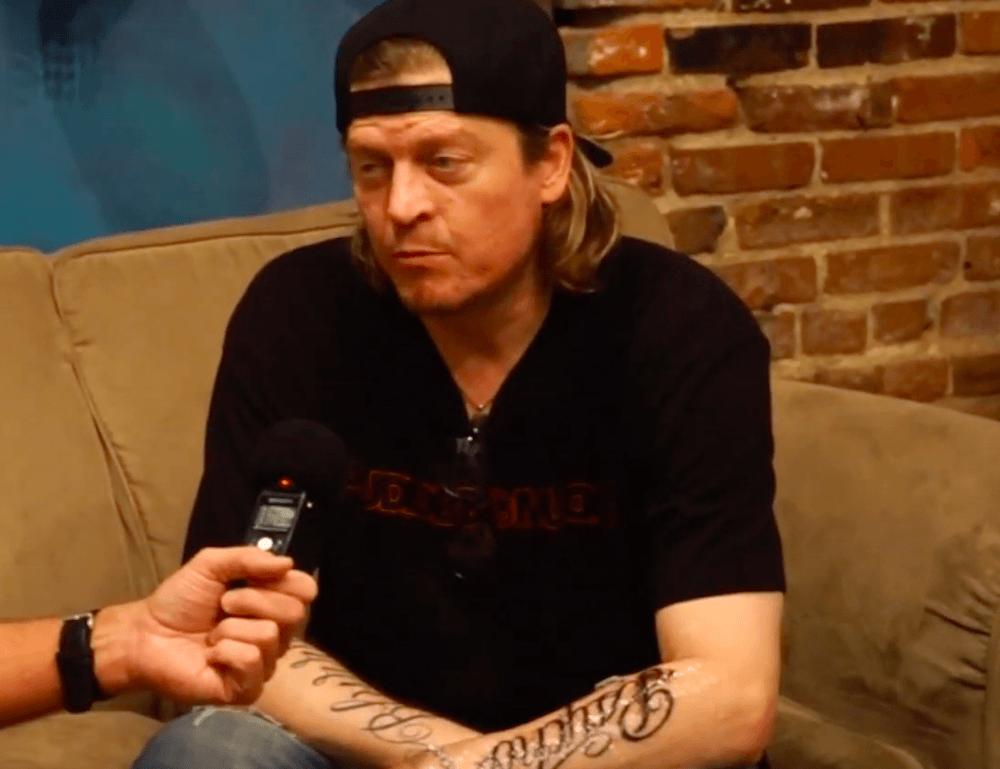
    Wes Scantlin, the lead singer for Puddle of Mudd, took to the airwaves to promote the band’s first new album in a decade, and talk about some of the motivation for his hard-fought sobriety.

    Blabbermouth reported on an interview with the Des Moines, Iowa radio station KAZR to promote the September 13 upcoming release of Welcome to Galvania, where Scantlin shared that his battle against dependency on alcohol and drugs has been a “long road, but it’s well worth it.”

    Scantlin’s dependency issues have made headlines in the media for more than a decade, including arrests in 2012 for cocaine possession and driving under the influence, drunk and disorderly conduct on a flight, leading sheriff’s deputies on a high-speed chase while under the influence of alcohol in 2015—one of several arrests during that year—and a 2017 arrest at Los Angeles International Airport for trying to board a plane with a BB gun.

    Scantlin’s dependency issues have also resulted in several disastrous live performances with Puddle of Mudd, including onstage meltdowns in 2015, an Ohio show where Scantlin’s inebriated state forced the band to delete its official Facebook page, and a 2016 Ohio show where he accused a fan of stealing his home before leaving the stage. 

    Eventually, the negative press and mounting legal problems forced Scantlin to seek treatment at a rehabilitation facility in 2018. He returned to the public spotlight with 11 months of sobriety under his belt that same year, telling Rock Titan magazine that the experience left him feeling great and the band had returned to touring.

    In the KAZR interview, Scantlin said that the revolving door of public intoxication and run-ins with the law had worn him down physically, mentally and spiritually. “It got really, really old,” he said. “I didn’t really want to even do it anymore.” 

    Scantlin credited a court judge (“a really, really awesome judge”) with helping him to get on the right path. “It’s comical, but Judge Corne saves Puddle of Mudd,” he joked. He also surrounded himself with the right support team. In an interview with Consequence of Sound (CoS) in July 2019, he said, “They believe in me and I believe in them.”

    As for the fans, whom he thanked in the CoS interview for “their patience,” he said that he hopes that Welcome to Galvania will be the sign that he and Puddle of Mudd are returning to form. “You could see for a while there where people were just like, ‘Okay, let’s see what you got,’ you know?” he said in the KAZR interview.

    “I hope the new music inspires my fans to live their lives,” he said in a statement. “I’m just trying to crawl under people’s skin and help them through their life musically.”

    View the original article at thefix.com

  • Papa Roach’s Jacoby Shaddix Talks Addiction, Childhood Trauma

    Papa Roach’s Jacoby Shaddix Talks Addiction, Childhood Trauma

    The Papa Roach singer revealed his struggles with addiction and expressed sympathy to those suffering from trauma.

    Jacoby Shaddix, the lead singer of Papa Roach, got candid about his struggles with recovery in a conversation with Philadelphia radio station WMMR-FM. Shaddix touched on his own sober journey, the childhood trauma he experienced, and how he feels for others who have had their lives affected by trauma.

    The rock star is now sober, but he said that the path to clarity was not an easy one for him, nor one he could have walked alone.

    “I had a mean struggle with it, man. I tried to get sober for the first time when I was 27 and struggled with it for years and fell off and got back on,” he recalled. “Then I finally found a support group of other musicians that were traveling the road and living the life that I was living, ’cause it’s quite unique, in a sense. And I found a way to do it and a way to find some peace.”

    Rock Bottom

    Shaddix was inspired to get sober after hitting rock bottom. In a moment of clarity, he realized he was only hurting himself and others.

    “My behaviors and my actions and the ways that I was treating myself and my loved ones, it was just not acceptable. I was just drinking to numb my feelings and try to escape it, but the problem was always there,” Shaddix admitted. “I was like, ‘Alright, it’s time to face it.’ I don’t wanna repeat this cycle of broken family and broken children.”

    His own struggles with substance abuse stems from his own traumatic experiences as a child.

    “I grew up and didn’t know how to deal with my emotions and my feelings of the dark experience that happened to me as a child and the brokenness that I carried from that,” Shaddix said. “Trauma, it’s real. Trauma affects people in a lot of different ways, and you’ve gotta find a way to deal with it. I’m still unpackaging all this stuff from my youth and coming to peace with it.”

    Trauma & Addiction

    Now that Shaddix is sober, he is sensitive to the trauma of others, especially military vets.

    “You see a lot of U.S. military veterans are coming back and they’ve experienced just horrific traumas… and my heart just goes out to them,” he said. “I did a bunch of research on homelessness in America, and a large portion of our [homeless] population are U.S. military veterans.”

    His own father was a Vietnam veteran who passed his trauma onto Shaddix.

    “My father was a Vietnam veteran and he had that experience and I saw how that played out in his life,” he revealed. “Man, the horrors of war… the trauma doesn’t end on the battlefield, people carry that trauma home. Soldiers got families, and you see how it affects the family and the kids.”

    Shaddix urged anyone listening to seek help if they feel like they need it.

    “The struggle for people is real, and I just encourage anybody that’s out there struggling, if you’ve got these demons that you’re dealing with, I guarantee there’s somebody around you that wants to help you, and do not be silent about your struggle,” he advised. “If you’re alone in this, it’s gonna take you out. If you don’t speak up, it’s just gonna take you down farther and farther and farther. So speak. Call a hotline if you’re struggling with life itself. There’s a lot of avenues for people to go out there and get help.”


    If you or someone you know may be at risk for suicide, immediately seek help. You are not alone.

    Call the National Suicide Prevention Lifeline at 800-273-TALK (8255)

    Call 911

    Send a text to the Crisis Text Line at 741-741. This free text-message service provides 24/7 support to those in crisis.

    Call a friend or family member to stay with you until emergency medical personnel arrive to help you.

    View the original article at thefix.com

  • Goo Goo Dolls’ Johnny Rzeznik: Sobriety Make Me A Better Person

    Goo Goo Dolls’ Johnny Rzeznik: Sobriety Make Me A Better Person

    Even five years after he quit drinking, Rzeznik said he still takes careful steps to maintain his sobriety. 

    As the Goo Goo Dolls celebrate their 33rd anniversary together, frontman Johnny Rzeznik is celebrating a more personal milestone: five years of sobriety. 

    “People actually like me again,” Rzeznik told Cleveland.com. “I think it’s made me a better person. It certainly has humbled me.”

    Even five years after he quit drinking, Rzeznik said he still takes careful steps to maintain his sobriety. 

    “I have a very powerful form of alcoholism. I finally gave up and accepted the fact that if I even smell too much booze, I’m going to start drinking again,” he said. “That’s just how I am.”

    Rzeznik said he finds fellowship through performing. 

    He said, “Connecting with the audience. If I go up there and say a little something or tell a little story or the audience is singing all the lyrics to the songs, I feel like I did my job. All I want to do is connect.”

    That is something that can’t be replaced, even in an increasingly digital age.

    “One of the things about live music that’s so incredibly important and can’t be replaced and automated is the common focus of a room full of people having that human contact and being immersed in the sensory overload of a rock concert,” Rzeznik said. “The volume, the lights, the smells, the people bumping into you…”

    That personal connection is especially important for people today, he said. 

    “We live in an increasingly isolated world, so it’s important to get out and actually touch people and laugh and cry and do all those things.”

    Even after 33 years of playing his songs, Rzeznik is always willing to play them again. 

    “A rock star I know said, ‘I just can’t play that song anymore,’ and I said, ‘You’re an ungrateful bastard. That song bought you a house in Northern California. That song put your kid through college,” he said. “Stand up there for three-and-a-half minutes and sing the [bleeping] song!’”

    Last year, Rzeznik revealed that he has a sobriety tracker on his phone. His recovery started after a New York blackout forced him to realize it was time to change. 

    Going To Rehab

    He called his manager and said, “I’m not doing anything for the next three months. I’ve got to take care of this, because I’m going to die.” 

    He went to rehab for three months, but wished he could have had even more in-depth treatment. 

    “I wish I could have stayed for six months,” he said. “I went to a very serious place, where they don’t do yoga and massage. They concentrate on triangulating treatment, where it’s like therapy and 12 step and some spiritual work.”

    After growing up with an alcoholic father, Rzeznik is happy that he will be raising his daughter in a sober home. 

    “I’m paraphrasing someone else, but kids turn you into the person that you should have been the whole time,” he said.  

    View the original article at thefix.com

  • David Crosby's Surprised He’s Still Alive After Addiction Battle

    David Crosby's Surprised He’s Still Alive After Addiction Battle

    Given the singer’s substance-soaked history, prison time, and medical problems, Crosby is unsure of how he’s still here.

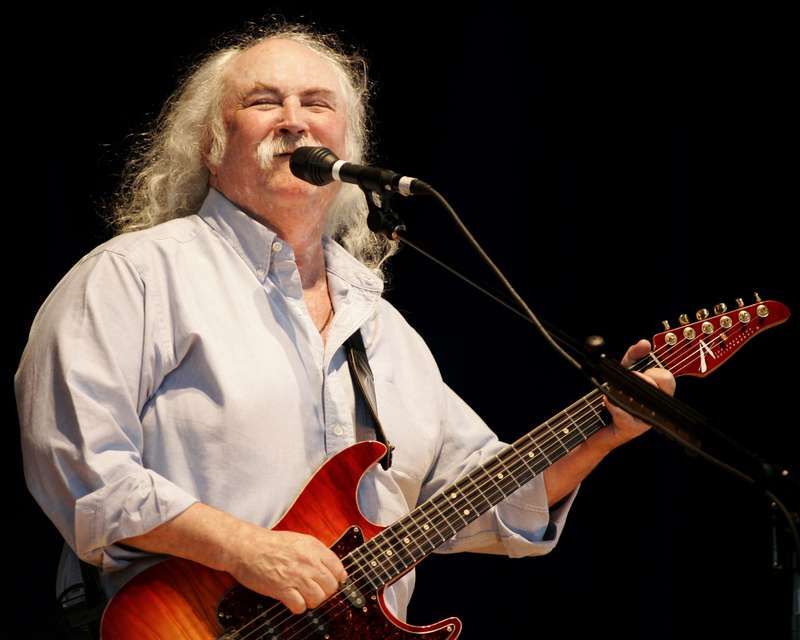
    Singer-songwriter David Crosby, 77, says he’s about as surprised as anyone that he’s lived to such a ripe old age. Crosby has been addicted to drugs, did hard time in prison, and survived heart attacks and a liver transplant foisted upon him by hepatitis C.

    “Nobody has any clue why,” said Crosby. “A whole lot of my friends are dead. I think my new motto is gonna be ‘Only the good die young.’”

    He will be celebrating his 78th birthday on August 14.

    An upcoming documentary, entitled Remember my Name, will cover the Rock & Roll Hall of Famer’s “checkered history.”

    “I’ve done some great things, some terrible things. Of course I remember that s—,” Crosby revealed. “All I had to do is be willing to tell the truth… But considering how old I am, I should be fading off into the distance politely and sort of getting ready to sit down and shut up.”

    Crosby has entrusted the telling of his life’s story to producer Cameron Crowe, who he’s known for a good while.

    “I’ve known him since he was 15,” Crosby said. “He was a very, very bright young man, and everybody liked him. I thought he was terrific, and we became friends. He’s been my friend ever since. And he knows, he really knows [about me].”

    One of the tales from Crosby’s life featured in the film is the story of how Joni Mitchell dumped him via song. Despite Mitchell going on to date Crosby’s bandmate, the two have stayed friends.

    “I do see her and talk to her,” Crosby said. “I had dinner with her at her place a couple months back. And I do still love her. Our relationship has always been thorny but good.”

    Prison Was The Turning Point

    Crosby’s life took a dark turn when he became addicted to heroin and cocaine, which culminated in drugs and weapons charges in 1983. After at first fleeing, Crosby turned himself in and served five months in prison in 1986. Here, he says, was where he was able to get off drugs for good.

    “It’s the only thing that really worked,” he recalled. “I had tried going into treatment and it didn’t work. I went into prison, and it worked. It was a s —y way to do it.”

    These days, life is pretty good for Crosby—with the exception of one thing: the 45th President of the United States.

    “I’m pretty happy almost all the time—unless I think about the president,” he says.

    He’s so passionate, he might even reunite with his old band, Crosby, Stills & Nash, if it could help beat President Donald Trump.

    “I would like to do some get-out-the-vote stuff in this coming year,” he said. “I really want this guy out of the White House. So if they wanted to do that, I’d probably do it with them.”

    View the original article at thefix.com

  • Ivan Moody Counts Rob Halford, Jon Davis Among His Sober Supporters

    Ivan Moody Counts Rob Halford, Jon Davis Among His Sober Supporters

    “No matter where he was in the world, he picked up, left me messages, he sent me cards,” Moody said of the Judas Priest singer.

    Ivan Moody, the lead singer of the metal band Five Finger Death Punch, has had a hard road to achieving sobriety, but he currently counts metal legend Rob Halford as one of his sober supporters, as well as Jonathan Davis from Korn.

    As Moody explained on The Jasta Show, “Rob is actually one of my—and I hate to put it this way—sober coaches. He’s been sober now for almost forty years. And when I went through recovery, and even my bandmates and I weren’t talking, Halford was on the phone with me. I got two 10-minute phone calls a day, and Halford was one of them every single day. No matter where he was in the world, he picked up, left me messages, he sent me cards.”

    Moody added that “Jonathan Davis was the same way—he was very supportive of me.”

    Halford is considered one of the best in the genre. Moody said, “This was coming from a kid who grew up on Judas Priest and I’m turning around and this guy is a father to me in certain ways, and very much a piece of who I am now.”

    Moody went on to tell Jasta he was “never very orthodox with [my] sobriety. Neither was J.D. or Rob, which, again, that’s what I really appreciate. I don’t go to a lot of meetings. I respect it, and I understand why other people used [them] and benefitted from [it], but for me personally, it’s just not what I need. So that was something I always looked to with guys like J.D. and Rob… that wasn’t my path and I didn’t need it.”

    Moody has reportedly been to rehab five times, and came close to death from an alcohol-related seizure. After that experience, Moody recalled, “I knew I was done during my detox. It took me seven and a half days just to detox. I couldn’t walk, I couldn’t go to the bathroom by myself, I couldn’t smoke a cigarette. I had a staff member actually sleep in the room with me for the first 28 hours just to make sure I didn’t go under. I blew a .36 when I went in, which anyone who knows anything knows means that was basically death. And I didn’t want to come out of it. I woke up the next day and I [was] pissed that I was still alive.”

    Moody ultimately realized he didn’t want his legacy to be dying from substance abuse.

    “I listen to a Linkin Park song now and I can hear [Chester Bennington] crying for help. Why did it take us so long to hear that? I want people to hear my lyrics or my melodies and say ‘that dude’s in pain.’ Or ‘that guy’s victorious over something—he overcame that substance.’”

    View the original article at thefix.com