Tag: social media

  • Social Media Algorithms as Triggers: Wish-ing for a Meth Pipe

    Social Media Algorithms as Triggers: Wish-ing for a Meth Pipe

    Imagine if Spencer’s Gifts from the mall in the 80’s smoked crack, got skyrocketed into the future, and became a Black Mirror episode. 

    Working in the digital world, publishing online, and playing the whole social media gig, there are certain things you have to make peace with as a sober person like myself. For instance:

    Every day, Facebook will ask if I want to stroll down a memory lane of old updates, many of which feature me with a red bloated face and a pinched hammered look in every picture. Hard pass, FB! But thanks for asking! Ditto I have learned to live with my Instagram feed being filled with people I follow but might not really know (or like, for that matter) as they endlessly post about White Claw or rosé all day

    Is It Possible for Targeted Advertising to Go Too Far?

    Then there are the ads and accounts for weed enthusiasts, microbrews, and wine tours that follow you on Twitter based on a few tweets that happen to have the words booze or weed in them, regardless of context. Oh social media, you’re so delightful. But is it possible for the algorithms and targeted advertising to get out of control and maybe cross a line? Can a company be so far off base with their social media ads that people in recovery can even feel triggered? In the case of the disaster that is Wish.com’s Facebook marketing strategy, I would emphatically say yes.

    Listen, with a decade plus of sobriety, I try to accept the things I cannot change and the many problematic aspects of Facebook fall squarely in that category. Name something about the social media platform that is awful and troublesome and I will totally agree with you. Yet I still use the damn thing, mainly because as a writer it’s super useful. Also, I’m an addict and maybe mildly hooked on the instant approval I receive every time I post something funny. Regardless, I’ve leaned into its ridiculousness so it takes a lot to make me notice how insane it can be.

    That is, until a few months ago. I was scrolling endlessly, as one does, and stumbled upon a Wish.com ad for bullets. Not bullets for guns, but bullets as in the little plastic canisters that hold your cocaine. For people who didn’t share my affinity for that substance or other sniffable powders, bullets were a handy, very 90’s way to keep your blow on you and do it without going to the bathroom to cut lines on the back of gay bar toilets, as glamourous as that all sounds. 

    Bullets, Meth Pipes, Sex Toys, and Poppers

    The ad featured the bullets in a variety of colors and they were only a dollar! What a bargain! I naturally took a screenshot of the ad and turned it into one of those aforementioned hilarious posts. Mainly, it was just so jaw-droppingly blunt that I felt like it needed to be laughed at and shared. Like, really? This is where we are, Facebook? Ads for the new Mindy Kaling movie and Dove Bars alongside cocaine bullets? I mean, talk about spot-on algorithms, but good lord. Obviously, I’m an open book (to a fault sometimes) and I have shared bluntly on Facebook about my drug use. Therefore, I get the ads appropriate to what I talk about. Still, this one felt a little too on the nose, as it were. 

    Thankfully, I have been sober for a long time, so it didn’t trigger me. But the sheer wildness of the ad was hard to get out of my head.

    A couple of weeks later, a friend posted a Wish ad for meth pipes, poppers, and sex toys. A former meth addict and gay man himself, his post expressed amazement at the brazenness of the items and basically called out Wish.com for providing all the tools for a relapse on his timeline. The comments from other sober folks echoed his shock, expressing disgust and anger over such garbage thrown carelessly in someone’s ad feed. 

    Yes, of course, you can block Wish. Yes, you can report them and take them out of your timeline. However, you don’t get a choice in the beginning. These ads just show up on your page uninvited, regardless of what’s happening in your life and in your recovery. 

    Days after that post, another gay male friend in recovery shared a similar status about Wish and their ads. Obviously, I was far from alone in my reaction to the inappropriateness of the ads. In fact, there are entire Facebook groups devoted to how insane Wish.com is. Oh, it’s not just drug paraphernalia. It’s everything from magnetic weight loss bracelets to weird teeth-whitening lasers. Oh and don’t even fall down the rabbit hole of all their wacky apparel and sexy underwear like this writer did if you at all value your time. It’s like if Spencer’s Gifts from the mall in the 80’s smoked crack, got skyrocketed into the future, and became a Black Mirror episode. 

    How Well Do You Really Know Me, Facebook?

    Of course, for Wish, none of these ads are personal. They have a whole bunch of crap and they want to sell it to you. Wish doesn’t know I had an epic drug problem nor does it care. Again, I get it. While vast and certainly random af, Wish’s inventory is not the problem. What seems more problematic is that a platform like Facebook has zero regulation or even a thought process about what’s being advertised to the people who use their service. You’d think in a country with an exploding meth epidemic, ads for glass pipes would be off limits, algorithms be damned. Their refusal to address this seems odd, since Facebook takes great pride in how accurately it can read our minds, suggesting who we should be friends with, what pages we should like, and what we should buy. So the fact that someone like me, who very much lives and breathes sobriety out loud on social media, can still get these kinds of ads proves maybe they don’t know us all that well at all. 

    Besides, shouldn’t we draw a line somewhere prohibiting certain things from being advertised? Meth accessories might be a good place to start that line.

    Also not fantastic is what seems to be the blatant targeting of these kind of products to gay men. In a community with a higher rate of addiction, death, and mental illness, it blows my mind that alcohol companies still sponsor pride festivals, travel companies shill drug-soaked vacation packages, and social media platforms suggest products used in practices that are literally killing the population they’re targeting. 

    This is an advertising hat trick as old as the game itself: market to the folks who use it the most. But like cigarettes or alcohol billboards plastered all over economically depressed neighborhoods, it feels like a cheap shot to push this stuff to gay men who innocently log on to Facebook. 

    Yet at the end of the day, it’s a drinking and using man’s world so I’m sure very little can be done. If I am in a good spot emotionally in my sobriety, I can go to bars, walk down grocery store wine aisles, and even look at meth pipe ads. But what about people new to recovery, fresh off their last run? Or someone in a vulnerable place and craving their drug? There’s a reason they tell us to stay away from bars or other using-associated cues in early sobriety. 

    Maybe if enough of us block, report, and unfollow, something will happen. Or is that too much to Wish for? 

    View the original article at thefix.com

  • Finding Meaning in Tragedy: Addiction, Trauma, and Activism

    Finding Meaning in Tragedy: Addiction, Trauma, and Activism

    Turning grief into activism is a powerful way to process and give meaning to the pain of traumas like the death of a loved one who struggled with addiction. It is on the heels of tragedy that we can make voices of change be heard.

    Grief is complicated, individually experienced, and universal. And humans are not the only creatures on this planet who mourn their dead. Scientists continue to debate how complex the grief of non-human animals is, but the evidence points to many species grieving the loss of their kin and mates.

    For millennia, scholars have been searching for a way to explain the depths of human grief. Plato and Socrates mused on what death and dying meant and philosophized about the grieving man. Sigmund Freud, often considered the father of modern psychology, began psychological research into mourning in his 1917 essay “Mourning and Melancholia.” In 1969, Elisabeth Kübler-Ross published her influential book, On Death and Dying. The popular five stages of grief were born from her work.

    Social Media Affects How We Grieve

    Loss can be traumatic. Whether expected or sudden, close or removed but symbolic, grief can take hold when we lose someone or something significant. We mourn and ritualize loss as a means to process it. There are culturally distinct rituals for mourning families; processing the emotions that come with grief can be guided by these rituals. These customs help us find meaning in our grief, even when we don’t consciously recognize it.

    As social media continues to become a more ingrained aspect of modern life, people are developing new rituals to mark tragic loss. The social norms of these rituals (such as posting photos, posting on the wall of the recently deceased, or sharing a status that talks about special memories) is always in flux. But one norm that is constant in the age of social media is our immediate collective knowledge of loss. There is an urgency to information and the negotiation of emotions in a shared space. This immediacy is changing the old social norms of letting some time pass before talking about causes of death.

    There is another related but distinct way people sometimes process grief, and that’s by turning tragedy into a call for activism. Smithsonian Magazine published a powerful piece titled “The March for Our Lives Activists Showed Us How to Find Meaning in Tragedy.” The author, Maggie Jones, describes the instant response students had because they knew “time was not on their side.” With on-demand information, the collective conscience quickly moves from one tragedy to the next as new headlines take over. These Parkland students were not being inconsiderate in their quick call to activism, they were creating meaning from tragedy and were bolstered by the collective grief that took shape immediately, in large part because of social media.

    The Trauma of Drug-Related Deaths

    Across the United States, drug overdose deaths have been on the rise, particularly those involving synthetic narcotics (primarily fentanyl). Overdoses caused by the most commonly used drugs are tracked by the Centers for Disease Control and Prevention (CDC). And deaths due to overdose are underreported and misclassified. The stigma that surrounds addiction and the prejudice against people with Substance Use Disorder (SUD) relegates many overdose deaths to the world of whispers and rumors.

    My life has been marked by traumatic losses due to the effects of SUD. People close to me have overdosed, some survived and some died. I’ve also lost people to complications due to a lifetime struggle with Alcohol Use Disorder. Only recently have I seen these losses become conversation starters, where people will openly talk about the battles once fought by the brave folks who lost their lives to disease. Maybe that means we’re turning a corner in addiction stigma. Maybe we’re opening the door for people to feel less shame in talking about their struggles while they still have a chance to change the course of their lives. We can pay homage to our lost loved ones by sharing their stories and removing the stigma that may have kept them from receiving the help they needed.

    Recently a person in recovery told me that their co-workers do not know about their history and they will never tell them because multiple times they have made comments like “drug addicts are scum and should be shot” and “addicts are worse than rabid dogs.” The negative perceptions of people with SUD grated on this person and fed their alcoholism in a detrimental way. They believe they are simply a bad person who does not deserve help because addiction cannot be cured. This is a falsehood perpetuated by ignorant and fearful people.

    When we lose people and we share the entirety of our memories about them, from childhood to work life, and we share the truth of their battles with addiction, we are combating these dangerous preconceptions and prejudice.

    Overdoses aren’t the only way addiction kills. According to drugabuse.gov, “drug-related deaths have more than doubled since 2000 [and] there are more deaths, illness, and disabilities from substance use than from any other preventable health condition.” SUD is a diagnosable and treatable condition that deserves as much recognition as any other health issue for which there are awareness campaigns and funds devoted to find treatments to save and improve lives. Substance use disorders have the highest mortality rate of any mental and behavioral disorder.

    Tragedy as a Call for Activism

    In a world where so many people process aspects of their grief online and where tragic events unfold live for millions of people around the world at the same time, finding meaning in tragedy is necessary for our mental health. When we experience trauma, we are at risk of developing post-traumatic stress. Trauma can manifest as a strong psychological or emotional response to a distressing or disturbing event or experience. We can be traumatized when we lose someone; we can even be traumatized when we hear that someone we care for went through a terrifying ordeal. If our ability to cope is overwhelmed, that is trauma. When someone develops post-traumatic stress disorder (PTSD), their sense of self in relation to the world around them has become damaged. Trauma has the potential to shatter our beliefs about our place in the world and our sense of safety.

    Finding meaning in tragedy can go a long way in preventing the development of post-traumatic stress and can be a marker in recovery from PTSD.

    In our changing experience of bereavement, tragedy is a call for activism. It is on the heels of tragedy that we can make voices of change be heard. Tragedy creates space in which people listen. Frequently, we want to connect with others when we experience loss; sharing grief reduces its intensity. Turning grief into activism is a powerful way to process and give meaning to the pain of traumas like the death of someone who struggled with addiction.

    View the original article at thefix.com

  • Please Don’t Tell Me How to Grieve

    Please Don’t Tell Me How to Grieve

    We are not taught how to grieve. Acknowledging that death is inevitable means that we have to come face-to-face with our own mortality and the mortality of everyone we love in this world. It’s incredibly scary.

    “Get over it.”
    “I’ve moved on. You need to move on too.”
    “Don’t talk about that.”
    “What’s wrong with you?”

    When it comes to grief, everyone seems to be an expert. We may not have life or death figured out, but life after death? People know how to do that. Or at least they think they do. According to them, there’s only one right way to grieve:

    Their way.

    Grief is universal. The way we experience it and process it, however, is not. To approach grief as if curing it were as easy as taking a pill is both irresponsible and insensitive.

    And yet, there are still people who take it upon themselves to try and tell you how, where, and when you should grieve. Now, in the age of social media, the shoulds and should nots have only gotten stricter. Grieving online is perhaps the biggest no-no. Experts have even coined the term “grief police” to describe the trend of policing just how people grieve — telling them they’re grieving too much or not enough.

    And in the last six months, we’ve even seen this grief-shaming play out in the headlines. First, people criticized The View co-host Meghan McCain for talking too much about her late father Senator John McCain following his death. Then, following actor Luke Perry’s sudden death, online trolls criticized his daughter Sophie for seemingly doing too well and not grieving enough.

    We get it: No matter how we grieve, people will have opinions about it. But it’s important to remember there is no “right” way to grieve, says Lauren Consul, a California-based licensed marriage and family therapist specializing in grief. Grief can be difficult to navigate because it’s not something our society is open about.

    “We are not taught how to grieve. Acknowledging that death is inevitable means that we have to come face-to-face with our own mortality and the mortality of everyone we love in this world. It’s incredibly scary,” said Consul. “Seeing someone who is grieving is a stark reminder that one day that will be us too. It’s painful to think about, so people tend to avoid and downplay other people’s grief. It can give a sense of control; if they can manage that person’s grief, they don’t have to think about their own.”

    This grief policing is especially true when the death is unexpected, as was the case when my father died from suicide in 2003. I learned pretty quickly that talking about death on places like Facebook makes some people uncomfortable. We may be a society that lives our life online, but for all the sharing we do on social media, there’s still this stigma associated with posting about our grief and the loved ones we’ve lost. It feels like an unspoken rule of sorts: grieve in silence. Don’t talk about it. And, if you do talk about it, make sure you find just the right balance – not too much and not too little.

    But here’s the thing about grieving: You’re never going to please everyone. You’re never going to grieve the “right” way because there is no right way to grieve. That’s something that took me a while to learn and understand. At first, I was afraid of what people would think or how they would view my grieving process, which included writing about my father’s suicide regularly on my blog. I even began to feel as though I needed to hold myself back and not talk about it, but you know what? That wasn’t good for me. In fact, it stalled my grieving process, and that wasn’t healthy.

    Maybe that’s why I’m always thinking of what I’d like to say to the “grief police.” If I had the chance to sit down with them and have an honest conversation about the realities of figuring out your life after losing a loved one, here are four things I’d tell them:

    My grief is not your grief. And your grief is not my grief.

    Grief is perhaps one of the most intense and most confusing emotions we’ll ever feel. And even though a plethora of grief books line the self-help sections of bookstores and libraries, how we actually go through our grief is a very personal journey. The strategies and coping skills that work for some may not work for others. Grief is as individual as the person going through it. For every loss, there are a hundred more ways to grieve. There is no right way, no one size fits all. Grief is an individual journey and no one can tell us how to do it. We must find the way that works for us and not judge others because they may grieve differently.

    Grieving is a journey – not a destination.

    That sounds cliché, but it’s true. Grief has no timetable, no script, and definitely no shortcuts. It’s not as easy as getting from Point A to Point B because the grieving road is far from linear. Elisabeth Kübler-Ross may have outlined the five stages of grief, but it’s not uncommon to vacillate back and forth sometimes. Even 16 years after my father’s death, I find myself returning to emotions like anger every so often. It doesn’t mean that I’m still in the throes of deep grief, though; it just reminds me that the work of grief is never really done.

    Sometimes, we just want people to listen.

    Grief demands that we feel, think, process, reflect – over and over. And there are times that we need to give voice to those feelings as we process. To put words to our emotions. To try and make sense of everything that’s happened to us. Maybe that’s why my writing has been such a healing part of my grief. I’ve been able to put the unimaginable into words, even at times when those words were hard to come by.

    Being there for someone during this time is a powerful thing. You don’t necessarily have to say anything. Trust me, your presence means more than you’ll ever know.

    Not everyone wants to be “cured” from their grief.

    People might be surprised to learn that I don’t want to “get over” my grief. There’s this misconception that you can easily move on, and that couldn’t be farther from the truth. As painful as some of these emotions are (hi, regret), I need to feel them. So while it’s tempting to listen and then try and offer advice to help us move on, I ask that you just listen. In the end, there are no magic words that will make everything better. We need to feel what we feel when we feel it — and feel it without judgment.

    I’m always going to talk about my father, my grief and my journey. It’s all part of my life and my story. We each have to move through grief at our own pace and in a way that is comfortable for us. But that doesn’t mean that we can’t be there for each other — in a way that is comforting without being condescending, sensitive without shaming, and helpful without being harmful. That just might be the greatest gift we can ever give someone: a safe space to grieve and begin the healing process.

    View the original article at thefix.com

  • Fentanyl Brunch Joke Lands Restaurant In Hot Water

    Fentanyl Brunch Joke Lands Restaurant In Hot Water

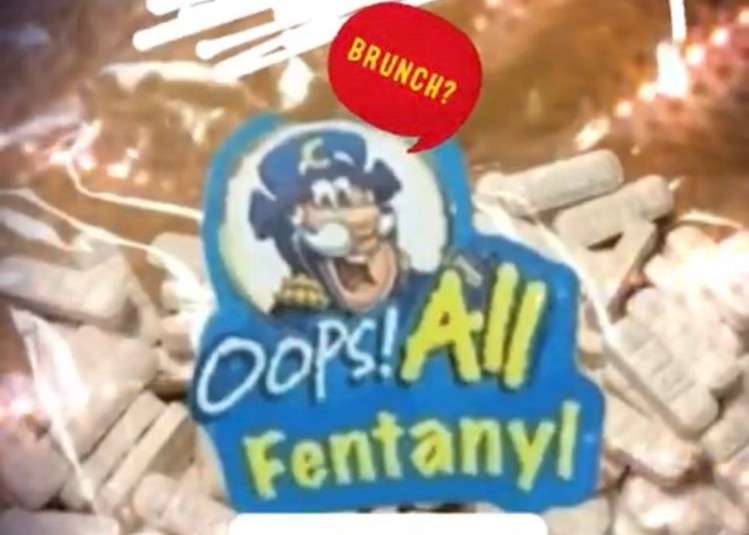
    An Ohio pub issued a public apology after parodying Cap’n Crunch with a joke menu item called “Oops! All Fentanyl.”

    Some jokes are best untold, as one restaurant and pub in Lakewood, Ohio is learning after a bungled social media post. On their Instagram account, the restaurant Yuzu posted a photo of a bag of fentanyl labeled “Oops! All Fentanyl” and “New brunch special? Sat & Sun.”

    The “joke” was likely referring to how many opioid drugs being sold have been unexpectedly cut with fentanyl, which has led to accidental fatal overdoses. Many Instagram users who saw it were not amused.

    “Screenshot from Yuzu Lakewood’s IG story. Not at all cool,” one person responded. “Making a joke of the opioid crisis is never funny ever.”

    The establishment’s owner, Dave Bumba, seemed to ignore the controversy his social media account created for about three days before finally responding on Facebook.

    “First, it’s never our intention to cause any malicious offense, and for that I do genuinely apologize for,” Bumba wrote in the post. “There’s a generational gap of humor; our target demo is 21 to 34. I’m aged out of our demo myself. Younger generations have developed a different sense of humor that more abstract, surreal, and darker than previous generations.”

    Bumba stopped short of calling the backlash a result of political correctness, instead turning into a meta-analysis of what’s a relatable coping mechanism versus what’s actually offensive.

    “It would be easy for me to blame this simply on an overly-politically-correct culture. A loud subset of people have been trained to seek out a reason to be offended. And while this might exist on some level, seeing some of the constructive criticism also made me think retrospectively about our social media content choices,” he posted. “Just because something exists and is perceived to be liked by enough of a subset of our demographic, does that make it the socially right choice to be relatable content?”

    Users considered the statement a non-apology, calling Bumba out on using a generational gap as cover.

    “Rather than sincerely apologizing for your offensive posts (which personally are not clever or funny and were in very poor taste), you backpeddle and still try to place blame on those you offended by implying they aren’t young or hip enough to get the joke,” wrote a user.

    Fentanyl has accelerated the number of deaths in the opioid crisis, hitting areas like Arizona especially hard. There, deaths from fentanyl overdoses have tripled between 2015 and 2017, mostly due to users believing they had a weaker opioid, like oxycodone, in hand.

    Street fentanyl is often disguised as legitimate prescription opioids, but these bootlegged pills are often made in primitive conditions with no quality control. And it only takes a little bit of fentanyl to send users into overdose.

    Users, including those of the targeted millennial demographic, have commented explaining why the joke wasn’t funny. Yuzu hasn’t posted anything further.

    View the original article at thefix.com

  • Bam Margera Shares His Rehab Struggles Through Social Media

    Bam Margera Shares His Rehab Struggles Through Social Media

    The long-struggling skateboard star aired his frustrations with rehab on the Internet, letting all his fans see how tough rehab can be.

    Bam Margera, the former star of Jackass, is struggling with the confines of his rehabilitation. As reported in The Fix, Bam entered rehab for a third time on January 2, 2019.

    Margera has struggled with drugs and alcohol since his youth, and the death of close friends from addiction has been a destructive force in his life. Ryan Dunn, a co-star of Jackass and one of Margera’s best friends, died in an alcohol-fueled, fiery car crash in Pennsylvania on June 20, 2011, alongside his friend Zachary Hartwell.

    Bam Margera has taken to Instagram to filter his emotions while in rehab this third time. “Writing is one thing to do in rehab,” is the caption of the below post, published in Livewire:

    Dear Cocksuckers,

    I have spent enough time grieving over Ryan Dunn through alcohol. I’m 39 years old, the party is over. I don’t plan on drinking anymore. I have wasted too much time at the bar and all my friends who needed decades of help are now sober. I would like to join the sober parade. I hear the stories of other rehab patients telling me about there [sic] weeks or months of horrible detox. Well guess how many days of detox I had? ZERO!

    I am sick of people always thinking I’m drunk, crazy or fucked up. So if you plan on calling me to tell me that, you can go fuck yourself instead. I’m not going to suck anyone’s dick to stay on [skateboard company] Element and or prove that I am sober. I am sober. So keep printing BAM [skateboard] decks or don’t. Plant a tree or go bite the big one, every day is Earth day!

    Margera’s next Instagram post was as direct and emphatic:

    To whom it may concern,

    1. I don’t do well with not being allowed to Facetime my wife and kid
    2. I don’t do well with not being able to answer important calls with important people
    3. I don’t do well with not being able to go with everyone else to an outside AA meeting.
    4. I don’t do well with not being allowed to use the gym.

    I don’t understand why I can’t go on the Interweb like everyone else.

    1. My eyes hurt from reading, my wrist hurts from writing, ’cause there is nothing else to do.

    Recovery often involves relapse and it definitely involves struggling through identity and pain, so perhaps Margera’s open discussion of his personal issues is one step closer toward health and sobriety. 

    View the original article at thefix.com

  • Artie Lange: I'm 18 Days Clean And Fighting Hard

    Artie Lange: I'm 18 Days Clean And Fighting Hard

    Comedian Artie Lange took to Twitter to gush about his current recovery program and how many days he’s been clean.

    The comedian stepped out of rehab to perform a show and took the time to send off a series of appreciative tweets.

    Comedian Artie Lange tweeted Wednesday that he’s been clean for 18 days. Lange performed a show before returning to his rehab in time for Thanksgiving on Thursday.

    “Guess who’s clean?!! Been clean 18 days! The rehab I’m at let me use my phone to check things. I still have more time here but I’m doing great,” he wrote on Twitter. “I’m humble. Not bragging. Just feel well. Tons of work ahead. Sunrise detox in Sterling, NJ helped save my life!!!  They’re great!!”

    The comedian has struggled with substance use disorder for years, but on Wednesday his treatment center allowed him to take a break from his program to perform. He gushed about his current recovery program on Twitter.

    “I’m at The Retreat by Lancaster PA. This place is a Godsend! They’re not payin me. No free stay. They do it right. I’m so grateful to them. The nurses are Angels,” he tweeted. “I’m not saying I will never relapse. I pray every day!! Just happy to be alive. I ain’t checkin out yet! I love u all!”

    He topped off his tweets with the serenity prayer.

    “God. Grant me the serenity to accept the things I cannot change. The courage to Change the things I can. And the wisdom to know the difference,” he wrote on Twitter.

    Lange had recently announced his intention to get clean on the Steve Trevelise Show

    “I’m about to go into drug treatment and commit to a full rehab, in-patient,” he said in the interview on the show. “I don’t know. I’m a very humble guy at this point. And I think I’m ready to go and do what I gotta do. It’s been long enough.”

    Soon after arriving at the rehab center after finishing his show, Lange sent out one last tweet before relinquishing his phone to thank his fans.

    “On way back to rehab. Did show.  Stayed clean.  On way back.  Another Thanksgiving inside someplace.  Last one was jail.  But I just killed for a huge crowd who felt like family,” his last tweet read. “I’m fighting hard.  Don’t count Artie Lange out. Love u. Be back by end of month.  I’m smiling. Thx”


    View the original article at thefix.com

  • Why People With Internet Addiction React Worse When Wifi Fails

    Why People With Internet Addiction React Worse When Wifi Fails

    Researchers explored the reaction to digital technology failure in people with internet addiction for a recent study.

    When the Wifi loses its connectivity, or the movie we’re streaming buffers endlessly—when the digital technology by which we have come to expect as part of our daily lives fails, our response to this interruption can take a variety of forms, from mild annoyance to more extreme or “maladaptive” reactions, including anger, panic and depression.

    What determines our response, according to a new study, may be dependent on our psychological makeup. Researchers found that participants who expressed a “maladaptive” response to digital technology failure also showed signs of extroversion, neuroticism, internet addiction and a pervasive “fear of missing out” (FOMO).

    Understanding what provokes these responses may help provide better support for such individuals, researchers suggest.

    In the study—published in the November edition of Heliyon—researchers from De Montfort University in Leicester, England engaged 630 participants, all between the ages of 18 and 68, in an online questionnaire that examined their responses to digital technology failure.

    Participants self-reported how they responded such incidents, as well as their attitudes towards “fear of missing out” and internet addiction. The study authors also measured responses in regard to the BIG-5 personality traits: conscientiousness, extraversion-introversion, agreeableness, openness and neuroticism.

    The researchers found that those participants whose responses indicated extroversion and neuroticism, and who expressed positive responses towards FOMO or symptoms of internet addiction also exhibited more signs of a maladaptive response towards digital technology failure. They also noted a correlation between age and level of response: specifically, as Science Daily noted, as age increased, a person’s level of frustration decreased.

    A frustrated response to technological failure is normal, according to study co-author Dr. Lee Hadlington. “[It’s] one of the things we all experience on a daily basis, so it seemed to be a logical step in our research.”

    But with technology playing a more significant role in our lives with each new development, our dependency on those devices to make our lives function also grows.

    “When they don’t work, we tend to just go a little bit ‘crazy’ or just switch off and stop doing things altogether,” Hadlington noted.

    Determining what provokes extreme responses in certain individuals may help make their lives more manageable.

    “If we can understand what leads individuals to react in certain ways, and why these differences occur, we can hopefully make sure that when digital technology does fail, people are better supported and there are relevant signposts for them to follow to get help,” said Hadlington. “Extreme reactions only make things worse.”

    View the original article at thefix.com

  • Could Limiting Social Media Use Improve Your Mental Health?

    Could Limiting Social Media Use Improve Your Mental Health?

    A new study examined whether excessive use of social media contributed to feelings of depression and loneliness.

    The more time you spend scrolling through social media, the more likely you could be contributing to your own feelings of depression and loneliness. 

    A new study from Penn State researchers has determined that social media use correlates with both depression and feeling lonely. 

    The study was led by Melissa Hunt of Penn State’s psychology department and involved 143 students from the university. The students were broken into two groups—one being told to limit social media use (Facebook, Instagram and Snapchat) for 10 minutes per app, the other instructed to continue using it as normal—and then monitored for three weeks. 

    Over the course of the study, students were assessed each week through testing for depression, social support and more. Their social media use was monitored through the iOS battery use screen.

    According to the study authors, levels of loneliness and depression decreased significantly over the three weeks. 

    “The limited use group showed significant reductions in loneliness and depression over three weeks compared to the control group,” authors wrote. “Both groups showed significant decreases in anxiety and fear of missing out over baseline, suggesting a benefit of increased self-monitoring. Our findings strongly suggest that limiting social media use to approximately 30 minutes per day may lead to significant improvement in well-being.”

    On the other hand, areas such as self-esteem and social support did not increase over the three weeks. Following up with the students was difficult, so authors were unable to fully determine if prior feelings returned or habit changes were implemented. 

    According to TechCrunch, Hunt states that by taking time away from social media, people are likely to instead focus on more fulfilling things in their lives. 

    “Some of the existing literature on social media suggests there’s an enormous amount of social comparison that happens,” she said. “When you look at other people’s lives, particularly on Instagram, it’s easy to conclude that everyone else’s life is cooler or better than yours. When you’re not busy getting sucked into clickbait social media, you’re actually spending more time on things that are more likely to make you feel better about your life.”

    The researchers did point out that their study was limiting. In future studies, they state, it could help to have a more diverse group of participants, include more social media outlets, extend the timeframe of the experiment and allow for more comprehensive follow-up with participants. Researchers also state that the set time for social media use could sway results.  

    Whatever the case, Hunt says, it’s important to take time away from technology to connect with others in your life. 

    “In general, I would say, put your phone down and be with the people in your life,” she stated. 

    View the original article at thefix.com

  • Utah Lawmaker Tries Pot For First Time On Facebook Live

    Utah Lawmaker Tries Pot For First Time On Facebook Live

    “I decided it was about time that at least one legislator knew a little bit about marijuana before we changed all the laws,” said the state senator.

    A Utah state senator decided to do some hands-on research before voting on the state’s marijuana policy in the upcoming November election.

    Jim Dabakis, a Democrat, took to Facebook Live to stream himself trying marijuana for the first time. He ate an edible gummy bear in Las Vegas, where recreational weed is legal.

    “I decided it was about time that at least one legislator knew a little bit about marijuana before we changed all the laws,” Dabakis said in the video. “I don’t think there’s a senator that’s used marijuana. I think maybe nobody has ever smoked marijuana and we’re going to make the laws.”

    Dabakis said “with great sacrifice” he went to Vegas on his own accord to give pot a try. However, he doesn’t like smoke, so he opted for an edible instead.

    “I wouldn’t recommend it as a sheer candy because it’s a little bit bitter,” he said.

    After trying the candy, Dabakis said that the experience wasn’t remarkable

    “It was no big deal,” Dabakis told USA Today. “It was fine. I just felt a little high.”

    In a follow-up video, Dabakis said he “wouldn’t recommend shooting up marijuana to anybody.” However, he called on everyone in Utah to just “mellow out” about marijuana.

    “The people who are terrified by it seem to be the people who have never tried it,” he said.

    In fact, he recommends that all his colleagues takes a moment to familiarize themselves with the issue at hand.

    “I think the reefer madness crowd – you guys, you need to try it. It’s not that big a deal,” he said in the video.

    He reinforced that stance when speaking with USA Today.

    “I want all my colleagues to get amnesty and go get a gummy bear or smoke a marijuana cigarette,” he said. “I think everybody is afraid of what they don’t know about.”

    Utah voters will consider legalizing a medical marijuana program in November. The issue has been fiercely debated in the state, where a heavy Mormon influence has resulted in some of the strictest alcohol laws in the nation. While the proposition to legalize medical marijuana seems to be slightly ahead by voters, the governor of Utah recently said that even if it doesn’t pass the state is headed toward legalization of medical cannabis.

    “The good news here is that whether [Prop 2] passes or fails, we’re going to arrive at the same point,” Utah Gov. Gary Herbert told The Salt Lake Tribune.

    View the original article at thefix.com

  • Can Social Media Predict Depression?

    Can Social Media Predict Depression?

    A new study examined whether social media data could be used to find markers for depression.

    Social media could be an accurate predictor of depression, new research has found.

    According to Medical News Today, researchers utilized an algorithm to examine data from social media that could pick out “linguistic cues that might predict depression.” 

    “We’re increasingly understanding that what people do online is a form of behavior we can read with machine learning algorithms, the same way we can read any other kind of data in the world,” lead author Johannes Eichstaedt, founding research scientist at the World Well-Being Project (WWBP) in Philadelphia, told Wired

    Eichstaedt’s team, co-led by H. Andrew Schwartz, a principal investigator of the WWBP, studied data from nearly 1,200 social media users who agreed to grant access to both their posts and their electronic medical records (EMR). Of those who participated, only 114 had dealt with depression in the past. 

    “For each of these 114 patients, we identified 5 random control patients without a diagnosis of depression in the EMR, examining only the Facebook data they created before the corresponding depressed patient’s first date of a recorded diagnosis of depression,” study authors wrote. “This allowed us to compare depressed and control patients’ data across the same time span and to model the prevalence of depression in the larger population.”

    Researchers were then able to determine whether what they refer to as “depression-associated language markers” depicted “emotional and cognitive cues.” These included sadness, loneliness, hostility, rumination and increased self-reference. 

    The linguistic markers, according to researchers, could predict depression fairly accurately as soon as three months before the individual received a diagnosis.

    Still, Eichstaedt says, there is a different method before turning to social media as a reliable tool to diagnose depression. “It would be irresponsible to take this tool and use it to say: You’re depressed, you’re not depressed,” he told Wired

    Eichstaedt also stated that the social media algorithm is comparable to a DNA analysis. 

    “Social media data contain markers akin to the genome,” Eichstaedt said, according to Medical News Today. “With surprisingly similar methods to those used in genomics, we can comb social media data to find these markers. Depression appears to be something quite detectable in this way; it really changes people’s use of social media in a way that something like skin disease or diabetes doesn’t.”

    Eichstaedt says he is hopeful one day that this type of information could prove helpful in making diagnoses and treatments. 

    “The hope is that one day, these screening systems can be integrated into systems of care,” he said. “This tool raises yellow flags; eventually the hope is that you could directly funnel people it identifies into scalable treatment modalities.”

    The report was published in the journal Proceedings of the National Academy of Sciences

    View the original article at thefix.com