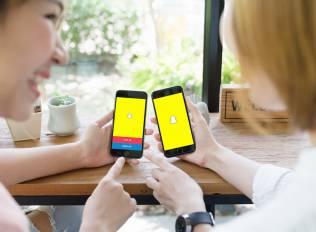
Tag: social media

  • Can Social Media Reduce Depression In Older Adults With Chronic Pain?

    Can Social Media Reduce Depression In Older Adults With Chronic Pain?

    A recent study examined how social media use affected the mental health of elderly adults living with pain.

    There’s been lots of information put forward about the toll that social media can take on our mental health, with excessive use of social media linked to depression and addictive behaviors.

    However, a new study indicates that there may be a silver lining: social media use might be associated with lower depression levels in older adults with pain. 

    The study, published in Journals of Gerontology, Series B and reported by Reuters Health, followed 3,401 people ages 67 or older. The people in the study all lived in the community, rather than in an assisted living or nursing facility, and 54% of them said they’d been bothered by pain in the past month. 

    Researchers found that among people with pain, 15% of those who did not use social media showed signs of depression. That dropped to just 6% among people who did engage with social media.

    “Using online social media to maintain contact with family members and friends is a good way to compensate for seniors who restrict their social activities due to pain. It is not going to replace seeing people in person, but it will help supplement their reduced activities,” said Shannon Ang, a doctoral candidate in sociology at the University of Michigan in Ann Arbor and co-author of the study. “For us, this study is about preserving mental health.”

    Despite the connection with better mental health, only 17% of participants were using social media, Ang found. He said that programs that teach the elderly how to use computers and engage online could be beneficial.

    In the future, Ang wants to research the connection between social media and mental health further, looking at what social media platforms and patterns of use are most closely connected with mental health benefits. 

    Healthcare providers say it isn’t necessarily surprising that social media could reduce depression symptoms, since it can alleviate feelings of isolation.

    “It’s very well known that social support is helpful for depression and physical symptoms. It’s a growing area of interest in research and clinical care,” said Dr. William Pirl of the Dana-Farber Cancer Institute in Boston, who wasn’t involved in the study. 

    However, people should proceed with caution, Pirl said.

    “People respond differently to it. Some people can become more anxious hearing other peoples’ stories or about other treatments for what they’re experiencing. There’s a lot of variability of whether social media is right for you.”

    View the original article at thefix.com

  • Selena Gomez Gets Candid On Instagram: "Depression Was My Life"

    Selena Gomez Gets Candid On Instagram: "Depression Was My Life"

    “I think before I turned 26 there was like this weird time in my life [where] I think I was kind of on auto pilot for about five years.”

    In a recent Instagram post, pop starlet Selena Gomez announced she would be taking a break from social media. She also held a live stream to speak to her fans about what she’s been going through.

    “Update: taking a social media break. Again. As much as I am grateful for the voice that social media gives each of us, I am equally grateful to be able to step back and live my life present to the moment I have been given,” she wrote in the post. “Kindness and encouragement only for a bit! Just remember- negative comments can hurt anybody’s feelings. Obvi.”

    Gomez also hosted an Instagram live stream where she spoke with fans for the last time before her hiatus. Fans asked her questions in the chat about a wide variety of topics, including her mental health.

    “Depression was my life for five years straight,” she revealed to her fans. “I think before I turned 26 there was like this weird time in my life [where] I think I was kind of on auto pilot for about five years. Kinda just going through the motions and figuring out who I am and just doing the best I could and then slowly but surely doing that.”

    Having her every action put under the spotlight for public scrutiny led to an “annoying” pattern where she constantly dealt with a “fear of what people are going to say.”

    To a fan who asked how to forget someone, Gomez offered a little advice.

    “Well, you can’t really just like forget. You kinda have to figure out why you’re still holding onto them. Like why do you want to forget them? And that’s where you start,” she said, before adding “Sometimes forgetting can be a bad thing.”

    This level of candidness from Gomez to her fans is not unprecedented. She has always been vocal about her struggles with mental health and her battle with lupus, an autoimmune disease. In February, the singer went to rehab for a mental health tune-up.

    “She felt like she needed to get away and focus on herself with no distractions. She came back feeling very empowered. She wants to go again later this year. She feels and looks great. She’s still working on new music and is excited about it,” someone close to Gomez told People.

    Gomez is also taking a social media break this time not because things are bad, but because they are good.

    “I enjoy my life,” she said on Good Morning America. “I don’t really think about anything that causes me stress anymore, which is really nice.”

    View the original article at thefix.com

  • An Open Letter to Addiction Treatment Providers

    An Open Letter to Addiction Treatment Providers

    There’s something wrong with addiction patients feeling the need to ask for medical advice from their communities because they don’t trust their providers.

    Maybe you’re a psychiatrist. Maybe you’re a dosing nurse at a methadone clinic. Maybe you’re an inpatient counselor. Maybe you work in an emergency department, or you’re an OBGYN; maybe you don’t specialize in addiction at all, but you regularly come into contact with people who are struggling with the condition. If you’re a medical professional, and all or some of your clients have a substance use disorder (SUD) diagnosis, this letter is for you.

    I am a person in remission from a substance use disorder. I’m here to tell you that addiction patients need you to understand our condition. That sounds basic, I know. It is basic. But here’s the thing: too many of you don’t understand. I’m not trying to attack you. I’m not saying you’re all misinformed. There are unquestionably many caring and well-informed providers doing excellent work in this arena. But it’s also true that enough of you are misinformed to be causing major problems for SUD patients. And that needs to change. Like yesterday.

    Right now my husband is white-knuckling his way through methadone withdrawal while his clinic works on getting him safely back on his therapeutic dose after one of you, a behavioral health doctor, rapidly dropped him 100 milligrams without consent, for no medical reason, while he was in the hospital for mental health reasons. And in 2014, my newborn daughter went through over a month of neonatal withdrawal from my prescribed methadone, which could have been prevented or lessened if my pre- and postnatal providers had made a few small changes to their protocols; sadly, this kind of medical treatment is still provided to mothers and infants across the country.

    Every damn day SUD patients crowdsource medical information from social media communities and online forums, often due to mistrust in the medical community when it comes to addiction care.

    Sara E. Gefvert, a certified recovery specialist who runs the Methadone Information Patient and Support Advocacy (MIPSA) Facebook group, says that she created MIPSA because she saw members of other communities receiving unreliable responses to medical questions. “Many MAT sites and groups I saw were not monitored frequently for correct and accurate content or were only adding to the misinformation and stigma that persons in recovery face, especially being on medication-assisted treatment.”

    In just one day, questions asked in five separate addiction treatment-focused Facebook groups included: 

    What kind of pain relief options are available during labor while I’m on buprenorphine?
    Should I raise my methadone dose if I have psychological but not physical cravings?
    Is it normal to lose my sex drive while on methadone?
    Am I still in recovery if I drink alcohol occasionally?
    Can cold-turkey opioid withdrawal kill you?
    Is it safe to detox while pregnant?
    Can you combine buprenorphine and methadone?
    Should my methadone be making me nod out?

    And others along those lines.

    These are all medical questions with real world consequences—some dire. The answers to these questions should be coming from trusted providers with medical expertise. Sure, people crowdsource medical information from the internet all the time, but it’s usually about pretty mild concerns, or trying to squirrel out whether they should go to a doctor. On the other hand, these addiction specific questions are often accompanied by complaints that the patient couldn’t get a straight answer from her treatment provider, or that the information she received was the opposite of what she read in a research study or an online article. There’s nothing wrong with people seeking community input on issues they’re facing, especially when the answers are reviewed by knowledgeable and professionally trained administrators like in the MIPSA group.

    There is, however, something wrong with addiction patients feeling the need to ask for medical advice from their communities because they don’t trust their providers.

    This seems to be an especially prevalent issue for medication-assisted treatment (MAT) patients. I was on methadone for about a year in 2013 and 2014, and on buprenorphine from 2014 to June of 2018 (with a short break of about five months in 2016). Before starting methadone, I was actively addicted to heroin for close to five years. In all of that time, I heard a lot of different things from a lot of different doctors, nurses, counselors and detox staff in virtually every region of the country. For example:

    Buprenorphine is only good as a detox aid.
    Buprenorphine works best as a long-term treatment.

    Methadone is more addictive than heroin.
    Methadone creates a dependency but effectively treats addiction.

    Breastfeeding while on methadone is unsafe.
    Breastfeeding while on methadone can help ease neonatal withdrawal.

    I can’t count myself sober if I take medication
    I’m at an increased risk of relapsing and overdosing if I detox.

    Addiction is a disease.
    Addiction is a spiritual malady.

    How was I supposed to tease out the truth from all that?

    With all the confusing and contradictory information that patients receive about addiction, it would be easy for someone to assume that the medical science is still out. In reality, there’s quite a lot of straightforward, peer-reviewed data about substance use disorders. Frankly, there is no excuse for a medical provider to ignore these facts. For example, decades of research have shown that methadone (a long-acting opioid agonist) and buprenorphine (a partial opioid agonist), help deter opioid misuse, decrease the risk of fatal overdose, and may help to correct neurochemical changes that took place during active addiction.

    To quickly address some of the other misinformation I’ve encountered:

    • Both methadone and buprenorphine treatment are appropriate, and in fact designed, for long-term use. Patients who choose to taper from these medicines can do so safely, but there is no generalized medical reason why someone with an opioid use disorder should be forced off either medication.
    • Breastfeeding while on methadone or buprenorphine is considered safe as long as the mother is not using other substances.
    • If a patient is using these medicines as prescribed and is not using other substances in a compulsive manner, they are in remission from their substance use disorder. In other words, they’re sober (though defining oneself with the term “sober” is a personal choice).
    • Addiction is medically defined as a disease. Which means that the onus is on our medical providers to stay informed about the science of this disease.

    Ultimately, you can’t be held responsible for everything your patient does. But you do have a responsibility as a treatment provider to give your patients accurate and informed medical advice.

    According to the Substance Abuse and Mental Health Administration (SAMHSA), about 20 million adults in the United States have a substance use disorder. So we’re not talking about some rare condition that only a handful of specialists can be reasonably expected to understand. This is a common, treatable disorder with a robust body of solid research behind it. You need to read that research. You need to stay informed. If you don’t have an answer to a patient’s question, you need to refer them to an accessible colleague who will. You took an oath to do no harm. Staying informed about addiction medicine is part of keeping that oath.

    Sincerely,

    Elizabeth Brico

    View the original article at thefix.com

  • Don't Blame Ariana Grande for Mac Miller's Death

    Don't Blame Ariana Grande for Mac Miller's Death

    The idea that someone holds another person’s very life in their hands and has the power to determine whether that person lives or dies is a painful and damaging misconception.

    I’ll be the first to admit that I don’t know very much about Mac Miller. I’ve never listened to his music or attended one of his concerts. My knowledge of him has mostly been in the headlines I’ve seen about his relationship with Ariana Grande and their subsequent breakup earlier this year.

    And yet, the second that news broke of Miller’s death Friday, I instinctively knew what was coming. I knew that following the shock over his untimely death, the shame and blame would begin.

    I knew because I’ve been there. I’ve lived it. And I’m here to tell you that casting blame is just about the most unhelpful thing you can do for someone following the death of a loved one.

    Sadly, I was right. Just a few hours after it was reported that Miller died of a suspected overdose, people began hurling blame on social media. Their target: Grande, who first fended off trolls after their May split when fans blamed her for her ex’s DUI. She even took to Twitter to explain their relationship.

    Now, four months later, Grande is battling trolls yet again. Trolls who are blaming her for Miller’s death and leaving hateful comments on her Instagram like “His spirit will forever haunt you,” “There’s a special place in hell for people like u [sic],” “You could’ve done something,” and “You should have helped him.”

    Grande has since disabled comments on her Instagram and fans quickly came to her defense on Twitter, but unfortunately, what happened to her is nothing new. It’s reflective of a pattern we’ve seen before, most notably with Asia Argento following Anthony Bourdain’s suicide in June. Argento was cyberbullied and blamed for the celebrity chef’s death, which prompted those in Hollywood to rally around the actress in the form of an open letter published in the Los Angeles Times.

    When someone dies suddenly and traumatically, it’s typically their loved ones who are caught in the crosshairs of other people’s grief and the struggle to understand the death. But what about those who don’t have an army of support like Grande or Argento? How are they supposed to traverse the minefield of grief following a traumatic death when they have so many questions and those around them are saying things that are more harmful than healing?

    It’s human nature to want to make sense of death because a part of us will always resist the idea that death is natural. And when the death is unexpected, like Miller’s, we rail against death even more, looking for any explanation we can find that will help us make sense of everything. Even if it’s misguided, sometimes those explanations come in the form of lashing out and assigning blame to those closest to the deceased.

    However, trying to place all the blame in the world isn’t going to magically bring the person back to life. Death isn’t something that we can wrap up neatly like a half-hour sitcom where everything is solved by the end. Just like life, death doesn’t work like that.

    When I was 21, my father suddenly and unexpectedly died from suicide. Although the day he died was the most traumatic day of my life, I wrestled with feelings of guilt and shame for years. I was the last one to see my father alive, and the questions swirled around my head in a never-ending loop. What if I’d woken up just 15 minutes earlier? What if I’d seen the signs that he was struggling? What if he said something on the last day of his life, something significant that I just casually brushed aside?

    What it? What if? What if?

    Those are the questions that plagued me, and I’m sure those are the types of questions on Grande’s mind as she mourns the loss of Miller. The best thing we can do for her — and everyone grieving the loss of a loved one — is to let the grieving process take place. Let people mourn in peace without hurling vindictive words at them. Those words are incredibly hurtful, not to mention cruel and damaging. The idea that someone holds another person’s very life in their hands and has the power to determine whether that person lives or dies is a misconception that has no place in the journey following someone’s death.

    As much as we’d like to think otherwise, we’re not superheroes who can swoop in and rescue someone. We can do everything to help them, of course, but we don’t have the all-knowing power to save them. And maybe even more importantly, it’s not our job to cure them. We can offer love, hope and compassion, but in the end, everyone on this planet is responsible for their own life.

    I can only hope that those trolls who are blaming Grande have never lost a loved one to a traumatic death like Miller’s. Trust me, people who lose someone to an overdose or suicide struggle enough with self-blame. They don’t need the world shaming and blaming them too. What they need is love and compassion. And space to grieve without shame.

    View the original article at thefix.com

  • Alcohol, Drugs, and Rape

    Alcohol, Drugs, and Rape

    “We all know right from wrong. Yeah, maybe alcohol inhibits a person. But at the end of the evening, the little monster of shame, regret, or guilt is gonna be in your head saying ‘You really messed up, that was wrong.’”

    Alcohol and drugs are inextricably linked to a large part of rape culture. And that applies to both perpetrators and victims—before, during and after sexual assaults. Anyone who has battled alcohol or drugs knows that substances impair judgment and create an astounding lack of impulse control. Memories can be unreliable or absent entirely.

    For those of us who have limped our way out of blackouts and staggered in and out of recovery, we know the shame of finding out what we’ve done in a drunken stupor. Often, the only thing between me and a relapse are the all-too-vivid memories of wretched consequences. I’m no longer afraid to open my eyes in the mornings. When I don’t get high, I don’t awaken with a pounding headache and discover a stranger in my bed.

    Roll Red Roll is a documentary about a high school in the hard drinking, football-obsessed town of Steubenville, Ohio. The film premiered to sold-out audiences at Tribeca Film Festival 2018. It has hit numerous venues since then, including Michael Moore’s Traverse City fest. It will continue to make the rounds throughout August and into October.

    The doc is about “Jane Doe,” a 16-year-old from West Virginia. She’d attended a series of pre-season football Steubenville parties on the night of August 11, 2012. After downing too much liquor, she passed out. While unconscious, Doe was raped and carried around to more parties by several members of the football team. All evening the boys took photos and videos on their cell phones, then casually shared them on social media. Two of the youths—Trent Mays, 17, and Ma’Lik Richmond, 16—were found guilty. Mays was sentenced to two years and Richmond got only one. They did their time in a juvenile facility. Neither boy is on a sex registry due to their age. Both are now playing college football.

    After watching Roll Red Roll, I reached out to crime blogger Alexandria Goddard, who is the heroine of the Steubenville rape story. After only a brief mention of the rape in a local media outlet, Goddard found the horrifying tweets and videos that had been posted. She shared them on social media. When she posted the Instagram photo of Jane Doe being carried by the boys, it caught the attention of the local community and the social justice hacker group, Anonymous.

    In our exclusive interview for The Fix, Goddard began with a question: “Would the perpetrators have behaved that way if they weren’t drunk? No, probably not. But the alcohol in no way absolves what they did.”

    Goddard described Steubenville as “a sports town known for putting down women, talking about them like they’re meat. They show off for each other. Didn’t any of them have sisters? Mothers? The way they talked about her it was as if they forgot she was a human being. That was learned machismo.”

    Goddard added, “We all know right from wrong. Yeah, maybe alcohol inhibits a person. But at the end of the evening, the little monster of shame, regret, or guilt is gonna be in your head saying ‘You really messed up, that was wrong.’”

    Boys laughed on the video while talking about peeing on Jane Doe’s unconscious body. “But the girls in town were vicious, too,” Goddard said. “And the school staff. Coach Reno questioned whether it was even rape. You can see it in the film. He said, ‘Did they rape her? Or did they fuck her?’” (Warning: the linked video contains graphic content released by hacker group Anonymous)

    Another booze-saturated rape case, People vs Turner (aka The Stanford Rape Case), is back in the news this summer. The victim was a 22-year-old woman (referred to as “Emily Doe”). In January 2015 she attended a few parties, consumed too much liquor and passed out. The defendant was Stanford University swimmer and Olympic-hopeful, Brock Turner, 20. He too had spent the night drinking. Turner was caught humping Emily Doe’s naked body behind a dumpster.

    After he was convicted on three felonies of sexual assault with intent to rape, the not-so-Honorable Aaron Persky sentenced Turner to only six months. He was out in three. There was a public outcry that built over time. By June 2016, over one million people had signed the petition to remove Persky. In June of this year Persky was ousted from his judicial bench.

    And that’s not all…

    On July 26, The New York Times wrote about Brock Turner’s lawyer, Eric Multhaup, who had argued that Turner should never have been convicted of “intending to commit rape” because the Stanford swimmer had only sought to have outercourse with “Emily Doe.”

    I don’t know how Multhaup said that with a straight face. Twitter, of course, went wild over this outrageous claim. Thankfully, that appeal didn’t fly. The original decision still stands: Turner was guilty of assault with the intent to rape an unconscious woman. He was found guilty of using a foreign object to penetrate the victim. The definition of rape is: “The penetration, no matter how slight, of the vagina or anus with any body part or object, or oral penetration by a sex organ of another person, without the consent of the victim.” Rape with an object can be equally as traumatic as penile violation.

    Amber Tamblyn and Jodi Kantor

    Recently, I went to hear author-director-actress-activist Amber Tamblyn and reporter Jodi Kantor at Manhattan’s 92nd Street Y. The two discussed Time’s Up, a legal defense fund organization Tamblyn co-founded soon after the #MeToo movement showed the world how many women are sexually harassed on the job. On TimesUpNow.com, the tagline reads: “The clock has run out on sexual assault, harassment and inequality in the workplace. It’s time to do something about it.”

    Employers are changing work policies. Companies are doing away with holiday work parties because serving alcohol practically ensures that boundaries will be crossed. Unlike in old movies, we’ve learned that there’s nothing funny about a tipsy coworker patting a woman on the butt or grabbing her for a kiss.

    “Sorry I got so drunk last night” is no longer a viable excuse and companies want to avoid problems—especially lawsuits. Frequently workplace sexual harassment claims are linked to events where alcohol was available. In a recent article for The American Lawyer, reporter Meghan Tribe wrote that many big law firms are quashing boozy summer events. Behavioral health consultant Patrick Krill told Tribe, “In light of [the] #MeToo movement, an open bar at a summer associate event is potentially a tinderbox of liability.”

    Other companies are trading open bar parties with drink ticket systems. Employees are limited to two drinks to avoid the sloshed sexual harassment issues. I also find it encouraging to see so many changes in New York State laws for employers that go into effect this year, such as sexual harassment prevention policies including training for employees.

    My own #MeToo story predates my work life. At age 13, while I was high on liquor and pot, I was sexually assaulted by local kids in my hometown, Port Washington, Long Island. Consumed by shame, I spent the following 13 years on a drug and alcohol-soaked binge. At age 26, I came out of a cocaine and rum induced blackout locked in a detox ward with no memory of how I had gotten there.

    Currently, I’m working on a series about women who became addicted to drugs and alcohol after they were raped. One of the women I’ve interviewed—let’s call her “Navy Girl”—was not a drinker but, both times she was attacked, the men had been drinking. After the rapes, like so many of us, Navy Girl didn’t tell anyone. She developed post-traumatic stress disorder (PTSD) and chronic insomnia.

    After years of not sleeping, Navy Girl saw a doctor. He prescribed 5mg of Ambien, the lowest dose. Already in her 30s, she’d never been addicted to anything but, within six months, she was hooked. Doctor-shopping worked for years. Then, when prescriptions went digital, she couldn’t game the system anymore and her doctors began cutting her off. Desperate to stave off withdrawal symptoms, she resorted to buying it from dealers but could not get enough for her habit. After attempting to stop for years, she finally found help in a 30-day drug rehab and has been sober for three years now.

    Where will Jane and Emily Doe be 30 years from now? Will they be lost to addictions? I’d bet money that they will suffer for years with PTSD. Perhaps in the future perps will be held accountable and sentences will fit the violence of a rape crime. I pray pussy grabbers will no longer be eligible for political office and lawyers will be banned from asking survivors how much they drank. I look forward to the day when enablers won’t shrug and say, “Boys will be boys.”

    View the original article at thefix.com

  • Snapchat Dysmorphia: A Growing Trend Among Social Media Users

    Snapchat Dysmorphia: A Growing Trend Among Social Media Users

    Snapchat dysmorphia was first identified in a 2017 plastic surgery survey.

    Apparently, some people are taking their love of photo filters a bit TOO far. That’s according to a recent paper published in JAMA Facial Plastic Surgery, which describes the emerging phenomenon known as “Snapchat dysmorphia.”

    Body dysmorphic disorder is characterized by obsessive thoughts of the flaws in one’s appearance, though these perceived flaws may not be noticeable to others.

    Photo filters and retouching tools in smartphone apps like Snapchat and Facetune allow just about anybody to edit away any perceived flaws in their “selfies”— but for some people, this just isn’t enough.

    Some doctors say that while previously, cosmetic surgery patients would bring in images of celebrities whose features they want to emulate, these days, patients will try and emulate the “filtered versions” of themselves.

    “Most of the time, [patients] want to talk about how they appear in their edited photos. And they are looking to explore options of how to translate that into reality,” Noëlle Sherber, who runs a dermatology and plastic surgery practice in Washington, DC, told Vox.

    The term “Snapchat dysmorphia” appears in a paper published in JAMA Facial Plastic Surgery on August 2, based on a trend first identified in the 2017 Annual American Academy of Facial Plastic and Reconstructive Surgery (AAFPRS) survey.

    The paper cited a recent study that found that adolescent girls who “manipulated their photos more reported a higher level of concern with their bodies and an overestimation of body shape and weight.” A higher level of body dissatisfaction was also associated with a higher level of engagement on social media. 

    According to the AAFPRS survey, in 2015, 42% of patients requested surgery to improve their selfies. That number is now 55%.

    The paper in JAMA notes that many of the features that appear in retouched selfies are unattainable with cosmetic surgery. This “trend” of “Snapchat dysmorphia” is alarming, the authors say, because it is “blurring the line of reality and fantasy.”

    Sherber echoed this point to Vox, “Some of the changes [patients] are making to their faces are not achievable. We can’t do that in real life. And if they really can’t be made to match that, they will be inherently disappointed.”

    Rather than cosmetic surgery, the authors of the paper say that behavior indicative of body dysmorphic disorder should be addressed with counseling.

    View the original article at thefix.com

  • "Descendants" Star Dove Cameron Gets Candid About Anxiety, Panic Attacks

    "Descendants" Star Dove Cameron Gets Candid About Anxiety, Panic Attacks

    “Today I had my first full on panic attack in months. Out of nowhere, and for no reason. That’s just sometimes how anxiety goes.”

    Dove Cameron, the star of the Disney Channel film series Descendants, recently took to Twitter to discuss her struggles with anxiety and to offer advice to fans who may be dealing with it as well.

    “Do your best to not speak negatively of others, of life, of any given situation,” Cameron tweeted. “And especially, do your best to not speak negatively of yourself. It’s hard at first, but it gets easier. I am not perfect at it, but it does make a difference for my anxiety and my noise in my mind.”

    Cameron told her Twitter followers that she “wanted to speak honestly,” and that she has been “doing phenomenally” with her anxiety.

    “It’s always there, a little bit, sometimes a lot… but I have gotten more skilled at keeping it quieter, reasoning with myself, breathing… but today I had my first full-on panic attack in months. Out of nowhere, and for no reason. That’s just sometimes how anxiety goes.”

    Cameron revealed that after making it through the panic attack, she wanted to share her experience.

    “I wanted to tell you this so that you don’t look at me and feel hopeless because I always seem stable,” she tweeted. “I know I can present like that sometimes.”

    Cameron continued, “No one is ‘perfect’ and we should not strive to be ‘cured,’ but rather, embrace highs and lows as a fact and centerpiece of being alive. ‘This moment is inevitable…’ There is help, hope, and growth for all of us. But we should never compare our paths to others, but rather, honor, embrace and accept our own path… None of us are OK 100% of the time, and that’s OK.”

    A couple of years ago on Twitter, Cameron addressed the importance of speaking up about mental health issues to help break the stigma.

    “So many people have anxiety/related things. It needs to be less taboo to talk about it, it helps so much to talk.”

    She added that anxiety had “made me that much more disciplined in my thoughts. So it has been a blessing in disguise… It’s not about hiding it, it’s about genuinely embracing, acknowledging and managing it.”

    In previous tweets, Cameron recommended the following to combat anxiety: “Time alone, self-reflection, laughter, getting in touch with my body, journaling, therapy, sleep, nature, exercise.”

    Cameron also revealed that she has taken up meditation in an effort to to deal with her anxiety and she “100% recommends” it to others dealing with the mental health issue. 

    View the original article at thefix.com

  • Is Social Media As Addictive As Cocaine?

    Is Social Media As Addictive As Cocaine?

    One expert suggests that media-stoked fears about addictive technology only serve to divert attention from pressing problems like online privacy and user consent.

    Following a recent spate of headlines likening social media to hard drugs, some psychologists deny they’re similar at all. According to Business Insider, scientists from the Oxford Internet Institute believe it’s not only irresponsible to compare the two, but doing so actually distracts from far more serious problems plaguing the tech world.

    The media, though, makes it difficult to separate founded fears from the unfounded ones. The BBC recently reported that social media companies were actively addicting their users through a variety of psychological techniques—an alarming claim that, if true, makes social media addiction more controversial than it already is.

    “It’s as if they’re taking behavioral cocaine and just sprinkling it all over your interface and that’s the thing that keeps you coming back and back and back,” Aza Raskin, a former Mozilla engineer, said of the industry. “Behind every screen on your phone, there are generally like literally a thousand engineers that have worked on this thing to try to make it maximally addicting.” 

    Raskin says that he’s the one who conceived of “infinite scrolling,” where users endlessly swipe down through online content (think Instagram) without ever having to click anywhere. It’s a trick that keeps people glued to their devices, Raskin told the BBC, as it prevents a user’s brain to “catch up” with their impulses.

    Andrew Przybylski, however, doesn’t believe that Silicon Valley’s engineers can successfully incorporate psychology into any of their social media designs. Przybylski, the Oxford Internet Institute’s director, balked at the BBC story and labeled Raskin’s research as “very sloppily done.”

    He added that if Raskin “actually knew anything” about the psychology behind addictive technology, the much-reported dangers of social media would be frighteningly accurate.

    A number of stories continue to portray digital screens no differently than addictive chemicals. And while there is evidence that the brain releases dopamine when people check their Facebook account, Przybylski insists that it’s not remotely the same thing as getting high from a drug.

    “Dopamine research itself shows that things like video games and technologies, they’re in the same realm as food and sex and learning and all of these everyday behaviors,” he told Business Insider, “whereas things like cocaine, really you’re talking about 10, 15 times higher levels of free-flowing dopamine in the brain.”

    Przybylski suggests that media-stoked fears about addictive technology only serve to divert attention from pressing problems like online privacy and user consent. They also distract from the most important objective: good research.

    Przybylski is skeptical that enough research data exists in the first place, let alone social media companies regularly using it in their work.

    “The main takeaway here is that we don’t actually know these things,” said Przybylski, calling for more collaboration with research. “It is important for these large companies to share their data with researchers, and share their data with the public. This research needs to be done transparently. It can’t just be a bunch of Cambridge Analyticas and one-on-one relationships between social media companies and researchers.” 

    View the original article at thefix.com

  • How Facebook Helped Me Overcome My Anxiety

    How Facebook Helped Me Overcome My Anxiety

    More than the actual anxiety was the anxiety about the anxiety. I felt tremendous shame for having negative feelings at all.

    It was 3pm on a Tuesday, and I was sitting at my desk with my head on my keyboard; I was too revved up to sit still, much less concentrate on work. I was in the midst of a resurgence of my lifelong anxiety and couldn’t talk to anyone or even focus on anything. Months later, I would finally be diagnosed with Generalized Anxiety Disorder (GAD).

    The diagnosis was a relief. It made sense of overwhelming feelings I’d had my whole life that had mostly been regarded as a character flaw. I grew up in an alcoholic home, and I’d been going to therapy for years to face the trauma of my childhood. For the first time I was feeling my emotions instead of mashing them down, and expressing anger before it turned into resentment. My anxiety had decreased throughout this process, but then I decided to get married. My fiance did nothing wrong, mind you, but somehow the thought of marriage made me feel trapped and put me mentally back in my childhood home. I grew incredibly anxious — and yet completely unaware of it.

    I’d had trouble sleeping for months but I wasn’t upset or stressed about anything — at least not anything conscious. My stomach felt like it’d been glued shut. I couldn’t eat. Soon enough my weight starting dropping enough for other people to comment on it. Compliments at first that slowly morphed into expressions of concern. I felt nervous all the time and I was hyper-vigilant, no matter who I encountered or where I was. If I was in a car, I’d flinch at the sight of another vehicle pulling out of a parking space as though it was about to hit me — even if it was well outside my physical range. I was sleeping two hours a night and not even feeling tired the next day. Sitting still felt like torture, and I was constantly second guessing myself as if I couldn’t trust my perceptions. I’d had episodes like this off and on for most of my life but I’d always pushed it down. But now, after a lot of therapy and ACOA recovery work, when the anxiety attacks returned, I had to acknowledge them. My overwhelming anxiety was there and I couldn’t hide it no matter how badly I wanted to.

    But that was the problem: I really really wanted to.

    More than the actual anxiety was the anxiety about the anxiety. I felt tremendous shame for having negative feelings at all. (All you ACOAs out there know what I’m talking about, right?) Growing up in my house, negative feelings had been treated like a disease that had to be banished. This didn’t just come from family but from the entire culture where I was raised. I explained to my therapist that even as an adult I felt like a streak of tar ran through me that marked me as broken, and I lived in constant fear of people seeing it. So when my anxiety revisited me, I tried to hide it, but piling that shame on top of it only made it worse. I wanted simultaneously to jump out of my own skin and hide inside my house forever.

    Then I remembered what Brene Brown said in her book on shame: that silence fed shame while a sense of common humanity combatted it. That meant talking about what I was feeling. Reaching out to tell someone was a major part of fighting shame because it made you feel less alone. Then it occurred to me: what if I just preempted this terror of someone discovering my anxious state and just told them? If I owned how I felt in advance, perhaps I’d feel less shame because I wouldn’t be so desperate to hide it. Problem was, any time I tried to talk about it in person, I completely fell to bits and I didn’t exactly want to put myself through that over and over again.

    So instead I opted to put it on Facebook.

    Of course, Facebook is the capital of oversharing and I normally kept my digital shouting box strictly to jokes. But I just didn’t see a better way to inform people of what I was going through or that my behavior might be different than my usual. In fairness to Brene Brown, she clarifies that reaching out to others in order to combat shame needs to be aimed at people who are receptive to hearing your pain. She definitely doesn’t suggest blasting it all over your social media. But that’s what I did.

    I wrote a long explanation of my mental state asking for compassion rather than advice and hit “post” before I could change my mind. Now, I should be clear that I didn’t exactly blast this to everyone I knew on Facebook. I used customized security settings so only those in the same city as me and my oldest, closest friends could see it, and I blocked my whole family as well as loose acquaintances. I hit post and immediately shut my laptop, vowing not to log into Facebook for at least a couple hours. I’d purposely planned my post to coincide with a concert I was attending because I knew it would prevent me from checking my phone constantly. I figured if anyone was judgemental or shaming, the bite might sting less if several hours had gone by — or possibly I wouldn’t even notice it in a flood of other tiny red notifications.

    When I finally gathered the courage to open Facebook again, I had a torrent of messages and notifications. Most of them carried the same sentiment: I have anxiety, too. While I’d certainly blasted my personal world with my emotional state hoping to get some level empathy, I didn’t anticipate which corners of my social circles would be delivering it. Close friends of mine, people I used to share every secret with, messaged to tell me they’d recently gone through something similar and not talked about it. Acquaintances wrote with ideas and (indeed) some advice. Much of the advice wasn’t especially helpful, but knowing that I wasn’t alone made a world of difference. For months afterward, casual acquaintances told me that sharing my experience actually helped them feel less alone, which I hadn’t even thought about.

    I can’t pretend like simply talking about my anxiety made it go away or even lessen much. It still took another year of focus, self care, and work before I truly felt like myself again. Sharing my anxiety online allowed me to deal with it without shame and without feeling like I was broken. In other words, it meant one less roadblock to contend with, and — given my emotional state at the time — I might not have made it through the anxiety without it.

    View the original article at thefix.com

  • When Teens Hurt Themselves…Online

    When Teens Hurt Themselves…Online

    “You should just kill yourself.” I thought that if people thought the messages I was saying to myself were coming from other people, they would be more willing to help me out.

    Trigger warning: The following story discusses self-harm.

    What happens when social media becomes the weapon of choice for self-harm; when the cyberbully is also the victim?

    Alicia Raimundo says she created ghost social media accounts to cyberbully herself as a teen in the hopes of validating her story. It was a coping skill, says the Toronto resident, now 28, and the only way she could think of to place her pain on full display in the hopes of friends and mental health experts coming to her aid. She didn’t know it then, but has learned since, that this form of anonymously posting critical, derogatory or otherwise hurtful comments about oneself is what mental health experts are now referring to as digital self-harm.

    “I thought that if people thought the messages I was saying to myself were coming from other people, they would be more willing to help me out,” Raimundo says, adding that she often posted mean comments others had said to her in person but for which she had no documentation or evidence. “I would say things to myself like: ‘You should just kill yourself,’ ‘You are a fake,’ ‘you are not worthy of love or support.’” 

    Raimundo, who has worked in the mental health field for eight years, says she also sent herself messages that read ‘You are hideous,’ and ‘You are just pretending and everyone will find out soon enough.’ She would rationalize the negative and violent messages she would send to herself, she says, by telling herself that the negative somehow served as a balance for the good in her life. 

    Raimundo’s story, although new to those unfamiliar with digital self-harm, is not unique. A survey published in late 2016 in the Journal of Adolescent Health asked 5,593 middle and high school students from across the US to share their experiences with cyberbullying and digital self-harm. Of those surveyed, about six percent reported anonymously posting something mean about themselves online. Males were more likely to engage in digital self-harm at 7.1 percent reported, with female respondents reporting at 5.3 percent. According to the survey, risk factors for vulnerable teens include sexual orientation, experience with school bullying and cyberbullying, depressive symptoms, and drug use.

    Teens who engage in physical self-harm also often struggle with depression, post-traumatic stress disorder, and/or difficulties with emotional regulation, says the American Psychological Association. It is important to note, however, that not all teens who cyberbully themselves have a mental illness.

    “Teens typically are experiencing many intense feelings and events for the first time, and during an already intense period of self discovery and understanding,” says Texas-Based Licensed Marriage and Family Therapist Associate Stephanie Bloodworth. “There are different reasons they may engage in digital self-harm, but the underlying force so often seems to be that they are seeking some kind of solution to their feelings of self doubt or low self worth.”

    These teens need help, says Bloodworth, but mental health caregivers and adult support figures should take care not to minimize the experience and mental pain of those they are trying to help. 

    “From a solutions focus, teens don’t need a different perspective, [such as saying] ‘This isn’t the end of the world, you know,’” Bloodworth says. “They need tools to help them handle what does feel like the end of the world they knew. They need tools and help to get the attention and support they need in healthy and appropriate ways.”

    Raimundo, the mental health professional who used to cyberbully herself as a teen, agrees.

    “I broke out of the cycle of digital self-harm by finally finding supports that listened to me and validated my story. People who I could speak openly and honestly to about engaging in digital self-harm, why I was doing it, and who would hold the space for me without judging me,” she says. “People saw me as someone trying to ask for help but not knowing all the right words to do so. They saw those messages as something that was actually happening in my head and addressed it as such.”

    Raimundo now works as an online Peer Supporter for Stella’s Place

    “I really wanted to create safe spaces online for people to reach out for help, because I found getting help from people who understood the internet as a community was really hard,” she says. “I wanted to provide positive spaces and places for people to access behind their phones and break out of the negative cycles they find themselves in.”

    Raimundo believes her experience with digital self-harm helps people open up if they are engaging in digital self-harm because it’s such a stigmatized form of self-harm that isn’t well understood. 

    “When they chat with me, it’s my hope that they are chatting with someone who gets it and can walk alongside them in their journey to recovery.”

    Raimundo also offers this advice to those who may find themselves in a position to help teens digitally self-harming themselves. Approach the situation with empathy and a listener’s ear, she says.

    “Don’t jump to the idea that we are doing it for the LOLs or because we are emotional vampires. Listen to why we are doing it, and try and connect us with the help with we need,” says Raimundo. “Yes, people engaging in these behaviors are crying for help, and we should give it to them.”

    If you or someone you know may be at risk for suicide, immediately seek help. You are not alone. Options include:

    View the original article at thefix.com