Tag: stephanie knarr

  • Ibogaine: Promising Addiction Treatment or Snake Oil?

    Ibogaine: Promising Addiction Treatment or Snake Oil?

    The induced vivid hallucinations and memories of childhood and formative experiences seem to be the key to ibogaine’s effectiveness in treating addiction, but experts don’t fully understand its mechanisms.

    With the rise in interest of various psychedelic drugs for a range of conditions (MDMA for PTSD, and ketamine and psilocybin mushrooms for treatment-resistant depression, to name a few), it seems only fair that we should pay serious attention to other substances in this family that might treat other conditions.

    Introducing ibogaine. Well, not quite introducing. The fairly-obscure African plant, used traditionally in Gabon, was first patented in the United States for use in treating opioid addiction in 1985. Unlike common street drugs such as MDMA (“ecstasy,” “molly”), ibogaine does not have the reputation of being known as a club drug.

    Like Years of Therapy in One Day

    But Ibogaine is still relatively unknown, despite a guest appearance in an early episode of Homeland. When I have advocated for its use in combating our nation’s opioid crisis, most of the responses range from a confused “What?” to an inquisitive “Oh, yeah. I’ve heard of that.” It isn’t a cheap thrill, something folks are clamoring to ingest. People who have found relief with the African root-bark have compared it to receiving years of therapy in the course of one day. The induced vivid hallucinations and memories of childhood and formative experiences seem to facilitate the process of overcoming addictions, even if it isn’t an automatic or guaranteed cure.

    However, that doesn’t mean it’s free of stigma. The federal government classifies it as schedule one – right up there with heroin, the addiction it is most well-known for treating, despite having “no medical use” according to the law. Statistics vary, with some rates as low as 20 percent. Other data shows  61% abstinence, eight months after treatment.

    So, what’s the issue? If this plant boasts a higher success rate than Suboxone (8.6%, once Suboxone use is discontinued), why is it only available outside the U.S.? Why are we not allowing a treatment method that people with opioid use disorder have touted as the thing that saved their lives?

    Why Is Ibogaine Illegal in the U.S.?

    Some of the fault lies with the media. Much like with LSD, clinical studies are slow and evolution of public consciousness is slower. Most of what we see in the news is negative and exaggerated. As with anything, there are risks. Up to 30 deaths have been documented. When people with other health problems related to addiction are treated by those without medical training, death rates can be as high as three percent. In healthy folks, that same rate is around .3%. 

    But when much of what you see in the news and on television is people panicking, convulsing, or dying, it’s tough to form a well-rounded opinion. We are emotional creatures, and even with positive perspectives from people who swear by their experiences, we can’t get the negative images out of our minds for long enough to consider the benefits of ibogaine treatment. 

    Many of the risks involve heart issues. Most psychedelics function as stimulants, raising the heart rate, but ibogaine can be especially cardiotoxic. Ibogaine affects electricity in the heart and could potentially result in dangerous arrhythmias or bradycardia (low heart rate). Because of this and any other possible risks, legitimate clinics pre-screen patients and offer a small test dose to evaluate the effects. Based on the results, they decide if a full dose will be safely tolerated. 

    Like Other Hallucinogenics, Proven Benefits but Not a Panacea

    The substance seems to work due to the uniqueness of the experience. I’ve read multiple accounts of people having vivid visions of the choices they made, and how they’ve arrived at this particular point in their life. This type of experience seems to be the key to its effectiveness in treating severe opioid and alcohol addictions, but experts don’t fully understand its mechanisms.

    And yet, even with its proven benefits, it’s not a panacea. The person with the addiction cannot just visit a clinic, have an ibogaine experience, and expect to return home without changing anything. There is still a rate of relapse, because they haven’t worked on the external triggers. They must still tackle their disease in a proactive way, which may include altering their life and addressing what led to using in the first place.

    Unlike commonly-used routes of getting off opioids – substitution medications such as methadone and Suboxone – ibogaine doesn’t require a patient to remain on another drug, taking it day in and day out to avoid experiencing cravings or going into withdrawal. Ibogaine seems to work by disrupting the receptors associated with addictive behaviors, as was witnessed in one 2015 study on its efficacy in opioid addiction.

    Scientists found that the substance (which, I learned, doesn’t always produce the talked-about hallucinogenic effects that led to its illegal status) acts on receptors such as dopamine and serotonin, which are linked to addiction and the brain’s reward system. Other psychedelics that are currently being studied for their effects on mental illness and addiction – such as MDMA and psilocybin mushrooms – make use of these same receptors. What makes ibogaine unique is that, rather than attaching to receptors on the outside of a cell membrane, it attaches to the inside. This mechanism seems to be unique to ibogaine; it has not been observed in any other naturally occurring molecule.

    Legal Status of Treatment Creates Financial Barrier and Increased Risk

    A major barrier to receiving an ibogaine treatment is the prohibitive cost. A single week of treatment in Mexico costs $5,000, and that’s after the price of a plane ticket. In Canada, the price for a ten-day round is $8,000. As a result, it’s not an option that’s available to most people in need of addiction treatment.

    We must legalize it here. International travel, necessary funds, time off from your job to recover – all these restrictions make it virtually impossible for the average person with treatment-resistant addiction to crack the barriers of that final, desperate chance at a life beyond drugs or alcohol.

    There is a strong, tight-knit movement of psychedelic therapists, but due to the criminalized status of what should be viewed as medicine, those involved with administering these substances remain underground, increasing risks. Even though many of these practitioners are medical doctors, they work without the support of a hospital or facility. While their willingness to practice this medicine outside of the law is a testament to their belief in its efficacy, it also means they are less able to quickly and safely address problems that may come up.

    Who knows what the genuine death toll of ibogaine is in the U.S.? It’s not likely that underground doctors are reporting these deaths to nurses and other hospital staff. If so, they’d be discovered, in turn ruining their careers and possibly derailing the entire growing movement. At least, that’s what instinct tells me. If nothing else, with the substance legalized, fewer deaths and injuries would occur due to more rigorous testing and administering – and consequently fewer accidents would happen as well.

    Ibogaine has shown lasting benefits in treating addiction, as many people attest. One patient was quoted as saying: “It’s not just [that] it gets you off the heroin, it’s like, it hits the reset button — that’s the only way to really explain it. It’s like a new brain.” Shouldn’t we be listening to the voices of people who have actually been there, rather than tossing their words to the wind and sticking with what hasn’t worked?
    View the original article at thefix.com

  • Life as a Transgender Addict

    Life as a Transgender Addict

    It’s easier to just sweep what’s uncomfortable under the rug. Better not seen, not heard, not felt. Total oblivion, that’s the name of the game.

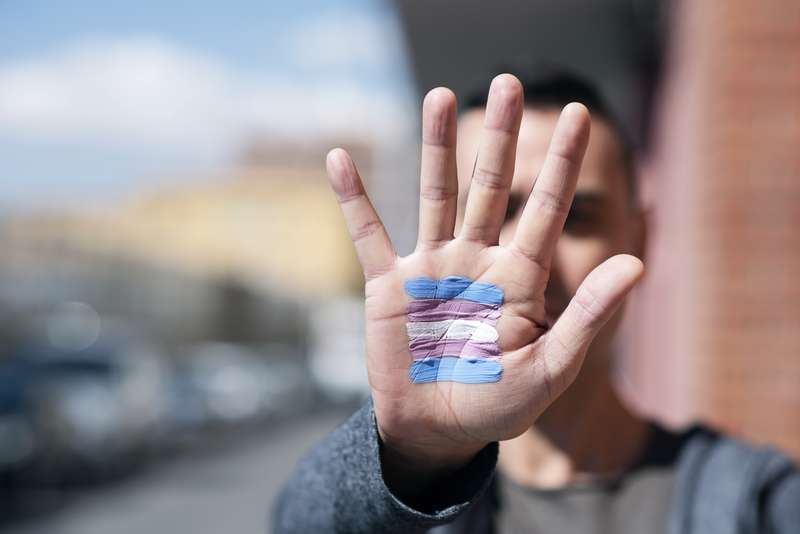
    I am a trans woman.

    You might be sitting here, reading this, and thinking to yourself: Okay. Congratulations! Good for you! I’m glad you had the courage to be yourself!

    If you’re like many people I’ve told, you’re probably thinking something along these lines. But you’re probably also thinking, what relevance does this have? Does this belong on a site revolving around drug and alcohol addiction, harm reduction, and other related issues?

    You’d be justified in asking these questions. The quick answer is yes.

    I, like many trans people, began using drugs and alcohol to cope with gender dysphoria. For those who don’t know, gender dysphoria is what occurs when your body and brain are misaligned; when internally you just know that what your parents, teachers, and other kids are telling you is wrong. You want to grow your hair long, play with dolls, and wear dresses, damn it!

    The rate of substance misuse in gay, lesbian, and bisexual people is twice that of heterosexual (straight) people. While reported rates of substance use disorder vary — the National Institute on Drug Abuse places the number for LGB substance abusers at 39.1 percent (versus 17.1 percent for the heterosexual population) — the disparity is higher when transgender folks are factored in, especially youth. The data is sparse, as transgender people are usually excluded from studies or grouped with other sexual minorities, but one study, for example, found that the “prevalence of substance use was 2.5-4 times higher for transgender youth compared with their nontransgender peers (depending on the substance).”

    Why this disparity?

    For one thing, even in folks like me (who report a higher overall satisfaction with life due to various sorts of privilege), there is still the issue of depression, body dysphoria, and societal pressure. All of these pressures combine together to form a boiling pot at times, for which the temporary relief of drugs and alcohol can seem like a godsend more than a vicious cycle from hell.

    You use, you feel better for a short time. Then you return to reality, and all your issues are still there. Only now they’re worse, because you haven’t slept — or if you did sleep, you slept like shit. I’m sure many of you can relate.

    My drug of choice was prescription pills, specifically uppers. But as with most pill fiends, it’s almost never limited to just one class of chemicals: I loved them all.

    I was one of those “up three or four days, sleep another” types. I would take heavy amounts of amphetamines for several days and then eat a heroic dose of whatever benzodiazepines I could find. Xanax was ol’ reliable, but — as all benzodiazepines are practically the same effect-wise — any would do in a pinch. I had a prescription for both Adderall and Xanax at one point in my career as an addict, and I still found myself buying other benzodiazepines and extra Adderall, as well as other prescription stimulants and opioids.

    Nothing was ever enough, and drugs were my security blanket. Speed gave me the confidence to go out in public — to not spend all my time isolated and fixating on the things I didn’t like about my body — and downers were perfect for numbing myself to anything the speed didn’t take care of.

    My experience of using drugs to cope is why I’m a strong believer in the need for tolerance, especially when it comes to trans kids. We have such a high rate of self-hatred, and I know personally that one guaranteed way many members of the LGBT community deal with this is by getting numb. It’s easier to just sweep what’s uncomfortable under the rug. Better not seen, not heard, not felt. Total oblivion, that’s the name of the game.

    Practicing tolerance means we accept people and let them do what needs to be done — and will eventually happen anyway, except for those in the community for whom it all gets to be unbearable: a study from the American Academy of Pediatrics found that more than half of transgender male teens and 29.9 percent of transgender female teens have attempted suicide.

    This simply does not need to happen. When trans children are accepted as their stated gender, the suicide rate decreases dramatically. If you could save someone’s life, wouldn’t you want to do whatever it takes to keep them from even considering ending it all? Suicide never has to be an option.

    Since 2017, I’ve had three friends die, two by suicide and one under circumstances I still haven’t cleared up. I don’t know that I want to have the mystery solved.

    She was a trans woman named Margot, and in the months leading up to her death, she had been in and out of hospitals, both for physical and mental issues. I can’t say, with any confidence, whether her heart exploded or if she took herself out to avoid the extreme mistreatment she received from her family. And, judging by the area we both lived in and how bad it really can be, I’m not convinced it wasn’t something more nefarious that resulted in her death.

    As for my other two friends (neither of whom made any reference or gave any hint that they may or may not be trans), I can’t tell you whether or not they were. Many of us are fantastic actors and so extraordinarily skilled at concealing such a crucial part of our identities, that even fellow trans people say, “I never would have guessed.” As far as I know, gender identity — that innate sense of who you are, which pervades every living being on this planet (whether or not you realize it) — may have been among the reasons they chose to take the quick exit out of here.

    And all three of my friends struggled, to varying degrees, with addiction. It’s no secret that substance use often worsens depression and other mental health conditions.

    By accepting trans people and working together to end bigotry, we will not only tackle an underreported cause of substance misuse and addiction, but also fight depression, trauma, and other underlying conditions associated with deciding to use drugs and alcohol in the first place.

    In many ways, when it comes to addiction, transitioning (the process of changing one’s gender presentation and/or sex characteristics to accord with one’s internal sense of gender identity) can almost be viewed as a form of harm reduction for people who need to go for it. I have many friends who, upon living as their true selves, realize even further that their substance abuse was closely tied to depression and self-hatred.

    No one’s path is ever going to be identical. I haven’t used any substances for over a month — the longest I’ve been clean in years, and I had to find my own way to do it. Transitioning isn’t a cure-all, but it can help. The best hope we have is working together to reduce the trauma experienced by transgender people in their daily lives, even (especially) as children. Until society figures out how to recognize and accept this community — my community — we won’t make a dent in the rates of addiction or suicide.

    Trust me on that.


    If you or someone you know needs help, call the National Suicide Prevention Lifeline at 1-800-273-TALK (8255) or Text HOME to 741741. For LGBTQ youth in crisis, call or visit The Trevor Project at 1-866-488-7386 or text START to 678678. If you think someone is in immediate danger, do not leave them alone, stay with them and call 911. Read about warning signs for suicide and more at mentalhealth.gov.

    View the original article at thefix.com

    Addendum

    The 2017 National Survey on Drug Use and Health reports that 18.7 million people age 18 or older had a substance use disorder in the United States. Furthermore, people who identify as gay or lesbian are more than twice as likely than those who identify as heterosexual to have a sever alcohol or tobacco use disorder (Healthline.com). These alarming numbers stress a need for more substance use resources readily available to the community. Drugrehab.com have an educational guide on this subject:

    www.ridgefieldrecovery.com/resources/lgbtq-addiction/
    https://www.drugrehab.com/guides/lgbtq/