Tag: synthetic opioids

  • Fentanyl Brunch Joke Lands Restaurant In Hot Water

    Fentanyl Brunch Joke Lands Restaurant In Hot Water

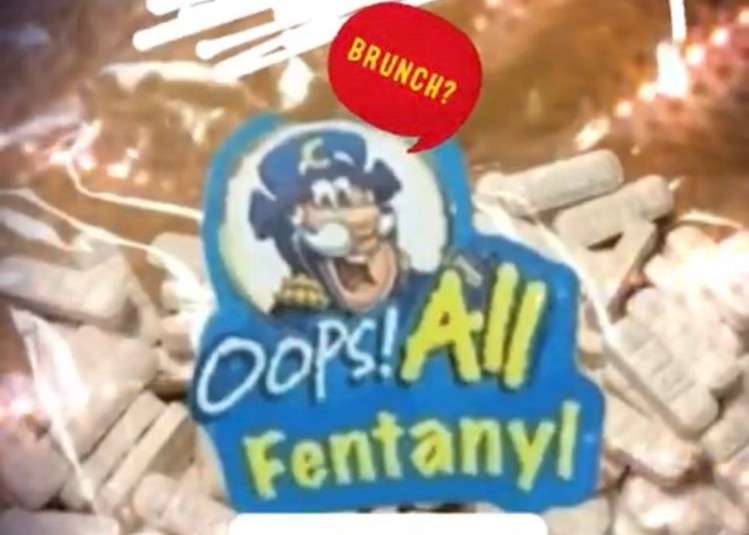
    An Ohio pub issued a public apology after parodying Cap’n Crunch with a joke menu item called “Oops! All Fentanyl.”

    Some jokes are best untold, as one restaurant and pub in Lakewood, Ohio is learning after a bungled social media post. On their Instagram account, the restaurant Yuzu posted a photo of a bag of fentanyl labeled “Oops! All Fentanyl” and “New brunch special? Sat & Sun.”

    The “joke” was likely referring to how many opioid drugs being sold have been unexpectedly cut with fentanyl, which has led to accidental fatal overdoses. Many Instagram users who saw it were not amused.

    “Screenshot from Yuzu Lakewood’s IG story. Not at all cool,” one person responded. “Making a joke of the opioid crisis is never funny ever.”

    The establishment’s owner, Dave Bumba, seemed to ignore the controversy his social media account created for about three days before finally responding on Facebook.

    “First, it’s never our intention to cause any malicious offense, and for that I do genuinely apologize for,” Bumba wrote in the post. “There’s a generational gap of humor; our target demo is 21 to 34. I’m aged out of our demo myself. Younger generations have developed a different sense of humor that more abstract, surreal, and darker than previous generations.”

    Bumba stopped short of calling the backlash a result of political correctness, instead turning into a meta-analysis of what’s a relatable coping mechanism versus what’s actually offensive.

    “It would be easy for me to blame this simply on an overly-politically-correct culture. A loud subset of people have been trained to seek out a reason to be offended. And while this might exist on some level, seeing some of the constructive criticism also made me think retrospectively about our social media content choices,” he posted. “Just because something exists and is perceived to be liked by enough of a subset of our demographic, does that make it the socially right choice to be relatable content?”

    Users considered the statement a non-apology, calling Bumba out on using a generational gap as cover.

    “Rather than sincerely apologizing for your offensive posts (which personally are not clever or funny and were in very poor taste), you backpeddle and still try to place blame on those you offended by implying they aren’t young or hip enough to get the joke,” wrote a user.

    Fentanyl has accelerated the number of deaths in the opioid crisis, hitting areas like Arizona especially hard. There, deaths from fentanyl overdoses have tripled between 2015 and 2017, mostly due to users believing they had a weaker opioid, like oxycodone, in hand.

    Street fentanyl is often disguised as legitimate prescription opioids, but these bootlegged pills are often made in primitive conditions with no quality control. And it only takes a little bit of fentanyl to send users into overdose.

    Users, including those of the targeted millennial demographic, have commented explaining why the joke wasn’t funny. Yuzu hasn’t posted anything further.

    View the original article at thefix.com

  • Police Station Evacuated After Possible Fentanyl Exposure

    Police Station Evacuated After Possible Fentanyl Exposure

    The substance believed to be fentanyl made its way into the police station after being confiscated from a suspect at See’s Candy.

    Sunnyvale, California police headquarters were evacuated this week after fentanyl sent multiple officers to the hospital.

    It began with a patrol officer at the Department of Public Safety headquarters. The officer was exposed to what police were told was the deadly synthetic opioid, fentanyl, according to a police report on Thursday, reported The Sacramento Bee.

    The report noted that the officer immediately felt “severe respiratory distress,” according to The San Jose Mercury News. The respiratory distress happened very quickly, according to Sunnyvale police spokesman Jim Choi.

    Police officers are aware of the risk of an accidental overdose due to fentanyl exposure, now more than ever. The Drug Enforcement Administration issued an officer safety alert (that included all first responders) warning of the possibility of such an overdose, the symptoms, and how to respond. Fentanyl is 30 to 50 times more potent than another deadly drug, heroin.

    Police officers can, according to some experts, have a dramatic and overdose-mimicking experience after contact with fentanyl that is essentially a placebo effect. Scottie Wightman, a Kentucky emergency medical technician, went unresponsive after one call. He was treated with naloxone, but a drug test later showed there were no drugs in his system.

    As a precaution, six officers from Sunnyvale’s Department of Public Safety were hospitalized and evaluated for possible fentanyl exposure. All of the officers have since gone home and the evacuation was lifted on the evening of the incident.

    However, Choi said the building was still under a “Level A” quarantine the next morning while crews processed police headquarters for hazardous materials, reported KTVU.

    After the headquarters were completely evacuated, a hazmat team entered to retrieve the suspected fentanyl and “decontaminated the affected areas,” police said.

    “The exposure was contained to DPS Headquarters and there is no threat to the community,” police wrote in a news release. “Police, fire and EMS services were not affected during this incident.”

    The substance believed to be fentanyl made its way into the police station after an officer responded to a business called See’s Candy. A call had been made that a man was urinating in public, and police eventually arrested the suspect on two outstanding warrants in San Luis Obispo County, according to police. The suspect’s name was not released.

    The suspect had a baggie that the police confiscated. The bag was filled with suspected narcotics, and the suspect reported to the police that fentanyl was part of the mix. Results are currently being procured at Santa Clara County’s crime lab, which according to Choi, is likely to take “some time.”

    View the original article at thefix.com

  • Illicit Mexican Fentanyl Taking Its Toll on Arizonans

    Illicit Mexican Fentanyl Taking Its Toll on Arizonans

    The number of fentanyl deaths in Arizona tripled between 2015 and 2017.

    At a party in Arizona, a small group of people took a few blue pills together, unaware of what was in them. Police were able to save three of them by applying naloxone, but it was too late for a fourth, 19-year-old Aaron Francisco Chavez.

    Investigators discovered that the group believed they had gotten their hands on oxycodone, a relatively less powerful opioid. The deaths, authorities say, are part of a massive fentanyl epidemic sweeping the state.

    “It’s the worst I’ve seen in 30 years, this toll that it’s taken on families,” said Arizona-based DEA agent Doug Coleman. “The crack (cocaine) crisis was not as bad.”

    The pills are reportedly gaining steam among partygoers in the state, which some experts believe is due to the delivery system.

    “There’s less stigma to taking a pill than putting a needle in your arm, but one of these pills can have enough fentanyl for three people,” said Lt. Nate Auvenshine of the Yavapai County Sheriff’s office.

    The blue pills that are taking over Arizona have an “M” on one side and a “30” on the other side, done to intentionally fool users into thinking that the meds are legitimate. These pills are the newest product from the notorious Mexican Sinaloa drug cartel, claims Tucson Police Lt. Christian Wildblood. The reason they are particularly deadly is simple—they adhere to no standards, made with pill presses bought online, so the amount of fentanyl in each pill isn’t very exact.

    “There is no quality control,” said Lt. Wildblood.

    The main way Mexican fentanyl enters the United States is in hidden compartments inside vehicles crossing through official border crossings, according to Customs and Border Protection (CBP). About 85% of the stuff comes in through the San Diego crossing, but the Drug Enforcement Administration notes that Arizona’s crossings are seeing a sharp rise in fentanyl seizures.

    Between 2017 and 2018, the DEA saw seizures rise from 172 pounds, or 54,984 pills, to a whopping 445 pounds, or 379,557 pills.

    The Sinaloa cartel continues to smuggle drugs despite the extradition of its leader, El Chapo, who recently received a life sentence in the U.S. This is a testament to their ability, says Coleman. 

    View the original article at thefix.com

  • "American Idol" Contestant Accused Of Fentanyl Distribution

    "American Idol" Contestant Accused Of Fentanyl Distribution

    Feds allege that former Idol contestant Antonella Barba was part of a major Virginia drug ring.

    Antonella Barba, who appeared in the sixth season of the reality/competition series American Idol, was indicted on federal charges for allegedly distributing fentanyl, heroin and other narcotics for a major drug ring.

    Barba was arrested in Virginia in late 2018 on charges of intending to sell 100 grams or more of heroin.

    Barba pled not guilty to the charge, but now faces 11 federal indictments, including 10 counts of distribution or possession of cocaine, heroin and fentanyl with the intent to distribute.

    According to newly released court documents, Barba was allegedly part of a drug ring that operated in the Hampton Roads metropolitan area from late 2017 to the fall of 2018. The ring reportedly used an apartment to store heroin, cocaine and money and made drug sales during the aforementioned time period in various locations throughout the Hampton Roads region.

    The indictment also alleges that a member of the ring – Justin Michael Isaac – instructed Barba to deliver approximately 830 grams of fentanyl to another conspirator on October 11, 2018. Barba was arrested that morning and charged in district court with allegedly selling or intending to sell heroin

    After pleading not guilty to the October charge, Barba was out of bail and awaiting trial in state court, but was taken back into custody on February 11, 2019 for the federal indictments. A detention hearing is set for February 14, 2019 in U.S. District Court in Norfolk, Virginia. Barba’s attorney, Assistant Federal Public Defender Suzanne Katchmar, did not respond to multiple requests for comments by various media outlets.

    Barba, a native of New Jersey and current Los Angeles resident, appeared on Idol in 2007 and reached the Top 16 before her elimination. She subsequently returned to college and earned a degree in architecture, and told Entertainment Weekly in 2009 that she was working on an album.

    Barba, who most recently reunited with several fellow Idol contestants for a parody of “We Are the World” on Jimmy Kimmel Live! was also charged with two misdemeanor charges of shoplifting at an Urban Outfitters in 2011.

    View the original article at thefix.com

  • Insys Execs Used Rap Video To Push Higher Doses Of Fentanyl Spray

    Insys Execs Used Rap Video To Push Higher Doses Of Fentanyl Spray

    The sales video parodied A$AP Rocky’s hit single “F—in’ Problems.”

    Jurors for a racketeering, fraud and conspiracy trial in Boston involving former Insys Therapeutics CEO John Kapoor saw a sales video made by the pharmaceutical manufacturer that showed company employees rapping about increasing prescription dosages and dancing with an individual dressed as a bottle of its powerful fentanyl spray Subys.

    Kapoor and four other former Insys managers and executives are accused of conspiring to pay doctors in exchange for prescriptions for Subsys, a fentanyl-based medication intended for use by cancer patients with severe pain. Kapoor and the other defendants have denied the charges.

    In the video, a parody of A$AP Rocky’s 2012 single “F—in Problems” which prosecutors said was shown during a national sales meeting in 2015, salesmen and other individuals rap about “titration,” a process by which employees persuade medical professionals to increase the strength of a prescription until their patients reach a certain dosage.

    At one point in the video, the person dressed as a Subsys bottle – which is notated with 1,600 micrograms, its highest dosage – is reportedly revealed to be Insys’ then-vice president of sales, Alec Burlakoff.  

    In November 2018, Burlakoff pled guilty to a charge of racketeering conspiracy, and according to NBC News, is expected to cooperate with prosecutors in the case against Kapoor.

    Another former Insys executive, ex-CEO Michael Babich, testified during the current trial that Kapoor encouraged employees to push for high dosages of Subsys so they would continue taking the drug.

    Attorneys for Kapoor claimed that Burlakoff was the architect of the kickback scheme, which according to CBS News, handed out more than $2 million to 18,000 doctors in 2016 alone.

    Kapoor’s lawyers also alleged that Burlakoff and Babich sought to reduce their sentences by providing false testimony against Kapoor, and have claimed that prosecutors have tried to link Insys to the national opioid crisis, noting that Subsys represents a fraction of the prescription opioid market

    Prosecutors, however, claim that Kapoor personally recruited physicians through expensive dinners and high-payment speaking engagements in order to ensure their commitment to higher dosages of Subsys. Kapoor, who resigned from Insys’ board of directors in 2017 after being arrested, along with Burlakoff, for their role in the kickback scheme on the same day that President Donald Trump declared the opioid crisis a public health emergency.

    Subsys, which is reportedly 100 times stronger than morphine, has been alleged to have played a role in hundreds of overdose deaths since the Food and Drug Administration approved it for use as cancer treatment for breakthrough pain in 2012. The drug, which helped to make Insys the best performing public offering in 2013, is now one of several opioid-related assets for which Insys Therapeutics, Inc., is currently seeking a buyer.

    View the original article at thefix.com

  • Border Patrol Makes Historic Fentanyl Bust

    Border Patrol Makes Historic Fentanyl Bust

    Almost $5 million worth of fentanyl and meth were seized.

    Follow my blog with Bloglovin

    In the reportedly biggest-ever Border Patrol fentanyl bust, agents in Arizona seized more than 250 pounds of the powerful narcotic hidden away in the secret compartment of a truck carrying cucumbers from Mexico.

    The haul of more than 400 packages of drugs included $3.5 million of the high-powered opioid and $1.1 million—nearly 400 pounds—of methaccording to Customs and Border Protection (CBP).

    A drug dog at the Nogales port of entry sniffed out the narcotics on January 26, when a 26-year-old driver tried passing through with his truckload of produce. A secondary inspection uncovered a special compartment in the floor of the trailer, where would-be traffickers had hidden the pricey stash totaling nearly 650 pounds. 

    The fentanyl bust was the largest in the history of the CBP while the meth seizure was the third-largest at an Arizona port of entry.

    The bust came one day after President Trump announced an end to the federal government shutdown that left thousands of government employees furloughed or temporarily working without pay.

    “I want to express my gratitude to the CBP officers involved in this case and Nogales personnel who selflessly perform their duties with dedication, vigilance, and professionalism,” said Nogales Area Port Director Michael Humphries. “This past weekend our CBP officers were able to stop an enormous amount of these deadly narcotics from hitting our streets.” 

    The driver was arrested and turned over to Homeland Security officials, who charged him with two counts of possession with intent to distribute. He is currently in federal custody, though authorities have not identified him.

    The Mariposa commercial crossing sees more than 1,500 trucks per day during the busy winter produce season, when millions of pounds of fruits and vegetables are shipped over the border every day. The size of Saturday’s bust was a surprise, authorities said, even at a high-volume port in the region that typically nets the most seizures of the addictive drug.

    “Normally, the southwest border ports are intercepting the most fentanyl, compared to other ports of entry, airports, seaports, the northern border,” said Guadalupe Ramirez, who oversees all Arizona border crossings, according to USA Today. “In CBP, in the history of CBP, this is the largest fentanyl seizure.”

    View the original article at thefix.com

  • Some San Francisco IV Drug Users Choose Fentanyl Over Heroin, Report Says

    Some San Francisco IV Drug Users Choose Fentanyl Over Heroin, Report Says

    Harm reduction advocates in the city urge IV drug users who choose to use fentanyl to run additional drug tests to “see what else might be in the mix.”

    The synthetic opioid, fentanyl, currently tops the list of drugs with the greatest likelihood of causing a fatal overdose; more than 18,000 people died from fentanyl-related overdoses in 2017, according to a report from the National Center for Health Statistics. Fentanyl’s lethal potential has been the subject of countless media stories.

    But a recent article on Stateline, the Pew Charitable Trust’s research and analysis blog, reported that some IV drug users in San Francisco’s Tenderloin district are actively choosing fentanyl over heroin.

    City health officials state that a number of factors have contributed to the drug’s popularity, including a low death rate, a degree of transparency among dealers and a sizable supply of the overdose reversal drug Narcan from local health and harm reduction groups.

    While much of the country saw fentanyl enter the illicit drug market in the mid-2010s, it wasn’t widely available in California until 2015. But as the Stateline article noted, the toll taken on California’s drug community—and in particular, on San Francisco IV drug users—wasn’t as severe as the wave of deaths that swept through New England and the Appalachian region.

    Figures from 2016 show that the California death rate that year hovered at 4.9 deaths per 100,000 persons, while the national death rate was 13.3 deaths per 100,000.

    Part of the reason for the lower numbers can be attributed to treatment and prevention efforts. The Stateline blog noted that California expanded Medicaid to low-income adults in 2010 and established a strong baseline of treatment options in subsequent years. San Francisco, in particular, has open lines of dialogue between drug users that help to guide the city’s health policy.

    “San Francisco’s harm reduction community systematically talks to drug users about their preferences and experiences,” said Daniel Raymond, policy director of the national Harm Reduction Coalition. “[They] continuously feed that information to the San Francisco Department of Health, which uses that intelligence to inform its message and overdose prevention strategies.”

    When the drug arrived in San Francisco in 2015, public health and harm reduction groups banded together to increase treatment options, availability to Narcan and drug testing strips, and outreach programs. The drug is also clearly labeled by dealers, so there is less of a chance of accidental ingestion, and its street cost is lower than heroin. As a result, fentanyl is the drug of choice for about half of Tenderloin users, as well as those in some neighboring communities.

    “For drug users, it’s just like you or I making decisions about the products we choose when we grocery shop,” said drug test administrator Kristen Marshall in the Stateline article. “Fentanyl is stronger, you need less of it, and it’s cheaper. So why wouldn’t I, as somebody with limited funds, want to spend my money on something that’s a better value and therefore a better product?”

    To be clear, fentanyl remains a dangerous drug, even more so than heroin. And many Tenderloin drug users avoid it, especially those who overdosed on other drugs laced with fentanyl. But for those that deliberately choose it, Marshall said that a policy of less-is-more appears to work.

    “Use less of it, use it slower, use it with other people, and keep Narcan with you,” she said. “It’s also important to test your drugs. Even if you know you’re getting fentanyl, you need to run additional tests to see what else might be in the mix.”

    View the original article at thefix.com

  • Mass Overdose In California Leaves One Dead, 12 Hospitalized

    Mass Overdose In California Leaves One Dead, 12 Hospitalized

    “Every indication is that this mass overdose incident was caused from the ingestion of some form of fentanyl in combination with another substance,” said a police chief at the scene.

    The synthetic opioid fentanyl is most likely responsible for a cluster of overdoses in one Chico, California house. One person died after overdosing and four are in critical condition; a total of 12 people were taken to the hospital. 

    According to NPR, Chico police are fairly sure the mass overdose was caused by the use of fentanyl, in combination with another substance.

    “Every indication is that this mass overdose incident was caused from the ingestion of some form of fentanyl in combination with another substance. That is yet to be confirmed, but we do anticipate confirmation in the coming days,” Chico Police Chief Michael O’Brien said.

    According to Anna Lembke, MD, fentanyl (a synthetic opioid pain reliever) can be 50 to 100 times more potent than heroin. Lembke gives this chilling example: “If you ingest a ‘bag of heroin,’ which is typically 100 mg of heroin, and that bag contains 20% pure fentanyl in place of heroin, you will be ingesting the rough equivalent of 2,000 mg of heroin, enough to kill even a highly tolerant user.”

    Chico Fire Department Division Chief Jesse Alexander said it was the largest mass casualty incident he had seen in years, with six people receiving CPR simultaneously.

    Chief O’Brien reported on the crime scene. “Upon arrival, Chico police officers found multiple individuals in what appeared to be life-threatening, overdose conditions. . . . Officers began to both administer CPR and also naloxone to those individuals. . . . Unfortunately one male individual was pronounced dead at the scene.”

    Chico officers began carrying naloxone on their person one year ago, according to CNN, and in this case lives were saved with the opioid-reversing drug. Police Chief O’Brien reported that officers administered CPR and six doses of naloxone.

    After working the crime scene, two officers reported feeling fentanyl-like symptoms from possible exposure and were treated and later released from a local hospital.

    The Chico Enterprise-Record reported that all of the people hospitalized were over the age of 18, with most of them appearing to be in their 20s. The National Institute on Drug Abuse reports that in 2017 there were more than 72,000 drug overdose deaths, with the sharpest increase seen among deaths related to fentanyl and fentanyl analogs (synthetic opioids) for a staggering total of nearly 30,000 overdose deaths. 

    View the original article at thefix.com

  • Fentanyl Test Strips: Important Tool Or False Security?

    Fentanyl Test Strips: Important Tool Or False Security?

    A recent study suggests that the testing strips should be widely distributed though some experts say the strips are not an adequate prevention measure.

    Last year, fentanyl became the most deadly drug in the country, responsible for more overdose deaths than any other substance. In addition to being found in — or even replacing — opioids like heroin and prescription pills, fentanyl has increasingly been detected in drugs like cocaine, whose users are at increased risk for overdose because they have not built up a tolerance to opioids. 

    That’s why some people say fentanyl test strips are an important tool to help cut back on opioid overdose deaths. Some users say they often have no idea whether the drugs they’re buying contain fentanyl, which is many times more powerful than other opioids and can cause an overdose in even a small amount.

    The test strips are able to detect the presence of the synthetic opioid, empowering users to make an informed decision about whether to take the drugs and about how much to use. 

    “Evidence to date suggests that people who use drugs often do not know whether fentanyl is present in what they are about to consume,” authors of a report prepared by the John Hopkins Bloomberg School of Public Health wrote last year

    The school conducted a study that found fentanyl test strips to be effective at detecting the drug. The researchers then interviewed people who use drugs about whether or not they would use the test strips: 84% said they were concerned about fentanyl, and 85% of people who thought they had taken fentanyl in the past said they wished they had known beforehand. Despite the drug’s powerful high, only 26% of users surveyed said that they sought drugs with fentanyl. 

    “Drug checking was viewed as an important means of overdose prevention, with 89% agreeing that it would make them feel better about protecting themselves from overdose. Interest in drug checking was associated with having witnessed an overdose and recently using a drug thought to contain fentanyl,” study authors wrote. 

    The study’s authors suggested that more agencies distribute fentanyl test strips. 

    “Drug checking strategies are reliable, practical and very much desired by those at greatest risk of overdose,” they wrote. “Drug checking services have the potential to facilitate access to treatment for substance use disorders and other essential services, as well as provide real-time data about local drug supplies for public health surveillance.”

    However, Assistant Secretary for Mental Health and Substance Use Elinore F. McCance-Katz wrote in an editorial on the SAMHSA website that fentanyl test strips are not a prevention measure that people should be focused on. 

    “Can’t the nation do better?” she wrote.

    She continues, “The entire approach is based on the premise that a drug user poised to use a drug is making rational choices, is weighing pros and cons, and is thinking completely logically about his or her drug use. Based on my clinical experience, I know this could not be further from the truth.” 

    Like needle exchanges, fentanyl test strips are likely to remain a controversial —but potentially lifesaving — tool. 

    View the original article at thefix.com

  • Feds Will Prosecute Fentanyl Dealers More Harshly in Baltimore

    Feds Will Prosecute Fentanyl Dealers More Harshly in Baltimore

    The feds are set to crackdown on fentanyl sellers in Baltimore, where there is expected to be twice as many overdose deaths as homicides in 2018.

    As part of the Trump Administration’s tough-on-crime stance, federal prosecutors will begin trying more fentanyl cases in federal court. They will be utilizing stronger resources and mandatory minimum sentences in an attempt to deter people from selling the deadly synthetic opioids in Baltimore, where there are expected to be twice as many overdose deaths as homicides this year. 

    Writing in an op-ed for The Baltimore Sun, US Attorney for Maryland Robert K. Hur said that the tougher tactics will hopefully curb fentanyl sales. As of last week, all fentanyl arrests in Baltimore are being reviewed by federal prosecutors who will decide whether the case will proceed in the state or federal system. This is part of the federal Synthetic Opioid Surge (SOS) initiative.

    “Federal prosecutors will pursue more cases involving fentanyl, bringing federal resources, laws and prison sentences to bear on those dealers who pose the greatest threat to public safety,” Hur wrote. “Word should spread that if you sell fentanyl on the streets, you run a very real risk of federal time.”

    Federal drug charges carry mandatory minimum sentences. Someone convicted of distributing 400 grams of fentanyl will face 10 years in prison; 40 grams will carry a five-year sentence. If the fentanyl is found to be involved in a death, there is a 20-year sentence. Because federal sentences are served in prisons far from home and have no possibility or parole or suspension, they’re seen as more harsh than state sentences. 

    “But criminal enforcement is essential to ending this crisis,” Hur wrote. “We need to target street dealers as well as corrupt pharmacists and medical providers. Treatment and prevention alone won’t stop the sellers, who are driven by profit and greed.”

    Hur shared the story of a 35-year-old woman who died of a fentanyl overdose. Before her death she texted a friend, “I don’t want to [be] this way. I worked and fought too hard to throw it all away. I almost overdose[d] the other night. I don’t know what to do.”

    “Law enforcement organizations know what to do in order to prevent more of these tragedies, and we are resolved to do it,” Hur wrote. 

    Former Attorney General Jeff Sessions first announced the SOS initiative in June, starting the program in 10 districts that were hard-hit by the opioid epidemic. 

    “We at the Department of Justice are going to dismantle these deadly fentanyl distribution networks. Simply put, we will be tireless until we reduce the number of overdose deaths in this country. We are going to focus on some of the worst counties for opioid overdose deaths in the United States, working all cases until we have disrupted the supply of these deadly drugs,” Sessions said in a press release at the time.

    View the original article at thefix.com