Tag: talking about mental health

  • "Just Between Us" Podcast Earns Praise for Honest Talk About Mental Health

    "Just Between Us" Podcast Earns Praise for Honest Talk About Mental Health

    Hosts Gaby Dunn and Allison Raskin dive deep into many of the associated anxieties and concerns that are linked with depression and bipolar disorder on the podcast.

    A recent episode of the podcast Just Between Us has received widespread praise from listeners for its honest and sympathetic discussion of mental health.

    Hosts Gaby Dunn and Allison Raskin, who are also best friends, talked at length about Dunn’s bipolar disorder—and in particular, feelings around a recent and seemingly insurmountable depressive episode.

    The pair, who are also best friends, delved deeply into many of the associated anxieties and genuine concerns that are linked with depression, from feeling like a burden to others to Dunn’s worry that the tone and subject of their talk would upset listeners. But as they discovered, the “response has been overwhelming,” says Dunn. “[The listeners] were like, ‘This is how I feel, and it’s good to hear it vocalized.’”

    In a conversation with The Fix, Dunn and Raskin—comedians, writers and podcasters whose joint credits include the best-selling novel I Hate Everyone But You and the hugely popular “Just Between Us” YouTube comedy channel—said that the conversation about Dunn’s depression was born partly out of Raskin’s mention of #JustCheckingIn, a hashtag she launched to encourage conversations about mental health.

    From there, as Raskin says, “It became more about personal experience.”

    “I’d been having a bad day, and Allison and I had been talking endless about this sort of thing because we’re best friends,” says Dunn. “I’d casually mentioned in the last few episodes that I’d been depressed, and so it was like, ‘Let’s just fill in the whole thing.’”

    “It felt a lot like impending doom,” says Dunn about the depression. “And because it’s cyclic—it’s cycling moods—it felt like this is what it’s going to be like for the rest of my life.”

    Once she began talking with Raskin, a host of emotions arose for Dunn during the course of the podcast conversation. “I was very annoyed at first,” she laughs. “You don’t ever want to hear about what you need to do, even if [someone is] gentle about it.” The enervating aspect of the depression also took hold: “I deeply believed that this had never happened before, that I would never get better, and it was over for me. So it’s hard to do something actionable when someone truly believes that.”

    And for Dunn, one of the biggest roadblocks was her fear of how the listeners would perceive the conversation. “There’s a lot of mental health talk about ‘how I overcame,’ or ‘here’s what’s happening since I got better,’” she recalls. Guilt over being in “the middle” of her episode, and how it might negatively impact listeners, was pervasive. “There’s a lot of people who care about us, and I was nervous. I was like, ‘Are they going to flip out?’”

    As it turns out, the listeners didn’t. “We have a wonderfully accepting fanbase, which I don’t think is always the case for creators,” says Dunn. “They were like, ‘Don’t worry—we’re not mad. This is how I feel, and it’s good to hear it vocalized.’”

    Many responded to Raskin’s gentle encouragement of rest and recovery. “If you’re having a flare-up, it’s extra important to give your body the rest it needs,” says Raskin. “Have mini-breaks or mini-vacations, and if you have nothing to do, watch a TV show rather than panic about it.”

    Above all, the act of checking in—both by the person struggling with depression or other issues, and from their friend or family member—can be crucial in helping work through many of the feelings that Dunn experienced. For those who may be reluctant to bring up their status with others, Raskin advises reversing the situation.

    “If my friend wasn’t feeling well and needed help, I would want them to let me know,” she says. “You’d want to deal with it with compassion. And that can give you a little perspective, that maybe it would be beneficial to reach out, that people want to hear from you.”

    Alleviating feelings of anger, self-reproach and anxiety can help those in the midst of difficult feelings to open up.

    “Allison always says that there’s ‘the thing’ and ‘how you feel about the thing,’” says Dunn. “You can deal with the actual thing, but you have to get rid of how you feel about the thing, because that’s just adding more stress. You don’t need to add more shame and worry on top of the actual thing. And I thought that was good advice.”
    View the original article at thefix.com

  • NBA Star Kevin Love Talks Anxiety, His First Panic Attack

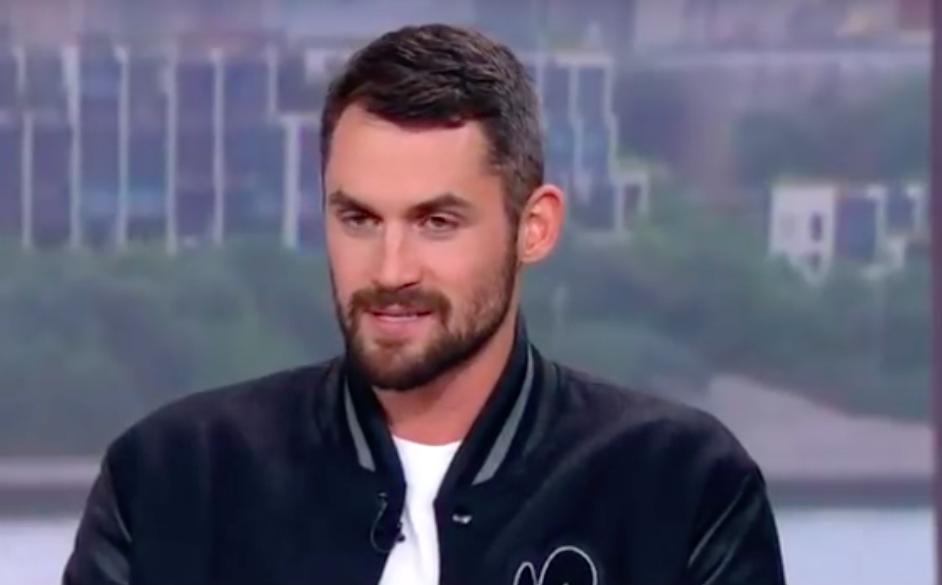
    NBA Star Kevin Love Talks Anxiety, His First Panic Attack

    Love described having his first panic attack to Men’s Health.

    Kevin Love is the five-time All-Star forward of the Cleveland Cavaliers who helped lead the team in winning a 2016 NBA championship. Since suffering a panic attack during a game, Love has also been an outspoken advocate for mental health awareness.

    Love can remember the exact date he had his panic attack, November 5, 2017, right after halftime during a game against the Atlanta Hawks. He told Men’s Health, “I couldn’t catch my breath. I was sticking my hand down my throat, trying to clear my air passage. I thought I was having a heart attack and ended up unconscious on the floor of our head trainer’s office.”

    At one point, Love thought “this could be it,” that he was actually dying, but then he also became terrified that his teammates would think he was “not reliable,” and he kept his anxiety attack a secret.

    As Love recalled to The Player’s Tribune, his panic attack “came out of nowhere. I’d never had one before. I didn’t even know if they were real. But it was real—as real as a broken hand or a sprained ankle. Since that day, almost everything about the way I think about my mental health has changed.”

    Love said that when he was younger, “You figure out really quickly how a boy is supposed to act… It’s like a playbook: Be strong. Don’t talk about your feelings. Get through it on your own. So for 29 years of my life, I followed that playbook. These values about men and toughness are so ordinary that they’re everywhere… and invisible at the same time, surrounding us like air or water. They’re a lot like depression or anxiety in that way.”

    Love has since learned to face his anxiety through therapy, spending time with his dog, taking medication and practicing meditation. He has also launched The Kevin Love Fund, a charity that works in tandem with the Movember Foundation and Just Keep Livin.

    “These superheroes that we look at, whether it be somebody in the entertainment industry or an athlete, we also have these layers that we deal with on a daily basis. Know that you’re not alone. You’re not different. You’re not weird. And we can do this stuff together,” said Love.

    View the original article at thefix.com

  • Jessie J Cries In Emotional Video About Depression, Vulnerability

    Jessie J Cries In Emotional Video About Depression, Vulnerability

    The singer said that she hopes her emotional outpouring helps others find motivation to acknowledge their feelings. 

    Singer Jessie J became teary in an emotional Instagram video that showed her working out her feelings at the piano during an “off day.”

    The video was posted on Sunday (Feb. 24). In a lengthy caption, the “Nobody’s Perfect” singer explained why she shared her vulnerable moment on social media. 

    “I’m not posting this for sympathy. Im posting this for anyone who needs to see it (I needed it),” she wrote. “This video is from yesterday I woke up. Feeling kinda off. I sat at the piano (which I’ve been avoiding) knowing it will bring some stuff up. I’m making it up and feeling my real feelings.”

    Jessie said she went live to share the moment, not knowing that she would end up crying.  

    “But it’s important to be open that we are not always done up and feeling 100. All of us have our days. Yesterday was one of my weird emotional days,” she wrote.

    Jessie said that she hopes other people will find motivation to acknowledge their feelings. 

    “In a time and a world (especially the social world) where sadly vulnerability is often seen as weakness where the younger generation are almost being taught to hide their real feelings behind a perfected edited image. Hence why anxiety and depression in kids is through the roof and only carries to their adult life if it doesn’t change.”

    She pointed to the high suicide rate, particularly among young men, and seemed to say that expressing emotion is one way to combat it. 

    “We push our feelings to the bottom of our energy and hope it goes away. It won’t. Don’t define yourself on it. But stand with it, process it and learn from it. Find YOUR happiness. No one can make you happy but you. People can contribute. But ultimate happiness comes from within. It’s a personal journey,” she said. 

    She called on people to find a way to cope with their emotions—through exercise, creativity or anything else that works. 

    “To anyone young or older. Let your sadness / pain / Greif [sic] out. In your OWN way. Ever noticed so many people apologise as soon as they start to cry these days? Like it’s an inconvenience to FEEL. Draw. Sing. Paint. Walk. Write. Drive. Work out. Be still. Whatever it is that let’s you understand and process your real emotions do it.”

    Most importantly, people should reach out for help when they need to, she said. 

    “TALK to people you love when you are down. Please do not suffer in silence. Life is way too short and ALWAYS GETS BETTER. I’m thinking of you and sending love to your heart.”

    View the original article at thefix.com