Tag: usps drug deliveries

  • "60 Minutes" Tracks Down Fentanyl "Kingpin" In China

    "60 Minutes" Tracks Down Fentanyl "Kingpin" In China

    The show’s producers tracked down and confronted one of the primary sources offering fentanyl online to US residents.

    60 Minutes recently did a segment on the fentanyl crisis, tracking down a man identified as something of a “kingpin” for the trafficking of this incredibly potent drug from China. Shipments of fentanyl from China via the U.S. Postal Service (USPS) are considered by federal authorities to be a massive source of the influx of the drug that has been causing mass overdose cases across the country.

    Shopping For Fentanyl Online

    After two overdose deaths in a week in Akron, Ohio, assistant U.S. Attorney Matt Cronin decided to investigate how the synthetic opioid, which can be 50 times more potent than heroin, was making its way so easily into American hands. He found that ordering fentanyl online was shockingly simple.

    “We just said, ‘Hey,’ according to the source’s instructions, ‘we’re interested in buying fentanyl,’” said Cronin. “And the result was, to say the least, surprising. We have dozens, probably over 50 different drug trafficking networks reaching out to us saying, ‘We have fentanyl. We have even more powerful fentanyl analogs. Whatever you want, we’ll get it for you for cheap. We’ll get it for you in bulk.’”

    All of the replies came from China.

    According to similar investigations by Ohio Senator Rob Portman and his staff, these sources guaranteed shipments that went through the USPS due to delays in implementing shipping procedures designed to stop fentanyl trafficking.

    “That’s because after 9/11, all private carriers like FedEx were required to give U.S. Customs advance descriptions and tracking of foreign packages,” 60 Minutes reports. “The Postal Service was allowed to delay because of the cost.”

    Although the USPS has tried to implement these requirements, they say that China is not cooperating.

    Locating The Source

    Somehow, 60 Minutes producer Bob Anderson tracked down a man named Guanghua Zheng, who was identified as one of the primary sources offering fentanyl online to U.S. residents, and confronted him outside of a Shanghai grocery store. Zheng insisted that he no longer does this before the woman who was with him intervened.

    The U.S. government has “sealed” off Zheng’s offshore bank accounts, shut down 40 of his websites selling illicit substances like fentanyl in 20 languages, and officially designated him and his sons as “foreign drug kingpins.” China has promised to shut down the synthetic opioid trafficking networks operating within its borders, but it’s unclear whether they are following through.

    During the 60 Minutes segment, Justin Herdman, U.S. Attorney in Cleveland, repeated a claim that fentanyl can cause intoxication, overdose, and even death through mere skin contact. However, in 2018, harm reduction activist Chad Sabora demonstrated this to be a myth by holding fentanyl-laced powder in his hand for several minutes without effect.
    View the original article at thefix.com

  • USPS Workers Convicted For Delivering Drugs

    USPS Workers Convicted For Delivering Drugs

    US Postal Service employees were caught for hustling on their route last week.

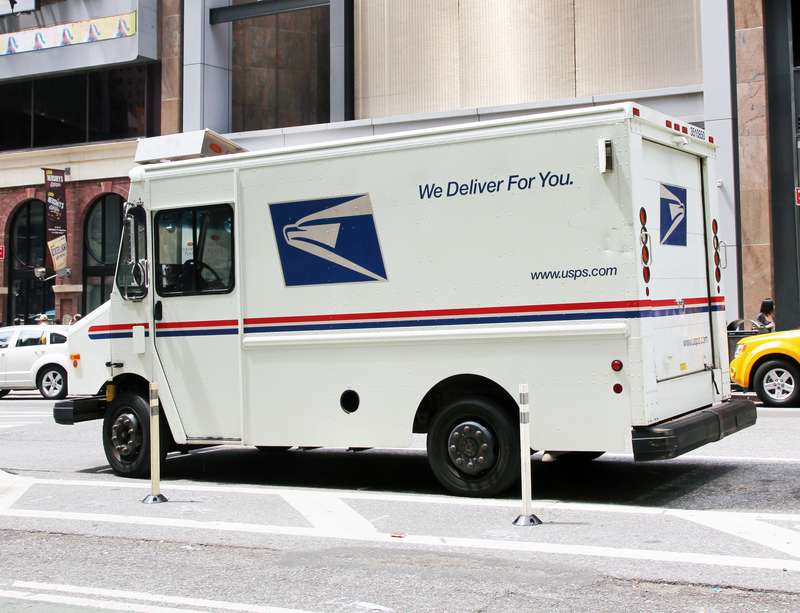
    Two United States Postal Service workers were convicted last week for delivering drugs on their postal routes.

    One employee, Unterria Rogers of Mobile, Alabama, was given five years for his involvement in a marijuana delivery ring along the city’s postal routes. Rogers would receive packages from California and deliver them, receiving $250 per pound he got into buyers’ hands. In all, Rogers delivered around 133 pounds before being caught. 

    Ultimately, it may have been his prolific delivery volume that did him in, as authorities were alerted following a spike of suspected drug packages in the city. Rogers was charged with using a firearm in his drug trafficking.

    Interception

    The second employee convicted last week was Fred Rivers of New Jersey. He would receive packages with false names and flag them as deliveries for a local drug dealer. He got $100 for every package he intercepted.

    These two are far from the only USPS employees to deliver more than postage. In 2017, the U.S. Attorney’s Office in the Eastern District of Pennsylvania indicted nine people, including two USPS workers, Steven C. Williams and Felicia Charleston, for their involvement in a marijuana-trafficking organization. They faced life in prison and multimillion-dollar fines for helping divert packages to distribute almost 100 kilograms of marijuana. In 2018, Williams and Charleston were sentenced to 15 months and 10 months in prison, respectively.

    Exploitation

    Delivery systems like the USPS and FedEx are easy to exploit for drug delivery, even without employees getting involved. These parcel delivery services remain among the easiest ways to ship fentanyl, opioids, and other drugs into the United States. This was made especially apparent during a federal court case involving 43 members of a methamphetamine distribution ring that had ties to the Sinaloa Cartel.

    “The sheer logistical nature of trying to pick out which packages contain opioids makes it much more challenging,” said Robert E. Perez, an acting executive assistant commissioner for U.S. Customs and Border Protection (CBP). “It’s unlike anything we’ve encountered.”

    The major issue is that drug rings have people on the inside.

    “Don’t think that these cartels don’t have their own ‘intelligence services,’” warned Perez. “Friends, family members working on the inside. So they’re going to know how many agents or officers are assigned to which FedEx facility, when they’re working, and when they’re not.”

    View the original article at thefix.com