Tag: vaping deaths

  • Vaping Death Toll Rises To Nine

    Vaping Death Toll Rises To Nine

    The Kansas resident, who was a new e-cigarette user, had an underlying health condition. 

    A second Kansas resident has died from a vaping-related illness, bringing the national death toll to at least nine as of Wednesday (Sept. 25). 

    The most recent victim was a man older than 50. He had an underlying health condition, according to information provided by the state’s Department of Health and Environment (KDHE). 

    “Today, I am saddened to announce the death of a second Kansan in association with this outbreak,” Governor Laura Kelly said in a news release. “Dr. Lee Norman and his team with the Kansas Department of Health and Environment are working tirelessly with other states and organizations to gather facts on e-cigarettes and its effects. We are coordinating a response to combat this epidemic, so that families can avoid such tragic outcomes.”

    New Users Are Affected Too

    The man was reportedly a new vape pen user. 

    “The patient had recently begun using e-cigarettes prior to hospitalization,” said state epidemiologist Dr. Farah Ahmed.

    The information on vaping-related illness in Kansas shows how widespread the issue is. The other death in the state was of a woman, also over 50, who also had underlying health issues.

    However, of the nine confirmed cases of vape-related deaths in the country, the victims have ranged in age from 17-67. They’ve included five men and four women. The products linked to the illnesses have contained tobacco, THC, CBD or a combination of these. 

    “E-cigarettes are unregulated, which means that we don’t know what’s in them,” said Norman, the secretary of KDHE. “And, of great concern to me, is that in the midst of all these illnesses being reported, the amount of young people using them is significant.”

    Youth Vaping Epidemic

    Parents must be aware that even though their children aren’t smoking traditional cigarettes, they could be vaping, officials say.  

    “Most teens who vape have never smoked cigarettes. Vaping is how they are initiating inhaling things into their lungs. We must work diligently and swiftly in addressing this public health crisis,” Norman said. 

    The state reports that 10.6% of high schoolers and 4.6% of adults use vaping products. All of them could be at risk, since it’s unknown what is causing vape-related illnesses. 

    “The Kansas Department of Health and Environment is urging people to stop vaping while this national investigation is underway,” said Ahmed.

    Norman said it’s important that everyone be aware of the risks of vaping, especially while vape pens remain widely available. 

    “Until [new] rules and regulations go into effect, education is our best defense,” he said. “Talk to your kids. Talk to your grandkids. Keep talking about these issues.”

    View the original article at thefix.com

  • Walmart To Halt E-Cigarette Sales

    Walmart To Halt E-Cigarette Sales

    The American Vaping Association has criticized Walmart for punishing e-cigarette companies but continuing to sell regular cigarettes.

    With so much focus on the dangers of vaping in the news, one of the largest retailers in the world is announcing they’re going to phase out e-cigarettes.

    As Yahoo reports, Walmart has circulated an internal company memo which reads: “Given the growing federal, state and local regulatory complexity and uncertainty regarding e-cigarettes, we plan to discontinue the sale of electronic nicotine delivery products at all Walmart and Sam’s Club U.S. locations.” 

    Retailers React To Pressure

    The memo also stated that once the current inventory of e-cigarettes has sold, Walmart will “complete our exit” from selling them. 

    In the wake of nine deaths that have been linked to vaping, the FDA is launching a criminal investigation and lawmakers have implored the current administration to get rid of e-cigarettes altogether. 

    Back in May, Walmart voluntarily raised the minimum age to buy tobacco products to 21. 

    As CNBC reports, a number of companies don’t want to wait for an FDA crackdown on e-cigarettes, and have been instituting their own bans on them. (CBS, WarnerMedia and Viacom have all decided to stop airing e-cigarette ads as well.)

    At the same time, the American Vaping Association has criticized Walmart for punishing e-cigarette companies but continuing to sell regular cigarettes. In a statement, the association’s president, Gregory Conley, said, “You know you are in the middle of a moral panic when big corporations like Walmart find it is easier to sell deadly combustible tobacco products than to sell harm reduction alternatives.”

    Prior to Walmart’s big move, the Trump administration announced it was moving ahead on banning flavored e-cigarette products. So far, Michigan and New York have banned flavored e-cigarettes just this month. San Francisco became the first U.S. city to ban the sale of e-cigarettes this past June.

    As Health and Human Services Secretary Alex Azar said in a statement, “The Trump administration is making it clear that we intend to clear the market of flavored e-cigarettes to reverse the deeply concerning epidemic of youth e-cigarette use that is impacting children, families, schools and communities.” 

    View the original article at thefix.com

  • Should I Stop Vaping?

    Should I Stop Vaping?

    Are the alarming headlines justified? And should the risks associated with vaping be a deterrent when the alternative is smoking cigarettes?

    Over the past few weeks we’ve seen a surge of headlines that say vaping may be more harmful than we might have initially thought. Seven deaths have been linked to the use of e-cigarettes. In response, some states have banned vaping products. However, naysayers — including experts — argue that a knee-jerk reaction by health agencies is premature, overlooks the harm reduction that vaping achieves, and could cause a potential public health disaster

    If smoking is the de facto predecessor of vaping, then e-cigarettes should be examined within the context of nicotine delivery systems as a whole. Smoking is the leading cause of preventable death in the United States. Should the risk associated with vaping be a deterrent when the alternative is smoking cigarettes?

    Some in the recovery community say that it shouldn’t. Many former cigarette smokers have replaced their “analog” smokes with e-cigarettes, using vaping as a means of harm reduction that swaps out cancer-causing tobacco with a safer means of nicotine delivery. Recovery purists and some clinicians, however, argue that smokers are trading one addiction for another and express concerns that, lower risk or not, most vapers are still ingesting large amounts of highly addictive nicotine. They also point to this recent rash of deaths as evidence against vaping.

    Before we address the question of harm reduction, though, do the alarming headlines have any merit in science? And given that e-cigarettes have been around for 15 years, why are we only seeing deaths now?

    Recent Media Coverage of Vaping

    The American Medical Association (AMA) recently labeled vaping “an urgent public health epidemic,” and physicians have urged the Food and Drug Administration (FDA) to act. The AMA claims that research has shown that the use of e-cigarettes and vaping products is unsafe and causes addiction, however the statement does not provide the supporting research. The AMA also says they “applaud steps to remove flavored e-cigarette products from the market.”

    The Centers for Disease Control and Prevention (CDC) issued a statement that together with the FDA, local health departments, and other clinical and public health partners, they are investigating a multi-state outbreak of lung disease associated with e-cigarette products. The FDA echoed the CDC’s concern, calling the outbreak “a frightening public health phenomenon.”

    Dr. Dana Meaney-Delman, who is leading the CDC’s investigation, said in a statement, “The recent rise of acute lung illnesses linked to vaping has deepened concerns about the safety of the devices.” 

    But why now? People have been vaping for over a decade. The CDC’s Meaney-Delman says, “We’re all wondering if this is new or just newly recognized.”

    The Facts About E-Cigarettes

    Here’s what we know: As of this writing (9/21/19), the CDC states that 530 cases of lung illness have been reported from 38 states, and seven deaths have been attributed to vaping. Most affected patients also reported a history of using vaping products that contain THC. 

    The CDC does not yet know the specific causes of these illnesses: “The investigation has not identified any specific e-cigarette or vaping products (devices, liquids, refill pods, and/or cartridges) or substance that is linked to all cases.” Regardless, for those who are concerned with these issues, the CDC recommends refraining from using all vaping or e-cigarette products until they know more.

    Elsewhere on the website, the CDC still states that e-cigarettes have the potential to benefit adult smokers as a substitute for regular cigarettes.

    Because of the media coverage and caution by public health agencies, we are seeing increasing action across the US: New York’s former mayor, Michael R. Bloomberg, has committed $160 million to ban flavored e-cigarettes, Governor Gretchen Whitmer issued an executive order to ban the sale of flavored vaping products in Michigan, San Francisco has banned the sale of e-cigarettes, and President Donald Trump says the FDA will ban flavored e-cigarettes. 

    For Adolescents, Nicotine (in Any Form) May Harm the Brain

    Is this a knee-jerk reaction? It seems that some of the pressure is a result of parents and politicians who are concerned that flavored vaping products are responsible for the surge in teen use. That’s understandable, given the potential for nicotine to harm the developing brain. According to the CDC, one in five high schoolers and one in 20 middle schoolers vape.

    For adults, however, there appears to be conflicting statements by researchers, doctors, and health officials. 

    In a September 2019 article, Dr. Robert Shmerling at Harvard echoed the CDC’s bottom line: Experts are unsure if vaping is causing these lung problems, and lung disease has not been linked to a specific brand or flavor of e-cigarette. A more likely culprit, they claim, is a chemical contaminant within the inhaled vapors that is causing an allergic reaction or immune system response. 

    This belief is supported by a study that came out last year linking the chemical flavors within e-cigarettes to an adverse effect. Dr. Sven-Eric Jordt, PhD, one of the authors of the study, recently told The Guardian that “the liquids vaporised by e-cigarettes are chemically unstable and form new chemicals that irritate the airways and may have other toxic effects.” These new chemicals are not disclosed by the manufacturers to users. 

    Dr. Michael Siegel, a professor at Boston University, claims that health officials and physicians are not telling the full story: In every case in which a specific e-liquid has been identified, that e-liquid has been found to contain THC — a fact corroborated by the CDC. He states that the e-liquids in some of these cases were oil-based and typically purchased off the street; therefore, their ingredients are not strictly regulated. It is these oil-based THC liquids that are known to cause acute respiratory illness. 

    Similarly, the Washington Post reported that the FDA investigation found the same vitamin E-derived oil in cannabis products that were used by those found to be suffering vaping-related illnesses throughout the country. 

    CDC’s Guidelines: Unnecessarily Broad

    While Siegel acknowledges we aren’t in a position to draw conclusions about THC oils or to say that street products are definitely to blame, he believes the CDC’s recommendations are unnecessarily broad and consequently harmful, since people who vape may think it’s safer to go back to smoking cigarettes. 

    “I cannot overemphasize how insane this policy is,” he says. “From a public health perspective, it makes absolutely no sense to ban these fake cigarettes but to allow the real ones to remain on the shelves.”

    Instead, Siegel suggests, the CDC could offer more specific and useful guidance to the public, specifically: Do not vape THC oils (including butane hash oil), do not use any oil-based vaping e-liquid product, and refrain from buying products off the street or using any e-liquid that doesn’t disclose its ingredients. To reduce risk, people should “stick to products being sold at retail stores, especially closed cartridges where there is no risk of contamination or the presence of unknown drugs.”

    Switching from smoking tobacco to e-cigarettes is a proven harm reduction strategy supported by health officials and used by individuals in recovery. 

    Lara Frazier, a person in long-term recovery, explained, “I am in abstinence-based recovery and quit smoking cigarettes over four years ago, thanks to e-cigarettes.” Regarding the recent deaths associated with vaping, she says: “There is mass hysteria about vaping, with people not being properly educated on what is actually occurring.”

    Frazier is concerned about the consequences of recent official warnings: “Nicotine addiction is like any addiction, and banning flavors will likely not result in less nicotine being smoked. This could cause more harm because the teenagers will have to find black-market cartridges, make their own juice, and/or switch to smoking cigarettes.”

    She continues, “I think it’s ridiculous that they are going to ban all flavored juices that aren’t tobacco-based on five (now seven) deaths and illness without properly looking at the data or researching the cause of the illness.”

    Vaping as Harm Reduction

    There is world-wide support and evidence for vaping as harm reduction. A study conducted by the New England Journal of Medicine found that vaping was nearly twice as effective as conventional nicotine replacement products for smoking cessation.

    In the UK, Public Health England also supports vaping as a harm reduction strategy. Even in light of the recent concerns, their position has stayed the same: “Our advice on e-cigarettes remains unchanged — vaping isn’t completely risk-free but is far less harmful than smoking tobacco. There is no situation where it would be better for your health to continue smoking rather than switching completely to vaping,” they said.

    Yaël Ossowski, deputy director of the Consumer Choice Center, urged President Trump to consider the facts before reacting hastily and pushing for a ban, arguing that vaping is a less harmful alternative for consuming nicotine. Ossowski cites a 2016 report by the UK’s Royal College of Physicians, which reviewed the science, public policy, regulation, and ethics surrounding vaping and concluded that e-cigarettes should be promoted widely as a substitute for smoking. The report also sought to clear up misinformation about vaping and long-term harm, stating that while there is a possibility of harm from e-cigarettes, it is unlikely to exceed five percent of that associated with tobacco products. 

    Smoking Cigarettes Is Still The Leading Cause of Preventable Death

    According to the Centers for Disease Control and Prevention, more than 16 million Americans are living with a disease caused by smoking. We have abundant evidence that smoking leads to disease and disability, harming nearly every organ in the body. It causes cancer, heart disease, stroke, lung diseases, diabetes, and chronic obstructive pulmonary disease. It also increases the risk for tuberculosis, eye diseases, and autoimmune conditions. 

    Worldwide, the use of tobacco products is responsible for more than seven million deaths each year. In the U.S., 480,000 people die every year from smoking, and 41,000 people die as a result of secondhand smoke. Economically, smoking has a huge impact on the United States: it costs $170 billion a year in direct medical care, and $156 million in lost productivity. 

    Smoking remains the leading cause of preventable death. 

    At this point, the evidence supports vaping as an effective means of harm reduction, thus outweighing the limited risks. Further, public health officials have yet to complete their investigations into these risks so they can conclusively identify the cause of the deaths attributed to vaping. It seems foolish to enforce blanket bans on e-cigarettes, as that may cause further harm by pushing people toward buying black-market vaping products or resuming smoking cigarettes.

    View the original article at thefix.com

  • State Marijuana Legalization Might Not Include Smoking, New York Governor Hints

    State Marijuana Legalization Might Not Include Smoking, New York Governor Hints

    “There are ways to get THC without smoking marijuana, and we don’t encourage smoking period.”

    Governor Andrew Cuomo of New York may have hinted that the state’s cannabis legalization bill may include a ban on smoking the substance, allowing only other methods of use such as edibles.

    This suggestion was noticed by Marijuana Moment after Cuomo was interviewed on MSNBC Sunday and was asked if the recent cases of lung injury and deaths possibly connected to vaping products had made him reconsider his stance on the issue.

    “No,” said Cuomo. “On marijuana, we’re not in favor of smoking marijuana. There are ways to get THC without smoking marijuana, and we don’t encourage smoking period.”

    Legalizing THC Doesn’t Necessarily Mean Legalizing Weed

    Cuomo may have simply been defending his stance on cannabis legalization by pointing out that people don’t have to smoke it in order to enjoy it as MSNBC anchor Kendis Gibson pushed him on the vaping issue. However, multiple cannabis-focused news outlets have interpreted his answers as possibly suggesting that all or some forms of smoking could be banned in a future legalization bill.

    “You can legalize marijuana and sell THC in compounds that do not require you to smoke the marijuana, and we do not support smoking of marijuana,” Cuomo continued. “There are compounds that have the THC, which is a compound in marijuana, that you don’t smoke.”

    It is possible that a marijuana legalization bill could include an exception for smokables, especially as general bans on vaping products for both tobacco and cannabis have already been proposed.

    The Trump administration is currently finalizing a national ban on flavored e-cigarettes that many experts have pointed to as the reason for the recent spikes in teen vaping rates. 

    Democrats are backing the proposed ban, with many of them saying that the legislation is long overdue. Meanwhile, multiple states, including New York, are drafting their own vaping bans.

    There is also direct precedent for such a ban in New York cannabis law. In 2014, medical marijuana legislation signed into law by Cuomo included a ban on smokable forms of the substance. Cuomo insisted on this provision himself, though his views on cannabis have clearly evolved over the years.

    View the original article at thefix.com
  • Skepticism Over E-Cigarettes Growing Rapidly

    Skepticism Over E-Cigarettes Growing Rapidly

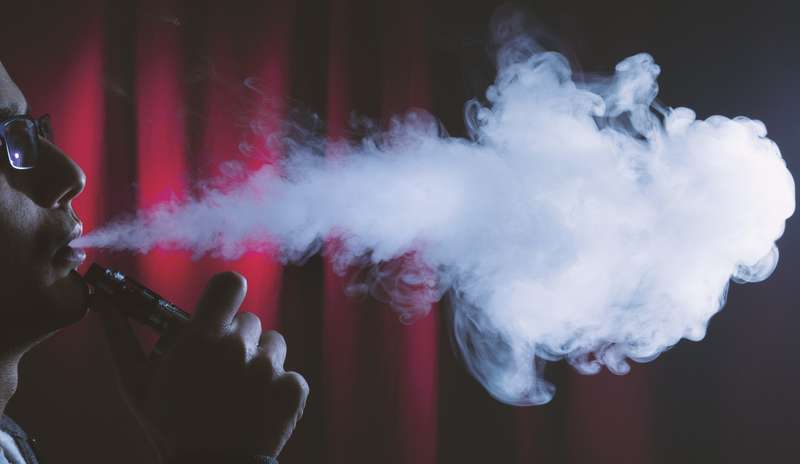
    In the midst of a mysterious wave of vaping-related illnesses, public concern over vaping is at an all-time high. 

    Concern over vaping, which is the use of battery-powered e-cigarettes, has been growing recently as more and more respiratory issues are being connected to the devices

    According to Bloomberg, vaping is “a way to ingest nicotine, the addictive alkaloid present in tobacco, without the smoke and tar that comes from burning tobacco.” Vaping devices use a battery to heat a liquid containing nicotine, and the user then inhales the vapor that is produced. 

    Some devices, such as the Juul, have received much attention for their compact and appealing design, as well as flavors. Juul has been repeatedly accused of marketing their flavored vaping products to a young audience.

    “The effects on humans of nicotine are not well-studied, although adolescents appear to be particularly vulnerable to it, with some evidence suggesting it can harm brain development,” Bloomberg reports. “A report by the U.S. National Academies of Sciences said there was substantial evidence that young vapers are more likely than nonvapers to try regular cigarettes.”

    Traditional Cigarettes Vs E-Cigarettes

    Another debate surrounding the devices is whether they are actually better for your health than smoking cigarettes. Early on, the devices were marketed as cigarette alternatives that could help smokers quit and replace the habit with something considered less harmful at the time. 

    But recently, a wave of vaping-related illnesses has led to multiple deaths and hundreds of other health issues for vapers across the U.S. 

    “Doctors have seen hundreds of cases where patients—often youthful, previously healthy adults—have shown up in the emergency room, suddenly stricken with dangerous respiratory damage,” Bloomberg notes. 

    In November 2018, the Food and Drug Administration took action to limit most sales of flavored e-cigarettes to only vaping stores and online retailers. 

    Flavor Ban

    And more recently, the Trump administration has come forward with the intention to remove flavored vaping products from the market.

    “Now, on the direction of President Donald Trump, the FDA plans to issue regulatory guidance that will force the removal from the market of all vaping products that taste like anything other than tobacco,” Bloomberg states. “Sales could resume only with FDA approval.”

    The e-cigarette industry itself has also taken steps in this direction. In 2018, Juul announced that it had stopped stocking stores with appealing flavors like mango, fruit, creme and cucumber, and instead provided only tobacco, menthol and mint flavors. The company planned to continue selling the fruity flavors on its website, but said it would be taking steps to ensure buyers were 21 or older. 

    Major e-cigarette retailers Altria, Reynolds and Juul Labs have also expressed support in raising the legal tobacco buying age from 18 to 21. 

    View the original article at thefix.com

  • Is Vitamin E Behind The Wave Of Vaping-Related Illnesses?

    Is Vitamin E Behind The Wave Of Vaping-Related Illnesses?

    The New York Department of Health is on the hunt for the cause of the recent rash of vaping-related illnesses. 

    As reports of respiratory illnesses—and at least six deaths—related to the use of electronic or e-cigarettes continue to mount, and while lawmakers work to ban flavored vaping devices, health officials in New York have found “very high” levels of vitamin E acetate, a thickening agent, in many of the cannabis vape products used by the individuals who became sick.

    The state’s Department of Health announced that the acetate is now a “key focus” of their investigation, and submitted more than 100 samples to the Food and Drug Administration (FDA) for testing.

    As Leafly noted, Vitamin E is the umbrella term given to several similar types of oils called tocopherols. They can be extracted from vegetables or made synthetically from petroleum, and are most commonly used as a dietary supplement or as an ingredient in food and/or cosmetics, such as face creams. 

    Highly Toxic When Inhaled

    Though topical application of tocopherols can lead to some skin reactions, inhaling them is highly toxic and can lead to serious health issues. When inhaled, tocopherols adhere to the fluid that lines the interior of the lungs, preventing oxygen from entering the body, and causing cellular death. That, in turn, causes an immune system reaction that resembles pneumonia, with reported symptoms including cough, chest pain, fatigue, shortness of breath, fever and forms of gastrointestinal distress.

    While testing in state-run markets can prevent additives from being used in vape cartridges, they are not specifically banned in legal adult-use markets.

    Alex Dixon, the CEO of Floraplex, which makes a chemical thickener called Uber Thick, told Leafly that tocopherols could be found in vape cartridges in “every store in downtown Los Angeles, [and] just about any online sales platform you can think of.”

    CDC director Robert Redfield said that while vitamin E acetate has been found in many of the samples used by the sickened individuals, “People need to realize that it is very probable that there are multiple causes.”

    “No one substance, including Vitamin E acetate, has been identified in all of the samples tested,” the FDA added in a statement. “Identifying any compounds that are present in the samples will be one piece of the puzzle, but will not necessarily answer questions about causality.”

    View the original article at thefix.com