Tag: Walmart

  • Walmart To Halt E-Cigarette Sales

    Walmart To Halt E-Cigarette Sales

    The American Vaping Association has criticized Walmart for punishing e-cigarette companies but continuing to sell regular cigarettes.

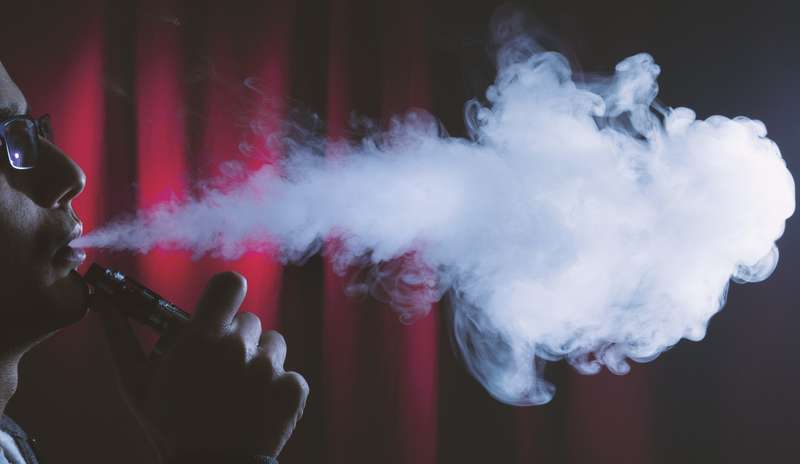
    With so much focus on the dangers of vaping in the news, one of the largest retailers in the world is announcing they’re going to phase out e-cigarettes.

    As Yahoo reports, Walmart has circulated an internal company memo which reads: “Given the growing federal, state and local regulatory complexity and uncertainty regarding e-cigarettes, we plan to discontinue the sale of electronic nicotine delivery products at all Walmart and Sam’s Club U.S. locations.” 

    Retailers React To Pressure

    The memo also stated that once the current inventory of e-cigarettes has sold, Walmart will “complete our exit” from selling them. 

    In the wake of nine deaths that have been linked to vaping, the FDA is launching a criminal investigation and lawmakers have implored the current administration to get rid of e-cigarettes altogether. 

    Back in May, Walmart voluntarily raised the minimum age to buy tobacco products to 21. 

    As CNBC reports, a number of companies don’t want to wait for an FDA crackdown on e-cigarettes, and have been instituting their own bans on them. (CBS, WarnerMedia and Viacom have all decided to stop airing e-cigarette ads as well.)

    At the same time, the American Vaping Association has criticized Walmart for punishing e-cigarette companies but continuing to sell regular cigarettes. In a statement, the association’s president, Gregory Conley, said, “You know you are in the middle of a moral panic when big corporations like Walmart find it is easier to sell deadly combustible tobacco products than to sell harm reduction alternatives.”

    Prior to Walmart’s big move, the Trump administration announced it was moving ahead on banning flavored e-cigarette products. So far, Michigan and New York have banned flavored e-cigarettes just this month. San Francisco became the first U.S. city to ban the sale of e-cigarettes this past June.

    As Health and Human Services Secretary Alex Azar said in a statement, “The Trump administration is making it clear that we intend to clear the market of flavored e-cigarettes to reverse the deeply concerning epidemic of youth e-cigarette use that is impacting children, families, schools and communities.” 

    View the original article at thefix.com

  • Walmart Unfairly Fired Employee For Medical Marijuana Use, Judge Says

    Walmart Unfairly Fired Employee For Medical Marijuana Use, Judge Says

    The judge’s ruling is reportedly the first of its kind in Arizona and may positively impact similar cases in the future.

    A former Walmart employee and medical marijuana patient who was fired after testing positive for THC after a workplace injury has won a wrongful termination suit against the mega-retailer.

    An Arizona judge ruled in favor of Carol Whitmire, who in 2016 was injured while on the job at Walmart. Company policy requires that employees who visit urgent care must submit to a drug test, and Whitmire – who used medical marijuana for shoulder pain and sleep issues – tested positive for cannabis metabolites.

    When Walmart fired Whitmire, she brought a wrongful termination suit against the company, claiming that it had discriminated against her in violation of the Arizona Medical Marijuana Act (AMMA).

    As High Times noted, the judge’s ruling could have a positive impact on similar cases in the future.

    Whitmire had been a Walmart employee at two Arizona locations for about eight years prior to her injury. According to the lawsuit, a bag of ice fell on Whitmire’s wrist in 2016, prompting a visit to urgent care.

    Per Walmart’s policy, Whitmire also underwent a drug test, and informed Walmart’s human resources department that she had been a registered medical marijuana patient for five years.

    As the Phoenix New Times noted, court records showed that Whitmire only used marijuana before bed to treat chronic shoulder pain and as a sleep aid, and never came to work impaired.

    Whitmire’s complaint contended that on July 4, 2016, she was suspended from work as a result of the urine test, and eventually fired on July 22. With the help of the Equal Opportunity Commission and the civil rights division of the Arizona Attorney General’s Office, she filed a discrimination charge against Walmart, and followed it with a wrongful termination charge which, as the New Times noted, alleged violation of the AMMA, Arizona Civil Rights Act, and the state’s worker compensation law.

    In his ruling, Arizona US District Judge James A. Teilborg granted partial summary judgment to Whitmire in regard to the discrimination claim under the AMMA. The Act notes that it is illegal for an employer to hire or fire based on a “positive drug test for marijuana components or metabolites, unless the patient used, possessed or was impaired by marijuana on the premises of the place of employment or during the hours of employment.” Teilborg denied the claims of discrimination under the civil rights act or worker’s compensation laws. 

    Teilborg also addressed Walmart’s statement about the legality of the charges under the state’s Drug Testing of Employees Act by noting that the testing could not prove that Whitmire was impaired at work or that the presence of metabolites the urine sample could “sufficiently” establish impairment.

    In a statement to the Phoenix New Times, the company wrote that they were “pleased the Court dismissed several of the claims, and we will continue to prepare our case.”

    Whitmire’s lawyer, Joshua Carden, described the ruling as “the first of its kind in Arizona,” and added that the court will decide on damages or possible reinstatement for Whitmire in May 2019.

    View the original article at thefix.com

  • Mental Health Clinic Finds A New Home In Walmart

    Mental Health Clinic Finds A New Home In Walmart

    The mental health clinic inside the Texas Walmart offers a variety of treatments and access to a licensed clinical social worker.

    Mental health services are being offered in Texas at an unexpected location: Walmart.

    According to the Boston Globe, Boston-based company Beacon Health Options opened the small clinic in the Carrollton, Texas Walmart last week. 

    Eventually, Beacon plans to open additional clinics in similar spaces in hopes of increasing mental health care options for those who may not have access to it otherwise.

    Currently, the Texas clinic has one licensed clinical social worker and provides treatment for anxiety, depression, grief, relationship issues and other common stressors. Patients can go online or call to schedule appointments. Walk-ins are also welcome. If the clinic is too busy, patients will have the option to use Skype to speak with a professional.

    The clinic is not meant for individuals with severe forms of mental illness, and operates on a sliding scale for patients without insurance.

    “People don’t know how to find a behavioral health or mental health professional,” said Beacon president and CEO Russell Petrella. “People don’t know where to go and what to do… We’re trying to mainstream behavioral health services.”

    According to Bonnie Cook, executive director of Mental Health America of Greater Dallas, the clinics are needed, as Mental Health America recently rated Texas as the state with the least access to mental health care. 

    “As a mental health community, we have to start thinking outside the box,” Cook told the Globe

    On the other hand, some professionals were critical of Beacon’s new venture because of the company itself.  

    “Offering mental health care in a retail setting is innovative and imaginative, and it could work,” Gary A. Chinman, Brookline psychiatrist and president of the Massachusetts Psychiatric Society, told the Globe.

    However, he added that Beacon “would have to change a lot more about their business model for it to be successful.”

    Vic DiGravio, president and CEO of the Association for Behavioral Healthcare, expressed the same concerns, stating that Beacon is restrictive when it comes to providing care because of “procedural hurdles and inadequate pay.”

    “If Beacon were serious about expanding access to mental health services, it would focus on doing a better job in its current lines of business,” DiGravio told the Globe. “What Beacon is really good at is limiting access to treatment. They’re not so good at promoting access to treatment.”

    In speaking to the Globe, Petrella did note that some providers struggle with “administrative hassles” and that steps are being taken to solve such issues. 

    He adds that Beacon has good intentions when it comes to clinics such as the one in Texas.

    “We’re trying to fill in the gaps in care, trying to do it in a reasonable way, with low stigma, and make it convenient,” Petrella stated. “Hopefully, we can improve the quality of some people’s lives.”

    View the original article at thefix.com

  • Walmart Canada Considers Selling Marijuana Products

    Walmart Canada Considers Selling Marijuana Products

    The mega chain is reportedly investigating the viability of carrying CBD products in their stores. 

    As a growing list of major companies either embrace or consider the option to include cannabidiol (CBD)-based products in their retail offerings, a representative from Walmart Inc. in Canada told the Vancouver Sun that the mega-chain has conducted research into the viability of carrying CBD products on store shelves.

    Diane Medeiros, a spokesperson for Walmart Canada, said that while the company does not have plans to carry CBD products at this time, it “has done some preliminary fact-finding on this issue.”

    The timing of their investigation coincides with the legalization of marijuana at the federal level throughout Canada on October 17, 2018.

    In an email exchange with the Sun, Medeiros said that the review of CBD-based products—goods that contain the active but non-psychoactive compound cannabidiol—is standard operating procedure, something they carry out for “any new industry.”

    As High Times noted, the investigation is also good business practice, as Canadians are expected to drop $1 billion on marijuana in the first three months after legalization. Response to the company’s announcement also proved positive for Walmart, whose shares rose nearly 3% in afternoon trading that day.

    And while Walmart is apparently not ready to offer CBD-based product to its customers, other brands, both global and regional, have already announced their intent to cater to the new market.

    In Canada, the drugstore chain Shoppers Drug Mart was approved as a licensed medical marijuana producer, which will allow them to dispense cannabis to their customers, while the Montreal-based Molson Coors Canada has entered into a joint venture with The Hydropothecary Corporation to produce non-alcoholic, cannabis-infused beverages. 

    The Coca-Cola Company, too, has reported making inroads towards CBD-based products with a beverage produced in conjunction with Aurora Cannabis, while Estee Lauder has added Hello, Calm—a face mask infused with sativa—to its line of cosmetic products.

    Several U.S. breweries like Lagunitas and Coalition Brewing have already begun selling CBD-infused beer products, and the vegan chain By Chloe offers CBD-based products in its nationwide locations.

    And, as the Vancouver Sun noted, companies that have refused to expand its offerings to CBD product may experience a setback: PepsiCo’s declaration to not sell CBD-infused goods resulted in a decline in its market share.

    Cowen & Co. analyst Vivien Azer underscored the retail industry’s growing focus on CBD-based products in a research note that stated, “Health and wellness consumers are beginning to find value and use cases from CBD-based oil extracts, tinctures, topicals and capsules to improve everyday life. We expect to see CBD used as a functional ingredient in non-alcoholic beverages.”

    View the original article at thefix.com