Tag: Writers in Treatment

  • Experience, Strength and Hope Awards Honor Leigh Steinberg and Courtney Friel

    In a single ceremony, the ESH Awards honored two prime examples of celebrities who wrote memoirs that capture their fraught journeys into recovery and long-term sobriety.

    After a year trapped like the rest of us in the worried doldrums of quarantines and isolation, the Experience, Strength and Hope (ESH) Awards returned with a double slam dunk on December 15, 2021. Held at the Skirball Cultural Center in Los Angeles, the recovery community’s number one annual rewards gathering and celebration played catch-up. In a single ceremony, Leonard Buschel and Ahbra Kaye honored two prime examples of celebrities who wrote memoirs that capture their fraught journeys into recovery and long-term sobriety.

    The Gratitude Dinner paid tribute to two brave and inspirational sober human beings. First, legendary sports agent Leigh Steinberg was celebrated as the 2020 Honoree for his revealing memoir, The Agent: My 40-Year Career Making Deals and Changing the Game. A powerful tale of tremendous success followed by a precipitous downfall, Steinberg’s redemption through the lens of sobriety happens within and without.

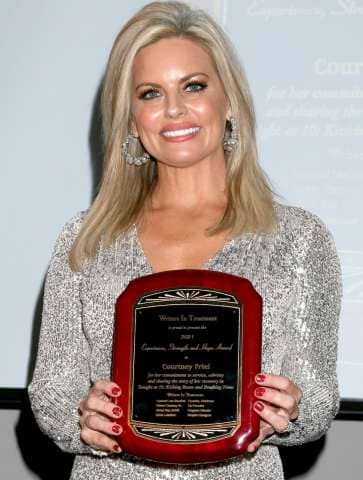
    Second, effervescent KTLA news anchor Courtney Friel was celebrated as the 2021 Honoree for her unflinching memoir, Tonight at 10: Kicking Booze and Breaking News. Friel’s story is told with humor and love that overcomes the downward spiral of desperation and fear. Together, both ESH Honorees are prime examples of surviving an addictive downfall and thriving well beyond. Wanting to use the darkest of their experiences to help others recover, they both walk a path of courage in telling their harrowing stories without blinking in the spirit of self-esteem.
    Experience, Strength and Hope Awards Honor Leigh Steinberg and Courtney Friel

    Once again, Leonard Buschel and Ahbra Kaye of Writers in Treatment came together to create an entertaining Gratitude Dinner of laughter and love. As the founder of the Reel Recovery Film Festival and Chasing the News, Leonard Buschel made a smart choice when he appointed Ahbra Kaye as Director of Operations and Outreach for the ESH Awards. Even amid fears of the Omicron variant and the rise of public gatherings, the entire evening went swimmingly well. Overall, both the Networking Reception and the Gratitude Dinner flowed with a positive attitude as attendees from the recovery community came together to celebrate these two luminaries.

    While speaking with Leigh Steinberg before the meeting, I was struck by his dedication to the path of recovery. When asked what the reward meant to him, Steinberg said, “For anyone out there still struggling with addiction, I hope that reading my book shows them that help is available. It is possible in one’s darkest hours to be resilient. We all truly have a chance to live a happier life.”

    Reflecting on his life, Steinberg explained the similarities between excellence in sports and goodness in life: “The key to sports and life is performance in adversity and our response to adversity. Adversity is a part of being alive. Indeed, life will knock us back at times. Life will have reverses. I have learned that having optimism and having faith in the light at the end of a dark tunnel is essential. I had an epiphany about how lucky I was in life…Thus, I had to come through and realize the best in recovery. I had to live up to my core values of loving my family and friends while doing my best to help others in need.”

    The 2021 Honoree was just as inspired. As she explained from the podium, “For fifteen years of my life, all I cared about was partying, drinking, cocaine, and pills. It’s a very boring life to keep doing that over and over again. The essence of recovery is a shift into the experience of freedom from that cycle.”
    Experience, Strength and Hope Awards Honor Leigh Steinberg and Courtney FrielCommenting on why she wrote the book, Friel smiled and said, “I wasn’t writing the book to be famous, make money, or be a bestseller. I wrote it to help people. The reward is when I get people who unexpectedly get in touch with me. More people than I ever imagined have told me how my message was instrumental in saving their lives. Not that I saved their lives, but they told me I helped open their eyes to the choice of being sober. Such a loving response is a gift that goes well beyond what I ever expected. It is what giving back is all about.”

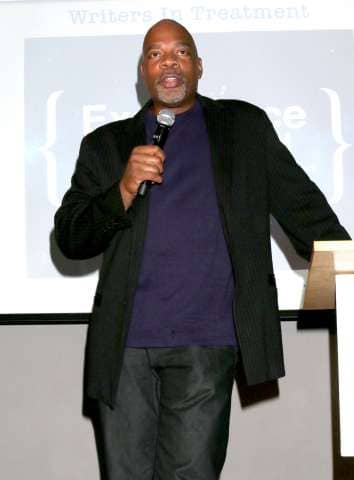
    The ESH Awards also showcased a diverse and talented roster of performers, starting with singer and spoken word performer Blu Nyle, who performed two poems at the podium that reflected the creative legacy of her ancestors. After Leigh and Friel received their awards, eight-time Grammy Award winner Philip Lawrence sang a fun tribute song that paid amusing homage to the two honorees. Written just for this occasion, it showed how inspiration and recovery, music and sobriety mix so well.

    Finally, the night came to a resounding end with an inspired comedy set by Alonzo Bodden. Taking down everyone from anti-vaxxers to political extremists, Bodden set fire to the stage with his combustible words. In truth, I have not heard a room laughing so hard and having so much fun together for a very long time. It was a perfect way to end a wonderful night.

    Photographs by Kathy Hutchins

    View the original article at thefix.com

  • Writers In Treatment: Melding Recovery, the Arts, and Information

    The primary purpose of Writers in Treatment was to promote treatment as the best first step solution for addiction and other self-destructive behaviors.

    When people in the addiction treatment industry consider the most innovative recovery figures, their thoughts often turn to Leonard Buschel. As the founder of the nonprofit Writers in Treatment, he started the REEL Recovery Film Festival, the Experience, Strength and Hope Awards, and the weekly Addiction Recovery eBulletin. All of these ventures have survived the test of time, thriving year after year by offering a vision of hope that life doesn’t end once a person embraces the path of sustainable sobriety. In truth, recovery opens the door to creativity and long-term success.

    For the past twelve years, Leonard Buschel has been an instrumental force in adding flavor and culture to the recovery community by filling a creative and intellectual void while helping those in need. As he expresses with passion, “There is life after sobriety. Getting sober doesn’t mean losing touch with the creative and intellectual side of your personality. You don’t have to be bored or boring.”

    People recovering from substance abuse disorders and alcoholism often talk about how they could realize their dreams of giving back if they only had financial resources. However, when a person actually experiences a windfall, they tend to buy a new condo, a shiny sports car, or stash the cash away for a rainy day. They never seem to put their money where their heart is. They never take the big risk.

    What’s inspiring about Leonard and his impressive achievements is that he is a noted exception to this rule. Hearing about how his friend, the late Buddy Arnold, had founded the Musician’s Assistance Program to help musical artists recover from addiction and mental illness, Leonard decided to do the same for writers. But where could a guy working as a counselor in the treatment industry find the capital to make it happen?

    Driving his Volvo home one night from his job at a Los Angeles rehab, Leonard experienced a life-changing event. Without warning, a distracted driver in an SUV ran a red light and T-boned Leonard’s car, sending it flying through the air. He did not realize this near-death experience was the beginning of his new life. Given a well-deserved insurance settlement, he took the funds, paid off some of his debts, bought tickets to a few plays and concerts, and hired an attorney to form a 501-C3 non-profit organization called Writers In Treatment (WIT).

    From the beginning, beyond sending people in the field of the written word to rehab with scholarships, the primary purpose of Writers in Treatment was to promote treatment as the best first step solution for addiction and other self-destructive behaviors. Struggling to raise funds, Writers in Treatment decided to rent the historic 175-seat Silent Movie Theatre in Los Angeles and put on the seminal REEL Recovery Film Festival.

    The first feature shown was Permanent Midnight, written by Jerry Stahl and starring Ben Stiller. Based on Stahl’s novel, it is one of the best films about the journey from addiction to recovery. Afterward, Jerry Stahl and Ben Stiller had a conversation about the film in front of a packed house. Engaging, fun and informative, everyone loved it, and Leonard Buschel knew he had stumbled upon something truly exciting. The promises were coming true as he envisioned a film festival to promote recovery.

    For the past twelve years, the REEL Recovery Film Festival & Symposium has focused on increasing awareness about the prevalence of substance abuse and mental illness in society. Unlike many one-and-done film festivals, it has continued to grow and expand year after year. The REEL Recovery Film Festival helps to reduce stigma through honest, realistic depictions of the difficult challenges plaguing families nationwide. It also provides opportunities for filmmakers to show artistic and innovative shorts, documentaries and features. Moreover, Leonard and programmer Ahbra Kaye have given away thousands of free tickets to rehabs and sober livings on both coasts.

    The REEL Recovery Film Festival has become a recovery staple in Los Angeles and New York. It also has taken place on multiple occasions in San Francisco, Las Vegas, Denver, Houston, Fort Lauderdale, and Vancouver. Leonard transformed an innovative idea into a valued institution by focusing on consistent execution and precise marketing. Time and again, professionals in the recovery and film communities nationwide ask if REEL Recovery can come to their city.

    Beyond the REEL Recovery Festival, Leonard Buschel is also the creative force behind the Experience, Strength and Hope Awards. Held annually at the Skirball Cultural Center in Los Angeles, it is a cherished event in the SoCal recovery community. The genesis of the ESH Awards was a party celebrating the publication of Christopher Lawford’s recovery-oriented memoir. From that moment, a cutting edge awards show was born to honor the courage behind such published stories. In the past decade, honorees have included Academy-Award winning actor Lou Gossett, Jr., astronaut Buzz Aldrin, actor and activist Mackenzie Phillips, Emmy-Award winner Joe Pantoliano, Duran Duran bass player and co-founder John Taylor, and actor Jodie Sweetin who said in 2019, It’s incredible that such an inspirational event has now been happening for over a decade.”

    In 2012, wanting to do more than these annual events, Writers in Treatment began publishing the Addiction Recovery eBulletin, a comprehensive news source with over twenty thousand subscribers. The weekly newsletter is now the most widely-read and highly-regarded source of information and news among industry professionals for the latest addiction and recovery stories. Beyond sponsorship of the festival, the Addiction Recovery eBulletin offers advertisers access to the eyes of the industry.

    Twelve years later, one man’s passion for recovery continues to pay dividends, both in relation to giving back and adding an unconventional dimension to the sober world. Today, as the COVID-19 pandemic restricts cultural offerings nationwide, Leonard Buschel continues to think outside the box. He started a topical online recovery web series, Chasing The News… Stone Cold Sober, with the Hazelden Betty Ford Foundation. As hosted by William Cope Moyers and featuring many well-known sober artists and celebrities, it provides an engaging online Zoom-like offering for people in recovery and beyond. Indeed, there is no question that after thriving for so long and through so many challenges, Writers In Treatment and The REEL Recovery Film Festival continue to turn this sober vision into a vibrant reality.

    View the original article at thefix.com

  • Beyond Addiction: Jodie Sweetin on Acting, Social Media, and the Gifts of Sobriety

    Beyond Addiction: Jodie Sweetin on Acting, Social Media, and the Gifts of Sobriety

    Whether it’s daily prayer and meditation, working with sponsees or just staying connected to my sober family, I know that it’s only because of how hard I’ve worked in my recovery that I get to have the life that I have today.

    Jodie Sweetin, 37, is best known for her role as Stephanie Tanner in Full House (1987-1995). During the TV show’s eight-year run, Sweetin appeared in every episode, becoming one of the most famous child actors in the country. Off set, she was a good student, skipping a grade in elementary school and later earning a scholarship to college. However, the transition to a more normal life after her Hollywood childhood proved difficult.

    When Full House came to an end when she was 14, Jodie’s young life skidded off the rails. She started drinking, and the alcohol use opened the door to drugs. Over the next decade, she bounced between the occasional Lifetime movie or comeback attempt and drug abuse, using ecstasy, methamphetamine, and crack. She said in an interview that she struggled with a sense of identity after the show ended and was “looking for other things to, to fix that and kind of fill that void.”

    After sinking deeper into methamphetamine addiction, Jodie realized she was headed towards catastrophe and checked herself into rehab. She got sober in 2008 at age 26. After discovering a path of recovery, she started taking professional classes and became certified as a drug and alcohol counselor.

    While working in the treatment industry in 2009, Jodie published unSweetined, a memoir chronicling her downward spiral into addiction. She also rediscovered her first passion, acting. In 2016 she joined the cast of Fuller House and her career took off once again. Jodie was the third most Googled actress for that calendar year.

    On February 28th, Jodie Sweetin is being honored at the 10th Annual Experience, Strength and Hope Awards presented by Writers In Treatment at the Skirball Cultural Center in Los Angeles. The award recognizes individuals in the entertainment industry who share their honest journey from addiction to recovery. The event, which promises to be “an all-star night of humor and sobriety,” has a few tickets remaining, available here: https://www.brownpapertickets.com/event/3909581.

    Given Jodie’s inspiring journey, The Fix was thrilled and honored to have the chance to interview her.

    The Fix: According to The Panther, the school paper of your alma mater Chapman University, you told students, “I love coming out and sharing my story, because I’ve made it to the other side and it’s continual work, but getting to come to a place where I am happy with my life is amazing.” Would you describe sobriety as a cornerstone of your life? How does being in recovery help?

    Jodie Sweetin: Sobriety is absolutely the cornerstone of my life. It’s always said in the rooms that anything you place before your sobriety will be the things you lose, and I absolutely believe that. Even though my life and my schedule can sometimes be crazy, I still make it a priority to be active in my program. Whether it’s daily prayer and meditation, working with sponsees or just staying connected to my sober family, I know that it’s only because of how hard I’ve worked in my recovery that I get to have the life that I have today. Recovery also helps me deal with the stress and chaos that often comes with getting back a full and busy life in sobriety. Without it, I’d be completely overwhelmed!

    After getting sober in 2008, you worked in the treatment industry, successfully obtaining your CADC as a Certified Alcohol and Drug Counselor. What did you learn about staying sober by working in that industry?

    I loved working in treatment, it was incredibly fulfilling and I’ve always said that I was so lucky to find a second career path that I loved. While my own recovery was always separate from my work in the field, it was because of what I learned on my own journey that I was able to connect with clients. I eventually worked more in the operations side of treatment, running staff and houses, but without a program of my own, I wouldn’t have been as effective in handling the pressure of it all.

    With the final season of Fuller House on the horizon, what do you plan to do next as an actor? If you could wave a magic wand, what would you most want to do?

    I would love to be able to move into some more dramatic work, as it’s something that people haven’t seen me do yet. It’s an exciting time in this industry right now, with so much fantastic work out there, so as much as I’ve loved getting to come back to my Full House family, I think that the opportunity to do something different is out there and I’m looking forward to it!

    You have been very vocal about the negative impact of social media on children. Do you think social media is fueling the national drug crisis? Do young people use drugs and alcohol to escape social media pressures?

    I think social media tells us, particularly young people, that we’re not “enough” and the rates of depression and suicide among youth is most definitely a direct correlation of comparing our insides to other people’s outsides. We see edited, perfect versions of people’s lives that don’t really exist and then feel our lives can’t possibly compare. I’ve always tried to be “real” on my social media. Posting pictures—without makeup or filters—of me at home with kids and living my normal life alongside the more glamorous parts of my job is something I try to balance in my online life. I don’t know that social media is fueling the drug crisis, but I definitely think it’s leading people to feelings of inadequacy that make them feel hollow inside.

    In your 2009 memoir UnSweetined, you wrote candidly about your struggles with alcohol and methamphetamine addiction after Full House went off the air in 1995. Was it difficult to come clean with your public? What was the response like, and did it surprise you?

    It’s always terrifying to be brutally honest about your mistakes. But the beauty that I’ve found in it is that there’s no longer anything I’m afraid of. When you reveal your own secrets, there’s no longer anything hanging over your head and the sense of freedom is enormous. The response has been amazing and I’m constantly receiving messages from people who’ve heard my story or read my book, who say that my courage to speak out has helped them to overcome their own demons. For me, that is a gift. To know that my story has helped someone else is the true essence of sobriety and it reminds me that even though I had to go through pain to get here, it’s worth it if I can help someone else.

    The entertainment industry has a nasty tendency to chew up and spit out many talented young performers. From Dana Plato and River Phoenix to Brad Renfro and Brittany Murphy; examples of these talents lost later in life seem countless. Given such brutal conditions, do you think the entertainment industry needs to install more safeguards to help young actors with the roller coaster ride of their careers? From your personal experience, what could be done to increase the positives and reduce the dangers?

    I think the best defense against the craziness of this business is a solid family life. Unfortunately, many people are not blessed with that foundation, whether in this business or not. The difference is that those of us in the spotlight have our stories and our failures made public, where those living in the rest of the world go through it all relatively unknown. I’ve had an amazing family support system and never blamed my addiction on growing up in the business. I know that I would’ve struggled with addiction whether or not I was a child actor, it just made my story much more public.

    In a 2019 interview with TODAY, you said, “My kids know that I’m sober… They know that I don’t drink.” Since your two daughters, Zoie and Beatrix, are 10 and 8 respectively, drugs and alcohol have yet to enter the picture in their lives. Do you believe the awareness you have provided about your recovery will help them avoid pitfalls in the future?

    I’ve always been incredibly open and honest with my girls. We have a wonderfully communicative relationship and as they get older, I’ll be able to share more of my story. At the end of the day, I can be an example of a sober woman for them, whether they have to go through their own struggles or not. I know that being in recovery has made me a better, more patient and understanding mother and it’s something that I am incredibly grateful I get to use in my life as a mother.

    What does it mean to be honored at 2019’s Experience, Strength and Hope awards? Are you proud to be recognized by Writers in Treatment on the tenth anniversary of this prestigious award?

    I am so honored by this, it’s hard to really imagine. When I got sober, I didn’t do it to get recognition or acclaim. I did it to better my life and find a little bit of hope. To be chosen by Writers in Treatment for such an award is incredibly humbling. I am so proud to be a sober member of recovery and am proud to carry the message of the 12-step community!

    View the original article at thefix.com

  • 2018 Reel Recovery Film Festival Returns to New York

    2018 Reel Recovery Film Festival Returns to New York

    The fest is the brainchild of Leonard Buschel, founder of Writers in Treatment (WIT), a nonprofit organization that helps alcoholic and addicted writers get clean.

    Calling all cinephiles! The REEL Recovery Film Festival (RRFF), which is celebrating its 10th year, is back for its 6th Annual New York City Edition. The festival kicks off its public program at 8 p.m. Friday, Nov. 2, with a screening of the Eric Clapton documentary, Life in 12 Bars. Click here for a free ticket to the documentary (or any movie at the festival), courtesy of Clapton’s treatment center, Crossroads Centre Antigua. The CEO of Crossroads, Nicos Peraticos, will be in attendance to give a short talk and introduce the film.

    For the full Nov. 2–8 schedule, visit the RRFF website. Note: All tickets are General Admission so, word to the wise: arrive early in order to nab yourself a seat.

    Every year since RRFF sprouted up in New York, I’ve attended this awesome week-long festival and had a blast meeting sober people. The fest is the brainchild of Leonard Buschel, founder of Writers in Treatment (WIT), a nonprofit organization that helps alcoholic and addicted writers get clean. WIT also publishes the Addiction Recovery Bulletin newsletter, and created the annual Experience Strength and Hope Awards. This year’s big award winner was Jane Velez-Mitchell for her New York Times best-selling memoir, iWANT: My Journey from Addiction and Overconsumption to a Simpler, Honest Life.

    Buschel spoke to The Fix about how he got here and what makes this year’s RRFF so special.

    “After 26 years of abusing everything from Valium to vodka and cocaine to codeine, I crashed and burned. I smoked breakfast, drank lunch and snorted dinner.”

    Finally, beaten to his bottom, the depressed and close-to-hopeless Buschel schlepped himself into 12-step recovery at the Betty Ford Center.

    “I’d prayed at the Western Wall,” he said. “I’d sat in temples of Kyoto, cried my eyes out at the Anne Frank House, but it wasn’t until I went to Betty Ford that I decided to get clean. I was horrified at the time, thinking it was some Christian enclave. Thankfully, I learned that wasn’t the case.”

    “This year’s RRFF received generous support from the Addiction Policy Forum,” Buschel said. “So thanks to them we have some really special events that didn’t happen at the Los Angeles RRFF week in October that just ended. So, one movie that’s just for our New York crowd is the first theatrical screening of the Eric Clapton documentary, Life in 12 Bars.”

    Such a perfect title since Clapton loves the blues.

    Buschel continued: “We had to find a bigger venue this year because our audience has grown so much since we started. Judging by last year’s enthusiastic turnout, we are expecting an audience of around 2,000. So, this year, it will be at the 100-year-old Village East Cinema, which is a New York City landmark. Another special treat is on Monday afternoon at 3 o’clock when we’ll have another complimentary screening, the Bill W. documentary.”

    The documentary’s director, Kevin Hanlon, will be at the theater and will give a talk. The film, which was created using old archives, is a moving documentary about AA founders Bill W. and Dr. Bob. Seeing those two on the big screen when it first came out gave me such a thrill. In my humble opinion, it is definitely worth watching the movie a second, or third, or fourth time.

    Addiction specialist and psychodrama expert, Tian Dayton, PhD, who is the author of 15 books including Emotional Sobriety, will be presenting a 6 p.m. panel on the last night, Thurs., Nov. 8, which will include a few videos, followed by a conversation with the audience. Directly after that is Buschel’s talk at 7 p.m.

    “My panel, Recovery Is a Verb, will be a conversation about the state of addiction in America,” Buschel said. “Then we will close with a 21st anniversary screening called Gridlock’d. It’s a great film starring Tupac Shakur, Tim Roth and Thandie Newton, with Elizabeth Peña, Lucy Liu and John Sayles. It’s about two guys trying to get into a government detox program. Tupac plays Spoon and Tim Roth is Stretch. It was written and directed by Vondie Curtis-Hall.”

    “We get 150 submissions from filmmakers around the world,” said Bushel. “We watch every one of them. Our panel votes on which are the very best and it is never easy to narrow it down. [There are] so many great submissions.”

    Click here for your free ticket!

    More Festival Highlights

    Coach Jake (2017): At 70 years old, Martin “Coach Jake” Jacobson is the winningest high school coach in NYC history. But this year, both on and off the field, may be the most challenging yet. Directed by Ian Phillips. Special Appearance by Coach Jake and director Ian Phillips. 82 min.

    Peace, Love and Zoo (2018) This film explores the colorful world of artist and recovery guru, Zoo Cain, as he uses art to ease his journey into darkness through cancer and a difficult relationship. Directed by Reginald Groff. Special Appearance by Director Reginald Groff and star Zoo Cain. 68 min.

    When Love is Not Enough: The Lois Wilson Story (2010) Based on the true story of the enduring love story between Lois Wilson and Bill W. and the transformational social movements they founded. Directed by John Kent Harrison. Starring Winona Ryder. 92 min.

    That Way Madness Lies (2018) Filmmaker Sandra Luckow’s scary account of her brother’s dangerous and ever-escalating cycle of arrests, incarcerations and commitment to mental institutions, one of which included a stay in Oregon State Hospital (the setting of One Flew Over the Cuckoo’s Nest). Directed by Sandra Luckow. NY Premiere. Personal Appearance by director Sandra Luckow. 101 min.

    WONDER WOMEN WEDNESDAY
    Films made by women, starring women, about women.

    These films are not just for women. Everyone is encouraged to come and to join in the discussion after each film.

    Recovering (2017) In this hour-long pilot, Cally Claremont, the adult child of an alcoholic (and so naturally, a recovering perfectionist), must seek help from her estranged sister and a famously sober rock star in order to save her unique treatment center from closing its doors. Directed by Carly Keyes. 46 min.

    Cleaner Daze (2018) is a dark comedy series about addiction, written by a recovering drug addict. The story follows a newbie drug counselor while she struggles with a crew of misfit teenage drug addicts and her own secret addiction. Starring Abigail Reno. Directed by Tess Sweet. 55 min.

    Ciao Manhattan (1972) Essential viewing for anyone intrigued by 60’s pop culture, the New York art scene and the Summer of Love. Ciao is a thinly disguised biopic of the last days of “tragic muse” and Andy Warhol superstar Edie Sedgwick, who died two weeks after the film was released. Directed by David Weisman and John Palmer. 84 min.

    Do No Harm: The Opioid Epidemic (2018) Today’s opioid epidemic is the worst man-made public health epidemic in American history. Every year we lose more people to opioid deaths than were killed in the entire Vietnam War. Narrated by Golden Globe winning actor Ed Harris. Directed by Harry Wiland. 90 min.

    I’m looking forward to RRFF and seeing Buschel again. This tireless innovator is now 24 years clean and sober. Man, I wish I had his energy.

    View the original article at thefix.com