Category: Work & Productivity

  • How to Stay Logged Off at Work

    How to Stay Logged Off at Work

    As we all head back to work and school after summer break it can be hard to maintain the habits we made during the holidays and stay logged off at work. Whether you were enjoying a 3-month university holiday, spent a couple weeks with family or only got away for a weekend, the culture of summer is hard to ignore. The office will inevitably be emptier than usual as everyone takes their annual leave (33% of people taking over 2 weeks!), and so, making concerted efforts to reduce your screen time, and spend time with loved ones is easier. However, as September returns and the workforce is back in full those habits are harder and harder to keep. So, we have put together some top tips to keep you logged off this autumn

    #1 Go into the office

    After a couple years of a pandemic, forced to work from home, many of us have become comfortable with this dynamic: rolling out of bed just before our first meeting, dressed in pjs from the waist down, generally more at ease. However, as we wrote about during the pandemic, this only exacerbates our issues logging off from work as the lines between work and home become blurred, leading to poor concentration, poor sleep and worse work-life balance! So, we recommend you make the effort and go in: it can be a far more enjoyable atmosphere we promise!

    #2 Keep working hours

    Along a similar line of attempting to maintain a differentiation between work and home we recommend you keep working hours! Whether you are working flexibly, compressed or a classic 9-5 it is important to have down time! You can mark this for yourself by going in to work, not using your work laptop after hours, or by moving to a separate part of your home. Whatever you do: try to recreate that summer feeling of disconnection at the end of every day.

    #3 Separate communication

    A good way to draw a distinct line between work and home is to separate your communication (most likely emails!). This could mean only having your work email on your laptop, setting slack to turn off notifying after 5pm or switching your devices to airplane mode at the end of a day. You could even add an OOO (Out of Office) each day to gently remind your colleagues/ clients that you are not working and will reply once you are back.

    logged off at worklogged off at work

    #4 Turn off notifications

    During the summer holidays some of us are able to go whole days (or even weeks!) without constant reminders of work. But we don’t have to mourn that now it is Autumn! You can try to keep that culture alive in weekends, bank holidays and annual leave at other times of year by turning off your notifications. Let everyone know you will be away and then make sure you are logged off at work. One tip if you are worried about missing vital crises is to tell your colleagues to ring you (not text: ring!) if they need you. You’ll be amazed how all their worries cease once they have to call!

    #5 Relax offline

    Whilst we are on holiday we are able to relax both digitally and through analogue activities. We can play card games and watch Netflix without feeling the affect of the screens too greatly. However, with the average UK employee spending nearly 2000 hours of our annual working lives in front of a screen: after work we need to find other ways to relax.


    View the original article at itstimetologoff.com

  • Is Your Phone Habit Wrecking Your Memory?

    Is Your Phone Habit Wrecking Your Memory?

    How many phone numbers can you recall? If you’re anything like the Time to Log Off team, you’ll find its very few. And yet, a few years ago we could all recall the phone numbers of our friends and family with ease, couldn’t we? And what about navigating ourselves from one place to another, didn’t that used to be something we could mange without heavy reliance on our smartphone and GPS?

    Memory researcher Catherine Loveday found in 2021 that 80% of the adults she surveyed felt that their memories were worse than before the pandemic. But prolonged periods of stress, isolation and exhaustion – common experiences for all of us since March 2020 – are known for their impact on memory. Is something else going on?

    Are we outsourcing too much to our phones?

    The term ‘digital amnesia’ has been defined as “a phenomenon where our brains are fast losing their ability to remember as we become increasingly reliant on technology to retain data”.

    digital amnesiadigital amnesia

    Scientists and psychologists are divided on whether it’s actually a true phenomenon or whether other factors (like the pandemic, ageing etc) are impacting our ability to recall information.

    The argument against digital amnesia

    Some neuroscientists believe we have always ‘outsourced’ some of our brain processes to other methods and that this isn’t necessarily worrying of itself.

    “We have always offloaded things into external devices, like writing down notes, and that’s enabled us to have more complex lives, processes. We’re doing it more, but that frees up time to concentrate, focus on and remember other things.”

    Chris Bird professor of cognitive neuroscience, University of Sussex

    These experts think that some of things our smartphones help us with are actually quite challenging as our brains aren’t evolved to remember highly specific, one-off things. Before we had devices, for example, it was challenging to remember all the things we needed to do at specific times of the day as our lives became more complex and now reminders, alarms and online calendars help with all of that.

    The argument for digital amnesia

    Other experts are more cautious about dismissing the potential long-term impact of outsourcing so much of our brain function.

    “Once you stop using your memory it will get worse, which makes you use your devices even more. We use them for everything. If you go to a website for a recipe, you press a button and it sends the ingredient list to your smartphone. It’s very convenient, but convenience has a price. It’s good for you to do certain things in your head.”

    Professor Oliver Hardt, McGill University

    Professor Hardt cites research that shows that people who have relied long-term on GPS have reduced grey matter density in the hippocampus (the part of the brain that has a major role in learning and memory). This is because GPS doesn’t encourage us to build up large spatial maps in the brian (which navigating without it does), rather it gives us simple, one-step instructions ‘turn left’ ‘go straight on’ which don’t engage the hippocampus and challenge it.

    Countering digital amnesia

    If you think your own brain power and memory might be being affected by over-reliance on your devices try these tips:

    • Try memorising five phone numbers of those you call the most frequently.
    • Go out on a day trip and ban the use of smartphone GPS, use a physical map instead.
    • Play old-fashioned memory games as a family (recalling random objects on a tray is a good one).

    Actively look for opportunities to memorise and recall information in your daily life, instead of using digital reminders and shortcuts. Your hippocampus needs to be challenged and exercised like any other part of your body and brain – don’t let it get rusty!

    For more about how to get a healthy balance with tech: My Brain Has Too Many Tabs Open is out now

    View the original article at itstimetologoff.com

  • Here’s the Proof Zoom is Killing Our Creativity

    Here’s the Proof Zoom is Killing Our Creativity

    In-person meetings generate more ideas, and more creative ones, than video meetings which produce fewer ideas overall. Those are the findings from a new study of more than 600 people highlighting the challenges and downsides of using tech to work remotely, as opposed to collaborating face-to-face.

    Videoconferencing inhibits creative ideas

    In the study, carried out by researchers at Columbia and Stanford, more than 600 people worked in pairs for five minutes – either in person or virtually – to try and come up with ideas for how to creatively use bubble wrap or a Frisbee. Then they had a minute to pick their best idea to put forward. Judges scored the creativity of their ideas — based on novelty and value.

    • They found pairs working on Zoom came up with fewer ideas.
    • The Zoom pairs also came up with ideas scored as ‘less creative’ by the judges.
    • Exactly the same effect was seen in studies of 1,490 engineers who paired up to brainstorm during workshops at a multinational telecommunications company.

    The researchers had a few ideas about what might happening when Zoom is killing creativity in scenarios like this.

    Why? The ‘shared space’

    In an in-person collaboration one thing that’s often overlooked is that team members are in the same shared physical space and share the same visual cues from their environment – and each other – that can generate ideas. In a virtual meeting, their eyes tend to focus on their screens and they ignore their own environment, which “constrains the associative process underlying idea generation,” say the researchers.

    In the study, the pairs on Zoom calls spent more time looking at their partner and less time looking at the room they were in, and remembered fewer unexpected props (a large house plant or a bowl of lemons) in the room compared to in-person pairs.

    Why? Moving less

    zoom is killing creativity - try walking to more generate ideaszoom is killing creativity - try walking to more generate ideas
    Move more if you want to be more creative – go for a walk.

    One thing we all know is that people move less when they meet virtually staring at a screen, and movement has specifically been shown to enhance creativity. One 2014 Stanford study found for example that a person’s creative output increased by an average of 60 percent when walking (as opposed to sitting).

    “Staying still hinders creativity”

    PROFESSOR Jeremy Bailenson, Stanford UNIVERSITY

    During in-person meetings or even phone calls, we can look around, walk around, multitask and use our hands – all of that movement isn’t just more relaxing than staring fixedly at a screen, it also stimulates creativity.

    If you find Zoom is killing your creativity, take these steps

    #1 Match the medium to the task

    Video calls are useful for large teams working remotely to check in and share information and they’re used more and more because of the cost savings in getting people working in different locations together. But this research shows they’re not suited for creativity and ideas generation. For effective brainstorming – meet in person.

    #2 Move more

    Movement of all types has been shown to help with idea generating and problem solving. If Zoom is killing creativity in your team, why not all go for a walking meeting in the park? Adding in contact with a green space will also give your ideas a boost.

    #3 Step away from screens more

    It’s not just the time on screens during brainstorming that might be impacting our creativity. Filling our heads with a non-stop stream of news, communication and entertainment doesn’t give us our brains any time to wander and get into the state of flow that’s conducive to problem solving. Spend less time looking at a screen and you may find that your ideas flow too.

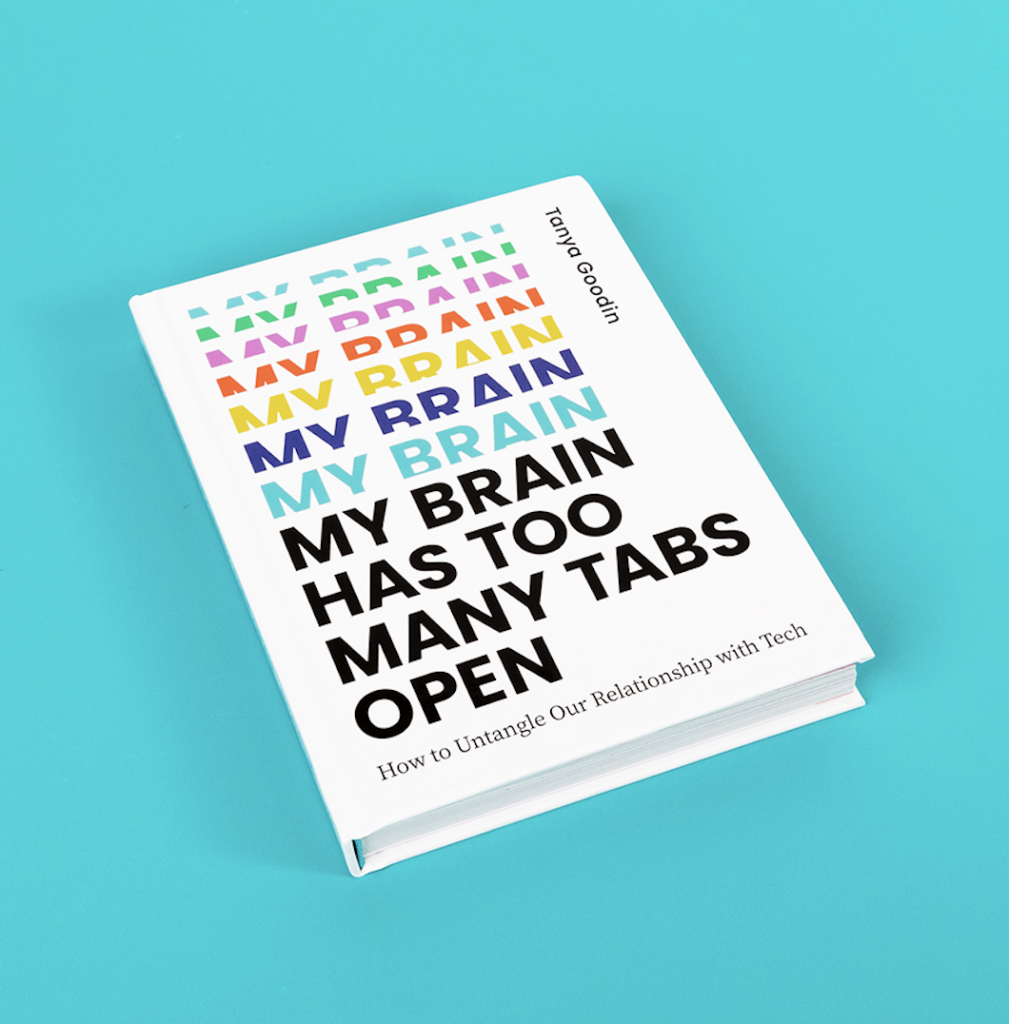
    My Brain Has Too Many Tabs Open by Tanya GoodinMy Brain Has Too Many Tabs Open by Tanya Goodin

    My Brain Has Too Many Tabs Open

    For more about how the digital world is impacting our work and productivity (and our home, and love lives). Out now on Amazon and in all good bookshops.


    View the original article at itstimetologoff.com

  • Here’s the Proof Zoom is Killing Our Creativity

    Here’s the Proof Zoom is Killing Our Creativity

    In-person meetings generate more ideas, and more creative ones, than video meetings which produce fewer ideas overall. Those are the findings from a new study of more than 600 people highlighting the challenges and downsides of using tech to work remotely, as opposed to collaborating face-to-face.

    Videoconferencing inhibits creative ideas

    In the study, carried out by researchers at Columbia and Stanford, more than 600 people worked in pairs for five minutes – either in person or virtually – to try and come up with ideas for how to creatively use bubble wrap or a Frisbee. Then they had a minute to pick their best idea to put forward. Judges scored the creativity of their ideas — based on novelty and value.

    • They found pairs working on Zoom came up with fewer ideas.
    • The Zoom pairs also came up with ideas scored as ‘less creative’ by the judges.
    • Exactly the same effect was seen in studies of 1,490 engineers who paired up to brainstorm during workshops at a multinational telecommunications company.

    The researchers had a few ideas about what might happening when Zoom is killing creativity in scenarios like this.

    Why? The ‘shared space’

    In an in-person collaboration one thing that’s often overlooked is that team members are in the same shared physical space and share the same visual cues from their environment – and each other – that can generate ideas. In a virtual meeting, their eyes tend to focus on their screens and they ignore their own environment, which “constrains the associative process underlying idea generation,” say the researchers.

    In the study, the pairs on Zoom calls spent more time looking at their partner and less time looking at the room they were in, and remembered fewer unexpected props (a large house plant or a bowl of lemons) in the room compared to in-person pairs.

    Why? Moving less

    zoom is killing creativity - try walking to more generate ideaszoom is killing creativity - try walking to more generate ideas
    Move more if you want to be more creative – go for a walk.

    One thing we all know is that people move less when they meet virtually staring at a screen, and movement has specifically been shown to enhance creativity. One 2014 Stanford study found for example that a person’s creative output increased by an average of 60 percent when walking (as opposed to sitting).

    “Staying still hinders creativity”

    PROFESSOR Jeremy Bailenson, Stanford UNIVERSITY

    During in-person meetings or even phone calls, we can look around, walk around, multitask and use our hands – all of that movement isn’t just more relaxing than staring fixedly at a screen, it also stimulates creativity.

    If you find Zoom is killing your creativity, take these steps

    #1 Match the medium to the task

    Video calls are useful for large teams working remotely to check in and share information and they’re used more and more because of the cost savings in getting people working in different locations together. But this research shows they’re not suited for creativity and ideas generation. For effective brainstorming – meet in person.

    #2 Move more

    Movement of all types has been shown to help with idea generating and problem solving. If Zoom is killing creativity in your team, why not all go for a walking meeting in the park? Adding in contact with a green space will also give your ideas a boost.

    #3 Step away from screens more

    It’s not just the time on screens during brainstorming that might be impacting our creativity. Filling our heads with a non-stop stream of news, communication and entertainment doesn’t give us our brains any time to wander and get into the state of flow that’s conducive to problem solving. Spend less time looking at a screen and you may find that your ideas flow too.

    My Brain Has Too Many Tabs Open by Tanya GoodinMy Brain Has Too Many Tabs Open by Tanya Goodin

    My Brain Has Too Many Tabs Open

    For more about how the digital world is impacting our work and productivity (and our home, and love lives). Out now on Amazon and in all good bookshops.


    View the original article at itstimetologoff.com

  • Here’s the Proof Zoom is Killing Our Creativity

    Here’s the Proof Zoom is Killing Our Creativity

    Here’s the Proof Zoom is Killing Our Creativity

    In-person meetings generate more ideas, and more creative ones, than video meetings which produce fewer ideas overall. Those are the findings from a new study of more than 600 people highlighting the challenges and downsides of using tech to work remotely, as opposed to collaborating face-to-face.

    Videoconferencing inhibits creative ideas

    In the study, carried out by researchers at Columbia and Stanford, more than 600 people worked in pairs for five minutes – either in person or virtually – to try and come up with ideas for how to creatively use bubble wrap or a Frisbee. Then they had a minute to pick their best idea to put forward. Judges scored the creativity of their ideas — based on novelty and value.

    • They found pairs working on Zoom came up with fewer ideas.
    • The Zoom pairs also came up with ideas scored as ‘less creative’ by the judges.
    • Exactly the same effect was seen in studies of 1,490 engineers who paired up to brainstorm during workshops at a multinational telecommunications company.

    The researchers had a few ideas about what might happening when Zoom is killing creativity in scenarios like this.

    Why? The ‘shared space’

    In an in-person collaboration one thing that’s often overlooked is that team members are in the same shared physical space and share the same visual cues from their environment – and each other – that can generate ideas. In a virtual meeting, their eyes tend to focus on their screens and they ignore their own environment, which “constrains the associative process underlying idea generation,” say the researchers.

    In the study, the pairs on Zoom calls spent more time looking at their partner and less time looking at the room they were in, and remembered fewer unexpected props (a large house plant or a bowl of lemons) in the room compared to in-person pairs.

    Why? Moving less

    zoom is killing creativity - try walking to more generate ideaszoom is killing creativity - try walking to more generate ideas
    Move more if you want to be more creative – go for a walk.

    One thing we all know is that people move less when they meet virtually staring at a screen, and movement has specifically been shown to enhance creativity. One 2014 Stanford study found for example that a person’s creative output increased by an average of 60 percent when walking (as opposed to sitting).

    “Staying still hinders creativity”

    PROFESSOR Jeremy Bailenson, Stanford UNIVERSITY

    During in-person meetings or even phone calls, we can look around, walk around, multitask and use our hands – all of that movement isn’t just more relaxing than staring fixedly at a screen, it also stimulates creativity.

    If you find Zoom is killing your creativity, take these steps

    #1 Match the medium to the task

    Video calls are useful for large teams working remotely to check in and share information and they’re used more and more because of the cost savings in getting people working in different locations together. But this research shows they’re not suited for creativity and ideas generation. For effective brainstorming – meet in person.

    #2 Move more

    Movement of all types has been shown to help with idea generating and problem solving. If Zoom is killing creativity in your team, why not all go for a walking meeting in the park? Adding in contact with a green space will also give your ideas a boost.

    #3 Step away from screens more

    It’s not just the time on screens during brainstorming that might be impacting our creativity. Filling our heads with a non-stop stream of news, communication and entertainment doesn’t give us our brains any time to wander and get into the state of flow that’s conducive to problem solving. Spend less time looking at a screen and you may find that your ideas flow too.

    My Brain Has Too Many Tabs Open by Tanya GoodinMy Brain Has Too Many Tabs Open by Tanya Goodin

    My Brain Has Too Many Tabs Open

    For more about how the digital world is impacting our work and productivity (and our home, and love lives). Out now on Amazon and in all good bookshops.


    View the original article at itstimetologoff.com

  • Finding Focus and Concentration in an Always-On World

    Finding Focus and Concentration in an Always-On World

    Finding time for tasks that involve focus and concentration is increasingly difficult in our smartphone-dominated world. With our over-connectedness to our digital devices, our FOMO, and the move to more emphasis on working from home, carving out distraction-free blocks of time while we focus on something important feels almost impossible.

    Create ‘blocks’ of time to focus

    And carving out those blocks is exactly what we need to do as the first step towards improving our focus and concentration. The Pomodoro Technique is one way of working which has five simple steps to help you focus on one task at a time and, because you set a strict time limit with a break, it enables you to do that efficiently and without feeling burnout and exhausted at the end.

    The Pomodoro Technique is a great place to start to improve focus and concentration

    5 Steps to the Pomodoro Technique

    1. Select your first task.
    2. Set a timer for 25 minutes.
    3. Work on the task for 25 minutes.
    4. When the timer rings, take a 5-10 minute break to stretch, walk around or get a bit of fresh air.
    5. If you have more tasks, repeat the steps but take a longer 20-30 minute break after completing four tasks.

    The technique is incredibly popular with devoted adherents swearing it’s the secret key to unlocking improved focus and concentration, boosted productivity and creativity. However, the key to making it work lies not just in creating the blocks of time themselves, but in making sure you can completely focus while working through each block.

    Distance Yourself from Notifications While Working

    If you try and implement the technique while still picking up and checking your smartphone, the dedicated focus time you have created for yourself is eroded. Separating yourself from your smartphone while you’re focusing is essential to reap the benefits.

    Studies have shown that the mere presence of our smartphone while we are trying to focus on something cognitively demanding, can reduce our IQ. In other words, just seeing our smartphone can make us more stupid. And that’s because, of course, the anticipation of the dopamine-creating notifications (from social media, messaging apps and other forms of communication) distracts us hopelessly. Even if we think we’re consciously ignoring our phone, our sub-conscious is thinking about the pay-off our brain will get when we pick it up.

    So, put your smartphone in another room (the same studies show that even if it’s hidden from our view, but in the same room, it can still impact our focus and concentration) and carve out some dedicated time to focus on what’s important. Try it for just one 25 minute block of time before you dismiss it as impossible, or impractical, and see how much you get done.

    For more about how you can improve work habits and your focus and productivity as well as tackling bad digital habits that are changing our lives – pick up a copy of our new book: My Brain Has Too Many Tabs Open. Available to order here.

    View the original article at itstimetologoff.com