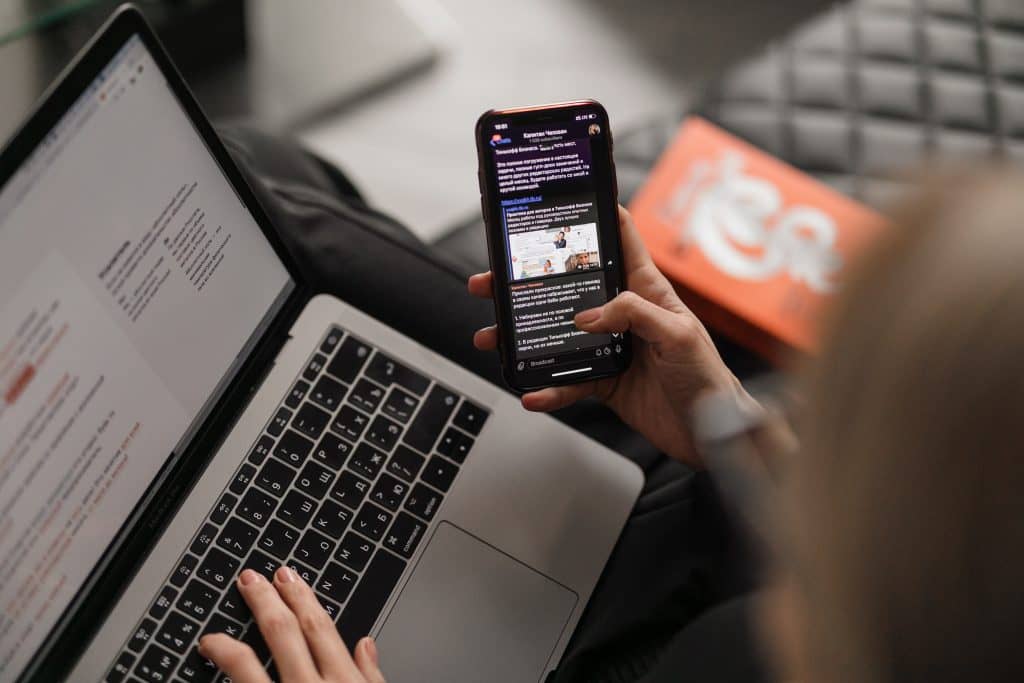
Group Chats. Whether for family, sport, work or pleasure, most of us belong to one or another. With the advent of the pandemic in 2020, these chats became an emotional and practical way to keep in touch with the outside world. However, this period also exposed the problem with group chats, which for many has overshadowed the usefulness that they once provided.
The Work Chat
With the advent of Whatsapp in the early 2010s, many workplaces started using group chats as a method of communication. Why send a lengthy internal email when you can just post to the chat?
In a world where working from home has become the norm, chats acted as a “virtual water cooler” chat for the 21st century. The contents of these chats are felt to be private, with no real world consequences for what was said. But, of course, there are. Not only have there been cases of firings for group chat comments, they also have unforeseen consequences. Bullying and employee burnout are chief among them. The “right to disconnect” movement was partly inspired by the 24/7 modern work week. Work chats also have a negative effect on employee performance, with one study estimating an average of eight minutes from replying to chat to returning to the task at hand.
And the problems with chats has now permeated our homes, in the form of the family group chat.
The Family Chat
When the pandemic hit, the family and friends group chat became more important than ever. With real life communication gone and some families separated by thousands of miles, it seemed the only option. However, the sheer number of members in single groups created the first of many problems: switching off. Constant notifications, and a fear of missing out or FOMO resulted in many users feeling annoyed or even isolated. We have three top tips on how to successfully detox from the family group chat.
1. Mute Notifications
Instead of being constantly annoyed by sounds and banner flashes, simply mute notifications. This will not only enable greater relaxation but also allow you to choose when you go back. This makes it more likely that you’ll be able to use it effectively.
2. Cut Back Daily
A useful analogy for activity on group chats is to think of it like a sauna: stay for a while, then leave. Whilst it might not be in your best interest to stop checking the chat right away, it definitely is in your interests to cut back your daily chat time. Choose specific times in the day to leave the chat alone and engage in activities off screen.
3. Leave the Chat
This is the most drastic but also the most simple of the tips. Taking a break from the constant chatter of family and friends online can be a better way to interact with them off it.
If you are still looking for tips or tricks, our new book, “My Brain Has too Many Tabs Open” written by our founder Tanya Goodin, is available to order from Amazon now.
With 26th annual UN Climate Change Conference (COP26) on the horizon, being held in our back garden here in the UK, in Glasgow, many of us are reinvigorated in our desire to cut our carbon emissions. Perhaps you are researching electric cars, bikes, insulation, or a vegan diet? Well we have one more way to help you save the planet, at no cost, whilst maintaining your digital wellbeing at the same time- win win. You just need to turn off your devices once in a while.
There’s a carbon impact from digital activity
If you didn’t realise it already, using your devices has an impact on your carbon footprint. We have to charge them, run WiFi systems, hard drives and more, and all has an impact on the electricity bill and the power each of us uses daily. To put it into perceptive: each email you send costs around 4g of carbon, if it has a photo attached that could go up to 50g. Now think about how many emails, texts, WhatsApps, DMs, and memes you send a day: over the course of a year that adds up.
Sending 65 emails is roughly equivalent to driving 1km in a car
The world’s email usage generates as much CO2 as having an extra seven million cars on the roads.
The first and most obvious solution is to cut down on screen time. Our founder, Tanya Goodin, recently spoke about the workplace app Slack, describing its negative effects on our mental health and the impact it has on our ability to work effectively. Instead she recommended phone calls, limiting information to infrequent emails and even going to speak to a colleague in real life. As we return to the office this is becoming more and more feasible and face to face chats will stop you sending emails and cut down Slack (or similar) spam, give you a change to stretch your legs, and give both parties some time off screen. At home, instead of spending your time on your device why not pick up a new hobby? You could get back into reading or crafting or just get outside again after a long day at work. There are so many options, and each one of them will help save the planet if you cut down on time on your devices doing it.
Learn how to fix it
Unfortunately there is no world where we can just switch off our devices and eliminate our digital environmental impact completely to help save the planet. So we have two other tips to help mitigate the impact when you are online: the first is to use the iFixit community and all their tools. In our podcast It’s Complicated, we talked to iFixit about how hard it is to fix our devices and the need for constant upgrades and they provided solutions: from ways to dispose of your goods more safely to kits to fix your phone yourself and tips and tricks to keep it running longer, they will all help you stop adding to your tech junk drawer.
Carbon offset your digital activity to save the planet
Finally, look into carbon offsetting: you can find out how much your use of your device costs the planet and then pay offset the costs by planting trees or similar carbon reducing practices. Alternatively you could use a carbon-negative phone plan such as the one offered by Honest Mobile so that your phone use at least is not hurting the planet.
If you want to learn more about how to switch off, and the many other ways in which our bad digital habits are impacting our lives – and how to fix them – you can read more in Tanya Goodin’s new book: ‘My Brain Has Too Many Tabs Open’.
Digital detoxing is difficult, and it can be hard to know where to start. Here’s some tried and tested low-effort but-high impact digital detox tips that actually work.
Allow only essential notifications
Let’s make things easier for ourselves.
We probably all know the feeling of being super concentrated on a task, or engaged in a conversation with a friend, when our phone buzzes. The second we check the notification, we interrupt our train of thought. The longer we loiter on our phone, the less likely we are be able to pick up where we left off and resume our stream of productivity.
To lower chances of this interruption in the first place, the first of our digital detox tips is about limiting the number of notifications you receive. Turn anything that you do not need to receive in real time, such as social media and news notifications. This means you have control over when you check your phone: not the other way round.
Leave your phone behind
Next time you go out and you deem it safe and sensible to, leave your phone behind. Whether going for a walk, to someone’s house, or even just running errands, use the outing as an opportunity to put some distance between you and your tech. If you can’t access it, you cannot succumb to the temptation to check your notifications or go on it.
If you don’t have a reason to leave your home, make one! Go for a walk over lunchtime or after work – your mind and body will thank you for it.
If the thought of leaving your phone at home makes you feel anxious: digitally detoxing is definitely the right move for you. Feeling nervous when separated from your phone is a sign of digital addiction, and could be having negative impacts on your productivity, relationships and sleep quality. Therefore, as difficult as it can be, breaking the habit of being accompanied by your phone everywhere you go is a really important step towards developing a healthier tech-life balance.
Make time for the activities you love
Find something to fill up the otherwise dead time you spend on your phone. If you have something you love and look forward to doing – for example baking, running, arts and crafts – you will not feel the need, or even want, to go on your phone. Investing time into doing the things you love will leave you feeling happy and fulfilled. Scrolling mindlessly on your phone will only delay (and possibly even exacerbate) your boredom and leave you feeling lethargic and dissatisfied.
Extend this to your morning and evening routine. Starting and ending the day on your phone is terrible for your self-esteem, productivity and sleep cycle. Find an activity that makes you feel good in the morning and sets you up for a productive day ahead – such as yoga or journaling – and one that relaxes you and helps you to wind down before bed, like reading, jigsaw puzzles or colouring.
Use your tech only when you need to
Often technology does enrich our lives, for example by allowing us to stay in contact with friends and family. Mobile phones in themselves are not harmful, but if we do not use them responsibly we can end up in a detrimental cycle of unhealthy technology use.
To make sure that you are using your phone mindfully, every time you pick it up, ask yourself why exactly you are using your phone. Your friend whom you are meeting for dinner is asking you what time you’d like to meet? Let them know! Agree on a plan, tell them you’re looking forward to catching up in person, and put your phone down. Instagram account @user49235 has liked your photo? You probably don’t need to go on your phone (and if you are receiving notifications like these, please refer to number 1 in our digital detox tips!)
Hold yourself accountable
The constant theme tying all these tips together is accountability. Question your actions: do I need to go on my phone right now? Do I even need my phone with me? Will going on my phone right now make me happy?
Asking yourself these questions will help you to align your digital habits with want you want from your daily life. A digital detox is a kindness to oneself: it separates your work life from your home life, gives you back time to do the activities you love, and promotes more activity and better quality sleep, leading to a healthier, happier day-to-day.
For many people, especially in the world of finance and consultancy, there is no such thing as a nine to five. However, with the advent of worldwide lockdowns, employees have begun to challenge the old status quo. They ask a simple question: should we have a right to disconnect from work?.
‘Disconnecting’ right now
A common refrain around digital detox is that the twenty-four working day makes it impossible. Especially in the financial services industry, if someone else is awake or a market is opening, the argument is that employees should be too. We’ve written about the problems with tech-work-life balance before, but for many years a legal “Right to Disconnect” has been a pipe dream. But the movement has spread. An EU resolution for disconnection after work hours has passed and there are murmurs that the UK should follow its lead. The French have led in this. In 2017, the French government passed a law requiring a company of more than fifty employees to draw up a charter that must clearly set out how employers could communicate with staff after designated working hours. Ireland has also recently implemented a series of codes and best practices for employers on the subject to “navigate an increasingly digital landscape”.
What are the barriers to disconnection?
Aside from legislation, the biggest barrier to disconnection from work is that companies are more dependent on tech than ever before. Taking email as just one example, the average office worker receives one hundred and twenty-one emails in a day. That’s an average of five every hour of the day and night. Most workers in Britain haven’t worked a traditional ‘9-5’ since well before Covid, making it difficult to formulate any set regular hours into law. That is all before the most obvious question of all: will restricting out-of-hours communication make companies more productive.
Is disconnection productive?
The short answer is yes. Whilst we can’t truly know the implementation effects until laws have been passed, early results are encouraging. In a study done into the effects of disconnection on home and office workers, 80% of Swedish employers reported higher rates of productivity amongst workers, with similar results in France and Brazil. It also found that even amongst neutral organisations, rather than ones who openly support changes, the results were similar. Longer hours, it seems does not equal greater productivity.
The Future of Disconnection
Whilst several countries have passed measures to help employees disconnect, it will surprise few to know that it is far from becoming a reality across the board. The best you can do at the moment is to tailor disconnection to your own individual hours. If you are unsure as to where to start with disconnecting from work, or you want to explore digital detox further, here are some more articles from us on the subject”
The recent outage of Facebook, Whatsapp and Instagram showed just how reliant we all are on social media. What should have been an opportunity to read a book, do some exercise or do any number of beneficial non-tech related activities instead caused global panic and hysteria. However, many people unexpectedly found they enjoyed it, and even called on Facebook to arrange another outage again soon. But, instead of waiting for someone to kick the plug out again in Silicon Valley, how about going about creating your own social media outage? Here are some tips on how to establish your own, and keep it going.
Turn off Push Notifications
One way to alleviate the inevitable stress that you might feel initially when being off social media, is to turn off push notifications as an initial step. This will not only partially or wholly eliminate any fear of missing out, but also allow you to interact with the people around you in ways you could never do on a screen.
Logout of Social Media Apps
If you have your social accounts logged in on multiple devices, chances are you will be tempted at some point to break your outage. To counter this, log out on every device. If you’re not ready to do that at once, you can ease gradually into it. Try a week off on your smartphone, maybe two. You have a much better chance of keeping your outage going if you are able to remove immediate temptation
Delete Apps
The beauty of apps is that you are able to install and delete them at will. So why not do just that? On a more practical level, deleting apps removes the immediacy of social media (you can’t post from a browser). This step can also form a useful halfway house between logging out and wanting to stay connected. Plus, it allows you to remove “non-essential” apps and de-clutter the feed on your existing apps. Reduce the number of platforms you’re juggling and you may well reduce your anxiety levels.
Focus on Self Care
Whilst it may seem a cliché, it’s important to re-focus on the most important aspect of your health: your emotional wellbeing. Go for a bike ride. Meet up with a friend. Or just focus on good old fashioned relaxation. Either way, caring for yourself rather than obsessing over ‘like’ counts means that when you eventually return to social media, you may have learned how to use it in a healthier way. Plus, it’s well documented that quitting social media, even in the short term, can result in benefits to both health and mood.
Make it A Team Effort
It can be daunting when trying to give up a part of your life that has likely become intrinsic on your own. Sharing the effort with someone else who also rather enjoyed the six hours when Facebook, Instagram and WhatsApp were done will provide a useful network of moral support and accountability. It also makes it more likely that you will stick at it for longer. And, sooner rather than later, you may both have created more responsible and better versions of yourselves.
For more tips on managing your social media outage or your relationship with tech in general, take a look at our new book My Brain Has Too Many Tabs Open, available to order from Amazon now.
Phubbing – a direct contraction of the words ‘phone’ and ‘snubbing’, can take many forms. It could be when you are having a hard conversation with someone and they get an email that they NEED to respond to right there and then, or perhaps when you are with family and your friends send you a hilarious message so you oh-so-subtly respond under the table, it could even be checking the weather, or checking a news story referenced in the conversation. If you are not sharing your screen with the other person in the conversation you are phubbing them, and we all know how annoying that can be when people aren’t truly listening.
Why is it a problem?
We all know how it feels to be phubbed – you can start to feel that you are not important enough, that you are boring and that the person you are speaking to doesn’t value your input into the conversation, all of which perpetuates the breakdown of human connection that we have experienced over the course of this pandemic. It has been 18 months of not being able to speak to each other freely except through technology and we all said throughout that as soon as it ended we would put down our devices, valuing in person interaction all the more. Yet this has somehow not been the result, we’re still phubbing our loved ones just as much. Phubbing has been linked to a decease in marriage satisfaction, as well as a decrease in the perception of one’s quality of life and general mental health- it does have real-world consequences. We need to stop.
How to stop
Phubbing is a reciprocal activity – if you take out your phone in a conversation *even if it is just to answer an essential work query* those you are talking with are more likely to do so too. Therefore, the first step we suggest to improve your experience of phubbing with others is to cut it out yourself. When you start a conversation with someone make an active effort to consciously put your phone away. Don’t leave it face up on the table ready to distract you, put it in your bag out of sight. Studies have shown that a phone on the desk reduces your IQ even when you are not using it, so put it away. If you have important aspects of your life to keep connected with (such as children), you can make periodic trips to the ‘bathroom’ to use your phone. Or ask your companion if it’s OK if you quickly check your phone in a break in the conversation. Once you make that first step, you’ll be pleasantly surprised at the difference it inspires in others, even if you don’t tell them anything about your new strategy. Give it a go and watch the difference it makes to all your interactions.
World Mental Health Day 2021: Mental Health and Tech
World Mental Health Day is back again for 2021 and it’s time again to review the relationship between tech and our mental health.
It is well documented that, whether anecdotally or from research, that using social media or any kind of tech excessively can lead to bad mental health. During the dark days of lockdown, many of us turned to the one thing that could not be cancelled: social media. Social media allows us to gain an insight into the lives of whoever we want, whenever we want. However, as was shown earlier this week, social media has allowed tech companies such as Facebook and Instagram to exploit their user’s mental health, with little to no consequences.
Facebook and Instagram: Impact on Mental Health
Though they have always denied it, this week Facebook and Instagram were hit with a leak of documents. The headlines showed that tech companies were less than benevolent in protecting the mental health of their users. These leaked documents show that 32% of teenage girls reported increased worries about their body image when viewing Instagram. As if this was not bad enough, these girls are part of the core Facebook demographic of users aged 22 or under, who make up 40% of Instagrams users. It’s clear that Facebook and Instagram knew the potential of their product to cause a decline in mental health. What’s also clear is that we the consumer, need to find ways to regulate these potential effects.
Digital Detox Tips for World Mental Health Day
1. Free Up Space
One of the effective ways of detoxing is good old deletion. Try going a day without social media, without the stress of constant notifications and see how good you feel afterwards.
2. Get Back to Nature
There is so much in the world around us that we just don’t see. Get out to your local park. Take a stroll down the river. Or just read a book in the garden. There are numerous health benefits, plus that feeling of contentedness.
3. Internet Free Time at Home
Let’s face it: no one wants everyone to be on their phone during family time. Set times in the day where you put down all tech and communicate with another person face to face. You will find you get more out of this type of communication than a DM on Instagram.
For more tips and tricks about how to improve your mental health this World Mental Health Day, our new book ‘My Brain Has Too Many Tabs Open’ is available to order now.
‘Sharenting’- the phenomenon of over-sharing images and information about your children is a part of everyday life for most children and teenagers today with 81% of children having some form of online presence (through their parents) by the age of 2. In fact, by the age of five, most parents have shared upwards of 1500 images of their children online. With many parents and guardians viewing Facebook folders as the natural progression from family photo-albums this is causing tensions between families across the world.
What is sharenting?
Sharenting is the act of posting about children and minors under your care (either in a personal or professional capacity) without their knowledge/ consent. This can take the obvious form of posting potentially embarrassing images of your children naked in the bath (which 19% of American parents admit to having done) as well as a more nuanced version including using children’s email addresses to sign up to things, tracking your fertility and more. Many seemingly insignificant decisions can have a great impact on your child’s digital footprint so beware.
Why is it a problem?
The first and most obvious problem with sharenting is that by posting images and information about your children online without their consent (either if they are too young or it is done without their knowledge) robs them of the autonomy and agency to decide if they wish to have a digital presence. As adults we are capable of making the decision to bargain for services offered online in exchange surrendering data about ourselves but our children cannot. Plunkett argues that as we learn more about the our cost this can have on our privacy and data, we should be supporting children to maintain analogue lives and avoid the ‘digital dossier’ which may stretch back in their cases to pre-birth?
Not only that but it denies them any control over the perception of themselves presented to the world which may go on to impact career aspirations, friendships and more.
Aside from the consent issues raised by a refusal of many parents to respect the autonomy and wishes of their children there are real security threats to children arising from their parents overuse of social media. For example, studies estimate that by 2030 over 60% of identity fraud will have originated from sharenting.
How to stop
First off we would recommend you delete any images of your children from your social media. Carry out a purge and commit to not posting in the future. If this seems too extreme a reaction you can always find ways to work around these restrictions without compromising the privacy of your children.
Many content creators online do not feel comfortable posting about their children due to their increased exposure to the online world and advanced understanding of the impact this can have. Melanie Murphy for example only posts images of her child with his face turned away from the camera and has not publicly announced his name which could be an option to take.
The most important part of your decision making should be educating yourself and your children about the impact sharenting can have and then giving them the choice (once they are old enough) for things to be posted. For example, you could give them veto power over any posts concerning them, or agree to increase your privacy settings, whatever makes you both feel more comfortable.
In the past year our digital and physical worlds have collided more than ever, leaving us all painfully aware of the need to log off. This manifests both in our own habits and those of our partners, children, colleagues and friends. Through our founder Tanya Goodin’s new book ‘My Brain Has Too Many Tabs Open‘ you can learn how to recognise harmful practices and find practical strategies to return to a more balanced life.
What does it include?
Goodin’s book is made up of anonymised accounts of people she has worked with throughout her career, from children in schools to bosses in the workplace and even Uber drivers! There are 24 stories in total, divided into the three sections of ‘Loving’, ‘Living’ and ‘Learning‘ to represent the different areas of our lives which the digital world has infiltrated. They are titled with the conversation-starting vocabulary we often use here at Time To Log Off, highlighting the realities of these oft-discussed tropes such as ‘phubbing’ (snubbing someone for your phone) or ‘sharenting’ (over-sharing your children on social media). After each narrative follows diagnostic guides, data and practical advice for improving habits.
The book also includes a thought-provoking manifesto for improved digital citizenship to tackle the bigger picture issues as well as the minutiae of day-to-day annoyances. Taking inspiration from global approaches to tech, such as the Taiwanese government’s focus on civil responsibility online, Goodin highlights a potential positive future and what commitments we must make to get there.
Who is it for?
This book is accessible for everyone. The narrative sections clearly communicate the issues to those with less expertise in the area whilst the data, manifesto and practical tips are provocative for those of all levels of knowledge of the subject. The layout and language are clearly comprehensible for the whole family with bright colours and large graphics breaking up the text throughout. It is well worth a read!
About the author
‘My Brain Has Too Many Tabs Open‘ is Goodin’s third book having previously published two others ‘Off‘ and ‘Stop Staring at Screens‘ which also covered the topic of digital detox and tech addiction. She is also the host of the ‘It’s Complicated’ podcast, an award-winning digital entrepreneur and founder of this movement, Time To Log Off. She was inspired to begin her work in this sphere after a 20+ year career working exclusively in the digital world and experiencing its negative effects before the rest of us did so she truly is an expert in the field.
Where can I find it?
‘My Brain Has Too Many Tabs Open’ can be found in most bookshops as well as online in both kindle and physical form so get reading! Once you have read it, please do leave a review so that others can find it and we can continue the conversation about digital wellbeing.
Is Instagram Toxic for Young Girls’ Mental Health?
Years of internal Facebook research, obtained by the Wall Street Journal, appears to show that Instagram may be toxic to significant portions of its young user base, predominantly young girls. However Facebook, in a statement, claim that the data was taken out of context and refute that Instagram is having a negative effect.
The fact that Instagram and other social platforms may be toxic to the mental health of teenagers, in particular teen girls, is of no surprise. We have written about it many times before in fact, including in our founder’s new book: ‘My Brain Has Too Many Tabs Open‘ which comes out on the 21st of September. What is a shock, is that Facebook appear to have been aware of the extent of damage caused to young teens and has done little to change the culture of the app. Changes could, for example, have shifted the focus away from the appearance of bodies and shape and size, which seem to be the main causes of body image issues in young girls. In their expose the WSJ further highlight the economic bonus these users (those under 22) bring to Instagram, with 40% of the app users being under 22 – bringing in roughly $100 billion in annual revenue.
What happens now?
As this story progresses, we will no doubt hear more about the leaked research carried out by Facebook on Instagram and its other subsidiary brands, but we fear the story will stay the same: social media giants are doing little to mitigate the negative impact of their products, and are potentially complicit in the mental health damage caused to their users by neglecting to take this issue seriously.
For more on the dangers of comparison culture, pick up a copy of our new book.