Author: The Fix

  • Ivan Moody Counts Rob Halford, Jon Davis Among His Sober Supporters

    Ivan Moody Counts Rob Halford, Jon Davis Among His Sober Supporters

    “No matter where he was in the world, he picked up, left me messages, he sent me cards,” Moody said of the Judas Priest singer.

    Ivan Moody, the lead singer of the metal band Five Finger Death Punch, has had a hard road to achieving sobriety, but he currently counts metal legend Rob Halford as one of his sober supporters, as well as Jonathan Davis from Korn.

    As Moody explained on The Jasta Show, “Rob is actually one of my—and I hate to put it this way—sober coaches. He’s been sober now for almost forty years. And when I went through recovery, and even my bandmates and I weren’t talking, Halford was on the phone with me. I got two 10-minute phone calls a day, and Halford was one of them every single day. No matter where he was in the world, he picked up, left me messages, he sent me cards.”

    Moody added that “Jonathan Davis was the same way—he was very supportive of me.”

    Halford is considered one of the best in the genre. Moody said, “This was coming from a kid who grew up on Judas Priest and I’m turning around and this guy is a father to me in certain ways, and very much a piece of who I am now.”

    Moody went on to tell Jasta he was “never very orthodox with [my] sobriety. Neither was J.D. or Rob, which, again, that’s what I really appreciate. I don’t go to a lot of meetings. I respect it, and I understand why other people used [them] and benefitted from [it], but for me personally, it’s just not what I need. So that was something I always looked to with guys like J.D. and Rob… that wasn’t my path and I didn’t need it.”

    Moody has reportedly been to rehab five times, and came close to death from an alcohol-related seizure. After that experience, Moody recalled, “I knew I was done during my detox. It took me seven and a half days just to detox. I couldn’t walk, I couldn’t go to the bathroom by myself, I couldn’t smoke a cigarette. I had a staff member actually sleep in the room with me for the first 28 hours just to make sure I didn’t go under. I blew a .36 when I went in, which anyone who knows anything knows means that was basically death. And I didn’t want to come out of it. I woke up the next day and I [was] pissed that I was still alive.”

    Moody ultimately realized he didn’t want his legacy to be dying from substance abuse.

    “I listen to a Linkin Park song now and I can hear [Chester Bennington] crying for help. Why did it take us so long to hear that? I want people to hear my lyrics or my melodies and say ‘that dude’s in pain.’ Or ‘that guy’s victorious over something—he overcame that substance.’”

    View the original article at thefix.com

  • AA Takes Center Stage in "Love in Recovery" from BBC Radio

    AA Takes Center Stage in "Love in Recovery" from BBC Radio

    No one is well-behaved here – they cross-talk, cheat, gossip, fight – but they love each other in the way only a group of alcoholics who have bared their souls to each other can.

    Love in Recovery, an award-nominated BBC radio comedy drama set in Alcoholics Anonymous, is now available in the U.S. via Audible

    The three-season (plus Christmas Special) series features actors John Hannah, Rebecca Front, Sue Johnston, Paul Kaye, Eddie Marsan, Julie Deakin, Johnny Vegas, and Samantha Bond. It was created and written by Pete Jackson, and is based on his life experiences, but, according to him, “in an abstract way.”

    “None of the specific stories are taken from my life or anyone else’s. I certainly wouldn’t betray anyone else in recovery’s trust by drawing on any of their experiences. But what I did was take all of the facets of my own recovery — the shame and regret and hope and disappointment and confusion and so on, and invent stories to convey those things.”

    His hope in writing the series was to “explore the complexities of alcoholism, and perhaps show those who don’t struggle with it that alcoholism is in no way as simple as they might expect. I’m ten years sober and I still can’t make total sense of why I so desperately sought out oblivion for so long.”

    The cast is small, which allows a lot of character development and interaction, and most of the story takes place in their weekly AA meeting, allowing years to pass in only three seasons. 

    Many archetypes are represented. There is Andy, the self-appointed group leader, who cares more than anyone else. In a hilarious recurring bit that runs for the first two seasons, Andy is always first to the meeting to set up the chairs; he is literally the only character that does any service, and each time, he runs into the same cleaning woman who has no idea who he is. Is he here to teach dance, ceramics, have a party? She never recognizes him, and it frustrates him every time. Andy thinks nobody appreciates him or the time he puts in to making the meeting happen, and so it’s incredibly moving when they surprise him with a cake on his birthday. (This ain’t no L.A. sobriety – I mean actual day of birth.) 

    Then there is Julie, the older housewife whose husband left her due to her drinking. She has been sober several years now, “except for a few slips.” Julie’s unlikely friendship with Danno, a young gay man with a chest tattoo he is so terrified of revealing to his new boyfriend that the rest of the group thinks he’s talking about AIDS when he alludes to it, demonstrates another kind of love in recovery. As it says in the book, “we are people who would not normally meet.” 

    In the first episode, Fiona walks into her first AA meeting ever, not sure she is an alcoholic but sure something needs to change. Fiona, a high-powered banker sick of embarrassing herself at business functions and waking up in strange places, becomes a stellar AA after a lot of initial resistance, humbling herself by working as a receptionist. Fiona doesn’t relapse on booze during the series, but does (spoiler alert) cheat on her fiancé, Simon, right before their wedding with a man who treats her like garbage, a classic alcoholic move we can all relate to – self-sabotaging when life is going well in order to have control of the inevitable rug coming out from under us. 

    Simon is not an alcoholic, just a normal guy who was ordered to go to meetings for six weeks for drunk driving (though Brits call it drink driving, which, I promise, will inadvertently crack you up every time, and, if you’re like me, you’ll repeat it out loud and giggle more) and stays for the camaraderie and love. Simon shows us the difficulty that normal people have in understanding us alcoholic/addicts, and also teaches Fiona unconditional love. He gets frustrated with her extreme self-centeredness, but he believes in their love so deeply that they persevere.

    Unlike people in the U.S., Brits are known for being quite reserved, something my ex-patriot friends living in London found hard to get used to. This reticence makes what happens in the rooms of AA even more of a departure from everyday life. As Jackson says, “I have been shocked, and thrilled, by how quick some Americans are to open up and get to the heart of things. That’s why AA is an extraordinary place (in the U.K.) sometimes. Once the doors are closed, people open up and talk about themselves and their experiences in a very un-English way. And perhaps because it’s been bottled up so long, it often comes flooding out in an extraordinary way.”

    No one is well-behaved here — they cross-talk, cheat, gossip, fight — but they love each other in the way only a group of alcoholics who have bared their souls and hopes to each other can. We learn about their children, their extended families, their generational trauma and alcoholic mothers, their codependencies, and of course, the war stories. It’s impossible to listen to this and not fall in love.

    While listening, I often wished it was a television show; I wanted so badly to see the characters’ faces and watch their interactions. Jackson chose radio because “The freedom you’re given on radio is extraordinary. The commissioners and execs don’t read scripts or give notes, so you can go away and do exactly what you want, which, for something as personal as this, was very important, I thought. Myself and producer Ben Worsfield (who’s a bit of a genius and without whom the show wouldn’t exist) would sit and talk about the things I wanted to explore, put together a bit of an outline and then I’d go away and write it. Then we’d get the cast together and record it. It was incredibly streamlined and free. Also, radio draws the listener in. It requires a little more concentration I think, so people are more involved, and feel almost part of the group.”

    He isn’t wrong. Having to imagine the visuals requires a bit more work, but it did draw me in and I felt close to the characters. Having the audio alone was somehow more intimate than watching video; there was no digital screen separating me from everyone. I don’t know what this series would have been like on TV, but it doesn’t matter. It’s perfect the way it is. I fell in love with these characters, and I know you will too.

    You can download Love In Recovery here.

    And follow Pete Jackson on Twitter, to see what he comes up with next: @PeteJackson79.

    View the original article at thefix.com

  • Fishermen Reel In $1 Million In Cocaine

    Fishermen Reel In $1 Million In Cocaine

    “We trolled past it. Every time we passed it we caught a fish,” one of the fishermen said.

    A pair of South Carolina fishermen had the catch of a lifetime on Sunday when they reeled in a bundle of cocaine worth about $1 million. 

    “We trolled past it. Every time we passed it we caught a fish,” one of the men told WCSC. In fact, a school of mahi-mahi, a popular catch with the fishermen, were swimming around the bundle.

    Before they packed up their rods and reels for the day, the duo decided to see what was in the package. They managed to snag the floating debris and pull it toward their boat. 

    When they saw the drugs inside, they contacted the Coast Guard. The agency alerted the North Charleston Police Department, which had officers meet the fishermen back at their marina. The police officers estimated that the bundle contained 30 to 50 kilos of cocaine, estimated to be worth $750,000 to $1 million, according to Coast Guard Lt. j.g. Phillip VanderWeit. 

    VanderWeit said that the boat was about 70 miles southeast of Charleston, an area where such a significant drug find is not common. 

    “It definitely doesn’t happen off the Charleston coast every day,” he said. “It’s a bit more common further south, whether in the Caribbean or the south Pacific.”

    Authorities will investigate the origins of the drugs. 

    In January, a fisherman in the Florida Keys also found a bale of cocaine, although that catch only had an estimated worth of $500,000, according to authorities. In that case, the drugs were floating beneath the dock when the man returned from a day of fishing. 

    In December 2017, the Coast Guard rescued a sea turtle that had become ensnared in more than 1,800 pounds of cocaine, worth about $53 million. 

    “After a period of lengthy questioning, it was determined the turtle did not have any useful information. We released him on his own recognizance after he agreed not to return to these waters again. #turtlesmuggler,” the agency tweeted at the time

    They then followed up with a more serious tweet about the prevalence of cocaine coming into the United States. 

    “In all seriousness, we love our sea creatures and do everything we can to help them when we see them in distressed situations. Additionally, during this patrol nearly seven tons of illicit narcotics with a street value over $135 million was confiscated.”

    View the original article at thefix.com

  • Takedown Of "Malibu Rehab Guru" Christopher Bathum Chronicled In Amazon Series

    Takedown Of "Malibu Rehab Guru" Christopher Bathum Chronicled In Amazon Series

    Ahead of its May 30th release, a former business partner of Bathum’s tried halting the publication of Bad Therapist.

    The story of the “predatory Malibu rehab guru” who sexually assaulted clients under the care of his Community Recovery chain of treatment facilities is chronicled in a new publication—and it’s already whipping up controversy.

    Bad Therapist is the first of a 6-part series called Exposure published by Amazon Original Stories. But ahead of its May 30th release, a person who was interviewed for the book tried halting its publication.

    The Blast reported on May 28 that it obtained a cease and desist letter sent to Amazon by Cliff Brodsky, a former business partner of Christopher Bathum. After being cheated out of a significant investment, Brodsky helped bring down Bathum, a fraud who was once respected in the addiction-recovery community.

    Brodsky was interviewed by author Evan Wright for the book, but later claimed that Wright did not have his permission to publish the information that he provided.

    Despite his efforts, Amazon went ahead and published Bad Therapist.

    “I’m not sure why Brodsky feels I need his permission to write about him,” Wright told The Blast. “He sought out and spoke to journalists—to me and others—for a story that he has been a part of for years through his business ties with Bathum, civil litigation, his social media campaigns and his prior interviews that appeared in print, on TV and in other media.”

    Meanwhile, Bathum is awaiting trial for an alleged $176 million insurance fraud. The luxury rehab “guru” was convicted in 2018 of sexually assaulting seven women while operating the Los Angeles-based Community Recovery.

    Bathum built Community Recovery—one of the fastest growing rehab chains in the U.S.—as a “luxury rehab for the people” and gained respect in the industry. But it began to come undone after a 2015 exposé by LA Weekly reporter Hillel Aron revealed that Bathum had quite a few skeletons in his closet. Bathum was never a psychotherapist. He never completed college. He was a pool cleaner before working in the rehab industry.

    And even as he appeared to help clients overcome substance use disorder, he himself abused meth and heroin. Wright claimed that not long before Aron’s story had published, “Bathum had overdosed in a Malibu motel while shooting drugs with patients.”

    Bathum’s sexual misconduct—allegations of abuse and sexual assault—was also revealed in Aron’s report, including a claim by a former patient that he offered her drugs in exchange for sex.

    Other Community Recovery clients also came forward with allegations of sexual assault.

    Wright warns, “Absent reforms, there are countless Bathums out there, running their rehabs, waiting to help a loved one close to you.”

    View the original article at thefix.com

  • Community Of Responders Campaign Aims To End Overdose Deaths

    Community Of Responders Campaign Aims To End Overdose Deaths

    The program’s goal is for naloxone to be deployed within six minutes of an overdose starting, drastically increasing the chances of the victims’ survival.

    A new campaign growing out of Green, Ohio aims to turn community members into lifesaving first responders who are ready to act in case of an opioid overdose. Combining the efforts of Cover2 Resources, NaloxBox, NaloxoFind, Project DAWN and ODMAP, the Community of First Responders (CFR) is the first of its kind in the U.S.

    CFR was organized by Greg McNeil, founder of Cover2 Resources. McNeil lost his son, Sam, to a heroin overdose and has since dedicated his life to combating the epidemic of opioid overdose in the country.

    His latest endeavor began early this year when he met one of the creators of NaloxBox—wall-mounted boxes similar to those containing AEDs but that contain naloxone, an opioid overdose reversal drug. These boxes can be installed anywhere, including public buildings and businesses.

    McNeil was then connected to the founder of NaloxoFind, an app that allows anyone to find naloxone locations in the area. Combining these two just made sense, but McNeil’s primary concern was that ambulances often take too long to reach individuals suffering an overdose. 

    “When a 911 call comes in about an overdose, first responders have six minutes to respond before there is brain damage,” McNeil explained to The Fix. “In 10 minutes, they’re gone.”

    For maximum life-saving potential, McNeil came up with the idea to recruit members of the public to keep naloxone on their person and respond to overdose cases after being alerted via text message when one is reported nearby. The hope is that this program will allow naloxone to be deployed within six minutes of an overdose starting, drastically increasing the chances of the victims’ survival

    Green, Ohio will be the testing ground for this program. McNeil had worked previously with Green Mayor Gerard Neugebauer, who was described as being very supportive of the CFR program. NaloxBoxes have already been approved for parts of the city that are most prone to seeing overdose cases. 

    “The installations will take place over the next two weeks in five hotels along the I-77 corridor covering all three interchanges in the City of Green and at Akron Canton Airport,” said McNeil. “To the best of our knowledge, these are the first NaloxBox installations in hotels and airports in the country.”

    The official launch date for CFR is June 20, when McNeil and other leaders in the fight against the opioid crisis will host a community event presenting the new program, holding a live demonstration, and treating guests to a to-be-announced musical guest. 

    So far, the Green community has been overwhelmingly supportive of CFR even before its launch—and McNeil has set ambitious goals for its future.

    “Our immediate goal is to complete installation and training for all participating hotel and airport personnel by our event launch. After the official launch of the CFR program, our goal will be to double the number of participating businesses by the end of the year.”

    Check out the Cover2 Resources podcast for more information.

    View the original article at thefix.com

  • Colorado To Allow Doctors To Recommend Pot Instead of Opioids

    Colorado To Allow Doctors To Recommend Pot Instead of Opioids

    Proponents of the new law say that it will help further reduce the number of opioid prescriptions in the state. 

    Doctors in Colorado will soon be able to recommend medical marijuana to patients for any condition that doctors might traditionally have prescribed an opioid painkiller for, opening the way for patients with conditions ranging from chronic pain to dental procedures to be able to access medical pot. 

    The bill was passed with bipartisan support and signed into law by Colorado Gov. Jared Polis. It will take effect August 2. 

    Proponents of the new law say that it will help further reduce the number of opioid prescriptions in the state. 

    “Adding a condition for which a physician could recommend medical marijuana instead of an opioid is a safer pain management tool that will be useful for both our doctors and patients,” said Ashley Weber, executive director of Colorado NORML.

    Currently, doctors can only recommend medical cannabis for certain conditions, including cancer and glaucoma, although the state also allows recreational cannabis use. Under the new law, any patients 18 or older who would be eligible for an opioid prescription can receive medical cannabis instead. 

    Opponents of the measure, including Colorado physician Stephanie Stewart, said that marijuana is less understood and less tightly controlled than opioids. 

    “Our real concern is that a patient would go to a physician with a condition that has a medical treatment with evidence behind it, and then instead of that treatment, they would be recommended marijuana instead,” she said. “This will substitute marijuana for an FDA-approved medication—something that’s unregulated for something that’s highly regulated.”

    In February, Illinois launched a similar program designed to move patients from opioids to medical cannabis. Although Illinois also has a medical marijuana program, it is very restrictive.

    Illinois’ initiative—the Opioid Alternative Pilot Program—allows people who would otherwise be given an opioid painkiller to access medical cannabis without going through the state’s medical marijuana program. 

    “We’re optimistic the program will benefit many Illinois residents and offer them an alternative for managing their pain,” Conny Meuller-Moody, the program’s director, told Rolling Stone at the time. 

    Illinois doctor David Yablonsky said that the program would give doctors more leeway to help patients avoid potentially-dangerous opioids. 

    “At least we’ll have an opportunity now as physicians to work with patients to try this instead of these dangerous and potent narcotics, you know opioids,” he said. “I hope it saves lives and that people come in and have a healthy alternative.”

    View the original article at thefix.com

  • Mama June’s Family Staged Intervention Before Drug Possession Arrest

    Mama June’s Family Staged Intervention Before Drug Possession Arrest

    The intervention was featured on a recent episode of “Mama June: From Not To Hot.”

    Just days before reality TV star June Shannon (aka Mama June) was arrested for drug possession back in March, she came face-to-face with a family intervention.

    On the season finale of her spin-off reality show, Mama June: From Not to Hot, June’s children Lauryn “Pumpkin” Shannon, Alana “Honey Boo Boo” Thompson, Jessica and her niece Amber gathered at June’s sister Doe Doe’s home to share with June how her behavior has affected the family.

    “I would love to come home and stay with you, tell you about my day, but I can’t do that because I’m scared. I’m scared to stay at your house,” said Alana, who is now living under the care of her sister and legal guardian Pumpkin, who is 19.

    June left during the intervention. She admitted she was having a hard time. “Just ask Geno (boyfriend Eugene Edward Doak) how many times I sit there and cry to him and be like, ‘I hate my f—ing self. I want to f—ing kill the person that I am now.’ Because I don’t know who I am. I don’t know if I want to ‘kill myself’ or I want to kill the person that has took over my body,” she said.

    She was finally persuaded to enter a treatment facility the same night. But after only 12 hours, June checked herself out and her boyfriend Geno picked her up.

    Two days later, on March 13, the couple was arrested at a gas station in Alabama on drug possession charges. June allegedly had crack cocaine and a crack pipe on her. She and Geno now face felony charges for drug possession. The court ordered Geno to stay away from June.

    June is currently in Alabama awaiting trial. According to her, she is not allowed to leave the state until after her hearing. She is facing several years of jail time.

    Mama June became a household name on the reality show Here Comes Honey Boo Boo, a spin-off of Toddlers & Tiaras which documented the family’s life in rural Georgia.

    Alana, who is now 13, reminisced about her pageant days with her mom by her side. “I just want mama back. Like at the pageant,” she said during the episode. “She helped me and we both did it together… And when we were at Dancing with the Stars, she was so fun and me and her spent time together. And she would take me to rehearsals and she would take me here and there.”

    According to Pumpkin, the family is hoping June will leave Geno and get back to her old self.

    Alana hopes things will change after the arrest. “So I really hope this is rock bottom for mama because once you hit rock bottom, there’s no more going deeper—you can only go up,” she said. “I really hope mama’s just thinking, I just got arrested. I need to get it together. I need to get my s— together. If this isn’t her wake-up call, I could possibly lose her forever.”

    View the original article at thefix.com

  • Frank Lucas, "American Gangster" Kingpin, Dead At 88

    Frank Lucas, "American Gangster" Kingpin, Dead At 88

    The infamous former drug kingpin died of natural causes.

    New York drug kingpin Frank Lucas, who oversaw a sprawling international network of heroin smuggling in the 1970s, died on May 30, 2019 at the age of 88.

    Lucas, whose life and crimes served as the inspiration for Ridley Scott’s Oscar-nominated 2007 drama American Gangster, claimed to be the chief architect of the “Golden Triangle” operation, in which heroin was smuggled from Southeast Asia in the coffins of U.S. servicemen killed in Vietnam. 

    Though the veracity of the scheme was questioned on numerous occasions, Lucas enjoyed a lavish lifestyle in the mid-1970s before federal agents and New York police shut down his empire in 1975. Lucas spent seven years in federal prison before earning his release by turning state’s witness for another drug sting.

    He would remain in the public eye as a quasi-mythical figure, thanks in part to a 2000 article for New York Magazine that detailed his colorful outlaw past. The article would serve as the basis for Scott’s film, though its depiction of Lucas’ life was criticized by the agents who pursued him in the 1970s and even resulted in a defamation lawsuit.

    Born in La Grange, North Carolina in 1930, Lucas made his way to Harlem, where a string of crimes, including the alleged murder of a dealer—which he claimed and then later denied—reportedly brought him to the attention of gangster Ellsworth “Bumpy” Johnson.

    Under Johnson’s tutelage, Lucas said that he assembled his own drug operation, which broke the Mafia’s grip on heroin distribution by buying opium directly from growers at the borders of Thailand, Burma and Laos and bribing Army soldiers to ship the processed heroin to the United States.

    As New York Magazine noted, the heroin—a potent brand known as “Blue Magic”—was sold in New York City and Newark, New Jersey, and claimed numerous lives. Richard M. Roberts, the New York City detective and attorney played by Russell Crowe in Gangster, said that “Frank Lucas has probably destroyed more black lives than the KKK could ever dream of.”

    Lucas lived extravagantly from the proceeds of his drug empire, which reportedly netted him $1 million a day, and was seen in the company of such public figures as Muhammad Ali, James Brown and Diana Ross. His taste for opulence drew the attention of the Drug Enforcement Administration (DEA) and New York Police Department, which convicted him on federal and state drug charges in 1975.

    Sentenced to 70 years in prison, Lucas would only serve seven after informing on fellow dealers and officials on his payroll.

    He returned to prison on new drug charges in 1984, and after his release in 1991, worked tirelessly on promoting his “Original Gangster” image through the New York article, the Scott movie—for which he was a paid consultant—and a 2010 autobiography. Jay-Z also recorded a 2007 album, American Gangster, which was inspired by Lucas’ exploits. 

    He tangled with the law one final time in 2012 for reportedly lying about federal disability payments.

    “All you got to know is that I am sitting here talking to you right now. Walking and talking, when I could have, should have, been dead and buried a hundred times,” Lucas said in the New York article. “And you know why that is? Because people like me.” 

    View the original article at thefix.com

  • Life as a Transgender Addict

    Life as a Transgender Addict

    It’s easier to just sweep what’s uncomfortable under the rug. Better not seen, not heard, not felt. Total oblivion, that’s the name of the game.

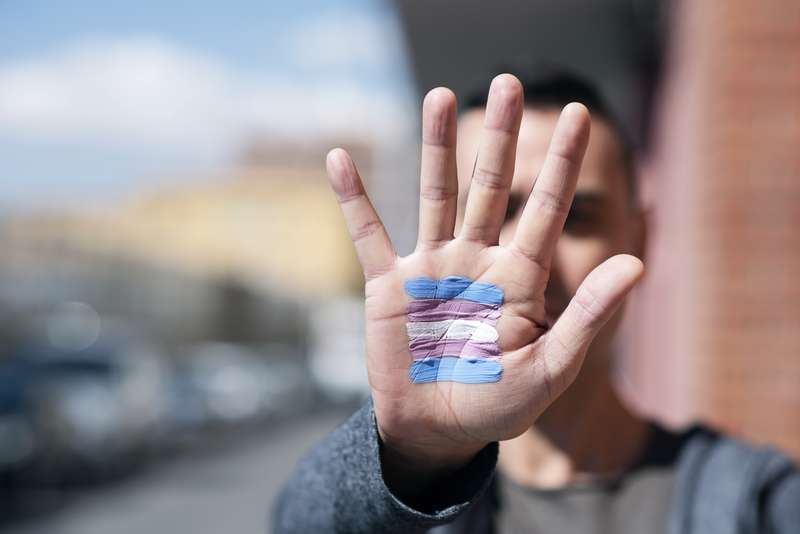
    I am a trans woman.

    You might be sitting here, reading this, and thinking to yourself: Okay. Congratulations! Good for you! I’m glad you had the courage to be yourself!

    If you’re like many people I’ve told, you’re probably thinking something along these lines. But you’re probably also thinking, what relevance does this have? Does this belong on a site revolving around drug and alcohol addiction, harm reduction, and other related issues?

    You’d be justified in asking these questions. The quick answer is yes.

    I, like many trans people, began using drugs and alcohol to cope with gender dysphoria. For those who don’t know, gender dysphoria is what occurs when your body and brain are misaligned; when internally you just know that what your parents, teachers, and other kids are telling you is wrong. You want to grow your hair long, play with dolls, and wear dresses, damn it!

    The rate of substance misuse in gay, lesbian, and bisexual people is twice that of heterosexual (straight) people. While reported rates of substance use disorder vary — the National Institute on Drug Abuse places the number for LGB substance abusers at 39.1 percent (versus 17.1 percent for the heterosexual population) — the disparity is higher when transgender folks are factored in, especially youth. The data is sparse, as transgender people are usually excluded from studies or grouped with other sexual minorities, but one study, for example, found that the “prevalence of substance use was 2.5-4 times higher for transgender youth compared with their nontransgender peers (depending on the substance).”

    Why this disparity?

    For one thing, even in folks like me (who report a higher overall satisfaction with life due to various sorts of privilege), there is still the issue of depression, body dysphoria, and societal pressure. All of these pressures combine together to form a boiling pot at times, for which the temporary relief of drugs and alcohol can seem like a godsend more than a vicious cycle from hell.

    You use, you feel better for a short time. Then you return to reality, and all your issues are still there. Only now they’re worse, because you haven’t slept — or if you did sleep, you slept like shit. I’m sure many of you can relate.

    My drug of choice was prescription pills, specifically uppers. But as with most pill fiends, it’s almost never limited to just one class of chemicals: I loved them all.

    I was one of those “up three or four days, sleep another” types. I would take heavy amounts of amphetamines for several days and then eat a heroic dose of whatever benzodiazepines I could find. Xanax was ol’ reliable, but — as all benzodiazepines are practically the same effect-wise — any would do in a pinch. I had a prescription for both Adderall and Xanax at one point in my career as an addict, and I still found myself buying other benzodiazepines and extra Adderall, as well as other prescription stimulants and opioids.

    Nothing was ever enough, and drugs were my security blanket. Speed gave me the confidence to go out in public — to not spend all my time isolated and fixating on the things I didn’t like about my body — and downers were perfect for numbing myself to anything the speed didn’t take care of.

    My experience of using drugs to cope is why I’m a strong believer in the need for tolerance, especially when it comes to trans kids. We have such a high rate of self-hatred, and I know personally that one guaranteed way many members of the LGBT community deal with this is by getting numb. It’s easier to just sweep what’s uncomfortable under the rug. Better not seen, not heard, not felt. Total oblivion, that’s the name of the game.

    Practicing tolerance means we accept people and let them do what needs to be done — and will eventually happen anyway, except for those in the community for whom it all gets to be unbearable: a study from the American Academy of Pediatrics found that more than half of transgender male teens and 29.9 percent of transgender female teens have attempted suicide.

    This simply does not need to happen. When trans children are accepted as their stated gender, the suicide rate decreases dramatically. If you could save someone’s life, wouldn’t you want to do whatever it takes to keep them from even considering ending it all? Suicide never has to be an option.

    Since 2017, I’ve had three friends die, two by suicide and one under circumstances I still haven’t cleared up. I don’t know that I want to have the mystery solved.

    She was a trans woman named Margot, and in the months leading up to her death, she had been in and out of hospitals, both for physical and mental issues. I can’t say, with any confidence, whether her heart exploded or if she took herself out to avoid the extreme mistreatment she received from her family. And, judging by the area we both lived in and how bad it really can be, I’m not convinced it wasn’t something more nefarious that resulted in her death.

    As for my other two friends (neither of whom made any reference or gave any hint that they may or may not be trans), I can’t tell you whether or not they were. Many of us are fantastic actors and so extraordinarily skilled at concealing such a crucial part of our identities, that even fellow trans people say, “I never would have guessed.” As far as I know, gender identity — that innate sense of who you are, which pervades every living being on this planet (whether or not you realize it) — may have been among the reasons they chose to take the quick exit out of here.

    And all three of my friends struggled, to varying degrees, with addiction. It’s no secret that substance use often worsens depression and other mental health conditions.

    By accepting trans people and working together to end bigotry, we will not only tackle an underreported cause of substance misuse and addiction, but also fight depression, trauma, and other underlying conditions associated with deciding to use drugs and alcohol in the first place.

    In many ways, when it comes to addiction, transitioning (the process of changing one’s gender presentation and/or sex characteristics to accord with one’s internal sense of gender identity) can almost be viewed as a form of harm reduction for people who need to go for it. I have many friends who, upon living as their true selves, realize even further that their substance abuse was closely tied to depression and self-hatred.

    No one’s path is ever going to be identical. I haven’t used any substances for over a month — the longest I’ve been clean in years, and I had to find my own way to do it. Transitioning isn’t a cure-all, but it can help. The best hope we have is working together to reduce the trauma experienced by transgender people in their daily lives, even (especially) as children. Until society figures out how to recognize and accept this community — my community — we won’t make a dent in the rates of addiction or suicide.

    Trust me on that.


    If you or someone you know needs help, call the National Suicide Prevention Lifeline at 1-800-273-TALK (8255) or Text HOME to 741741. For LGBTQ youth in crisis, call or visit The Trevor Project at 1-866-488-7386 or text START to 678678. If you think someone is in immediate danger, do not leave them alone, stay with them and call 911. Read about warning signs for suicide and more at mentalhealth.gov.

    View the original article at thefix.com

    Addendum

    The 2017 National Survey on Drug Use and Health reports that 18.7 million people age 18 or older had a substance use disorder in the United States. Furthermore, people who identify as gay or lesbian are more than twice as likely than those who identify as heterosexual to have a sever alcohol or tobacco use disorder (Healthline.com). These alarming numbers stress a need for more substance use resources readily available to the community. Drugrehab.com have an educational guide on this subject:

    www.ridgefieldrecovery.com/resources/lgbtq-addiction/
    https://www.drugrehab.com/guides/lgbtq/

  • Does The Disease Model Of Addiction Empower People To Get Help?

    Does The Disease Model Of Addiction Empower People To Get Help?

    A new study examined whether the messaging that addiction is a disease made people more or less likely to get help. 

    New research compared how differing approaches to substance use disorder affect how a person manages their addiction.

    For the study, 214 participants with substance use disorder were placed into one of two groups—a group that was exposed to a “growth mindset” and a group that was exposed to messaging that emphasized addiction as a disease.

    “The growth mindset message stresses that human attributes are malleable, and we know from previous work that it encourages better self-regulatory strategies such as seeking help from others,” said Jeni Burnette, associate professor of psychology at North Carolina State University and first author of the paper published in the Journal of Social and Clinical Psychology. 

    The growth mindset group read an article that explained the various roots of substance abuse and emphasized that there are multiple pathways to recovery, while the disease mindset group read an article that explained the effects of addiction on the brain.

    After reading the articles, members of each group completed a survey asking them about their approach to dealing with their addiction.

    The findings suggest that the disease messaging limited the participants’ approach to managing their addiction, while the growth mindset made participants feel more empowered to handle their substance use problem.

    The growth mindset group reported feeling more confident in dealing with their problem, and reported “stronger intentions” to seek counseling or cognitive-behavioral therapy.

    “When we began talking about addiction as a disease, the goal was to decrease stigma and encourage treatment,” said Sarah Desmarais, associate professor of psychology at NC State and co-author of the paper. “That worked, to an extent, but an unforeseen byproduct was that some people experiencing addiction felt like they had less agency; people with diseases have no control over them.”

    The study found no difference between the groups when it came to how much they blamed themselves or whether they would seek medication-assisted treatment (MAT).

    “It’s promising to see the growth mindset group express a greater willingness to seek treatment via counseling or cognitive-behavioral therapy,” said Desmarais. “And the lack of difference between groups on medication treatment is also good news, because it reflects the fact that both groups equally appreciate the medical aspects of addiction.”

    The authors conclude that their findings support “moving away from messaging about addiction solely as a disease.”

    “It’s more complicated than that,” said Desmarais. “Instead, the finding suggests that it would be more helpful to talk about the many different reasons people become addicted.”

    View the original article at thefix.com