Author: The Fix

  • New Data Show Disturbing Racial Disparities in Combined Opioid-Cocaine Overdose Rates

    The problem is not just increased use of stimulants and opioids, it is also a lack of recovery resources, substance use disorder treatment, and a historical mistrust of healthcare providers.

    An exclusive interview with researcher Tarlise Townsend, Ph.D., reveals a definitive need for harm reduction policies plus investment in treatment in marginalized communities. In these communities, particularly lower-income African American and Latino neighborhoods, the opioid epidemic has combined with stimulant abuse to create a sharp spike in overdoses. These findings, from a study funded by the National Institutes of Health that examined death certificate data in the dozen years before the start of the COVID-19 pandemic, were published last month in the American Journal of Epidemiology.

    Driven by the three-headed dragon of fentanyl, prescription painkillers, and heroin, drug overdoses kill over a hundred thousand people every year in the United States. However, from 2007 to 2019, drug overdose deaths involving more than one substance increased dramatically across the board nationwide. Additionally, these multi-drug overdoses had a more noticeable spike in traditionally marginalized communities that lack substance disorder education, prevention efforts, and treatment opportunities.

    The Fix is honored to interview Dr. Tarlise Townsend about the implications of her study.

    The Fix: Why is the combination of stimulant abuse like cocaine or methamphetamines and opioid use disorder like heroin or prescription painkiller misuse hitting marginalized racial and ethnic communities so hard? As opposed to one or the other, what do you think is the reason for the two-headed dragon?

    Dr. Tarlise Townsend: The overarching response to that question, unfortunately, is that we don’t have an answer. Although we have diagnosed and identified the problem, we still desperately need to understand what’s driving it: Why are marginalized communities, particularly Black Americans, being hit proportionately hard by these combined overdose deaths? At the same time, the reality is that structural racism shapes everything, including access to resources. There is a lack of harm reduction options in this community, a historical lack of trust in healthcare providers, and a profound lack of access to treatment for substance use disorder.

    Also, criminalization is a really big factor when it comes to the increased risk of overdose. It is so much less likely that authorities will be contacted in time to administer overdose antagonists like Naloxone. After all, Black Americans, particularly men, are so much more likely to be criminalized for just being in possession of these drugs.

    As a result, there are many factors contributing to these racial disparities. Also, these disparities may not be specific to just these two types of drugs; stimulants and opioids. It may be a more systemic problem that right now is just manifesting as increased overdose due to the combination of stimulants and opioids. When you put this issue into the context of fundamental cause theory, you realize that the fundamental causes of health issues like socioeconomic status or racism affect health outcomes in almost every context in these communities. These overarching causes fundamentally affect people in so many ways because they basically bleed into everything.

    Even if you try to address other causes of these health disparities, socioeconomic status and racism will find another way to generate other challenges. Indeed, socioeconomic status and racism have been and continue to be fundamental causes of adverse health outcomes in these marginalized communities. The problem is not just the increased use of stimulants and opioids leading to more overdoses. It also is a lack of recovery resources, educational opportunities, and substance use disorder treatment in these communities.

    What drug is playing the driving role in this overdose crisis? Is heroin or cocaine proving to be more destructive in these communities?

    Our study did not look specifically at the type of opioids contributing to these overdose deaths. However, other recent research looking at the problem of opioid-stimulant deaths has found that fentanyl is playing the driving role. The story of this rise in overdoses is due primarily to a surge in fentanyl exposure. There is a contamination of these street drugs that the person who is using does not realize. Despite the increase in combined opioid-stimulant use, the inclusion of fentanyl in that picture is the driving force. 

    In developing countries, particularly in Southeast Asia, methamphetamine use has been connected with working long hours. Is that happening in the U.S. as well?

    I don’t feel like I can answer that question with any expertise or confidence, but it does bring up another perspective. There is evidence of people who use opioids in homeless populations on the street intentionally using stimulants to stay alert. First, these people are more readily targeted and criminalized for using. Second, they cannot afford to be oblivious when living in such extreme conditions. It could be that the stimulants counteract the opioids, allowing these people to avoid what we would describe as loitering and remain aware of external threats.

    Thus, the co-use of these two drugs by homeless populations could be described as an effort to cope with really trying conditions. However, despite such hypotheses about what is going on, there is not a lot of proven research. Thus, we know very little about those specific dynamics. Still, the idea of homeless people addicted to opioids using stimulants as a survival mechanism is a notion that deserves greater investigation.

    Specifically, what kind of harm reduction and evidence-based SUD treatment services are needed in Black and Latino neighborhoods? For example, if you had a billion dollars in funding to fight this crisis, how would you spend it?

    We need to look at both the money is no object question, and money is an object, so what do we do question. For the first, we need all the things. There is no specific policy solution or harm reduction solution that is going to address everything. There is no quick and easy fix to eliminate rising disparities in opioid and stimulant overdose deaths. We would think that when we implement a societal health intervention, the population in our society that needs the most help will receive the most benefit from such an intervention. However, this is not the case because health disparities will often widen unless you specifically target the communities with the greatest needs. If you want to help those communities, you have to target the barriers preventing them from accessing the help they need, like resource barriers, stigma issues, socioeconomic gaps, and racial and ethnic challenges. Often, the people who benefit the most from societal health interventions are the people with the most resources. The lack of resources in marginalized communities results in such health interventions often proving ineffective.

    In general, when we are thinking about policies and programs designed to target disparities in substance use and overdose, we need to be intentional about tailoring those interventions to the communities that need them most. We need culturally informed and competent efforts tailored to address the needs of these specific communities that are being hit the hardest by opioid and stimulant overdose deaths. Highlighting such tailoring, we need education and outreach materials translated into the languages primarily spoken in these communities. Awareness of substance use disorder treatment and harm reduction programs need to be raised in contexts that people in these communities trust. A great example is the role that Black churches are playing in Black communities. Since that setting implies a greater trust, it leads to a greater uptake of these recovery options. There is a lot of distrust in these communities when it comes to traditional healthcare settings.

    Beyond these efforts, I also think we need to be thinking bigger. For example, the safe consumption sites that just opened in New York are encouraging, and initial evaluations are already underway. Researchers are looking at how effectively they reduce opioid mortality and increase the uptake of treatment for substance use disorder and other health intervention efforts. I’m also eager to see what effects decriminalization like we are seeing now in Oregon will have on overdose mortality trends. When it comes to spending money to combat these problems, whether it is the limited funds that are now accessible or an imaginary unlimited amount, researchers need in-depth cost-effectiveness analyses. No matter how much money is being spent, many health interventions that people thought would lead to major results did not give us the greatest bang for our buck. In reality, resources are limited and scarce. Thus, the money spent needs to be used in the best way possible. We need to study which of these programs and policies will prove cost-effective. 

    An example of such a cost-effective study is seen today in the use of Naloxone, the opioid antagonist that can reverse an overdose in an emergency. Distributing Naloxone to people who most likely will experience overdose is highly cost-effective and saves lives. It has proven to be one of the most cost-effective medications on the market. Our experience with Naloxone so far is a good model for figuring out how we can best use limited resources to address this crisis and reduce the health disparities in these marginalized communities.

    View the original article at thefix.com

  • The Heart of the Matter: Substance Use Disorder and Heart Health

    Any time you’re drinking too much — whether overall or in one sitting — it can have a big impact on your immediate and long-term health.

    When you think about a healthy heart, what comes to mind? We all know the importance of regular exercise and avoiding too many saturated fats when it comes to keeping our cardiovascular system operating at its best. But living a heart-healthy lifestyle goes well beyond just diet and exercise. Drinking and drug use, especially when it crosses the line into addiction, can have a massive impact on heart health.

    Since cardiovascular disease is the leading cause of death for adults in this country, it’s important to reflect on all the ways that behaviors can impact our cardiovascular health — including the choice to drink or use drugs.

    Alcohol can affect blood pressure: for better or worse.

    Everyone loves to hear how a glass of red wine — or dark chocolate for that matter — is good for heart health. While it’s true that some research has shown a connection between moderate consumption of red wine and health health, the American Heart Association emphasizes that correlation doesn’t equal causation. The benefit for heart health likely has more to do with people’s actions, like living a low-stress or active lifestyle, than their consumption of wine.

    What’s crystal clear, however, is that drinking heavily can raise your blood pressure. Having high blood pressure, also known as hypertension, increases your risk for heart attack and stroke. If you have high blood pressure and consume more than one standard drink a day, your doctor will likely talk to you about reducing your alcohol consumption as part of an overall heart-healthy lifestyle.

    Boosting your blood pressure isn’t the only way that alcohol use affects your heart health. Drinking heavily is one of the leading causes of cardiomyopathy, a disorder where the heart isn’t able to pump blood efficiently. People who develop cardiomyopathy due to alcohol use often experience heart failure, and many need a heart transplant in order to survive.

    Alcohol may make heart disease more common among young people

    In most cases, cardiovascular disease becomes more common as people age, and is relatively rare in young people. However, a new study finds that alcohol and recreational drug use can increase risk of premature cardiovascular disease. Researchers found that people who drink alcohol, use tobacco or use recreational drugs including cocaine, amphetamines and cannabis all had increased risk for heart disease.

    “All subgroups of recreational substances were independently associated with a higher likelihood of premature and extremely premature,” cardiovascular disease, the study authors wrote.

    The more substances you use, the higher risk you are at. The study found that people who use four or more substances regularly had a nearly 9-times increased risk for heart disease.

    Alcohol as part of a heart-healthy lifestyle

    Even if you’re concentrating on your heart health, it’s ok to have an occasional glass of wine. You can even substitute in a beer or cocktail, but it’s important to only drink in moderation. That means having no more than one drink a day for women and two drinks a day for men. Remember, that means standard drinks — not a generous pour.

    If you have trouble sticking to that limit, it might be time to reevaluate your relationship with alcohol. Unhealthy patterns like binge drinking can exist alongside or without substance use disorder. Any time you’re drinking too much — whether overall or in one sitting — it can have a big impact on your immediate and long-term health. You might need professional guidance to change your interactions with alcohol and switch to a healthier drinking pattern.

    Taking care of your mental health, including addressing any underlying traumas or illnesses, can reduce stress. Keeping your stress to a minimum is important for controlling your blood pressure and cardiovascular health.

    Heart health is important, but it doesn’t exist in a vacuum. Taking care of your heart means taking care of your physical, mental and emotional health. Think about the steps you can take to be a healthier version of yourself.

    Learn more about Oceanside Malibu at http://oceansidemalibu.com/. Reach Oceanside Malibu by phone at (866) 738-6550. Find Oceanside Malibu on Facebook.

    View the original article at thefix.com

  • Hard Conversations: Talking With a Loved One About Their Drinking

    Talking with a loved one about their drinking or drug use can seem impossible, but it can also help plant a seed of recovery.

    Watching a loved one struggle with drugs or alcohol can be incredibly painful. Oftentimes, as a family member, you will notice problematic behaviors before your loved one sees them or is willing to acknowledge them. That can put you in a powerful position to point out your concern and help your loved one get into substance abuse treatment before things reach a crisis point.

    In an ideal world, talking to a loved one about addiction can bring you closer and get them into treatment. But this can also be a fraught conversation ripe with pitfalls and opportunities for hurt feelings. To make the discussion go a bit more smoothly, it’s best to prepare ahead of time. Here’s how.

    1. Evaluate your own emotions and responses.

    Before you involve your loved one, start by taking an honest inventory of your own emotions and feelings. Oftentimes, we bring our own history into the current situation, which can cloud how we see things and confuse the conversation. Maybe you have your own personal experience with sobriety, or perhaps you grew up with a parent that was an alcoholic. Either of those scenarios can make you more sensitive to a loved one’s substance use and more likely to react, rather than have a thoughtful and logical discussion.

    Be sure that you’re expressing genuine concern for your loved one, and that you’re not merely being triggered by their behavior. If you have a trusted third-party — like a therapist or confidential friend — to talk through your concerns. Practice formatting your concerns in a way that centers your loved one, not yourself. Putting your own experiences aside might help your loved one take you more seriously.

    1. Organize your talking points.

    People in active addiction often don’t realize the ways that their behavior has escalated. Helping them see their actions can highlight that they really do need help. The key is doing this in an objective way. No one wants to feel scolded or judged; instead they want to feel seen.

    Think about what behaviors you are most concerned about. For example, you might say something like, “I noticed you’ve been drinking every day after work,” or “The kids mentioned that you slept through your alarm three times last week.” Show your loved one their behavior through your eyes, but don’t shove it in their face.

    1. Use “I” statements.

    It’s easy for difficult conversations to escalate, becoming more and more emotional. An emotional, reactive discussion rarely leads to a productive place. One way to deescalate the situation and remove some of the negative emotion is by using “I” statements.

    Here’s how it works: rather than coming at your loved one with everything they’ve done, you focus on the impact that has on you. For example, instead of saying “You’re drinking every night and ignoring your responsibilities,” say “I have to take care of the animals and dinner chores alone when you’re drinking after work.” I statements can incorporate emotions and feelings, too. You might say, “I get scared when you’re out late and I haven’t heard from you.”

    Using “I” statements removes some of the arguing and pushback. Your loved one might disagree about the details of their behavior, but they can’t argue with your experience.

    1. Keep expectations realistic.

    Everyone is familiar with the idea of a big, dramatic intervention that results in someone leaving immediately for treatment. In reality, your discussion is unlikely to look like that. Your loved one might not even agree that there is a problem. That’s ok — this can be the first step in an ongoing conversation. That’s why it’s important to have a positive conversation and leave the door open for your loved one to come back to you after they’ve thought about what you said.

    Of course, there are situations where waiting isn’t the right answer. If your loved one is endangering themselves or others, or having a negative impact on your emotional or mental wellbeing, it is entirely ok to set boundaries and stick with them. Only you can decide what boundaries are right for you at a given time.

    1. Be prepared to offer help.

    Even after a person realizes that they might need treatment, the logistics can be overwhelming. Be prepared before you even start the conversation by gathering some resources on recovery options, different programs, local meetings, and more. That way, you can capitalize on your loved one’s willingness to accept help as soon as they express it.

    Only the person who is struggling with drug or alcohol use can make the decision to get treatment. However, as a family member or close friend, you have an important role to play in encouraging them and planting the seed for recovery.

    Learn more about Oceanside Malibu at http://oceansidemalibu.com/. Reach Oceanside Malibu by phone at (866) 738-6550. Find Oceanside Malibu on Facebook.

    View the original article at thefix.com

  • Outpatient Detox: An Important Option

    Outpatient detox lets you access medical care while still sleeping in your own bed at night.

    Before you can start the work of recovery, you need to go through detox — the process of allowing all drugs or alcohol to leave your body. For many people, detox is the most intimidating part of the recovery process. It can be physically painful and even dangerous. That’s why many people opt for going to an inpatient detox. For others, however, the thought of leaving their home and family can cause even more distress. If you’re one of those people, outpatient detox can be a great option.

    During outpatient detox, like that offered at Vanity Wellness Center, you’ll meet with a medical team every day. They check up on you to make sure that you’re healthy, and also provide the accountability that can make all the difference during the tough moments of detox. Wondering if outpatient detox is right for you? Keep reading to find out.

    What is detox?

    If you’re using drugs or alcohol frequently, you might be tempted to just stop. Well-meaning friends and family members can give that advice as well. However, suddenly stopping drugs or alcohol can make you very sick and be dangerous.

    That’s because when you use, your body becomes physically dependent on your substance of choice. You need more and more of it just to feel normal. If you don’t use, you might experience symptoms of dope sickness, like nausea or sweating, or symptoms of alcohol withdrawal, including tremors and anxiety.

    The physical and mental effects of detox can be severe. Because of that, it’s important to have a medical team by your side. They know what typical detox looks like. They can help you understand what to expect and where you are in the process. And if you experience complications — like hallucination — they’re at the ready to get you the medical help you need.

    How does outpatient detox work?

    When you sign up for outpatient detox, you’ll talk with your providers about what to expect. Part of that discussion will include how long your detox process is likely to last. In most cases, withdrawal from alcohol and opioids lasts about three days, but some people experience symptoms for less time or for longer.

    When your detox begins, you’ll visit the treatment provider each morning. They’ll take your vital to make sure that you’re stable. They’ll discuss symptoms, talk to you about coping strategies, and possibly connect you with other people who are going through detox. After that visit, you’ll return home or to another safe space to continue detoxing. You’ll return to your provider again the next morning.

    Medical supervision of detox is incredibly important. So is the fellowship that you’ll feel knowing that someone else is on your team. Detox can be isolating — you’re beginning to cut yourself off from the people you used drugs with, and your sober friend or family don’t understand what you’re going through. In that vulnerable moment, the support provider by your outpatient detox center can make the difference between failure and success.

    Does outpatient detox work?

    Some people have more success detoxing when they’re completely removed from their day-to-day lives. For these people, an inpatient detox is a good option.

    However, inpatient detox isn’t for everyone. Many people feel more comfortable in their own homes, around the people they love. With the support of an outpatient detox program, you can clear your system of drugs or alcohol just as safely and effectively at home as you can in a residential program.

    When you use an outpatient detox program you have a team of professionals ready to help you meet the challenges that daily life presents. They’ll help you figure out how to talk to your boss about your illness, or cope with your children’s questions. All of that can make it easier to get through detox. Most importantly, the team will connect you with treatment immediately following detox so that you have a clear next step in your recovery process.

    Unfortunately, outpatient detox isn’t a quick fix or easy option. Simply put, there’s no quick and easy detox. But for many people, outpatient detox is the best of both worlds: it provides you peace of mind through medical supervision, and optimizes your comfort by having you stay in your own bed. If that’s appealing, outpatient detox can be the first step toward your new, sober life.

    View the original article at thefix.com

  • The Physical Toll of Alcohol and Drugs

    You don’t have to be addicted to have an increased risk for disease associated with alcohol or drug use.

    Addiction can have a massive impact on your relationships, emotional health and mental well-being. That can make it easy to forget that using drugs or alcohol — even recreationally — can raise your risk for some physical illnesses, including cardiovascular disease and cancer. Considering the physical impacts of substance use can be scary, but there’s good news: getting sober or reevaluating your relationship with drugs or alcohol can help you reclaim control over your health.

    Here’s what you should consider about the physical impact of drugs and alcohol, and how they fit within the larger social, environmental and personal framework that impacts our health.

    What drug and alcohol do to the body

    The exact physical effects of addiction will depend on your drug of choice. Most people know that drinking alcohol excessively can take a toll on your liver, while using meth can deteriorate your oral hygiene and the appearance of your teeth. Living with active addiction can impact your sleep patterns and nutrition, leaving you looking haggard or generally unwell.

    There are also links between drug and alcohol use and serious illness. It’s important to recognize that you don’t have to be addicted to experience these effects. Even recreational use can raise your risk for disease. For example, people who have one drink per day are at increased risk for cancer compared with people who don’t drink. It’s estimated that about 20,000 people in the United States die each year from cancers that are alcohol related.

    Recreational alcohol use can also have an impact on your heart, which is especially concerning considering that cardiovascular disease is the leading cause of death for adults in the U.S. and Canada. This trend holds true among young people, who are generally at a lower risk for cardiovascular disease. According to a 2021 study, young people who use cocaine, marijuana, and alcohol increased their risk of premature heart disease by up to three times. People who use four or more different substances recreationally had a nine-times higher risk of heart disease than their peers who didn’t use drugs or alcohol recreationally.

    Physical illness, addiction and trauma

    Research shows a clear correlation between substance use and chronic illnesses like cancer and cardiovascular disease. But the story of causation is trickier to pinpoint. People who are at higher risk for substance use might also be at higher risk for certain diseases.

    Consider the research on Adverse Childhood Experiences (ACEs). These are potentially traumatic events in childhood, ranging from abuse to having a parent with mental illness to having an incarcerated parent. These events can create toxic stress, which changes how the brain and body function. Because of that, people who experience a significant amount of ACEs are more likely to experience mental illness, addiction, cardiovascular disease and cancer.

    People who drink heavily or use illicit drugs might wonder if those decisions impacted their cancer diagnosis or heart health. The truth is that a complex variety of biological processes, behavioral choices and environmental factors influence our health over the lifetime.

    Sobriety and physical wellness

    It’s never too late to take charge of your overall health. The first step is getting treatment for substance use disorder and evaluating the past traumas that might be impacting how you interact with drugs or alcohol. Counseling can help you understand the ways in which your past is still affecting your current behaviors and future health.

    When you stop using drugs and alcohol, you might notice some immediate changes to your physical health. You may begin sleeping better or notice a change to your weight. Your immune system, which can be depressed by alcohol, will likely rebound, offering you more protection against everything from a cold to COVID. In addition, paying more attention to your health can help you notice concerning symptoms and connect with care early on, preventing more serious outcomes.

    Over time, the health implications of drinking less and not using drugs add up. People who drink less alcohol and don’t use recreational drugs are less likely to develop heart disease or cancer than those who indulge heavily. It’s too late to change the past, but you can take control of your future health today by exploring sobriety.

    Sunshine Coast Health Centre is a non 12-step drug and alcohol rehabilitation center in British Columbia. Learn more here.

    View the original article at thefix.com

  • 5 Ways to Support Your Loved One During Recovery

    Support from friends and family is crucial to the person’s success in recovery. It may be difficult to know exactly how to provide that support in a time of crisis.

    According to current statistics, an approximate 23 million people are in addiction recovery in the United States. Recovery, in any modality – inpatient, outpatient, 12-step, or otherwise – can be an emotionally, mentally, and physically challenging experience for the person seeking to break the grip of addiction, and for their friends and family. Recovery holds special challenges for the latter group, who have seen their loved ones struggle with addiction, and in some cases, may have endured negative experiences because of that addiction.

    However, support from those around the addicted individual is crucial to their success in recovery. It may be difficult to know exactly how to provide that support in a time of crisis. Following are 10 ways you can support a family member or friend as they take their first steps in recovery.

    1. Supporting isn’t enabling – know the difference.

    Cynical wisdom may suggest that any support for an addict is enabling their behavior. However, the two actions are not the same: support is offering help while maintaining healthy boundaries, while enabling is support at the expense of your own well-being. Support requires honesty, while enabling excuses and even participates in addictive behavior (“he/she can’t help it”). And support allows you to question addictive behavior while maintaining love and affection; enabling strangles healthy inquiry for fear of reprisal or recrimination.

    2. Educate yourself on recovery.

    Misinformation is a hot button topic of late, and the addiction and recovery worlds are no stranger to misguided, judgmental, and just plain wrong material in both print and online form as well. So it’s important that you know a few facts as your loved one undergoes recovery: addiction is not a sign of physical, mental, or moral weakness. It’s an imbalance in the chemical components of the brain which undoes impulse control and leaves the individual with a neural road map studded with triggers that, when tripped, set off addictive behavior, often without the individual’s conscious choice. It’s also important to understand that relapse is a common occurrence with individuals in recovery: there is no such thing as a “cure” for addiction. Understanding these core truths provides you with a foundation for a fuller and more accurate picture of the struggles your loved one is facing.

    3. Communicate clearly and without judgment.

    Remember that it’s okay to ask your loved one how they are feeling, and let them know that they can communicate with you as well. Assuring them that they can speak without fear of judgment allays a lot of concerns experienced by individuals in recovery. If they seem unsure of how to begin the conversation, give them a question that allows them to elaborate on their feelings, rather than a yes/no query (“Are you feeling all right?”). Though you may also experience anxiety about your loved one’s condition, try to avoid an interrogatory tone when asking about their well-being. Be honest: saying that you’re unsure or uncomfortable, but that you still want to ask about them, is the sort of honesty they crave. Choosing words that don’t carry a lot of negative freight helps, too: some people don’t mind the words “addict” or “rehab,” but your loved one may feel like those terms carry a stigma.

    4. Help them build good coping skills.

    External and internal stressors play havoc with everyone’s sense of well-being, but for individuals in the grip of addiction, or in the process of recovery, they can lead to a relapse. Your loved one will hopefully learn many ways to contend with stress while in recovery, but there’s simply no way to completely remove all stressors from life. Illness, personal loss, professional changes, and even differences in daily routines can all spark a stressful response. You can help by listening to your loved one when they feel stressed, and help them process and address their feelings. Discuss practical ways to solve those stressors, if possible, as well as coping mechanisms they’ve learned as part of their recovery.

    5. Know the signs of relapse.

    Relapse is a common occurrence during and after recovery. The National Institute for Drug Abuse notes that 40 to 60 percent of individuals with a substance addiction will relapse. To that end, it’s important for loved ones to first understand what a relapse is. From a clinical standpoint, relapse occurs when a clinical condition that had previously improved experiences a sudden decline. In terms of addiction, that typically means a return to substance use. Relapses are not only troubling in terms of the individual’s emotional and mental wellbeing, but they also pose physical danger: tolerance levels drop for many people who abstain from substance use over an extended period of time, and returning to drug use may lead to an overdose.

    Relapses don’t appear without provocation. The typical signs of relapse began with a change in the individual’s outlook: they may seem more negative about recovery, or downbeat about their existence. Old patterns of behavior may return: they may have mood swings, bursts of anger, or resistance to taking responsibility for their actions. From there, the individual withdraws from help, turning away from family, friends, and the support provided by recovery. Return to actual substance use is usually sparked by an emotional conflict of some kind; it could be a major issue, like family clashes or exposure to addictive substances, or it could be a less combustive concern, such as apathy, depression, or an encounter with a location where addictive behavior took place.

    If relapse occurs, it’s natural for both you and your loved one to feel a lot of emotions: anger, shame, grief, and even despondency. It’s important for you to follow some of the guidelines mentioned here: establish boundaries, listen to your loved one, offer support where you can without enabling, and most importantly, understand that relapse isn’t failure. Your loved one has experienced a setback, and needs to return to treating the disease.

    Tarzana Recovery Center is a luxury addiction treatment center in Tarzana, CA. For more info, visit their website or Facebook, or call 866-514-1748.

    View the original article at thefix.com

  • Differences Between Illicit and Pharmaceutical Fentanyl: What You Need to Know

    Understanding the difference between these two types of drugs is essential, as they have very different purposes and implications.

    Fentanyl is a powerful opioid that has been making headlines lately because of its role in increasing overdose deaths across North America. There are two main types of fentanyl: illicit fentanyl and pharmaceutical fentanyl. Understanding the difference between these two types of drugs is essential, as they have very different purposes and implications. In this blog post, we will discuss the differences between illicit and pharmaceutical fentanyl, the dangers of both types, and tips to stay safe.

    What is Fentanyl?

    Fentanyl is a potent synthetic opioid that was introduced into the medical field as an intravenous anesthetic under the trade name of Sublimaze in the 1960s. It is a powerful, short-acting painkiller that’s about 100 times more potent than morphine. It has high lipid solubility and quickly crosses the blood-brain barrier to produce relief from pain.

    Pharmaceutical grade fentanyl is currently available as:

    • Actiq®– oral transmucosal lozenges, commonly referred to as the fentanyl “lollipops.” 
    • Fentora®– effervescent buccal tablets 
    • Abstral®– sublingual tablet 
    • Subsys®– sublingual spray 
    • Lazanda®– nasal spray 
    • Duragesic®– transdermal patches, and injectable formulations.

    In 2015 there were six million prescriptions dispensed per year, with two thirds going to patients with cancer or other painful medical conditions. Still, during peak times for the opioid crisis (2016-2017), this changed drastically when widespread abuse led many doctors to stop prescribing them altogether because they could not distinguish between legitimate patient needs and addiction, which caused many patients to feel abandoned and desperate.

    Illicit Fentanyl

    According to the U.S. Centers for Disease Control and Prevention (CDC), synthetic opioids — namely illicit fentanyl — remain the primary cause of fatal overdoses in the United States. 

    China is the main country of origin for illicit fentanyl, and its analogs are trafficked into the United States. In 2019, China fulfilled a pledge to U.S. authorities by placing all forms on a regulatory schedule designed primarily as drug substances or raw materials used in the manufacturing of fentanyl. While China’s shipment of these lethal materials directly into America has decreased, shipments coming in through Mexico have been increasing at record numbers. 

    The connection between China and Mexico has grown due to increased fentanyl precursor sales by Chinese traffickers. In March 2021, Matthew Donahue described this situation as “an unlimited supply” that would keep arriving at Mexican cartels’ doors without end — a description which perfectly fits the tasks currently facing law enforcement agencies throughout both countries today. 

    The waves of fentanyl coming into the United States from Mexico are not just reaching our shores, they’re crashing on top of us. In recent months, multiple busts with arrests and seizures link these pill mills in Juarez to make finished Chinese sourced precursors for trafficking across America’s US – Mexico border right here at home!

    Hidden Fentanyl Deaths: How Drug Makers Are Killing Americans 

    Fentanyl is currently found in most counterfeit oxycodone pills and other medications. It is difficult to distinguish between the actual medications from the illicit ones because, as they can easily pass for legal drugs due to its near-identical appearance with many different manufacturers’ logos on each pill or capsule. When this lethal drug is found in other substances, like benzodiazepines, cocaine, and methamphetamines, users with no tolerance to opioids are at much higher risks of dying. Some advocates consider hidden fentanyl deaths as murder by poisoning.

    The Drug Enforcement Administration (DEA) data, shows that fentanyl is now widely encountered in powder form and as prescription drugs such as oxycodone or Xanax. The danger of illicit fentanyl comes from its potency. A tiny granule of this lethal substance can cause override the body’s natural reflexes to breathe, leading to respiratory depression and death.

    Border Crisis Continue to Fuel Fentanyl Deaths

    The United States Drug Enforcement Administration has seen a record number of seizures along the southwest border, with agents remarking that one reason for this uptick in drug trafficking is due to increased migration from Central America. 

    During last year’s surge in illegal immigration, Border Patrol agents were relocated to process the migrants. This surge led to the closing of inspection checkpoints, allowing drug traffickers to go undetected. The unprecedented upsurge of fentanyl coming into the USA has had disastrous consequences on our citizens and generations to come. Unfortunately, this tragic situation continues to evolve.

    Fentanyl Overdose and Narcan 

    Narcan (naloxone) is a life-saving drug that can reverse the effects of an opioid overdose. The issue is that not everyone who needs Narcan knows how to use it or where to get it. Many people believe that Narcan is only for police or first responders, which is not the case. Narcan can be administered by anyone – a friend, family member, or stranger.

    It is vital to let the public know about Narcan’s ability to reverse an overdose, where to get this life-saving medication, and how to use it. We need to make sure that people have access to this life-saving drug in case of an overdose.

    If you are using illicit drugs, be especially careful and take steps to reduce your risk of exposure to fentanyl. These steps include not using drugs alone, carrying naloxone (Narcan), and being aware of the signs of an overdose. If you think someone may be overdosing on fentanyl, the symptoms may include having trouble breathing or swallowing; extreme sleepiness with no response when called upon. The most common overdose responses are:

    • Lips turning blue
    • Gurgling sounds 
    • Body stiffness or seizure-like activity
    • Foaming at the mouth
    • Confusion or bizarre behavior before becoming unresponsive

    Getting Treatment

    If you are struggling with fentanyl dependence, please seek help. Many resources are available, including medically assisted detox treatment centers, drug rehabs, and support groups. Don’t let fentanyl take your life – there is hope for recovery.

    It is essential to clearly understand the differences between a medical detox program and substance abuse rehabilitation. At the same time, both help those struggling with drug addiction, medical detoxification monitors and manages the physical symptoms of withdrawal, while rehabs mainly offer psychological and peer support.

    Fentanyl addiction is frightening and, more than ever, a dangerous activity. Withdrawal from fentanyl can be challenging and intense; although opioid withdrawal is generally not considered life-threatening on its own; however, some of the medical and psychological symptoms may lead to complications that can be deadly. It is always good to get assistance from medical and mental health professionals through detoxification who can utilize multiple strategies for managing withdrawal effects while keeping patients safe.

    Sources:


    View the original article at thefix.com

  • The First Drink Was Russian Roulette: An Interview with Leigh Steinberg

    Life will knock us all back, but the question is can we stay in the present moment? Can we summon up the strength and energy to perform with excellence in those trying moments?

    If you’ve ever seen Tom Cruise as a driven sports agent in the award-winning film Jerry Maguire (1996), then you know more about super-agent Leigh Steinberg than you realize. Based on his life experiences, the film’s storyline ended before Leigh Steinberg experienced the worst travails of his life. During his career, Steinberg has represented over 300 professional athletes in football, baseball, basketball, boxing, and Olympic sports, including the number one overall pick in the NFL draft a record eight times.

    Despite his success, Steinberg met his match when it came to alcohol. In 2015, he described his challenging journey into sobriety in his memoir. Today, Steinberg reveals his inspirational journey in an interview with The Fix.

    The Fix: As a young man, your first client Steve Bartkowski became the No. 1 overall pick in the 1975 NFL draft, catapulting you into the upper echelons. When you look back on the sudden rise of those early days, do you ever feel like it all happened way too fast? Was it challenging to deal with the mighty rush of early success?

    Leigh Steinberg: I had had the wonderful experience of being student body president at Cal (University of California, Berkeley) in the tumultuous days of the Sixties. At that point, Berkeley was the vortex of student life. From demonstrations and rock music to alternative lifestyles, the school was at the center of the national story. Such an experience really prepared me for the national profile that came with the Bartkowski signing. I never confused newspaper clippings, awards, or external praise for the substance of being a good person and being grounded.

    From Warren Moon to Oscar De La Hoya, you desired your top clients to be preeminent roles models in their sports. Do you perceive yourself as a role model? How did the process of recovery illuminate this perception?

    We are all role models to someone. Younger people look up to you, older people will mentor you, and you will find people who will be the models for your future behavior. I had a father who raised us with two core values: The first was to treasure relationships, especially family, and the second was to do your best to make a meaningful difference in the world. It is part of your responsibility to help people who cannot help themselves. The whole nexus of my practice was trying to stimulate the best in young men.

    When it comes to making a meaningful experience in the world, I learned a lot from my struggles with alcoholism. Being in my twelfth year of recovery, I feel like I have been given the opportunity to help people who are struggling with the same challenges that I faced. It is a real positive that comes out of the experience. If you are reading this right now and you feel hopeless and overwhelmed by your experiences with substance abuse and addictions, I want you to know that there is hope and a light at the end of the tunnel. I have been where you are now, and it does get better.

    What did you learn from the success of your clients? What did you learn from their failures?

    For me, the critical key has always been how someone responds to adversity. If we take a quarterback who has thrown a couple of interceptions so the game is getting out of hand and the crowd is starting to boo, what happens next? Can that person summon up the internal focus to tune out extraneous distractions and elevate their level of play in critical situations? Life will knock us all back, but the question is can we stay in the present moment? Can we summon up the strength and energy to perform with excellence in those trying moments? What I saw them do in success is stay grounded and stay hungry. As opposed to bragging about a past achievement or becoming self-absorbed, they were able to stay in process and do the things that created their success in the first place.

    An old Irish saying goes, “A man takes a drink, the drink takes a drink, the drink takes the man.” How would you say this saying applies to your life experience?

    When it comes to alcohol, it snuck up slowly on me. I didn’t drink for most of my life and most of my career. However, when I started drinking, it suddenly stopped becoming a decision and a matter of volition of whether or not to drink. With what seems like little or no warning, it becomes a craving and compulsion. I did not realize until later in my life that I am allergic to alcohol. At this point, the first drink would be a disaster. Knowing the metamorphosis in my brain when I take the first drink gives me no other choice but to stay vigilant.

    You write in your book, “Consuming alcohol became a form of Russian roulette for me.” It’s truly a powerful image. Can you explain it further?

    The first drink was Russian Roulette. After I took the first drink, it wasn’t clear what would be the eventual outcome. It could be anything from a blackout where I did not remember what had happened to just falling asleep to something unexpected. It was unclear how an evening would end, and it wasn’t going to be positive (laughing). After taking the first drink, I was no longer in control of my own life. It wasn’t positive. Depending on how my body was metabolizing alcohol and how much I was drinking, it could lead to many self-destructive behaviors, including drunk driving, hurting other people’s feelings, and complete self-absorption. It could lead to a place where I was no longer aware of the choices I was making.

    Can you describe your “moment of clarity”? What realization led to the start of what is now your long-term recovery?

    It was a sense of proportionality. I was sitting in my father’s room at our family house after closing my office and home. I am at my parent’s house in West Los Angeles, and all I have is the next drink. At that moment of despair, there was an epiphany where I gained a sense of proportion. I realized I wasn’t a starving peasant in Sudan, I didn’t have the last name Steinberg in Nazi Germany, and I didn’t have cancer or anything fundamentally wrong with my body. Thus, what excuse did I have not to live up to my dad’s admonitions and be a good father? How could I not follow his guidance and try to be helpful to other people? It was a moment of clarity that I needed to overcome the denial that I had a problem. I realized I had to turn my life over to a process that would hopefully lead to a better tomorrow.

    You believe the success of rookie prospects in the NFL is helped by being drafted by the right teams where successful cultures of strategy and support allow them to grow into professional players. You use the experience of Patrick Mahomes in Kansas City as the ideal example. Do you think that a person’s success in recovery might be similar as well?

    The key to winning in sports is the quality of the organization: Enlightened and stable ownership, a front office that excels at drafting and roster composition, and the quality of a coach who knows how to communicate with his players. All of that is important. Likewise, when it comes to recovery, having the right sponsor, being in the right sober living house, and surrounding yourself with other people who are serious about their recoveries and working the 12 steps is critical. I know it has been critical for me. Going to the right meetings helps you find the people with long-term sobriety who can become your role models. Overall, the concept of being in a healthy environment leading to success is critical in both environments.

    Can you talk about the role of steroids in professional sports? As an agent who cared about his clients, you write that you gained insight into the danger of steroids early on. Do you think performance-enhancing drugs will always be a part of professional sports?

    I don’t think they have to be, and I hope they won’t be. Steroids themselves are a real health danger on both a physical and a mental level. People taking steroids experience such emotional extremes, going from ‘roid rage to breaking down in tears in an instant. Steroids play havoc with a person’s emotional stability.

    Today, there are many promising therapies and techniques for training the human body, like nutrition, hyperbaric oxygen therapy, and stem cell therapies. There are so many breakthroughs about enhancing performance and stamina in a natural way. It really shouldn’t be necessary to use destructive substances to perform well. One of the major threats in professional sports has been opiates to deal with pain. In a football game, it’s like a traffic accident on every play. Since pain is ever-present, it’s essential to find alternatives to becoming dependent and ultimately addicted to opioids is critical.

    Any last words? Any message you want to leave us with today?

    I have found that the most important life skill is listening. If you can cut below the surface with another human being and listen carefully to their greatest anxieties and fears and their greatest hopes and dreams, you can help them. If you can put yourself in their shoes and connect with their hearts and minds, then it’s possible to navigate yourself through life with grace and integrity. Indeed, from the beginning, it was at the heart of my father’s message to me.

    Lastly, I believe one of the keys is to try to live in this moment without being lost in the past or fearful of the future. We don’t always have to answer the cell phone that’s ringing. You can put focus and energy into the present to derive maximum satisfaction and be a happy person.

    View the original article at thefix.com

  • Alcoholics Anonymous Welcomes Queer Members – But Is It Enough?

    Addiction is inherently bound up in issues of class, race, sexuality, religion, and yes, gender – the exact “outside issues” that AA members are taught to check outside the meeting room doors.

    Every day, in thousands of church basements, community centers, and clubhouses across America, people who can boast anything from a few hours to many decades without alcohol gather to collect one more sober day. Nearly all these meetings of Alcoholics Anonymous begin with members collectively reciting something called the AA Preamble, a statement of purpose for the AA group and reminder that AA’s “primary purpose is to stay sober and help other alcoholics achieve sobriety.”

    I first heard the Preamble in 2009, during my earliest attempt at sobriety, and have heard it hundreds more times since. The Preamble is so ubiquitous in the AA program that almost all members can recite it by heart. The Preamble is short, just two paragraphs comprised of five sentences. Until last year, it was exactly 100 words. It is now 98. The loss of three words, and addition of one, might seem small, almost meaningless, to anyone outside of the AA program. But for an organization that has stubbornly resisted most edits to its doctrines and covenants since its genesis over 80 years ago, it is earthshaking. And for those of us who want AA to change – who hope the program that did so much to save our lives can adequately respond to new, more inclusive cultural norms – it is a sign that AA is not a relic or a curiosity but a living, evolving thing, still in search of the best way to carry the message.

    For 74 years, the Preamble told members that AA is “a fellowship of men and women who … help others to recover from alcoholism.” Here’s the big change: “men and women” has been dropped and replaced with “people.” There’s a poetic simplicity to this that shouldn’t undermine its significance. No longer does AA’s self-constructed statement of purpose reduce members to men or women, Box A or Box B, this or that. AA is full of queer, trans, and non-binary addicts who for decades were greeted at every meeting with a recitation that excluded them. That is no longer the case.

    To understand why the change to the Preamble is so important, you first must understand just how rooted in antiquity much of AA is. I’m a gay atheist, and my first few years in “the rooms” were spent largely trying to see how, or if, I could fit in. No easy task. The central text of Alcoholics Anonymous is the “Big Book,” originally written in 1939 by famed AA founder Bill Wilson with assistance from other founding members. The Big Book’s first 164 pages, the pages thought of as the “nuts and bolts” of the AA program and authored primarily by the near-mythic Bill W., have remained largely set in stone, subject only to grammatical and semantic edits. Wilson’s vision of a set of principles and practices to get and keep a drunk sober remains intact. And many of those principles read as outdated at best, and offensive at worst, to modern eyes.

    Consider the chapter that caused me the most distress. “We Agnostics” purports to be the AA welcome wagon for the irreligious, but it is deeply condescending to those who don’t believe in God. The chapter begins reasonably enough, with sympathies toward those who have found organized religion corrupt or otherwise distasteful. It then turns toward AA’s unique, somewhat incomprehensible notion of spirituality, a vague sense that there is a “God of our understanding” who is in some way “bigger” than us. This can all be read metaphorically, which most godless AA members do, as a call to get out of our own heads and kill our egos. But there is a hard religious turn toward the end, a nod to our “Creator,” and a parable of a drunk redeemed through faith that wouldn’t be out of place on a megachurch’s Instagram feed. The overall message of “We Agnostics” is: Perhaps you don’t believe in God now, but you will, if you want to get sober.

    Arguably worse is “To Wives,” chapter 8 of the Big Book. As the title might have tipped you off, “To Wives” is sexist, heteronormative nonsense. Written in a confessional style, “To Wives” purports to tell the story of the long-suffering wife of the alcoholic – “Oh, how she cried!,” that sort of thing. The unspoken assumption is that alcoholics are men, and AA membership is mostly men, and these members are straight and married to women. In that sense, the old Preamble – written eight years after the Big Book and when AA was becoming more established – sounds downright progressive in its inclusion of both “men and women.”

    None of this should be surprising. Wilson was the product of both his time and his spiritual biography. In 1939, women had only been voting for 20 years, and the teaching of evolution could still be outlawed by states. For his part, Wilson had put down the bottle with the help of the Oxford Group, an anti-hierarchical, but explicitly Christian, sect focused on adherence to high moral standards and surrender to God. He incorporated many of the Oxford Group’s teachings into the Big Book. The roots of AA are Christian ones, and as a result, there is a religious lean to much AA literature. Some members are happier about this than others. When I was first trying to stay clean, I told a longtime member I was an atheist. He responded, missing the point entirely, that this was fine: “All you need to believe is there is a God, and you ain’t Him!”

    Both “To Wives” and “We Agnostics” remain, unchanged, in the Big Book today, although there have been unsuccessful movements to remove or rewrite them. It is no exaggeration to say that the change to the Preamble is the biggest move toward modernity AA has taken in perhaps its entire history. How did it happen? Well, making a complex process simple: any AA meeting can propose changes through their elected representative, who then takes those proposals to an annual conference, where they are voted on by all the area delegates. (There are 93 “areas” in the US. Some states have one, bigger states have more – New York has four.) It is at these General Service Conferences where the big decisions about the most fundamental tenets of Alcoholics Anonymous are made.

    The Preamble vote took place at the 2020 Conference. One New York area delegate put together a charming PowerPoint presentation, appropriately titled “AA In A Time of Change,” laying out the broad procedural steps, and I am cribbing from that here. AA groups in New York, D.C., and Louisiana pushed to have the change debated at the Conference. One committee initially voted down the proposal, finding that they needed “more information.” And that could have been where the change died – smothered in committee and consigned to next year’s conference.

    It wasn’t to be. As per the delegate, “in rapid succession,” members brought four floor actions. A floor action is discouraged at a Conference – it is outside of the normal “process” by which change is made within AA, and can be voted down immediately. There is a radical bent to a floor action, and for a body that requires 2/3 majorities to pass anything, the Conference process is nothing if not deliberative. But “I guess we’re alcoholics,” notes the welcomingly wry delegate, and members pushed. And so, after a “spirited” debate, the floor actions passed, and on May 1, 2020, Alcoholics Anonymous formally voted to make the Preamble inclusive of non-binary recovering alcoholics. It was announced in Grapevine in 2021, and was introduced at AA groups throughout the summer and fall.

    I wanted to find out just how spirited the conference debate was. The voting debates at the General Service Conference are not public, even to other AA members. While writing this article, I reached out to six area delegates to hear their recollections of the Preamble debate and vote. Only one responded, and he declined to speak. I anticipated their hesitancy – one of the most religiously observed creeds of Alcoholics Anonymous as an organization is its refusal to engage in what it deems “politics.” This is so important that it is even part of the Preamble itself, which states, “AA…does not wish to engage in any controversy [and] neither endorses nor opposes any causes.” And so, AA takes no position on medication, health coverage, drug legalization, or any of the other myriad policy debates that directly touch on addiction.

    But this is a country that bans trans people from public restrooms, that mandates genital inspections for children to play sports. In that context, yes, making the Preamble queer-inclusive was “engaging in controversy,” and it is silly to pretend it isn’t. Certainly the opponents of the change, in private Facebook groups, attacked it in political terms. “Extraterrestrials are going to feel excluded now.” “More Cancel Culture, Politically Correct BULLSHIT.” One member’s post I saw bluntly stated that her group would refuse to read the new Preamble. And again and again, members expressed annoyance that AA would take up what they call an “outside issue.”

    The “outside issue” trope is an old one in the program, drawn from the language of the Tenth Tradition, which tells members that AA “has no opinion on outside issues,” and thus will “never be drawn into public controversy.” It is deeply connected to AA’s refusal to engage in “politics.” The justification here is that anything not explicitly related to sobriety can alienate addicts from the program, and thus keep them mired in active addiction. But there’s an equally salient point – by not engaging in the everyday realities of members’ lives, AA can seem distant, naïve, and unfeeling. Plus, as in the case of the Preamble change, the ban on outside issues can be weaponized by bigots.

    Addiction is inherently bound up in issues of class, race, sexuality, religion, and yes, gender – the exact “outside issues” that AA members are taught to check outside the meeting room doors. AA teachings discourage these discussions in any formal or public setting, and so, newcomers living in poverty are told that this is no barrier to a spiritual awakening, minorities are told to overcome their “victimhood,” and old timers – usually white men with decades sober – often spitefully attack any mention of drugs other than alcohol in meetings. Yes, even drug use is considered an “outside issue” by many AA members. As it has with the Preamble, the outside issues rule is vague enough to be targeted at any inter-group discussions some members don’t like.

    Try as I might, I could not get an AA representative to comment on the record for this story. I had a lengthy chat with a very nice employee at AA’s General Services Office who asked me to forward some questions and refused to be quoted. Those questions were not responded to. I wasn’t surprised – I’ve written about AA and politics in the past, and was castigated by some for even identifying myself as an AA member in public. There is an overarching fear of sunlight in AA that is at odds with our current cultural moment, where institutions both private and public are held accountable for their internal rules and processes.

    The Preamble’s change is a sign that the tide is turning in Alcoholics Anonymous. As older addicts are replaced by younger ones, the wall AA has built around its teachings weakens a little more. As one Facebook commenter put it: “Stop debating queer and trans members because we’ve been here and stayed sober even when we weren’t included, don’t get it twisted nothing any of ya’ll have to say will change my sobriety date.” Exactly.

    View the original article at thefix.com

  • Experience, Strength and Hope Awards Honor Leigh Steinberg and Courtney Friel

    In a single ceremony, the ESH Awards honored two prime examples of celebrities who wrote memoirs that capture their fraught journeys into recovery and long-term sobriety.

    After a year trapped like the rest of us in the worried doldrums of quarantines and isolation, the Experience, Strength and Hope (ESH) Awards returned with a double slam dunk on December 15, 2021. Held at the Skirball Cultural Center in Los Angeles, the recovery community’s number one annual rewards gathering and celebration played catch-up. In a single ceremony, Leonard Buschel and Ahbra Kaye honored two prime examples of celebrities who wrote memoirs that capture their fraught journeys into recovery and long-term sobriety.

    The Gratitude Dinner paid tribute to two brave and inspirational sober human beings. First, legendary sports agent Leigh Steinberg was celebrated as the 2020 Honoree for his revealing memoir, The Agent: My 40-Year Career Making Deals and Changing the Game. A powerful tale of tremendous success followed by a precipitous downfall, Steinberg’s redemption through the lens of sobriety happens within and without.

    Second, effervescent KTLA news anchor Courtney Friel was celebrated as the 2021 Honoree for her unflinching memoir, Tonight at 10: Kicking Booze and Breaking News. Friel’s story is told with humor and love that overcomes the downward spiral of desperation and fear. Together, both ESH Honorees are prime examples of surviving an addictive downfall and thriving well beyond. Wanting to use the darkest of their experiences to help others recover, they both walk a path of courage in telling their harrowing stories without blinking in the spirit of self-esteem.

    Experience, Strength and Hope Awards Honor Leigh Steinberg and Courtney Friel

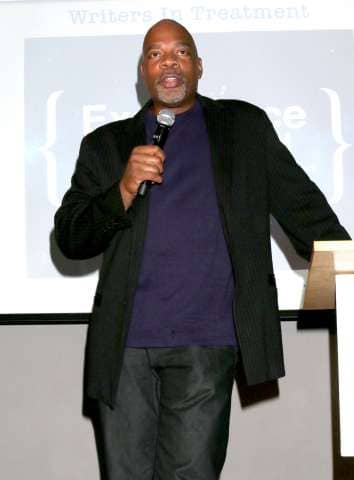
    Once again, Leonard Buschel and Ahbra Kaye of Writers in Treatment came together to create an entertaining Gratitude Dinner of laughter and love. As the founder of the Reel Recovery Film Festival and Chasing the News, Leonard Buschel made a smart choice when he appointed Ahbra Kaye as Director of Operations and Outreach for the ESH Awards. Even amid fears of the Omicron variant and the rise of public gatherings, the entire evening went swimmingly well. Overall, both the Networking Reception and the Gratitude Dinner flowed with a positive attitude as attendees from the recovery community came together to celebrate these two luminaries.

    While speaking with Leigh Steinberg before the meeting, I was struck by his dedication to the path of recovery. When asked what the reward meant to him, Steinberg said, “For anyone out there still struggling with addiction, I hope that reading my book shows them that help is available. It is possible in one’s darkest hours to be resilient. We all truly have a chance to live a happier life.”

    Reflecting on his life, Steinberg explained the similarities between excellence in sports and goodness in life: “The key to sports and life is performance in adversity and our response to adversity. Adversity is a part of being alive. Indeed, life will knock us back at times. Life will have reverses. I have learned that having optimism and having faith in the light at the end of a dark tunnel is essential. I had an epiphany about how lucky I was in life…Thus, I had to come through and realize the best in recovery. I had to live up to my core values of loving my family and friends while doing my best to help others in need.”

    The 2021 Honoree was just as inspired. As she explained from the podium, “For fifteen years of my life, all I cared about was partying, drinking, cocaine, and pills. It’s a very boring life to keep doing that over and over again. The essence of recovery is a shift into the experience of freedom from that cycle.”

    Experience, Strength and Hope Awards Honor Leigh Steinberg and Courtney FrielCommenting on why she wrote the book, Friel smiled and said, “I wasn’t writing the book to be famous, make money, or be a bestseller. I wrote it to help people. The reward is when I get people who unexpectedly get in touch with me. More people than I ever imagined have told me how my message was instrumental in saving their lives. Not that I saved their lives, but they told me I helped open their eyes to the choice of being sober. Such a loving response is a gift that goes well beyond what I ever expected. It is what giving back is all about.”

    The ESH Awards also showcased a diverse and talented roster of performers, starting with singer and spoken word performer Blu Nyle, who performed two poems at the podium that reflected the creative legacy of her ancestors. After Leigh and Friel received their awards, eight-time Grammy Award winner Philip Lawrence sang a fun tribute song that paid amusing homage to the two honorees. Written just for this occasion, it showed how inspiration and recovery, music and sobriety mix so well.

    Finally, the night came to a resounding end with an inspired comedy set by Alonzo Bodden. Taking down everyone from anti-vaxxers to political extremists, Bodden set fire to the stage with his combustible words. In truth, I have not heard a room laughing so hard and having so much fun together for a very long time. It was a perfect way to end a wonderful night.

    Photographs by Kathy Hutchins

    View the original article at thefix.com