Author: The Fix

  • Wendy Williams Dissolves Recovery Foundation

    Wendy Williams Dissolves Recovery Foundation

    Despite shuttering her foundation, Williams says she “remains committed” to helping others.

    Wendy Williams has dissolved the foundation she founded to support young people struggling to overcome substance use disorder, she said on her talk show.

    She had founded The Hunter Foundation—to support education, prevention and rehabilitation programs for substance use disorder—in 2014 with her now-estranged husband Kevin Hunter. But amid a dramatic split from Hunter, Williams says she will instead work with “other foundations” and “remains committed to helping others in the struggles of life.”

    Wendy filed for divorce in April and removed Hunter—who was not only her long-time husband but her business partner—as executive producer of her popular talk show, The Wendy Williams Show.

    Wendy had just revealed in March that she had been residing in a sober living home.

    “For some time now, and even today and beyond, I have been living in a sober house,” she said on her talk show. “And you know, I’ve had a struggle with cocaine in my past and I never went to a place to get treatment. I don’t know how, except God was sitting on my shoulder and I just stopped.” 

    She shared with her audience her day-to-day routine living at the sober house. “Doors locked by 10pm. Lights out by 10pm. So I go to my room and I stare at the ceiling and I fall asleep to wake up and come back here to see you,” she said. “So that is my truth. I know, either you are calling me crazy or the bravest woman you know. I don’t care.”

    Soon after filing for divorce, however, Williams made another big move. “I’m moving out of the sober house in just a few days,” she said on April 15. “It’ll be Wendy on her own.”

    She added, “Addressing my sobriety, my addiction, head-on has really helped me sort out every single compartment of my life. I have a commitment to me and my son to come out of here better, stronger and faster than ever.”

    Despite her messy and public divorce, and transitioning out of sober living, Wendy seems to be taking it all in stride. She recently said that she is “working on my divorce pleasantly” and is apparently enjoying the single life.

    “I don’t have a boyfriend, but I must admit I am rediscovering my love of men,” she said. “I do date and I date pretty often.”

    View the original article at thefix.com

  • 5 Messes I’ve Had to Clean Up in Recovery

    5 Messes I’ve Had to Clean Up in Recovery

    When I’m on top of my 10th step game, it goes something like this: Sorry, my bad. How can I fix it? The apologies come easily, and I promptly follow up with offers to make up for all harms done. But I’m not always on top of my game.

    What Does Recovery Feel Like to Me Right Now?

    Good question.

    It feels like making less mess, less often and…
    It feels like cleaning up the messes I still manage to make.

    When I’m really on top of my 10th step game, it goes something like this: Sorry, my bad. How can I fix it? The apologies come easily throughout my day, and I promptly follow up with offers to make up for all harms done. Then at night, under the covers, I make sure to scribble in my journal for those few minutes before Mr. Sandman knocks me out cold. Surprisingly, I learn a lot about myself in those last illegible minutes of consciousness. I see the patterns within the actions, where someone (sometimes me) gets hurt.

    But I’m not always on top of my game.

    Here are five messes for the first five months of 2019 and how I’ve managed to mop them all up.

    1. My Kid’s Library Fines

    In January I tore open another notice from the collection agency looking for me to make good on my son’s library fines. It was at least the sixth notice, and it had been years since I’d declared the book lost. ‘Til that point, though, I’d refused to send payment, both for the late fees accrued while I waited for it to turn up under the bed or at school, and for its replacement charge (because it never did).

    I was waiting for amnesty. I’d heard the library does this from time to time, waive all late fees. I didn’t feel I should have to pay $41.10 on a fantasy book about cats. My kid’s read all of them: the series on cats, dogs, wolves, and bears—for free, but I couldn’t cough up $41.10 for accrued fines? That’s insanity!

    Finally I saw it. I could screw up my kid’s credit before he gets the chance to do it himself. Everyone should have the right to ruin their own credit. No one should be robbed of that privilege by say, a spendthrift spouse, or a stingy, stubborn parent.

    So last week I finally fed three twenties, one single and one dime into the fine box at the local library. It felt great: a clear account and a clear conscience. The cost of coughing up proved well worth the relief it bought. Lesson learned: going forward, I’ll suck it up, pay promptly, and stop getting those “important notices” in my mailbox which have a way of souring my serenity.

    2. My Speeding Ticket

    Contrary to what the bumper sticker reads, I want to believe my choices behind the wheel don’t really matter.

    Not long after the library’s collection agency stopped courting me, I tore open another “important notice,” this time a $50 citation for speeding in a school zone.

    My first response was to defend myself: Oh brother, I wasn’t speeding! According to the fine print, I was going “41 mph in a 30 mph zone.” My second response was to rationalize: Come on, I was only going 11 miles over the legal limit. And my third response, finally, was acceptance. Yes, I was unlawfully speeding.

    I don’t write out many checks anymore, which might be why I get all pouty when I have to actually do it. It’s so damn involved: the writing, folding, sealing and licking (do I have a stamp?) and then the envelope knocks around my backpack for a week before I remember to mail it. But the mailing of that check made payable to the NYC Department of Finance felt good — the act of popping it into the blue box on the corner, both a physical acknowledgement of my error and a conscious effort to rectify it. It was another Step 10 moment, making amends to my fellow drivers and pedestrians of central Brooklyn. And hey, I found myself feeling a fourth response rising, gratitude: Hey, it was a school zone after all. I could have hit a kid crossing Ocean Parkway on the way home.

    3. My Unhappy Downstairs Neighbor

    Who does jumping jacks at 10:30 at night? I do, and it’s a problem because I have a neighbor below me who doesn’t sleep well. Sometimes my teen doesn’t get around to practicing piano until 10:30 pm either, and if it’s Haydn, I’ll break out into pretty awful pirouettes on the living room rug. Born about when Stalin first came to power, my neighbor always smiles kindly at my kids on the elevator. This babushka’s done nothing to deserve my thoughtlessness. It’s taken her banging the broom handle against her ceiling — more than once — to make me realize her reality and stop. This last time she knocked on my door in her housecoat.

    It shouldn’t have come to that. I apologized, again, but this time it felt different. I felt her frustration with me, and her chronic fatigue, bordering on despair. I prayed for the willingness to find a solution, and got one. My teen now practices by 9:30 pm, or not at all (mostly not at all). And instead of performing leaps and bounds to my reflection in the living room mirror, I’m using a folding chair from a funeral parlor as a ballet barre to do late-night low-impact leg lifts and silent swan arms. And I’m saving all jumping jacks for the laundry room.

    4. My Coffee Table Catastrophe

    Clumsiness isn’t a defect per se, but the carelessness that leads to avoidable accidents is. If you’re a good housekeeper, and sober, you don’t usually break shit. But when you’re willful, preoccupied, or impatient —whether drunk or dry — the odds are less in your favor. I was feeling all three when, to earn a few extra bucks, I was cleaning my neighbor’s home recently.

    It was an Ethan Allen bicentennial-era colonial table from the ‘70s, with a smoky glass insert. I could have just wiped down the glass. Or I could have taken a few moments to study the situation, then gingerly lift the glass to clean the crumbs along the maple-esque ledge upon which it rested. I did neither. In my haste to move onto activities more worthy of my talents coupled with my resolve to get at that damned dirt at all costs, I reached down underneath the glass and pushed it up with force. In slo-mo horror, I watched the six-foot tinted glass oval slip from my fingers, tilt up, then fall smack through the frame and shatter against the parquet floor.

    Oh f*&$%!

    Thankfully, after a little conscious breathing and a lot more profanity, I had the presence of mind to pray. I credit the serenity prayer for helping me come up with a sober 10th step strategy: apologize, clean it up, save a shard, identify a glass factory in the tri-state area that makes custom inserts for vintage coffee tables, place the order, pick it up and deliver the replacement glass to its rightful spot, nestled in that oval frame set between two plaid sofas in Mr. Donald’s living room. Good as new!

    The problem was, I didn’t want to do any of this. I wanted to cry and run home instead. I wanted to bail on this good neighbor, who’d been a true friend to me, my sons, even my ex, all these years, pre- and post-divorce. This neighbor who brought me fresh mint from the farmer’s market and cannolis from Bay Ridge, who got my latchkey kids off the doorstep and into their home when they’d forgotten their keys. I wanted to leave this true friend with a true mess. Fortunately, though, I didn’t. I sucked it up and swept it up, and followed through on all the rest. Today I’m even more grateful for the friendship of my forgiving neighbor. And I’m not ever allowed to touch his new coffee table.

    5. My $700 Face Cream

    And here’s a real dollop of sloppy spending. One recent morning I was trudging that road to happy destiny and stumbled. I fell, hard. Nose to pavement, that mindful breath knocked clean out of me, knees bleeding through the exposed portions of my distressed denim, I saw the cause: it was those stubborn roots of that ancient tree — my character defects. They’d buckled the pavement and tripped me up again.

    I’d just performed the single most obscene act of overspending in my not-short lifetime: I dropped down the Visa for a $765 face cream. My sober spending habits — and my sanity — snagged by those sinewy tendrils: vanity and fear. In that shockingly short-sighted moment when I confirmed the purchase, I sought false comfort in cosmetics instead of in the care of my creator.

    Pre-sobriety, I tried to self-soothe with a bubbly Bellini or a pitcher of sangria. Towards the end, it was bargain barrel red and Four Roses blended whiskey. Typical addict’s descent: desperately seeking substance for relief from self. So it was humbling now, five years into recovery, to admit to this irresponsible oopsie with the ol’ plastic. And no surprise, the high from spending on skincare lasted only as long as it took that confirmation email to hit my inbox. Almost instantaneously, I added panic and guilt to my shopping cart.

    That nagging itch of fear around aging, illness, and dying with a Siamese instead of a soulmate was now the sharp pain of fear and remorse that I might not make next month’s rent, and my kids’ summer holiday could be spent at the rundown neighborhood triplex — rumored to have bedbugs — instead of lobbing lemony tennis balls all day long at camp.

    I was stunned and embarrassed by my reckless misuse of purchasing power — certainly too embarrassed to admit to my sponsor that, in my quest for an eternally youthful jawline, I was galloping straight into the jaws of debt instead.

    Luckily I had just enough recovery to rein it in, and turn towards Step 2. I asked HP for guidance and got it:

    The solution was obvious:

    Return it.

    And still more lucky, dermstore.com, with more than 10K visitors monthly, takes all returns, no questions asked. What’s even better is that when those unsaleable items in my character — fear and vanity — trip me up, I can pick myself up today, blot my bloody shins, and choose a different path. In my drinking days, I was down for the count on all my defects….

    So, thanks, Second Step, you stopped the runaway horse of spree spending, and you too, Step 10, because I was able to reverse the financial harm done to self. My face, while not slathered in luxe cream tonight, feels radiant and clean, because I can face the Visa bill in the morning.

    My Sober Strategy for the Second Half of 2019: Steps 6 and 7

    But the habit of relying on Steps 2 and 10 to bail me out of scrapes is wearing on me. It feels un-sober. I’m starting to think that lasting emotional sobriety depends on my willingness to keep plugging away at 6 and 7, to really yank at those defective roots of self-centered fear and vanity.

    Soon after that life-affirming afternoon five and a half years ago, reading my 5th step aloud in a garden gazebo as mosquitoes ate me alive, my sponsor suggested I follow up by reading Drop the Rock: Steps 6 and 7: Removing Character Defects. Four years after that, I finally Primed the paperback to my doorstep and began reading. One story is resonating right now. A gal beset by sloth, who struggled with clutter for years, finally struck on a solution that pretty much sums up my strategy today:

    “I now know that if I don’t want to live in a mess,” she realized, “I need to pray to God for the willingness, courage and motivation to clean up my own mess.”

    Isn’t that what I tell my own teen 20 times a day anyway?

    I may never completely stop this habit of compulsively punching 16 digits into devices for ill-conceived purchases (did I mention I want to lease an Audi Q5?) but this week my impulse purchase was three Wham-O Frisbees. Progress.

    Half-measures avail me nothing. I gotta push myself to make those 10th step amends, to others and to myself, as promptly as possible, but better late than never! And I can use the steps (and the slogans, and my sponsor, and my sober sisters) to help me break each amends down into baby steps, steps that will take me further from, rather than closer to, that first drink. This feels like recovery, and a better set up for long-term sobriety and my happy life.

    Final Takeaway: Do the right thing, even when I don’t want to, even when it doesn’t seem like a big deal. Or, even when it is actually sort of a big deal; in fact, it feels so big, it’s kinda overwhelming:

    Still do the right thing.

    View the original article at thefix.com

  • Study: Bullied Kids Are Twice As Likely To Use Painkillers

    Study: Bullied Kids Are Twice As Likely To Use Painkillers

    Girls who had been bullied were also more likely than boys to have recently taken painkillers.

    A recent study of Icelandic school children found that those who reported being bullied were twice as likely to use pain medication as non-bullied children.

    The study, conducted in 2018 and published in Acta Paediatrica, surveyed over 10,000 kids aged 11 to 15. Close to 600 reported being victims of peer bullying two times per month or more, and it was found that these kids reported significantly higher rates of pain and use of medication for pain.

    The medications involved in the study were common over-the-counter painkillers such as ibuprofen, aspirin and acetaminophen.

    The children surveyed reported experiencing headaches, stomach pain, back pain, and neck/shoulder pain, and one in four of all surveyed kids who had some kind of pain at least once per week had taken an analgesic in the past week.

    Over twice as many bullied kids had taken a painkiller in the past week as non-bullied kids, at 33.5% and 15.2%, respectively. Girls were also more likely than boys to have recently taken painkillers, but controlling for all factors, bullied kids were more likely to turn to pills.

    “The use of analgesics was significantly higher among bullied students even when controlling for pain, age, gender and socioeconomic status,” lead study author Pernilla Garmy told Reuters. “Bullied students tended to experience more pain than the non-bullied students, and bullied students were twice as likely to use pain medication even when controlling for experienced pain.”

    Studies have already found a link between bullying and chronic pain. One 2015 study found that psychosocial stress, such as that arising from bullying, abuse, and family conflict, was a risk factor for this kind of pain in adolescents, and similar results have been found in studies about workplace bullying and harassment.

    This latest study adds to this evidence while also suggesting that using painkillers is more likely with those experiencing psychosocial stress, and not necessarily just because the pain exists.

    “My hypothesis of the link between bullying and painkiller use could be that if you are feeling satisfied and safe, and then get a headache, you might cope with the pain without medication,” said Garmy. “But if you are feeling sad and unsecure—a common experience by bullied children and adolescents—the pain might be overwhelming and there is a need for use of analgesics.”

    The study concludes by recommending greater recognition of the “high prevalence of pain and the use of pain medication in children” among health professionals as well as coordinated efforts for intervention and prevention.

    Although most over-the-counter analgesics are safe for adolescent children in small doses, there are concerns about overuse and “negative side effects that can worsen when combined with other coping behaviors such as alcohol.

    View the original article at thefix.com

  • Where Joe Biden Stands On Marijuana

    Where Joe Biden Stands On Marijuana

    Biden is one of the few Democratic presidential candidates that opposes legalization. 

    High Times detailed 2020 presidential candidate and former Vice President Joe Biden’s position on marijuana policy, which embraces decriminalization and federally supporting cannabis research—but stops short at legalization.

    Biden, who as a U.S. senator helped to pass punitive drug crime bills that he has since described as “a big mistake,” supports rescheduling marijuana as a Schedule II drug, allowing states to determine their own laws regarding legalization, and expunging prior marijuana possession convictions. 

    But Biden has opposed legalization in the past and continues to do so as a presidential candidate, which places him opposite fellow Democratic contenders like Bernie Sanders, Elizabeth Warren and Kamala Harris on that issue.

    A campaign spokesman for Biden, who told supporters in New Hampshire on March 16 that “no one should be in jail for smoking marijuana,” clarified the candidate’s position in a statement to CNN. “Vice President Biden… supports decriminalizing marijuana and automatically expunging prior records for marijuana possession, so those affected don’t have to figure out how to petition for it or pay for a lawyer,” said Andrew Bates.

    Bates also noted that Biden “would allow states to continue to make their own choices regarding legalization and would seek to make it easier to conduct research on marijuana’s positive and negative health impacts by rescheduling it as a schedule 2 drug.”

    As CNN noted, Biden supported decriminalization efforts as vice president under the Obama administration. In a 2014 interview with Time, Biden said, “I think the idea of focusing significant resources on interdicting or convicting people for smoking marijuana is a waste of our resources.” But he added that legalization was outside of the administration’s policy stance. 

    At the time of that interview, Biden had earned a reputation as a hardliner on the War on Drugs, supporting tougher penalties and prison sentences for drug offenses, including the Anti-Drug Abuse Act of 1988, which imposed more severe sentencing for possession of crack cocaine than its powder form.

    The bill, which led to disproportionate rates of incarceration in African-American and Latino communities, was later described by Biden as a “big mistake” which “should have been eliminated.”

    Biden’s support for decriminalization and other measures is shared by two other presidential hopefuls: former Colorado governor John Hickenlooper and Senator Sherrod Brown.

    The majority of the other 2020 Democratic candidates, including Senators Cory Booker, Kirsten Gillibrand, Amy Klobuchar, Mayor Pete Buttigieg and former Housing and Urban Development Secretary Julián Castro, all support marijuana legalization.

    View the original article at thefix.com
  • John Lehr, The Original Geico Caveman, Is 23 Years Sober

    John Lehr, The Original Geico Caveman, Is 23 Years Sober

    “I was looking at serious time in jail. My lawyer told me to get in a program, and I have been sober ever since.”

    While it’s been 15 years since the first GEICO caveman commercial aired in 2004—offending cavemen with the slogan “so easy a caveman could do it”—comedian John Lehr, who played the original GEICO caveman, is still performing, writing and producing comedy. And he’s using his personal recovery to inspire and entertain as well.

    While Lehr, 52, has stayed busy working on a multitude of projects including the comedy western Quickdraw on Hulu and 10 Items or Less on TBS, his comedy has a personal side, too. For his performances, Lehr gets his material from real life. Sobriety is a recurring theme.

    As a young comedian from Chicago, Lehr arrived in Los Angeles to pursue bigger dreams. He admitted to Forbes that he was “really unhappy” early on and was later diagnosed with depression.

    His moment of clarity came from behind the wheel, and then a jail cell, on LSD. “I was driving on acid and I got pulled over in Ventura County. I spent the night in jail on acid. I was looking at serious time in jail. My lawyer told me to get in a program, and I have been sober ever since.”

    That was 23 years ago. Now on the other side, he’s in a position to use his personal history to entertain and inspire audiences. Lehr created his brand Cold Sober Comedy to do just that. He performs and MCs at events under Cold Sober Comedy, including the Annual Sober St. Paddy’s Day Comedy Night for the Atlanta Caron Treatment Center in March.

    “Quitting drugs and alcohol—as hard as it is—is the easy part,” he said to Forbes. “What’s really hard is living without the drugs and the alcohol. I didn’t know how to be sober. What people don’t realize about addicts and alcoholics, it makes it easier to live with them. Take it away and then the real dragon comes out.”

    He also made a live show about making it in Hollywood and getting sober. “It’s a live show about all of it. I call it Three Harsh Tokes,” he said. “Number one: I’m not God. I may not know who or what God is, but I know it’s not me. Number two: I’m never going to fully recover, but as long as I’m seeking God or a higher power in others’ views, I’m okay. I don’t have to find it. I just have to seek it. And number three: I can’t fix myself.”

    Lehr’s upcoming projects include a marijuana comedy featuring Tommy Chong (of the iconic stoner duo Cheech & Chong) and a July 1st appearance at the Association of Recovery in Higher Education (ARHE) 10th National Collegiate Recovery Conference at Boston University.

    “I will be speaking to the people who run the program at colleges all over the country,” Lehr said. “What I talk about is how to stay sober. [Addicts] just don’t know how to live life on life’s terms. I tell them, ‘If you’re not having fun, you’re not going to stay sober. If you can’t find the sweetness and light to life, you’re screwed.’”

    View the original article at thefix.com

  • Artie Lange Arrested For Violating Drug Court Terms

    Artie Lange Arrested For Violating Drug Court Terms

    A sheriff’s office spokesman said that Lange “appeared to be sober” when he was arrested.

    Artie Lange, comedian and former co-host of The Howard Stern Show, has been arrested for violating the terms of his probation laid out by a New Jersey drug court. 

    According to the New Jersey Patch, Lange was arrested at about 7:30 on Tuesday morning (May 21) at Freedom House, and is being held in Essex County jail.

    A spokesperson for the Essex County Sheriff’s Office said that Lange appeared sober and “coherent” when he was arrested. It’s not clear how he violated the terms of his release. 

    Kevin Lynch, a spokesman for the Essex County Sheriff’s Office, denied reports that Lange had been found with heroin last week, though he would not expand on this.

    Officials reportedly told Radar Online, “Lange is non-compliant. Consequently, he will be taken into custody by officers from the Essex County Sheriff’s Office. He will be returned to the Essex County Correctional Facility in Newark.”

    They added, “All the stories gave the impression he was doing great, but that is not the case.”

    The day before his arrest, Lange posted a picture of himself at a gas station where he is working, with Howard Stern’s new book, Howard Stern Comes Again

    “Pumping gas and reading Howard Sterns new book, which is great by the way,” Lange posted on his Twitter account using a third party. “I read in 2004 Trump interview with me there. I’m reading about the POTUS when a guy yells at me ‘yo fill it with regular’ lol, my crazy life!”

    Lange is on four years’ probation stemming from heroin charges. He violated the probation twice already and was jailed earlier this year. His work release required him to get a local job, which is why he was pumping gas at a New Jersey Exxon. 

    “I gotta pump gas for 10 more days and then I’m satisfying the program I think. If this gets back to Howard, tell him I love him. I love him to death and I miss him,” Lange said in a video posted last week. “I gotta pump gas! I’ll be back onstage soon, though. I promise.”

    In a YouTube video posted by a fan Lange said that his eight years on The Howard Stern Show (until 2009) were a great experience. Although the two have lost touch, Lange said Stern supported him as much as anyone could. 

    “There’s a million times Howard said to me, ‘Go to rehab, take as long as you want, and when you come back, you got a job.’ What else can you expect, and I shit all over that because I was a drug addict. Howard did me right. I love him.”

    View the original article at thefix.com

  • Patrick Kennedy Says Dad’s Reaction To His Addiction Left Him In "Fog Of Shame"

    Patrick Kennedy Says Dad’s Reaction To His Addiction Left Him In "Fog Of Shame"

    Kennedy got candid about the ups and downs of his journey to sobriety in a recent commencement speech.

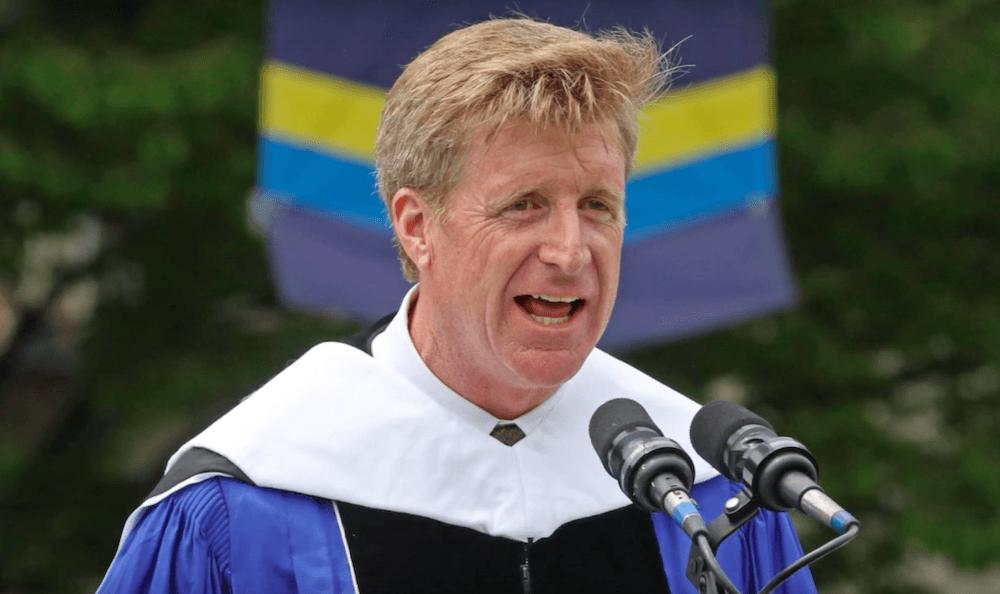
    Former U.S. Representative Patrick Kennedy had to learn about the stigma surrounding substance use disorder the hard way.

    His father and former U.S. Senator, the late Ted Kennedy, was compassionate “when it came to my asthma or my brother’s bone cancer,” Kennedy said at the University of Rhode Island commencement last Sunday (May 19). But “when it came to my addictions,” his father said, “Patrick just needs a swift kick in the ass.”

    Kennedy gave his commencement speech to a crowd of 15,000 on Sunday. The congressman-turned-mental health advocate said that drug overdose and suicide in the U.S. is “a public health crisis.”

    As a U.S. representative, Kennedy was the lead sponsor of the Mental Health Parity and Addiction Equity Act of 2008, which required insurance to cover treatment for “illnesses of the brain, like depression and addiction, the same as diseases of the body, like cancer and heart disease,” as he explained to The Fix in a 2016 interview.

    “Mental health conditions are chronic diseases, for the most part,” said Kennedy in the same interview. “You wouldn’t feel shame in seeking treatment for diabetes or cancer. So you shouldn’t feel ashamed for seeking treatment for depression, anxiety or anything else.”

    Kennedy added, “And just like those other diseases, people living with a mental health condition or substance use disorder can manage their disease and live full, happy, meaningful lives—I’m living proof of that.”

    After leaving Congress, Kennedy furthered his mental health advocacy by founding The Kennedy Forum in 2013, an organization with the goal of revolutionizing mental health care in the U.S., and One Mind, an organization to improve and accelerate brain research.

    When he was younger, Kennedy was haunted by his father’s perception of addiction. “I spent many years lost in a fog of shame,” he said at URI. “Addiction was unimpressed that I came from a famous family.”

    On May 6, 2006, Kennedy woke up at three o’clock in the morning “thinking I was late for a vote.” That’s when he famously crashed his car into a barricade on Capitol Hill. He admitted that he had been “disoriented” from medication he was taking.

    “That’s when I found my highest calling,” he said. We’d later find out that Kennedy was abusing OxyContin, which he was prescribed for back pain.

    Since he revealed his truth, he said other senators and representatives, both Democrat and Republican, would confide in him about their own struggles.

    Kennedy found help through medication-assisted treatment. And through his work, and through speaking up about his own journey, he’s hoping to encourage more people to speak up as well.

    “The more people learn that someone at their church is in recovery for opioid addiction or another mom at day care takes medication to control her OCD, the more we will realize that ‘everyone has something.’ We have to break down the ‘othering’ that has gone on too long with brain diseases,” he told The Fix.

    View the original article at thefix.com

  • Can Hypnosis Help Chronic Pain Patients Find Relief?

    Can Hypnosis Help Chronic Pain Patients Find Relief?

    A new review examined whether hypnotic intervention could provide “meaningful” pain relief.

    Undergoing hypnosis could significantly reduce pain that people experience, but it’s too early to tell whether this could be used to treat chronic or acute pain, experts say. 

    A review recently published in the journal Neuroscience and Biobehavioral Reviews found that study participants who were exposed to painful stimuli like heat or cold were able to reduce the amount of pain they experienced by 29-42% by using methods of hypnosis. 

    “These findings suggest that hypnotic intervention can deliver meaningful pain relief for most people and therefore may be an effective and safe alternative to pharmaceutical intervention,” study authors wrote. Yet, they warned, “High quality clinical data is, however, needed to establish generalisability in chronic pain populations.”

    Lead study author Trevor Thompson, a psychologist based at the University of Greenwich, England, noted that “experimental pain”—that created by heat, cold or other stimuli in a lab—is not a direct comparison to real-life pain from injury or chronic pain, or “clinical pain.” 

    “It is important, of course, to acknowledge that clinical pain isn’t quite the same thing as experimentally induced pain,” he told Medical Express. That’s because injuries and ongoing pain “involve more negative emotional states, less sense of control over pain, and adverse effects on quality of life,” he said. 

    Still, the fact that hypnosis provided such significant relief to people who were being hurt was significant. 

    “If hypnosis is effective at reducing experimental pain, there’s reason to be optimistic it would have the same effect on clinical pain,” he said.

    Mark Jensen, professor at the University of Washington in Seattle and editor of the Journal of Pain, said that previous research has indicated that hypnosis techniques can reduce the amount of pain that patients experience. How effective it is depends on the root cause of the pain, he said. He added that it’s important that people be informed consumers, and use hypnosis as one of many strategies for managing their pain. 

    “Anyone can hang out a shingle and call themselves a ‘hypnotist,’” he said.

    Jensen said that hypnosis uses a combination of relaxation and imagery to tap into the body’s natural pain-relief systems. Other research has indicated that hypnotherapy techniques change the body’s perception of pain. It’s often much more subtle than many people think, he added, and it’s certainly not a way to immediately remove all pain. 

    “It’s not all-powerful magic that will eliminate pain,” he said. “It’s not the hocus-pocus you see on TV.”

    View the original article at thefix.com
  • How One County Reduced Opioid Deaths By 50%

    How One County Reduced Opioid Deaths By 50%

    The statewide effort to provide more access to medication-assisted treatment and harm reduction programs has saved lives. 

    One county in rural Vermont reduced opioid overdose deaths by 50% last year, using a combination of strategies meant to stop opioid abuse and reduce harm to people who choose to continue using. 

    In Chittenden County, which includes the state capital of Burlington, opioid overdose deaths dropped from 35 in 2017 to just 17 last year. Bob Bick, CEO of the region’s largest treatment provider, said that a number of interventions paid off significantly. 

    “You’ve had this coming together of a whole bunch of strategies that were directly targeting active users and high-risk users,” Bick told VT Digger

    One of the most effective means of intervention was offering people the chance to start medication-assisted treatment (MAT) as soon as they expressed interest.

    Rather than having to wait to get into a MAT program, people in Chittenden County could receive MAT at any time through two area emergency rooms, at University of Vermont Medical Center and Central Vermont Medical Center. The program has since been expanded to all emergency rooms in the area. 

    Dr. Stephen Leffler, MD, chief population health and quality officer for the health network that includes the two hospitals, said that the program makes a big difference for people who have a moment of wanting help. 

    “They are already showing positive results,” he said. “This is a statewide, team effort.”

    In addition to connecting people with treatment quickly, the county also focused on reducing deaths among people who chose to continue using drugs. They did this by distributing fentanyl test kits to active users.

    “We know that relapse is part of the recovery process,” Bick said. “So we wanted to make these widely available.”

    He noted that people reported not using drugs that tested positive for fentanyl. A program called Safe Recovery in the state also provides naloxone and clean needles to people to request them. While this is harm reduction in and of itself, people who came in for needles were also offered the chance to begin MAT immediately. 

    “We are seeing the people who need us the most, and we need to be able to see them when they ask for help,” Program Director Grace Keller said at a panel recently. 

    Vermont has been praised for its hub-and-spoke model to curb opioid addiction, which has since been replicated in other states around the nation.

    Under the model, primary care providers serve as the “spoke” who provide ongoing treatment and channel people toward “hubs,” like Safe Recovery, that provide medication-assisted treatment. 

    “The parallel universe would be cardiology or infectious disease, where if you get sick and your primary care doc can’t take care of you, you’d get referred to a cardiologist,” John Brooklyn, a family doctor and addiction specialist in Vermont who helped design the system, said in 2017. “The nexus of this was really to try to integrate substance use treatment in primary care.”

    View the original article at thefix.com

  • Former Pharmacist In Recovery Teaching Ohio’s Future Pharmacists

    Former Pharmacist In Recovery Teaching Ohio’s Future Pharmacists

    The pharmacist’s 15 years of recovery are a key component in his chemical dependency course. 

    A former pharmacist in recovery found his calling through teaching the future pharmacists of Ohio about substance use disorder.

    Chris Hart developed his chemical dependency course in 2005 after losing his license to work as a pharmacist. Using Hart’s experience as a pharmacist who abused painkillers, lost everything, and re-built his life in recovery, the class explores the impact of chemical dependency on healthcare professionals—as well as “concepts of addiction, individuals at risk, intervention, withdrawal, emotions, recovery networks, regulatory actions and returning to practice,” according to the course description provided by the Ohio State University College of Pharmacy.

    Hart’s 15 years of recovery is a key component of his course. He begins every class with “Hi, my name is Chris Hart, and I am a long-time recovering addict.” And students must attend a 12-step meeting.

    Hart had been a pharmacist for 10 years before he became dependent on painkillers. Six years later, he was reported to the Ohio Board of Pharmacy and lost his license. He attended a treatment facility, where he was taught a different perspective of addiction.

    “The biggest thing I learned from treatment is that I had a disease,” he told The Lantern. “When I got caught the first time, I thought I was that stupid, weak-willed, immoral, terrible person who did such a bad thing. And then I realized this disease is a lot more complicated than what we think and by having a disease and treating my disease by going to meetings and talking to my sponsor, things they told me to do, I could get better.”

    Hart eventually re-obtained his license after a period of probation and went back to work. However, six years in, he relapsed. This time, he lost his license permanently. Hart spent some time in jail and attempted suicide.

    It was after this point that Hart decided he would try teaching. In 2005, working with a former professor at his alma mater Ohio Northern University, Hart developed his chemical dependency course.

    “He just set to work immediately to develop a course because he knew he had to get the word out and warn everyone,” his wife Susie Hart said. “I was so proud of him.”

    Hart teaches the course at six of Ohio’s seven pharmacy schools, including the College of Pharmacy at Ohio State University.

    “He is happier than ever. He is stronger than ever. He loves teaching,” said Mrs. Hart.

    “It’s a disease,” said Chris Hart. “[What] it is not is a moral condition. Someone who is addicted to drugs is very sick. They’re a sick person who needs to get well. They are not a bad person that needs to get good.”

    View the original article at thefix.com