Author: The Fix

  • Japan Wants To Use Facial Recognition To Fight Gambling Addiction

    Japan Wants To Use Facial Recognition To Fight Gambling Addiction

    If approved, the project could launch as soon as 2021.

    Gambling venues in Japan have been asked by government officials to implement facial recognition systems in order to restrict access to their facilities by those suffering from gambling dependency.

    The move will attempt to address concerns over a possible increase in gambling addiction with the launch of a long-gestating casino resort project, which was approved in 2018.

    The proposal offers a multi-pronged strategy, including increased treatment and support for those who suffer from gambling dependency, and assistance from the gambling industry itself and the National Police Agency to enforce stricter regulation of illegal gambling. The government is currently seeking public opinion on their plan, and if approved, will launch in 2021, which will coincide with the construction of casino resorts.

    As the Nikkei Asian Review reported, concerns over gambling addiction held up legislation approving the establishment of casino resorts for nearly two decades. A 2017 survey by the country’s Ministry of Health Labor and Welfare suggested that gambling addiction impacted 3.6% of Japan’s adult population – an estimated 3.2 million people – which is considerably higher that rates in countries like France, where it stands at 1.2%, and the United States, where statistics suggest that approximately 1% of adults meet the criteria for gambling dependency. 

    But with the July 20, 2018 passage of the legalization bill, the government has sought to ally fears through programs like the facial recognition systems. These would be installed in racetracks and pachinko parlors across the country, and would identify people with gambling addiction whose families have requested that they be restricted from entering such places. The request system will reportedly be introduced in pachinko parlors by March of 2020.

    In addition to the facial recognition and request systems, the government has proposed additional measures for 2020, including a limit on the number of tickets that identified gambling addicts may purchase online for horse and boat racing, as well as the installation of consultation offices on and treatment and support centers for gambling addiction in all major cities and prefectures.

    The government has also schedule a public survey on issues tangential to gambling addiction, including its relationship to poverty, abuse, suicide and debt.

    Prior to those efforts, the government’s Welfare Ministry has reached out to the gambling industry itself to develop guidelines for advertising that will not, as the Japan Times stated, “fuel people’s desire to gamble.” The Education Ministry will increase education in the nation’s schools about gambling dependency, while the National Police Agency will instruct its regional police departments to enforce tighter restrictions on illegal gambling.

    According to Gambling Insider, the government has submitted its proposal to the public, which will be able to weigh on the strategies until March 27, 2019. If it gains public approval for its plan, the government will finalize its policy by the end of April 2019 and begin implementing facial recognition systems in 2021.

    View the original article at thefix.com

  • Florida Versus Evidence: How I Lost My Children Because of Past Drug Use

    Florida Versus Evidence: How I Lost My Children Because of Past Drug Use

    When my first slew of drug tests returned negative, the opposition began slinging whatever they could think of in my direction, hoping something would stick.

    I am living in two worlds. One is a world populated by doctors and advocates, run on the tenets of research and science and reason. It is a world in which addiction is treated with medicine, and where there’s no question that people who use drugs deserve to be safe and free of avoidable infections and diseases. In this world, nobody hesitates to administer naloxone if the occasion calls for it. In this world, people are not afraid to touch the bodies of drug users, and we all understand that if you can self-administer naloxone, you don’t need naloxone. I experience this world through phone lines, e-mails, and social media. I write about this world; this world is my template for how all worlds should be.

    Addiction as Moral Failure

    Then there is the world where my life takes place. In this world, having an addiction is a moral failure. Drug use is met with punishment. Judges replace doctors and toxicologists, making medical decisions and determining the results of drug tests with reckless abandon. In this world, abstinence is the only route to health. In this world, a hit of pot is just as chaotic as compulsive, daily injections of heroin. In this world, there is no sterile equipment; in this world, everyone is sick. Here, you can be sentenced to death just for being the friend of someone who overdoses. This is the world I touch with my fingers and teeth—the world where I walk, and eat, and breathe. This is the world where I live.

    I became involved with the Florida Department of Children and Families in April 2018. I was never charged with a crime or afforded the presumption of innocence, evidentiary standards, or jury decision that would have accompanied a criminal charge. Instead, one judge—virtually accountable to no one and equipped with full immunity—deemed my husband and me guilty of some nebulous pre-crime like the woeful characters in Philip K. Dick’s short-story-turned-film “Minority Report.” Apparently, I am guilty of the possibility of neglecting or otherwise harming my children in the future because I have a diagnosed substance use disorder.

    Since that decision, I have been forced to obey the mandates set forth by my county’s child welfare authorities in an attempt to win back custody of my girls. So far, not a single mandate has been evidence-based.

    I love writing about harm reduction, evidence-based addiction care, and trauma-informed mental health practices. I enjoy staying informed about best practices in addiction medicine. I am proud that I get to help demystify and destigmatize addiction and mental illness, and I am honored to have the opportunity to speak with the researchers who have dedicated themselves to driving us out of the dark ages of addiction medicine. But now that I am living in those dark ages myself, I can’t shake a sense of bitterness: I write about a better world, but it’s one that I only get to view from afar.

    Substance Use Disorder Treatment and Geography

    In 2017, I wrote an article for OZY about the general disparities between addiction care in red states and blue states. I was living in Seattle, Washington, at the time but I’d had some experience trying to get help for addiction in Florida—so I knew how backward providers could be. For example, when I gave birth to my daughter in Palm Beach while on prescribed methadone, hospital staff refused to let me breastfeed her. She was treated for Neonatal Abstinence Syndrome (NAS) and pediatric staff claimed that enough methadone would be passed through my breast milk to potentially harm her. In reality, numerous studies have found the exact opposite to be true and breastfeeding is now recognized as one of the most effective balms for NAS, due to the maternal contact and general health benefits of breast milk. The amount of methadone passed through breast milk is too negligible to help or harm.

    As I wrote in the OZY article, Democratic-ruled states are more likely to offer Medicaid coverage for methadone and buprenorphine, while Republican states are less likely to even offer the medications themselves, much less cover them. People in red states also face harsher penalties for drug crimes and are less likely to be allowed to continue a methadone or buprenorphine prescription while incarcerated. (Though this is a nationwide issue, blue states are leading the reform.) But writing the story from Seattle meant writing from a place of comfort: I was living among the reformers—walking within the pages of history that will be attributed to the good guys. I was able to take my buprenorphine every day because my state insurance covered it. I was surrounded by intelligent, informed people with whom I could speak honestly about my decision to engage in non-abstinence-based recovery. When I wrote about the issues in the system, I wrote from a place of distance. Of privilege.

    I did not appreciate how lucky I was until I dove headlong into the true trenches of the Drug War. 

    In Recovery and Losing Custody

    In Broward County, Florida, my children were removed from me because of unsubstantiated accusations of drug use. When my first slew of drug tests returned negative, the opposition began slinging whatever they could think of in my direction, hoping something would stick. Most of it revolved around the fact that I was poor—but ignorance about mental illness and addiction reared its ugly face yet again. The opposition cited my prior child welfare investigation in Florida—the one that was triggered by my daughter’s NAS. It was a routine investigation that had been deemed unsubstantiated. These types of investigations are typically labeled “harmless.” I had been in compliance with my methadone program, and my daughter’s doctors had no concerns—but five years later, the opposition used that prior methadone prescription as a basis for deeming me an unreliable witness: the dirty, lying junkie. 

    When I was asked under oath whether I had spoken with one of my husband’s siblings about possibly purchasing marijuana, I admitted that I had. Clinicians in addiction treatment recognize that drug cravings are normal and applaud us when we admit that we think about buying drugs but then decide against it. But the guardian ad litem attorney—the counsel whose job it is to protect my daughters’ interests—argued that by considering using marijuana, I placed my sobriety and therefore my children at risk. It didn’t matter that I canceled the purchase and honestly acknowledged that I’d thought about it. The judge called my process of considering marijuana but then deciding against it “drug-seeking behavior.” She gave custody of my daughters to my husband’s parents.

    The terribly irony underscoring the entire proceeding is that if I were still living in a state that embraced the most current research on addiction, I would never even have been in a courtroom. The accusation against me stated that I left my daughters in the care of their grandparents for three days while I used drugs outside of the home. According to the U.S. Department of Health and Human Services, “drug tests do not provide sufficient information for substantiating allegations of child abuse or neglect or for making decisions about the disposition of a case.” Drug use on its own, away from any children, is not child abuse. A parent who leaves their child with a family member to go to a bar for an evening is generally considered to be engaging in responsible substance use.

    The federal government recognizes that child abuse cannot reasonably be defined as placing a child with a trusted caregiver, leaving the home for a couple days, and returning sober. It doesn’t much matter what went on during those two days. True or false—the accusation against me never described child abuse. A more enlightened jurisdiction would have recognized that. The separation trauma that my children and I have endured over the past nine months is completely attributable to our location.

    I used to write about addiction and drug policy from a place of privilege. Now I am writing from the deep trenches. I feel as though I am performing a kind of literary necromancy whenever I publish—except that instead of communing with the dead or demonic, I am writing from within that unillumined place, hoping that, by disseminating research, facts, and the words of distant experts, I can summon reason back into my life.

    View the original article at thefix.com

  • Video: Police Search Cancer Patient’s Room For Marijuana

    Video: Police Search Cancer Patient’s Room For Marijuana

    The patient’s partner said that the incident shows how important it is for marijuana laws to protect patients who use it to ease their suffering. 

    A Facebook Live video of police searching the room of a stage IV cancer patient for marijuana has gone viral and sparked a conversation about the rights of terminally ill patients to use cannabis. 

    Nolan Sousley posted the video, which now has more than 9,000 shares. 

    Police were called to the hospital after a security guard reported smelling marijuana from Sousley’s room. Sousley admitted that he took THC capsules in the parking lot, but insisted he had no marijuana in the room. 

    “I had some capsules that had some THC oil in them. I took them outside, in the parking lot. I want to know why it’s a big deal,” Sousley said in the video. 

    He pressed the officers, saying that medical marijuana is going to be legal soon in Missouri, which is rolling out a medical marijuana program that won’t take patients until June. 

    “But then it’s still illegal,” an officer said. 

    “I don’t have time to wait for that,” Sousley said. “What would you do?”

    He asks the officer if he would do anything to save his life.  “Marijuana saved your life?” the officer responds skeptically.&nbsp

    In the video, police searched bags in the room, but Sousley refused to let officers search one bag. 

    “It has my final day things in there, and nobody’s going to dig in it,” Sousley said. “It’s my stuff, it’s my final hour stuff is in that bag. It’s my right to have my final—I’m not digging it down here in front of everybody.” 

    However, after the video ended, one of the police officers went through that bag with Sousley’s permission and did not find any marijuana, according to the Springfield News Leader.

    Sousley’s partner, Amber Kidwell, said that the incident shows how important it is for marijuana laws to protect patients who are using marijuana products to ease their suffering. 

    “It’s huge for us, because it’s a medical thing,” she told WRAL. “It’s a medical cannabis to help him with his life. A better quality of life. Why do we not get that opportunity to give him a better quality of life?”

    Kidwell said that it’s hard enough fighting cancer, without law enforcement rifling through the hospital room. However, she also said that the incident lead to a lot of support. 

    “We’ve had an outpouring of people reaching out for support and love, and through this we’ve had a lot of people reach out… a lot of people have reached out who have cancer also, and hearing their stories has been really important for us. When you get an outreach and outpouring of people telling you their story also… for us, this is a terminally ill patient who should have the right to choose (their own treatment).”

    Sousley said he didn’t want to argue. 

    “Terminal lives matter,” he said. “Love thy neighbor. Do unto others as you’d have them do unto you. Give everybody a hug.”

    The police department did not comment, other than to say it had received threats after the video went viral. 

    View the original article at thefix.com

  • Fentanyl Disguised As Oxycodone Seized In Ohio

    Fentanyl Disguised As Oxycodone Seized In Ohio

    Ohio officials are warning those who buy pills on the street to exercise caution.

    Authorities in Ohio are warning drug users to be extra cautious, after law enforcement in the state seized fentanyl that had been pressed into pills meant to resemble oxycodone, which were to be sold on the street. 

    The Community Overdose Action Team, which focuses on reducing opioid-related deaths in Montgomery County, Ohio, said in a statement reported by the Dayton Daily News that drug users need to realize the dangers of fentanyl. 

    “The Community Overdose Action Team reminds you that any illegal drug you purchase and use could contain fentanyl,” the statement read. “Fentanyl is a highly potent drug which greatly increases your chance of an overdose. It is 100 times more potent than morphine and 50 times more potent than heroin.” 

    The Montgomery County Sheriff’s Office Range Task Force and Dayton police also warned people that fentanyl is becoming widespread in Ohio’s drug supply.

    Christine Ton, media director for the sheriff’s office, said that the blue pills even have the markings of oxycodone. Some people get the pills thinking they’re buying Oxycontin, while others seek out the fentanyl pills for a powerful, cheap high. 

    “It is more potent than heroin and cheaper to buy,” Ton said.

    She added that the department seizes all varieties of drugs, not just opioids. “We routinely see meth, fentanyl, marijuana and are also running across cocaine. Crack and heroin are also located frequently.”

    Benjamin Glassman, U.S. Attorney for the Southern District of Ohio, said that his office is aggressively going after fentanyl-related cases as the drug becomes more prevalent. 

    “We are prosecuting more and more fentanyl-related narcotics-trafficking cases, both in Dayton and district-wide,” he said. “Fentanyl and its analogs are incredibly dangerous and are at the heart of the overdoses and deaths plaguing our region.”

    Recently, The Washington Post reported that public health officials had pressured the Obama administration to declare fentanyl a national health emergency as far back as 2016, but the administration did not act. John P. Walters, who served as chief of the White House Office of National Drug Control Policy between 2001 and 2009, said this likely contributed to the ever-increasing rate of fentanyl overdoses.

    “This is a massive institutional failure, and I don’t think people have come to grips with it,” said Walters. “This is like an absurd bad dream and we don’t know how to intervene or how to save lives.”

    Derek Maltz, former agent in charge of the Drug Enforcement Administration’s Special Operations Division in Washington, agreed that it was a missed opportunity to save lives. 

    “Fentanyl was killing people like we’d never seen before. A red light was going off, ding, ding, ding. This is something brand new. What the hell is going on? We needed a serious sense of urgency.”

    View the original article at thefix.com

  • How Daylight Saving Time Affects Some Kids' Mental Health

    How Daylight Saving Time Affects Some Kids' Mental Health

    Experts break down the impact of daylight saving time on kids with mental health issues.

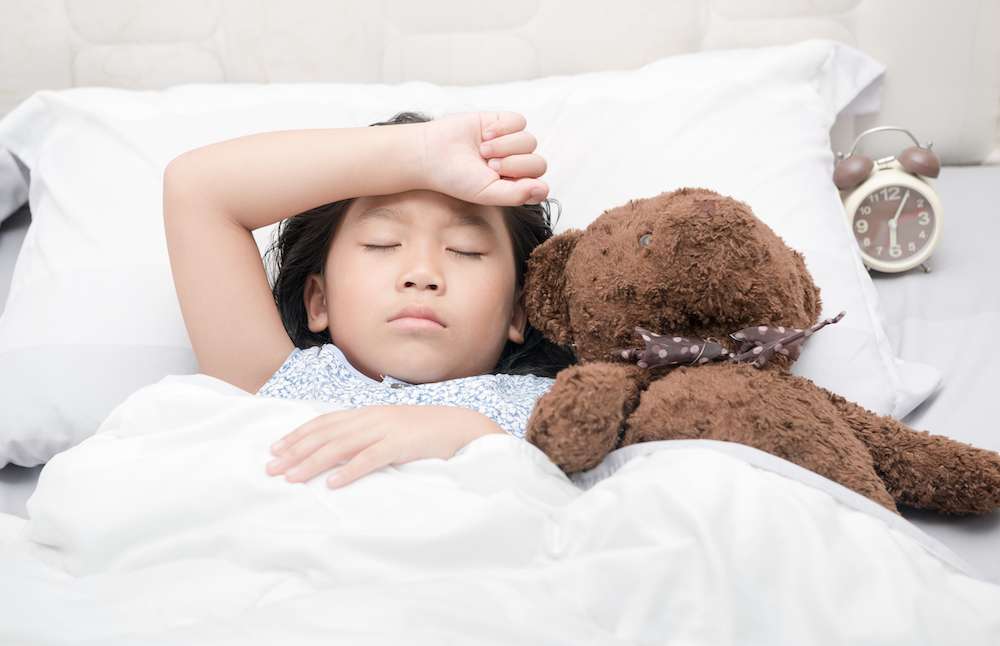
    Children with mental health diagnoses may be more prone to struggle with sleep around daylight saving time, according to physicians from Nationwide Children’s Hospital in Columbus, Ohio. 

    WMBF News reports that doctors there have observed changes in sleeping patterns around daylight saving time in many young patients—especially those with a mental health diagnoses.

    “Sleep is a more complicated issue for patients with a mental health disorder,” Robert Kowatch, child and adolescent psychiatrist and sleep medicine specialist at Nationwide, said in a news release. “Different conditions affect sleep differently, as do various medications for these conditions and their related side effects. These patients may be more sensitive to time changes than the typical child or teen.”

    Some of the physicians’ observations around daylight saving include the following: 

    • Children struggling with depression and anxiety may struggle to fall asleep and stay asleep.
    • Children diagnosed with autism have the tendency to sleep one to two hours less than their peers and tend to awake earlier in the mornings. 

    Those with bipolar disorder tend to sleep less when experiencing manic or hypomanic episodes, and in some instances any change in their circadian rhythm (such as a time change) can lead to manic episodes. 

    For some children with attention deficit/hyperactivity disorder, taking certain stimulant medications close to their bedtime will make it harder to get to sleep.

    “With many medications, an impact on sleep is a possible side effect, from interfering with falling asleep to resulting in next-day drowsiness,” Kowatch added in the release. “Parents and patients should create a plan with their clinician, and make sure dose schedules and amounts are properly followed, such as taking a longer-lasting dose earlier in the day followed by a shorter-lasting dose later in the day, so a stimulant can wear off—if necessary—in time for bed to allow for restful sleep.”

    Natasha Mero, a sleep technician at Palmetto Sleep Labs LLC, tells WMBF that a lack of sleep can affect a person’s life in numerous ways, some dangerous. She also made a comparison between the effects of daylight savings and those of jetlag. 

    “It can affect memory issues, it can affect alertness, mood,” Mero tells WMBF. “Sometimes people don’t get enough sleep, they can be depressed, help you concentrate. It definitely can affect driving. A lot of people can get in accidents if they don’t get enough sleep. We’ve seen several people come into the sleep lab where they fall asleep at the wheel because they’re not getting enough sleep at night, or get in a fender bender or fall asleep at a stop sign.”

    In order to strive for better sleep, experts from Nationwide Children’s Hospital recommend limiting electronic time in the bedroom, avoiding heavy meals before sleeping, eliminating caffeine eight hours before bed, keeping bedrooms cool and dark, and avoiding any exercise before trying to sleep. 

    View the original article at thefix.com
  • How Daylight Savings Time Affects Some Kids' Mental Health

    How Daylight Savings Time Affects Some Kids' Mental Health

    Experts break down the impact of daylight savings time on kids with mental health issues.

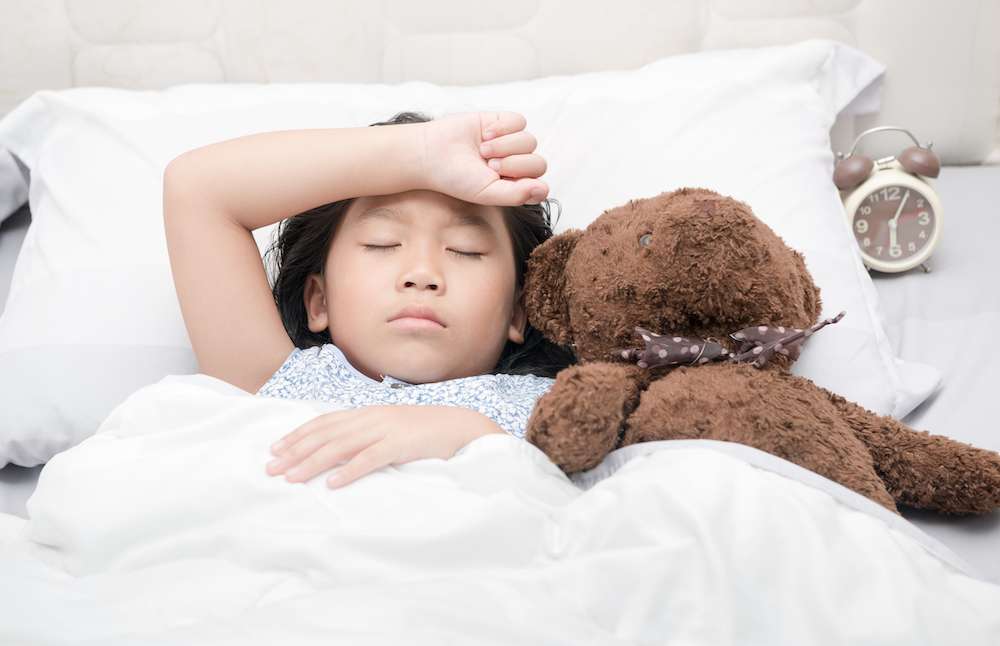
    Children with mental health diagnoses may be more prone to struggle with sleep around daylight savings time, according to physicians from Nationwide Children’s Hospital in Columbus, Ohio. 

    WMBF News reports that doctors there have observed changes in sleeping patterns around daylight savings time in many young patients—especially those with a mental health diagnoses.

    “Sleep is a more complicated issue for patients with a mental health disorder,” Robert Kowatch, child and adolescent psychiatrist and sleep medicine specialist at Nationwide, said in a news release. “Different conditions affect sleep differently, as do various medications for these conditions and their related side effects. These patients may be more sensitive to time changes than the typical child or teen.”

    Some of the physicians’ observations around daylight savings include the following: 

    • Children struggling with depression and anxiety may struggle to fall asleep and stay asleep.
    • Children diagnosed with autism have the tendency to sleep one to two hours less than their peers and tend to awake earlier in the mornings. 

    Those with bipolar disorder tend to sleep less when experiencing manic or hypomanic episodes, and in some instances any change in their circadian rhythm (such as a time change) can lead to manic episodes. 

    For some children with attention deficit/hyperactivity disorder, taking certain stimulant medications close to their bedtime will make it harder to get to sleep.

    “With many medications, an impact on sleep is a possible side effect, from interfering with falling asleep to resulting in next-day drowsiness,” Kowatch added in the release. “Parents and patients should create a plan with their clinician, and make sure dose schedules and amounts are properly followed, such as taking a longer-lasting dose earlier in the day followed by a shorter-lasting dose later in the day, so a stimulant can wear off—if necessary—in time for bed to allow for restful sleep.”

    Natasha Mero, a sleep technician at Palmetto Sleep Labs LLC, tells WMBF that a lack of sleep can affect a person’s life in numerous ways, some dangerous. She also made a comparison between the effects of daylight savings and those of jetlag. 

    “It can affect memory issues, it can affect alertness, mood,” Mero tells WMBF. “Sometimes people don’t get enough sleep, they can be depressed, help you concentrate. It definitely can affect driving. A lot of people can get in accidents if they don’t get enough sleep. We’ve seen several people come into the sleep lab where they fall asleep at the wheel because they’re not getting enough sleep at night, or get in a fender bender or fall asleep at a stop sign.”

    In order to strive for better sleep, experts from Nationwide Children’s Hospital recommend limiting electronic time in the bedroom, avoiding heavy meals before sleeping, eliminating caffeine eight hours before bed, keeping bedrooms cool and dark, and avoiding any exercise before trying to sleep. 

    View the original article at thefix.com
  • Alabama Lawmaker Wants To Drug Test Food Stamp Recipients

    Alabama Lawmaker Wants To Drug Test Food Stamp Recipients

    The state rep’s new bill targets SNAP beneficiaries who have a “reasonable suspicion” of drug use.

    An Alabama lawmaker has introduced legislation that would require people to undergo a drug test before they receive SNAP benefits, formerly known as food stamps.

    Republican state Representative Tommy Hanes drafted the bill, which targets SNAP beneficiaries who have a “reasonable suspicion” of drug use. The bill defines “reasonable suspicion” as having a drug conviction within the past five years—thus, the legislation would heavily affect people with a history of substance use disorders.

    According to Think Progress, SNAP recipients are already required to disclose any drug-related convictions. 

    Under the bill, if a SNAP recipient tests positive for drugs, they would receive a warning. If they test positive a second time, their food assistance would be cancelled for a year, and if they test positive a third time they would be ineligible for life. However, recipients who have children could appoint someone else to get the children’s food assistance. 

    People against this practice say that in addition to stigmatizing people on assistance, the bill would create financial stress, since drug tests after the first must be paid for by the SNAP recipient. However, people who pass their tests would be reimbursed. Anyone who refuses to be tested would not receive food assistance. 

    Emily Moon of the Pacific Standard wrote that the bill would put the state’s SNAP program in jeopardy. 

    “Drug tests for public benefits does not reduce drug use,” she wrote. “Instead, it makes federal assistance programs more expensive and less effective; research shows the requirements discourage people from applying and fail to help those with illegal drug dependences get jobs—the long-term goal of most public-assistance programs.”

    Political science professor Matthew Gritter, of Angelo State University, said that drug testing can be a hassle that prevents people who need benefits from applying for them. Therefore, it reduces the efficiency of the SNAP program, he told the Pacific Standard last year. 

    “One of the things that we found in states that have drug tested welfare recipients is that very few welfare recipients test positive, but it becomes very expensive to test them,” he said. “So you’re raising the overhead costs to the program—and SNAP traditionally has had a very low overhead and a pretty positive impact. So a lot of these reforms, coming from people that advocate small government, are actually making the program clunkier and more bureaucratic.”

    However, writing for the Alabama Political Reporter, Josh Moon said that facts like these do not matter to Rep. Hanes and others who support drug testing SNAP recipients.

    “The liberal news media is playing a role in spreading false information about conservatives who attempt to implement common sense reform,” Hanes said in a press release. “Our goal should be helping folks become independent, so they are able to obtain a much higher standard of living.”

    View the original article at thefix.com

  • Marijuana Licensing Issue May Lead To "Extinction Event" In California

    Marijuana Licensing Issue May Lead To "Extinction Event" In California

    As many as 10,000 growers will reportedly have their temporary licenses expire over the next new month, if a new bill is not passed.

    Confusion and delays in the licensing process for legal cannabis growers in California could be an “extinction event” for the marijuana industry if the legislature does not act to correct it, experts say.

    When recreational marijuana use was approved in California, growers were able to apply for temporary licensing, The Sacramento Bee reports. This was meant to act as a bridge, while growers applied for and met the criteria for a full annual license.  

    However, the state has been incredibly slow to give annual licenses, approving just 56 out of 6,900 applications. This has growers worried, since the deadline to apply for an extension of the temporary license expired at the end of 2018.

    However, a new bill, SB67, would allow growers to apply for an extension until Dec. 31 of this year. 

    “We’ve named these ‘extinction events,’” said K Street Consulting’s Jackie McGowan. The consulting firm represents the marijuana industry in California. “This bill is a bill that the industry is very anxious to see passed.”

    If it does not pass many growers will return to the black market and legal sellers may have to buy their product from the black market, said Sen. Mike McGuire, a Democrat who sponsored the bill. 

    “The bottom line is this: This bill is going to protect thousands of cannabis farmers, in particular, who did the right thing and applied for a state license after the passage of Prop. 64 but their temporary license is about to expire,” he said. 

    McGuire said that as many as 10,000 growers will have their temporary licenses expire over the next new month if the bill is not passed. That could have detrimental effects on the industry, he said. 

    “This is the worst way to transition a multibillion-dollar agricultural crop, which employs thousands of Californians. Without legal licenses, there isn’t a legal, regulated market in California.”

    Terra Carver, who directs a growers’ alliance in the state agreed. 

    “There will be dire consequences such as imminent market collapse of hundreds of businesses in the region and through the state,” Carver said. 

    McGuire said that having passed marijuana legalization, the state is responsible for ensuring the integrity of establishing the legal market. 

    “In a time where the Golden State is working overtime to bring the cannabis industry out of the black market and into the light of a legal regulatory environment we can’t afford to let good actors who want to comply with state law fall out of our regulated market just because timelines are too short and departments have been unable to process applications in time due to the sheer number of applications,” he said. 

    View the original article at thefix.com
  • Justin Bieber Reveals Mental Health Struggles

    Justin Bieber Reveals Mental Health Struggles

    The recently married pop star took to Instagram to get candid about his mental health with fans.

    In an Instagram post on March 10, Justin Bieber told the world that’s he’s experiencing disconnection and feeling “weird.”

    Bieber posted on Instagram that he wanted to update his fans on what he’s been going through. “Been struggling a lot. Just feeling super disconnected and weird. I always bounce back so I’m not worried…just wanted to reach out and ask you guys to pray for me. God is faithful and ur prayers really work thanks.. the most human season I’ve ever been in facing my stuff head on…”

    Teen Vogue reported that the comment section of Instagram shows Justin’s fans came through with prayers and support. One fan shared that they also experience depression, and: “Love you always and I hope you can find a way to feel better and more like yourself again.” Another Belieber (the fond nickname for the pop star’s fans) told the singer, “We all believe in you!”

    Justin has used social media in the past to connect with fans and discuss his mental health. In 2016, he posted that participating in a lot of meet and greets contributed to his depression.

    “The pressure of meeting people’s expectations of what I’m supposed to be is so much for me to handle and a lot on my shoulders,” he wrote at the time. “I end up feeling so drained and filled with so much of other people’s spiritual energy that I end up so drained and unhappy.”

    Justin’s ex-girlfriend Selena Gomez has also struggled publicly with mental health issues. Selena Gomez and Julia Michaels released a song called “Anxiety” that Selena shared was personal to her.

    Justin and those who work for him claim that his current struggles have “nothing to do with Hailey,” but in a recent couple’s interview with Vogue, Hailey and Justin called their marriage “very hard.”

    They discussed the strain of being married so young and their struggle to get over things like their initial breakup, and Justin’s past, faster life with random sex and drugs.

    The Vogue journalist wrote, “It is impossible not to feel, in Justin’s presence, that he is still recovering from something—the fame whose price was his childhood, the mortification of a thousand magnified adolescent peccadilloes, an accumulated uncertainty about the attentions of those in his orbit—and these scars crowd the surface like his innumerable tattoos.”

    View the original article at thefix.com

  • 7 Tips to Help You Find the Right Therapist (and Why You Need One)

    7 Tips to Help You Find the Right Therapist (and Why You Need One)

    It was a therapist who first told me that I wasn’t in therapy because I was bad and out of control, like my mother said; I was in therapy to learn how to deal with having an emotionally unstable mother.

    My mother believes everyone needs therapy. And she’s right, they do. After being around her. Everyone, that is, except her. Don’t be like my mother, requiring the world to change around you. (It won’t.) And don’t be like my Dad either, who tells me I’m overreacting every time I have an emotion. Don’t be like me, either, an asshole exploiting her parents for profit. Wait. 

    Do you need therapy? Probably. Could you benefit from therapy? Definitely. Can you afford therapy? More easily than you think. Many therapists keep sliding scale spots open in their practice, for those who need help but don’t have health insurance or a large income. I found my current gem of a therapist through Open Path Collective, a network of clinicians who offer therapy at a rate of $30 to $60 per session for individuals.

    It was a therapist who first told me that I wasn’t in therapy because I was bad and out of control, like my mother said; I was in therapy to learn how to deal with having an emotionally unstable mother. And I didn’t talk too much and ask too many questions; actually I was curious, the therapist said, and had a lot to say.

    It was a therapist who said: “I can’t see you and your husband at the same time, the relationship is too damaged and he just shuts down and threatens to end it.” The same therapist asked “Are you drinking every single night?” And, “Have you tried AA?” And when I couldn’t get myself to stop or go to AA, she found a rehab, called my parents, and helped make all the arrangements from her office.

    It hasn’t been all Aha! moments and cleansing cries on couches though. I’ve had a couple of negative experiences. None, however, were as negative as the summer I tried to therapize myself on my own with just books. That experiment ended with me smoking crack for the first time, shooting up heroin while smoking crack (neither of those were my thing, but that summer!), and my first DUI.

    Maybe you’re surviving – but you could be thriving. 

    It might be helpful to look for a therapist who specializes in addiction or whatever you believe your specific issues are, but it’s not necessary. Your intuition is your greatest asset in your search. If you don’t like your therapist, leave and find another one. Repeat until you have the seven experiences I describe below.

    1. Your emotions are validated.

    Therapy helps you accept that your emotions are valid, something our culture certainly doesn’t want you to do. Allowing yourself to feel your feelings is an underrated gift. Your emotions may seem out of proportion to the event that caused them, and that’s okay. You learn that they are actually a response triggered by the event to a deeper, older wound. You will learn, as the poet Rumi said, to “meet them at the door laughing and invite them in.”

    2. You get to talk about anything you want.

    This is one of the most exciting things with a trusted therapist, thinking what would I like to discuss today? The toxic friendship I want to find the courage to give up; that awful conversation with my dad; or do I want to recount everything that happened this week? It’s all up to you! You can plan it in advance, and you don’t even have to stick to the plan, you can talk about whatever comes up! Where else do you have this kind of freedom, where you don’t have to dance around sensitive issues, where there is no fear of being judged that isn’t your own projection, where you are safe, completely safe, to talk about the most trivial and most traumatizing of issues? What joy! The time is truly yours.

    3. You don’t have to caretake or worry about anyone else’s thoughts or feelings.

    If you aren’t worried about your friend’s thoughts and feelings at all and constantly dump your problems on them, quit being an asshole. That isn’t their job, even if they think it is. The only thing addicts are better at finding than their drug is codependents. Your therapist is one of only people in the world with whom you don’t have this burden. This doesn’t mean you should abuse them, just that you don’t have to worry if they are sick of hearing about your dumb boyfriend again. 

    4. Unconditional presence.

    Therapists are masters at the art of holding space. They are fully with you as you explore the pains and confusions of life. You are never too much, never unacceptable. You just are. We live in a culture that doesn’t teach anything unconditional, least of all love and presence. People have to learn how to do it. Your therapist knows how, and it is their job to provide this for you. Your therapist isn’t invested in pushing the journey to a certain place for their own benefit. They are just there to walk with you along the way. My therapist held that space and accepted me until I could learn to accept myself. When I beat myself up after another relapse, she didn’t join in. Her unconditional presence and nonjudgmental interest helped me to finally break that pattern.

    5. You’re given the space to work out your problems on your own.

    Therapists aren’t there to solve your problems for you. They are impartial witnesses, bringing a gentle, open, and noncritical attitude to your experience. It’s the exact opposite of my childhood. I can tell you from experience that nothing feels better than figuring out a problem on your own, with someone with no skin in the game standing by as a witness, someone who only wants to see you do well and who isn’t going to scold you when you fall (but will encourage you to explore why).

    6. They notice, and can help point out your patterns.

    After I stopped obsessing about a man who treated me carelessly, my therapist pointed out that I had a pattern of acting as if sex was all I had to offer and offering it to people who didn’t deserve it. I remember the moment because she said it so gently, as a question, and then she paused. She knew to bring it up only after I had described a scenario which shown I had grown in self-love and respect. It blows my mind how she is able to hold back until the moment is right. I had a previous therapist who I never let get a single word in, and when I finally asked after a year, “What do you think?” She said, “I thought you’d never ask!” She told me that she had been planning to bring it up soon, but that she sensed that it was going to take what it took for me to learn to trust her.

    7. Safety.

    Before we can change anything, we first need to get to a place of safety. I breathe a huge sigh of relief every time I walk into my therapist’s office. There is nothing more important than feeling safe. And it is so rare in this world, in this time. To paraphrase the great Eddie Pepitone, “It’s a sign that a society is falling apart when murder is entertainment, though the Ted Bundy special was very good.” I can’t think of anyone I know who hasn’t had their car broken into, or their body broken into, or their mind hijacked by the needs of another who didn’t see them as real. Therapy is a true safe space. And in therapy, you can learn to create safe space within yourself, which is something nobody can take from you. 

    In conclusion, get a therapist. I mean it. What are you waiting for? Give your friends a break. Learn to see your parents as flawed humans who did the best they could. Lean on your sponsor for no more and no less than they can handle. Get. A. Therapist. You don’t have to stay stuck anymore, you don’t have to keep hurting yourself with a million tiny infractions. Help yourself. Allow yourself to be helped.

    I love you. Especially the nastiest among you. You need it the most. Leave your excuses in the comments.

    View the original article at thefix.com