Author: The Fix

  • How Addiction Stigma Prevents People from Getting Help

    How Addiction Stigma Prevents People from Getting Help

    The doctor believed that people with addictions are sneaky and dishonest, and maybe this is why. My treatment has repeatedly been delayed or denied because I’ve been honest. Do other people have to lie to get medical care?

    My name is Sara and I am 28 years old. I grew up in a two-parent household with a loving family, had excellent grades in high school, and graduated from college. I currently work full time. I love children, nature, animals, family, and my many friends.

    Self-Medicating with Opioids

    I have also struggled with depression, anxiety, and OCD since I was in my early teens. At age 18, my life was changed forever when I was prescribed an opiate painkiller after the removal of my wisdom teeth. I discovered, with that one prescription, that opioids made me feel normal. And yet, opioids are what put me through a roller coaster of hell for the next eight years. They also introduced me to my good friend “Heroin.”

    From early on in my addiction, I wanted help but was too ashamed to ask for it. I also figured I could beat this thing myself, but I couldn’t. I needed help. My parents encouraged me to contact a rehab facility, which I did immediately. The nurse who did the intake was very kind and said I could come the next day to be admitted for detox, but she first needed to get approval from the insurance company.

    I, and my family, were so relieved that I would begin a journey of recovery. This is when I experienced the stigma of addiction for the first time. The nurse from the rehab center called me back and said that my insurance company would not approve me to go to detox and rehab because I had not yet been incarcerated.

    Several months later, I was finally approved for rehab, but only after I possessed a misdemeanor charge.

    “Sneaky Drug Addicts”: Doctors Perpetuate Stigma

    After detox, rehab, and a six-month stay at a sober living facility, I came home and began looking for work. I found a job quickly, but I needed paperwork completed for a physical. Although the job did not require a drug test and there was nothing on the form requesting drug testing, my primary care provider refused to give me a physical or sign the form unless I agreed to a drug test. It didn’t matter that I was in recovery and was also attending outpatient rehab which routinely drug-tested me.

    Even now, with two years in recovery from addiction, I still experience prejudice and stigma in health care settings. Recently a bout of severe food poisoning and dehydration sent me to the emergency room. There, I was accused of going through withdrawal. I provided the nurse with the list of my medications, which included Vivitrol—an opioid blocker. I was also honest and told her that I used marijuana occasionally to help with anxiety. After I was sent for testing in Radiology, the doctor told my mother that he was quite sure that I was going through withdrawal and that he wanted a urine screen. My mother told him that she was sure I wasn’t going through withdrawal because I had always been upfront and honest with her when I relapsed in the past.

    “Well, you know how sneaky drug addicts can be,” the doctor said.

    When I returned and the doctor told me his suspicions, I agreed to the urine test but told him that I expected an apology after he got the results and I only tested positive for marijuana. I watched as two nurses outside the room laughed and looked toward my room. I knew they were laughing at me—the drug addict.

    Half an hour later, the doctor walked in and said, “Well, I guess you were right, you aren’t going through withdrawal. We only found a small trace of marijuana in your system. But, you understand why I had to test you, don’t you?”

    He never did apologize to me.

    In Recovery and Denied Therapy

    Part of my recovery is getting a monthly injection of Vivitrol which is an opioid blocker that also helps reduce my cravings. The provider that gives me the Vivitrol requires that I also go to a counselor, which I was more than willing to do. But at my intake interview at the local mental health agency, I was honest about my occasional marijuana use for anxiety and as a result I was denied counseling services. I even appealed it to the medical director, but that didn’t help. It didn’t matter to them that the anxiety, depression, and OCD—which is relieved by the marijuana—may have been partly responsible for my addiction to opioids in the first place.

    That ER doctor held the belief that people with addictions are sneaky and dishonest, and maybe this is why. My treatment has repeatedly been delayed or denied because I’ve been honest. Do other people have to lie to get medical care? If someone is sent to a counselor for emotional eating, are they refused counseling if they have given up everything but potato chips? And even if the providers believe smoking marijuana is a condition of addiction, wouldn’t that be all the more reason to offer me care and a provider? To this day, I have been unable to find a counselor who will take me.

    My wish is that every person who has substance use disorder is treated with respect and compassion. When you are addicted, you already beat yourself up every day. Every time you look in the mirror, you see an addict. We certainly don’t need to be reminded by the people that chose a sacred profession and took an oath to help people that we aren’t worth it. That only puts us deeper in the depths of destruction rather than building us up for a path to recovery.

    Healing: Compassionate Health Care Providers

    My experience isn’t unusual, but I have also encountered many health care workers who were compassionate. Those were the people who gave me a reason to keep fighting for my life. There was a nurse in the emergency department (the one time I was there to get help for withdrawal after I had relapsed) who gave me a big hug when I was leaving and said, “Don’t give up. Keep trying. You are worth it.” And then I watched as she hugged my mother as she sobbed on her shoulder.

    “I know it’s scary, Mom, but she will get through this. The good thing is, she wants to get help,” she said.

    Another nurse told me how proud she was at how far I’ve come and not to take other people’s biases to heart. And then there was my Health Home Nurse — she just works her magic and does whatever’s needed to help you stay in recovery. She is nothing short of amazing and I owe my life to her. Those are the people who make me want to continue my recovery and the ones I will be thankful to for the rest of my life.

    I am Sara. I am a survivor who is recovering from substance use disorder. I could be your daughter, your niece, your granddaughter, your next door neighbor, or your co-workers daughter. I am worthy of being treated with respect and compassion just as much as every human being struggling with this disease is worth it. With the right kind of support, people can and do recover.

    Note: My mother, who has worked in the healthcare industry for over 30 years, has been frustrated witnessing firsthand the stigma I’ve faced when trying to obtain care and services. She’s often had to advocate on my behalf. She currently volunteers with an organization called Truth Pharm, which works with local providers to reduce stigma in healthcare settings. She asked if I would be willing to share my story, and that’s why I wrote this.
    View the original article at thefix.com

  • Is There A Link Between Gun Violence And Mental Health?

    Is There A Link Between Gun Violence And Mental Health?

    A new study found that a history of mental illness had no significant association with gun violence.

    A study by the University of Texas found that access to firearms, high hostility levels, and impulsiveness made people more likely to engage in gun violence, while mental illness did not.

    The study appears to have been motivated by a “public, political, and media narrative that mental health is at the root of gun violence,” and the results look to have soundly debunked that narrative which some have worried will increase stigma against those with psychological disorders.

    Dr. Yu Lu and Dr. Jeff R. Temple interviewed 663 “emerging adults” and found that those with access to firearms were 18.15 times more likely to have threatened someone with a gun in their lifetimes than those without. While this might seem like a predictable result, they also found that a history of mental illness had no significant association with gun violence or carrying a gun in public.

    Source: Wikimedia Commons

    Additionally, people who were found to have “high hostility” were 3.51 times more likely to have threatened someone with a firearm, and those with high impulsivity were 1.91 times more likely than others to have carried a gun outside of the home.

    The psychological disorders named in the study included depression, anxiety, PTSD, and borderline personality disorder. They also included stress, impulsivity, and hostility as symptoms of mental health issues, but Lu and Temple still concluded that it is access to firearms, including gun ownership or other access, that creates the primary risk for violence.

    “Counter to public beliefs, the majority of mental health symptoms examined were not related to gun violence. Instead, access to firearms was the primary culprit,” they wrote. “The findings have important implications for gun control policy efforts.”

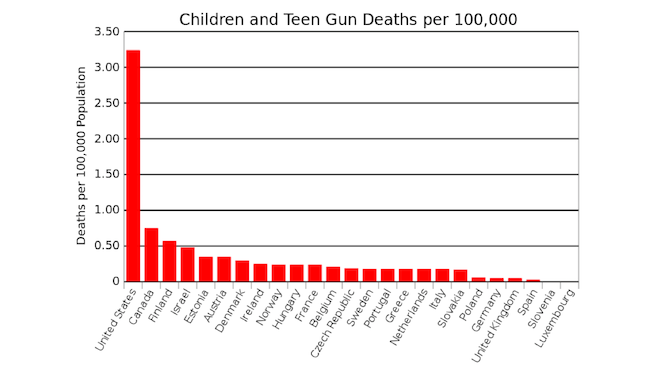
    Gun violence in the U.S. continues to be a major problem, accounting for an average of 30,000 to 40,000 deaths each year. Depending on the definition of mass shooting, by some accounts there was a mass shooting in the U.S. nearly every day in 2018.

    When a shooting is severe enough to make it into national news, the issue of whether gun violence is caused by a lack of gun control or by mental illness is often raised.

    The University of Texas study describes this as a question of “dangerous people” versus “dangerous weapon.” Lu and Temple point out that research on links between mental illness and gun violence is lacking and often limited to those with severe disorders or mentally ill individuals who have already been arrested for violent crime.

    This may have been the first study in the U.S. to look at “the temporal association between gun violence and mental health symptoms,” according to the study’s conclusion. Lu and Temple also noted that the sample size, the focus on emerging adults, and the inclusion of only some of the many psychological disorders and related symptoms were possible limitations for this study.

    As always, further research into the issue of gun violence in the U.S. will provide greater insights into the likely causes of this growing problem.

    View the original article at thefix.com

  • Illicit Mexican Fentanyl Taking Its Toll on Arizonans

    Illicit Mexican Fentanyl Taking Its Toll on Arizonans

    The number of fentanyl deaths in Arizona tripled between 2015 and 2017.

    At a party in Arizona, a small group of people took a few blue pills together, unaware of what was in them. Police were able to save three of them by applying naloxone, but it was too late for a fourth, 19-year-old Aaron Francisco Chavez.

    Investigators discovered that the group believed they had gotten their hands on oxycodone, a relatively less powerful opioid. The deaths, authorities say, are part of a massive fentanyl epidemic sweeping the state.

    “It’s the worst I’ve seen in 30 years, this toll that it’s taken on families,” said Arizona-based DEA agent Doug Coleman. “The crack (cocaine) crisis was not as bad.”

    The pills are reportedly gaining steam among partygoers in the state, which some experts believe is due to the delivery system.

    “There’s less stigma to taking a pill than putting a needle in your arm, but one of these pills can have enough fentanyl for three people,” said Lt. Nate Auvenshine of the Yavapai County Sheriff’s office.

    The blue pills that are taking over Arizona have an “M” on one side and a “30” on the other side, done to intentionally fool users into thinking that the meds are legitimate. These pills are the newest product from the notorious Mexican Sinaloa drug cartel, claims Tucson Police Lt. Christian Wildblood. The reason they are particularly deadly is simple—they adhere to no standards, made with pill presses bought online, so the amount of fentanyl in each pill isn’t very exact.

    “There is no quality control,” said Lt. Wildblood.

    The main way Mexican fentanyl enters the United States is in hidden compartments inside vehicles crossing through official border crossings, according to Customs and Border Protection (CBP). About 85% of the stuff comes in through the San Diego crossing, but the Drug Enforcement Administration notes that Arizona’s crossings are seeing a sharp rise in fentanyl seizures.

    Between 2017 and 2018, the DEA saw seizures rise from 172 pounds, or 54,984 pills, to a whopping 445 pounds, or 379,557 pills.

    The Sinaloa cartel continues to smuggle drugs despite the extradition of its leader, El Chapo, who recently received a life sentence in the U.S. This is a testament to their ability, says Coleman. 

    View the original article at thefix.com

  • "American Idol" Contestant Accused Of Fentanyl Distribution

    "American Idol" Contestant Accused Of Fentanyl Distribution

    Feds allege that former Idol contestant Antonella Barba was part of a major Virginia drug ring.

    Antonella Barba, who appeared in the sixth season of the reality/competition series American Idol, was indicted on federal charges for allegedly distributing fentanyl, heroin and other narcotics for a major drug ring.

    Barba was arrested in Virginia in late 2018 on charges of intending to sell 100 grams or more of heroin.

    Barba pled not guilty to the charge, but now faces 11 federal indictments, including 10 counts of distribution or possession of cocaine, heroin and fentanyl with the intent to distribute.

    According to newly released court documents, Barba was allegedly part of a drug ring that operated in the Hampton Roads metropolitan area from late 2017 to the fall of 2018. The ring reportedly used an apartment to store heroin, cocaine and money and made drug sales during the aforementioned time period in various locations throughout the Hampton Roads region.

    The indictment also alleges that a member of the ring – Justin Michael Isaac – instructed Barba to deliver approximately 830 grams of fentanyl to another conspirator on October 11, 2018. Barba was arrested that morning and charged in district court with allegedly selling or intending to sell heroin

    After pleading not guilty to the October charge, Barba was out of bail and awaiting trial in state court, but was taken back into custody on February 11, 2019 for the federal indictments. A detention hearing is set for February 14, 2019 in U.S. District Court in Norfolk, Virginia. Barba’s attorney, Assistant Federal Public Defender Suzanne Katchmar, did not respond to multiple requests for comments by various media outlets.

    Barba, a native of New Jersey and current Los Angeles resident, appeared on Idol in 2007 and reached the Top 16 before her elimination. She subsequently returned to college and earned a degree in architecture, and told Entertainment Weekly in 2009 that she was working on an album.

    Barba, who most recently reunited with several fellow Idol contestants for a parody of “We Are the World” on Jimmy Kimmel Live! was also charged with two misdemeanor charges of shoplifting at an Urban Outfitters in 2011.

    View the original article at thefix.com

  • In Massachusetts, Opioid Deaths Decline For Second Year

    In Massachusetts, Opioid Deaths Decline For Second Year

    Officials applaud the state’s progress but acknowledge that there’s still a long way to go in the fight against the opioid crisis.

    Officials in Massachusetts are celebrating after state figures showed that opioid overdose deaths declined for the second year in a row, which officials say is due to interventions throughout the state that limit access to opioid prescriptions, increase access to opioid-overdose reversal drugs, and help connect people with treatment for opioid use disorder. 

    The data, which includes confirmed and estimated deaths from opioid overdoses, showed that 1,974 Bay Staters died from opioids in 2018, down about 4% from 2017. Between 2016 and 2017 there was a 2% decline in overdose deaths. 

    Monica Bharel, Department of Public Health Commissioner, told WGBH she was pleased with the progress and hopes that opioid overdose deaths continue to decline. 

    “When you look from 2016 to now, we are making progress. We are making progress and fighting this devastating opioid epidemic. We’ve seen a 6% decrease, we know the efforts we have in place are beginning to work, and importantly, to me, from a public health point of view, we have to continue our sustained work to bring those deaths down further.”

    Since Massachusetts improved its Prescription Monitoring System in 2015, there has been a 35% decline in Schedule II prescriptions, which include opioids. Gov. Charlie Baker praised this in a statement, while acknowledging that there is a long way to go. 

    “While we are encouraged to see fewer opioid-related overdose deaths for a second consecutive year and a 35% decrease in reported opioid prescriptions since 2015, the opioid epidemic continues to present a very serious challenge that is made more difficult due to the presence of fentanyl,” the governor said. 

    Although the progress is positive, there were some dire statistics released. Fentanyl is now present in 89% of opioid deaths in the state, up from less than 30% in 2014.

    Among people aged 25-34 opioids account for a staggering 40% of all deaths. In that demographic, opioid overdoses are still increasing. In addition, overdose deaths are increasing among black men. 

    Bharel said that the state needs to focus on these groups. 

    “For us at the state level and also at the community level, that gives us the opportunity to say, ‘Let’s make sure we’re engaging and investing in every community,’” she said. “There are some of us who are at highest risk. We want to make sure our work focuses on them.”

    That includes education, she added, particularly about synthetic opioids. 

    “One of the most important public health interventions is awareness and education. When people are using illicit drugs, they have to be aware of fentanyl, that fentanyl is deadly, that fentanyl is present in almost all of the opioid deaths right now.”

    View the original article at thefix.com

  • Justin Bieber Reportedly Getting Treatment For Depression

    Justin Bieber Reportedly Getting Treatment For Depression

    A source close to Bieber says the singer is “confident he will feel better soon.”

    Justin Bieber has been struggling with depression and is seeking treatment, according to sources close to the star. These sources tell Elle that the pop star been “down and tired. He has been struggling a bit.”

    Bieber’s career began when he was 13 years old.

    “He started off as a typical sweet, Canadian teen,” a source said. “He was such a great kid, honestly super sweet and very polite and nice to everyone around him. Having this huge amount of fame completely changed him. He had access to anything and everything and was surrounded by people who just said ‘Yes.’”

    The sources were quick to dispel any allegations that this bout of depression has anything to do with his new marriage to model Hailey Baldwin.

    “It has nothing to do with Hailey—he is very happy being married to her,” said the source. “It’s just something else that he struggles with mentally. He has good help around him and is receiving some treatment. He seems confident he will feel better soon.”

    Bieber’s grappling with fame from an early age manifested in his acting out, the singer said in a recent interview in Vogue. “I started really feeling myself too much. People love me, I’m the shit—that’s honestly what I thought. I got very arrogant and cocky,” he said. “I found myself doing things that I was so ashamed of, being super-promiscuous and stuff, and I think I used Xanax because I was so ashamed.”

    He gained particular attention when he was arrested in 2014 for a DUI, where he was racing his red Lamborghini in a residential area while drunk. The arresting officers noted Bieber “was not cooperating with the officer’s instructions” and smelled strongly of alcohol.

    “At first, he was a little belligerent, using some choice words questioning why he was being stopped and why the officer was even questioning him,” said Miami Beach Police Chief Raymond Martinez.

    More recently, Bieber has admitted to abusing Xanax to distance himself from his “legitimate problem” with promiscuity.

    All this is a result of being in the public eye since he was young, say those close to him.

    “He’s emotional and struggles a lot with the idea of fame—being followed, having his every move stalked by fans, cameras in his face,” said the source. “It all sets him off and he often feels like everyone is out to get him.”

    Bieber also ended his Purpose tour early last summer, stating that he needed some time for himself.

    “I got really depressed on tour,” Bieber told Vogue. “I haven’t talked about this, and I’m still processing so much stuff that I haven’t talked about. I was lonely. I needed some time.”

    View the original article at thefix.com

  • Insys Execs Used Rap Video To Push Higher Doses Of Fentanyl Spray

    Insys Execs Used Rap Video To Push Higher Doses Of Fentanyl Spray

    The sales video parodied A$AP Rocky’s hit single “F—in’ Problems.”

    Jurors for a racketeering, fraud and conspiracy trial in Boston involving former Insys Therapeutics CEO John Kapoor saw a sales video made by the pharmaceutical manufacturer that showed company employees rapping about increasing prescription dosages and dancing with an individual dressed as a bottle of its powerful fentanyl spray Subys.

    Kapoor and four other former Insys managers and executives are accused of conspiring to pay doctors in exchange for prescriptions for Subsys, a fentanyl-based medication intended for use by cancer patients with severe pain. Kapoor and the other defendants have denied the charges.

    In the video, a parody of A$AP Rocky’s 2012 single “F—in Problems” which prosecutors said was shown during a national sales meeting in 2015, salesmen and other individuals rap about “titration,” a process by which employees persuade medical professionals to increase the strength of a prescription until their patients reach a certain dosage.

    At one point in the video, the person dressed as a Subsys bottle – which is notated with 1,600 micrograms, its highest dosage – is reportedly revealed to be Insys’ then-vice president of sales, Alec Burlakoff.  

    In November 2018, Burlakoff pled guilty to a charge of racketeering conspiracy, and according to NBC News, is expected to cooperate with prosecutors in the case against Kapoor.

    Another former Insys executive, ex-CEO Michael Babich, testified during the current trial that Kapoor encouraged employees to push for high dosages of Subsys so they would continue taking the drug.

    Attorneys for Kapoor claimed that Burlakoff was the architect of the kickback scheme, which according to CBS News, handed out more than $2 million to 18,000 doctors in 2016 alone.

    Kapoor’s lawyers also alleged that Burlakoff and Babich sought to reduce their sentences by providing false testimony against Kapoor, and have claimed that prosecutors have tried to link Insys to the national opioid crisis, noting that Subsys represents a fraction of the prescription opioid market

    Prosecutors, however, claim that Kapoor personally recruited physicians through expensive dinners and high-payment speaking engagements in order to ensure their commitment to higher dosages of Subsys. Kapoor, who resigned from Insys’ board of directors in 2017 after being arrested, along with Burlakoff, for their role in the kickback scheme on the same day that President Donald Trump declared the opioid crisis a public health emergency.

    Subsys, which is reportedly 100 times stronger than morphine, has been alleged to have played a role in hundreds of overdose deaths since the Food and Drug Administration approved it for use as cancer treatment for breakthrough pain in 2012. The drug, which helped to make Insys the best performing public offering in 2013, is now one of several opioid-related assets for which Insys Therapeutics, Inc., is currently seeking a buyer.

    View the original article at thefix.com

  • Ask an Expert: How Do You Safely Detox from Benzos?

    Ask an Expert: How Do You Safely Detox from Benzos?

    Dr. Khantzian (Harvard Medical School) explains how hospitals safely detox people from benzodiazepines like Xanax when withdrawals can potentially cause seizures and death.

    Dear Expert,

    I know that withdrawal from Xanax is very dangerous, with risks of panic attacks and seizures and even death. How do hospitals detox people who are addicted to benzos such as Xanax?

    Edward J. Khantzian, MD: You are correct that withdrawal from benzodiazepines can cause seizures and even death, and should only be done in a detox facility under medical supervision where dosages are precise and withdrawal symptoms can be carefully monitored. At the very least, benzodiazepine withdrawal should occur under the supervision of a physician with whom one has a close and honest rapport.

    Detox may differ depending on the particular benzo used, so initially a physician will do a urine test to ensure that it is Xanax. Then, a program of supervised withdrawal will begin based on how much one has been taking and for how long—this will impact the chances of significant withdrawal symptoms. Xanax comes in 0.5, 1.0, 2.0, and 3.0 mg tablets. Most practitioners tend to prescribe the medication in the lower dose range, which is 0.5 mg. For withdrawal, we usually use a benzodiazepine with a slower onset and longer duration of action, such as oxazepam (Serax). After the physician establishes an initial tolerance amount, he or she will generally put the patient on a slow taper in which the oxazepam dose is decreased by 10% every few days until it can be discontinued entirely.

    This is just an example of one protocol that an experienced physician or detox facility would use. As above, I strongly recommend that withdrawal occur in one of these scenarios. Under these conditions, withdrawal should be safe and comfortable. All the best.

    Dr. Khantzian is Professor of Psychiatry, part time, Harvard Medical School in Boston, and President and Chairman, Board of Directors, Physician Health Services of the Massachusetts Medical Society in Waltham, Mass. He is in private practice and specializes in addiction psychiatry. Full Bio.

    View the original article at thefix.com

  • Will Drinking Liquor Before Beer Actually Prevent A Hangover?

    Will Drinking Liquor Before Beer Actually Prevent A Hangover?

    A new study examined whether drinking alcohol in a certain order or by a certain color could prevent a hangover.

    There are many old tales about how to cure hangovers or prevent them altogether. 

    Perhaps one of best-known “rules” to drinking is that the order in which you down your drinks—whether it is hard liquor, wine, and beer—can affect the severity of a hangover. There are even little rhymes to accompany this, such as “Liquor before beer, you’re in the clear,” or “Beer before wine, you’ll be fine.”

    But a new study has discredited this idea, claiming that no matter what type of alcohol a person consumes first, their hangover will be the same. 

    To determine this, senior clinical pediatrics fellow Dr. Kai Hensel of the University of Cambridge in the UK and his colleagues conducted a two-year study. 

    For the study, they gathered 90 German students in the medical and psychology fields, ages 19 to 40. Each individual in the study, according to Time, was matched with two others of about the same age, body mass, sex, and drinking habits. 

    After eating a filling meal, the researchers instructed one member from each group of three to drink around 2.5 pints of lager beer, or to drink until their breath alcohol concentration was .05%. Following that, they drank around four glasses of white wine, until reaching .11%. 

    At the same time, a second member of the group drank the same amount but in the opposite order, while the third drank only wine or only beer. Then, each member was given cold water and instructed to go to bed.

    The following week the participants did the same thing again, but opposite what they had drank in the prior week. 

    Each week, according to Time, the participants tracked and rated the severity of their hangovers. Common hangover symptoms like headaches, nausea and dizziness were reported, and 21 of the participants said they vomited at some point. 

    Despite the groups drinking alcohol in various orders, the researchers did not find any glaring difference from group to group. 

    The researchers did determine that women seemed to feel worse than men when it came to hangovers. They also found that a person’s breath alcohol concentration did not correlate with the strength of their hangover, but vomiting and how intoxicated someone felt did. 

    In conclusion, the researchers determined that using common sense and following moderate drinking guidelines is the best way to avoid feeling hungover. 

    “Just asking the participant, ‘How drunk are you?,’ if they are really drunk, is the best predictor,” Hensel said, according to Time. “You don’t have to do all that research. Just ask yourself.”

    View the original article at thefix.com

  • FDA Issues Warning To Drug Manufacturer Over Product Tampering

    FDA Issues Warning To Drug Manufacturer Over Product Tampering

    McKesson is the first drug manufacturer to get a warning letter from the FDA about properly securing and tracking drug shipments.

    In 2016, three Rite Aid pharmacies reportedly unloaded what were supposed to be bottles of opioid pills, only to discover that the pills had been replaced with other medications such as Aleve.

    Now, partly because of those incidents, the Food and Drug Administration has issued a formal warning to the drug manufacturer McKesson for shipping “illegitimate” opioids and not properly tracking drug shipments. 

    “This is simply unacceptable,” FDA Commissioner Scott Gottlieb said in a statement

    Gottlieb said that the FDA has taken measures to curb the flow of illegal drugs into the country. However, the administration also relies on the cooperation of drug manufacturers to ensure the safety of prescription drugs

    “Just as critical are the FDA’s efforts to protect patients from exposure to drugs that get into the legitimate U.S. supply chain that may be counterfeit, stolen, contaminated or otherwise harmful, as well as making sure these same drugs aren’t being diverted for illegal sale,” Gottlieb wrote. “Entities within the supply chain must also comply with the law and do their part to respond quickly and thoroughly when notified of potential counterfeit, stolen or diverted products entering the supply chain.”

    Gottlieb said that the warning letter to McKesson is the first issued under the Drug Supply Chain Security Act

    “The warning letter to McKesson outlines violations observed during inspections that took place this past summer, including failing to: sufficiently respond to notifications that there was illegitimate product in their supply chain; quarantine and investigate suspect products; and maintain records of investigations of suspect product and disposition of illegitimate product as the law requires,” he wrote. 

    When one pharmacy received medications that had been tampered with, it alerted McKesson to the issue. The distributor launched an investigation, but the FDA said it was not thorough enough. 

    “While McKesson’s internal investigation noted that it was likely the opioid medication was replaced while in their possession or control, McKesson did not sufficiently respond to the notification that they may have distributed illegitimate products,” Gottlieb said. 

    According to CNBC News, McKesson is taking the warning “very seriously.” 

    The company said in a statement, “We have been in communication with the FDA over the past several months to respond to their questions and we are in the process of providing additional procedural detail and documentation, including enhancements recently made in response to the FDA’s initial feedback. We are committed to the security of the supply chain and are taking steps to help ensure we comply fully with FDA’s track-and-trace laws for all pharmaceutical products.”

    View the original article at thefix.com