Author: The Fix

  • Doctor Stands By Writing More Than 300k Opioid Prescriptions

    Doctor Stands By Writing More Than 300k Opioid Prescriptions

    “I was never charged or ever investigated because I didn’t commit any crimes. I prescribed narcotics to people in pain.”

    When Dr. Katherine Hoover was working at a pain clinic in West Virginia between 2002 and 2010, she wrote more than 335,130 prescriptions for painkillers, which breaks down to 130 prescriptions each day, seven days per week. 

    Despite the outrageous numbers, Hoover recently told NBC News that she stands by her actions and she didn’t do anything wrong. 

    “I was never charged or ever investigated because I didn’t commit any crimes,” Hoover said in a telephone interview. “I prescribed narcotics to people in pain. I did everything I could to help people have a better life, which I told the FBI. Every prescription I wrote was justified for the person who had gotten it.”

    Despite the fact that she practiced in the state with the highest rates of opioid overdose deaths, Hoover sees no connection between her actions and the crisis. 

    “That’s not because of doctors,” Hoover said. “It’s actually gotten worse since they forced doctors out of business who do their best to treat pain patients. … The first and real problem in our country is the high rate of suicide and the distress people are in. That’s the epidemic that we need to start looking at.”

    Hoover began working at Mountain Medical Care Center, a private clinic in Williamson, West Virginia that was reportedly known for easily giving out prescriptions.

    Each morning, cash patients would line up outside the clinic, where first-time patients paid $450 to see a doctor, and returning patients paid $150 to the receptionist to write a refill for their prescriptions. In 2009 alone the clinic took in more than $4.6 million in cash, according to court documents. 

    “They called it ‘Pilliamson,’ instead of Williamson,” Mingo County Prosecuting Attorney Michael Sparks told The Charleston Gazette in 2011. “It was an open secret, you might say.” 

    In 2010, federal authorities shut down the clinic. The office manager and another doctor who worked at the clinic were charged with crimes including selling narcotics prescriptions, but Hoover was never charged. She received a civil penalty of about $90,000 and reportedly fled to the Bahamas.

    Over the past eight years, according to NBC, Hoover has been reportedly elusive with her whereabouts, although she is still engaging in lawsuits, including with a dry dock company that she says wrecked her yacht. 

    Speaking with NBC, Hoover said that her doing time in jail would not solve anything. 

    “We need to stop putting people in jail,” she said. “Our jails are full of innocent people. This needs to be addressed as a public health problem. Everybody in our society is addicted to something.”

    View the original article at thefix.com

  • Pennsylvania Supreme Court To Decide If Prenatal Drug Use Is Child Abuse

    Pennsylvania Supreme Court To Decide If Prenatal Drug Use Is Child Abuse

    A lengthy legal battle has been waged by the state against a mother whose newborn was hospitalized for 19 days to treat drug withdrawal.

    The highest court in the Keystone State this week heard arguments on the divisive matter of whether prenatal drug use counts as child abuse. 

    Attorneys for child protective services framed it as a matter of “human rights,” while defense lawyers for an unnamed mother warned that criminalizing such behavior could be a “slippery slope,” according to the Philadelphia Inquirer

    The Pennsylvania Supreme Court case revolves around a woman who tested positive for a medley of drugs—including pot, opioids, and benzodiazepines—just after giving birth in a central Pennsylvania hospital. Afterward, her newborn was hospitalized for 19 days to treat drug withdrawal.

    Children and Youth Services took custody of the baby and accused the mother of abuse, setting off a lengthy legal battle still winding through state courts. 

    Early on, a Clinton County court decided that the mother’s drug use didn’t constitute child abuse as a fetus is not a child. But during the appeals process, a Superior Court bounced the case back to the lower court, though two judges raised concerns about the implications of labeling drug use during pregnancy as a form of abuse.

    “Should she travel to countries where the Zika virus is present? Should she obtain cancer treatment even though it could put her child at risk?” wrote Judge Eugene Strassburger, according to the Philadelphia newspaper. 

    Earlier this year, attorneys for the mother—who is identified in court filings only by her initials—asked the state’s high court to take up the case, and this week the justices heard oral arguments from both sides. 

    “Failing to heed a doctor’s advice to take folic acid, if the child is born with a neural tube defect, then the mother could be a child abuser under the county’s reading of the statute,” said attorney David Cohen, arguing that labeling prenatal drug use as child abuse could open the door to a variety of similar arguments against unhealthy behavior. 

    But Justice Christine Donohue called that “slippery slope” argument “too much,” and said she wasn’t sure that she’d “buy” it. Meanwhile, county CYS attorney Amanda Browning told the court that the case was about “human rights, equal protection and child welfare,” pointing to the painful withdrawal process after birth.

    It’s not clear when the high court will issue its decision.

    View the original article at thefix.com

  • Prince’s Half-Sister Talks About His Death, Fentanyl

    Prince’s Half-Sister Talks About His Death, Fentanyl

    Sharon Nelson says the music icon was just trying to control his pain when he took the fatal dose of fentanyl.

    First came prescription drugs and heroin. Now, the synthetic opioid, fentanyl, is ripping through the country, killing scores of people who take heroin, cocaine or prescription pills that have been laced with fentanyl.

    That’s exactly what happened to Prince, according to his half-sister, Sharon Nelson. 

    Speaking with ABC News correspondent Bob Woodruff for a 20/20 segment that will air Friday night, Nelson said that her brother was just trying to control his pain. 

    “He wouldn’t have taken a pill like that at all,” Nelson, Prince’s oldest sister, said in a preview released by ABC. “When you’re in pain, you’re going to take a pill, hoping it relieves it. You’re not thinking like that; you’re not thinking like a normal person who isn’t in pain.”

    Woodruff said that Prince’s death made fentanyl a household name and raised awareness about the drug. 

    “This is kind of a wakeup call for people around the country about the power and danger of these pills, from a man who—no chance given his intelligence and position in life—would never have taken a pill with so much fentanyl,” Woodruff said. 

    Fentanyl can be used in a medical setting to control severe pain. However, toxicology reports showed that the levels of the drug in Prince’s blood when he died in April of 2016 were extremely high and were a “smoking gun,” as to his cause of death. 

    “The amount in his blood is exceedingly high, even for somebody who is a chronic pain patient on fentanyl patches,” Dr. Lewis Nelson, chairman of emergency medicine at Rutgers New Jersey Medical School, told the Associated Press earlier this year. 

    However, there are reports that the singer thought that he was taking Vicodin, not fentanyl pills. Nelson said the fact that her brother, an experienced opioid user, died from an overdose shows how dangerous fentanyl is.

    She said she hopes fans will realize that fentanyl is extremely dangerous and that it can be lurking anywhere—even when people think they know what drugs they are taking. 

    “After all that’s happened to Prince, I know, I can say for sure that his fans will never take that pill,” she said.

    The episode of 20/20 that Nelson appears on is focused on fentanyl, including investigating the source of illicit fentanyl from China and speaking with families who have lost loved ones to fentanyl overdose. 

    View the original article at thefix.com

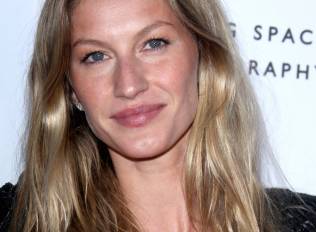
  • Gisele Bundchen Details Panic Attacks, Suicidal Ideation In New Memoir

    Gisele Bundchen Details Panic Attacks, Suicidal Ideation In New Memoir

    “I always considered myself a positive person, so I was really beating myself up…I felt like I wasn’t allowed to feel bad.”

    In an upcoming memoir, Gisele Bündchen reveals that her life as a supermodel was far from perfect, despite how it appeared on the outside.

    Behind the scenes, the Brazil native, who retired from the runway in 2015 after 20 years in the business, struggled with panic attacks and suicidal thoughts, People reports.

    In a new interview, the 38-year-old mother-of-three said she is ready to share the pain she struggled with as she went from small town life to global stardom as a young woman.

    Bündchen was 14 when she got her first taste of modeling in Brazil. The rest was history. 

    “Things can be looking perfect on the outside, but you have no idea what’s really going on,” she told People. “I felt like maybe it was time to share some of my vulnerabilities, and it made me realize, everything I’ve lived through, I would never change, because I think I am who I am because of those experiences.”

    As a young model, Bündchen suffered her first panic attack in 2003 during a bumpy plane ride. She struggled to accept the pain she was feeling while at the height of her success.

    “I had a wonderful position in my career, and I was very close to my family, and I always considered myself a positive person, so I was really beating myself up… I felt like I wasn’t allowed to feel bad,” she told People.

    The model said she felt “powerless.” In her memoir, Lessons: My Path to a Meaningful Life, she described feeling like an “animal trapped inside” a cage. “I couldn’t see a way out, and I couldn’t stand another day of feeling this way,” she said, according to Page Six.

    Unable to make sense of her emotions at the time, her anxiety only worsened.

    “The idea swept over me then: Maybe it will be easier if I just jump. It will be all over. I can get out of this. When I think back on that moment, and that 23-year-old girl, I want to cry. I want to tell her that everything will be all right, and that she hasn’t even begun to live her life. But in that moment, the only answer seemed to be to jump.”

    The former Victoria’s Secret model was prescribed Xanax by a treatment professional, but wasn’t enthusiastic about receiving medication for her problems.

    “The thought of being dependent on something felt, in my mind, even worse, because I was like, ‘What if I lose that [pill]? Then what? Am I going to die?’ The only thing I knew was, I needed help,” she said, according to People.

    Since then, she made some changes to her lifestyle—like cutting sugar and relieving stress with yoga and meditation—that she said were the building blocks to her recovery.

    “I had been smoking cigarettes, drinking a bottle of wine and three mocha Frappuccinos every day, and I gave up everything in one day. I thought, if this stuff is in any way the cause of this pain in my life, it’s gotta go.”

    View the original article at thefix.com

  • Martin Sheen On Sobriety, Supporting Charlie Sheen

    Martin Sheen On Sobriety, Supporting Charlie Sheen

    “I think all of us are striving to lead honest lives. That’s a requirement of every human being.”

    Actor Martin Sheen addressed the many challenges experienced by his son, Charlie Sheen, at a charity event in Los Angeles on September 24.

    The 78-year-old actor, who currently appears in the Netflix series Grace and Frankiefolded his son’s experiences with alcohol, drugs and his very public meltdown into statements about selflessness, family unity and the importance of finding a means of giving back to the world at large at an benefit for the nonprofit The People Concern by LA Chefs for Human Rights.

    Sheen, who was being awarded with LA Chefs’ Human Rights Hero Award for his work with the homeless in Los Angeles, said that he was proud of his son’s efforts to follow a healthier path and admit to his past discretions. “I think all of us are striving to lead honest lives,” said Sheen. “That’s a requirement of every human being.”

    Sheen, who also battled alcoholism, said that charity and helping others can also be beneficial to one’s own problems. “The best way to heal is to help healing someone else, and it takes one to know one, so you can appreciate what someone’s going through if you’ve gone there yourself,” he noted.

    In an interview with AARP Magazine, Sheen said that upon getting sober through his Catholic faith, he turned to Alcoholics Anonymous to gain perspective on how to help Charlie with his dependency issues, which ultimately entailed him turning over his son to authorities for probation violation in 1998 as a last-ditch attempt to get him into rehabilitation.

    Martin Sheen admitted that bringing his son to help felt, at times, almost insurmountable. “What he was going through, we were powerless to do much, except to pray for him and lift him up,” he told Radio Times in 2015. Being in the glare of the celebrity spotlight also posed its own set of unique roadblocks. “The ego, the cover, the availability of stuff – it’s bread for destruction, the celebrity’s life,” he explained.

    To counter the siren call of the dangerous side of fame, Sheen said that giving over one’s most precious commodities – time and ability – can become an oasis.

    “When you come to understanding that the only thing you can ever possess is the thing that you cherish, and you give away with love, including your precious time and talent,” he explained. “That’s why volunteering is so important, because that’s the only thing we can take with us when the job is over. The only things you can take with you are the things which you cherish and gave away with love.”

    Sheen expressed pride and gratitude in Charlie’s latest attempt to live a clean and sober life. “The bigger your celebrity, the more difficult it is to lead an honest life, because your past is always present,” said the elder Sheen. “I think today makes it that much harder for people because there’s no privacy. I think that the idea of anonymity is very important to the [recovery] program, and it has an energy all its own.”

    View the original article at thefix.com

  • The Eternal Holiday of the Alcoholic

    The Eternal Holiday of the Alcoholic

    When you drink constantly, you become numb, slipping down into a sub-life, a waking coma. You become a chaotic ghost that exists almost at one step removed from everything else.

    The following is an excerpt from Jolly Lad – The Expanded North American Edition, published this month by MIT Press and available here.

    After I stopped drinking in August 2008 I went to Alcoholics Anonymous a lot at first – most days in fact for about half a year. I don’t go that often anymore and I haven’t done any of the twelve steps but I’d still say the programme was a crucial aid to me quitting.

    I guess even before I joined the fellowship I already had an inkling of what AA would be like. I’d seen enough soap operas, so I was prepared. Generally speaking, it was as I’d imagined it – a neon strip-lit, magnolia painted room with trestle tables and stackable chairs – usually in churches, village halls or community centres. Careworn people in comfortable clothes, chatting, sipping tea, rolling cigarettes. The 12 commandments and the 12 traditions would be unrolled and hung on the back wall. The yellow card (“Who you see here / What you hear here / When you leave here / LET IT STAY HERE!”) would be placed prominently at the front, resting against a small tub for the collection of voluntary subs at the end of the meeting. There would be a literature table full of pamphlets, information sheets and books and a box containing chips, or commemorative engraved metal tokens, for those who had hit a notable anniversary in sobriety – including the most important one: 24 hours. There would always be one or more copies of The Big Book there – the text written in 1939 by Bill W, to help alcoholics.

    Chapter Three of The Big Book says: “Most of us have been unwilling to admit we were real alcoholics. No person likes to think he is mentally different from his fellows. Therefore it is not surprising that our drinking careers have been characterised by countless vain attempts to prove we could drink like other people. The idea that somehow, someday he will control and enjoy his drinking is the great obsession of every abnormal drinker. The persistence of this illusion is astonishing. Many pursue it into the gates of insanity or death.”

    I had been prepared to pursue the chimera of controlled drinking right through the gates of death myself. When I gave up I was close to dying and had nearly checked out accidentally once earlier the same year. But I’d made my peace with death. I had come to believe that alcohol was the only thing that made life bearable. And in a lot of ways it was.

    Image via Krent Able

    There was dirt, horror and disfigurement everywhere I looked. But after one stiff drink I could leave the house; after two drinks the fear started lifting and after the third drink I’d feel like an artist. Or to be more precise, I would see the world through the eyes of an artist. And after five drinks, well, I could take my pick of them. On a good day I felt like Picasso. But there were all kinds of days. Imagine being Gustav Klimt in Hull, the golden light of the low winter sun at 3pm in the afternoon radiating along The Avenues. Imagine being Walter Sickert in Manchester, the violent brown and black smudges radiating from your feet and along canal towpaths. Imagine being Vincent van Gogh in St Helens, the sky ablaze with stars. That is something close to victory, something close to beating death.

    They laughed at me and called me a piss artist. And how right they were. I was an aesthete with a broken nose in a stained shirt and inside-out boxer shorts, drinking the world beautiful.

    When you drink constantly, you become numb, slipping down into a sub-life, a waking coma. You become a chaotic ghost that exists almost at one step removed from everything else. You float through the film of your own life. You see the sublime in the augury of fried chicken bones and tomato sauce cast upon the upper deck floor of a bus. You can divine a narrative among the finger-drawn doodles on the misted windows. You can feel your destiny in hundreds of individual condensation droplets on the glass turning red, then amber, then green.

    Everything that you’d worried about a few hours previously… Where will I get the money from? What if he beats me up? Am I seriously ill? Am I dying? Have I got cancer? What will she say when I finally get home a week late? Will she cry when we eventually go to bed together? Will she pack her things and leave the next day? How near is death? What will it be like? Will I scream and cry? What is it like to die? And now, after some drinks, there is just the sweet sensation of your life passing you by with no struggle and no fuss. The rope slides through your fingers with no friction, just warmth as a balloon rises higher and higher out of sight. I have bottles and bottles and bottles and my phone is out of credit. A Mark Rothko night. A Jackson Pollock night…

    This is the eternal holiday of the alcoholic. Once you create as much distance from your everyday life as you naturally have from orange tinted Polaroids of childhood caravan trips or stays in seaside hotels and Super 8 film reels of school sports days, then you start to experience your quotidian life like it’s the sun-bleached memory of a happy event. You feel nostalgia and warmth for boring events that are unfolding right in front of you. You feel wistful about experiences that most people would find barbaric or gauche or unremarkable. You experience the epic, the heart- warming and the hilarious in post office and supermarket queues. You develop permanently rose-tinted glasses.

    But there’s no getting away from it, after a while the strategy starts failing. You start seeing everything through the eyes of Francis Bacon, through the eyes of Edvard Munch, through the eyes of HR Giger…Your vision becomes stained and cracked.

    It is pretty tough stopping drinking but it’s not like I want a pat on the back for it.

    Image via Krent Able

    I see alcoholism as a self-inflicted leisure injury to some extent, disease or not. But going on the wagon is nothing compared to coming to terms with what you are like sober. The trouble with stopping drinking is that the only thing it solves in your life is you being drunk or hungover and ill all the time. When you stop drinking, everything you drank to avoid dealing with is still there, as bad as ever. Mental illness, debt, depression, the impulse to self-harm, the impulse to commit suicide, anxiety, social dysfunction, eating disorders, body dysmorphia, stress, anger, violent rage… I started drinking when I was 13 and was drinking every day by the time I was 15. I stayed pretty much constantly drunk until I was 37. When I stopped I had no real idea what I would be like.

    Alcoholism is debt consolidation for your life. Submit to alcoholism and your life becomes incredibly simple. Drink becomes the only thing you care about – and you will end up just fine with letting all the other stuff slide to the extent that it doesn’t even matter if you die or not. The only real problem with this arrangement is what happens if you decide to stop.

    Picture a reservoir surrounded by mountains. You have been tasked with draining the massive body of water away to repopulate the area. But once the water has gone you are faced with the former town that was initially flooded and the now wrecked buildings which need to be pulled down. Call several construction firms. People have been fly tipping here for years. There is tons of rubbish here. You will need help to clean the area up. There are corpses wrapped in carpet and chains. It was the ideal place to dump bodies. You’ll need to call the police and the coroner’s office. The press are on their way. There are rotten and half eaten animal carcasses that need to be cleared up and disposed of. Environmental health need to be involved. You have never seen so many mangled shopping trollies, broken children’s bikes and unwanted cars. The clearance job will be massive. There are burst canisters of toxic waste that have long since leached into the ground. It will be years before you can do anything with this land. The water was merely the stuff that was making this area look picturesque. What you have left in its place is an area of outstanding natural horror. It probably feels like you should have left well enough alone.

    Before claiming a seat by putting my coat on the back of it, and even before queuing up for a coffee, I went into the gents to try and freshen up. I scrubbed my hands hard and splashed freezing cold water onto my face – prodding the dark purple streaks of flesh under each eye with a fingertip. I stood for some time looking into the mirror as the water dripped off my face.

    What did I look like? A middle-aged man with long hair in a heavy metal T-shirt. The beard of someone who slept behind a hedge on an A-road roundabout. Face permanently blotched red down one side with hundreds of burst capillaries after spending three days awake doing amphetamines in 1996. A Monday night which culminated in nurses shouting: “Shave his chest, shave his chest!” A nose broken 17 times and eventually surgically rebuilt. Forehead like the cover of Unknown Pleasures. Right eyelid drooping down over a partially sighted eye, scarred and damaged beyond repair.

    George Orwell said we all get the kind of face we deserve by the time we turn 40. I had mine hammered irreversibly into place by my 25th birthday. Ostensibly I looked like the same person, but somehow as if reflected in the back of a rusty soup spoon instead of a mirror.

    Image via Krent Able

    I was comfortable with going to AA now that I’d been going for nearly two years but still, the back of the room suited me just fine – it’s not a Kate Bush concert, you’re not missing anything if you don’t sit in the front row.

    Comfort was not on the agenda the first time I went to AA however. My first visit to the rooms might as well have been my first day at senior school, or my first day in prison, for all the stress it caused me. I went while visiting friends up north and it was terrifying. A bare concrete room with old school chairs, bare lightbulbs and spiders in the corners. A retirement age man with a nose like a red, purple and blue blood sac mumbled brutal things as other broken people looked at their feet. When I stepped outside into the freezing cold night after the 60 minutes were up I had to sit on a garden wall for ten minutes, staring at the ground under an orange sodium light. I was unable to stand properly because of anxiety and I was still dizzy with fear walking away afterwards. It struck me quite clearly that there might not even be any point to giving up drinking, that it could even make things worse in some ways.

    It’s bad form to talk about the meetings or AA at all. Tradition 11 says: “Our public relations policy is based on attraction rather than promotion; we need always maintain personal anonymity at the level of press, radio and films.” I’d like to apologise for speaking about AA here, even if it is just in very general terms. I would never repeat what anyone else said there; I never talk there myself, I just sit and listen. I wait for the reassurance of identification and nothing else.

    “I was like that once. I was that bad. I never want to go back to that again.”

    Buy Jolly Lad here.


    This excerpt has been lightly edited for context. All identifying details of AA meetings have been changed.

    View the original article at thefix.com

  • Big Pharma Tries To Slip Benefit Into Senate Opioid Package

    Big Pharma Tries To Slip Benefit Into Senate Opioid Package

    “Big Pharma is trying to hijack the bill and turn it into a giant pharmaceutical company bailout,” said Senator Tina Smith (D-Minnesota).

    Pharmaceutical companies are attempting to inject $4 billion in savings for themselves into opioid legislation being considered in Congress. 

    A package of bills meant to address the opioid epidemic have passed both the House and Senate, and the two bodies are now working together to craft a version that both can agree on.

    The Pharmaceutical Research and Manufacturers of America, or PhRMA, has tried to get a clause added to the bill that would reduce the discount that pharmaceutical companies need to offer Medicare beneficiaries whose spending on drugs falls into the coverage gap, according to The New York Times.  

    “We have a good bipartisan opioids bill and we need to get it signed into law. But now Big Pharma is trying to hijack the bill and turn it into a giant pharmaceutical company bailout,” Senator Tina Smith (D-Minnesota) said in a Twitter post.

    Right now, pharmaceutical companies are required to discount brand-name drugs 50% for people in the coverage gap. Next year, the discount is set to increase to 70%. The increased discount was initially designed to reduce federal spending on Medicare’s drug benefit by $7.7 billion through 2027.

    However, after the law was passed increasing the discount, the Congressional Budget Office raised its estimate of the savings to $11.8 billion. Because of this, PhRMA would like the discount reduced to cover only the $7.7 billion savings, calling the updated level a “technical error.” 

    The AARP said that PhRMA’s proposal “will increase prescription drug costs for older Americans while providing a windfall of billions of dollars to the drug industry.”

    The prescription drug discount has nothing to do with the opioid crisis—but because there is broad bipartisan support for passing the opioid legislation quickly, PhRMA is trying to slip its desired changes into the bill while it has momentum, the Times noted. 

    “We are focused on ensuring Medicare Part D is secure for the future by correcting a technical error” by the Congressional Budget Office, said Stephen J. Ubl, the president and chief executive of PhRMA.

    However, most people outside PhRMA disagree. 

    “In the context of the current debate, I would not roll back the drug discounts,” said Mark E. Miller, the former executive director of a federal commission that advises Congress on Medicare. “We need broader changes in the structure of Medicare’s drug benefit. If the discounts are rolled back, patients and taxpayers should get something in return, to bring more competition to the market and drive down drug prices.”

    View the original article at thefix.com

  • Overdose Deaths Increase in New Jersey Even As Prescriptions Decline

    Overdose Deaths Increase in New Jersey Even As Prescriptions Decline

    State attorney General Gurbir S. Grewal says that despite the fatal OD increase “there are reasons for hope.”

    Opioid overdose deaths in New Jersey increased by 24% last year, even as the number of prescriptions written for opioids fell for the first time in recent years. 

    According to a press release from the state attorney general’s office, just over half of opioid overdose deaths in the state were caused by fentanyl and other synthetic opioids meant to mimic its strength. 

    “We still lose too many of our residents to drug overdoses, and the death toll continues to rise,” said Attorney General Gurbir S. Grewal. “But, if we look at the numbers, there are reasons for hope.”

    Despite the fact that an average of eight New Jersey residents die from an opioid overdose each day, Grewal said that policies to limit prescriptions of opioids are working. The state’s opioid prescription rate peaked in 2015, when 5.64 million opioid prescriptions were dispensed.

    By 2017, that number was down to 4.87 million, making last year the first “in recent memory when the number of opioid prescriptions fell below 5 million,” said the press release. 

    In March 2017, the state enacted a five-day limit on first-time opioid prescriptions. Since then, prescriptions of opioids have decreased 26%.

    Between January 2014 and March 2017 they were reduced just 18%, so this suggests a significant improvement in cutting back on opioid prescriptions. Overall, opioid prescriptions have been reduced by 39% between January 2014 and July of this year.

    “The decreasing rate of prescription opioids dispensed in New Jersey shows that a smart approach to the opioid epidemic can help turn the tide. If we persist in our efforts to prevent addiction and overdoses, we can save lives,” said Sharon Joyce, director of the Office of the New Jersey Coordinator for Addiction Responses and Enforcement Strategies (NJ CARES).

    In order to try and decrease the opioid overdose rate, the state will begin offering more information online, including data on naloxone administration rates and overdose rates for specific counties. 

    “The Attorney General is not only making his Department’s opioids data publicly available,” the press release said. “Through NJ CARES, the Department is relying on data to target its education efforts and identify its enforcement priorities.”

    The administration is also focusing on outreach efforts, including an ad campaign to highlight a safe disposal program for unused prescriptions.

    And the musical Anytown will be performing at middle and high schools across the state to raise awareness about the dangers of opioids. 

    View the original article at thefix.com

  • Scientists Used Gambling Monkeys To Try To Figure Out Addiction

    Scientists Used Gambling Monkeys To Try To Figure Out Addiction

    The experiment’s goal was to understand which regions of the brain wield influence over decision-making.

    The behavior of a pair of monkeys with a taste for juice—and gambling—may suggest that risky decisions, from high stakes betting to criminal behavior, is less of a personality trait and more an issue of brain circuitry.

    Scientists conducted an experiment in which the monkeys were taught to play a computer game that rewarded them with juice, the amount of which varied depending on the risk level of their decision.

    When the scientists found that a region of the brain involved with eye movements became activated when the monkeys took greater risks, they temporarily deactivated the region—and found that the test subjects made far less rash decisions.

    The research suggests that risk preference is not fixed but adaptable, and by understanding the brain function involved in those decisions, help could be provided for individuals who have “decision-making disorders” like substance or gambling dependency.

    The research, conducted by scientists from Johns Hopkins University and published in the September 2018 edition of Current Biology, sought to determine whether risk-taking was a personality trait—in short, “that some people are risk takers and others are not,” said study co-author and Johns Hopkins associate professor Veit Stuphorn. 

    The scientists devised a computer game in which the test subjects—two rhesus macaques—were offered two choices: one, which provided a guaranteed but small amount of juice, and the other, which might bring a more substantial amount of juice, or none at all. To indicate their choice, the monkey would move their eyes in each round.

    What the scientists found was that the monkeys consistently chose the bigger but less safe option, even in the face of getting consistent but smaller amounts of juice instead of none at all.

    They also discovered that the supplementary eye field (SEF)—a region in the frontal lobe of primates’ cerebral cortex that is involved in eye movement, and possibly in the eye’s role in decision-making—became very active when the monkeys earned a larger reward.

    But as NPR noted, the activity didn’t prove that it correlated with the monkeys’ behavior, so the scientists temporarily deactivated that area of the brain through cooling. Once inactive, the monkeys made safer bets by choosing the smaller but consistent option for juice.

    The study findings do not conclusively determine that the SEF is responsible for high-risk decision-making; rather, it suggests that making risky decisions is not a set and permanent aspect of an individual’s personality.

    The brain might alter those choices based on a number of factors, including the level of reward. It’s also possible that other regions of the brain may be complicit in making high-risk choices. 

    Understanding which regions of the brain wield influence over decision-making could have far-ranging implications in the treatment of conditions that involve rash choices.

    “One would be to help people who have decision-making disorders, whether that’s problem gambling or addiction, or other things like that,” said Michael Platt, the James S. Riepe University Professor of neuroscience, marketing and psychology at the University of Pennsylvania. “We might be able to develop more effective therapies.”

    View the original article at thefix.com
  • Views From A Rehab Counselor

    Views From A Rehab Counselor

    No amount of comfort is enough when there is a look of terror on someone admitting to treatment for the first time.

    “I want to be that little girl!”  

    A woman in her late 40s is sitting in front of me in my office, sobbing as she stares at a black and white picture of my then four-year-old daughter being twirled on the dancefloor, her white crinoline dress slightly blurred by the movement of her swirl. She has a smile of joy that only a four-year-old can have.  

    The woman is a patient I’m admitting to the rehab facility where I’m a counselor. She is highly intoxicated and emotionally distraught. This is her first time in treatment.

    I immediately regret having the picture so visible, something I know a lot of counselors and therapists would never do and as I move to put the picture facedown on the window sill, she begs me not to. For some reason she is fixated on my daughter’s image.

    In the three years that I’ve been in the field there is something new happening—more and more older men and women—those in their 40s through late 60s—are entering treatment for the first time for their alcohol dependence.  

    It’s also happening with people in their 20s—young, suburban, college-educated, fresh-faced young people attempting to stop drinking.

    Prior to this job, I worked in an all-male halfway house for 30 men. In the year that I was there, maybe four of the 50 or so guys I had on my rotating caseload struggled with alcoholism. The rest were mostly 20 and 30-year-olds who were addicted to heroin.

    This carried over into my current job where initially most of the patients coming in were younger, a little rough around the edges, wanting to detox from opiates and benzos. Then suddenly, just a few months ago, something seems to have shifted.  

    I’m stunned by the amount of alcohol these patients have been drinking on a daily basis. I went into my local liquor store to ask the owner to show me what a “handle” is and what a “sleeve” of nips looks like.  

    For me, someone who is not in recovery and looks forward to a glass of wine at the end of the day, who stops the second I feel a little buzzed I can’t wrap my head around that desire, that need to completely obliterate oneself to the point of blackout. I can count on less than two hands the number of times I’ve been even slightly drunk and only one time when I actually got a touch of the bed spins. I’ve never thrown up from drinking, never passed out. 

    I know enough to realize that a good number of people with substance use disorders are self-medicating for one thing or another, for the pain and anguish, the unaddressed trauma and mental health issues that lurk beneath the surface.  

    If a family member accompanies the patient to our facility they will often take me aside and fill me in on some details that the patient wouldn’t necessarily reveal themselves during the intake process. It comes out eventually during the customary 28-day stay, with the gentle guidance of insightful therapists and peers.  

    Obviously the hard part, the seemingly impossible task, will be for them to find other ways to cope once treatment is complete.

    I have a special fondness for the men and women who arrive to the facility under the influence. I love the rollercoaster ride they take me on with them, the ups and downs, the loop-the-loops, the crying and yelling.  

    I’m okay with being told to “fuck off” and then only two minutes later being told that I’m their guardian angel. I was recently told that I was “hotter than a hand grenade” by a man whose blood alcohol level was off the charts.  

    I told him that when he sobered up how disappointed he’d be in my “hotness” level. And yes, when I DID see him the next day, he barely remembered me.   

    No amount of comfort is enough when there is a look of terror on someone admitting to treatment for the first time. I can only do so much by telling them that it’s going to be okay, that they’ve come to the right place, that they’re so brave for making this first step. I get to go home at the end of the day. I don’t have to be woken up every four hours to have my vital signs taken or worry about who my roommate might be.  

    Some time during my intake the woman sitting in front of me looked at the picture of my daughter, put her head down, still sobbing and defeated and filled with shame and said, “I’m NEVER going to be that little girl.”

    It was clear that she didn’t think she would ever achieve a moment of such complete joy and freedom, that she would ever be spun around on a dance floor in a twirly dress. It took a couple of hours to complete her paperwork and by the time we wrapped up, she had sobered up quite a bit.  

    As I stood up to escort her to the unit, she looked at the picture one more time, some strong and silent resolution having been made, the belief that joy could and would be achieved in her life and said, “I’m GOING to be that little girl.”

    I so hope that she has found many joyful and free moments since she left treatment, that she dances in her living room with a smile on her face.  

    Gayle Saks has written extensively about her work as a substance abuse counselor from the unique perspective of someone who is not in recovery herself. Her blog, My Life In The Middle Ages, was voted one of the Top 20 Recovery Blogs for 2016 by AfterParty Magazine. She has written on the subject for The Fix, HuffPost, mindbodygreen and Thought Catalog. She has also written about being the daughter of a Holocaust survivor and the eventual suicide of her mother. Her pieces on the subject have appeared in kveller where she is a regular contributor, The Jewish Journal, and MammaMia.

    In 2013 she was invited to be on a panel on HuffPost Live to talk about being middle-aged, where her 15 minutes of poignant and intelligent conversation turned into a soundbyte about her having a hot flash at a Justin Timberlake/Jay-Z concert. 

    Saks grew up on Long Island, New York, and lives in the Greater Boston area with her husband, daughter, two cats and two dogs or as her husband says, “Too many beating hearts.”

    View the original article at thefix.com