Author: The Fix

  • Addiction Contributes To 40% Of Foster Care Cases

    Addiction Contributes To 40% Of Foster Care Cases

    Nationally, about 36% of foster care cases stem from parents using drugs.

    In North Carolina, as in the rest of the country, the opioid epidemic is tearing families apart, with substance use disorder to blame for about 40% of cases where a child enters foster care in the state. 

    A 15% Rise Over A 10-Year Period

    A decade ago, just 25% of foster care cases were related to substance use disorder, according to North Carolina Health News. In just five years the number of kids in foster care in the state has increased by 20%, highlighting just how devastating addiction can be for the whole family

    Ken Maxwell owns a privately run nonprofit foster care placement and adoption agency in the state. He said that typically during times when the economy is strong foster placements go down, because parents are better able to provide for their kids.

    However, right now North Carolina has a strong economy and low unemployment rates, but drug abuse continues to drive up the number of kids in care. 

    “We’re not seeing the numbers decline, we’re seeing the numbers increase. The numbers are staying high because of substance abuse or opioid abuse,” Maxwell said.

    Maxwell said that families who have never had interactions with the foster care system before are losing their children, showing how quickly opioids cause parents to lose the ability to care for their kids. 

    He said, “This sneaks up on families and they don’t realize it until they’re at risk of losing their kids.” 

    A study published in July found that nationally, about 36% of foster care cases stem from parents using drugs. Nationally, the number of kids in foster care increased 12% between 2012 and 2017. 

    The Numbers Are Higher In North Carolina

    Mary Beth Rubright is the assistant director of social work for the Department of Social Services in New Hanover County, North Carolina, where half of foster care cases are related to substance abuse, with 23% caused by opioids. She said that social workers try to help parents get sober so that they can provide a safe living environment for their kids and be reunified. 

    She said, “If they’re in recovery and in a program, it makes our job a whole lot easier.”

    The county has launched a program to help get babies home sooner if they are born with drugs in their system. The program allows parents to work closely with a social worker with the goal of regaining custody of their infants within 60-90 days. The program is expensive to run, but the long-term benefits for families are worth is, Rubright said. 

    “It’s critical that you give [mothers] opportunities to bond with her children. The truth is that in the end, it’s a lot less expensive to pour those resources in on the front end.”

    View the original article at thefix.com

  • SAMHSA Under Fire For "Meth Monster" PSA

    SAMHSA Under Fire For "Meth Monster" PSA

    While spreading awareness is key, people in the health industry say that the video’s approach is all wrong.

    With methamphetamine addiction and overdose on the rise, the Substance Abuse and Mental Health Services Administration (SAMHSA) is trying to raise awareness about the risks of meth use, but is coming under fire for a new PSA the agency released this week. 

    Stereotypes & Stigma

    As reported by Filter magazine, in the PSA, a man is shown in a boxing ring battling a hideous “meth monster.” In the first round, the man is knocked down, but springs back up. Next, the monster uses pliers to pull out his teeth, a reference to the “meth mouth” stereotype.

    “There goes the teeth,” a sports commentator narrating the video says. “That’s gotta hurt.”

    In the third round, the man is captured by the monster. “He doesn’t seem to be able to get away. He’s trapped. Meth is stealing his soul,” the commentator exclaims. 

    The commercial ends by urging people to get more information or seek help by visiting samhsa.gov/meth or calling 1-800-662-HELP (4357). While awareness is key, people in the health industry say that the approach in the video is all wrong.

    Dr. Sarah Wakeman, an addiction medicine specialist at Massachusetts General Hospital, took to Twitter to express her concern. 

    “Is this a joke?” she wrote. “This makes the old fried egg commercials look mild. ‘Meth will steal your soul’- really @samhsagov ?? How about some fact based, non stigmatizing public health approaches instead of this…”

    Bill Kinkle, co-host of the Health Professionals in Recovery podcast, wrote on Twitter that PSAs show the policy mistakes that can prevent people from getting help. 

    “Everything you need to know about how War on Drugs propaganda operates is in this video. Personifying a drug as an evil monster, filling you with intense fear, portraying drug use always as a boxing match, tons of misinformation and lies, then finishing with ‘get the facts,’” he wrote. He followed up with a simple tweet: “Not helpful.”

    SAMHSA’s web page dedicated to meth information does relay helpful and concerning facts. For example, the agency reports that meth use among adults 26 and older increased 43% between 2017 and 2018. 

    Still, Samatha Arsenault of the advocacy group Shatterproof said PSAs like this one waste resources that could be better spent on getting people with meth addiction real help.  

    “I was appalled by this video,” she wrote. “Sad to see that after knowing for so long that scare tactics not only don’t work but are damaging to ppl impacted by SUD that resources were used to put this together.”

    View the original article at thefix.com

  • Online Tool For Tracking Treatment Beds Unveiled In San Francisco

    Online Tool For Tracking Treatment Beds Unveiled In San Francisco

    The tool will go live on the SF Health Network website in November.

    A new online tool is scheduled to go live in November to help homeless San Franciscans find available treatment beds for substance use disorder or mental illness.

    Mayor London Breed unveiled the tool on Tuesday (Sept. 24), as part of her Heal Our City initiative.

    “When someone is experiencing homelessness, mental illness, and a substance use disorder, the last thing we should be doing is making it more complicated for them to get the care they need,” said Breed. “With this real-time data, we’ll be able to connect people more efficiently with available treatment beds, make better use of our existing resources, and identify opportunities for improvement in our existing system of care.”

    Going Live In November

    The tool will go live on the SF Health Network website in November. Anyone will have access to real-time information about the 350 short-term behavioral health treatment beds in San Francisco.

    “We want to make the best possible use of the substance-use and mental health treatment resources that San Francisco already provides, and to make data-driven decisions about where we need to add services,” said Dr. Anton Nigusse Bland, the city’s first director of mental health reform.

    However, not everyone was moved by the mayor’s announcement. “It’s mind boggling that our Department of Public Health still doesn’t know where its own beds are or who is in them,” said city supervisor Matt Haney, according to the SF Examiner. “This is a long overdue, though really minor, basic step towards a functional system.”

    Haney is a vocal advocate for reforming the city’s approach to mental health care, drugs, and its homeless population. He has been critical of the city’s lack of a “comprehensive citywide strategy” in tackling these issues.

    Drugs In The Tenderloin

    This year it was reported that more than half (56%) of those arrested or cited for selling drugs in SF in 2017-2018 were in the Tenderloin, a neighborhood which falls under Haney’s District 6.

    The problem is so dire that Haney introduced a city resolution that would declare drug abuse and overdose a public health crisis. He also sponsored legislation to establish a Street-Level Drug Dealing Task Force, which passed Tuesday (Sept. 24), to advise city officials on how to tackle its problem with drug dealing.

    This November, Haney is urging San Franciscans to vote in favor of Mental Health SF, a program that would guarantee treatment for mental illness and substance use disorder for every resident.

    “San Francisco has the opportunity to lead, to say, ‘This should be a right for everybody.’ We’re going to build a system around it,” Haney said in May.

    View the original article at thefix.com

  • Machine Gun Kelly Wants To Be Happy Without Drugs, Alcohol

    Machine Gun Kelly Wants To Be Happy Without Drugs, Alcohol

    “I want to wake up and know what mood I’m going to be in,” the rapper wrote in a recent Twitter post.

    Machine Gun Kelly is on to the next chapter. The Cleveland rapper announced on Twitter that he’s “determined” to be happy, substance-free.

    “I want to become happy without the help of pills, drink, or drugs one day,” he wrote. “I want to wake up and know what mood I’m going to be in.”

    The rapper and actor, born Colson Baker, said he was inspired by the love he received during his Hotel Diablo tour, which ended with a final performance in Moscow, Russia on Sunday (Sept. 22). MGK will continue to perform in the States up until November 18, according to his official website.

    “Fans gave me so much love this tour it made me want to become a happier person. I’m determined to do it. Thank you, I love you,” he wrote.

    He also tweeted on the same day, “Just finished the last show of the best tour of my life. I’m just sad it’s over… I’ve felt broken inside for a while, this helped fix me.”

    Heroin Addiction

    MGK’s history of drug and alcohol use is no secret. His music has chronicled his battles with heroin and suicidal thoughts. The vulnerability of his work cemented his fan base, who connected with the rapper through his music.

    Weed is often referenced in his interviews, but the rapper, a father to a young daughter, has calmed down considerably from using harder drugs.

    This past July, the 29-year-old recalled in a GQ interview how he would snort painkillers, which he said he would “never recommend” to anyone.

    When asked which drug he would never do again, he replied, “Opana. It’s like heroin. We snorted it. It was so dark. I’d never recommend it to anybody,” he said. “One: it’s absolutely addictive. Two: to be addicted and to want that feeling over and over again… I’m not a person who goes down and then has a rush of positivity to bring themselves back up. I’m the type of person who likes to listen to sad music when I’m sad. I love to wallow and just sink and sink, so that’s why I’ll never touch that one again.”

    Fans Show Support

    His fans on Twitter responded to his recent post with overwhelming positivity. “Somehow I have been able to do this and I was one of the worst alcoholics I’ve ever seen in my life. You [definitely] can do this my dude. Surround yourself with positive people willing to accomplish the same goal,” one follower replied.

    “You got that strength within you. You’ve survived nearly dying numerous times, you have that power to be happily sober and you have a huge crowd of people to help support you with that,” wrote another.

    View the original article at thefix.com

  • Will Arnett Credits Community With Keeping Him Sober

    Will Arnett Credits Community With Keeping Him Sober

    “Sobriety to me is a gift. It’s something that I was fortunate enough to be able to receive and I’m very, very grateful on a daily basis.”

    Will Arnett, who is most recognized for playing George Oscar Bluth II (G.O.B.) on Arrested Development, credited his sober community with helping him overcome alcoholism when he received the Spirit of Sobriety Award at the Brent Shapiro Foundation Summer Spectacular last Saturday night (Sept. 21).

    “Sobriety to me is a gift,” Arnett said, according to Variety. “It’s something that I was fortunate enough to be able to receive and I’m very, very grateful on a daily basis.”

    He said that his decision to get sober has had a ripple effect on the people around him.

    “Sobriety has touched so many people, not just me but so many people in my life, my kids, my family,” he said.  

    He Relapsed In 2018 

    Arnett got sober more than 18 years ago after he noticed he was drinking too much. He briefly relapsed in 2016 while working on Flaked, his Netflix comedy series about a man in recovery. When that happened, he was able to reconnect with his recovery community, which has helped him stay sober.

    “I have been on the receiving end of a lot of kindness in my life and that kindness is what has allowed me to be here tonight passing the message on to others who need help,” Arnett said at the gala. “Community is the opposite of addiction. The more conversations we can have, the more people we can help.” 

    Celebrating Sobriety For A Good Cause

    The Brent Shapiro Foundation was started by Robert and Linell Shapiro, who lost their son Brent to a drug overdose in 2005. The foundation regularly brings together Hollywood stars to share their sobriety stories and raise money for addiction treatment and awareness. 

    “I think early education is a big key,” Linell Shapiro said at the event. “Being with your kids, being open about it, talking about drugs and their influences. I think if you start young enough, people lots of times don’t want to do that but if you start young enough and put it in the right way, it will really stay with a child.”

    Actress Eva Longoria hosted the event, and said that she has been touched by the work that the Shapiros have done in honor of their son. 

    “I do want to say as a new mother, this foundation and what they are doing is extremely important and it’s why we are here tonight,” she said. “The work that Bob and Linell have done over the last 14 years is remarkable and I couldn’t be more proud of them.”

    View the original article at thefix.com

  • Massachusetts Temporarily Bans Vape Sales

    Massachusetts Temporarily Bans Vape Sales

    Critics fear the ban will push people to use black market vaping products.

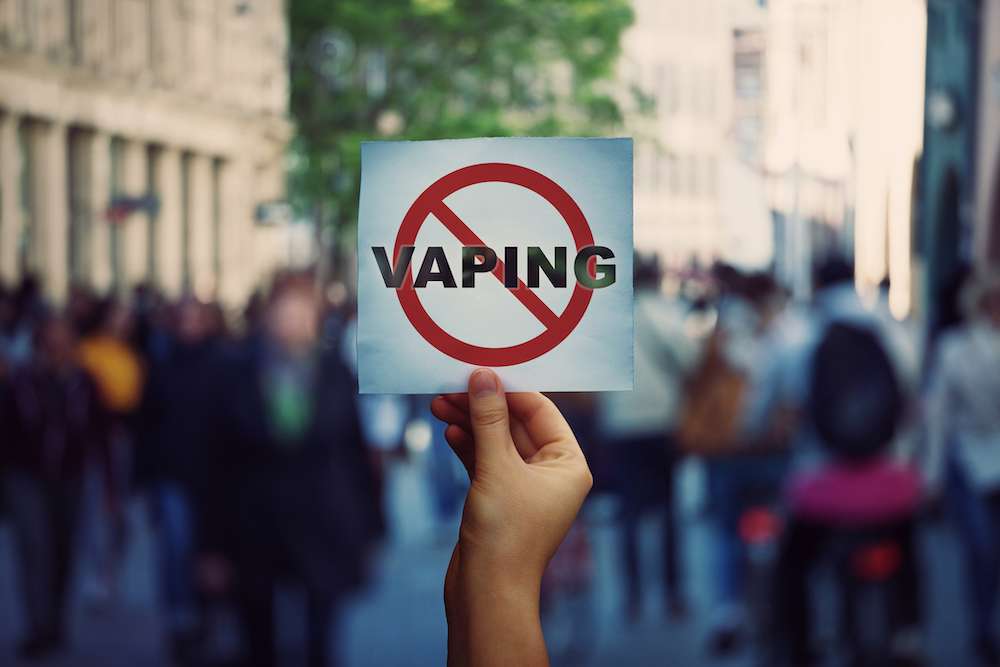
    The state of Massachusetts has declared an emergency four-month ban on the sale of all vaping products, amid increasing reports of vape-related illnesses around the country. 

    “One of the experts said that, ‘We don’t have time to wait. People are getting sick and the time to act is now.’ I couldn’t agree more,” Governor Charlie Baker said, according to The Boston Globe.

    The ban was approved Tuesday (Sept. 24) and is the strictest policy that has been adopted so far in the U.S. The ban covers flavored and unflavored vaping products, and extends to ban online and retail sales as well.

    Other States Taking Similar Measures

    New York banned flavored vaping products last week, and Michigan took similar steps earlier this month. The Massachusetts ban covers all vape products, including tobacco-flavored products, similar to San Francisco, which enacted a ban on all vape products in June.

    “The use of e-cigarettes and marijuana vaping products is exploding, and we are seeing reports of serious lung illnesses, particularly in our young people,” Baker said at a press conference, according to the Associated Press.

    Michael Seilback, assistant vice president for state public policy of the American Lung Association, called on the feds to take action, something the Trump administration has promised to do. 

    “From our perspective, it’s the absence of strong federal action by the FDA that is forcing states to have to make choices like this on how they are going to protect children and adults from the public health emergency of e-cigarettes,” said Seilback. 

    Critics React

    Still, people who sell vapes said that an across-the-board ban is an overreach. 

    “There are clearly some issues there. The question is, what’s the problem? Is it the product being sold on the shelves by companies like Juul, or is it the off-brand stuff coming from other countries and sold on the internet?” said Jon Hurst, president of the Retailers Association of Massachusetts. “I hope we can all work together and find out what is the problem and find a solution soon.”

    Geoffrey Yalenezian is the COO of a chain of vape shops in Massachusetts. He said he was shocked by the ban. 

    “My chin hit the floor,” he said, adding that the ban is “not changing or stopping anything. He’s taking a stance. His stance is I don’t really care about small businesses in Massachusetts.”

    Shaleen Title, who sits on Massachusetts’ Cannabis Control Commission, is concerned that the ban will push people to use black market vapes, which are potentially even more dangerous. 

    “This is a terrible decision. Purposely pushing people into the illicit market—precisely where the dangerous products are—goes against every principle of public health and harm reduction,” she wrote on Twitter. “It is dangerous, short-sighted, and undermines the benefits of legal regulation.”

    View the original article at thefix.com

  • AToN Center

    AToN Center

    This San Diego luxury rehab provides customized treatment by highly qualified staff and, according to one alum, “Sets the gold standard for all other treatment centers.”

    AToN’s treatment program is based on a collaboration with each individual resident to “Achieve a recovery philosophy that works in their life.” AToN (which stands for “aid to navigation”) does this by drawing from a variety of modalities: Cognitive Behavioral Therapy is meshed with individual and group therapy. Add one or more of the various holistic treatments such as massage, acupuncture, and hypnotherapy and you can see how comprehensive their program is. They also provide EMDR and biofeedback therapy, as well as weekly breathwork and mindfulness groups.

    AToN is a luxury rehab, but pretension is at a minimum: “In general, AToN draws an affluent crowd. However, I felt accepted right away and felt no sense of pretense or judgement,” said one alum. Residents range in age from “20’s to 60’s” and come from “different educational and socioeconomic backgrounds.” There is also a range in terms of “duration/stage of active alcoholism/addiction.”

    Residents at AToN stay in one of five houses, “like mini mansions,” complete with pools and jacuzzis. All the houses are adjacent, creating a 10-acre campus/sanctuary which residents describe as “beautiful” and “peaceful.” Some who responded to our survey had a roommate while others had a private room. No chores are required at AToN other than making your bed and keeping your room tidy. The focus is on the clients’ individual needs and comfort.

    Alumni had high praise for AToN’s homemade meals, describing them as “Gourmet and truly exceptional,” and “Like a 5 star restaurant for every meal.” For those with food-related allergies, restrictions, or personal preferences, “The staff goes above and beyond to accommodate special requests and dietary needs.” One resident felt there was “Too much ‘comfort’ food. High carbs.” But while you can find fried items and pasta on the menu, “Anything and everything was readily available in abundance,” said one alum. 

    AToN employs three chefs who provide a wide variety of delicious and healthy meals and snacks. Some resident favorites were filet mignon, ribs and pho. The seafood bar was another big hit, and, according to one alum, “Plenty of fresh vegetables and fruits accompanied every meal.” Outside of meal times, clients noted that coffee, sweets, snacks, and “A mix of healthy options and baked goods [were] readily available at all times.” For those who tire of the world-class gourmet meals, AToN takes residents to a different nearby restaurant every Sunday.

    During their stay, clients at AToN are allowed fairly unrestricted access to their cellphones and computers during free time (television is allowed after 3 p.m.). One client appreciated being able to stay connected: “The freedom to access my personal life while in residence made me all the more willing to make my stay a success.”

    Life at AToN is “Very structured,” according to one alum, “which is what I needed.” Clients attend group and individual therapy sessions daily. “The amount of one on one counseling is exceptional. You have a one on one everyday. This is what I got the most out of during my time here,” said one person. 

    In addition, residents are given their choice of activity each day, with options such as personal training in one of two onsite gyms, equine therapy, tennis, swimming, and more. Personal yoga sessions and massage are also offered. On weekends, AToN clients go on recreational outings such as “Stand-up paddle boarding in the local lagoon, playing miniature golf, visiting the San Diego Zoo Safari Park.” 

    AToN offers up to five offsite self-help meetings weekly, including AA, NA, SMART Recovery, Refuge, Lifering, and Celebrate Recovery. “I specifically attended ATON because it was not 12 step oriented,” said one former client, while another pointed out, “It was 100 percent open to both 12 step and alternative which I found very appealing.” Religion is not part of the program at AToN but in keeping with their policy of catering to each resident’s needs, transportation to outside houses of worship is made available to all who request it.

    Rules at AToN are “made clear from the beginning,” said one resident, “but most don’t have a problem following them.” Additionally, “Clients are encouraged to work out personal differences in process groups.” When rules are broken, staff response is “prompt and judicious.” For example, “There was a young lady who was clearly high and then tried to frame her roommate for pills that were found. The young lady was immediately escorted off the property.” 

    Most alumni were impressed with the care provided by medical and clinical staff at AToN. The center employs seven full-time staff psychologists and four full time staff chemical dependency counselors, and every residence has a nurse present 24/7. Alumni described staff as “empathetic and caring” and “very sensitive to individual needs.” In addition, there are four EMDR-certified therapists specializing in the treatment of trauma and two biofeedback certified therapists who treat patients with anxiety.

    “AToN stuck out for me because of the trauma therapies they offer and the high clinician/client ratio (1:2),” said one alum, who had struggled for years before coming to AToN. Others appreciated the individualized and holistic treatment: “Each patient was assigned a group of therapeutic staff which included two or more Addiction Counselors, one or more Psychologists, Psychiatrists, and Medical doctors…The therapy I received from the group was better than if I had just one therapist.” One former resident was grateful for the focus on trauma, but suggested: “Start emdr prep in the first couple weeks so an adequate amount of sessions can occur.”

    Detox at AToN is medically supervised. Three of the center’s five houses are licensed for IMS (Incidental Medical Services) which allows physicians to provide medical care onsite. 

    The majority of those we surveyed have remained sober since completing the program at AToN, and for those who haven’t, AToN quickly helped them get back on the right track: “I did have a minor relapse after leaving ATON, but there is a weekly aftercare available that you can attend for life, and once a month a therapist reaches out to you to see how you are doing and talk with you. It is amazing.”

    Overall, alumni are grateful for AToN’s “loving and very empathetic environment” and its “competent and genuinely caring” staff. They credit the program with giving them the tools to stay sober and help them turn their lives around: “I highly recommend ATON center if you are serious about sobriety and recovery. Like I said this place changed and saved my life.” Or, as another alum put it, “Aton is the most amazing treatment center I have ever attended.”

    AToN is in network with Anthem Blue Cross of California. This allows BlueCard members from across the U.S. to be treated as in-network (with the exception of Blue Shield of California).

    To learn more about how we create Rehab Reviews, click here

    Read more Rehab Reviews

    Read more Rehab Reviews

  • Digital Detox: I Gave Up My Smartphone for 22 Days

    Digital Detox: I Gave Up My Smartphone for 22 Days

    I had no idea how much of an Internet world I’d been living in, comparing my own Internet life with other Internet lives. Compulsively engaging with our smartphones distorts our self-image and objectivity.

    The idea to give up my phone came to me one day when I saw Facebook posts about the 10th anniversary of the death of 21-year-old Casey Feldman, who was killed by a distracted driver. I wanted to do something special to commemorate this, and then realized her anniversary was 22 days before my dad’s. He was also killed by a driver using a phone.

    I announced it on Instagram, knowing I wouldn’t open the app for three weeks to see anyone’s reaction to it: 

    “Because I believe distracted driving starts even before we get into a car, I’ve decided to go on a smartphone cleanse for 22 days every year, starting this year. That means the only phone use I will have is what it was built for—phone calls (and of course, not while driving—hands-free is risk-full!). I hope some of you will join me in this phone-free detox. I’m giving up apps, Instagram, music, podcasts, texting, whatever my phone does that puts it between my eyes and the world, for 22 days every year to honor two very special people who died because of it. I imagine my life will be much friendlier and more productive as a result. We’ll see. I’ll report back here on August 8. Good luck to those of you who join me.”

    Nothing could have prepared me for what came next.

    Week One

    It’s only been six days since I decided to go phone-free (except for calls) for a month, and I’m already happier. On Sunday night, I saw this beautiful sunset and was disappointed in myself when my first instinct was “must post photo of gorgeous sunset”…and of course I couldn’t, because I couldn’t use my phone, not even to take photos. Then I got really happy because I realized I was actually LIVING the sunset, something the compulsion to document everything can interfere with. Also, no more comparing my life to other people’s lives on Instagram or Facebook, and that’s bound to raise someone’s happiness level. 

    I’ve cheated a few times when I had no other option, like when my train was coming and I didn’t have time to buy a ticket. But other than these times, I’ve fought every urge to look at it. If someone texts me who doesn’t know about my cleanse, I politely text back but keep it short. No more novel-long texting sessions, which I’m realizing are nowhere near as effective or connective as a simple phone call. 

    I’m also more present and creative. Ideas for my writing have come to me more clearly—I feel less lost in structuring stories because my brain is more present and I’ve got plenty of time to think about it. I’m more present in pretty much everything I do. There is a clear line now between being on a computer and being out in the world, just like there used to be, before smartphones.

    My conversations are better. Because I’m more present when I’m by myself (i.e., not reading my phone), I’m also more present when I’m with others. I’m a better listener and my stories are better (or so I’m told). I’m operating at peak capacity instead of whatever percentage I was at before. And I’m hella more productive! When I’m sitting at a desk, my brain gets it that this is “work time.” There is a balance, a dividing line between work and rest. 

    In short: Life is so much better. Yes, I’m getting pretty bad FOMO. I guess I just have to trust that whatever I’m missing probably isn’t all that important. And there are still analog ways to do things, we can still exist in the world without being connected 24-7. When I see other people on their phones for entire train rides or walking around (or tonight, when I saw a guy straight-up watching a movie on his phone with giant headphones while RIDING A BIKE), I feel bad for them. I think, Man, I’m sorry life is so uninteresting to you that you have to do this. 

    None of this even begins to address people who have to stay on their phones while driving, the catalyst for my doing this. But I’m beginning to see why the addiction is so hard for them to break. If they weren’t addicted, putting a phone aside would feel like nothing. 

    Week Two

    I’ve had moments during the past week where I felt tempted to use my phone. I did have a few exceptions this week, like brief texts with a friend I was meeting for dinner who didn’t know about the cleanse and emailing a work contact when an assignment was suddenly due. And I’ve used my phone for my alarm clock. 

    But other than that, I haven’t used it at all.

    This means no Googling when I want to know about something. I have to actually think things through and surmise an answer. Not feeling like this gadget requires my constant attention is tremendously freeing. I hadn’t realized how much mental energy I’d been needlessly devoting to it all this time.

    Another interesting development: My animosity towards just about anyone has softened. If someone says something I perceive as troubling, I give them the benefit of the doubt. I’m noticing that with the lack of phone interaction (texts, social media, etc.), I’m thinking in a more civilized manner. I greatly prefer this way of relating—one that allows for shades of gray in people’s motivations. 

    On the flipside, I’ve had a few moments of anxiety that surprised me. I found myself crying profusely twice and feeling great panic and overwhelm a few others. I realized that in my regular life, these emotions are being suppressed. The panic is coming from just plain existing without being able to distract myself with my electronic pacifier. And that’s scary—what other emotions has my smartphone been repressing all this time? 

    Cognitively things are better, too. Creative problems are solved faster. I have more faculties available to me and can think more deeply about them. My vocabulary is better and I have better access to my subconscious, so a writing problem I was struggling with for a year has now been solved. 

    I also suddenly have more hours in a day. Not stopping to photograph everything and then sharing it means I get to experience the thing fully, just by myself or with whoever is next to me, and I get to experience twice as many of those things. 

    Don’t get me wrong, I’m not saying that sharing things via your phone is a waste of time. Like everything, it’s meant to be a tool to enhance your life, not escape it.

    I had no idea how much of an Internet world I’d been living in, comparing my own Internet life with other Internet lives. It seriously distorts your self-image and objectivity—and sense of gratitude. I am so grateful now for my wonderful life, one I am living, through my own eyes, and not through a screen any longer.

    I can’t wait to see what the next 11 days bring.

    Week Three

    Of course I would manage to schedule driving somewhere new smack in the middle of my 22-day smartphone cleanse. I was invited to speak on a podcast today an hour and a half away.

    When I set out to make the drive, I figured I wouldn’t need GPS at all. It was a straight shoot down the Garden State Parkway, with only two turns at the end. But then I needed to stop for gas. 

    I’d been rehearsing in my head things I might say during the podcast—like how bad technology is for us. And then technology saved me. I turned too soon, into a car wash instead of the Lukoil, and I couldn’t see any way for me to get over there. I pulled over into a gravelly parking lot, put the car in Park, and opened my GPS. It rerouted me and got me where I needed to be. 

    Using GPS is okay. It’s interacting with GPS while driving that’s not. I emailed my podcast hosts to tell them what happened while I was sitting in my parked car at the gas station, which was safe. Doing that while driving would not have been.

    Week Four: The Aftermath

    I’ve been allowing myself all smartphone privileges again for six days now, and it’s been really weird.

    Thursday, the anniversary of my dad’s death, was the last day of my 22-day smartphone cleanse. I experienced it far differently than I have in years past—mostly because I didn’t wake up thinking, What should I write about this on social media? Instead, I talked with my family about it, on the actual phone. There is something about sharing these things online that isn’t sufficient—it almost dissipates the weight of this very private thing. Plus, the responses you get from strangers can never equal the heartfelt responses you get from people who were actually there. 

    On Saturday, just before my cleanse ended, I was walking around my neighborhood and noticed another development—I was looking around more. I was seeing more of my world because the tunnel vision I’d developed from looking at a small screen all the time had gone away. Even six days back from the cleanse, I haven’t returned to it.

    My first time looking at my phone for longer than five minutes was last night. I could feel the addiction start to take hold again, so I imagined a giant X over the phone when I went to bed. After I set my alarm, I flipped it over so I couldn’t see the screen. When I woke up and checked the time, I saw someone had texted me but decided I wouldn’t respond until I’d gotten to work—in fact I wouldn’t use my phone at all until I got to work, just like I did during the cleanse. I’m going to keep doing this.

    One Month Post-Cleanse

    It’s now been four weeks since the end of my experiment, and I’m still not back to using my phone like I was. I don’t use it until I get to work, and I don’t use it after I get into bed at night. I also haven’t gone back to listening to music on my phone. Early on, I realized I wouldn’t be able to make it through the cleanse without music, so I switched to using my iPod. Turns out the audio quality is much better. Plus just listening to music is more enjoyable when you’re not also checking email and reading texts.

    The hardest part is when I can’t sleep. In the past, I’d scroll with my brightness dimmed, hiding the phone below the mattress so as not to wake my husband (an incredibly light sleeper). But now I picture that giant red X over the flipped-over phone along with a big circle around it, “no smoking”-style. And that seems to help.

    Engaging with our smartphones is a never-ending cycle that starts with good intentions. We check it to be sure family members are okay. Next thing we know, we’re checking for texts from our mothers, then work email, then texts and email from friends, then all our various social media accounts. We have our calendars and exercise and music on our phones. And then we’ve got the devastating 24-hours news cycle and you-know-who’s Twitter account. The result is we’re chronically feeling bad about ourselves. 

    We feel like we’re never enough.

    And then before we know it, we’re compulsively checking while driving—when the most compassionate thing we could do for ourselves, our kids in the backseat, and other people out there on the road is be present.

    When we make the effort to actually see others, with our own eyes, we open the door to be seen ourselves.

    We open the door to see ourselves.

    Five quick-and-dirty tips if you want to modify your phone use:

    1. Give it up cold-turkey for a set amount of time. Knowing I had a 22-day deadline helped me stick to it. It’s a misconception that it takes 21 days to start a new habit. Scientists have found it typically takes more like two months or longer. But if you give yourself three weeks, that feels more doable. Even a few days, as you can see from my accounts, can make a big difference.

    2. Do it for someone you love. I did mine for my dad and for a girl I’d never even met who died the same way my dad did. It never would have been enough for me to do it just for my own well-being or the well-being of others. When we do things for honor, it makes our drive stronger. It’s how marathoners finish races when they’ve raised funds for charity at the same time.

    3. Don’t beat yourself up if you slip. Whatever you slip on will teach you a lot about yourself—though I already knew I ran around like a chicken with her head cut off. The idea is to limit the hold the phone has on you, not prohibit use when you legitimately need it. 

    4. Don’t worry about losing social media. People you’re truly close to will understand and bend to fit your new rules. And the people whose voices you miss hearing will become closer again. A novel-long text exchange does little to convey the emotions a five-minute phone call can.

    5. Don’t be scared if emotions appear that you didn’t know were there. Our phones keep us in a perpetual state of reactivity. It’s better to be available to think and process things fully. We become like superheroes when we have our wits about us—able to be aware and help others, able to talk to strangers and make new friends, able to think an idea all the way through, able to appreciate the beauty of a songbird or a tree or a new house going up. As small as our worlds might feel without constant awareness of all those other worlds online, it’s easier to feel gratitude and that our life is a good life—and we are the ones leading it. 

    View the original article at thefix.com
  • Vaping Death Toll Rises To Nine

    Vaping Death Toll Rises To Nine

    The Kansas resident, who was a new e-cigarette user, had an underlying health condition. 

    A second Kansas resident has died from a vaping-related illness, bringing the national death toll to at least nine as of Wednesday (Sept. 25). 

    The most recent victim was a man older than 50. He had an underlying health condition, according to information provided by the state’s Department of Health and Environment (KDHE). 

    “Today, I am saddened to announce the death of a second Kansan in association with this outbreak,” Governor Laura Kelly said in a news release. “Dr. Lee Norman and his team with the Kansas Department of Health and Environment are working tirelessly with other states and organizations to gather facts on e-cigarettes and its effects. We are coordinating a response to combat this epidemic, so that families can avoid such tragic outcomes.”

    New Users Are Affected Too

    The man was reportedly a new vape pen user. 

    “The patient had recently begun using e-cigarettes prior to hospitalization,” said state epidemiologist Dr. Farah Ahmed.

    The information on vaping-related illness in Kansas shows how widespread the issue is. The other death in the state was of a woman, also over 50, who also had underlying health issues.

    However, of the nine confirmed cases of vape-related deaths in the country, the victims have ranged in age from 17-67. They’ve included five men and four women. The products linked to the illnesses have contained tobacco, THC, CBD or a combination of these. 

    “E-cigarettes are unregulated, which means that we don’t know what’s in them,” said Norman, the secretary of KDHE. “And, of great concern to me, is that in the midst of all these illnesses being reported, the amount of young people using them is significant.”

    Youth Vaping Epidemic

    Parents must be aware that even though their children aren’t smoking traditional cigarettes, they could be vaping, officials say.  

    “Most teens who vape have never smoked cigarettes. Vaping is how they are initiating inhaling things into their lungs. We must work diligently and swiftly in addressing this public health crisis,” Norman said. 

    The state reports that 10.6% of high schoolers and 4.6% of adults use vaping products. All of them could be at risk, since it’s unknown what is causing vape-related illnesses. 

    “The Kansas Department of Health and Environment is urging people to stop vaping while this national investigation is underway,” said Ahmed.

    Norman said it’s important that everyone be aware of the risks of vaping, especially while vape pens remain widely available. 

    “Until [new] rules and regulations go into effect, education is our best defense,” he said. “Talk to your kids. Talk to your grandkids. Keep talking about these issues.”

    View the original article at thefix.com

  • Is Bite-Sized Therapy A Good Option For Kids?

    Is Bite-Sized Therapy A Good Option For Kids?

    Clinicians test the effectiveness of single, 30-minute sessions to treat kids suffering from depression and anxiety.

    Despite the fact that more and more young people are struggling with depression, anxiety and other psychological obstacles, help is still hard to come by for some. 

    According to Vox, it’s estimated that about one-quarter of those under age 18 have struggled with such a problem and only about one-third receive help. 

    But Jessica Schleider is hoping to change that. 

    Teaching Kids Coping Skills Through Cognitive Behavioral Therapy

    Schleider is in charge of the Lab for Scalable Mental Health at Stony Brook University in New York and is an advocate of psychotherapy, which is similar to therapy but “much, much shorter.”

    Psychotherapy is also known as talk-based therapy. Traditionally, patients have hour-long sessions over the timeframe of weeks or months. 

    But Schleider’s approach differs. Her sessions are about 30 minutes and are rooted in the idea of cognitive behavioral therapy. Three such sessions are available online for free so that young patients can try them and then assist in evaluating them. 

    While Schleider is still working to determine the effectiveness of the sessions, a pilot study with 96 participants in 2018 showed encouraging results, finding that one 30-minute session decreased depression and anxiety in comparison to a control group. 

    Schleider says her hope is that these sessions can provide kids with coping skills. 

    “I don’t think what we’re doing will replace anything already out there,” Schleider says. “But there needs to be other options.”

    Short, Online Modules on Mental Health

    Because of the shortage in mental health care, Schleider says one way her sessions could be used is when a child is waiting for a one-on-one appointment with a therapist. Or, she adds, they could be used by pediatricians when a child is showing signs of depression. 

    One of the sessions available online confronts depression by teaching children that the feelings they are experiencing are temporary. Another of the sessions delves into self-hatred and being kind to oneself, while the third deals with mood management. 

    Schleider says the content in the modules are “all little pieces of what you might get in a full treatment package.”

    “But nobody’s ever bothered to test whether every aspect of those full treatment packages need to happen in order for someone to make a change,” she added. 

    As such, Schleider plans to continue collecting data on whether her programs are effective. 

    “Right now we have four or five different programs we’re evaluating,” she said. “We want to get an excellent grasp of what they do, and how they do it, and for whom they can be supportive and helpful before getting to the point of saying ‘everyone should now do this thing.’”

    “Too many kids have gone without care for too long, and that’s why I’m doing this,” she added.

    View the original article at thefix.com