The pop star got candid on Instagram about his past drug use, mental health and relationships.
Singer-songwriter Justin Bieber recently shared a number of thoughts and feelings in a long Instagram post that covered his unstable childhood, the shock of finding fame at such a young age, the ups and downs of performing, and his past drug use.
The Canadian YouTube singer-turned-teen-sensation admitted that he “started doing pretty heavy drugs at 19” in connection with his chaotic teen years in which he went from being unknown to being beloved by millions.
Bad Decisions
“As my talent progressed and I became ultra successful it happened within a strand of two years… By 20 I made every bad decision you could have thought of and went from one of the most loved and adored people in the world to the most ridiculed, judged and hated person in the world!” he wrote.
Bieber blames his bad decisions on the pressures that were placed on him at such a young age, when he was still, naturally, “defiant, rebellious, things all of us have to go through.” He also pointed to the common experience of child stars, many who have ended up with substance use issues, legal problems, and/or mental illness.
In 2014, Bieber was arrested on suspicion of driving under the influence on an expired license and charged with these crimes plus resisting arrest without violence. A toxicology report found THC and Xanax in his system and police claimed he also admitted to having consumed alcohol in addition to the other drugs before driving. He settled for the lesser charge of “misdemeanor careless driving and resisting arrest without violence” and paid a $500 fine, plus a $50,000 contribution to the charity Our Kids.
Married Life
Today, 25 and recently married to model Hailey Baldwin, Bieber seems to have settled down and is learning from his past mistakes, writing that “humility comes with age.”
“It’s taken me years to bounce back from all of these terrible decisions, fix broken relationships, and change relationship habits,” he said in his Instagram post. “Luckily god blessed me with extraordinary people who love me for me.”
Bieber has spoken in the past about struggling with mental health issues such as depression and anxiety and was diagnosed with ADHD at a young age. In another Instagram post back in March, he asked fans to pray for him as he struggled, saying he was “feeling super disconnected and weird.” However, he remained positive.
“I always bounce back so I’m not worried just wanted to reach out and ask for your [sic] guys to pray for me,” he wrote. “God is faithful and ur prayers really work thanks.”
Warren, Sanders and de Blasio are the only 2020 presidential candidates who have voiced support for SIFs.
US Sens. Elizabeth Warren and Bernie Sanders endorsed safer consumption spaces in late August, a position lauded by harm reduction advocates.
Safer consumption spaces, also known as supervised injection facilities (SIFs) or overdose prevention sites, “are clinical but community-oriented spaces” where people may use under medical supervision and have a place to access information about treatment for substance use disorder.
Those in favor of SIFs say “the facilities keep people alive during the drug-using phases of their lives, while also offering them a hand up to a new and better life.”
Their Endorsements
Both Warren and Sanders, who are running for president, said they would support SIFs, if elected.
As reported by The Hill, Sanders would “legalize safe injection sites and needle exchanges around the country, and support pilot programs for supervised injection sites, which have been shown to substantially reduce drug overdose deaths.”
Warren would “support evidence-based safe injection sites and needle exchanges and expand the availability” of naloxone.
Lindsay LaSalle, director of public health law and policy with the Drug Policy Alliance, said the candidates’ endorsement is “significant.” “It shows that there are candidates who, in the context of the opioid crisis… that they’re willing to think outside of the box and look at interventions that have proven successful in other countries.”
SIFs Around The World
There are approximately 120 safer consumption spaces currently operating in 12 countries, according to the Drug Policy Alliance.
A visit to Vancouver’s Insite was able to convince Philadelphia Police Commissioner Richard Ross that his city needed to follow suit. He said the experience changed him from being “adamantly against [the sites] to having an open mind.”
Safehouse, the organization trying to open the nation’s first safer consumption spaces in Philadelphia, will fight the good fight in court against the federal government, which has sued the organization for violating federal law.
“Either way it’s decided, it will set the first legal precedent in the country,” said LaSalle.
Harm reduction and recovery advocate, Ryan Hampton, told Truthout that he would have attempted recovery sooner had he had access to safer consumption spaces.
“I would have found my way into recovery much sooner, because I would have established trust with a clinician, a qualified health care provider, instead of some shady treatment center that was just trying to rip off my insurance company, or my mother,” Hampton said.
“AA is like parenting for adults. I got to have it as a child. My mom abandoning me in AA was the best thing she ever did for me.”
Close your eyes for a sec and pretend you’re watching a movie. It’s Christmas Eve, 1975. Lara, a five-year-old girl with white-gold hair, big green eyes, and olive skin, is scurrying to keep up with her mother, a five-foot-eight beauty.
Noni’s hair is black, her eyes blacker. Her stiletto heels click at a manic pace on the Manhattan pavement. With her large pupils and long-legged strides, she seems to be on speed but could also be soused. Her upper body teeters down Delancey Street. By rote she steps over drunks and around junkies without slowing, oblivious to her daughter racing behind. Lara mimics Noni’s dodges and weaves, also unfazed by the bodies littering the sidewalk.
Everybody Has a Screwed-Up Childhood, Right?
The Lower East Side neighborhood was “kind of peaceful then. Heroin addicts are docile,” Sharp tells The Fix. “They don’t make trouble.” Yet, as she and her Mom laughed at the late shoppers, a speeding bullet whizzed by Sharp’s head.
“It was so close it blew out my left ear. We never saw doctors so nobody knew I lost my hearing on that side.” Noni frequently exploded at Sharp for “ignoring” her, but the child couldn’t hear much of what was said. Noni mistook the lack of response as proof that Sharp was dimwitted, or willfully not paying attention.
“Everybody has a screwed-up childhood, right?” Sharp smiles and shrugs. “The only kids I knew were like me—living with a single mom, with no idea who their father was. We were like goldfish in water. You can’t see the water because it’s all you know.”
When her friend Marisol bragged about getting a letter from her father, Sharp didn’t believe her at first.
“I was so jealous. Not only did Marisol have a father, she knew his name and where he was. She could go visit him. They had conversations.” In Sharp’s five-year-old brain, it didn’t matter that Marisol’s father lived in prison.
Today Sharp is a graduate of Smith College and has written for Teen Vogue, Longreads, and is a top writer on Quora. Two years ago, her “Mansplaining Pool Post” went viral.
Poolside Johnny
Sharp explained what prompted the post: “Women all know a Poolside Johnny. We’ve met him in a hundred different places in a hundred different ways.” She was engrossed, reading Rebecca Solnit’s book Men Explain Things to Me, when a man walked up and offered to be her mentor.
“It was so funny. I started thumb-typing everything he said.” When she told him her name was Gloria Steinem, he responded “it’s too Jewish.”
“So I said, ‘How about Betty Friedan?’ He just wasn’t getting it. He didn’t know who they were or that they both went to Smith College. While he’s still talking, I popped the conversation on the internet.”
When she realized he was not going to stop talking, she left.
“I took a long shower,” she said. “When I get out, my phone is blowing up! Facebook alerts. My first thought was a terrorist attack. Then I see it’s my post. It kept going and going.”
The famous post has now been written about in 6 languages and 20 publications including Glamour, Elle, The Daily Mail, Huffington Post and Refinery29. Sharp was surprised by the attention, especially from literary agents who wanted to rep her memoir, Do the Hustle, about growing up in foster care.
Love Is…
“My mom taught me what I needed to know. Like how to falsify documents—birth certificates, marriage licenses. We ran them through tea and let them dry on the window sill to make them look aged.” She also gave Sharp notebooks “to write everything down,” and great advice, like “Sometimes abortions are better than husbands.”
Beautiful Noni attracted men and married some. Sharp has no idea exactly how many.
Sharp self-published her first book at age five. She folded pieces of paper into a book and punched holes in it with scissors, tying it together with a ribbon. The book was a gift for Noni’s most terrifying husband, who verbally and physically abused both of them.
Sharp’s book was titled Love Is. Each page contained an answer: A hug. A kiss. Asking someone how they are. She thought if he had that information, he would be nice.
“It didn’t go as planned,” said Sharp. “He accused me of plagiarizing. A five-year-old. So yeah, that was my first book, Love Is for a sociopath.”
Noni’s struggles with alcohol and drugs started before Sharp was born. “She was that way my whole life, which I think is good because if you had a great parent and then they go downhill, I’m sure it’s a lot harder.”
Sharp didn’t know any other life: “I met a girl outside of our circle who invited me over. It was strange when we walked in and her mother wasn’t lying face down in a puddle of her own body fluid. I was so surprised when the girl’s mother served sandwiches at a table with matching chairs.”
Sharp recalls Noni’s feelings were so overwhelming, she couldn’t control her behavior: “When my mother had a feeling, she expressed it by throwing a chair. When I voiced a feeling, even if it was just, I’m hungry, I’m hot, I’m tired, my mother’s immediate response was, ‘No you’re not.’”
AA and Foster Care
When Noni found AA, Sharp learned there were people in the world who lived and behaved differently.
“Sitting in those rooms, I listened to people express themselves. They did it so clearly, appropriately. Well, despite the cursing,” she laughs. “What I mean is, they’d use words to say what had happened and how it made them feel and talk about what they were going to do. They’d say things like, ‘I’m going to sit with the feeling.’ That’s when, at seven, I realized, ‘Wow, you don’t have to react to a feeling.’”
By age eight, Sharp understood that Noni wasn’t bad, she was sick. “AA is like parenting for adults. I got to have it as a child. My mom abandoning me in AA was the best thing she ever did for me.” After getting her court slip signed, Noni would leave Sharp in the meeting while she went to the bar across the street. In those rooms, Sharp learned that addiction was hereditary and decided she didn’t want to test her luck. She considers herself an “alcoholic waiting to happen” and has always been cautious about drinking.
At nine, Sharp went into foster care. At every new place she was shuffled to, she asked if they knew how to reach her mother.” Responses ranged from “No, she couldn’t take care of you” to “She left you and isn’t coming back.”
“Noni never came to visit me. No one did.” She tried every number in her notebook. None worked. Finally, she reached one of Noni’s friends who said Noni had moved to Florida.
“Birthdays passed—no calls, no cards. By 12, I started to believe she’d abandoned me,” Sharp said, “I figured nobody wants me because I’m unlovable. I talk too much, get in the way. I’m a burden.”
Sharp told me, “I think those social workers were trying to help but, as fucked up as my mother was, before foster care, I knew she loved me. Foster care took that away.”
The places she lived all had one thing in common: Jesus. Most of Sharp’s foster parents were fundamentalist Christians.
“I didn’t do Jesus. I wasn’t down with that. I knew this hippie guy from Egypt didn’t look like Kurt Cobain. That nonsense never sat well with me. And I’m glad my mother passed on her rabid femininity. She never yelled ‘Oh my God.’ For her it was, ‘Oh my Goddess.’”
On the Grift
Some of the families had money, but many just liked collecting a check. They’d take in as many kids as they could but they’d spend the money and not feed the foster kids.
“We were always so hungry,” said Sharp. “Whenever they gave us anything to eat it was rice.”
As she got older, her options narrowed.
“Once you hit double digits, the number of homes that will take you in plummets.”
The majority of older kids live in group homes, residential facilities. Or, if there’s no place to put them, foster kids are sent to detention homes. Sharp says at group homes, there was a lot of Christianity, too.
Sharp credits those East Village AA meetings with teaching her that if a situation is uncomfortable remove yourself from the situation. At 14, she ran away. Homeless, she wound up sleeping in Washington Square Park where she met “Gay Cher,” a transgender drug addict and sex worker.
“We were on the grift together,” said Sharp. “Gay Cher became my BFF. She gave me a makeover so I could pass for 18, get a job, and earn enough to rent an apartment.”
The plan worked. Sharp found jobs in the nightclub business: waitress, hostess, party promoter and bartender. She tried dancing and recalls: “I was a decent go-go dancer but never great at pole dancing. But I made a lot of money from then on.”
Doing the Next Right Thing
On 9/11 Sharp lost friends when the towers fell. Aching to do something but feeling helpless, she credits AA for guiding her to “do the next right thing.” At 31, she examined her life and realized she wanted to quit bartending. For years, she’d been serving alcohol to customers who had drinking problems. But, without any formal education, her opportunities were limited. As an avid reader since the days Noni left her alone in libraries, she decided to take the GED. On the day of the test, she ended up in the wrong room and was given a college exam instead of the high school equivalency placement. She aced it, and enrolled in a two-year associate’s degree program for free. After that she won a scholarship to Smith College. With hard work and luck, she found her way to a career as a writer.
“I’m not angry at my mom anymore. I’m grateful that she abandoned me in libraries and AA. Now I have a loving and kind husband. We live in a beautiful home in a safe and friendly neighborhood. I learned everything I needed to know to take care of myself. And I’ve done a damn good job.”
Lara B. Sharp reads an excerpt from her memoir in progress:
This clinic is the first of its kind for the retail behemoth, but if successful, could be the first of many.
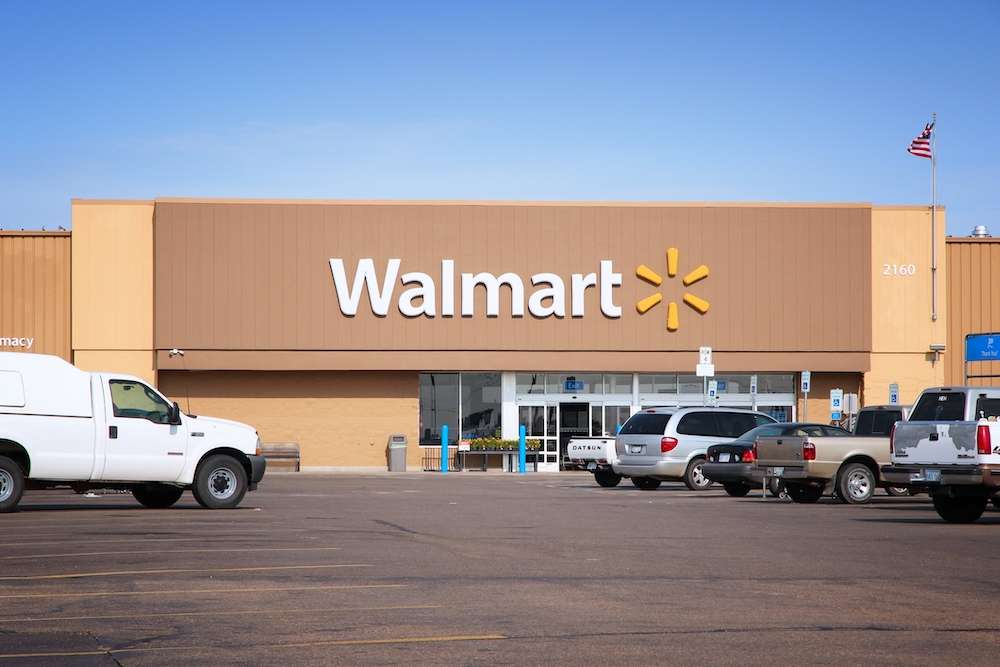
There’s a new resource for mental health in Dallas, Georgia—and it’s a bit unexpected.
Recently, Walmart announced it would be opening a new clinic called Walmart Health, debuting in the Georgia town and set to open sometime this month.
According to CNBC, the idea is to provide “comprehensive and low-cost primary care.” Among the services to be provided are primary care, dental care, counseling, labs, x-rays and audiology. The clinic will be housed in a building next to Walmart in order to provide more privacy for patients.
According to a Walmart spokesperson, there will be a focus on accessibility and affordability with the new clinic.
“Walmart is committed to making healthcare more affordable and accessible for customers in the communities we serve,” the representative said. “The new Walmart Health center in our Dallas, Georgia, store will provide low, transparent pricing for key health services for local customers. We look forward to sharing more details when the facility opens next month.”
While this specific move is new for Walmart, the store isn’t a stranger to providing for those in need of health care. CNBC reports that the retailer is home to one of the largest pharmacies in the country, with locations in about 4,700 of its stores. According to the company itself, health and wellness made up about 9% ($36 billion) of its $332 billion in sales in the U.S. in the last fiscal year.
While mental health is a relatively new market for the retailer, this won’t be the first time Walmart has housed mental health care. For example, space for a behavioral health company was leased in a Texas store in 2018 because of a shortage in the area.
Walmart has also opened Care Clinics in various states in the past, but those have been housed in the actual store rather than in a separate space.
Part of the reasoning for the retailer branching out, Business Insider explains, is due to competition, specifically as Amazon has transformed the retail market. Now, traditional retailers are having to think outside the box in terms of what else they can offer customers.
“We all want to exist in 10 years,” Marcus Osborne, Walmart’s vice president of health and wellness transformation, told Business Insider last October. “None of us wants to be Sears.”
The federal agencies are investigating more than 200 cases to see if there is a “common cause or if they are different diseases with similar presentations.”
As vaping has picked up in popularity in recent years, concerns around the habit have also increased.
Most recently, U.S. health officials have announced an investigation of up to 354 possible cases of severe lung disease associated with vaping. According to the Washington Post, the cases span 29 states, the Centers for Disease Control and Prevention (CDC) and the Food and Drug Administration (FDA) said in a statement released Friday (Aug. 30).
However, the agencies say more information is necessary in order to conclude whether the lung illnesses are connected to a specific product.
“Even though cases appear similar, it is not clear if these cases have a common cause or if they are different diseases with similar presentations, which is why our ongoing investigation is critical,” CDC Director Robert Redfield and acting FDA Commissioner Ned Sharpless said in the statement.
According to officials, such as Health and Human Services Secretary Alex Azar, these possible connections between vaping and lung disease should not be overlooked. Azar says, “this situation, and the rising tide of youth tobacco use, is a top public health priority for the Trump Administration and every leader at HHS.”
Counterfeit Products
A CDC official said that the investigation is “starting to point to what solvents are being used, and that can vary a lot.” The official adds that this is especially concerning in counterfeit and black market products.
To avoid possible complications, the FDA says those who vape should not modify or add substances to e-cigarettes and should not buy any such substances off the streets. They should also remain vigilant of any health issues or concerns and seek medical intervention if they feel the need.
According to the Post, officials are encouraging those who use e-cigarettes to cease doing so and to talk to medical professionals about other options, such as nicotine gum or patches.
The CDC and FDA also noted that in many of the lung disease cases, the individual had also used THC or CBD.
“People need to stop using these illicit THC products now—and it’s the CDC’s responsibility to say what we do know,” Michael Siegel, a professor of community health services at Boston University, tells the Post. “Yes, there are unknowns. Yes, there may be other products implicated as well. But a large number [of confirmed cases] seem to involve THC oils purchased from ‘pop-up shops.’”
New Territory
State departments are working to gather and share information. Illinois Department of Health Director Ngozi Ezike tells CNBC that the investigation is “new territory.”
“We’re on the cusp of what we consider new territory in that this is not an illness or an association between vaping and acute respiratory illnesses that have been reported before or that CDC even collects information on,” Ezike said.
According to the Post, the plan is for the CDC to create a data collection system for states and to “finalize an initial definition of a vaping-related lung injury or illness by week’s end.”
Mental health nonprofits are using social media to close the treatment gap in Nigeria.
Nigeria’s continuing problem with brutal violence inflicted across the country (and neighboring Niger, Chad and Cameroon) by the terrorist group Boko Haram is causing mental health problems to rise, compounded by the government’s unwillingness to adequately fund mental health services in the country. A new report in The Weekexamines the issue in-depth.
Boko Haram
For a decade now, Boko Haram, also known as the Islamic State’s West Africa Province, has terrorized innocent Nigerians. The group is said to be responsible for killing more than 20,000 people and displacing more than 2 million since 2009. The group has abducted at least 8,000 children and teenagers, forcing them to join the fight or be killed.
Boko Haram’s violent campaign has left countless Nigerians in need of mental health care to deal with the trauma of it all, but as The Week reported, the government has little interest in improving mental health care.
Stigma is also a barrier to adequate care.
“Nigerians still don’t see things like depression as illnesses… A lot of Nigerians would rather listen to their pastor or imam than a doctor,” said Emeka Iregbulem, a psychiatrist at the Federal Neuropsychiatric Hospital in the city of Enugu.
Nonprofits Address Treatment Gap
NGOs like the Mentally Aware Nigeria Initiative (MANI) are left to address the treatment gap across Nigeria with little support.
MANI, one of the few non-profits in Nigeria tackling mental health, in addition to deploying mental health providers to villages on kekes (motorized tricycle), is also utilizing social media to reach more Nigerians.
With over 100 million Nigerians online, social media or messaging services like Twitter and Whatsapp offer some relief to those who may not otherwise address underlying trauma and depression.
“We have counselors available around the clock to act as first responders when Nigerians need help,” said Rasheedat Olarinoye, a project manager with MANI. “Our counselors are volunteer psychiatrists and medical officers that are, a lot of times, the thin line between life and death.”
Mowunmi Olanrewaju, a 26-year-old development worker in Lagos, received counseling from a MANI psychologist through Twitter direct messaging. She was dealing with depression and loneliness, but had not been able to afford regular counseling sessions.
Olanrewaju said that receiving therapy through Twitter made a world of difference. “In the past, I imagined I would just get it over with (suicide), but now, I have seen enough of the pain and what it does to the people around you,” she said.
A new study examined the possible connection between depression and a fast-food heavy diet in teens.
Teens’ diets could be contributing to their mental health, specifically their levels of depression, a new study has found.
According to CNN, recent research indicates there could be a connection between teenagers with a “high fast-food, low plant-based diet,” and depression levels.
As part of the study, researchers at the University of Alabama at Birmingham (UAB) studied urine samples from a group of middle school students at one point, then again 18 months later. Both times, the students were screened for symptoms of depression.
In the urine, high levels of sodium and low levels of potassium were present.
“High sodium, you’ve got to think of highly processed food,” said lead author Sylvie Mrug, chair of the psychology department at UAB. “This includes fast food, frozen meals and unhealthy snacks.”
Missing Nutrients
According to Mrug, having low potassium is a sign that a person’s diet may be missing certain healthy foods, such as fruits and vegetables, that have high levels of potassium. These include foods like beans, sweet potatoes, spinach, tomatoes, bananas, oranges, avocados, yogurt and salmon.
Researchers also discovered that having a higher level of sodium in the urine could predict a student’s likelihood of exhibiting signs of depression 18 months later.
“The study findings make sense, as potassium-rich foods are healthy foods,” said dietitian Lisa Drayer, a CNN health and nutrition contributor. “So, if adolescents include more potassium-rich foods in their diet, they will likely have more energy and feel better overall—which can lead to a better sense of well-being and improved mental health.”
Other Studies
These findings aren’t necessarily new, as prior research has pointed to a similar connection between diet and mental health in adults. More specifically, one study found that adults who followed a diet of fresh fruits, vegetables, nuts, seeds and little red meat or processed foods were less likely to struggle with depression.
While the study of middle school students seemed to point to a definite connection between diet and depression, researchers say it was too small to be definitive, as it only included 84 students, 95% of which were African-American and from low-income homes.
Mrug noted that more research is needed, as the study found an association but not a cause and effect relationship between diet and depression.
“It might also be true that a poor diet could be linked to other risk factors for depression, such as social isolation, lack of support, lack of resources and access to healthcare and substance abuse,” Drayer adds. “It might be hard to tease out if diet is the factor or simply a marker for other risk factors for depression.”
The 31-year-old singer took to Twitter to air his grievances about his family over the holiday weekend.
Pop singer Aaron Carter issued a blistering fusillade of tweets over the Labor Day weekend, aimed at targets ranging from his brother Nick Carter of the Backstreet Boys, to addiction and their family, before appearing to recant and blame the Twitterstorm on being “in a bad place emotionally.”
The initial round of tweets—now deleted from his account—were centered around his elder brother and in particular, Nick Carter’s son, Odin, whom the younger Carter alleged he had never met. From there, Aaron took swings at his brother’s wife, whom he described as a “recovering addict,” his brother’s memoirFacing the Music and Living to Talk About It, and other members of his family.
Emotional Tweets
When fans suggested that photos of Carter and his nephew existed, Carter tweeted that the meeting may have taken place when he was struggling with addiction. One day after the online outburst, Carter took to Twitter to note that he was “in a bad place emotionally” at the time of the tweets, and hoped to see his “whole family dynamic heal.”
Carter’s furious Twitter flurry kicked off early on Sunday (Sept. 1), as he was flying from Baltimore, Maryland to Los Angeles, California. After posting that he was looking forward to spending time with friends, Carter fired off a tweet demanding that someone post a photo of him with his nephew, Odin, who is Nick Carter’s three-year-old son and featured regularly on his parents’ social media accounts.
From there, Aaron lit into his brother, whom he claimed was like a stranger to him (“Nick and I don’t know each other”) and exclaimed that he loved “Oden [sic] even though I might never know you.”
Estranged Brothers
Nick Carter’s issues with drug and alcohol addiction, which he addressed in his book, were the focus of his brother’s next round of tweets. “Both Nick and [wife] Lauren [Kitt] are allegedly recovering addicts and should know better,” he wrote. He eventually took on his entire family, whom he described as “all [having] had their own shortcomings and shuns me?! My mother?! My Sister Bobbie Jean?!”
After advising that Nick “keep his families’ shortcomings out of books,” Aaron added that he may have met Odin, but “didn’t have him when I was sober… I don’t remember.” He concluded the tweets by noting that he was advised to “keep things off of social media, but Nick can write a book knowing his family, {BESIDES ME) can NOT defend themselves?”
Response from Carter’s followers expressed sympathy for his grievances, while others stated, “It’s sad people feel like their [sic] entitled to attack others so they feel good about themselves.”
On Monday (Sept. 2), Aaron posted that his anger was motivated by emotions, as well as a visit to their mother, Jane, from whom Nick is estranged. “I’m upset that Nick didn’t even seem to care and I had to be the man of the family and take charge,” Aaron wrote about the visit, before adding, “I’d still like to see the whole family dynamic heal.”
Aaron Carter spent two months in rehab in 2017 for dependency on painkillers, though he later told media sources in 2018 that he still smoked marijuana and drank alcohol, which drew alarmed responses from addiction and mental health experts.
Critics claim that the app’s focus on categorizing food could lead to disordered eating in children.
A new app is getting flack for promoting dieting in children and teenagers.
Kurbo, released by WW (formerly Weight Watchers) on Aug. 13, was designed to help young people aged 8-17 lose weight in a “healthy” way, but it’s garnered outrage among those who say it promotes disordered eating.
Good Food, Bad Food
The app utilizes a “traffic light system” to help kids discern which foods are “good” and “bad.”
“Green light foods, including all fruits and veggies, are great to eat anytime. Yellows like lean proteins and pasta are also good. You’ll just watch your portions,” according to Kurbo’s official website. And “red foods, like candy and soda? You don’t have to give them up. Just stop and think how to budget them in.”
WW says the method is supported by science, but according to a petition seeking the removal of Kurbo, “Categorizing foods like this can lead to food guilt or anxiety.” The change.org petition had nearly 108,000 signatures as of Wednesday morning.
The traffic light system is the same one used by Stanford’s Pediatric Weight Control Program, according to the app’s developer, Joanna Strober. She created Kurbo to help her son manage his weight, per a pediatrician’s advice, she told USA Today. A mobile app was preferable to her son, who did not like attending the program in person. The family also had trouble affording the cost of the program.
Gary Foster, WW’s chief science officer, told USA Today that Kurbo is not only evidence-based, it is preferable to the barrage of unhealthy weight loss strategies and “unrealistically thin ideals” that are promoted on social media.
“It’s a simple way to teach kids a healthy pattern of eating,” said Foster. “Everything that’s in the app is science based. It’s not about dieting. It’s not about calorie counting. It’s not about restrictions. This is not a diet that says get rid of red foods, only eat green foods.”
Negative Reviews
There are plenty of negative reviews of Kurbo on Google Play and Apple’s App Store claiming the app is “preying” on parents’ fears of disordered eating and diabetes. However, one App Store reviewer left a solid five star review, slamming the app’s critics.
“Everyone seems angry about this app, and it’s making me enraged,” reviewer KikiKite, who is in recovery from anorexia, said in late August. “America has a weight problem, and here is a well-known and trusted establishment creating an app to help promote HEALTH.”
While a representative for the American Academy of Pediatrics, Sarah Armstrong, acknowledged that the method used in Kurbo is supported by research and is effective when combined with counseling and other modes of treatment, she said the app itself is new and its effectiveness is to be determined.
Armstrong also said there is some truth to the claim that focusing on diet and nutrition can lead to disordered eating. “There is some evidence that talking about weight particularly even by family members in kids of any weight, shape, or size, not necessarily just in kids with obesity, can make kids really start over-focusing on it and can lead to restrictive eating… that is associated with more unhealthy outcomes.”
In the midst of investigation, the CDC has declined to say which brands of vape cartridges are the most compromised.
An 18-year-old was admitted to NYU Winthrop Hospital six weeks ago, presenting with chest pains, nausea, fever, and shortness of breath. Doctors there diagnosed him with a condition related to acute lung injury before setting him up with a breathing tube and putting him in a week-long induced coma.
The doctors were baffled as to how he became so sick so quickly, until his mom found something in his trash: a marijuana vape cartridge with branding from TKO Extracts, a California-based THC company. As it turns out, the cartridge in question wasn’t theirs, but a knockoff.
Fake Cartridges
The teen made a full recovery, but his case is not unique as doctors would encounter a similar patient just one day later.
A 19-year-old who showed up complaining of coughing, rapid weight loss, and chest pain, was found to have nodules in his lungs. These symptoms had appeared within a span of two weeks, so fast that the doctors at first thought he may have a fast-moving cancer. However, they eventually figured it out—black market THC cartridges.
The hospital’s chief of pediatric pulmonology, Melodi Pirzada, had never seen such young and healthy patients become so desperately sick in such a small amount of time.
“It’s becoming very scary. Every day, new cases are adding up,” she said. “Because we didn’t have this problem three months ago.”
Pirzada is far from the only health care practitioner who is concerned with the acute health effects of counterfeit THC vape cartridges. Across the entirety of the United States, there have been 193 cases of severe lung afflictions in 22 states that have been linked to vaping.
28 Cases In California
In California, where recreational marijuana is legal, hospitals have taken on at least 28 cases wherein patients suffered from acute lung damage as a result of vaping THC.
The problem has gotten to the point where the California Department of Public Health (CDPH) released a health alert regarding these counterfeit, black market THC vape cartridges.
The problem extends beyond California as well, including the states of Wisconsin and Utah that have seen severe lung ailments come about as a result of questionable vape cartridges.
“Within the last few months it’s amazing how many cases from around the country have come into the spotlight,” said Dr. Raj Dasgupta, the pulmonary and critical care physician at the University of Southern California.
In the midst of investigation, the Centers for Disease Control and Prevention (CDC) has declined to officially state which brands of vape cartridges are the most compromised.
“The investigation is ongoing. We cannot provide this information at this time,” a CDPH spokeperson told Rolling Stone. The problem seems isolated to only counterfeit THC vape cartridges and not vapes in general, according to Pirzada. “E-cigarettes cause their own problems. But this is a totally new issue,” she said.
For now, vape enthusiasts may have to depend on one another to protect themselves from these knockoff THC cartridges. The Instagram account Dankbusters Official or the Reddit community “cleancarts” offer tips on how to identify authentic products, but they admit that there’s no way for a home user to know for sure.
“Unless you’re spending $800 on every cartridge to get it tested, there’s no way to 100% know,” said the anonymous administrator of Dankbusters Official.